Mold on Soil on Pilea Moon Valley: Causes, Checks & Fixes
Quick answer
Mold on soil on Pilea Moon Valley usually means the surface stays wet while organic mix breaks down. First step: scrape off visible mold and let the top 2–3 cm dry before watering again.
Mold on Soil on Pilea Moon Valley: Causes, Checks & Fixes
This guide covers mold on soil on Pilea Moon Valley. See also the general Mold on Soil guide, watering, and light pages for this plant.
Mold on Soil on Pilea Moon Valley: Causes, Checks & Fixes
Quick answer
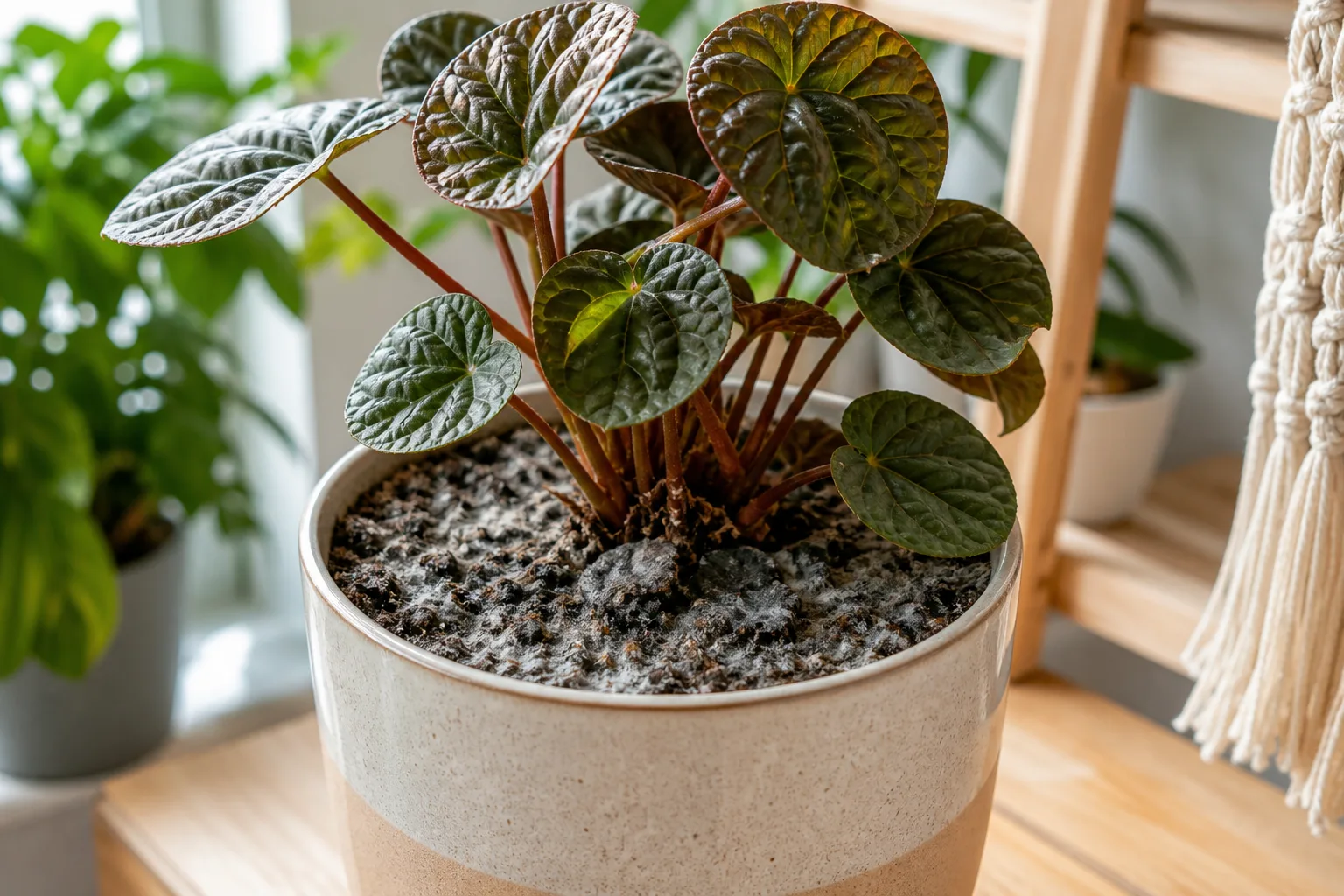
White, gray, or green fuzz on the surface of a Moon Valley pot almost always means the top layer of mix stays wet too long. Pilea mollis ‘Moon Valley’ grows in a peaty, soil-based mix that holds moisture at the surface when watering outpaces evaporation. That fuzzy layer is usually saprophytic fungus feeding on decaying organic matter-not a disease attacking living leaves-but it is a warning that roots may be sitting in stale moisture too.
First step: scrape off the visible mold and let the top 2–3 cm of mix dry before you water again. Do not reach for fungicide on day one. Fix the wet surface first, then watch whether new growth stays clean.
Why Moon Valley gets mold on soil
Moon Valley sits in a tension many growers create by accident. The plant wants evenly moist soil without ever being sopping wet, plus moderate to high humidity around 50–60%. In practice, that often translates into frequent shallow top-ups in dim light, grouped pots on a humidity tray, or terrarium-style shelves where air barely moves across the soil line.
Several Moon Valley traits make surface mold more likely than on an open, upright plant:
- Peaty potting mix - Standard mix with 15–20% perlite still contains plenty of organic matter. Saprophytic fungi thrive on decaying peat and compost when the surface never dries.
- Dense leaf mound - Quilted bronze-green leaves form a low canopy that shades the pot rim and traps humidity right above the soil.
- Fine, shallow roots - Moon Valley roots spread near the surface where you water. Keeping the top inch constantly damp feeds mold without giving deeper roots the oxygen cycle they need.
- Humidity-first placement - Bathrooms, grouped plant shelves, and enclosed displays raise ambient moisture but often reduce airflow at the pot surface-the exact zone mold needs.
Overwatering is the usual trigger, but not always in the obvious way. You may be waiting until the top looks dry while the layer just below stays wet, especially in an oversized pot or a plastic container that holds moisture longer than porous clay. Winter slows growth; continuing summer watering frequency on a cool windowsill leaves surface peat soggy for days.
Mold and fungus gnats share the same habitat: damp peat-rich mix with decaying organic debris. Seeing both on a Moon Valley pot confirms chronic surface wetness rather than a random fungal spot.
What mold on soil looks like on Moon Valley
Typical saprophytic mold:
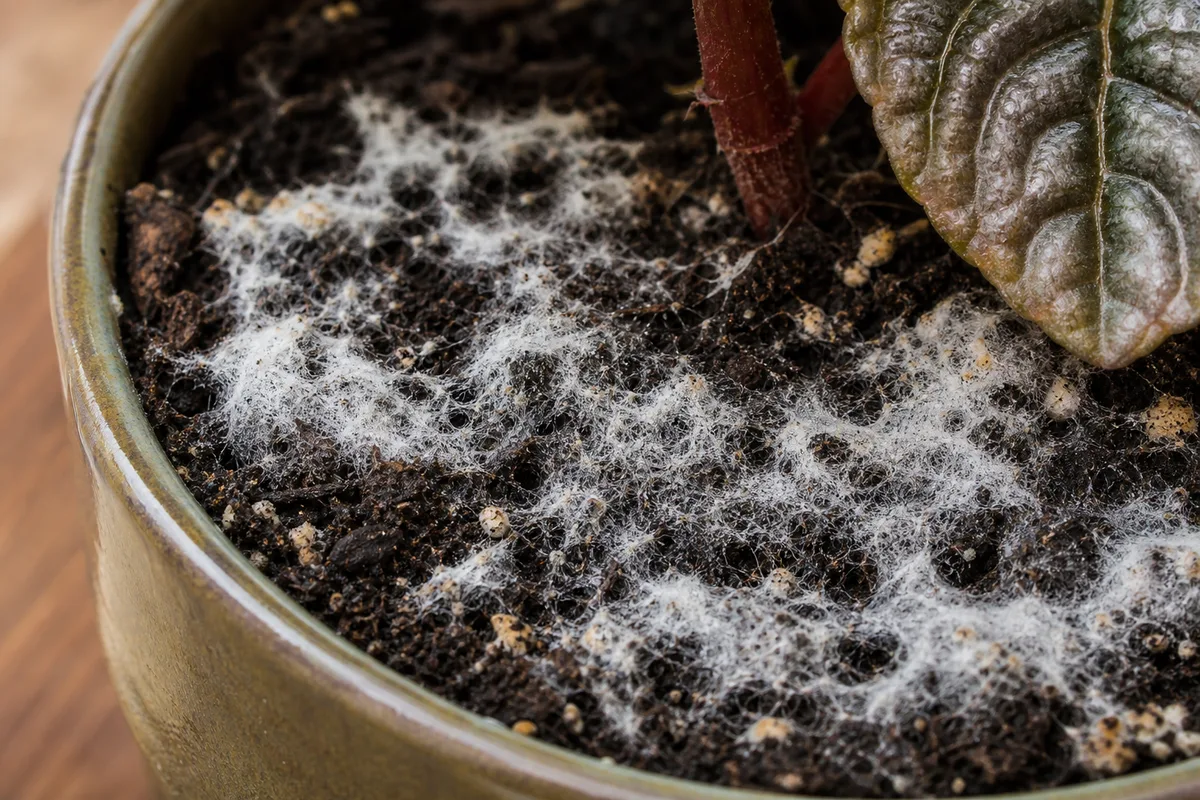
Mold on Soil symptoms on Pilea Moon Valley - compare with healthy tissue on the same plant.
- White, gray, or pale green fuzzy film on the top centimeter of mix
- Thread-like mycelium visible when you scrape the surface
- Soil surface stays dark and damp several days after watering
- Musty smell when you lift the leaf cluster and sniff near the rim
- Plant leaves still firm with normal puckered texture-at least early on
- Small flies rising from the pot when you water (companion fungus gnats)
Signs the wetness is hurting Moon Valley, not just growing mold:
- Lower leaves yellow while soil stays heavy
- New tips stay small, puckered, or stop opening
- Stems feel soft at the soil line
- Sour or rotten smell from the mix
- Mold returns within two to three days of every scraping
Do not confuse mold with a white crust on the pot rim or soil surface from fertilizer salts or hard water. Clemson HGIC notes that crusty white deposits indicate salt buildup, which is a different problem-usually from over-fertilizing or poor leaching-not fuzzy saprophytic growth.
How to confirm the cause
Work through these checks before you repot or spray:
- Moisture at 2–3 cm depth - Stick your finger or a bamboo skewer into the mix. If the surface is fuzzy but deeper layers are already dry, you may be shallow-watering too often. If the whole top third stays wet for days, drainage or pot size is the issue.
- Dry-down speed - Note how many days after watering the surface stays visibly damp. On Moon Valley in Pilea Moon Valley light guide, the top 2–3 cm should approach dryness within the normal 7–10 day summer rhythm-not stay slick indefinitely.
- Pot weight and drainage - Lift the pot. Chronic heaviness means water is not leaving. Confirm drainage holes flow freely and saucers are emptied after each drink.
- Light level - Leggy, pale growth with mold suggests the plant is not using water quickly enough. Moon Valley in too much shade dries slowly and invites surface fungi.
- Debris on soil - Fallen Moon Valley leaves and old peat fragments under the mound are mold food. Clear them before judging whether mold returns.
- Gnat test - Tap the pot after watering. Flies hovering at the rim confirm damp peat mix supporting both mold and larvae.
If leaves look healthy, roots feel firm when you probe gently at the edge, and mold appears only on a wet surface, you are likely dealing with harmless saprophytic growth tied to watering habit-not an emergency pathogen.
First fix for Pilea Moon Valley
Scrape off the top 1–2 cm of moldy mix, discard it, and pause top watering until the top 2–3 cm feels dry.
Use a spoon or small trowel to remove the fuzzy layer and any loose wet peat beneath it. Bag the material rather than composting it indoors. Leave the plant in place-do not repot on day one unless the mix smells sour or stems are soft.
After scraping, let the pot dry from the top down. Moon Valley can tolerate a slightly drier surface between drinks; it cannot recover from chronically sodden peat. Letting surface soil dry between waterings disrupts mold and fungus gnat larvae at the same time.
If you need to keep roots from drying out hard while the surface recovers, bottom-water once by setting the pot in a shallow tray for 20–30 minutes, then remove it and empty any leftover. That wets the root zone without re-soaking the top layer you just cleaned.
Do not cover the soil with decorative moss, rocks, or glass chips to hide mold-that traps moisture and makes recurrence faster.
Step-by-step recovery
After the initial scrape and dry-down:
- Resume watering only when the top 2–3 cm is dry - Water thoroughly until a little runs from drainage holes, then discard saucer water. Match winter intervals (10–14 days) when growth slows.
- Add a thin dry topping if needed - A light layer of fresh perlite or dry potting mix on the cleaned surface can buffer the next few waterings without holding excess moisture.
- Improve airflow at the soil line - Pull the pot slightly away from neighbors, open a shelf gap, or run a fan on low nearby. Keep humidity around the leaves without sealing the pot rim.
- Move to brighter indirect light if the plant is stretching or the pot dries too slowly. Moon Valley wants bright indirect light, not deep shade.
- Set yellow sticky traps if fungus gnats were present. Traps catch adults but do not replace drying the soil-use them alongside watering correction.
- Remove fallen leaves weekly from under the quilted mound so organic debris does not restart mold on the fresh surface.
- Repot only if mold returns quickly, mix smells sour, or roots feel mushy - Move to fresh perlite-amended mix in a pot one size appropriate for the root ball. Trim black, soft roots and avoid watering heavily for the first week after Pilea Moon Valley repotting guide.
Skip cinnamon, vinegar, or hydrogen peroxide drenches as a first response. They are cosmetic bandages on a moisture problem and can stress fine Moon Valley roots if overused.
Recovery timeline
Surface mold should stop reappearing within one week once the top layer dries reliably between waterings. Fungus gnat numbers usually drop within several days of corrected drying, though adults may linger until traps catch them.
Moon Valley leaf texture does not change much in response to surface mold alone-judge recovery by new quilted leaves opening cleanly and no fuzzy return on the rim for two full watering cycles. If yellow lower leaves were present, expect two to three weeks of stable care before you know whether those leaves will drop or the plant will outgrow the damage.
Severe root stress from long-term wetness may require stem cuttings from healthy tops. Moon Valley propagates easily from stem cuttings if the base is too far gone.
Lookalike symptoms to rule out
Powdery mildew forms a dry white powder on leaf surfaces, not a fuzzy mat on soil. Moon Valley mildew is uncommon indoors but would sit on foliage, not peat.
Green algae on the soil surface needs constant light and moisture together. It smears green when rubbed and often rings the pot in very bright, wet setups-not typical dim shelf culture.
Salt crust looks hard and crystalline, not fluffy. It builds on rims and the soil surface from fertilizer or hard water, not decaying organic matter.
root rot on Pilea Moon Valley may accompany mold but is a root condition, not surface fuzz. Confirm with firm versus mushy roots and sour smell-not by mold color alone.
Mistakes to avoid
Do not scrape mold every day without changing the Pilea Moon Valley watering guide. You will fight the same colony indefinitely.
Do not keep watering because Moon Valley leaves droop slightly-check depth moisture first. Brief wilt from dry soil resolves after one proper drink; wilt on heavy wet soil means too much water, not too little.
Do not use a pot without drainage because Moon Valley likes humidity. Standing water causes root rot and chronic surface mold.
Do not choose an oversized pot “so you water less often.” Extra mix holds moisture at the surface where mold starts.
Do not fertilize a mold-stressed plant hoping to push growth. Feed only after watering is stable and new leaves look healthy.
Do not assume mold is harmless if gnats, yellow leaves, and sour smell stack up together-that combination means the root zone needs intervention, not patience.
How to prevent mold on soil on Moon Valley
Match watering to the top 2–3 cm dryness test every time, not a calendar. Summer may mean every 7–10 days; winter may stretch to 10–14 days in cooler, lower-light rooms.
Use standard potting mix with 15–20% perlite and repot when peat compacts and stays soggy on the surface. Peat-lite mixes drain well when fresh but break down over time.
Keep bright indirect light so the plant uses water at a steady pace. A mold-prone Moon Valley on a dark shelf almost always needs more light before more fungicide.
Maintain humidity around leaves, not around the soil rim-group plants or use a humidifier, but leave airflow gaps at pot level.
Empty saucers after every watering. Never let the pot sit in runoff.
Clear debris from the soil surface when you inspect the textured leaves-those craters catch dust and fallen tissue that feed surface fungi.
If mold appeared after switching to a heavy, water-retentive mix, return to a chunkier blend with extra perlite rather than fighting the old peat surface forever.
When to worry
Treat as urgent when mold returns within days of every cleaning, the mix smells sour, stems soften at the base, or multiple lower leaves yellow while the pot stays heavy. Those signs point toward overwatering and possible root rot, not harmless saprophytic growth alone.
Also escalate when fungus gnats are constant despite dry surface attempts-larvae may have spread through a peat block that stays wet in the center even when the top looks dry. Repotting with root washing is reasonable then.
Cosmetic white fuzz on an otherwise vigorous Moon Valley with firm stems and clean new tips is not urgent. Scrape, dry the surface, and adjust watering before you repot or spray.
Conclusion
Mold on Moon Valley soil is usually a moisture message, not a death sentence. The quilted mound, peaty mix, and humidity-friendly placement that make Pilea Moon Valley overview happy also slow surface drying when watering runs ahead of light and airflow. Scrape the visible growth, let the top 2–3 cm dry, and confirm recovery through clean new leaves-not through fighting the same fuzzy rim every week. Fix the wet surface first; repot only when smell, stem softness, or instant mold return say the root zone-not just the top layer-needs a fresh start.
When to use this page vs other Pilea Moon Valley guides
- Pilea Moon Valley watering guide - Use for routine moisture checks before assuming mold on soil is the main issue.
- Pilea Moon Valley problems hub - Browse all 4 common issues on this species.
- Root Rot on Pilea Moon Valley - Different entry point when symptoms overlap with mold on soil.