Spider Mites on Pilea Moon Valley: Causes, Checks & Fixes
Quick answer
Spider mites on Pilea Moon Valley cause pale stippling in puckered leaf craters and fine webbing at crowded stem joints, especially in dry winter heat. First step: isolate the pot and rinse every leaf surface thoroughly, working into the textured craters and undersides.
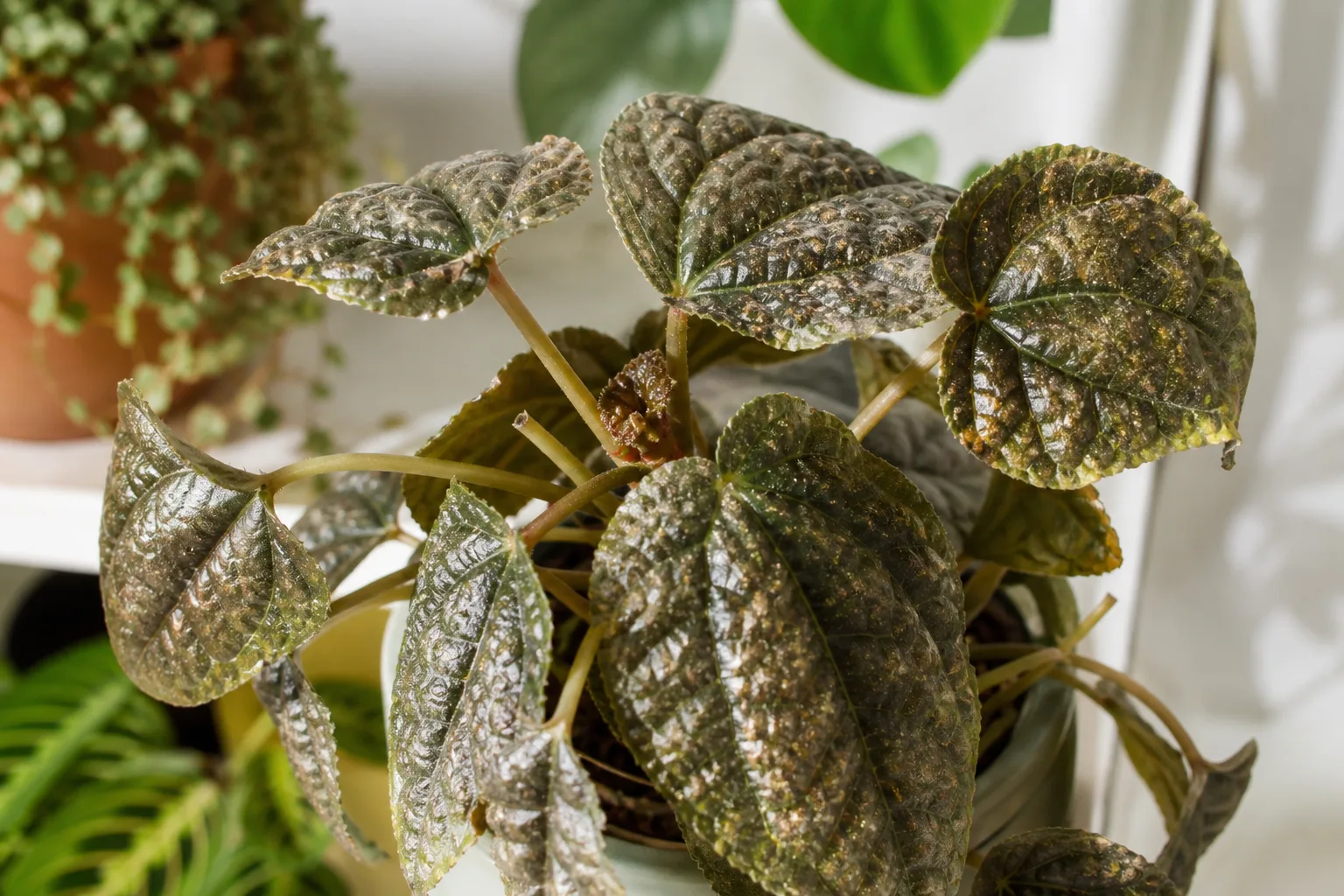
Spider Mites on Pilea Moon Valley: Causes, Checks & Fixes
This guide covers spider mites on Pilea Moon Valley. See also the general Spider Mites guide, watering, and light pages for this plant.
Spider Mites on Pilea Moon Valley: Causes, Checks & Fixes
Quick answer
Spider mites on Pilea Moon Valley (Pilea mollis ‘Moon Valley’) show up as pale stippling in the quilted leaf craters and fine webbing where stems meet in the compact crown. The textured bronze-green foliage makes early damage look like dust settled in the puckers-until the colony grows and leaves turn dull or bronzed.
First step: isolate the pot and rinse every leaf surface thoroughly, working lukewarm water into the sunken veins, undersides, and overlapping leaves at the crown. Do not spray insecticide until you have confirmed live mites with a tap test or magnifier.
Why Pilea Moon Valley gets spider mites
Moon Valley is grown for deeply puckered, quilted leaves-not the flat coin foliage of Pilea peperomioides. That texture creates small pockets where two-spotted spider mites shelter from casual wiping, while the upper surface shows feeding damage as thousands of tiny pale dots.
The plant’s normal care also overlaps with mite-friendly conditions indoors. Missouri Botanical Garden recommends high humidity, humidified rooms, or pebble trays for Pilea mollis ‘Moon Valley’-yet many homes drop to 20–40% humidity when heating runs. Spider mites prefer warm, dry air with low humidity, and outbreaks spike on winter windowsills where sun warms leaves while furnace air dries the room.
Moon Valley is often grouped on shelves or terrarium-style displays to raise local humidity. That helps the plant-but touching leaves between pots give mites a bridge to the whole collection. A compact mounding habit with overlapping quilted leaves also slows airflow through the crown, so colonies build in the interior before you notice stippling on outer leaves.
Stressed plants show damage faster. Allowing the top 2–3 cm of mix to dry between waterings is correct, but chronic underwatering combined with dry air weakens foliage. Conversely, soggy soil does not cause mites directly, yet a wilted stressed plant tolerates feeding poorly. The common winter pattern is dry air + warm light exposure + missed underside inspection.
What spider mites look like on Moon Valley
Early feeding:
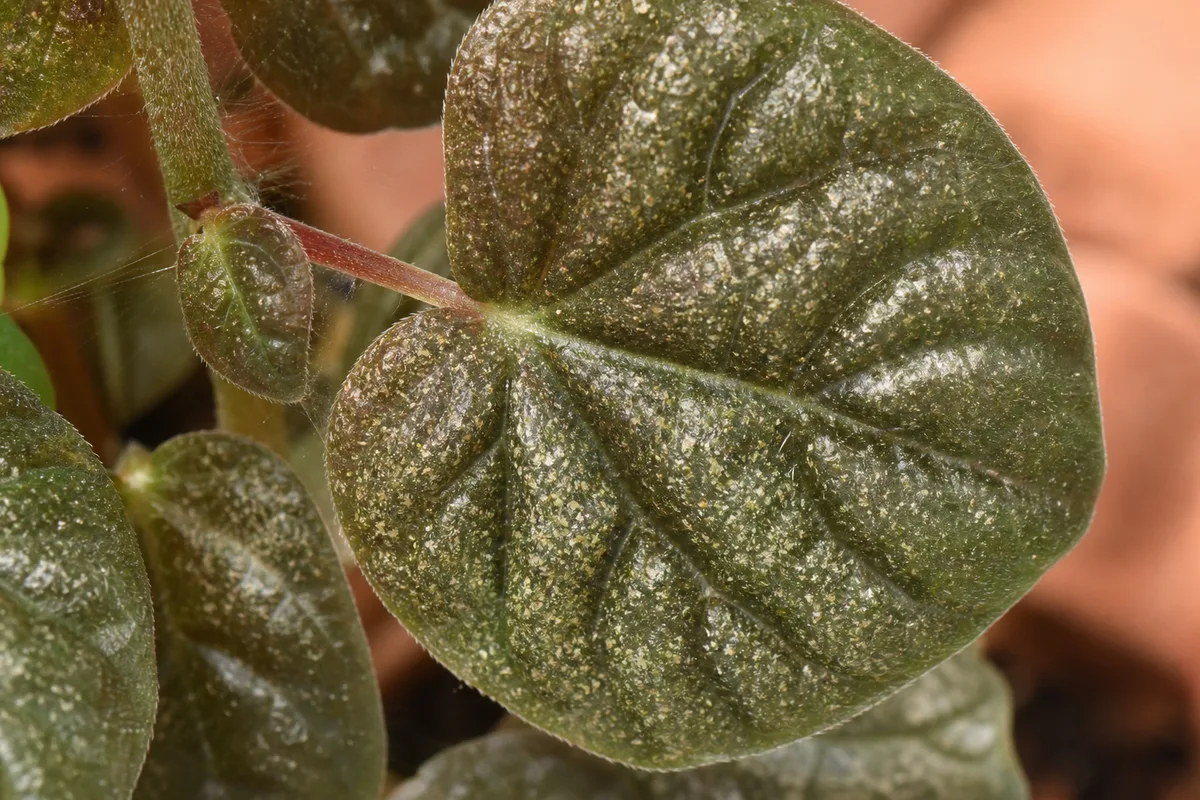
Spider Mites symptoms on Pilea Moon Valley - compare with healthy tissue on the same plant.
- Fine pale yellow or white dots scattered across bronze-green quilted surfaces-often mistaken for dust in leaf craters
- Slightly dull or dusty-looking leaves without obvious insects at a glance
- Damage concentrated on outer leaves facing sun or heat sources first
Established infestation:
- Bronze or silvery stippling across large sections of puckered foliage
- Fine silk webbing at leaf axils, stem joints, and between overlapping crown leaves
- Tiny moving specks on a white paper after tapping a suspect leaf
- New leaves smaller, puckered unevenly, or slow to expand when feeding is heavy
- Lower leaves yellowing and dropping while soil moisture is otherwise normal
The mites themselves are about 1/50 inch long-barely visible without magnification. On Moon Valley, check the dark leaf undersides and the bright green leaf margins where contrast makes stippling easier to spot.
Webbing is a late but reliable sign. A few stray threads in one axil mean the population is already established, not just starting.
How to confirm the cause
Work through these checks before treating:
- Tap test - Hold white paper under a quilted leaf and tap the leaf firmly. Moving specks confirm spider mites; static dust does not crawl.
- Magnifier check - Inspect leaf undersides and crater edges at 10×. Look for oval mites, pale nymphs, and fine webbing strands.
- Pattern vs. watering - Yellow leaves from overwatering usually come with wet soil, soft stems at the base, or sour smell. Mite stippling can occur with appropriate dryness at the root zone.
- Humidity context - Edge crisping from dry air alone browns margins; mite damage shows evenly distributed dots across the leaf face. Both can coexist in winter-confirm pests before blaming humidity only.
- Neighbor plants - Scan other pots on the same shelf. Mites spread to any susceptible houseplant, not only Moon Valley.
If you see stippling but no mites on the tap test, rinse once and recheck in three days. Very early colonies are easy to miss on the first pass.
First fix for Pilea Moon Valley
Move the pot away from other plants, then rinse all foliage with lukewarm water-especially undersides and quilted craters.
Wrap the soil surface in plastic if you rinse at the sink so mix does not wash out of the small pot. Angle the spray into the puckered veins where mites hide. Repeated washing reduces mite numbers significantly when done thoroughly.
Moon Valley stems are fragile and break easily at the soil line. Support the mound with one hand while rinsing with the other; do not twist crowded stems.
Do not apply horticultural oil or insecticidal soap on day one if you have not confirmed mites-those products stress textured leaves when used unnecessarily. Do not repot, fertilize, or prune heavily on the same day as discovery.
Step-by-step recovery
After the initial isolation and rinse:
- Repeat rinsing every three to five days for two weeks, directing water into crown overlaps and undersides each time.
- Apply insecticidal soap if live mites remain after several rinses. Cover upper and lower leaf surfaces completely; soap has no residual effect and must contact mites directly.
- Treat on a schedule - Repeat soap every five to seven days for at least three cycles to catch newly hatched nymphs. One spray rarely ends an infestation because eggs survive the first application.
- Raise local humidity after sprays dry. Group pots, use a pebble tray, or run a humidifier to make the room less favorable for rapid mite reproduction-without keeping quilted leaves wet overnight.
- Prune only heavily webbed leaves that block spray access to the crown interior. Snip with clean scissors; avoid stripping the whole mound at once.
- Scout neighboring plants on the same shelf weekly with a magnifier, even if they look clean.
If the infestation covers most of the plant and webbing returns within days after three full treatment cycles, consider discarding the worst specimen to protect the collection-bag the plant before removal to limit mite migration.
Recovery timeline
Physical rinsing shows fewer live mites within a few days when the colony is still moderate. A full soap cycle typically takes two to three weeks with label-interval repeats. Stippled and bronzed quilted leaves do not revert to solid green-they remain cosmetically marked until you trim them or new growth replaces them.
Expect clean new puckered leaves emerging from the crown within two to four weeks once mite pressure drops and humidity improves. A sparse mound after heavy damage may need a full growing season to look full again because Moon Valley grows as a compact bush, not a single vining stem.
Lookalike symptoms to rule out
Low humidity alone crisps leaf margins and can dull texture, but it does not produce crawling specks on a tap test or silk webbing at stem joints.
Mealybugs show as white cottony clumps in axils-not moving dust-like stippling. They stay stationary and leave sticky honeydew.
Thrips scar leaves with silvery scratch marks and distorted new growth; webbing is not their hallmark. Shake a stem-thrips are slender and jump; mites are rounder dots.
Nutrient issues usually yellow whole leaves or show uniform chlorosis, not fine pinpoint stippling across the quilted surface.
Normal leaf aging on lower stems yellows one leaf at a time on an otherwise healthy mound without spread to new quilted tips.
Mistakes to avoid
Do not spray only the top of quilted leaves. Mites concentrate on undersides and in craters.
Do not stop after one rinse or one soap application. Egg hatch cycles demand repeats.
Do not place a freshly soaped Moon Valley in direct sun or above 90°F-soaps and oils can injure foliage in heat.
Do not use homemade dish-soap sprays. Commercial insecticidal soaps use potassium salts of fatty acids formulated for plants; household detergents burn puckered leaves.
Do not let an infested Moon Valley touch neighbors on a humidity shelf. Isolation is part of treatment, not optional.
Do not fertilize during active infestation. New soft growth feeds mites faster; stabilize the pest first.
Pilea Moon Valley care cross-check
While treating mites, keep the basics steady:
- Light - Pilea Moon Valley light guide; avoid blasting winter sun through glass onto a heat-stressed mound.
- Water - Let the top 2–3 cm of mix dry before watering; do not compensate for mites by keeping soil soggy.
- Humidity - Target 50–60% after treatments dry. High humidity supports Moon Valley and slows mite reproduction.
- Handling - Fragile stems break during aggressive wiping; rinse with water pressure instead of scrubbing.
How to prevent spider mites on Moon Valley
Rinse quilted foliage weekly during dry seasons-late fall through early spring when furnace air runs hardest. The textured surface collects dust that can mask early stippling.
Quarantine new Moon Valley pots for two weeks before placing them on grouped shelves. Inspect acquired plants before mixing them with established ones.
Keep spacing between pots so leaves do not touch; mites walk across contact points overnight.
Maintain humidity with grouping, pebble trays, or a humidifier rather than misting late in the day, which can leave craters damp overnight without solving dry-room air.
Scout the crown interior every few days in winter-outer leaves can look fine while the center already hosts webbing.
When to worry
Treat as urgent when webbing spans multiple stems, new quilted tips stay distorted after two rinse cycles, or mites appear on several shelf neighbors at once. Moon Valley is not a fast regenerator like a trailing pothos; losing most of the crown to defoliation leaves a long recovery road.
Consider removing and bagging a severely infested plant rather than risking the whole collection-especially before spring when mite reproduction accelerates in warm rooms.
A few stippled outer leaves with no webbing and a clear tap test after one rinse is moderate, not catastrophic. Consistent rinsing plus humidity adjustment often controls early colonies without chemicals.
Conclusion
Spider mites on Pilea Moon Valley exploit the same puckered leaves you bought the plant for-stippling hides in craters until webbing appears at the crown. Isolate, rinse into every textured pocket, confirm live mites, then repeat soap on a schedule if rinsing alone is not enough. Judge success by clean new quilted growth, not by old bronzed leaves, and keep winter humidity and weekly inspection on the same shelf as your watering routine.
When to use this page vs other Pilea Moon Valley guides
- Pilea Moon Valley watering guide - Use for routine moisture checks before assuming spider mites is the main issue.
- Pilea Moon Valley problems hub - Browse all 4 common issues on this species.