Leggy Growth on Ponytail Palm: Causes, Checks & Fixes
Quick answer
Leggy growth on Ponytail Palm means an elongated thin trunk between strap-leaf tufts, a crown leaning toward the window, and pale sparse foliage. Beaucarnea survives dim corners but etiolates without enough sun. First step: move gradually to the brightest south or west window and rotate weekly.
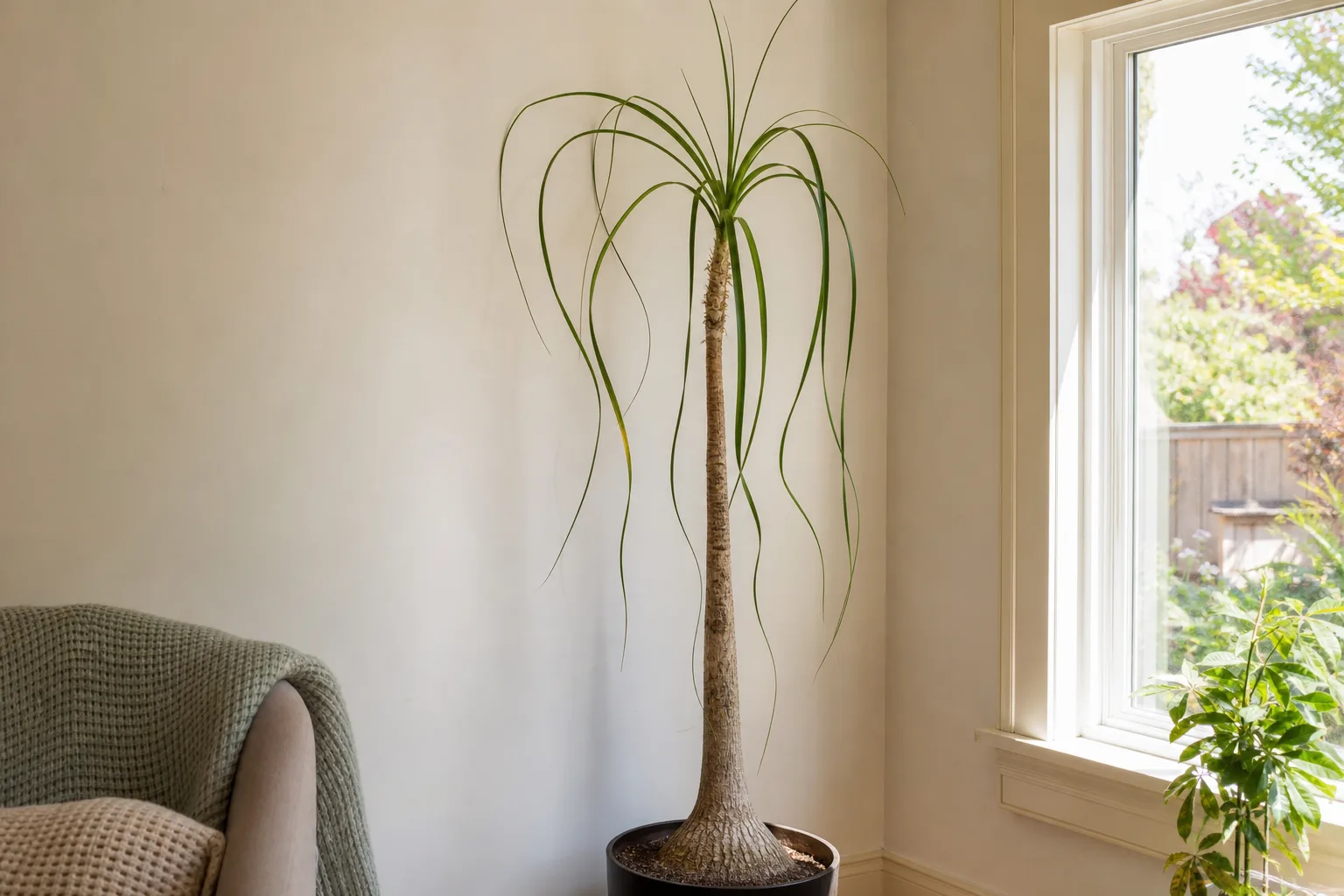
Leggy Growth on Ponytail Palm: Causes, Checks & Fixes
This guide covers leggy growth on Ponytail Palm. See also the general Leggy Growth guide, watering, and light pages for this plant.
Leggy Growth on Ponytail Palm: Causes, Checks & Fixes
Quick answer
Leggy Ponytail Palm (Beaucarnea recurvata) is almost always etiolation-the crown stretching toward photons the caudex cannot store. Unlike a true palm, this species is a semi-desert caudiciform native to bright Mexico and Central America. It can survive in a dim office corner for years because the swollen base holds water, but survival and a compact fountain silhouette are different outcomes.
This page is for visible stretch-elongated trunk, sparse strap-leaf tufts, window lean. If you are auditing whether your window is bright enough before obvious stretch appears, start with the not enough light guide and the Ponytail Palm light guide.
First step: move the pot gradually to the brightest south or west window over 7–14 days. Rotate a quarter turn weekly. Do not fertilize until new crown growth looks healthier.
What leggy growth looks like on Ponytail Palm
Healthy ponytail palms carry a thick caudex and a relatively short trunk topped by a dense fountain of cascading strap leaves. Leggy specimens look structurally different:
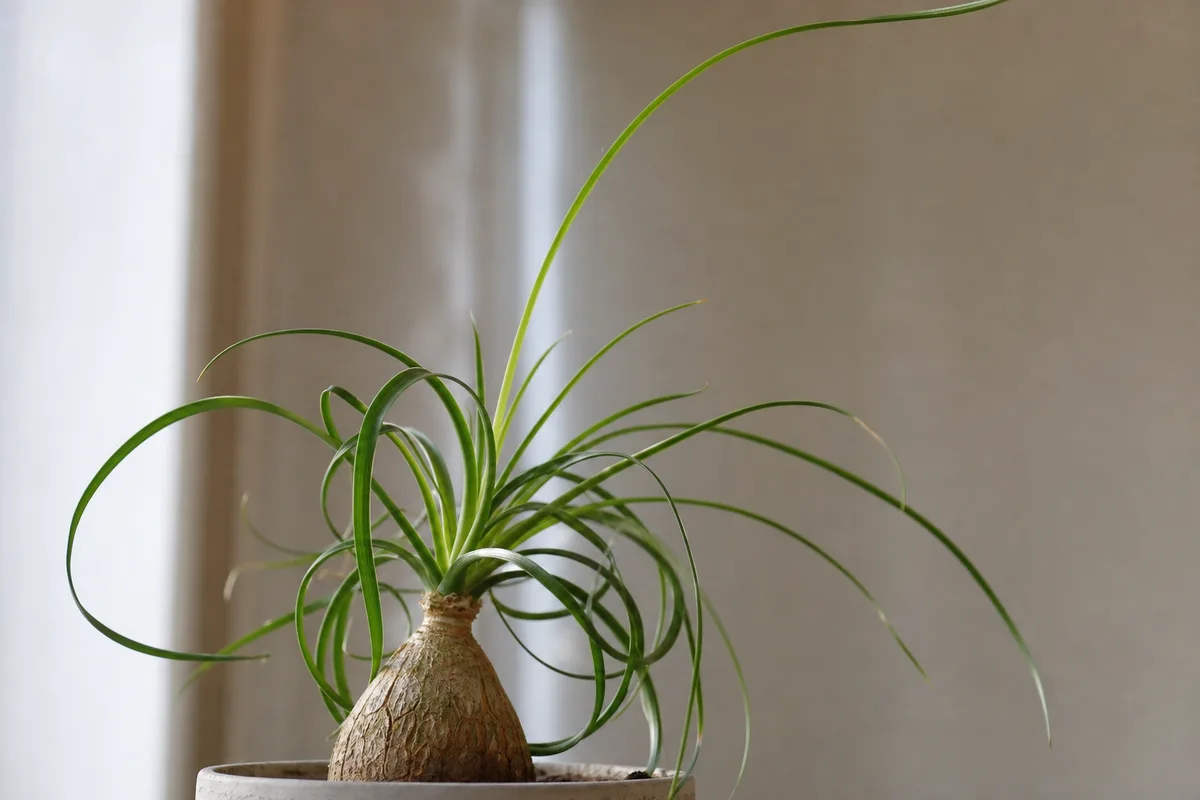
Leggy Growth symptoms on Ponytail Palm - compare with healthy tissue on the same plant.
- Elongated thin trunk - visible bare stem between strap-leaf clusters, taller than when you bought the plant
- Wide tuft spacing - gaps between leaf clusters at the crown are wider on new growth than on older compact sections
- Strong directional lean - the whole crown angles toward the brightest window or lamp
- Pale yellow-green straps - new leaves emerge lighter and narrower than mature foliage
- Weak crown droop - stretched straps arch more and feel less rigid than firm healthy growth
- Firm caudex - the base stays hard when etiolation alone is the issue; softening on wet soil signals a different problem
Unlike many etiolating houseplants that turn noticeably pale, Beaucarnea often keeps some green while stretching. Owners mistake long bare trunk for “normal slow height gain” when the plant is actually reaching for light. Compare new tuft spacing to older growth-that gap is your best recovery metric.
Leggy stretch is not the same as caudex collapse. Rot-related decline pairs soft or spongy base tissue, sour wet mix, and yellow limp straps. Etiolation keeps a firm caudex and soil that may stay damp longer because metabolism is slow in shade-not because you are overwatering on purpose.
Leggy growth vs. not enough light vs. slow growth
These three ponytail pages overlap but serve different jobs:
| Question you have | Start here |
|---|---|
| ”My trunk is already long and bare between leaf tufts” | This page - etiolation morphology and structural recovery |
| ”Is my window bright enough? Soil stays wet; leaves look pale” | Not enough light - placement audit and early stress |
| ”Growth is slow but shape looks normal” | Slow growth - seasonal pace, pot size, temperature |
Survival in dim light ≠ compact form. Beaucarnea marketed as an easy low-light plant can hold green leaves while the trunk elongates season after season. Each year of stretch is structurally permanent on the old trunk because indoor growth is inherently slow.
Why Ponytail Palm gets leggy
Ponytail palm evolved in semi-desert regions with intense daylight-not forest shade. Indoors, the label “easy houseplant” encourages placement on desks and shelves far from glass. Extension guides classify Beaucarnea as full sun to partial shade; dim ambient room light often falls in the low-light range where the plant survives but cannot photosynthesize enough to stay compact.
Insufficient light intensity is the primary cause. When photosynthesis drops, the plant elongates stem tissue between tufts to intercept more photons-a response called etiolation. The trunk stretches faster than strap leaves can fill in, producing weak architecture.
One-sided exposure creates directional lean. Tufts on the shaded side grow longer trying to reach the window while the lit side looks relatively normal.
Short winter days worsen stretch at higher latitudes. Even a reasonable summer window delivers fewer hours in December, and Beaucarnea’s already slow metabolism stalls before stretching resumes in spring.
Overwatering in dim light does not cause etiolation directly, but it compounds risk. In low light the caudex drinks slowly, so mix stays wet longer. Owners who keep a summer watering rhythm in a dark corner invite root stress-legginess and wet-soil decline often share the same dark placement. See root rot if the caudex softens.
How to confirm the cause
Work through these six checks before pruning, repotting, or fertilizing:
- Light at the crown - Hold your hand between the crown and the window at midday. A sharp shadow suggests usable brightness; a faint ghost shadow means light is likely too low for compact growth. South and west glass usually deliver the strongest indoor sun NYBG.
- Direct sun hours - If the crown receives little to no direct sun, etiolation is likely for this full-sun species. Wisconsin Extension recommends as much light as possible.
- Growth direction - Crown leaning strongly toward one window confirms phototropism from low light, not random weakness.
- Tuft spacing trend - Compare newest strap clusters to older ones from when the plant looked fuller. Increasing gaps on new growth confirm ongoing stretch.
- Caudex firmness - Press the swollen base gently. Firm tissue supports etiolation. Soft dented caudex on damp soil points to rot-treat that first.
- Soil dry-down speed - Soil wet for three or more weeks in a cool dim room fits low-light metabolism. Reduce watering frequency per the watering guide-but still upgrade light if tufts keep spacing out.
If the caudex is firm, the crown leans toward light, and tuft gaps are widening, you have confirmed etiolation. Proceed with a light upgrade-not fertilizer, not repotting.
First fix for Ponytail Palm
Move the pot to the brightest location available, acclimating over 7–14 days.
Each few days, shift one step closer to south- or west-facing glass-or from deep interior shade toward the window. Beaucarnea handles direct sun after acclimation; the goal is several hours of real sun on the crown, not just bright ambient room light. If moving from a very dark spot, watch for bleached or crisp strap tips and hold at the last safe distance an extra week.
This single step addresses the root cause. After relocation:
- Rotate the pot 90 degrees weekly so all sides receive similar light and new growth stays balanced.
- Pause fertilizer until new straps look darker and tighter.
- Recalibrate watering to match dry-down in the brighter spot-brighter light usually means faster evaporation Wisconsin Extension.
- Wait for new crown growth before any drastic pruning. Beaucarnea is slow; proof of recovery is tighter tuft spacing on fresh leaves.
If natural light is inadequate, add a full-spectrum grow light 12–18 inches above the crown for 10–14 hours daily on a timer. Even sun-loving caudiciforms produce denser crowns under supplemental lighting when window exposure is weak.
Step-by-step recovery
Days 1–14: Relocate gradually per the acclimation schedule above. Stop fertilizing. Note lean direction and which tufts are most sparse.
Weeks 2–8: Rotate weekly. Water only when mix is dry deep down per your watering rhythm. Watch for new strap leaves emerging with smaller gaps between tufts-that is your proof light is sufficient.
After compact new growth appears: Remove only clearly dead strap leaves. For severely etiolated specimens with yards of bare trunk, optional spring crown reduction is a last resort-NYBG notes that cutting the stem in spring when entering active growth may restart tufts below the cut, but success depends on plant condition and is not guaranteed. Keep the cut wound dry while it heals.
Months 3–24: Continue strong light and patient watering. The silhouette improves as new tufts replace sparse crown tissue. Mature ponytail palms may add only modest height per year even in good light-do not expect instant bushiness.
Recovery timeline
Beaucarnea is inherently slow-growing indoors. Expect four to eight weeks before noticeably darker, tighter new straps after a light upgrade, and one to three growing seasons before a severely etiolated crown looks meaningfully fuller. Cool rooms below about 60°F (15°C) extend the timeline further NYBG.
Signs recovery is working:
- New strap tufts emerge with smaller gaps and deeper green color
- Existing firm caudex stays hard at the soil line
- Crown lean stops worsening once rotation and brighter light are consistent
- Pot dry-down speeds up slightly in the brighter location
Signs the problem is worsening or misdiagnosed:
- Soft spongy caudex on wet soil-switch to overwatering or root rot protocol, not more light alone
- New tufts still sparse after eight weeks in clearly brighter light-verify placement or add a grow light
- Strap tips bleach or crisp after a sudden sun jump-pull back from hot glass and acclimate slower
Remember: stretched trunk length never compresses. Judge recovery by new growth quality, not by old bare stem.
Lookalike symptoms
| Pattern | More likely leggy etiolation | More likely another issue |
|---|---|---|
| Long bare trunk, window lean | Common | Uncommon for rot alone |
| Pale sparse new tufts | Common | Possible with low light + wet soil |
| Firm caudex, slow-drying soil in dim room | Common | Also fits not enough light |
| Soft caudex, sour wet mix | Not typical alone | Root rot - higher urgency |
| Normal shape, just slow new leaves | Unlikely | Slow growth - winter or cool room |
Leggy growth vs. normal slow growth: A healthy ponytail in acceptable light may add few new tufts per year without dramatic stretch. Worry when tuft gaps on new growth clearly exceed older sections or the plant leans heavily.
Mistakes to avoid
- Assuming height gain equals healthy vigor - Fast upward reach in dim light is etiolation, not strength.
- Pruning the entire crown before improving light - New tufts regrow just as sparse if brightness stays low.
- Jumping from deep shade to hot south glass in one day - Acclimate over 7–14 days to avoid scorch.
- Compensating for low light with extra water - Wet soil in dim conditions invites caudex rot UF/IFAS.
- Heavy fertilizing to “wake up” the plant - Extra nitrogen without matching light produces soft weak shoots.
- Ignoring one-sided lean - Rotation matters as much as relocation.
- Expecting the old trunk to shorten - Only new tissue grows compact; bare stem is permanent unless you choose optional beheading.
Ponytail Palm care cross-check
Leggy growth often signals a placement mismatch with how Beaucarnea actually grows:
- Light: Full sun to partial shade indoors; compact form needs real window sun or strong supplemental light-not just “it is still alive.”
- Water: Caudex stores moisture-allow near-dry intervals between deep soaks, especially in dim rooms where uptake is slow.
- Soil: Gritty, fast-draining mix prevents rot when metabolism is sluggish NC State.
- Rotation: Weekly turns keep the fountain crown balanced NYBG.
How to prevent leggy growth
Position new ponytail palms in the sunniest window from the start rather than the darkest acceptable corner. If décor demands a low-light spot, accept a sparser silhouette or plan for a grow light.
Rotate weekly. Supplement winter light when days shorten. Match watering to the pot’s dry-down rate in that specific location-dimmer spots need longer intervals between drinks.
When moving outdoors in warm weather, harden off gradually to full sun locations. Read stretch warning signs early in the light guide before bare trunk becomes structural.
When to worry
Legginess alone is cosmetic. Escalate when:
- Soft caudex on persistently wet soil-inspect for rot immediately
- Yellow limp straps while mix stays damp-stop watering and unpot
- Crown collapse despite a light upgrade-confirm rot is not the primary issue
- Optional beheading considered-only on firm healthy caudex in spring, with acceptance that regrowth is uncertain
For most owners, leggy ponytail palm is a reversible placement problem. Firm caudex, brighter sun with acclimation, patient expectations for this slow species, and realistic judgment of new tuft spacing will produce a tighter crown over time-without the emergency response that watering diseases demand.
Related Ponytail Palm guides
- Ponytail palm overview - full care hub and caudex biology
- Light guide - window placement, acclimation, grow lights, stretch warning signs
- Not enough light - placement audit before obvious stretch
- Slow growth - normal pace vs. etiolation
- Watering guide - dry-down rhythm after light changes
- Overwatering - wet-mix stress in dim rooms
- Root rot - soft caudex when soil stays wet
Conclusion
Leggy growth on Ponytail Palm is fixed by brighter sun with 7–14 day acclimation and weekly rotation-not by fertilizer or extra water. Move to south or west glass, read new tuft spacing after four to eight weeks, and accept that old bare trunk does not shrink. If stretch is mild, improved light alone may suffice; if bare trunk is already severe, consider optional spring crown reduction only after compact new growth proves placement works. For window targets and grow-light setup, start with the Ponytail Palm light guide; for placement audits before obvious stretch, use not enough light.
Related tool
Use the Plant Problem Diagnosis Tool to narrow causes for leggy growth on this plant before changing multiple variables at once.