Yellow Leaves on Portulaca: Causes, Checks & Fixes
Quick answer
Yellow leaves on Portulaca are usually tied to overwatering or root rot in slow-draining mix, not nutrient deficiency. First step: Check stem firmness and soil moisture before watering again.
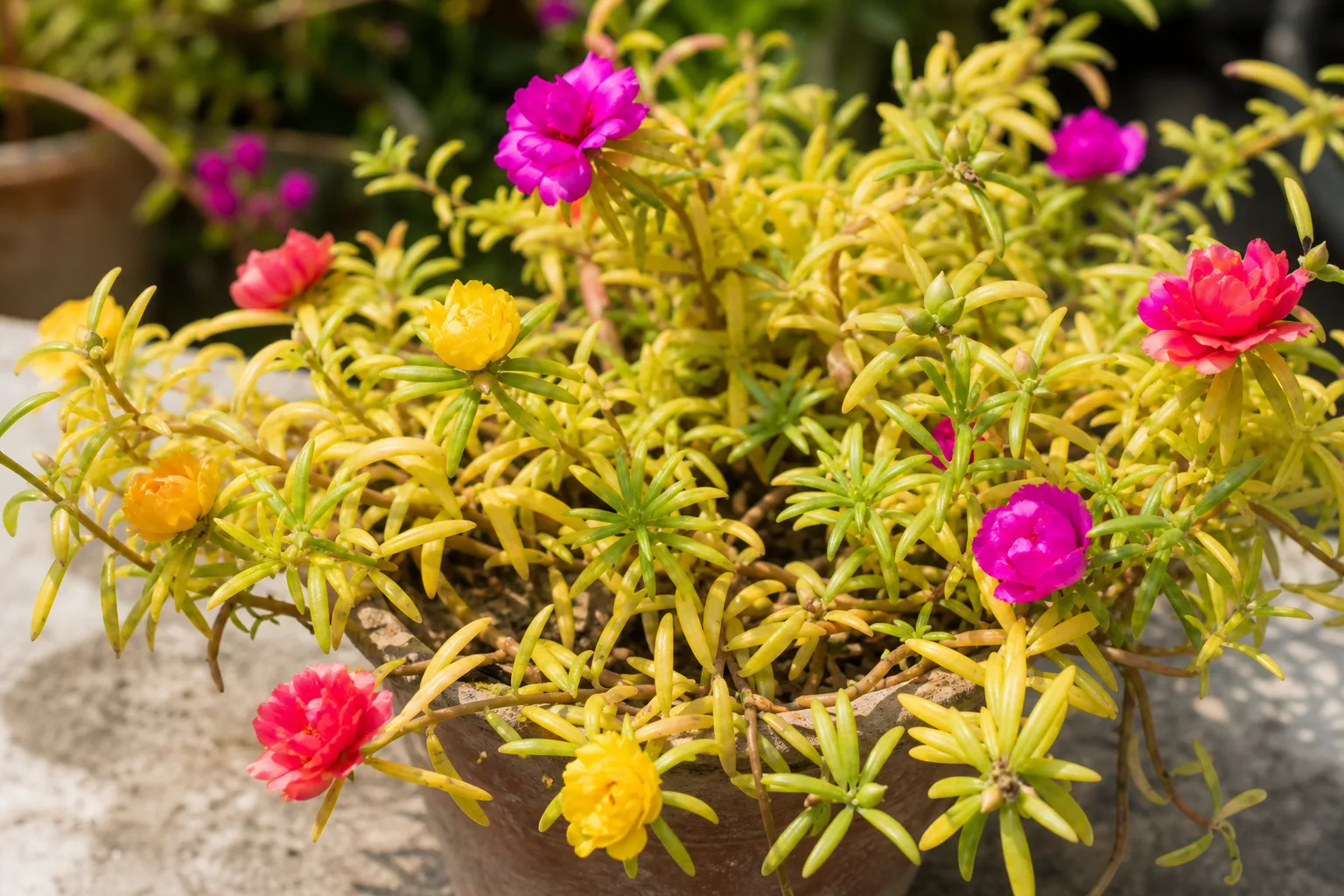
Yellow Leaves on Portulaca: Causes, Checks & Fixes
This guide covers yellow leaves on Portulaca. See also the general Yellow Leaves guide, watering, and light pages for this plant.
Yellow Leaves on Portulaca: Causes, Checks & Fixes
Quick answer
Yellow leaves on Portulaca (Portulaca grandiflora, Moss Rose) are usually tied to overwatering or root rot in slow-draining mix-not nutrient deficiency on lean terrace soil. Picture a trailing hanging basket after three rainy days: lower stems turn chartreuse while the mix stays damp and smells sour. That is the rot path. A few yellow needles on dry, firm outer runners in full sun is often normal aging, not a crisis.
First step: probe soil depth and squeeze the stem base. Wet + soft → root rot until proven otherwise. Dry + firm → aging or brief drought, not a feed event. Cold night + firm stems → temperature shock.
Portulaca stores water in fleshy, succulent leaves. Yellowing on wet soil signals excess moisture or failing roots-not hunger in rich mix. For full Moss Rose culture context, start at the portulaca overview.
Scope of this page: Chartreuse to yellow foliage triage. If stems are mushy and roots are brown, escalate to root rot on Portulaca. If leaves look bleached white rather than chartreuse yellow, open faded leaves. If whole leaves brown and soften-not just yellow-see brown leaves.
Why Portulaca gets yellow leaves
Moss Rose is a hot, dry weather annual with shallow succulent roots. It yellows for reasons that rarely match generic houseplant advice:
Overwatering and crown rot (most common)
Crown rot may occur in poorly-drained soils. In containers, dense peat-heavy mix, saucers that hold runoff, and daily sprinkles keep the root zone saturated. Portulaca stems hold water reserves-gardeners often keep watering when leaves look tired even though roots are already drowning. Lower stems turn translucent chartreuse while mix stays wet; flowers stop opening on sunny days.
Cold shock on terrace baskets
Moss Rose is a warm-season annual. A sudden night below about 10°C (50°F) can yellow tissue overnight while stems remain firm and soil smells neutral. Cool spring weeks on an exposed rail mimic this-uniform yellow on upper and lower foliage without mushiness. This is not rot; do not unpot.
Normal aging on trailing runners
Long prostrate stems naturally shed older needle clusters near the soil line. A few yellow leaves on dry, firm outer sections while tips stay green and flowering is low priority-pinch old runners rather than repotting.
Sun scorch and drought on dry hot sites
On a blazing balcony with bone-dry mix, sun-facing leaves may yellow or bleach before crisping. Proven Winners notes portulaca is shallow rooted-small pots in full sun can stress outer tissue when dry-down outpaces stem reserves. This is environmental, not disease.
Nutrient deficiency (uncommon in containers)
Moss Rose thrives in poor to average, well-drained soil. Pale yellow-green on firm stems in lean outdoor beds after a long season without any feed may suggest nitrogen lack-but yellow on wet soil is almost never solved by fertilizer.
What yellow leaves look like on Portulaca
Rot pattern: Lower leaves or stem sections turn chartreuse to yellow; advanced cases show mushy, water-soaked tissue at the soil line. The plant may wilt despite wet mix. Sour smell when lifting the pot is a strong rot signal.
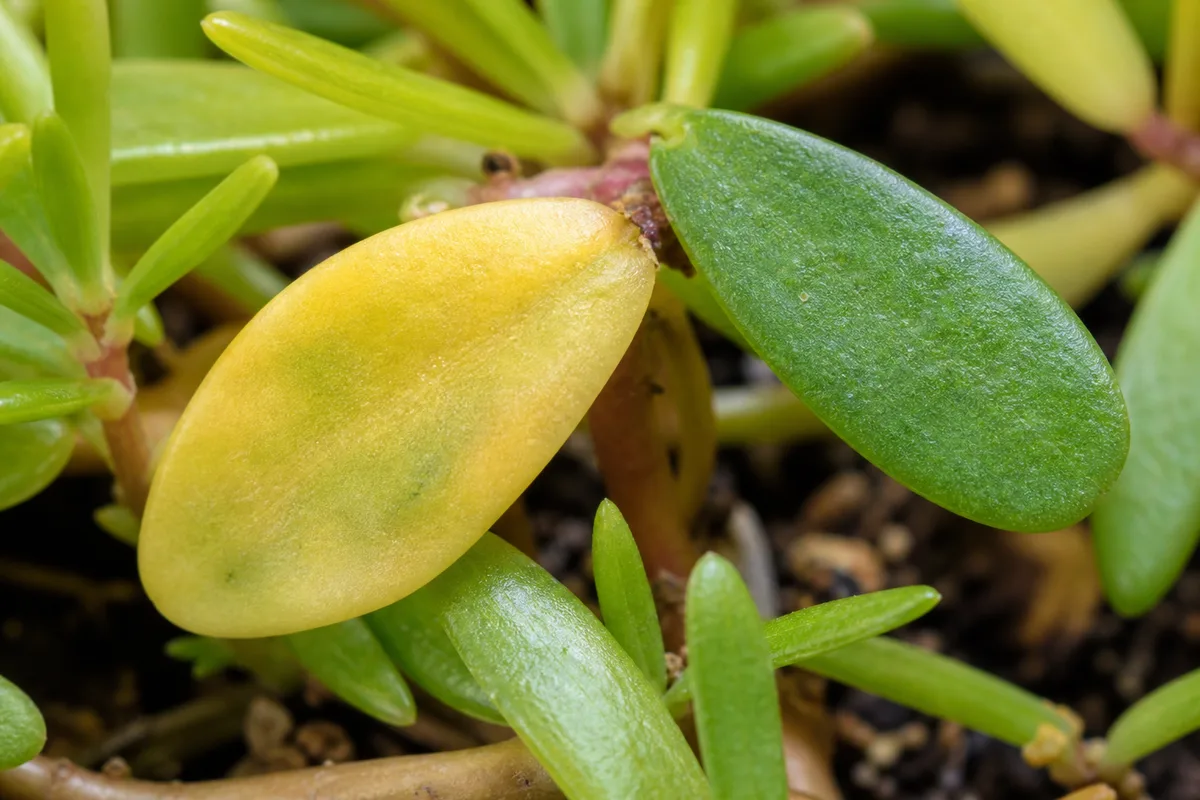
Yellow Leaves symptoms on Portulaca - compare with healthy tissue on the same plant.
Cold pattern: Uniform yellow across many leaves after a cold night; stems stay firm; soil moisture is normal; no sour odor.
Aging pattern: Isolated yellow needles on long trailing sections; crown and tips remain green and firm; soil is dry; flowers still open in sun.
Sun/drought pattern: Yellow or bleached patches on exposed leaf faces; soil is very dry; pot feels light; stems firm but outer trailers may look slightly limp midday.
What to watch: Yellowing that climbs upward from a soft base on wet soil is urgent. Yellow confined to old runners on dry firm stems is cosmetic.
How to confirm the cause
Work through this decision path in order-one branch at a time.
- Soil moisture at depth - Push a finger or dry skewer 2–3 cm deep per the watering guide. Wet cling → rot or overwatering path. Bone-dry → aging, drought, or scorch possible.
- Stem firmness at the base - Squeeze reddish stems at the soil line. Soft on wet mix → root rot. Firm throughout → cold, aging, or dry-site stress.
- Pot smell and weight - Sour odor + heavy pot after days without watering suggests wet lower soil. Very light pot supports drought or aging on outer runners.
- Temperature history - Cold snap below 10°C on an exposed basket with firm stems supports cold shock, not rot.
- Sun and move history - Recent shift from deep shade to blazing terrace sun can yellow exposed tissue; stippling with webbing points to pests instead.
- Spread pattern - Yellow climbing from base on wet soil is rot. Scattered yellow on old trailers only is aging.
Confirmed rot = wet soil + soft base + sour smell or mushy roots when gently unpotting. Confirmed aging = dry firm stems + isolated lower-runner yellow + healthy tips. Confirmed cold = firm stems + uniform yellow after cold night + neutral-smelling soil.
| Pattern | Soil | Stems | Spread | Likely cause | Next page |
|---|---|---|---|---|---|
| Chartreuse base, sour smell | Wet, heavy | Soft at soil line | Climbs from base | Rot | Root rot |
| Early wet soil, no mush yet | Moist, not dry | Still mostly firm | Lower leaves first | Overwatering | Overwatering |
| Few yellow needles on old runners | Dry | Firm crown + tips | Outer trailers only | Aging | Stay here-pinch runners |
| Uniform yellow after cold night | Variable | Firm | Many leaves at once | Cold shock | Warm sun + frost protection |
| Bleached/yellow on sun faces | Bone-dry, light pot | Firm | Exposed leaves | Sun scorch / drought | Faded leaves, heat stress |
| Pale yellow-green all season | Dry, lean bed | Firm | Even, slow | Low nitrogen (rare) | Nitrogen deficiency |
First fix for Portulaca
Pick one primary action based on what you confirmed. Do not stack repot + feed + prune on day one.
If aging only on firm trailing stems
Pinch or trim old yellowed runners back to firm green tissue. Resume dry-down watering in full sun. No repot, no fertilizer-Moss Rose in lean mix does not need a rescue feed for a few yellow old leaves.
If wet soil + soft stems (rot suspected)
Stop watering immediately. Do not pour more water because leaves look limp. Open the full root rot rescue guide for unpot, root trim, sandy repot, and the 5–7 day dry-down wait. If more than one-third of roots are mushy, treat as urgent per that page.
If wet soil but stems still firm (early overwatering)
Hold all irrigation and move the pot to the sunniest spot you have so mix dries faster. Review overwatering on Portulaca for drainage checks, saucer discipline, and monsoon pull-back-before roots turn mushy.
If cold shock on firm stems
Move the basket to warm full sun and protect from frost until nights stay above about 10°C. Do not unpot or trim roots. Yellow tissue may not re-green; watch for firm new tips within one to two weeks.
If bone-dry soil with firm stems (drought / scorch)
Water deeply once if soil is completely dry at depth, then resume the watering guide rhythm. If leaves look bleached rather than chartreuse, also read faded leaves and water stress for dry-site nuance.
Propagation salvage: If crown rot advances but upper stem tips remain firm and green, you can root 5–8 cm cuttings in dry sandy mix after air-drying cut ends 24 hours-see portulaca propagation. Discard mushy base sections; do not compost them near pets.
Recovery vignette (terrace grower log): A 24 cm plastic hanging basket of trailing Moss Rose on a Bengaluru rail turned chartreuse at the base after four overcast monsoon days with daily sprinkles. Soil smelled sour; stem base was soft; crown tips still firm. Watering stopped; plant unpotted; roughly one-quarter of roots were mushy and trimmed. Repotted into dry gritty mix; first drink after six dry days in full sun. Yellowing stopped climbing by day 8; new green tips on inner shoots by day 14. Old yellow needles did not re-green-expected.
Recovery timeline
Early overwatering (firm stems): yellowing often stabilizes within one week once soil dries and sun exposure is strong.
Rot-related yellowing: stabilizes in one to two weeks if enough healthy roots remain after rescue-full detail on the root rot page.
Aging yellow leaves: replaced by new tips over the season; old yellow tissue does not re-green.
Cold-yellowed tissue: may not fully recover until warm weather returns; firm new growth is the success signal.
Worsening signs: yellow climbing daily on wet soil, stems collapsing at the soil line, or no new firm tips after two weeks-escalate to root-rot salvage or propagate from firm tips.
Lookalike symptoms
Bleached white or faded patches on sun-facing leaves are not the same as chartreuse rot yellow. Use faded leaves on Portulaca.
Whole brown soft leaves on wet soil overlap with rot but look different from isolated yellow needles-see brown leaves.
Wilting on wet soil with yellow base is classic water stress from root failure, not underwatering.
Crispy brown tips on dry outer trailers in heat are tip burn, not crown yellowing-open brown tips.
What not to do
Do not fertilize yellow Moss Rose in wet soil-that stresses roots further. Overwatering can result in root rot when yellow leaves tempt you to water more. Do not assume every yellow leaf needs iron or nitrogen; Portulaca prefers lean, well-drained soil. Do not repot into standard garden soil when rot is suspected-follow the root rot guide sandy-mix protocol instead.
How to prevent yellow leaves on Portulaca
Water when completely dry per the portulaca watering guide. Use sandy, rocky, fast-draining mix in full sun. Avoid cool, shaded overwatering in spring-terrace baskets on north-facing rails dry slowly and rot fast.
During monsoon weeks on Indian balconies, pull back hard: overcast skies slow evaporation, and daily rain can replace irrigation. A pot that needed water every four days in May may stay damp ten days in July-constant moisture yellows crowns through rot, not through humidity deficiency.
Protect baskets from cold snaps below 10°C in early spring and late autumn. Wear gloves when pruning yellow foliage-Portulaca contains soluble calcium oxalates toxic to cats and dogs. Call ASPCA Animal Poison Control at (888) 426-4435 or your veterinarian if a pet chews stems or roots during cleanup.
Practical checks
Urgency check
Urgent if yellow stems are soft on wet soil, yellowing climbs from the base daily, or more than one-third of roots are mushy after unpotting-open root rot immediately.
Low urgency if a few yellow needles sit on dry firm trailing runners while tips stay green and flowering.
Best inspection order
Stem base firmness → soil moisture at depth → pot smell → recent cold or rain history → sun exposure → gentle root check only if wet-soil yellowing persists after 3–4 days without watering.
Portulaca care cross-check
- Watering rhythm: Portulaca watering guide
- Confirmed mushy roots: Root rot
- Early wet soil, firm stems: Overwatering
- Bleached / faded look: Faded leaves
- Dry-site stress: Water stress and heat stress
- Whole-leaf decline: Brown leaves
- Hub entry: Portulaca overview
Trailing Moss Rose in hot, dry, sunny sites with bone-dry soil is rarely rot-look for sun scorch, drought, or mechanical damage before you soak a healthy crown.
Related Portulaca guides
This page owns yellow-leaf symptom triage-wet+soft vs dry+firm vs cold+firm. For rescue depth after rot is confirmed, use root rot and overwatering rather than repeating those steps here. Baseline culture lives on the portulaca overview and watering guide.
Related tool
Use the Yellow Leaves Diagnosis Tool to narrow causes for yellow leaves on this plant before changing multiple variables at once.