Nitrogen Deficiency on Prayer Plant: Causes, Checks & Fixes
Quick answer
Nitrogen deficiency is plausible when older Prayer Plant leaves gradually turn broadly pale and growth slows, but its natural yellow-green markings and sensitivity to light and excess fertilizer make color alone unreliable. Check the newest leaves, roots, moisture, light, and feeding history before giving one gentle balanced feed.
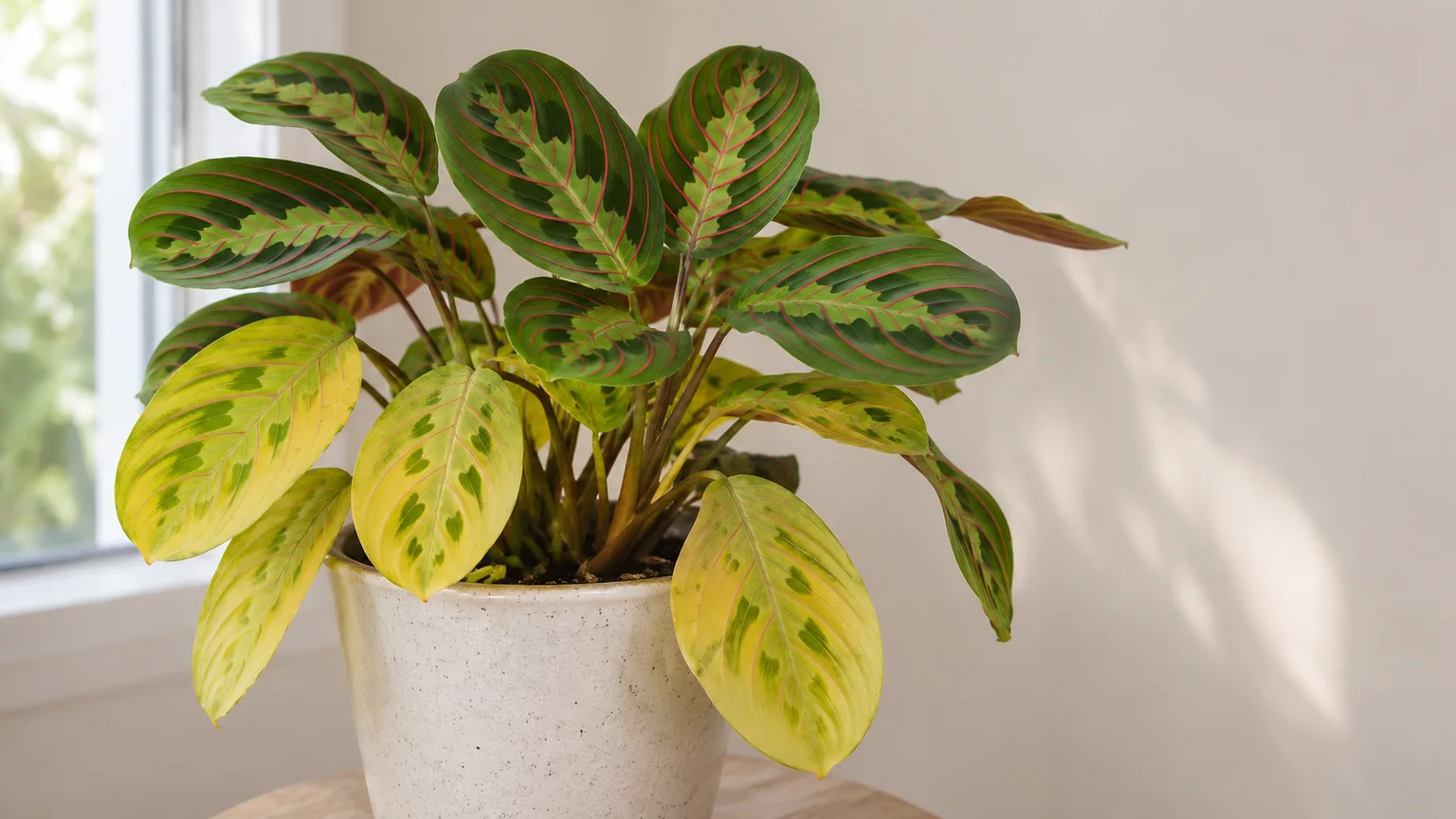
Nitrogen Deficiency on Prayer Plant: Causes, Checks & Fixes
This guide covers nitrogen deficiency on Prayer Plant. See also the general Nitrogen Deficiency guide, watering, and light pages for this plant.
Nitrogen Deficiency on Prayer Plant: Causes, Checks & Fixes
Quick answer
Nitrogen deficiency is plausible when several older Prayer Plant leaves gradually turn broadly pale yellow-green and the plant slows its production of new leaves. But Maranta’s normal leaf pattern already includes pale markings, and low light, root stress, and too much fertilizer can also change leaf color. First check the newest leaf, potting mix, light, and feeding history; if the roots are sound and the plant is actively growing after months without feed, use one gentle balanced fertilizer dose. For the general nutrient pattern, see our nitrogen deficiency guide; use the Prayer Plant overview and Prayer Plant problems hub for the plant’s broader care context.
What nitrogen deficiency looks like on Prayer Plant
Look for a gradual, broad loss of green across several older leaves, often with slower leaf production or smaller new leaves. The pale area should spread beyond Maranta’s usual central markings; a single yellow-green patch is not a reliable diagnosis. Nitrogen deficiency commonly affects older foliage first, but yellow leaves and stunted growth have other causes, so treat the pattern as a clue and verify the plant’s conditions before feeding. RHS nutrient guidance describes that older-leaf-first pattern and notes that light deprivation, drought, waterlogging, and other growing problems can resemble a nutrient shortage.
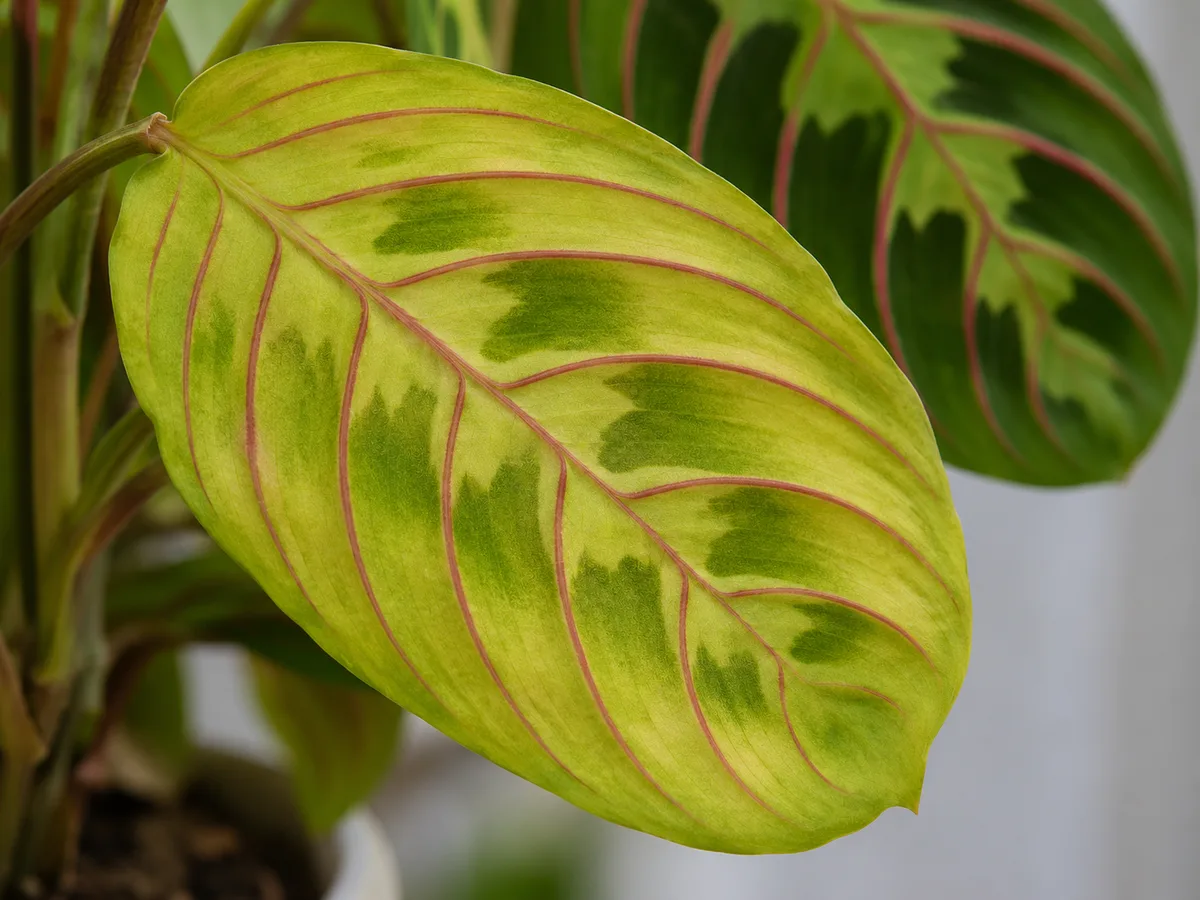
Compare the broadly pale older leaf with the greener, patterned leaves that are still unfolding.
Maranta’s patterned leaves can make pale color easy to misread
Red-veined Prayer Plant normally has dark green leaf markings with a paler yellow-green zone near the midrib. Those markings are part of the plant’s identity, not evidence of a nutrient problem. NC State’s Plant Toolbox also notes that low fertility and low light can both reduce leaf color, while too much sun can bleach the pattern and over-fertilizing can burn leaves; one pale area therefore does not tell you which condition to correct. NC State’s Maranta profile describes these characteristic markings and lookalikes.
The plant’s nightly leaf rise is normal movement, not a nitrogen symptom (RHS plant profile). Check leaves at the same time of day when comparing their position; a folded blade at night does not mean the plant is wilting or short of feed. The comparison that matters is color and size across older leaves and the newest rolled leaf.
Follow the newest rolled leaf and older clump leaves
Before changing fertilizer, compare one older outer leaf with the newest leaf emerging from the center of the Prayer Plant clump. Maranta’s new leaves first emerge as rolled tubes, so compare them after they have begun to open rather than judging the folded shape as a symptom (Gardener’s Path describes the rolled new leaves). A classic nitrogen pattern is more plausible when older leaves fade first while the newest leaf remains greener, and this has happened during active growth after a long period without feeding. If the newest leaf is pale first, or the color fades evenly across the whole plant, look for another cause before adding nitrogen.
Check the root zone and recent care in this order:
- Feel the mix and lift the pot. Record whether it feels wet, evenly moist, or very dry, then review the Prayer Plant watering guide before changing its schedule.
- Check the light history. Maranta does best in bright indirect light; direct sun can bleach its markings, while dim placement can dull color and slow growth. Compare its location with the Prayer Plant light guide.
- Review the last repot and feed. Fresh potting mix may still contain nutrients, while older container mix can run low; the RHS notes that potted plants can show deficiencies as nutrients run down. A long stretch without fertilizer during active growth supports a deficiency more than a recently fed plant does; check the Prayer Plant soil guide if the mix is compacted, stale, or slow to drain.
- Look for a competing pattern. If your notes show repeated or strong feeds, compare the leaf margins with the Prayer Plant salt build-up guide before adding anything else.
Yellowing by itself is not confirmation: nitrogen deficiency is only one possible cause of yellow or stunted growth. If the pattern is unclear, compare it with the yellow leaves guide and the nitrogen deficiency overview, which also advises checking for other causes before adding nitrogen.
First fix for a Prayer Plant: one gentle balanced feed
If the plant is putting out new leaves, its root zone is draining normally, and it has gone several months without fertilizer, give it one measured dose of complete liquid houseplant fertilizer at the low end of the label’s rate. Use a balanced product rather than a concentrated nitrogen-only feed because the leaf pattern cannot confirm which nutrient is low. To avoid damage from excess fertilizer, follow the RHS guidance on using feeds according to product directions; do not repeat the dose early or combine it with fresh compost, a soil drench, or a second product.
If the mix is waterlogged or the plant is wilting, do not feed it first. Correct the root-zone problem and use the Prayer Plant overwatering guide or root rot guide if those symptoms fit.
Recovery: judge the next rolled leaf, not the fading older one
Do not use an already yellow older leaf as the main recovery measure. Keep it while it is still firm and contributing green tissue; trim it only when it is mostly yellow, dry, or damaged. Improvement is more usefully measured by the yellowing stopping and the next rolled Prayer Plant leaf opening at its usual size and pattern.
Allow the plant’s next growth cycle to show the result rather than feeding again after a few days. If newer leaves also lose color, the plant stays stalled, or several older leaves decline together, revisit its light, moisture, roots, and feeding history. The separate Prayer Plant slow growth guide can help when small or infrequent leaves continue after the pale pattern stops spreading.
Lookalikes on Maranta and when to use another guide
| What you see | More useful next check |
|---|---|
| One oldest leaf fades while the rest of the clump stays firm and patterned | Watch the next leaf before treating; an isolated old leaf is weaker evidence than progressive yellowing. |
| Several leaves yellow while the pot stays wet and heavy | Follow the Prayer Plant overwatering guide and check for root damage. |
| The whole plant is dull, stretched, or making smaller leaves in a dim corner | Compare with the not enough light guide before feeding. |
| Visible leaf burn follows a strong or frequent fertilizer feed | NC State notes that over-fertilizing can burn Maranta leaves; pause fertilizer and compare with the salt build-up guide before feeding again. |
| Yellowing does not follow the older-leaf-first pattern | Start with the broader Prayer Plant nutrient lockout guide or the yellow-leaves guide linked above. |
Keep Maranta from cycling back into low fertility
Tie feeding to visible growth rather than the calendar alone. During the brighter, active part of the year, a low-dose balanced feed about once a month is a cautious starting point for a Prayer Plant that is producing new leaves (Gardener’s Path recommends a low monthly feed in the growing season); reduce or pause it when growth slows, in line with RHS guidance to feed during active growth. Keep the dose modest rather than trying to correct pale leaves with a large one.
Keep its established bright indirect light and evenly moist, well-drained mix steady as you feed. Do not fertilize a dry or waterlogged pot, and do not increase nitrogen just because a leaf has a pale center. If the new growth stays patterned and the outer leaves stop fading, leave the feeding routine alone instead of chasing a greener color with extra product.
Related Prayer Plant guides
- Use Prayer Plant yellow leaves when several kinds of yellowing appear and the cause is uncertain.
- Use Prayer Plant nutrient lockout when feeding history is adequate but new growth still looks nutrient-stressed.
- Use Prayer Plant slow growth when leaf production stays small or slow after color stabilizes.
- Use Prayer Plant not enough light when the entire clump looks dull or stretched in a dim location.
Related tool
Use the Fertilizer Dilution Calculator to convert your product’s label rate into one measured dose for this Prayer Plant.