Prayer Plant Nutrient Lockout: Checks Before You Feed
Quick answer
Nutrient lockout cannot be confirmed from yellowing alone on a Prayer Plant. First pause fertilizer, then check the newest leaves, recent feeding, root-zone moisture, drainage, and any crust around the pot before changing the mix or adding nutrients.
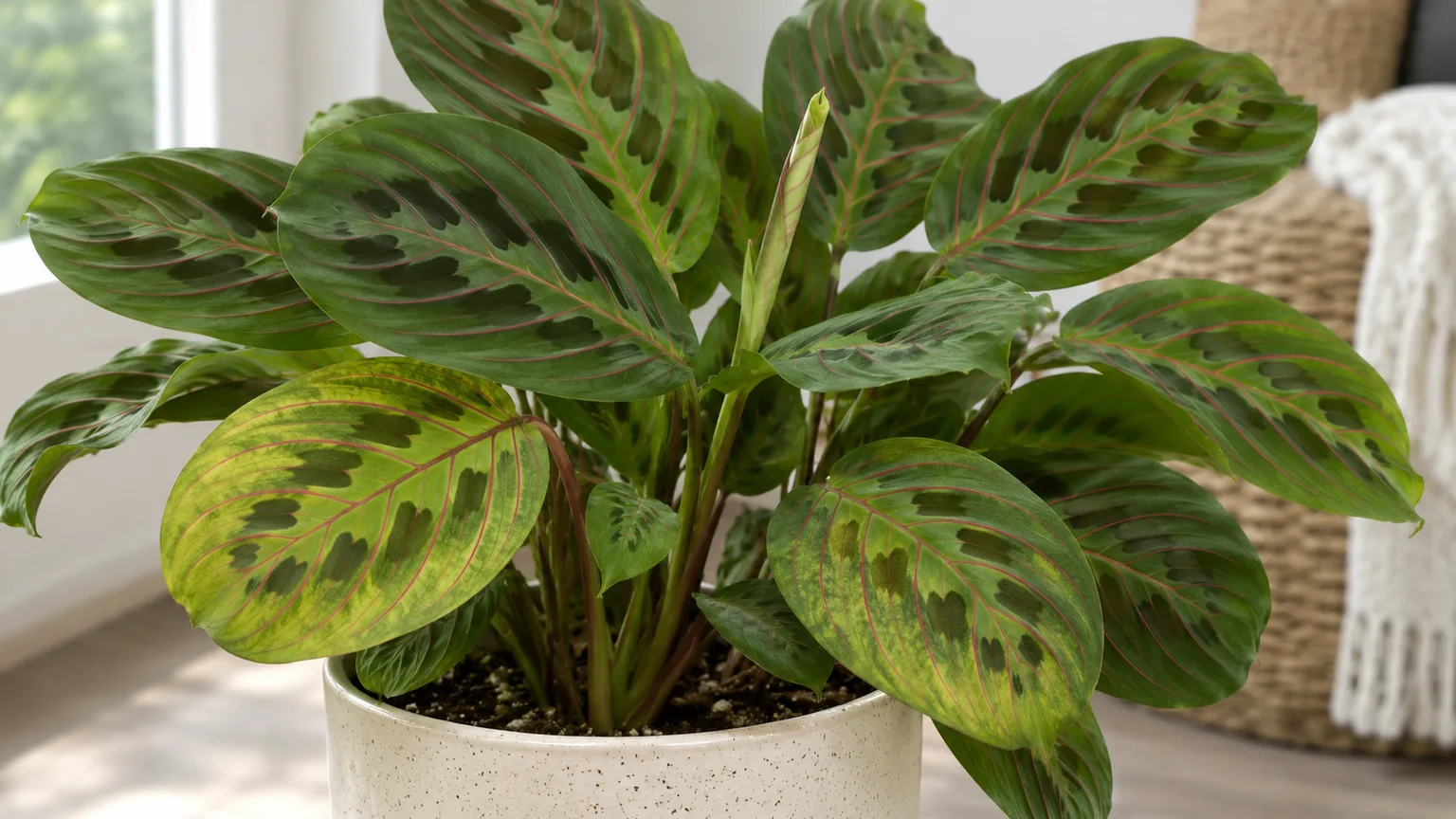
Nutrient Lockout on Prayer Plant: Causes, Checks & Fixes
This guide covers nutrient lockout on Prayer Plant. See also the general Nutrient Lockout guide, watering, and light pages for this plant.
Nutrient Lockout on Prayer Plant: Causes, Checks & Fixes
Quick answer
On a Prayer Plant (Maranta leuconeura), nutrient lockout is a possibility to investigate, not a diagnosis you can make from a yellow leaf. Pale growth can also follow a waterlogged root zone, poor light, mineral residue, or a change in care. First pause fertilizer and check the plant’s recent feeding and root-zone history. For the general mechanisms behind the term, see our nutrient lockout guide; the checks below focus on how to tell whether the problem fits a Prayer Plant.
What nutrient lockout can look like on a Prayer Plant
A possible nutrient problem may show up as new leaves opening unusually pale or yellowing that continues across several leaves. Neither sign identifies a particular nutrient or proves that nutrients are present but unavailable. Gardening Know How notes that Prayer Plant chlorosis can be most noticeable on younger leaves, but its yellow-leaf guide also points to environmental stress as a major lookalike; treat the color as a clue, not a verdict.
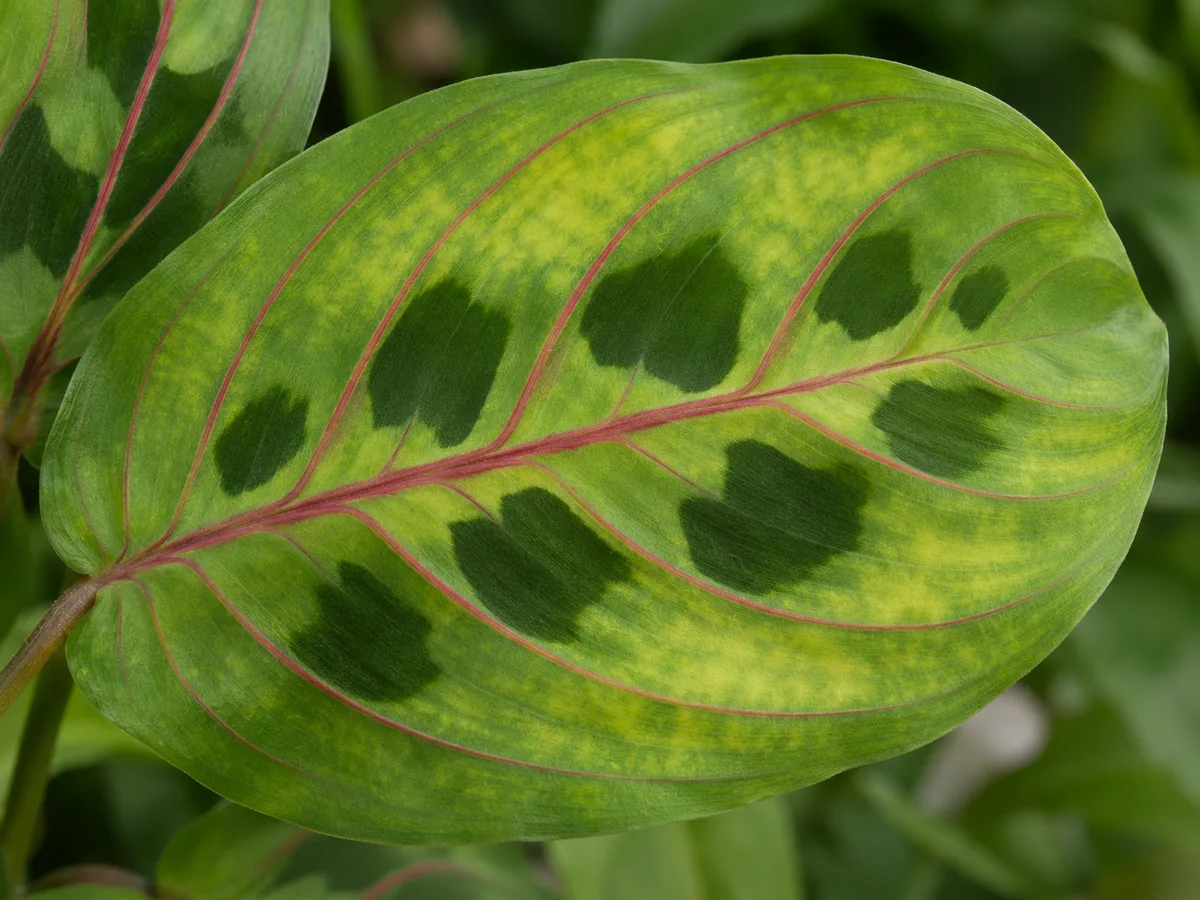
Pale areas on a patterned Maranta leaf are a reason to check the root zone and feeding history; the leaf alone cannot confirm nutrient lockout.
Read Maranta’s patterned leaves before diagnosing chlorosis
Prayer Plant leaves naturally combine green backgrounds, darker paired blotches, and colored veins. Compare a questionable leaf with another leaf on the same plant or cultivar before deciding that its patterned areas are new yellowing. A change that crosses the normal pattern, appears on successive leaves, and persists in daylight deserves investigation; one older leaf fading while the rest of the plant is stable is weaker evidence of a nutrient problem. The species’ distinctive oval leaves and markings are described in Gardening Know How’s Maranta guide.
Distinguish normal Prayer Plant movement from stress
Maranta leaves lift and fold upward around nightfall, then relax again with the day. That regular movement is not a sign that nutrients are locked out, so compare the leaves at the same time of day before interpreting a change in angle; Prayer Plant’s nightly leaf movement is a normal feature of its care. Leaves that stay limp or folded through the day call for a moisture and root check, not an automatic dose of fertilizer.
How to confirm a root-zone problem
Start with the plant’s history. Note the fertilizer product, strength, and last application; whether the pot has been watered with hard tap water; and whether the plant is actively producing new leaves. Houseplants grow in a limited volume of mix, so salt levels can build up there over time, and winter growth often slows; UW-Madison Extension’s houseplant guidance cautions against unnecessary feeding when growth has slowed. The university’s houseplant care guide recommends feeding during active growth and warns that too much fertilizer can burn leaves.
Next, check the pot without disturbing the roots. Feel the top inch of mix, lift the pot to judge whether it remains unusually heavy, and make sure water can leave through the drainage holes. Prayer Plants prefer evenly moist, not soggy, mix; when soil stays wet and roots cannot function well, yellowing can look like a nutrient shortage, as UW-Madison Extension explains. For that reason, compare the signs with the plant’s watering guide and overwatering guide before changing fertilizer.
Look for pale or crusty deposits at the soil surface or along the inside of the pot. On a Prayer Plant, deposits can come from fertilizer or hard-water minerals, and they point more toward accumulated salts than a simple shortage; Ohio Tropics describes crusty residue from fertilizer or hard-water salts and how to flush excess salts from a pot. If the Prayer Plant wilts while its mix is wet, or yellowing follows a long period of wet soil, inspect the roots for soft brown tissue or a bad odor; UW-Madison Extension notes root rot can mimic deficiency. Follow the root rot guide rather than flushing an already saturated pot. If the mix is dense or has stopped draining, use the Prayer Plant soil guide and wrong soil mix guide to decide whether a repot is justified.
Soil pH can affect nutrient availability, but that general principle does not establish that a Prayer Plant’s potting mix is out of range. Penn State Extension’s soil pH guidance explains the relationship between pH and nutrient availability in soil; do not add acidifiers, lime, or extra nutrients based on leaf color alone. If the plant has firm roots, a freely draining mix, and a repeated pale-new-growth pattern after recent care is ruled out, ask a local extension service whether it can test the container medium.
Also check light and inspect leaf undersides for pests before diagnosing a shortage. Too little light can leave houseplant growth faded or stunted; UW-Madison Extension’s overview of indoor conditions explains why light and root-zone conditions both affect houseplant health. Compare the plant with its light guide, not-enough-light guide, and yellow-leaves guide before treating a broad color change as nutrient lockout.
First fix: pause fertilizer and trace the cause
The first step is to stop adding fertilizer while you sort out the pattern. This short pause avoids adding more salts to a small pot and gives you time to decide whether the mix is wet, crusted, compacted, or simply supporting slow growth. Continue the Prayer Plant’s normal moisture routine; do not let it dry hard as a way to “reset” the soil.
If there is visible crust, the pot drains freely, and the mix is not still wet, wait until the plant is due for water and flush the mix with plain water until it runs through the drainage holes. Empty the runoff. Ohio Tropics gives practical guidance for flushing fertilizer salts from a draining pot. Skip this step if water cannot drain or the root zone is already saturated; in that case, address drainage or root damage first.
If there is no crust and the roots are firm, look at the pattern of new growth and recent feeding before resuming a complete houseplant fertilizer. Feed only while the Maranta is actively growing, use the product label, and begin conservatively rather than trying to compensate with a strong dose. UW-Madison Extension recommends fertilizing during active growth, and Savvy Gardening’s houseplant fertilizer guide likewise ties feeding to the growth cycle. If new growth is pale but the root zone and light are sound, compare the pattern with the Prayer Plant’s nitrogen-deficiency guide before selecting a targeted correction.
Recovery: watch the next Prayer Plant leaves
Use new leaves and whether pale areas keep spreading as the main recovery checks. Some leaves already marked may stay discolored, so a new leaf with the usual pattern and no fresh yellowing is a better sign that the correction is working. A Prayer Plant’s next leaf may take time; do not repeat feeding just because you are waiting for new growth.
If several leaves continue to yellow, the pot stays wet, or stems soften, reassess the root zone rather than increasing fertilizer. A plant with widespread root damage may not recover fully; UW-Madison’s root-rot guidance notes that severe cases can kill a plant. For a plant with mainly faded leaves and no salt or root signs, use the not-enough-light guide to rule out a placement issue.
Prevent nutrient problems in a Prayer Plant
Keep the Maranta in a moisture-retentive but airy mix and water when the upper layer begins to dry, rather than following a fixed calendar. Water quality also matters: Marantas can be sensitive to hard tap water, so if deposits keep returning, consider a filtered or lower-mineral source and watch whether new foliage stays clean; The Sill’s Maranta care guide discusses that sensitivity. The Prayer Plant watering guide and fertilizer guide cover the plant’s regular care routine.
Feed only when the plant is actively making new leaves. Record what product you use and how much you dilute it, and avoid adding a second fertilizer product to correct a problem that has not been identified. Stable indirect light, good drainage, and measured feeding make it easier to tell a true nutrient issue from ordinary Maranta stress; see the Prayer Plant overview for the full care profile.
When to use this page vs other Prayer Plant guides
Use this guide when pale growth appears alongside a fertilizer, mineral, or root-zone question and you need to decide whether nutrients are actually the issue. If a crust is the clearest sign, start with salt buildup on Prayer Plant; if older leaves yellow while the mix stays wet, compare overwatering and the root rot guide. For a specific deficiency pattern, use the nitrogen-deficiency guide only after the plant’s light, moisture, and roots check out.
Use the Prayer Plant problems hub to choose a different diagnosis when the symptom is not mainly pale new growth.
Related tool
Use the Plant Problem Diagnosis Tool to organize checks for yellowing, feeding history, light, and root-zone moisture before changing more than one part of the Prayer Plant’s care.
Related Prayer Plant guides
- Salt buildup — use when there is a crust, repeated strong feeding, or mineral deposits.
- Nitrogen deficiency — use when a genuine deficiency pattern remains after root and light checks.
- Yellow leaves — use when the main question is why foliage is yellow, regardless of cause.
- Overwatering — use when the pot remains wet and the plant declines after watering.
- Wrong soil mix — use when the mix is dense, compacted, or no longer draining well.