Brown Tips on Raindrop Peperomia: Causes, Checks & Fixes
Quick answer
Brown tips on Raindrop Peperomia are usually environmental-tap water fluoride, dry winter air, or alternating drought and heavy soaking. First step: water with room-temperature filtered or rainwater only after the mix has dried completely.
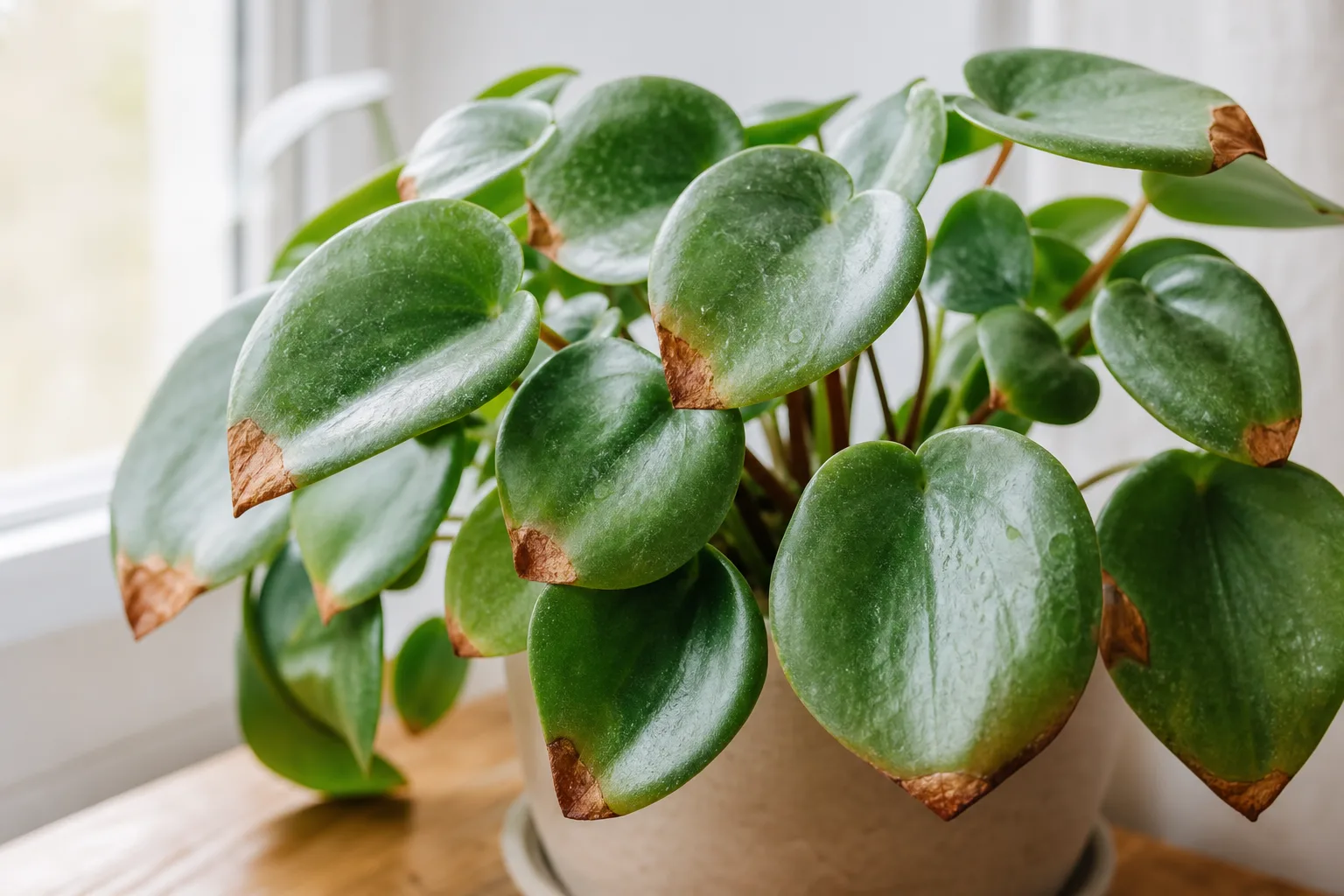
Brown Tips on Raindrop Peperomia: Causes, Checks & Fixes
This guide covers brown tips on Raindrop Peperomia. See also the general Brown Tips guide, watering, and light pages for this plant.
Brown Tips on Raindrop Peperomia: Causes, Checks & Fixes
Quick answer
Raindrop Peperomia (Peperomia polybotrya) carries thick, glossy teardrop leaves on stiff upright petioles-the pointed tip is the farthest point from the roots, so it dries first when water delivery or air moisture fails. That upright habit makes tip burn more visible than on trailing peperomias, where damaged edges hide among overlapping foliage.
First step: water with room-temperature filtered or rainwater only after the mix has dried completely. Peperomias are sensitive to fluoride in tap water, which concentrates at leaf margins over repeated waterings. Letting tap water sit overnight removes chlorine but does not remove fluoride-filtered or rainwater is the reliable fix. Full dry-down rhythm lives on the watering guide; fix water quality and timing before trimming, repotting, or fertilizing.
Wet soil but crispy tips? Damaged roots from overwatering cannot move water upward even when the mix feels damp-tips desiccate while the base stays wet. That paradox is common on this small-rooted species in oversized pots or cachepots that trap runoff.
Tip only or whole leaf?
This page owns margin-only tip necrosis on firm teardrop leaves. If browning spreads across the whole leaf, starts at the petiole base, or pairs with limp stalks and heavy wet soil, use the brown leaves guide instead-that pattern usually means rot, scorch, or systemic stress, not isolated tip burn.
| Pattern | Tip / margin | Rest of leaf | Stem & soil |
|---|---|---|---|
| This page - tip burn | Dry tan-to-brown crispy point only | Green and firm | Firm stems; mix dry to normal |
| Whole-leaf browning | May include tips but not tip-only | Large dead areas or full leaf | Varies - see brown leaves |
| Root rot masquerade | Crispy tips on firm-looking leaves | May stay green initially | Soft petiole base; wet sour mix - root rot |
| Winter dryness cluster | Matching crispy tips on several leaves | Firm throughout | Normal moisture - low humidity |
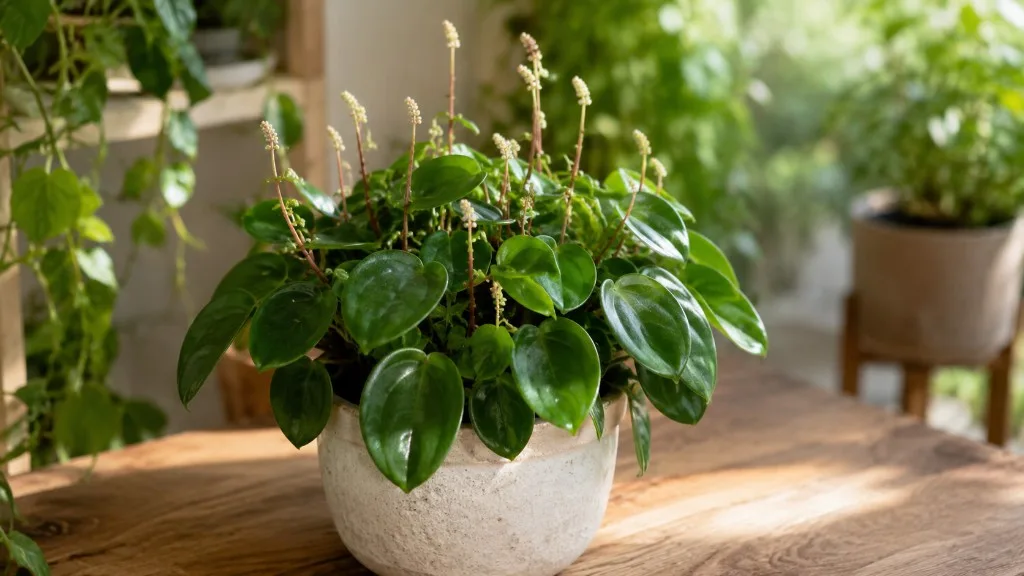
What brown tips look like on Raindrop Peperomia
Healthy Raindrop Peperomia leaves are firm, emerald green, and teardrop-shaped with a glossy surface. Each peltate leaf-petiole attached near the center, creating a slight dimple-sits on its own stiff stalk, and the plant stays compact at roughly a foot tall indoors. Tip burn shows up differently depending on cause:
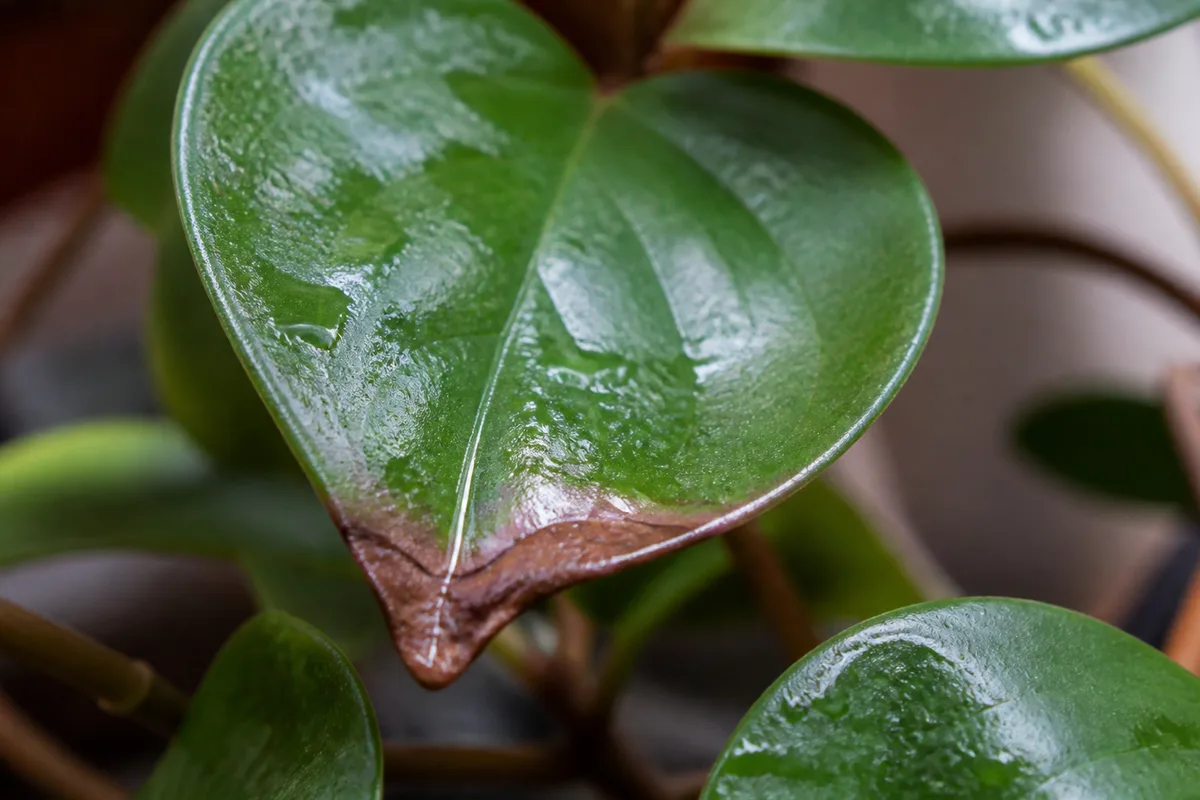
Brown Tips symptoms on Raindrop Peperomia - compare with healthy tissue on the same plant.
Typical environmental tip burn:
- Dry, tan-to-brown, crispy tissue at the pointed tip only
- Rest of the leaf stays green and firm when you flex it
- Damage may creep slightly down one margin but rarely engulfs the whole leaf at once
- Older leaves often show tips first; newer leaves stay clean until stress continues
Underwatering pattern:
- Tips turn light brown and papery; leaf may feel slightly thinner than neighbors
- Pot feels very light; mix is dry through the top half
- Stems stay upright and firm-not limp. Cross-check underwatering if the whole pot is bone dry.
Low humidity or heating-season dryness:
- Multiple leaves develop matching crispy tips at once
- Often appears in winter when indoor air is driest
- No white crust on soil surface (that points to salts instead). See low humidity when a heating vent or radiator sits nearby.
What tip burn is not:
- Soft brown patches at the petiole base with wet soil-likely root rot from overwatering
- Wet, dark lesions with yellow halos-fungal leaf spot; avoid wetting foliage when watering
- Pale or tan patches on the upper leaf face after a window move-sun scorch, not classic tip necrosis
- Corky raised bumps on the leaf underside-edema from overwatering plus cool nights, not dry tip necrosis
Damaged tip tissue will not turn green again. Recovery means new leaves open with clean edges.
Why Raindrop Peperomia gets brown tips
Raindrop Peperomia evolved in humid tropical forests but adapts to average home conditions. That tolerance makes tip burn easy to misread-you assume the plant is fine until edges crisp. Several factors stack on this species specifically:
Tap water fluoride and minerals. The RHS notes that peperomias are sensitive to fluoride in tap water, which concentrates at leaf margins and kills tip cells over repeated waterings. MSU Extension describes fluoride toxicity as necrotic regions at tips and along margins-damage is irreversible once tissue dies. Raindrop Peperomia’s thick leaves still show this pattern because minerals accumulate at the slowest-moving part of the leaf.
Inconsistent watering. This plant wants soil to dry between waterings-for Raindrop Peperomia, that often means fully dry through the top half before the next drink per the watering guide. Long drought followed by a heavy soak stresses feeder roots; damaged roots deliver water unevenly, and tips desiccate first.
Low humidity in heated rooms. NC State notes the plant thrives in high humidity but tolerates average household levels. Prolonged dry air-especially near radiators, AC vents, or during winter heating-raises transpiration faster than roots replace moisture at the leaf tip.
Salt buildup from fertilizer. Peperomias are light feeders. Excess fertilizer or minerals from hard water leave soluble salts in the mix that pull water away from roots and scorch margins. White crust on the pot rim or soil surface is a clue.
Direct sun scorch. Direct sun can scorch peperomia leaves. Raindrop Peperomia prefers bright, indirect sunlight. A sudden move to a south-facing sill can burn exposed tissue-sometimes at tips and sometimes as pale patches.
Root stress from overwatering. Ironically, soggy soil also causes tip browning. When roots rot, they cannot move water upward; leaf tips dry while the base may stay wet. Raindrop Peperomia’s compact habit and fleshy, water-storing leaves make it slow to use excess moisture in an oversized, slow-drying pot-or in a decorative cachepot that holds standing water at the drainage hole.
How to confirm the cause
Work through these checks in order:
- Tip texture and location - Dry crispy tips on firm leaves suggest water quality, humidity, or watering rhythm. Soft brown at the petiole base suggests rot.
- Water source - Have you used straight tap water for months? Recent switch to filtered water sometimes stops new damage within a few weeks. Remember: overnight sitting removes chlorine, not fluoride.
- Soil dryness - Stick a finger or skewer into the top half of the mix. Fully dry and light pot with crispy tips fits underwatering or low humidity. Wet deep mix with brown tips fits root stress-see overwatering.
- Season and placement - Did tips appear after turning on heat or moving the plant closer to a window? Winter dryness and summer sun scorch are common triggers.
- Salt check - Look for white crust on soil or pot edges. Sniff the mix-sour smell means rot, not salt.
- New growth - If the newest teardrop leaves emerge with clean tips while older ones stay brown, you may have already fixed the trigger. All new leaves browning means stress is ongoing.
| Symptom | Tip burn | Root rot | Sun scorch | Leaf spot |
|---|---|---|---|---|
| Tip / margin | Dry crispy point | May include tips | Upper-face patches | Wet dark lesions, yellow halos |
| Leaf body | Firm and green | May stay firm early | Bleached or tan facing window | Spreading dead patches |
| Stem base | Firm | Soft on wet mix | Firm | Firm |
| Soil | Dry to normal; no sour smell | Wet, sour | Normal moisture | Normal; avoid wet leaves |
| First fix | Filtered water + dry-down | Stop water; inspect roots | Move off direct sun | Dry foliage; isolate if spreading |
If tips are dry, stems are firm, and soil smells normal, you are likely dealing with cosmetic environmental burn-not an emergency disease.
First fix for Raindrop Peperomia
Switch to room-temperature filtered or rainwater, and water only after the mix has dried completely.
Pour slowly until a little runs from drainage holes, then empty the saucer. Do not water on a calendar. Do not increase frequency to “help” brown tips-that worsens rot risk in a plant with small roots. Follow the watering guide dry-down checks rather than a weekly schedule.
This single change addresses the two most common drivers on peperomias: fluoride/mineral tap water and uneven moisture. Hold off on repotting, fertilizer, and heavy pruning until you see whether new leaves emerge clean over the next four to six weeks.
Step-by-step recovery
After stabilizing water quality and dry-down timing:
- Raise local humidity modestly if tips appeared in winter. Aim for average household humidity around 40–50% or slightly higher-a pebble tray or small humidifier near the plant beats occasional misting, which dries in minutes. Persistent winter crisping may need the low humidity checklist.
- Move off harsh direct sun if a recent window change preceded burning. Bright filtered light or an east window suits this species better than midday sun through glass.
- Flush salts if white crust is visible. Run clean filtered water through the pot at two to three times the pot volume, let it drain fully, and resume the dry-between-waterings rhythm. Skip fertilizer for four to six weeks afterward.
- Trim dead tips cosmetically once you know the cause is controlled. Cut along the natural leaf curve, leaving a thin brown margin so you do not wound green tissue. Raindrop Peperomia is listed as non-toxic to cats and dogs by the ASPCA-still wash hands after handling trimmed debris near pets.
- Inspect roots only if soil stays wet for days, stems soften, or leaves yellow while tips brown. Unpot, remove mushy roots, and repot into a slightly smaller well-draining mix-not a big upgrade pot. Advanced rescue lives on root rot.
- Hold fertilizer until new growth looks healthy. Feeding a stressed peperomia adds salt stress without fixing the underlying issue.
Change one variable at a time. Raindrop Peperomia reacts poorly when water, pot, light, and food all shift in the same week.
Recovery timeline
Filtered water and stable dry-down often show results on new leaves within two to four weeks during active growth. Winter recovery may take longer when the plant is nearly static.
Old browned tips stay brown permanently-judge success by the newest teardrop leaves, not damaged older ones. If three consecutive new leaves open with clean tips, the fix is working. If every new leaf browns immediately, recheck water source, humidity, and whether the pot stays wet too long.
Lookalike symptoms to rule out
Brown leaves from overwatering often include yellowing and soft stems, not isolated dry tips alone. Wet mix for days plus sour smell confirms rot over tip burn-see overwatering and root rot.
Fungal leaf spots show as dark wet patches, sometimes with yellow halos-not uniform crispy tips. NC State recommends avoiding wet leaves to reduce leaf spot risk.
Sun scorch creates bleached or tan patches on the upper leaf surface facing the window, not always limited to the point.
Pest damage on peperomias more often shows stippling, webbing, or deformed new growth-not clean tip necrosis alone. Check leaf undersides if you suspect insects.
Edema produces corky raised spots on leaf undersides from uneven watering plus cool nights-not dry crispy tips alone. Route to edema if bumps appear.
Normal old-leaf aging sometimes yellows or dulls the lowest leaves while tips stay intact on upper foliage. Remove spent lower leaves once the plant is stable.
Mistakes to avoid
Do not increase watering to fix brown tips-soggy roots make margin damage worse on this slow-drinking species.
Do not trim deep into green tissue when cosmetically cutting tips; you create fresh wounds that brown again.
Do not repot into a much larger container on day one. Extra wet soil around small roots is a common hidden cause of ongoing stress-remove cachepots that trap saucer water.
Do not rely on misting alone for humidity; it is temporary and can promote leaf spot if foliage stays wet.
Do not apply full-strength fertilizer hoping to “green up” tips-salt burn can add new margin damage.
Do not assume overnight tap-water sitting fixes fluoride-it addresses chlorine only.
Raindrop Peperomia care cross-check
Tip burn often means the baseline routine is slightly off. Confirm these match how this plant actually grows:
- Light: Bright, indirect sunlight-not direct midday sun through glass.
- Water: Fully dry between waterings per the watering guide; never let the pot stand in runoff.
- Pot size: Compact root system in a breathable pot that dries at a predictable pace-not an oversized decorative cache pot.
- Temperature: Roughly 65–75°F indoors; cold drafts and hot vents both stress leaf edges.
- Feeding: Light, occasional fertilizer during active growth only-not a weekly heavy dose.
Raindrop Peperomia is generally considered safe for pets-filter and flush water as you would for any houseplant near cats or dogs.
How to prevent brown tips next time
Use filtered or rainwater at room temperature as your default-especially if your tap water is hard or heavily treated.
Learn your pot’s dry-down speed in your room rather than following a generic weekly schedule. Lift the pot; light weight plus dry top half means it is time to water.
Keep the plant away from heating vents and cold drafty windows in winter. A small humidifier during the driest months prevents repeat tip burn.
Flush the pot a few times during the growing season if you fertilize regularly, or use half-strength feed at extended intervals as the RHS suggests for peperomias.
Wipe glossy leaves monthly with a damp cloth to keep pores clear-dusty foliage in dry air loses moisture slightly faster at the margins.
When to worry
Brown tips alone are rarely urgent. Escalate when:
- Tips brown on every new leaf despite filtered water and corrected watering
- Stems go soft at the base while soil stays wet for days
- Yellowing spreads up the plant with limp petioles and sour-smelling mix
- Brown tips appear with black mushy roots on inspection
Those patterns suggest advancing root rot or systemic failure-not cosmetic tip necrosis. Follow root rot rescue when the stem base softens. A plant with firm stems, dry crispy tips on older leaves only, and clean new growth is on the mend.
Related Raindrop Peperomia guides
- Watering guide - fluoride, dry-down rhythm, and pot-weight checks
- Brown leaves - whole-leaf or spreading necrosis, not tip-only burn
- Low humidity - winter heating cluster crisping
- Underwatering - papery tips on a very light pot
- Overwatering - wet mix with failing roots and ironic tip dryness
- Root rot - soft petiole base and sour soil escalation
- Edema - corky bumps vs. dry tip necrosis
Conclusion
Brown tips on Raindrop Peperomia look alarming on glossy teardrop foliage, but the fix is usually boring: better water, stable dry-down, and enough humidity. Confirm the pattern is dry tips on firm leaves-not wet rot at the base-then switch to filtered water and wait for clean new growth before you repot or feed. When browning spreads beyond the pointed tip, use the brown leaves guide; when wet soil and soft stems join the picture, route to root rot. Patience matters-the damaged tips will not heal, but the plant can look pristine again leaf by leaf.