No Flowers on Rosemary: Causes, Checks & Fixes
Quick answer
Rosemary may be healthy without flowers if it is between local bloom windows, young, recently pruned, or a naturally sparse-flowering cultivar. First compare the plant's age, pruning history, and local season; if its bloom window is active and it grows in shade, move the pot gradually to a sunny outdoor position.
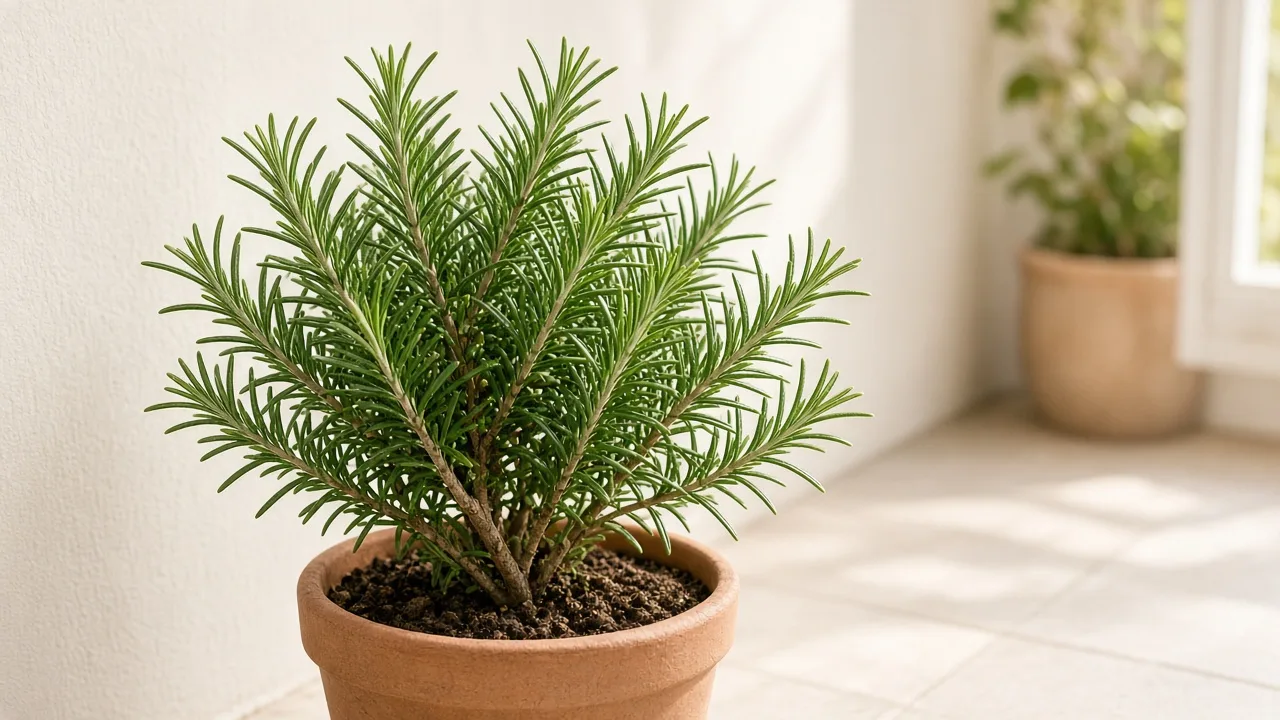
No Flowers on Rosemary: Causes, Checks & Fixes
This guide covers no flowers on Rosemary. See also the general No Flowers guide, watering, and light pages for this plant.
No Flowers on Rosemary: Causes, Checks & Fixes
Quick answer
Rosemary (Salvia rosmarinus, formerly Rosmarinus officinalis) is an evergreen Mediterranean shrub, not a houseplant that flowers continuously. A plant can look leafy and healthy while it is outside its local bloom window. Season, cultivar, how long the shrub has been established, direct sun, recent pruning, and climate all affect whether you see flowers in a given year. For the general pattern behind this symptom, see the no-flowers guide; this page focuses on what those factors mean for rosemary.
First, check the calendar and pruning history before feeding or repotting. If the plant is within its normal flowering window, is established, and has not just been clipped, but its container sits in shade, the first care correction is to move it gradually to a full-sun outdoor position when local weather allows. Rosemary’s full-sun requirement is part of its normal shrub culture, not a special bloom treatment. Start with the Rosemary overview if you need the plant’s broader care baseline.
What no flowers looks like on rosemary
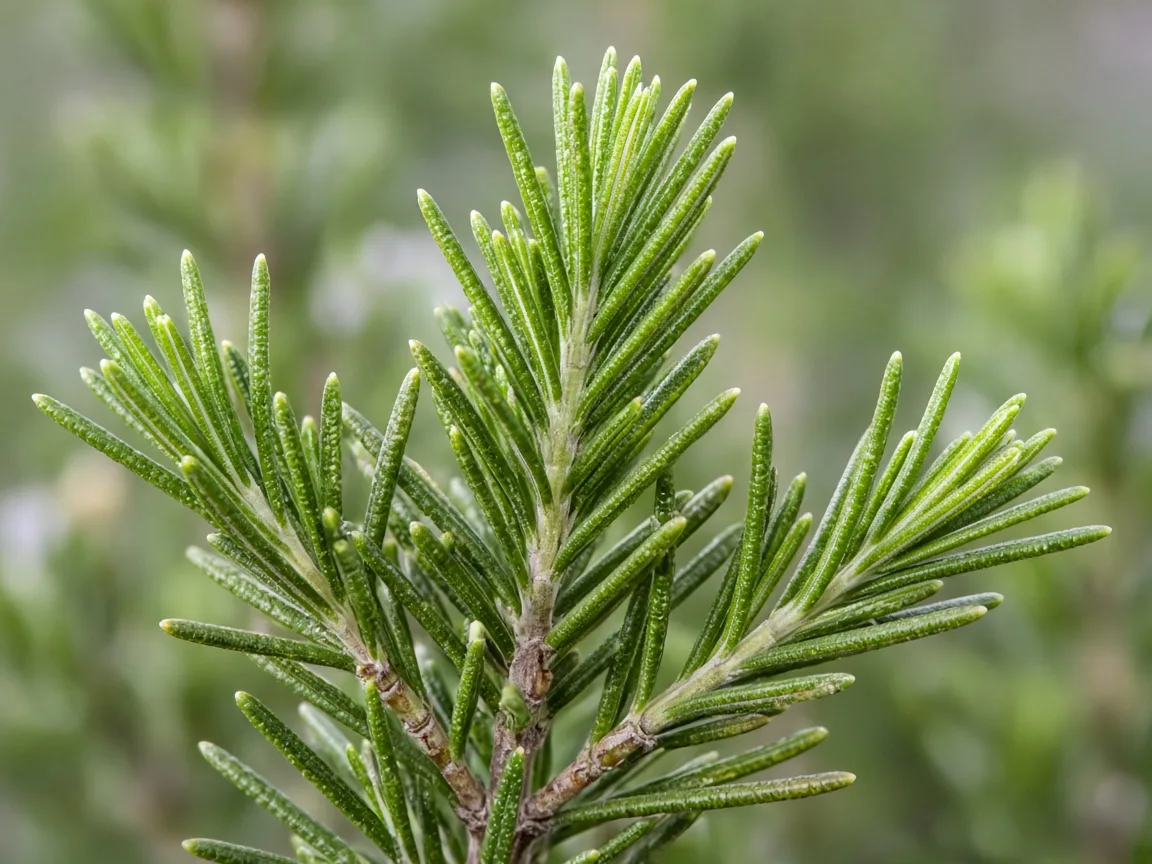
Rosemary flowers are small and easy to miss among its narrow, aromatic leaves. Look around the leaf joints on several branches for short clusters of tiny tubular flowers. Depending on the variety, blooms can be blue, lavender, pink, or white; healthy green tips without flowers are not, by themselves, a disease symptom. NC State describes rosemary flowering in spring into summer in North Carolina, while Penn State lists January through April for winter-hardy plants in its region. Those different windows are a reminder to compare with your own climate, rather than treating one calendar month as universal. (NC State Extension; Penn State Extension)
The absence is more meaningful when the shrub has already passed its usual flowering period without any clusters and the same pattern repeats in following seasons. A single bloom-free spell on a recently planted, moved, or heavily harvested plant is weaker evidence of a care problem than persistent non-flowering on a mature shrub that otherwise grows well.
Start with rosemary’s local flowering window
Rosemary does not follow one worldwide schedule. NC State places flowering in spring and summer for North Carolina. Penn State describes winter-hardy rosemary blooming from January to April in its setting, and potted plants overwintered indoors blooming from spring into summer. Treat these as regional examples: your local temperatures, daylight pattern, and the conditions in which the plant spends winter shift the timing.
Before changing care, write down when the plant last flowered, whether it spent winter outside or indoors, and when new growth started. If you are checking during the quiet part of its annual cycle, wait for the next local window while maintaining normal care. A calendar mismatch is especially likely when the leaves are healthy, the stems are firm, and new growth continues. If the plant is not flowering during the expected period, compare its actual exposure with the Rosemary light guide before assuming that it needs more food.
How age and cultivar change the expectation
A tiny nursery plant or a recently rooted cutting has a different history from a settled landscape shrub. The Royal Horticultural Society describes established rosemary as having been in place for two or three years, with roots developed enough to support strong growth and flowers. That is a useful context, not a strict age threshold: a younger plant may flower, and an older one can skip a season. A recent move, root disturbance, or a season spent rebuilding foliage can also make bloom an unreliable short-term measure of health. (RHS rosemary growing guide)
The cultivar label matters too. Rosemary selections differ in habit and flower color, and NC State lists ‘Marjorca Pink’ as a sparse-blooming variety. Penn State also describes upright and prostrate forms and several named cultivars. A plant with fewer flowers than a neighboring rosemary may be expressing its variety, rather than failing to respond to care. If the name is unknown, do not infer the cultivar from flower color alone; keep a note of the plant’s source and flowering pattern over more than one season.
Check sun at the rosemary canopy
Rosemary is grown in full sun. Count direct sunlight at the actual foliage, not how bright the patio or room feels. A wall, balcony roof, tree canopy, winter window angle, or neighboring building can shade the plant for most of the day. The Spruce describes full sun as at least six hours of direct light for rosemary. If the plant receives only a short morning beam or filtered light, low exposure is a plausible contributor to reduced flowering. (The Spruce rosemary care guide)
If a potted rosemary has been indoors, assess the windowsill across the season. A bright room is not necessarily a sunny one: winter days are shorter, and glass, overhangs, and distance from the window reduce the light that reaches the leaves. Indoor rosemary can survive with attentive placement, but The Spruce notes that adequate direct sunlight is difficult to provide inside, especially in short winter days. Do not treat a grow light as a guaranteed flowering switch; it can address a light shortage, while bloom still depends on the plant’s season, cultivar, and condition. (The Spruce indoor rosemary guide)
Review pruning and harvesting dates
Frequent harvest is compatible with growing rosemary, but repeated clipping immediately before the local flowering period can remove leafy shoot ends and the small axillary sites where flowers appear. Check whether you shortened the entire shrub, sheared it into shape, or took the most vigorous tips shortly before expected bloom. If you did, stop shaping for now and let the plant make undisturbed growth through the next suitable period. Penn State and the RHS recommend pruning after flowering, which gives you a practical timing rule for the next trim. (Penn State Extension; RHS rosemary growing guide)
Harvesting a few sprigs is not the same as repeatedly shearing every branch. Use the Rosemary pruning guide for the green-wood limit and seasonal shaping; it explains how to shorten rosemary without cutting into bare old wood. If you also see stretched stems with long gaps between needles, use not enough light on rosemary to distinguish a foliage growth problem from a bloom-only concern.
Climate, containers, and indoor limits
Rosemary’s flowering calendar tracks the climate in which it grows. A plant exposed to cold, wet winter conditions may be struggling to maintain healthy growth, while one protected indoors may have less direct light than it received outdoors. Penn State notes that indoor overwintering is difficult because of low-light and watering challenges. The RHS also warns that cold, wet compost can harm rosemary roots. When foliage or stem health is declining, no flowers may be only one part of a larger stress pattern.
For a container, first check that the pot drains freely and that the plant is not sitting in water. Container care matters for root health, not because a dry saucer directly makes flowers appear. Gardening Know How’s potted rosemary guidance notes that container rosemary needs good drainage and generally does not require routine fertilizer. If soil stays wet or stems soften, switch to the Rosemary watering guide or root rot on rosemary rather than treating the missing flowers in isolation.
The first fix to try
If your rosemary is in its expected local bloom period, has established roots, and has not been recently pruned, but receives less than full sun, move the container to a sunny outdoor location when temperatures are safe for the plant. This is the first change to make because full sun is the normal growing requirement for rosemary. If it has been indoors or shaded, increase outdoor exposure gradually over several days so the foliage is not abruptly shifted into stronger light.
For in-ground rosemary, do not dig up a healthy shrub just to chase one flower-free season. Observe the sun path first. If the site is shaded for much of the day, consider whether a careful relocation after flowering or replacement with a better-sited plant is realistic; rosemary dislikes wet roots, so any new site must also drain freely. For an indoor-only plant, improve its brightest available light but keep expectations measured. Penn State reports flowering in spring to summer for potted plants overwintered indoors, yet it does not mean every indoor specimen will bloom.
Why fertilizer is not the first answer
Do not add a bloom booster solely because flowers are absent. Lack of flowers is not enough to diagnose a nutrient shortage. Check season, cultivar, establishment, light, and pruning first. Potted rosemary generally needs no routine fertilizer according to Gardening Know How; pale foliage or stunted growth calls for a broader diagnosis, not an automatic phosphorus product. If you suspect a feeding issue for other symptoms, use the Rosemary fertilizer guide and follow its restrained care advice rather than applying a product at an unverified dose.
Likewise, do not increase watering to coax buds, repot a plant with healthy roots, or prune it harder to “stimulate” flowering. Each adds stress without confirming the cause. Rosemary’s normal care pattern is sunny exposure, sharp drainage, and light pruning after flowering—not a stack of interventions aimed at a single missing seasonal event.
Recovery and what to watch next
You cannot make a missed flowering window reappear on old stems. If the plant remains healthy, judge the correction at the next appropriate local season. Improvement may look like continued compact green growth and flower clusters later in the year; it does not require a bloom immediately after moving a pot.
Escalate the diagnosis if needles yellow broadly, stems soften, or the potting mix remains wet long after watering. Rosemary can develop root rot in wet conditions, so these signs fit a root or moisture problem better than a flower-only issue (NC State Extension). Conversely, firm stems, healthy aromatic foliage, and fresh growth with no flowers point back toward season, light, age, cultivar, or pruning history.
When to use this page vs other rosemary guides
Use this page when the plant looks basically healthy but does not flower in its expected local window. If you do see flowers but they are unusually small, compare the pattern with small flowers on rosemary. Sparse, stretched branches with long gaps between needles are better handled by leggy growth on rosemary. A plant that does not flower and also has weak, one-sided growth may need the light diagnosis before a flowering diagnosis.
Related Rosemary guides
- Rosemary overview - Use for the full seasonal care baseline and plant profile.
- Rosemary light guide - Use to measure sun exposure and find a better location.
- Rosemary pruning guide - Use for post-flowering trimming and old-wood limits.
- Rosemary fertilizer guide - Use only when growth symptoms suggest a separate feeding question.
- Rosemary problems hub - Use to compare other symptoms affecting the shrub.
Related tool
Use the Plant Problem Diagnosis Tool to sort a bloom-only concern from light, watering, or root symptoms before making another care change.