Mealybugs on Scindapsus Pictus: Causes, Checks & Fixes
Quick answer
Mealybugs on Scindapsus Pictus show up as white cottony clusters tucked into leaf axils along trailing vines-not the plant's normal silver leaf spots. First step: isolate the plant and dab every visible cluster with 70% alcohol before spraying anything.
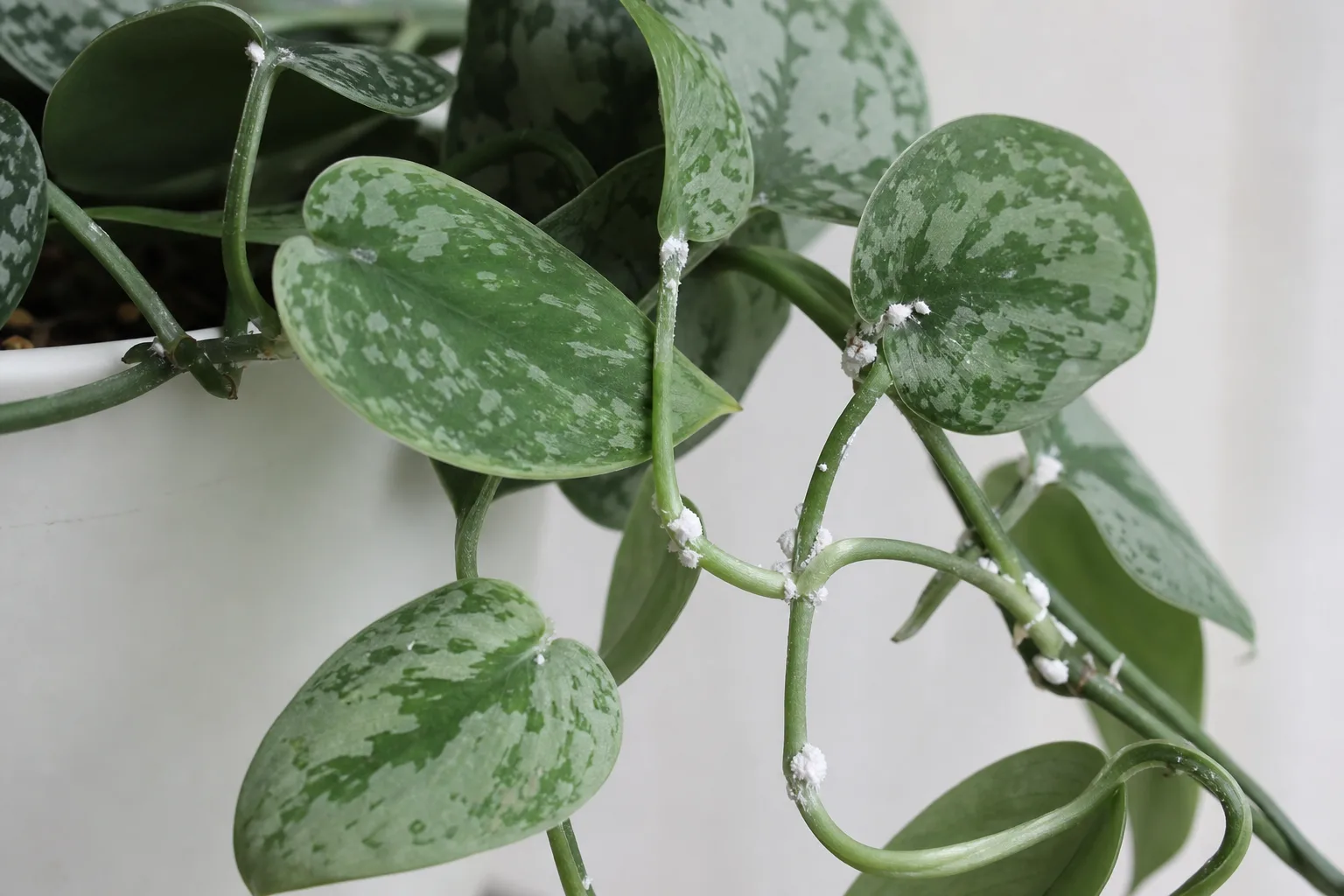
Mealybugs on Scindapsus Pictus: Causes, Checks & Fixes
This guide covers mealybugs on Scindapsus Pictus. See also the general Mealybugs guide, watering, and light pages for this plant.
Mealybugs on Scindapsus Pictus: Causes, Checks & Fixes
Quick answer
Mealybugs on Scindapsus Pictus (Scindapsus pictus, also called Satin Pothos or Silver Pothos) appear as white cottony clusters tucked into leaf axils along trailing vines-not the plant’s normal silver-gray leaf blotches. They feed on sap, weaken new growth at vine tips, and excrete sticky honeydew that can lead to sooty mold on satin-textured foliage below.
First step: isolate the plant and dab every visible cluster with a cotton swab dipped in 70% isopropyl alcohol. That mechanical removal confirms active pests and knocks down adults before you add sprays. Do not return the plant to a shared shelf or basket display until you have completed repeat treatments and seen no new wax for two consecutive weeks.
Why Scindapsus Pictus gets mealybugs
Mealybugs are common indoor plant pests that arrive on new plants, shared tools, or nearby infested specimens-not because satin pothos is uniquely susceptible, but because its vining growth habit creates long chains of sheltered node crevices where pests hide. UC IPM notes that mealybugs often live in protected areas such as branch crotches, stem joints near soil, and between stems and touching leaves-and that philodendron and other common houseplants are frequently affected indoors where natural enemies are absent.
Scindapsus Pictus grows as a slow trailing or climbing vine with nodes every few inches along each stem. Every node where a heart-shaped leaf attaches is a pocket where cottony wax can accumulate out of sight-especially on the back side of hanging baskets or where vines loop against a moss pole. Warm room temperatures year-round favor mealybug reproduction indoors, and plants grouped on shelves share crawlers when leaves touch.
Stress does not cause mealybugs, but it makes damage harder to notice. A satin pothos kept in dim light with chronically wet mix grows slowly and may not push obvious new tips for weeks-so sap loss from hidden axil colonies goes undetected until honeydew or sooty mold appears on lower leaves. Over-fertilizing pushes tender new vine tips that crawlers prefer to colonize. Recent nursery arrivals and quarantine lapses remain the most common introduction route.
What mealybugs look like on Scindapsus Pictus
Early infestations are easy to miss because the cottony wax hides pinkish or yellowish bodies beneath, and because normal silver variegation on satin pothos leaves can look like white spotting from a distance. Check these patterns together:
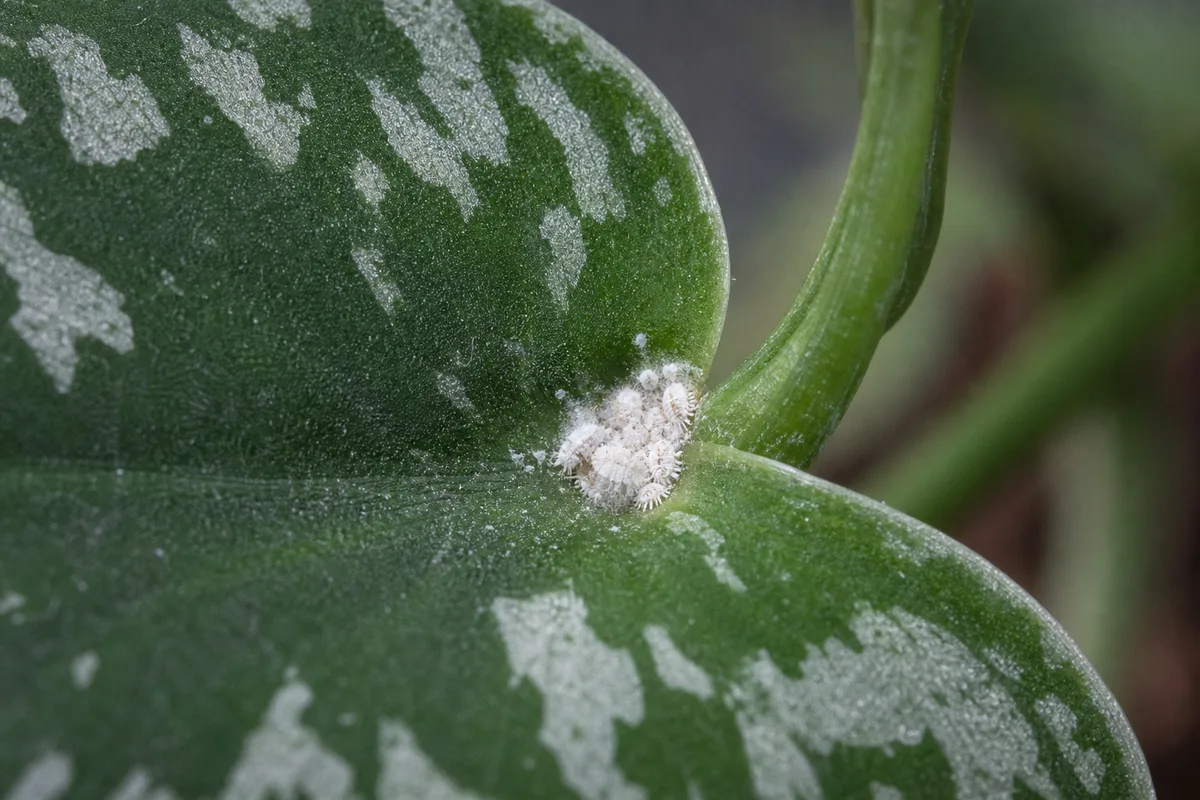
Mealybugs symptoms on Scindapsus Pictus - compare with healthy tissue on the same plant.
- White fluffy tufts tucked into vine nodes and petiole axils where each leaf meets the stem-not flat silver-gray blotches painted on the leaf blade
- Waxy filaments along stem joints where trailing vines bend or overlap in a basket
- Clusters on the undersides of leaves near the petiole base, especially on vines hanging away from your usual viewing angle
- Sticky, shiny honeydew on satin leaves below active feeding sites
- Black sooty mold on leaf surfaces coated with honeydew
- Stunted or distorted new leaves at vine tips that open small, pale, or without their usual silver pattern
On Scindapsus Pictus, do not mistake healthy variegation for pests. Normal silver spots are flat, matte, and part of the leaf surface pattern-they do not move, smear, or cluster in three-dimensional cotton balls at nodes. Mealybug wax feels fluffy, sits in axils, and leaves a pinkish smear when dabbed with alcohol.
How to confirm the cause
Do not treat from one white speck on a leaf tip. Use this inspection order:
- Isolate first - Move the plant away from other houseplants before handling. Maryland Extension recommends isolating infested plants so the infestation does not spread. Mealybug crawlers can walk short distances and hitchhike on hands, tools, and touching leaves.
- Trace each vine - Start at the soil line and follow every stem outward, checking every node and leaf axil with bright light. On hanging baskets, lift trailing sections and inspect the back side of vines.
- New growth tips - Check the newest unfurling leaf at each active vine tip; crawlers often settle in tight sheaths.
- Soil line and pot rim - Look where stems enter the mix and along the inner pot edge. Persistent infestations after clean foliage may indicate root mealybugs below soil.
- Disturbance test - Gently touch a white patch with a dry cotton swab, then dab with alcohol. Mealybugs dissolve and leave a pinkish smear; mineral deposits, perlite, or normal silver variegation do not.
- Neighbor check - Inspect pothos, philodendrons, and other Araceae on the same shelf for axil clusters or honeydew.
If roots are firm, soil smells neutral, and the only issue is cottony wax in axils with stickiness, mealybugs fit. If the pot stays heavy for days, soil smells sour, and stems soften at the base while mix stays wet, rule out root rot before spraying.
Lookalike symptoms to rule out
Normal silver variegation is flat and fixed on the leaf blade, not fluffy wax in axils. Powdery mildew forms dry white powder on leaf surfaces, not cottony tufts at nodes. Mineral or hard-water deposits wipe off dry; mealybugs do not. Scale insects look like hard brown or tan bumps, not fluffy wax. Spider mites leave fine webbing and stippling on leaf undersides, not cotton clusters. Fungal leaf spot from overwatering shows brown or black lesions with yellow halos-not waxy insects.
First fix for Scindapsus Pictus
Isolate the plant and dab every visible mealybug cluster with a cotton swab dipped in 70% isopropyl alcohol.
Work slowly through every node on every vine, dissolving the waxy coating on contact. This single mechanical pass confirms the diagnosis, removes adults you can reach, and avoids spraying chemicals on a plant that might only have mineral dust or normal variegation.
Once isolated and dabbed:
- After alcohol removal, spray insecticidal soap or horticultural oil per label directions, covering all node axils, leaf undersides, and stem joints-repeat on labeled intervals because mealybugs hatch over several weeks.
- Wipe sticky honeydew from satin leaves with a damp cloth so you can spot new clusters easily.
- Repeat alcohol dabbing and soap spray weekly until no live bugs appear for two consecutive weeks.
Do not fertilize a stressed satin pothos during active treatment. Do not repot on day one unless root mealybugs are confirmed at the soil line. Do not blast hanging vines with a hard water jet that soaks the crown and keeps mix wet longer than Scindapsus Pictus overview tolerates.
Step-by-step recovery
After the initial isolation and alcohol pass:
- Keep the plant isolated in medium to Scindapsus Pictus light guide with stable dry-down watering-check that the top half of mix is dry before every drink.
- Re-inspect every node axil at each weekly treatment; missed clusters restart the cycle.
- If ants appear on the pot rim, saucer, or basket chain, they are often farming mealybug honeydew-treat the plant, not just the ants.
- For trailing vines, rotate the hanging basket or moss pole each week so you inspect a different face of the plant.
- After two clean weeks, return the plant to its normal spot but continue monthly node checks for two months.
- Trim vine sections that collapse completely, but leave mostly healthy foliage until new growth at tips confirms recovery.
Heavy infestations with wax buried at the soil line may need a gentle unpot, alcohol dab on exposed roots and crown, and repot into fresh well-draining mix-only after the above steps fail twice.
Recovery timeline
Light axil infestations on one or two vine sections often clear within two to three weeks of weekly alcohol and soap passes. Moderate cases covering multiple stem joints may need four to six weeks because eggs hatch on staggered schedules. Severe damage with stalled new tips can take two months before firm satin leaves return along the vines.
Old yellowed or distorted leaves will not fully revert. Use clean new growth at vine tips, firm stems, and absence of fresh wax as recovery markers-not old foliage returning to perfect silver pattern.
What not to do
- Do not ignore a few white tufts because the trailing vines still look full-mealybugs multiply in axils on the back side of baskets.
- Do not move the plant back among others after one treatment; crawlers travel to neighboring pots when leaves touch.
- Do not pour undiluted alcohol over the entire root zone-satin pothos roots are sensitive to sudden chemical stress.
- Do not fertilize until new growth is clean and watering is stable.
- Do not confuse sticky honeydew with normal guttation; honeydew feels tacky and often pairs with wax in axils.
- Do not handle treated tissue without gloves near pets; Scindapsus Pictus contains calcium oxalate crystals that irritate skin and is toxic to cats and dogs if chewed.
How to prevent mealybugs next time
Quarantine every new plant four to six weeks before placing it near your satin pothos. Trailing Araceae grouped on shelves or in mixed displays are exactly how mealybugs hop between pots.
During weekly care, lift one trailing vine and glance at the node axils behind it. Keep medium to bright indirect light so vines grow vigorously and new leaves harden quickly. Water when the top half of mix is dry; chronically wet mix weakens roots without eliminating pests.
Disinfect scissors with alcohol after pruning any plant with suspected pests. Inspect plants that shared a windowsill or nursery bench whenever one shows cottony wax. Improve airflow around crowded hanging baskets on sheltered shelves-stagnant warm pockets favor pest buildup.
When to worry
Treat mealybugs as medium severity on Scindapsus Pictus-but escalate if:
- Cottony clusters spread to most nodes on several vines within one to two weeks
- New leaves at vine tips stop emerging or open stunted and deformed
- Ants persist on the pot or basket hardware despite plant treatment
- Sooty mold covers large sections of foliage and blocks light to lower leaves
- White wax appears on roots when you unpot and the infestation returns after repeated foliage treatment
If repeated weekly treatment for six weeks fails, consider discarding a heavily infested plant rather than risking your entire collection-especially when multiple vines are fully coated and root mealybugs are suspected.
Conclusion
Mealybugs on Scindapsus Pictus are a sap-feeding pest problem, not a variegation mystery. Confirm white cottony clusters in vine node axils and sticky honeydew-not flat silver leaf spots. Act by isolating, dabbing with alcohol, and repeating insecticidal soap until two clean weeks pass. Prevent them by quarantining newcomers and inspecting node crevices during routine care on trailing vines. Judge success by firm stems and clean new growth at tips-not by old leaves returning to perfect form.
When to use this page vs other Scindapsus Pictus guides
- Scindapsus Pictus watering guide - Use for routine moisture checks before assuming mealybugs is the main issue.
- Scindapsus Pictus problems hub - Browse all 3 common issues on this species.
- Yellow Leaves on Scindapsus Pictus - Different entry point when symptoms overlap with mealybugs.