Slow Growth on Scindapsus Pictus: Causes, Checks & Fixes
Quick answer
Scindapsus Pictus is a naturally slow vine-modest spring and summer growth is normal. When no new tips appear for months, leaves stay small and pale, or internodes stretch, move the plant to brighter indirect light before repotting or fertilizing.

Slow Growth on Scindapsus Pictus: Causes, Checks & Fixes
This guide covers slow growth on Scindapsus Pictus. See also the general Slow Growth guide, watering, and light pages for this plant.
Slow Growth on Scindapsus Pictus: Causes, Checks & Fixes
Quick answer
Scindapsus Pictus is a slow-growing tropical evergreen climber-modest pace is part of its nature, not a flaw. Concern starts when vines produce no new tips for months during spring and summer, new leaves stay noticeably smaller than older ones, or silver variegation fades on fresh growth while internodes stretch.
First step: move the plant to brighter indirect light and wait two weeks before changing anything else. Low light is the most common limiter on this vine. Root-bound pots, winter dormancy, chronic overwatering, and recent repot shock can also stall growth-but light is the check that costs nothing and fixes the majority of stalled satin pothos.
Why Scindapsus Pictus grows slowly
This species is not pothos. Missouri Botanical Garden describes it as a slow-growing tropical evergreen climber in the Araceae family, native to Southeast Asia, where it climbs tree trunks by aerial rootlets. NC State Extension lists a slow growth rate for indoor culture. A healthy plant may add only a handful of new leaves through a growing season-especially when trailing from a shelf rather than climbing a support.
Slow becomes a problem when the plant looks static month after month while light and temperatures favor growth. Scindapsus Pictus allocates energy to survival first. In dim corners it keeps existing foliage but barely extends vines. In wet, cool, or root-crowded conditions it pauses top growth while roots struggle. The silver-blotched leaves are your report card: firm blades with good patterning mean the plant is holding steady; tiny plain-green new leaves with long gaps mean something is limiting photosynthesis or uptake.
Winter naturally slows this tropical vine indoors. Shorter days and cooler room air reduce metabolic activity even when the plant stays alive. Expect near-pause from late fall through early spring unless you supplement light. That seasonal rest is normal-do not force growth with heavy feeding in December.
What slow growth looks like on Scindapsus Pictus
Normal slow growth:
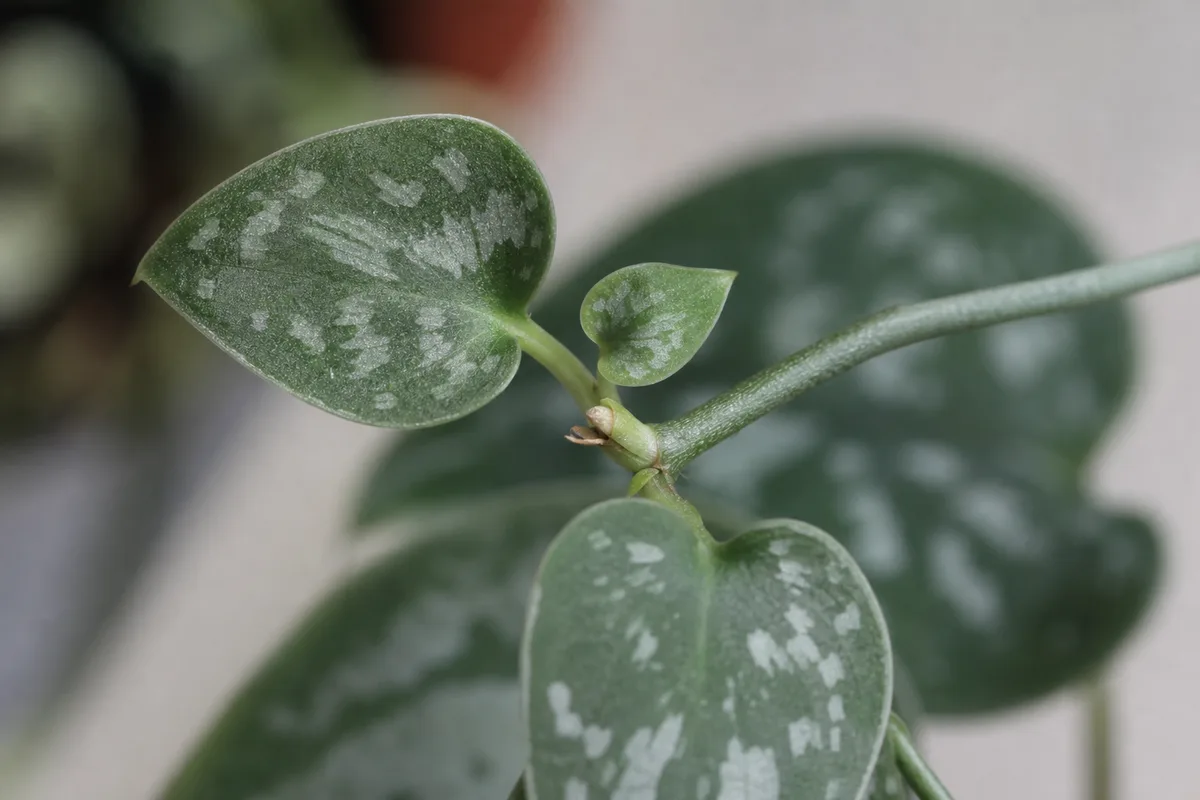
Slow Growth symptoms on Scindapsus Pictus - compare with healthy tissue on the same plant.
- One to several new leaves every few weeks during spring and summer
- New blades similar in size to leaves two or three nodes back
- Silver variegation stable or slightly stronger on fresh growth in good light
- Firm stems and leaves; soil dries on a predictable weekly rhythm
Problem slow growth:
- No new leaf tips for two or more months during active season
- New leaves clearly smaller than mature ones lower on the vine
- Long bare internodes between leaves (often paired with leggy growth)
- New foliage emerging mostly green with weak or absent silver markings
- Soil staying wet for a week or more; pot feels heavy despite little new growth
- Roots circling pot walls or emerging from drainage holes while top growth stalls
- Yellowing lower leaves or curling tips alongside stalled extension
Judge the plant against itself, not a fast-growing pothos on the next shelf. Scindapsus Pictus will never match Epipremnum speed-but it should still produce visible new tissue when light and roots are working.
How to confirm the cause
Work through these checks in order before stacking fixes:
- Light audit - Can the plant see a bright window for most of the day, filtered through sheer curtain or at an east exposure? Hold your hand between window and leaves at midday: a soft, diffuse shadow means usable indirect light; almost no shadow means too dim for meaningful growth.
- New leaf comparison - Measure or eyeball the newest leaf against one from mid-vine. Smaller, paler blades with wide spacing confirm light stress-too little light reduces leaf size and causes poor growth. Uniform small size on a young cutting may be normal.
- Season check - Note the calendar. Stalled growth from November through February in a temperate home often reflects dormancy, not failure.
- Root and pot check - Slide the plant partway out of the pot. Dense root mat circling the outside, roots escaping drainage holes, or soil drying within one to two days after watering suggest root-bound conditions limiting uptake.
- Moisture pattern - Stick a finger 4–5 cm into mix. Chronic sogginess when growth is slow points to overwatering or poor drainage damaging roots silently. Bone-dry soil pulling from pot edges with curled leaves suggests drought stress-not the same as slow growth, but it stalls extension until water is restored.
- Recent changes - Scindapsus Pictus repotting guide, moving rooms, or turning off heat in winter commonly pause growth for two to four weeks. Wait before adding fertilizer or repotting again.
- Pest scan - Inspect leaf undersides and stem joints for spider mites, mealybugs, or scale. Low-level infestations sap vigor before obvious leaf damage appears.
If light is weak and new leaves are small, you have a diagnosis-act on light first. If light is strong, roots are crowded, and the season is warm, root room is the next suspect.
First fix for Scindapsus Pictus
Move the plant to medium or Scindapsus Pictus light guide-within one to three feet of an east window, or behind sheer curtain at a south or west exposure.
Do not jump to fertilizer, repotting, or moss poles on day one. Scindapsus Pictus needs enough intercepted light for photosynthesis before any other input matters. NC State Extension recommends bright indirect light for houseplant culture and notes that direct sunlight and cooler air are not tolerated-so pull back from harsh glass, but do step closer to usable brightness.
After the move, leave watering, feeding, and pot size alone for two weeks. Watch the next node: if a new leaf emerges larger and more silvered than the one before it, light was the bottleneck. If nothing changes in four to six weeks during spring, proceed to root assessment.
Step-by-step recovery
Once light is corrected-or if light was already adequate-address remaining limits in this order:
- Stabilize watering - Water when the top half of the soil is dry. Let excess drain fully. In brighter light the pot will dry faster; adjust rhythm to the pot, not a calendar. Avoid keeping roots wet in dim conditions-that combination stalls growth and invites rot.
- Repot in spring if root-bound - Move up one pot size into well-draining mix with perlite. Trim only mushy roots, not healthy white ones. Expect two to four weeks of pause after repotting before new growth resumes.
- Feed lightly during active growth - Apply balanced liquid fertilizer at half strength monthly from spring through summer only after light and watering are stable. Stop if leaves brown at tips or the plant was recently repotted.
- Add a support if you want larger leaves - Training vines up a moss pole or trellis can encourage bigger blades as the plant climbs, mimicking its native tree-trunk habit. This is optional-not required for basic recovery.
- Pinch tips to branch - Once growth restarts, cut just above a node on long bare sections. New shoots often emerge from the joint, making the plant look fuller rather than one thin string.
- Address pests if found - Rinse undersides and treat confirmed mites or mealybugs before expecting growth to rebound. Stressed plants should not receive heavy fertilizer while pests are active.
Do not repot and fertilize and relocate in the same week. Scindapsus Pictus recovers faster when one variable changes at a time.
Recovery timeline
Light improvement often shows in the next leaf: expect a slightly larger blade with better silver within four to eight weeks during spring and summer. Full vine fill-in takes longer-several months of steady nodes-because Scindapsus Pictus overview grows slowly by nature.
Repot recovery typically needs two to four weeks before new tips appear. Winter interventions may show little until day length increases in March or April.
Signs you are winning: new leaves match or exceed the size of older ones, internode gaps shorten, silver patterning returns on fresh growth, and soil dries on a predictable rhythm. Signs the problem is deepening: more yellow leaves, soft stems at soil line, new leaves getting smaller not larger, or soil staying sour and wet.
Lookalike symptoms to rule out
Leggy growth is light-related stretching with long bare stems-often overlaps with slow growth, and the same light fix applies. Read it as early warning before the vine stops extending entirely.
Dormant winter rest looks like slow growth but affects most houseplants equally in short-day months. Growth should resume when light and warmth return without heroic intervention.
Root rot stalls growth but adds yellow lower leaves, mushy stems, and sour soil smell-poorly drained or wet soils can cause root rot. If those appear, inspect roots before assuming patience will solve it.
Underwatering causes curling leaves and very dry mix-not a static plant with firm foliage. Water first if soil is dust-dry and leaves are folding.
Nutrient deficiency can produce pale leaves and poor growth, but on Scindapsus Pictus low light mimics this pattern. Fix light for six weeks before assuming hunger-over-fertilizing stressed roots causes more harm than a missed feeding.
Mistakes to avoid
Do not pour on fertilizer to force speed. A plant in dim light cannot use extra nitrogen; salts can accumulate and brown leaf tips.
Do not repot into a much larger pot hoping for a growth spurt. Oversized containers stay wet too long and slow roots further.
Do not compare growth speed to golden pothos. Different genus, different pace-judge Scindapsus Pictus against its own prior leaves.
Do not ignore winter and expect summer growth rates year-round.
Do not move the plant to direct south glass without acclimation. Scorching silver zones stresses the plant and can halt growth while damaged tissue heals.
Scindapsus Pictus care cross-check
Slow growth often means one core need is below what this vine prefers:
- Light: Medium to bright indirect for most of the day; avoid dark hallways and far bookshelf corners.
- Water: Top half of mix dry before watering; reduce frequency in winter.
- Temperature: Comfortable room range of 65 to 85°F; avoid sustained exposure below about 15°C (59°F).
- Humidity: 40–60% is adequate; low humidity alone rarely stalls growth but can brown tips.
- Soil: Well-draining potting mix with perlite; sour, compacted mix limits roots even when watering looks correct.
- Pot size: Repot every one to two years when roots escape holes-not on a schedule when the plant is still comfortable.
When these align, slow growth usually means patience, not crisis.
How to prevent slow growth next time
Place new Scindapsus Pictus where bright indirect light is realistic all year-not only where the pot photographs well. Rotate the container monthly so both sides receive light and growth stays even.
Track new leaf size monthly during growing season. A downward trend catches light loss before vines go fully bare.
Repot in spring at first signs of root crowding rather than waiting until the mix is exhausted and roots coil for years.
Keep watering tied to dry-down speed. Brighter summer light means more frequent checks; dim winter corners mean less water, not the same schedule.
Scout for pests when growth softens. Mites thrive in warm dry indoor air and drain vigor before webbing is obvious.
Use half-strength fertilizer monthly only in spring and summer when the plant is actively producing new leaves-not as a default year-round tonic.
When to worry
Treat as urgent when slow growth pairs with spreading yellow leaves, mushy stems at the soil line, foul-smelling mix, heavy pest infestation, or sudden leaf drop after a cold draft. Those patterns suggest root rot, acute stress, or infestation-not a plant that simply needs brighter light.
A stable Scindapsus Pictus with firm leaves, no pests, and modest but steady summer growth is not an emergency even if it will never race across the room. Upgrade light and root conditions, then judge by the next two leaves.
Replace the plant only if roots are largely mushy after rot, most vines have collapsed, or pest and virus-like mottling persist after corrected care. Slow growers can rebound from single-limit bottlenecks; they rarely recover from advanced root failure without aggressive propagation from whatever healthy nodes remain.
Conclusion
Slow growth on Scindapsus Pictus starts with realistic expectations-this is a slow vine by design. When growth truly stalls, bright indirect light is the first and often sufficient fix. Confirm with new leaf size, check roots and season, then adjust watering and feeding one step at a time. The silver on the next leaf tells you whether the plant is back on track.
When to use this page vs other Scindapsus Pictus guides
- Scindapsus Pictus watering guide - Use for routine moisture checks before assuming slow growth is the main issue.
- Scindapsus Pictus problems hub - Browse all 3 common issues on this species.
- Leggy Growth on Scindapsus Pictus - Different entry point when symptoms overlap with slow growth.
- Yellow Leaves on Scindapsus Pictus - Different entry point when symptoms overlap with slow growth.