Scindapsus Treubii Dark Form Light Guide
Scindapsus Treubii Dark Form Light Guide
Scindapsus Treubii Dark Form Light Guide
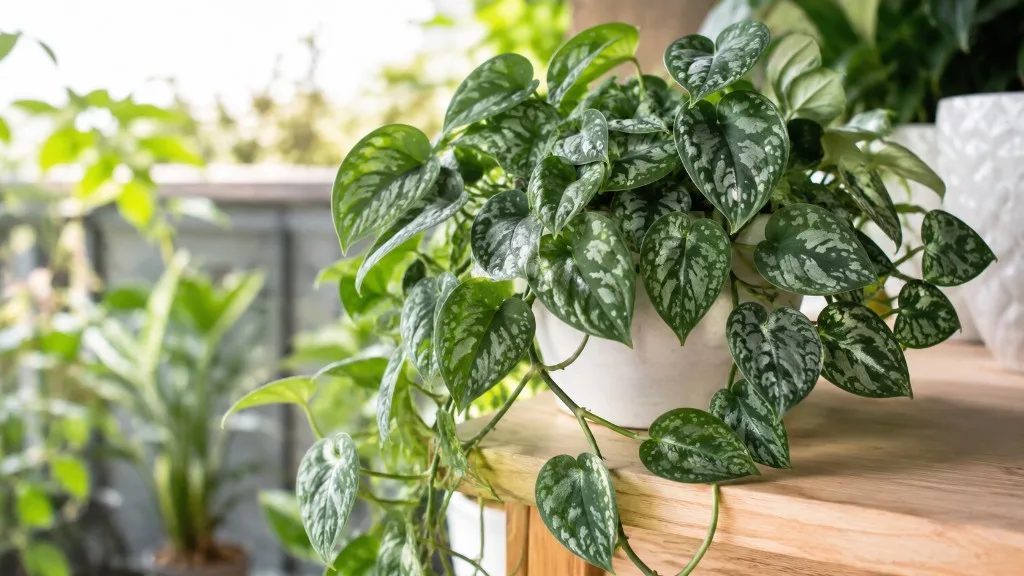
Scindapsus treubii ‘Dark Form’ — sold as Scindapsus Treubii Dark Form, Dark Form Moonlight, or nearly black scindapsus — is grown for one visual trait: deep, satiny leaves that mature to near-black. The plant is slower and less forgiving of lazy placement than a golden pothos, but its light needs are not exotic. Park it in a dim hallway because “trailing plants tolerate shade” and you will get long bare stems with small, greener leaves that never develop the dark satin sheen. Press it against unfiltered south glass because “plants love sun” and the glossy leaf surface bleaches to olive or tan with crisp brown margins. The useful range sits between those mistakes: medium to bright indirect light for most of the day, with new growth as your proof.
This is not a pothos, even though retailers reuse pothos-adjacent common names. Scindapsus treubii ‘Dark Form’ belongs to the Araceae family and climbs humid forest trunks across Peninsular Malaysia, Northwest Borneo, and Java — regions where light arrives filtered through canopy layers rather than as fixed midday beams on open rock. NC State Extension describes the species as preferring bright indirect sunlight or filtered light indoors, with direct sunlight able to scorch leaves. Outdoor cultural light is listed as dappled sunlight and partial shade (direct sun only part of the day, roughly two to six hours). That combination frames every indoor placement decision: replicate bright, filtered understory light — not dark shade and not window-scorching sun.
This guide covers how much light Scindapsus treubii ‘Dark Form’ actually needs, why leaf color depends on exposure, how Dark Form differs from Moonlight, where to put the pot by window direction, when direct sun is safe, how low light changes growth, how to set up grow lights, and how to read warning signs before legginess or scorch becomes habit.
Cultivar note: Scindapsus Treubii Dark Form (Scindapsus treubii ‘Dark Form’) — very dark green to near-black leaves with a subtle satin sheen. Place in medium to bright indirect light — darker leaves tolerate slightly lower light than Moonlight; water when top half dry; slow growth reduces watering frequency.
How Much Light Scindapsus Treubii Dark Form Actually Needs
The baseline for healthy Scindapsus treubii ‘Dark Form’ light requirements indoors is medium to bright indirect light — enough intensity that the plant produces compact new leaves with firm texture and the deepening dark color mature foliage is known for, but not so much direct radiation that the glossy leaf surface burns. NC State Extension lists bright indirect sunlight or filtered light as the houseplant standard and warns that direct sunlight can scorch leaves on Scindapsus treubii.
In practical home terms, the plant should sit where leaves receive strong ambient brightness for much of the day. A spot three feet from a bright window often fails because the wall is bright but the canopy is not. A shelf directly beside an east window often succeeds because soft morning rays and steady indirect afternoon brightness land on the foliage itself. If you want a number to calibrate against, many experienced growers target roughly 1,200 to 3,000 lux at leaf level for several hours daily — bright enough to keep internodes short and leaf color deepening on new mature foliage, but well below the intensities that produce sunburn on thick aroid leaves. A phone lux meter app is imprecise yet useful for comparing two spots in your home before you commit a rare Dark Form to the wrong ledge.
Duration matters alongside intensity. Scindapsus treubii ‘Dark Form’ is not a desert succulent that wants six hours of blazing sun. It is a slow-growing forest understory vine that evolved under long days of filtered photons. Most homes already provide 10 to 14 hours of ambient indoor brightness during waking hours; your job is to ensure enough of that brightness reaches the leaves, not just the room. A plant on a north desk under a single ceiling bulb may experience long “day length” with very low leaf-level intensity — the classic recipe for slow growth and leaves that stay greener than you expected.
Leaf texture also changes how radiation behaves at the surface. Dark Form leaves are glossy, thick, and satiny — NC State Extension notes young leaves are deep green and mature leaves are nearly black. That high chlorophyll load helps the plant photosynthesize in moderate light, which is why Dark Form tolerates slightly lower intensity than the pale Moonlight cultivar. It does not mean the plant wants a dark corner. The same window that keeps a golden pothos glossy can still bleach or overheat Dark Form foliage if harsh afternoon beams strike the leaf surface directly.
The Short Answer for Busy Growers
If you only remember five rules, use these. Default placement: within one to three feet of an east-facing window, or a filtered south- or west-facing window behind sheer curtain — close enough that light hits leaves, not just the floor. Target intensity: medium to bright indirect; new leaves should emerge firm, adequately sized, and deepening toward near-black as they mature. Low light is survivable, not ideal: growth slows, internodes lengthen, and new foliage may stay greener and smaller. Direct sun is limited: gentle morning sun can work on acclimated plants; midday and afternoon beams through clear glass usually require pulling back or diffusing. Judge by new growth over 10 to 14 days — old scorched or faded leaves will not repair; only the newest leaves tell you whether the current spot works.
Why Light Controls Leaf Color and Growth
The near-black look on Scindapsus treubii ‘Dark Form’ is not a paint finish. It is the result of dense pigmentation in thick, glossy leaf tissue — young leaves emerge deep green and darken as they mature, which NC State Extension describes for the ‘Dark Form’ cultivar. Light drives how much energy the plant can invest in leaf expansion, internode length, and pigment development. Too little light and the vine stretches toward the brightest vector while pushing smaller, greener leaves. Too much direct radiation and the same pigments break down through photobleaching, leaving washed-out olive or tan patches.
In the wild, Scindapsus treubii climbs tree trunks in humid forests where dappled light shifts through the day as the sun angle and cloud cover change. The vine receives enough energy to grow steadily — albeit slowly — without exposing every leaf to full tropical noon radiation. Indoors, you approximate that pattern with bright ambient light plus diffusion — east windows, bright north windows with open sky view, or south and west windows softened by sheer fabric, frosted glass, or placement deeper into the room.
When light is chronically insufficient, the plant prioritizes survival over display. New leaves may emerge smaller and lighter green because the vine is stretching for photons rather than investing in the thick, dark mature foliage you bought the plant for. Internodes lengthen as the vine etiolates, producing the leggy, sparse look that beginners often misdiagnose as a fertilizer problem. When light is excessive, the opposite stress appears: bleached or olive-toned patches, brown crispy margins, and sometimes cupped leaves during peak hours as the plant loses water faster than roots can replace it.
Color change on existing foliage is limited. A leaf that emerged pale green in a dim hallway will not turn near-black in place. Move the plant to better light and subsequent leaves may deepen normally, but you may need to prune old bare vines if the aesthetic bothers you. That is a normal outcome for aroid leaves — judge the fix by what new growth does, not by whether old tissue transforms.
Near-Black Foliage and Chlorophyll
Dark Form carries more chlorophyll per leaf area than Moonlight, the milky-green sibling cultivar on the same species. That biology is the reason Dark Form tolerates slightly lower light before stretching — there is more photosynthetic machinery in each leaf. It is also why low light shows up differently than on silver-marked Scindapsus pictus: you will not see “fading variegation,” but you may see leaves that stay mid-green, smaller new foliage, and long gaps between nodes on trailing stems. If your priority is the near-black satin look, treat failure to deepen as a light problem first, not a nutrient deficiency.
Side lighting reveals the satin sheen best. In a correctly bright room, Dark Form leaves catch angled light and look subtly luminous — not sparkly like Moonlight, but richly textured. In a dim room the same leaves look flat and muddy green-brown even when the plant is technically alive. That visual dullness is often the first sign placement needs adjustment.
What Happens in the Rainforest Understory
Understanding native context prevents two common errors: treating Scindapsus treubii ‘Dark Form’ like a deep-shade fern, or treating it like a sun-hungry succulent. Understory vines receive filtered light for most daylight hours, with brief sun flecks that move across leaves rather than holding one leaf in a fixed beam for hours. Humidity is high, air movement is gentle, and root zones stay aerated in leaf litter — conditions that let leaves handle moderate brightness without desiccating.
Your home will not replicate a Malaysian forest floor, but you can borrow the principle: stable, bright, indirect exposure beats dramatic swings. A plant that sits in dark shade all week and then moves to a blazing west window for weekend “sun therapy” will protest with dropped leaves, curled tips, or bleached patches. Gradual placement within a consistent band of brightness produces healthier vines than alternating extremes.
Dark Form vs Moonlight Light Needs
Both cultivars share the same species-level preference for bright indirect or filtered light, but they show stress at different speeds because leaf pigmentation differs. Moonlight — with thick, milky-green leaves and a silvery sheen on the upper surface per NC State Extension — has less chlorophyll in pale zones and often needs slightly brighter exposure to keep compact, vivid foliage. Dark Form can coast a step dimmer before internodes lengthen, thanks to its darker, chlorophyll-rich leaves.
That tolerance is relative, not a license for a basement shelf. In identical low light, Moonlight may fade to washed-out green faster, while Dark Form stays alive longer but still produces leggy stems and undersized leaves that never reach the near-black maturity you see in nursery photos. In identical harsh direct sun, both cultivars scorch — Dark Form does not gain immunity because the leaves are dark. If you own both cultivars, place Moonlight in the brighter of two good spots and Dark Form one step back, then confirm with new growth rather than assumptions.
Do not confuse either treubii cultivar with Scindapsus pictus (satin pothos), which is a different species with silver-splashed variegation and its own light sensitivity in pale sectors. Dark Form troubleshooting focuses on depth of green-to-black coloration and internode length, not silver pattern loss.
Best Window Placement for Scindapsus Treubii Dark Form
Window direction is a shorthand, not a guarantee. Obstructions — neighboring buildings, deep overhangs, tinted glass, trees outside — matter as much as compass orientation. Still, direction gives you a reliable starting map before you fine-tune with the new-growth test.
East, North, South, and West Exposures
East-facing windows are the easiest win for most Scindapsus treubii ‘Dark Form’ placements. Soft morning sun for an hour or two plus bright indirect light through the afternoon matches understory fleck patterns without the heat load of west glass. Hang a basket within one to two feet of the glass or set a pot on the sill with a sheer panel if leaves show light yellowing by mid-morning.
North-facing windows work when the view is open sky and the room is not sunken or heavily obstructed. In a bright north room, place the plant within one to two feet of the glass. In a dim north room where you would not comfortably read without a lamp, expect slow growth and greener, smaller new leaves unless you add a grow light. Scindapsus treubii ‘Dark Form’ may survive there; it will not develop the near-black mature look.
South-facing windows deliver the strongest indoor light in the Northern Hemisphere. Dark Form can thrive three to five feet back from the glass or directly in the window with sheer curtain diffusion. Unfiltered south sun through clear glass at close range burns glossy leaves faster than many growers expect, especially in summer when leaf temperature spikes. If your only bright spot is harsh south light, filter it — do not rely on “it will acclimate” without evidence in new leaves.
West-facing windows combine strong afternoon brightness with heat. They can produce beautiful compact growth when the plant sits behind diffusion or far enough back that only ambient brightness reaches leaves. Unfiltered west exposure is a common scorch scenario for Scindapsus Treubii Dark Form in apartments with sunset views. Treat afternoon west sun as guilty until proven innocent by two weeks of unscorched new growth.
Rotate hanging baskets every week or two so both sides of the vine receive light; otherwise you will get a lush face toward the window and a sparse reverse side that looks uneven on a shelf display.
Can Scindapsus Treubii Dark Form Take Direct Sun?
Brief, gentle direct sun — typically early morning from an east window — is the upper limit most indoor Scindapsus treubii ‘Dark Form’ plants tolerate without damage, and only after they are acclimated. NC State Extension is explicit that direct sunlight can scorch leaves on this species. Outdoors in USDA zones 9–11, partial shade with two to six hours of direct sun is listed as acceptable cultural light, but indoor glass magnifies heat and UV exposure differently than open shade under trees.
The practical indoor rule: if you can see a sharp sunbeam landing on the leaf surface for more than a short morning window, assume risk. Dark leaves are not sun-proof — they can bleach to olive or tan and develop crispy brown margins when radiation and leaf temperature spike. Missouri Botanical Garden recommends placing related scindapsus houseplants in bright indirect light and to avoid direct sun — the same indoor safety margin applies to Dark Form.
Safe Acclimation to Brighter Exposure
Plants grown in nursery shade houses or dim shop floors have leaves calibrated for lower radiation. Moving them straight to a bright west sill causes sudden scorch within days. Acclimate over 7 to 14 days instead. Move the pot six inches closer to the target window every two or three days, or add diffusion first and remove it gradually. Watch newest leaves each morning; halt or step back if you see bleaching, curling, or crisping on fresh growth.
If you must increase light because the vine is leggy, prioritize higher indirect intensity before direct beams. A plant that stretched in a dim corner often recovers faster when moved to a bright east exposure than when jumped to filtered south noon sun. Increase one variable at a time — light first, then reassess Scindapsus Treubii Dark Form watering before touching fertilizer or Scindapsus Treubii Dark Form repotting.
Low-Light Limits and Survival vs Thriving
Scindapsus treubii ‘Dark Form’ earns a beginner-friendly reputation partly because its chlorophyll-rich leaves extract more energy per photon than pale cultivars. That tolerance creates a trap: the plant survives while leaf size, growth rate, and color depth decline until the vine looks like a generic green trailer that never achieves the near-black satin finish.
In low light, photosynthesis slows, root activity drops, and the pot stays wet longer. Growers who keep a fixed weekly watering schedule regardless of exposure often overwater dim plants, compounding yellow leaves and root stress. Light correction should precede watering schedule tweaks — brighter correct light increases transpiration and restores a healthy dry-down rhythm tied to your Scindapsus Treubii Dark Form overview.
When Leaves Stay Green Instead of Deepening
Failure to darken on new mature leaves is the clearest low-light signal for Dark Form — not silver fading, but leaves that remain mid-green or olive when older nursery foliage was near-black. Long internodes — wide gaps between leaves along the stem — confirm etiolation. Smaller new leaves and slower vine extension follow. The plant may lean sharply toward the brightest corner; rotating helps symmetry but does not replace insufficient intensity.
Recovery depends on future leaves, not past ones. After you improve light, allow three to four new leaves before judging success. If color deepens and internodes shorten, prune leggy bare stems to encourage bushier regrowth from nodes. If new leaves stay small and green, the spot is still too dim or the plant needs supplemental LED.
Grow Lights When Natural Light Falls Short
Offices, north apartments, and winter-short days push Scindapsus treubii ‘Dark Form’ below its ideal range. Full-spectrum LED grow lights fill that gap well because they deliver intensity without the leaf-heating infrared load of older incandescent bulbs. Missouri Botanical Garden notes that scindapsus houseplants achieve best container growth at room temperatures from 65 to 85°F in bright indirect light — pair supplemental lighting with that comfort band rather than blasting a cold windowsill plant with a hot fixture inches away.
Position fixtures 12 to 18 inches (30 to 45 cm) above the canopy as a starting point and run them 10 to 12 hours daily on a timer to mimic natural day length. If leaves look pale, warm to the touch, or slightly bleached, raise the fixture or reduce hours. If the vine still stretches, lower the light slightly or extend duration by an hour — adjust one variable at a time. Hanging baskets need lights aimed at the top of the cascade, not just the pot on the floor; lower leaves on long vines often live in self-shade unless you train vertically on a moss pole or rotate the basket frequently.
Distance, Hours, and Spectrum Setup
Choose full-spectrum white LEDs labeled for foliage houseplants rather than purely red-blue “bloom” panels unless you already own them and see good results on other aroids. For a desk Dark Form in a small pot, a single 15 to 40 watt clip lamp may suffice. For a long vine on a moss pole, a brighter panel or multiple sources prevents top-heavy growth under a single hot spot.
Begin conservatively: 10 hours at 18 inches. After two weeks, read new growth. Compact nodes and deepening leaf color mean keep settings. Stretching means increase intensity modestly — move the lamp closer by two inches or add an hour — not jump to 16 hours at six inches, which risks bleaching even dark foliage. Pair grow lights with normal room temperatures (65 to 75°F / 18 to 24°C), the comfort band NC State Extension recommends for Scindapsus treubii.
Warning Signs Your Scindapsus Treubii Dark Form Has the Wrong Light
Light stress is often misdiagnosed as underwatering, overwatering, or humidity failure because symptoms overlap. Use timing and leaf age to separate causes. Light problems show on newest exposure-facing leaves first and change predictably when the plant moves. Watering problems often hit older lower leaves or uniform yellowing after a wet spell. Mite damage shows stippling and fine webbing, usually worsening in dry hot zones near heaters — not the same uniform bleaching direct sun produces.
Too Little Light — Leggy Vines and Lighter Leaves
Watch for these low-light signals on Scindapsus treubii ‘Dark Form’: internodes longer than one leaf width on new growth; new leaves smaller than older leaves produced in brighter prior conditions; new foliage staying mid-green instead of deepening toward near-black; vine leaning aggressively toward the window; soil staying wet more than a week in a small pot because transpiration dropped; slow or stalled new leaf production through the growing season. Correct by moving closer to the brightest filtered source or adding LED supplementation, then wait for three to four new leaves before reassessing. See Leggy Growth on Scindapsus Treubii Dark Form if stretching persists after a light fix.
Too Much Light — Bleach, Scorch, and Curling
High-light and direct-sun stress shows differently: olive, tan, or chalky bleached patches on leaves facing the glass; brown crispy edges on sun-struck foliage; leaf cupping or folding during midday bright hours; sudden widespread damage within 48 hours after a window move; washed-out, dull leaf color that loses the deep satin sheen seen in correct indirect light. Pull the plant back, add sheer diffusion, or shift to east exposure. Do not compensate with extra water; scorched leaves rarely rehydrate back to health.
How Light Changes Watering and Seasonal Care
Light is the throttle on the whole care system for Scindapsus treubii ‘Dark Form’. Brighter correct exposure increases transpiration, so the pot dries faster and the plant uses nutrients during active growth. Dim exposure slows metabolism; the same weekly watering that worked on a bright east sill will keep soil soggy on a shaded bookshelf and invite root rot.
When you move a plant brighter, check moisture every two to three days for the first two weeks instead of assuming the old calendar still applies. When you move dimmer — rarely intentional, but common after a summer-to-winter window shift — extend the dry-down interval and reduce Scindapsus Treubii Dark Form fertilizer until new growth confirms the plant is still metabolically active. Seasonal light drop through shorter days affects northern homes even without moving the pot; a vine that needed water every seven days in July may need ten to fourteen in January at the same window.
Humidity interacts at the margins. Scindapsus treubii ‘Dark Form’ tolerates ordinary household humidity (40 to 60% is a comfortable target), but hot, bright, dry air near a south window in winter heating season can crisp leaf edges that are not true scorch — distinguish by checking whether damage appears only on the window-facing leaf half during peak sun hours. If yes, it is light load; if edges brown uniformly in a dim cool room, look at watering and Scindapsus Treubii Dark Form soil before buying a humidifier.
Avoid changing light, pot size, and watering volume in the same week. Light moves are stressful enough alone. Let new growth stabilize, then address other variables. That discipline saves more Scindapsus Treubii Dark Form than any single product recommendation.
Conclusion
Scindapsus treubii ‘Dark Form’ light requirements boil down to rainforest logic applied indoors: give the vine medium to bright indirect light for most of the day, keep harsh direct sun off the glossy leaf surface, and use new leaf quality — firm texture, appropriate size, deepening color on mature foliage — as the final test. East and filtered bright exposures are the safest defaults; north rooms and office desks often need LED backup; west and south windows demand diffusion or distance.
Dark Form tolerates slightly lower light than Moonlight thanks to its chlorophyll-rich leaves, but low light still produces leggy stems and greener, smaller foliage long before the plant dies. Excess sun bleaches the near-black satin look you bought the plant for. Light also sets watering pace, so every placement change should trigger a moisture check habit, not just a location change.
Place the pot where leaves receive real brightness, acclimate increases over one to two weeks, and read the newest growth before rewriting the rest of your care routine. Get that right and Scindapsus treubii ‘Dark Form’ rewards you with slow, steady trails of deep satiny foliage — the understated look that outlasts trendier houseplants without forgiving lazy placement.
When to use this page vs other Scindapsus Treubii Dark Form guides
- Scindapsus Treubii Dark Form overview — Start here for whole-plant context before deep-diving this topic.
- Scindapsus Treubii Dark Form problems hub — Jump to symptom-specific fix guides when this care topic does not resolve the issue.
- Leggy Growth on Scindapsus Treubii Dark Form — Escalate here when light adjustments are not enough.
Related Scindapsus Treubii Dark Form guides
- Scindapsus Treubii Dark Form overview
- Scindapsus Treubii Dark Form watering
- Scindapsus Treubii Dark Form soil
- Scindapsus Treubii Dark Form propagation
- Scindapsus Treubii Dark Form fertilizer
- Scindapsus Treubii Dark Form repotting
- Leggy Growth on Scindapsus Treubii Dark Form
- Scindapsus Treubii Dark Form problems