Yellow Leaves on Scindapsus Treubii Dark Form: Causes
Quick answer
Yellow leaves on Scindapsus Treubii Dark Form make excess moisture the first cause to check. Inspect pot weight and soil below the surface; wait until the upper half is dry and the lower mix is approaching dry before watering again. One yellow leaf alone does not confirm the cause; yellowing across several leaves deserves a root and light check.
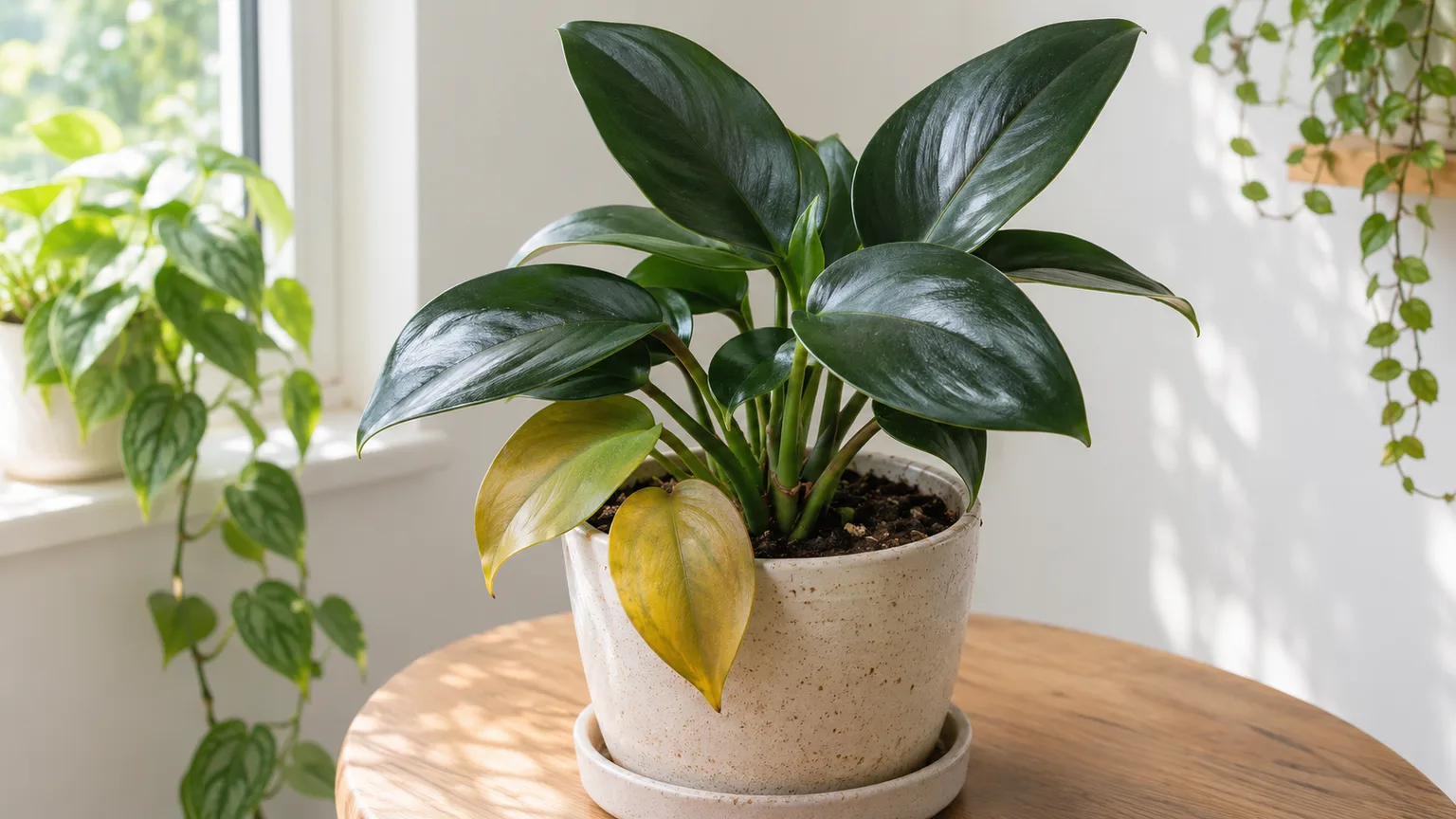
Yellow Leaves on Scindapsus Treubii Dark Form: Causes, Checks & Fixes
This guide covers yellow leaves on Scindapsus Treubii Dark Form. See also the general Yellow Leaves guide, watering, and light pages for this plant.
Yellow Leaves on Scindapsus Treubii Dark Form: Causes, Checks & Fixes
Quick answer
Yellow leaves on Scindapsus Treubii Dark Form make excess moisture the first cause to check. Lift the pot and feel the mix halfway down; if it is still wet, wait until it dries toward the species’ recommended half-dry point before watering again. One yellow leaf alone does not confirm root trouble; yellowing across several leaves calls for a root and light check.
For how yellowing works across houseplants in general, see our yellow leaves guide. On Treubii Dark Form, several soft, limp yellow leaves on a heavy pot with wet mix make excess moisture a leading possibility; confirm the root-zone condition before changing care.
What yellow leaves look like on Treubii Dark Form
Treubii Dark Form is a trailing aroid with the glossy, nearly black foliage that makes early yellowing worth checking against the rest of the vine. When checking this dark foliage, compare an affected leaf with healthy leaves and look for a clear change in color, firmness, or sheen. The location and number of affected leaves are more useful than color alone.
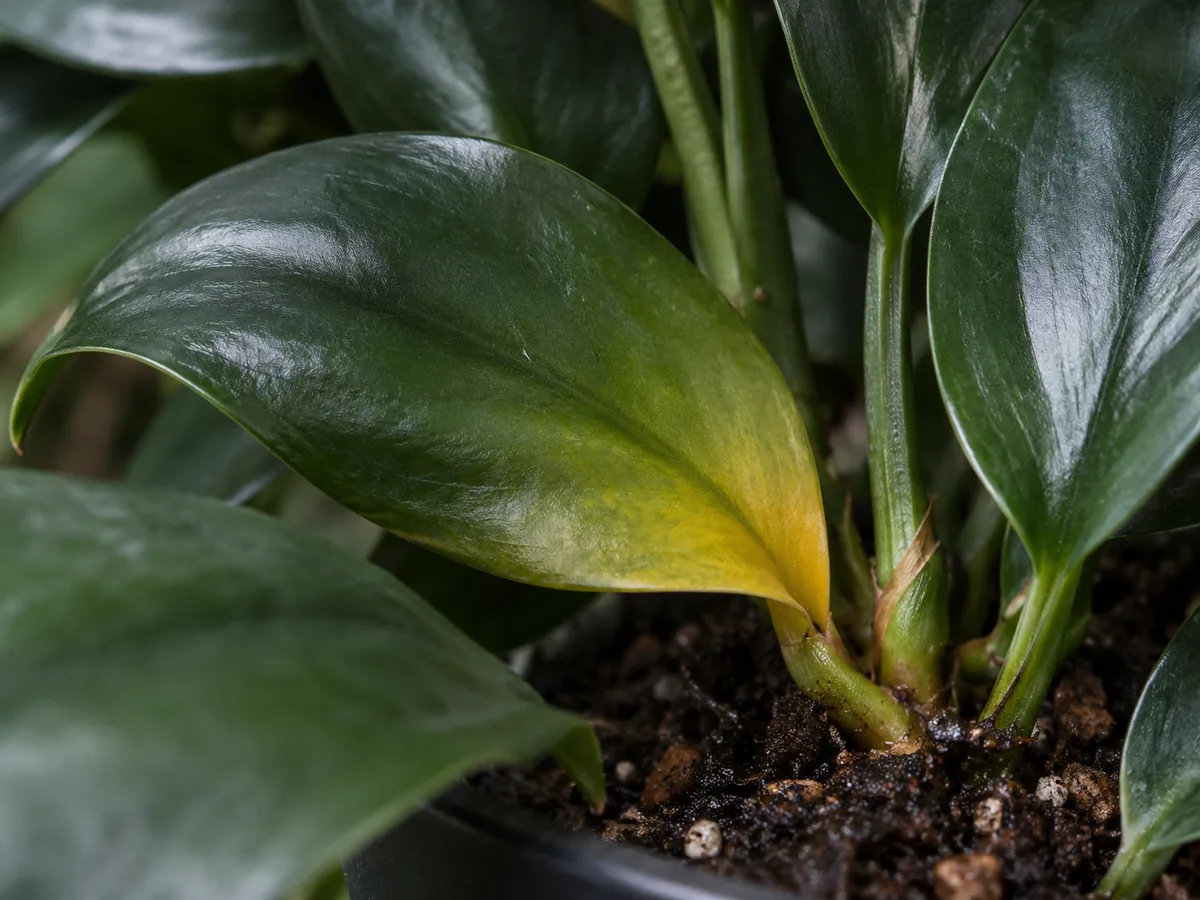
Several lower leaves yellowing together on a heavy, damp pot points toward excess moisture; an isolated leaf needs context from the soil and the rest of the vine.
General houseplant guidance links yellowing and limp foliage with excess moisture; dry mix and crisp tissue point toward a different problem, while pests can cause localized yellowing. The Spruce also lists overwatering and underwatering among common causes of yellow houseplant leaves. Use those broad patterns as clues rather than a Treubii-specific diagnosis, then check the plant’s soil and roots before treating.
Why this slow, dark vine turns yellow
Check these possible causes in order, starting with the root zone:
Excess moisture is the first cause to check. NC State Extension says overwatering can lead to root rot in Treubii and recommends allowing the soil to dry substantially between waterings. Persistently wet mix can lead to root rot, so compare the pot weight and moisture below the surface before adding more water.
An isolated yellow leaf. One lower leaf yellowing while the rest of the vine remains firm is less specific than a spreading pattern. Check the mix and keep watch for additional yellowing before changing the plant’s care.
Too little light. Treubii prefers bright, indirect or filtered light. If it sits in a dim position and growth has slowed, compare that pattern with the moisture check before blaming light alone.
A prolonged dry spell. If the mix is dry well below the surface and the pot is light, underwatering is possible. Dry, crisp tissue differs from the softer yellowing often seen with wet roots, though leaf texture alone is not diagnostic.
Nutrient problems. Nutrient deficiency can yellow older leaves, but it is easy to confuse with root, watering, or light stress. nitrogen deficiency affects older lower leaves; consider feeding only after the roots and basic growing conditions check out.
Temperature stress. NC State lists a preferred range of 65–75°F for Treubii. Keep it away from cold window glass and sudden temperature changes, especially if symptoms appeared after a move.
Direct sun scorch and pests. NC State lists direct-sun scorch and common pests for Treubii, including mealybugs, aphids, and spider mites. Damage concentrated on the exposed side makes light worth checking; inspect for visible insects, webbing, sticky residue, or stippling before treating yellowing as pest damage.
How to confirm the cause
Work in this order before changing anything:
- Lift the pot. A heavy pot days after watering suggests excess moisture remains; Gardening Know How recommends using pot weight as one clue. A conspicuously light pot means the mix may be dry through.
- Finger-test halfway down. Surface dryness lies; push a finger to the middle of the root ball. Damp at depth shows the root zone is still moist even when the top looks dry; compare that with the leaf pattern and pot weight.
- Feel the yellow leaves. Soft, limp leaves can accompany excess moisture. Dry, papery, crisp tissue can point toward drought, but texture alone does not confirm the cause.
- Count and locate. One isolated lower leaf with firm growth above is less specific than yellowing across several leaves, which warrants checks of water, light, and roots.
- Check the shaded side. Yellowing concentrated on the shaded side together with slowed or stretched growth makes light worth checking, but does not rule out a moisture problem.
- Smell the drainage holes and inspect the base. A sour smell or soft stems at the soil line increases concern about root trouble and warrants a root inspection.
- Flip leaves and check vine joints. Sticky residue, cottony clusters in axils, fine webbing, or stippled dots mean pests are contributing, and the sticky or scarred pattern will not match pure water stress.
The first fix to try
First, hold off watering while the mix remains wet below the surface. Let it dry toward the point NC State Extension recommends for Treubii: half dry to almost dry.
Avoid making several changes at once. Let the mix dry toward the plant’s recommended watering point, then reassess moisture and whether new yellowing continues. Existing yellow tissue may remain discolored, so use the condition of new growth and roots as additional clues.
Step-by-step recovery
When the mix reaches that dry-down point, water thoroughly and let excess drain. Use the Treubii Dark Form watering guide to keep the next watering tied to soil condition rather than a calendar; remove fully yellow leaves only if you want to clear damaged tissue.
If stems are soft at the base or the mix smells sour, inspect the roots. Persistently saturated soil can contribute to root rot. If roots are damaged, trim mushy roots and repot. Slide the plant out carefully and look for roots that are brown and mushy. If present, trim those parts with clean scissors and repot in fresh, airy mix that matches the plant’s soil preferences. If roots are firm, avoid an unnecessary repot and reassess light and moisture instead.
The half-dry rule: Treubii’s narrow watering window
Use the species-specific guidance instead of a generic houseplant schedule: NC State Extension recommends watering Treubii when the soil is half dry to almost completely dry. Avoid keeping the mix continuously wet, and use pot weight as a second clue when the soil surface dries faster than the lower mix.
In practice, let the upper half dry and allow the lower mix to approach dryness before watering thoroughly until it drains. When light and growth slow, the mix may take longer to dry; check pot weight and soil depth rather than following a seasonal calendar. Judge by pot weight plus the halfway finger test, not by the calendar, and empty any cachepot so the base never sits in pooled water.
Reading yellow on near-black leaves
Dark foliage can make subtle changes harder to notice. Compare suspect leaves with healthy ones and note whether yellowing is limited to one old leaf or spreading across the plant.
During routine checks, inspect leaf undersides and the oldest leaves near the soil. If yellowing appears with soft stems or persistently wet mix, inspect roots rather than relying on color alone.
Why slow growth changes the math
Named grower Rachel Castelletti describes Treubii Moonlight as a slow-growing vine, but the profile does not give a recovery timetable for Dark Form. Avoid a fixed calendar; follow whether yellowing spreads and whether new growth is firm and healthy.
Existing yellow leaves may remain discolored after the cause is corrected. Track the plant over time: continued spread, stem condition, and the quality of new growth provide more useful signs than expecting an old leaf to return to its former color.
When nutrients are worth checking
Do not use fertilizer as a first response to yellowing. Check moisture, roots, and light first. If the plant is otherwise healthy and actively growing, follow the label and the Treubii Dark Form fertilizer guide; avoid feeding a plant with suspected root damage.
Light: bright and filtered, never harsh
NC State Extension recommends bright, indirect or filtered light for Treubii. Protect it from harsh direct sun, which can scorch leaves; damage concentrated on the exposed side suggests checking light exposure as well as watering.
If the plant is in a dim location and growth has stalled, move it toward brighter filtered light rather than into direct sun. See the Treubii Dark Form light guide for placement details.
Temperature and drafts
NC State Extension gives a preferred temperature range of 65 to 75°F for Treubii. Keep it in steady indoor warmth and away from cold drafts.
Keep the pot away from cold window glass and heating or cooling vents. A fixed humidity target is not the first adjustment to make when leaves yellow; first check root moisture, light, and temperature.
When to use this page vs other guides
| What you see | Most likely cause | Where to go |
|---|---|---|
| Yellow, soft leaves on a heavy, damp pot | Overwatering | This page + Overwatering |
| Yellow with mushy stem bases, sour mix smell | Root rot | Root rot after the rescue steps above |
| Yellow, crisp edges on a light, dusty-dry pot | Underwatering | Underwatering |
| Faded yellow on the shaded side, stretched stems | Low light | Not enough light |
| One lowest leaf only, rest firm and dark | Cause is unclear; monitor for spread | This page, check mix first |
Mistakes to avoid
- Watering on a schedule instead of by pot weight and the halfway test.
- Misting yellow leaves to “hydrate” them, which keeps foliage wet without fixing root-zone saturation.
- Fertilizing a stressed plant before water and light are corrected.
- Repotting for mild yellowing before checking the mix and roots.
- Cutting back healthy vines for one isolated yellow leaf before checking the mix.
- Moving a light-starved plant straight into direct sun, trading fade for scorch.
How to prevent it next time
Anchor watering to the half-dry rule and pot weight. Keep placement bright but filtered, temperatures steady, and the mix draining freely. Refresh the mix if it becomes compacted or stays wet much longer than before. Inspect new plants for pests before placing them beside Treubii; quarantine newly acquired plants before adding them to the collection. NC State lists mealybugs, aphids, and spider mites among pests that can affect this plant. Anything that does not match the patterns above belongs on the Treubii Dark Form problems hub for routing to the right guide.
With pets or children around, handle with normal care: this species carries medium-severity poison characteristics if ingested, so do root work where dropped leaves and trimmings cannot be chewed.
Related Treubii Dark Form guides
- Treubii Dark Form hub — baseline care for light, water, and soil when the whole plant looks off rather than just a few leaves.
- Treubii Dark Form watering guide — use when yellowing keeps recurring and the dry-down rhythm needs recalibrating.
- Treubii Dark Form light guide — use when yellowing sits on the shaded side with stretched, leggy stems.
- Treubii Dark Form problems hub — use when checks point to pests, spots, or wilting instead of plain yellowing.
Related tool
Use the Yellow Leaves Diagnosis Tool to narrow causes for yellow leaves on this plant before changing multiple variables at once.