Underwatering on Scindapsus Treubii Dark Form: Causes
Quick answer
Underwatering on Scindapsus Treubii Dark Form is most likely when the root-zone mix is dry and the pot is light alongside limp leaves. First check moisture below the surface; if the root ball is dry, water evenly until excess drains, then let the pot drain fully.
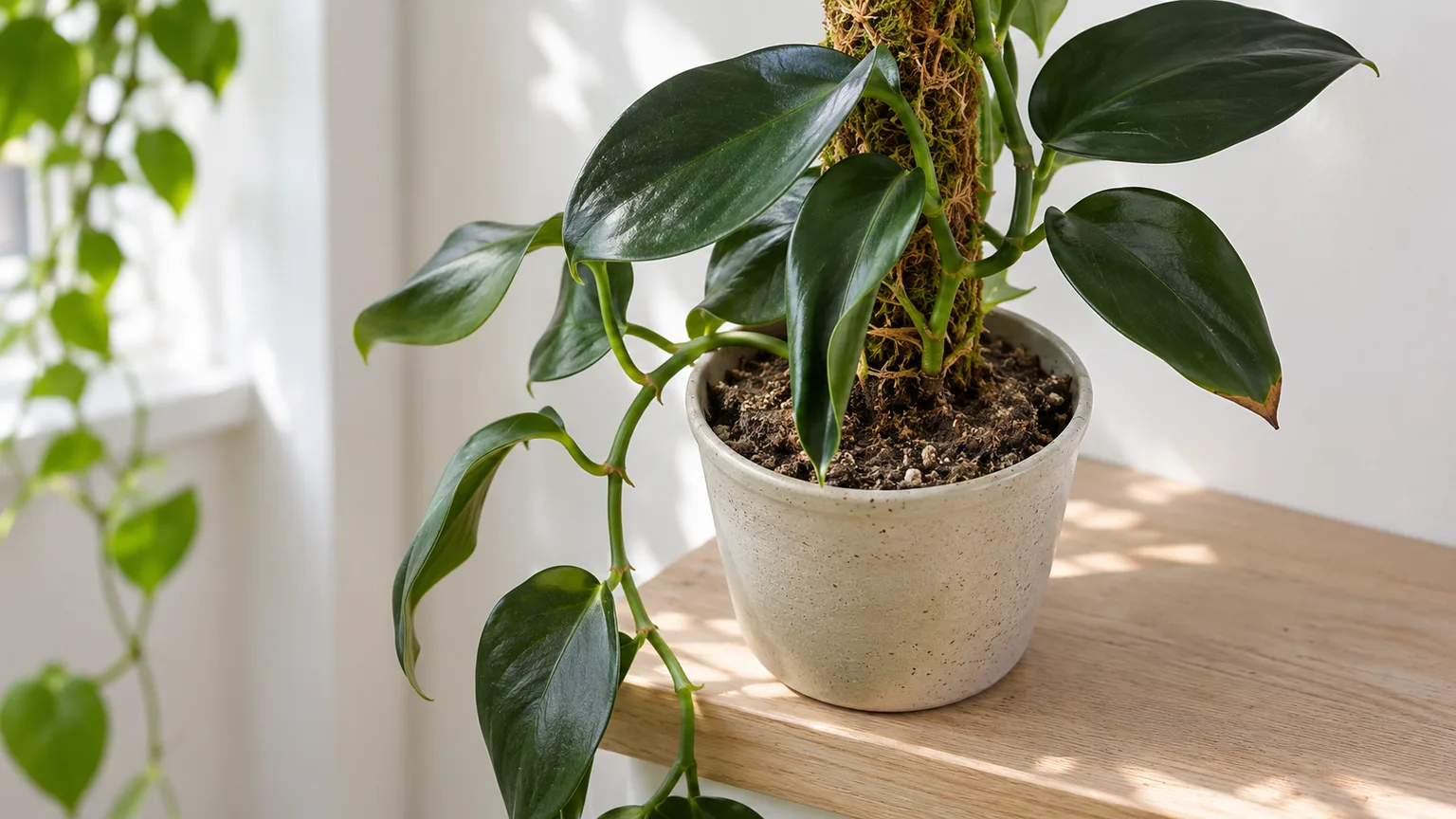
Underwatering on Scindapsus Treubii Dark Form: Causes, Checks & Fixes
This guide covers underwatering on Scindapsus Treubii Dark Form. See also the general Underwatering guide, watering, and light pages for this plant.
Underwatering on Scindapsus Treubii Dark Form: Causes, Checks & Fixes
Quick answer
Underwatering on Scindapsus Treubii Dark Form is most likely when the potting mix is dry through the root zone, the container feels light, and several leaves lose firmness at once. A single curled leaf does not confirm thirst: root damage, direct sun, low humidity, and pests can produce overlapping symptoms. First check the mix below the surface. If it is dry, water the whole root ball slowly until excess drains, then let the pot finish draining. Do not add repeated small sips to a dry, shrunken mix.
For the general signs of drought stress, see our underwatering guide. Dark Form has thick, glossy leaves and a climbing or trailing habit, so inspect the pot and vines together rather than diagnosing from leaf curl alone.
What underwatering looks like on Dark Form
A thirsty Scindapsus treubii can lose leaf firmness and develop limp vines; prolonged dryness may leave older or exposed leaf edges brown and crisp. Dark Form’s thick leaves can stay presentable while the root ball dries, so compare several leaves and check whether new growth is still opening normally. NC State describes Dark Form as a cultivar of S. treubii with glossy, very dark green leaves (NC State cultivar description). Its care guidance recommends watering when soil is half dry to almost completely dry, rather than keeping it constantly wet (NC State watering guidance).
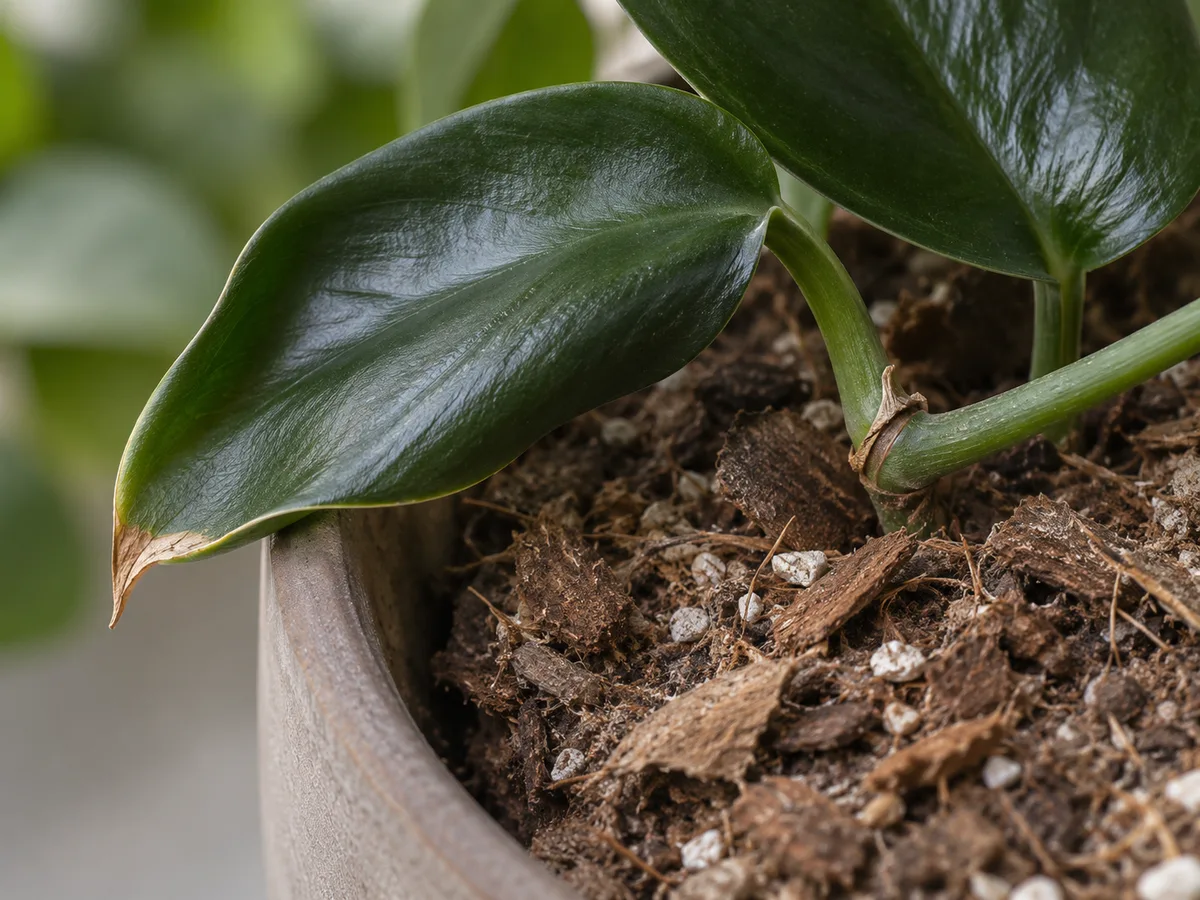
Mild leaf curl with dry mix is a clue to check moisture below the surface before watering.
A dry surface alone is not enough to diagnose underwatering. Check the soil about two inches below the surface before deciding; Illinois Extension notes that wilting may come from either underwatering or overwatering, so use soil moisture with the other symptoms (Illinois Extension watering guidance). Curl can also follow pests or other growing conditions, so inspect for insects and compare the moisture pattern before treating (Gardening Know How on curled leaves). If the pot is heavy or the mix remains wet, more water can worsen root stress; see our overwatering guide and root-rot guide.
Why Dark Form may dry unevenly
Dark Form is grown as a trailing or climbing vine. A small nursery pot, a crowded root ball, bright warmth, or an airy mix can make it dry sooner than expected; a large pot, low light, or dense mix can keep the center wet after the surface dries. Those are clues to check, not a fixed watering calendar. The plant’s own watering guide covers its routine moisture checks, while the soil guide explains the balance between drainage and moisture retention.
How to confirm the cause
Check the plant in this order:
- Feel the mix below the surface. Use a finger or a clean wooden skewer near the edge of the root ball. Dry mix through that area supports underwatering; cool, damp mix means pause before watering again. Illinois Extension recommends checking soil about two inches deep instead of following a calendar, while Iowa State Extension advises watering after the mix dries but before the plant starts wilting (Illinois Extension; Iowa State Extension). NC State advises letting Scindapsus treubii soil become half dry to almost completely dry between waterings, rather than keeping it saturated.
- Lift the pot. A notably light container supports a dry-root-ball diagnosis. Pot weight is most useful when compared with the same container after a thorough watering and drainage.
- Look at the whole vine. Thirst is more plausible when multiple leaves are limp while the mix is dry. If only one leaf is affected, inspect it and the nearby stem for pests or mechanical damage; see the pest guides.
- Check the pattern of damage. Crisp edges on leaves facing a hot window can point to light stress as well as dry mix. Compare with our not-enough-light guide when growth is persistently small or stretched.
- Check for root trouble only when evidence warrants it. If the mix is wet but the vine stays limp, or the pot has a sour smell, investigate drainage and roots instead of adding water. Healthy roots are firm; soft, dark roots suggest damage and need the root-rot recovery steps.
First fix: re-wet a dry root ball evenly
When the mix is dry at root depth, water slowly over the surface until water drains from the pot. Pause if water immediately channels down a gap at the pot wall; apply another slow pass after the first drains so the center of the mix can absorb moisture. Then empty the saucer or cachepot and let the container drain. The Spruce’s Scindapsus pictus guide also recommends watering thoroughly and allowing excess water to drain; use that general aroid guidance alongside NC State’s species-level dry-down advice (The Spruce).
Do not leave the pot standing in water, fertilize a wilted plant, or repot solely because leaves are limp. If water keeps bypassing a severely dry root ball, a brief bottom soak can help re-wet it; remove the pot once the mix begins taking up moisture and drain it fully. Avoid soaking a plant whose mix is already damp.
Recovery on a climbing vine
After watering, keep Dark Form in its usual bright, indirect position and avoid changing light, pot size, and fertilizer at the same time. Some leaves may regain firmness as the root zone rehydrates, but brittle brown tissue will not turn green again. Judge progress by whether limpness stops spreading and new leaves emerge with normal firmness. If the vine remains limp while the mix is moist, check the roots and review the repotting guide before watering again.
For plants with long bare or damaged sections, keep healthy nodes intact; propagation is a backup only when a section is failing, not the first response to a dry pot. Learn the plant’s node placement in the propagation guide.
Lookalikes that need a different response
| What you notice | What to check | Better next step |
|---|---|---|
| Several limp leaves and a light pot | Mix dry well below the surface | Water thoroughly and drain |
| Limp vine with wet, heavy mix | Root firmness, smell, drainage | Pause watering and check for root damage |
| One distorted leaf or sticky residue | Undersides, nodes, new growth | Inspect for pests before changing watering |
| Damage concentrated on the window side | Recent direct sun and leaf scorch | Move out of direct sun; use the light guide |
| Small, stretched new leaves over time | Placement and support | Compare with the leggy-growth guide |
Prevent repeat underwatering
Use the mix and pot as your guide, not a weekly schedule. Check below the surface before watering and account for changes in room warmth, light, and how densely the roots fill the pot. Water thoroughly when the root zone has reached the plant’s normal dry-down point, then let excess water drain. NC State’s recommendation for Scindapsus treubii is to water when soil is half dry to nearly dry; exact timing varies with the container and growing conditions.
A plant that dries unusually fast after repeated thorough waterings may be root-bound or growing in a mix that no longer wets evenly. Check the root ball before sizing up, and choose a pot with drainage. The plant overview and care hub help distinguish routine care adjustments from a separate problem. NC State’s recommended dry-down range offers a species-level reference point for those checks (NC State Plant Toolbox).
When to seek a closer diagnosis
If a thorough watering does not improve firmness and the mix is now moist, do not repeat the soak automatically. Inspect for root damage, pests, and stem softness. If roots are mostly soft or the vine has lost firm nodes, retain healthy sections and reassess whether the original root system can support recovery. Persistent symptoms on wet mix belong to the wilting guide or yellow-leaves guide, depending on what you see.
Related Scindapsus Treubii Dark Form guides
- Watering: routine dry-down checks and watering technique.
- Soil: when the mix dries unevenly or stays wet too long.
- Root rot: limpness with wet mix or soft roots.
- Drooping leaves: drooping that persists after moisture is corrected.
Related tool
Use the Plant Watering Calculator to organize your moisture checks for this plant.