Brown Tips on Scindapsus Treubii Dark Form: Causes, Checks
Quick answer
Brown tips on Scindapsus Treubii Dark Form can follow watering stress, dry air, direct sun, or other environmental problems. Check the mix moisture, the plant’s placement, and signs of root stress before changing care.
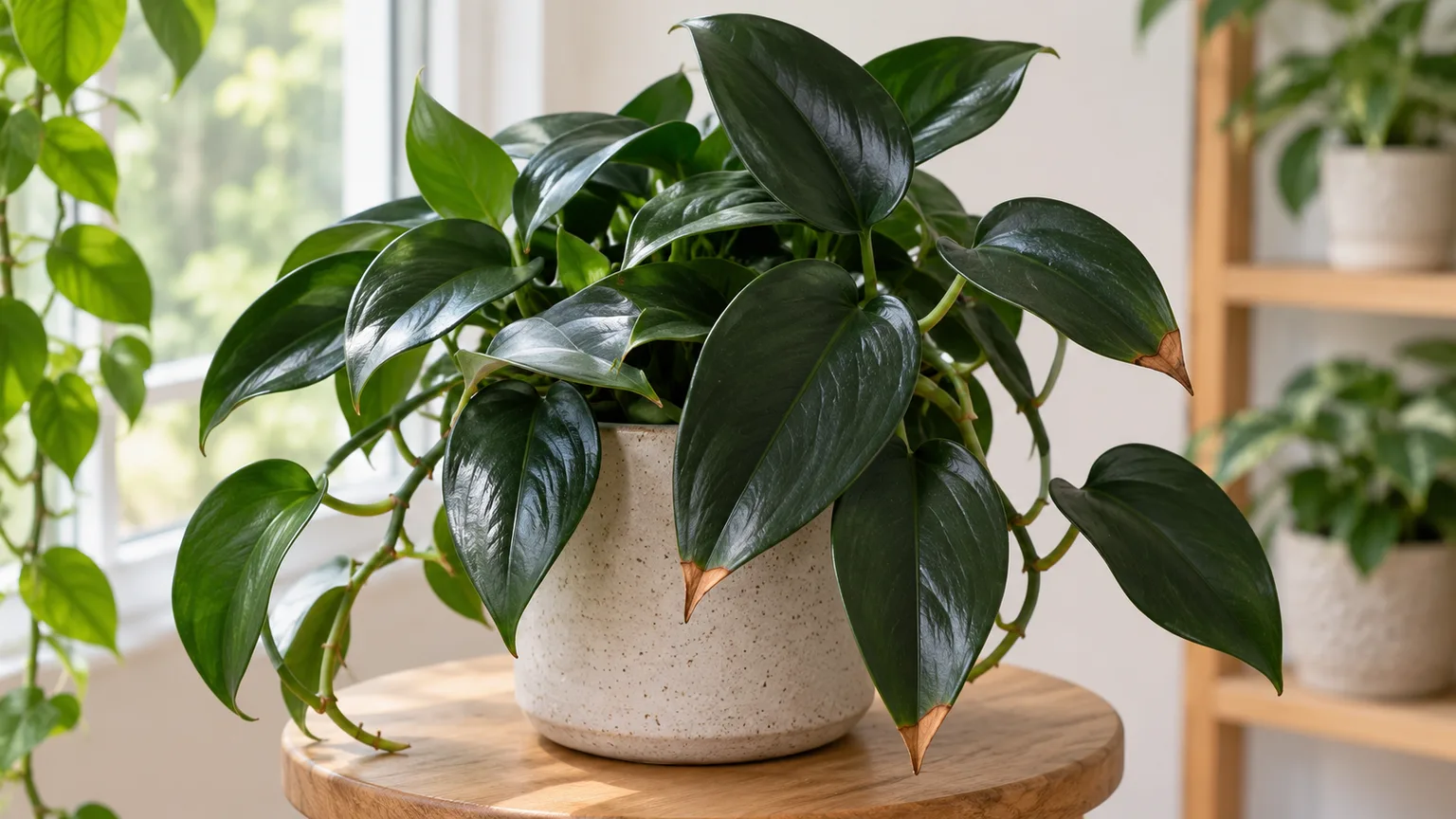
Brown Tips on Scindapsus Treubii Dark Form: Causes, Checks & Fixes
This guide covers brown tips on Scindapsus Treubii Dark Form. See also the general Brown Tips guide, watering, and light pages for this plant.
Brown Tips on Scindapsus Treubii Dark Form: Causes, Checks & Fixes
Quick answer
Brown tips on Scindapsus Treubii Dark Form can accompany watering stress, dry air, direct sun, or other environmental problems. First check the mix moisture, the plant’s placement, and signs of root stress before changing care. A flush is not the right first response to every brown tip.
For the general causes of brown tips on houseplants, see our brown tips guide. On Dark Form, compare several leaves and check the plant’s recent watering and light conditions; a single brown tip does not identify its cause.
What brown tips look like on Dark Form
Dark Form leaves are glossy and very dark green, nearly black at maturity, thick, and heart-shaped. Brown tips or margins can have several causes; also note whether browning appears in the middle of the leaf, since overwatering can produce that pattern in houseplants (RHS leaf-damage guidance).
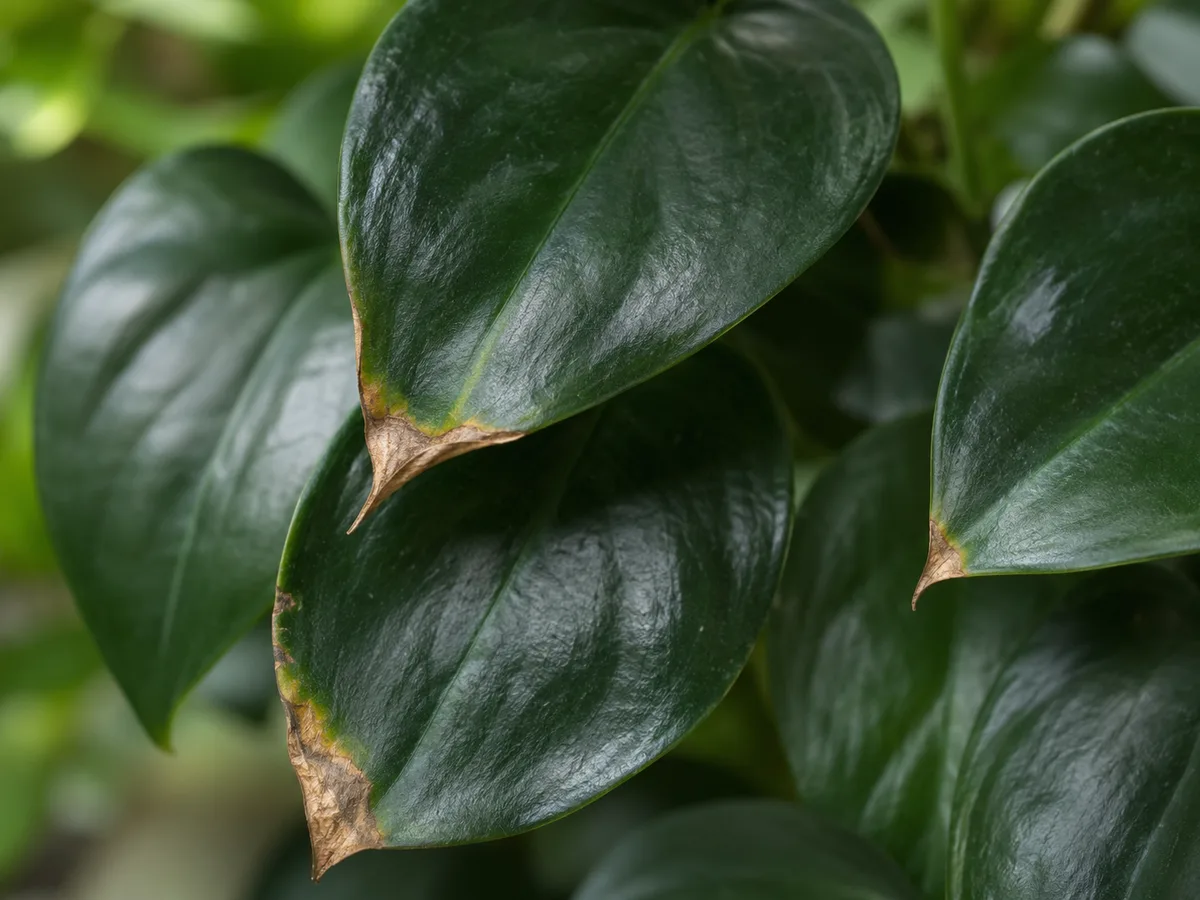
Dry brown tips affect a few older leaves while the rest of the Dark Form foliage remains firm and glossy.
Scindapsus treubii is a slow-growing vine. Track whether fresh damage appears on new leaves after you make a targeted care change; this is more useful than expecting an existing brown area to disappear.
Why Dark Form gets brown tips
Scindapsus treubii is slow-growing, prefers bright indirect or filtered light, and does best when watering waits until the soil is half dry to almost dry. NC State Extension also notes that overwatering can lead to root rot and direct sun can scorch the leaves, so check the plant’s light and watering history before assuming fertilizer is the cause (NC State Extension). Because Dark Form replaces leaves slowly, old damage can remain visible long after the original stress has eased.
Brown tips can have more than one cause. The RHS notes that houseplant brown tips or margins may reflect over- or under-watering, a dry atmosphere, or poor ventilation, so compare the leaf pattern with the plant’s conditions before settling on a cause (RHS leaf-damage guidance). Winter heating can lower indoor humidity, but a single humidity reading does not prove dry air caused the damage (Joe Gardener).
How to confirm the cause
Work through these checks in order before treating:
- Surface buildup check. Look for crust on the mix or pot rim and review recent feeding and water choices. Crust is a reason to review buildup, not proof that it caused the brown tips; flush only when drainage is reliable.
- Water history check. Push a finger 4 to 5 cm into the mix. If the plant repeatedly goes from dust-dry to soaked, or the pot stays heavy and wet for days, note that pattern before watering again; Scindapsus treubii is intolerant of overwatering and can develop root rot (NC State Extension).
- Humidity and heat check. Note radiators, heating vents, and cold drafty glass. Damage worst in winter with the heat on, across several leaves at once, implicates dry air — heating season is when indoor humidity plummets and houseplants suffer for it.
- Light-side check. Browning concentrated on the window-facing side, or bleached patches rather than crisp tips, can indicate direct sunlight scorching the leaves.
- Root check. Slip the nursery pot out only if it stays wet or smells sour, then look for dark, soft roots rather than firm pale ones. Sour or slimy smells can accompany waterlogged roots; root rot is a known risk when this species is overwatered (Joe Gardener; NC State Extension).
The first fix to try
If there is surface buildup and the mix drains freely, flush the pot with plain room-temperature water until it runs from the drainage holes, then let it drain completely.
Set the nursery pot in a sink and pour slowly across the surface; empty the cachepot or saucer so the plant never sits in runoff. Flushing can leach accumulated fertilizer salts, a general houseplant tip-burn method described by Gardening Know How; that article is about Dracaena, so use the flush only when buildup is plausible and the mix drains freely. If there is no crust or the mix drains poorly, skip the flush and address the confirmed watering, light, or air-condition cause instead. Do not feed, repot, or prune on the same day.
Step-by-step recovery
After that first correction, work only the cause supported by your checks:
- Stabilize watering on the half-dry rule. Water only when the top half of the mix is dry, and always empty standing runoff. Details for this plant’s rhythm are in the Dark Form watering guide. Remember that roots need air as well as water, and pots without drainage quietly collect water that suffocates them.
- Pause feeding. Skip fertilizer until two consecutive new leaves emerge clean, then resume a diluted, label-rate feed only while the plant is actively growing. Scindapsus-specific care guidance recommends feeding during spring and summer, but the product label and the plant’s growth are better guides than a fixed calendar (Plantophiles).
- Test water quality only if other checks fit. If local water leaves mineral crust, try filtered or rainwater for several watering cycles while keeping the rest of the routine stable. Fluoride tip injury is described for Dracaena, but that does not establish fluoride sensitivity in Dark Form; treat this as a comparison, not a diagnosis (Gardening Know How).
- Address persistently dry room air. Grouping plants or running a humidifier may help if tip browning coincides with dry heated air; avoid misting as a substitute for diagnosing the cause.
- Trim for appearance last. Once new growth is clean, snip only dead tissue with clean scissors, following the leaf’s natural point and leaving a narrow brown margin so you do not cut into healthy tissue.
Handling note: NC State Extension lists Scindapsus treubii as toxic if ingested, so keep cuttings away from pets and children and wash your hands after trimming (NC State Extension).
Recovery timeline
Do not expect old brown tips to disappear. Judge the correction by the next leaf as it unfurls: clean new growth suggests the active stress has eased, while fresh browning means the cause still needs checking. Dark Form grows slowly, so the interval between visible leaves varies with season and growing conditions.
Worsening signs include browning that climbs onto new leaves despite the flush, soft or darkening stems near damaged leaves, or a mix that stays soggy and sour. Those mean the root zone is still failing and the plant needs unpotting and inspection, covered in the Dark Form soil guide.
Lookalike symptoms
- Sun scorch. Bleached or papery patches on the window side rather than neat tip browning. Confirm with the Dark Form light guide and move the plant back from the glass.
- Whole-leaf browning. If lower leaves turn brown and fall, check the root-zone moisture and recent heat exposure; the RHS describes that pattern as having multiple possible environmental causes, so use it as a cue to inspect rather than a stand-alone diagnosis (RHS leaf-damage guidance).
- Cold exposure. Sudden damage after a cold draft is different from gradual crisping at the tips. NC State Extension gives a preferred room-temperature range of 65–75 °F for Scindapsus treubii (NC State Extension).
- Pest stippling. Mealybugs, aphids, and spider mites all attack this species (NC State lists these pests), but they leave sticky residue, webbing, or clustered insects rather than clean crisp tips. If you find pests, identify them first and treat only the confirmed pest.
- Fungal or bacterial spots. Soft, wet-looking spots with yellow halos that spread in damp still air differ from dry crisp tips. Improve airflow and stop misting wet foliage overnight.
What not to do
Do not add fertilizer to a stressed Dark Form without first checking the mix, roots, and growing conditions. Do not repot unless roots are clearly rotting or the mix has collapsed. Repeated misting is a poor substitute for diagnosing dry air, and trimming into green tissue removes healthy leaf area. Leave the damaged tip until the cause is stable, then trim only the dead margin if appearance matters.
How to prevent it next time
Keep the routine consistent: water when the top half of the mix is dry, provide bright indirect light, and avoid prolonged saturation. Feed only during active growth and follow the product label; flush only if salts appear to be accumulating and the pot drains reliably. NC State Extension recommends rich, well-drained soil for Scindapsus treubii, so a well-drained mix rich in organic matter and a pot with drainage help prevent water from lingering around the roots.
When to worry
Escalate when browning spreads to fresh leaves within days, when stems soften or darken near the damage, or when several leaves fail at once while the mix smells sour. Those patterns point past cosmetic tip burn toward root failure. If only older leaf tips are crisped and new growth is clean, the plant is already recovering — stay the course and browse the Dark Form problems hub only if a different symptom appears.
Related Scindapsus Treubii Dark Form guides
- Dark Form plant hub — placement, routine, and what healthy new growth looks like.
- Dark Form watering — the half-dry check that prevents wet-dry tip burn.
- Dark Form light — bright indirect levels that avoid scorch mistaken for tip burn.
- Dark Form soil — drainage and mix choices that keep salts flushing out.
- Dark Form fertilizer — seasonal feeding strength that avoids salt buildup.
- Dark Form problems — entry point when the symptom turns out to be something else.
Related tool
Use the Brown Tips Diagnosis Tool to narrow causes for brown tips on this plant before changing multiple variables at once.