Overwatering on Scindapsus Treubii Dark Form: Causes
Quick answer
First, remove the pot from any cachepot and empty standing runoff. Scindapsus Treubii Dark Form is intolerant of overwatering; NC State Extension recommends waiting until its soil is half dry to nearly dry before watering again.
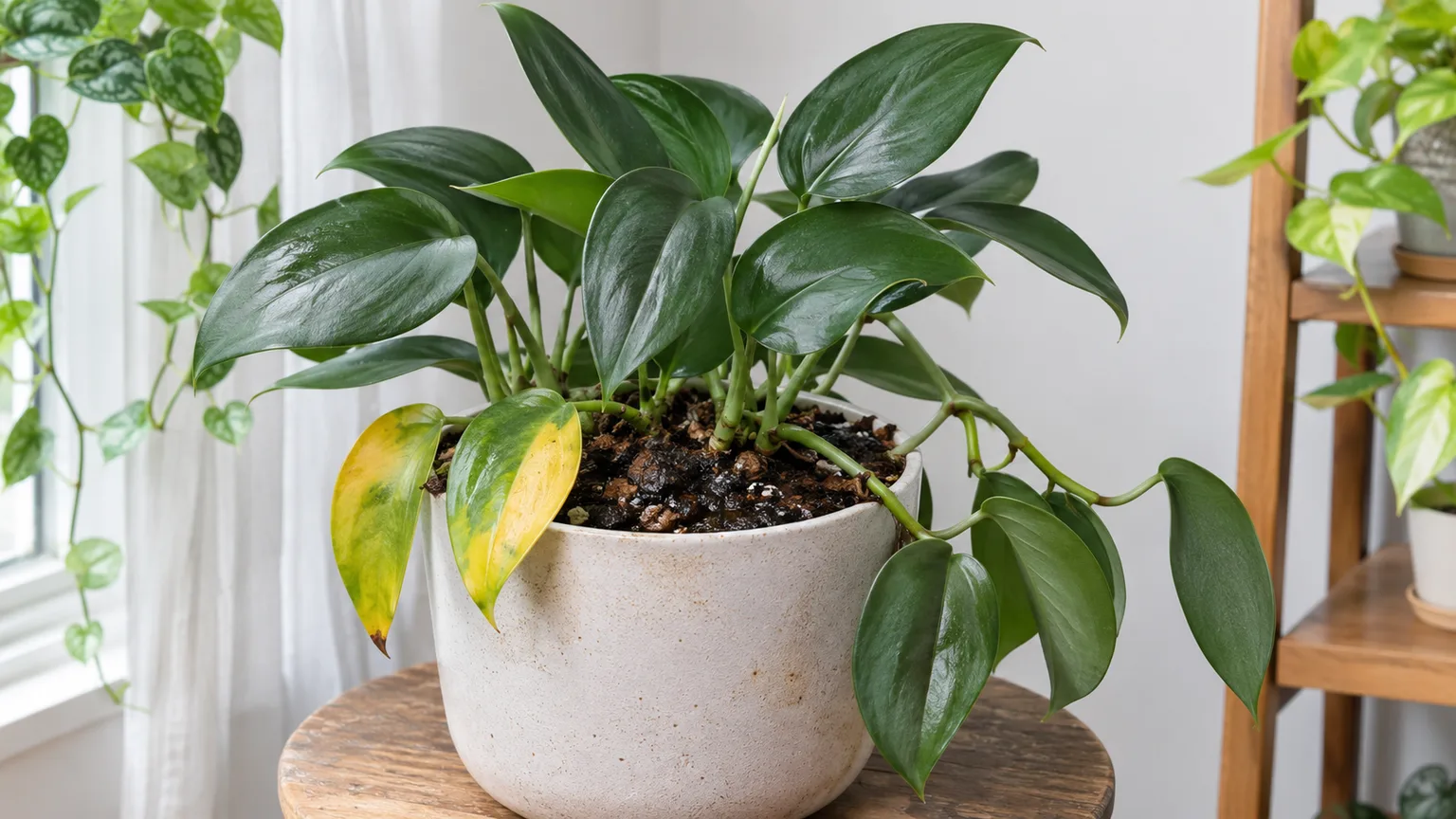
Overwatering on Scindapsus Treubii Dark Form: Causes, Checks & Fixes
This guide covers overwatering on Scindapsus Treubii Dark Form. See also the general Overwatering guide, watering, and light pages for this plant.
Overwatering on Scindapsus Treubii Dark Form: Causes, Checks & Fixes
Quick answer
Stop watering and let the top half of the mix dry before the next drink. Scindapsus Treubii Dark Form is a slow-growing, thick-leafed vine that sips water slowly, so mix that stays soggy suffocates its roots faster than most owners expect. North Carolina Extension notes this species does not tolerate overwatering and does best when watered only once the soil is half dry to almost completely dry. How constantly wet mix starves roots in general is covered in our overwatering guide — on Dark Form, the pattern usually shows up as yellowing lower leaves plus limp vines sitting in soil that never seems to dry.
First move, and only move for now: lift the nursery pot out of any decorative cachepot, tip out every drop of standing water, and do not water again until the top half of the mix feels dry to a finger or skewer test.
What overwatering looks like on Dark Form
The tricky part with this cultivar is that its thick, satiny leaves, which mature to a glossy near-black tone, hide early stress well. Early root stress is not always obvious from the leaves alone, so compare the plant’s condition with how long the mix stays damp.
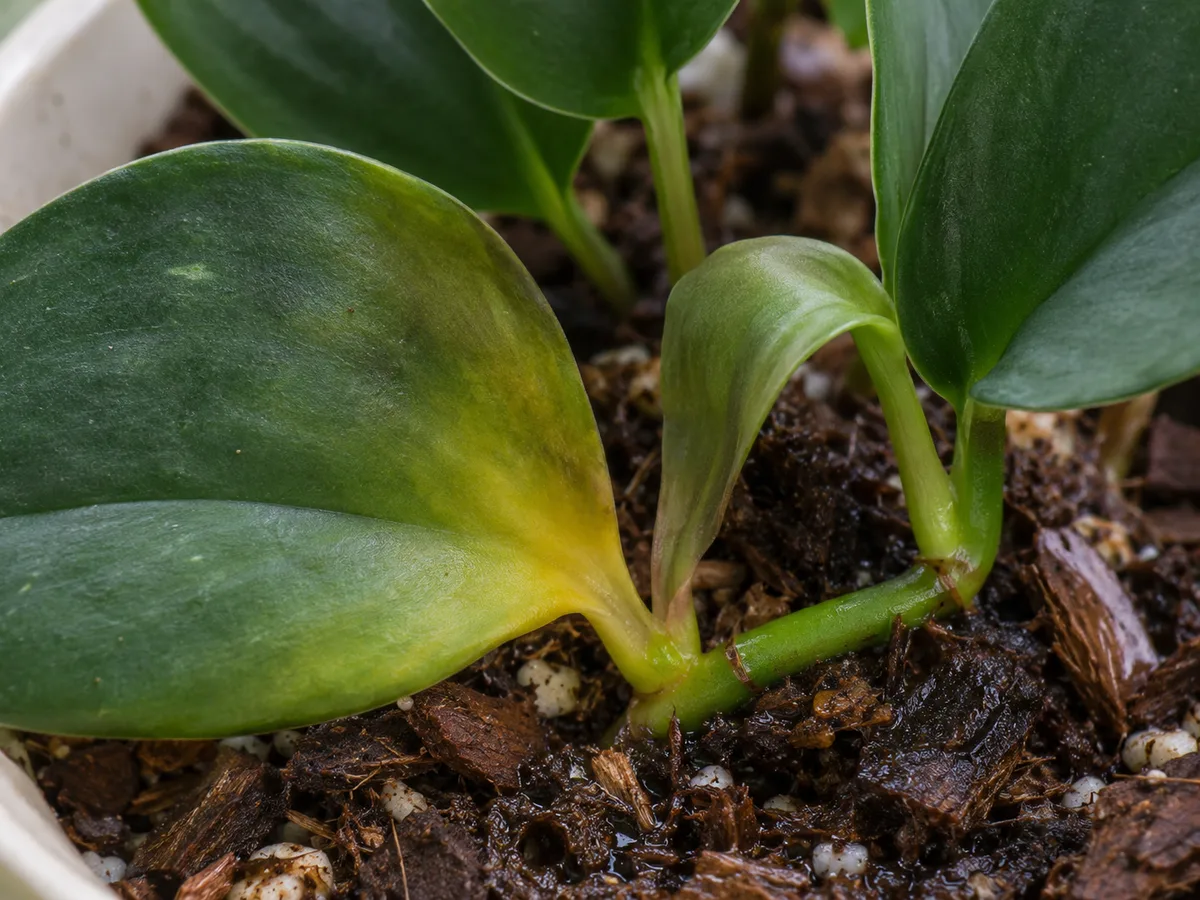
Yellowing older leaves and limp growth beside wet mix can point to overwatering; check the root zone before changing the watering routine.
Yellowing starts on the older, lower leaves while the vine tips still look fine. An isolated older leaf can age naturally; repeated yellowing across older leaves is a reason to inspect the root zone and recent watering conditions. Next comes the signature contradiction: vines go limp and leaves soften even though the soil is clearly damp. That limp-on-wet pattern is the key separator from thirst, and it matches what experienced growers describe — overwatering shows itself through yellow leaves and the vine wilting rather than through crisp edges.
More concerning signs are softening at the soil line or roots that are brown, black, and mushy. Fungus gnats or surface growth may accompany persistently damp potting mix, but neither one by itself confirms root rot.
Why Dark Form gets overwatered so easily
Scindapsus treubii is a slow-growing vine, and its watering needs should be judged by the mix rather than the calendar. Thick foliage can make early water stress less obvious, so owners may be tempted to water preemptively. That habit is risky for a species NC State Extension describes as intolerant of overwatering.
Third, placement quietly decides everything. In modest indoor light the plant photosynthesizes and transpires sluggishly, so the pot stays wet for days longer than it would in a bright window. Low light, a pot much larger than the root system, or a mix that holds water can all delay dry-down. When repotting, University of Minnesota Extension advises increasing pot diameter by only 2–3 inches, since excess mix in an oversized container can stay wet and raise root-rot risk. Cooler or lower-light periods may also change how quickly the pot dries, so do not carry a warm-season cadence into a different growing environment without checking the mix.
How to confirm before you act
Use these checks together; no single leaf symptom proves overwatering.
Check the mix below the surface with a finger or wooden skewer, following NC State Extension’s guidance to let Scindapsus treubii soil become half dry to nearly dry between waterings. A heavy pot can support that reading, while a dry surface alone does not tell you whether the lower root zone is still wet. Pair soil moisture with the plant: yellowing lower leaves and limp growth on damp mix make excess moisture more likely; limpness with a light pot and dry mix points toward thirst.
If the mix remains wet and symptoms continue, inspect the roots gently. Firm roots without soft, decayed areas do not show the same damage as roots that are brown or black and mushy; use the latter as a reason to follow the rescue steps below.
The first fix: stop watering and air out the root zone
Do exactly one thing first: get air back to the roots. Lift the nursery pot out of its cachepot or saucer, pour off all pooled runoff, and set the pot somewhere with gentle airflow in bright indirect light so the mix can breathe. Bloomscape’s Scindapsus guidance makes the same point from the other direction — always discard any excess water in the saucer, because sitting in runoff is what pushes damp mix into rot.
Then let the mix dry toward the halfway point before watering again, checking the pot rather than following a calendar. This gives you a chance to see whether the plant stabilizes as the root zone returns to the species’ recommended dry-down range. Avoid adding fertilizer while roots are stressed; investigate further if stems soften, the mix remains wet, or decline continues.
Mild-case recovery vs root-rot rescue
If the vine firms as the pot dries and yellowing does not continue, the plant may recover without a repot. Resume watering by checking the mix as described below. Remove leaves only after they are fully yellow; damaged tissue will not regain its former appearance.
If vines stay limp on wet mix, stems soften at the base, or roots looked mushy in your check, move to a rescue. Root rot can occur with overwatering on this species, and rotted roots cannot be dried back to health — they must come off. Remove loose, saturated mix and trim roots that are clearly soft and decayed with clean scissors, stopping at firm tissue. Repot into fresh, well-drained mix in a container sized for the remaining roots, using the Scindapsus Treubii Dark Form repotting guide for pot selection. Avoid keeping the new mix saturated; follow the plant’s dry-down needs as it resumes growth.
Node-cutting insurance for a slow grower
Because Dark Form grows slowly, a badly rotted parent takes months to rebuild — so take out insurance while you operate. Snip one or two healthy vine tips with at least one node and a leaf each, and root them in water or an airy propagation medium. Take cuttings only from firm, healthy vine sections; propagation can preserve a portion of the plant but does not guarantee success. Once a cutting has developed roots, pot it into a well-drained mix and monitor its moisture separately from the recovering parent.
A dry-down rhythm that prevents repeats
The long-term fix is a checking habit, not a schedule. Water thoroughly when the mix has dried to around halfway, then let excess drain and empty the saucer. How quickly the pot reaches that point depends on light, temperature, pot size, and the mix, so use the Scindapsus Treubii Dark Form watering guide as a plant-specific reference and check the actual pot before watering.
Two structural choices make the rhythm far more forgiving. Pot in a genuinely chunky perlite-amended mix rather than dense straight peat, as covered in the Scindapsus Treubii Dark Form soil guide — chunky mix re-admits air quickly even if you water a day early. And give the plant enough light to actually use its water: this species wants bright indirect light, and changes in light can alter how quickly the pot dries, so recheck moisture after moving the plant. During slower growth or cooler conditions, do not assume the previous watering interval still applies; let the soil condition guide the next watering.
Cool conditions can slow growth and change dry-down. Keep the plant in a stable indoor environment and let the soil condition, rather than a fixed interval, guide watering.
Mistakes to avoid
Do not use fertilizer to treat a soggy root zone. Resume the plant’s ordinary feeding routine only after it has stabilized and resumed healthy growth. Do not repot, hard-prune, and spray for pests all on the same day either; each is a separate stress, and stacking them on weakened roots hides which action helped or hurt.
Do not mist the leaves as a substitute for fixing the soil, and do not switch to little sips every few days to “be careful” — one full soak followed by a real dry-down beats chronic dampness every time. Finally, do not keep the nursery pot parked inside a tight cachepot with no air gap; treat outer pots as coasters, watering at the sink and returning the plant only after dripping stops.
Lookalikes worth ruling out
Underwatering can also cause limp vines, so check the mix and pot weight before adding water. A thoroughly dry root ball supports thirst; damp mix points to another cause.
Low light can slow growth. If the mix dries normally and roots look firm, check the Dark Form light guide before changing the watering routine. A single yellow leaf on an older vine may be normal aging; look for a pattern across the plant rather than relying on one leaf.
When to worry
Inspect roots promptly if stems soften at the soil line, decline continues while the mix stays wet, or the plant loses firmness across several vines. For a confirmed root-rot pattern, follow the Dark Form root-rot guide for diagnosis and salvage steps. Extensive root loss can limit recovery; healthy cuttings may offer a backup, but they are not a guarantee. If you are unsure whether limp vines mean rot or simple thirst after these checks, start with the Scindapsus Treubii Dark Form overview or compare nearby symptoms in its problems hub before cutting.
Related Scindapsus Treubii Dark Form guides
Use this guide when the mix stays wet and the vines or roots show signs of stress. For routine moisture checks, see the watering guide; for mix or container changes, use the soil guide and repotting guide. If the mix dries normally but symptoms continue, compare other causes in the problems hub.
Related tool
Use the Root Rot Risk Checker with Scindapsus Treubii Dark Form pre-selected to score drainage, pot size, and watering habit for this plant before changing anything else.