Mealybugs on Scindapsus Treubii Dark Form: How to Spot
Quick answer
Isolate your Scindapsus Treubii Dark Form at the first sign of cottony white clusters, then dab each insect directly with a cotton swab dipped in 70% isopropyl alcohol. Check leaf axils, stem nodes, leaf undersides, and unfurling tips, and keep inspecting after treatment because eggs protected beneath wax can hatch later.
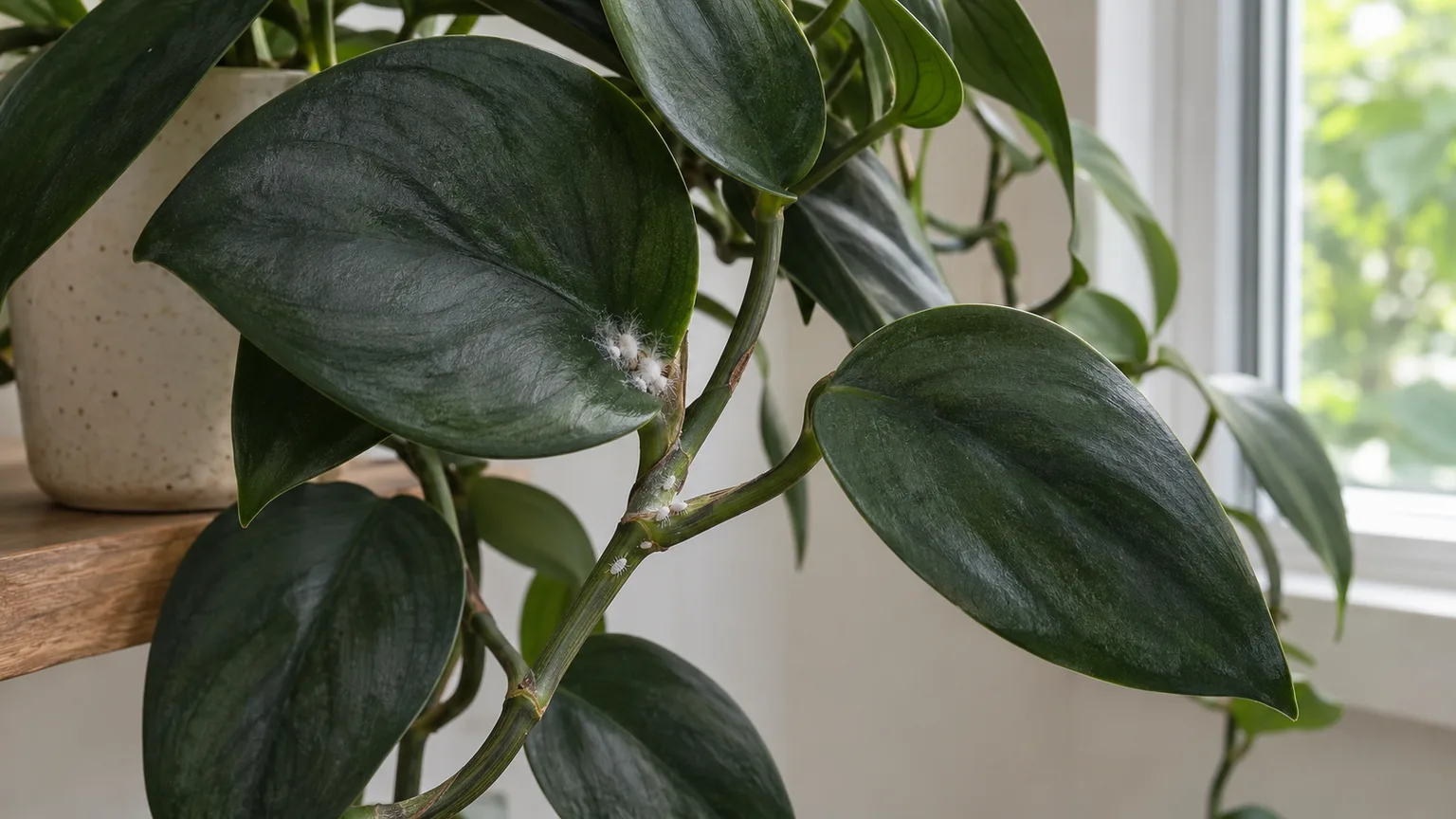
Mealybugs on Scindapsus Treubii Dark Form: Causes, Checks & Fixes
This guide covers mealybugs on Scindapsus Treubii Dark Form. See also the general Mealybugs guide, watering, and light pages for this plant.
Mealybugs on Scindapsus Treubii Dark Form: Causes, Checks & Fixes
Quick answer
Move your Scindapsus Treubii Dark Form away from every other plant the moment you spot suspicious white fluff. Then work vine by vine, pressing a cotton swab dipped in 70% isopropyl alcohol directly onto each cottony mass until the wax dissolves and the insect underneath is exposed. For general mealybug biology that applies to any houseplant, see our mealybug pest guide. On Dark Form itself, the job is easier to start than on many plants because the near-black satin leaves make white colonies stand out, but harder to finish because eggs hide in tight axils and hatch for weeks afterward.
What mealybugs look like on Scindapsus Treubii Dark Form
Mealybugs are soft-bodied, wingless insects about 1/16 to 1/8 inch long with oval bodies coated in a white, waxy secretion, as described by the Missouri Botanical Garden. Females cluster together and spin cottony masses that shelter hundreds of eggs, so what you notice first is white fluff rather than individual bugs.
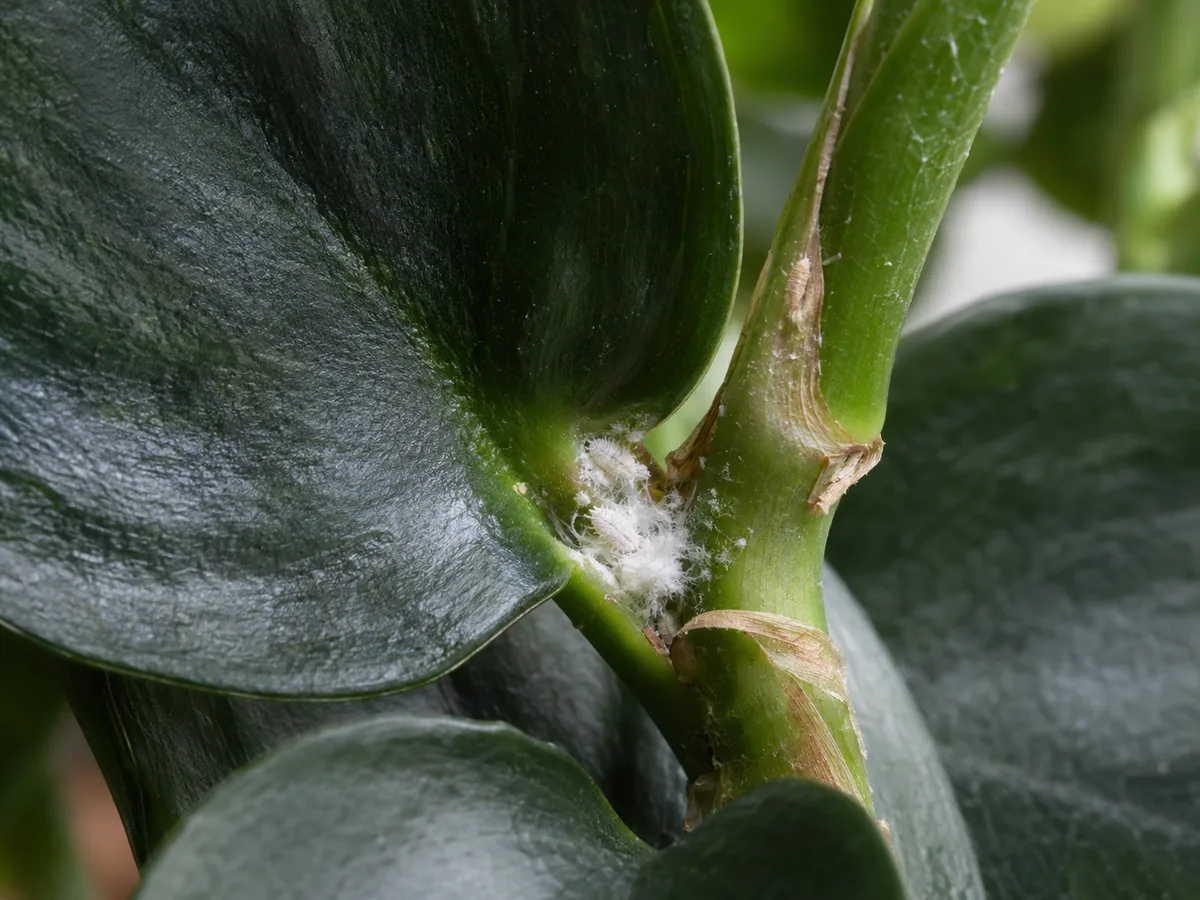
Cottony wax in a leaf axil and stem node is a common sign of mealybugs.
Dark Form foliage turns that fluff into a high-contrast signal. Check these sites in order:
- Leaf axils and stem nodes along each vine, where the petiole meets the stem and wax tufts wedge into the crease.
- Leaf undersides, especially along the midrib of lower, older leaves where colonies feed undisturbed.
- Unfurling tips and young leaves, which emerge crinkled or stunted when mealybugs drain the growing point.
- Vine contact points, anywhere two vines touch each other, the pot rim, or a support, since crawlers cross these bridges.
Secondary signs confirm an active colony rather than stray dust. Sap feeding produces sticky honeydew that dries to a glossy film on the normally matte-satin leaf surface, and black powdery sooty mold often colonizes that film, both classic mealybug signatures noted by the Royal Horticultural Society. Heavy feeding yellows individual leaves and stalls the vine tip.
Why this slow dark vine is vulnerable
Scindapsus Treubii Dark Form grows slowly on trailing or climbing stems, reaching its full length over seasons rather than weeks, a habit documented by NC State Extension. Slow growth cuts both ways: colonies have weeks of undisturbed feeding before a vine outgrows them, and the plant cannot quickly replace drained leaves once pests are removed.
Two traits shape inspections on this cultivar specifically. First, the dark blades make white colonies easy to spot on top, but undersides and tight nodes still need checking. Second, long vines that drape or touch neighboring pots can create contact points between plants. Do not assume that wet mix itself causes mealybugs; use the plant’s normal watering guide to prevent unrelated root stress. Keeping the plant in medium to bright indirect light and watering only when the top half of the mix dries grows firmer tissue that withstands minor feeding pressure.
How to confirm before treating
Rub suspect fluff with an alcohol-dipped swab. A live mealybug mass melts into a yellowish-brown smear with visible soft bodies; mineral dust, perlite flecks, and hard-water crusts stay gritty and unchanged. This simple contact test, recommended by Epic Gardening, beats guessing from photos.
Separate mealybugs from these lookalikes:
| What you see | Distinguishing test | Verdict |
|---|---|---|
| Raised cotton tucked in axils and nodes, sticky leaf below | Dissolves to a brown smear with alcohol | Mealybugs |
| Flat grey-white dust spread evenly over leaf tops | Wipes off dry with no stickiness and no insects | Dust or mildew residue |
| Hard white grit on lower leaves and topsoil | Granular, will not dissolve or smear | Perlite or fertilizer salts |
| Chalky rings along leaf edges | Follows margins, no cotton, no stickiness | Hard-water deposits |
| Glossy leaves with black film but no visible cotton | Check axils and undersides closely; colony may be higher up | Honeydew and sooty mold from hidden feeders |
If leaves are sticky but you find no cotton anywhere on the plant, inspect the vines and pots directly above it. Honeydew rains downward, so the colony may sit on an overhanging plant while this one only catches the drip.
First fix: isolate, then swab
Do one thing first: quarantine the plant in a separate spot with similar medium to bright indirect light so recovery is not slowed by a dark corner. Crawlers walk across touching leaves within days, so isolation protects the rest of the collection while you work, a step Gardening Know How lists as the foundation of indoor mealybug control.
Then swab every visible colony. Dip a pointed cotton swab in 70% isopropyl alcohol, press it into each white mass, and hold until the wax collapses. Work each vine from tip to base so dislodged crawlers fall onto already-treated sections. Alcohol evaporates fast and spot treatment avoids soaking the foliage, but keep the plant out of direct sun until dry.
Wear gloves while handling the vines. Scindapsus treubii contains irritating calcium oxalate sap, noted by NC State Extension, so repeated vine-turning and swabbing with bare hands can irritate skin.
Full treatment over four weeks
One swabbing never ends an infestation because eggs sheltered under wax and in crevices keep hatching. The Royal Horticultural Society notes that eggs are laid beneath the waxy coating and nymphs can continue developing after adults are removed. Keep inspecting for new crawlers rather than stopping on a preset calendar date.
- Rinse the vines. After the first swabbing, shower the foliage with lukewarm water at moderate pressure, supporting the pot so the mix does not wash out. This dislodges crawlers and clears honeydew so later inspections read cleanly.
- Apply insecticidal soap or horticultural oil. Once dry, spray all undersides, nodes, and axils until wet, following label directions. The Missouri Botanical Garden stresses thorough coverage of undersides and crotches with repeat applications, since these contact sprays only kill insects they touch. Test the product on a small, inconspicuous area first and follow its label for application conditions and repeat timing.
- Re-inspect regularly and re-swab any live insects you find. Fresh white tufts may be newly hatched crawlers. Dab confirmed insects before they become established.
- Prune hopeless sections. Prune a vine section when colonies are widespread through its nodes or damaged growth remains distorted after the infestation is controlled. Cut back to the nearest clean node with sterile shears and discard the cuttings away from plants.
- Root a clean backup. This species roots readily from stem cuttings with a node, so a small jar of tip cuttings taken from uninfested vine sections insures against losing a prized dark vine. Full propagation detail is in the Scindapsus Treubii Dark Form care hub.
End quarantine only after three consecutive weekly inspections find no fluff, no live insects, and no fresh stickiness.
Recovery timeline
Slow growth means slow but readable recovery:
- Days 1 to 3: Visible adults are gone and honeydew washes off. Already-yellowed leaves stay yellow.
- During follow-up: Eggs beneath wax can hatch after visible insects are removed, so continue checking axils, nodes, and leaf undersides.
- As the vine resumes growth: Use clean, undamaged new leaves and the absence of fresh honeydew or insects as recovery signs; old feeding scars will remain.
Once the infestation is controlled, remove leaves that are heavily damaged or coated with sooty mold using clean shears.
Mistakes to avoid
- Misting the whole plant with alcohol. Broadcast alcohol strips leaf cuticles and burns foliage. Restrict alcohol to direct swab contact.
- Fertilizing as a pest treatment. Extra fertilizer will not remove mealybugs. Return to the plant’s usual feeding routine once it is growing steadily again.
- Repotting on day one. Unpotting adds root stress without touching canopy pests. Repot only if the mix stays soggy or smells sour, which is a separate root problem.
- Ending isolation while insects are still appearing. A few missed crawlers can keep an infestation active or spread to touching plants.
- Handling vines bare-handed for long sessions. The calcium oxalate sap irritates skin and eyes, so glove up before extended swabbing.
How to prevent it next time
Quarantine every newcomer before placing it near your collection and inspect its axils and undersides with a bright light before it joins the collection; the Royal Horticultural Society recommends isolating new acquisitions for a month where possible. Space pots so vines never touch, and check leaf undersides during each watering rather than only admiring leaf tops.
Keep the routine that grows resilient vines: appropriate light, watering keyed to the top-half dry check, and an airy well-draining mix. If yellow leaves, stunting, or leaf drop appear without any cotton or stickiness, the cause lies elsewhere, and the common problems hub routes to the right guide.
Related Scindapsus Treubii Dark Form guides
- Scindapsus Treubii Dark Form care hub — Placement, growth habit, propagation, and pet-safety notes for this cultivar.
- Watering guide — Use when vines soften or stall and you need the top-half dry check.
- Light guide — Use when quarantining or repositioning a recovering vine without starving it of light.
- Soil guide — Use when the mix stays wet, smells sour, or drains poorly under a stressed plant.
- Common problems hub — Use when symptoms lack cottony masses and sticky residue and need a different diagnosis.
Related tool
Use the Pest Identifier Tool to narrow causes for mealybugs on this plant before changing multiple variables at once.