Root Rot on Scindapsus Treubii Dark Form: Checks & Fixes
Quick answer
Root rot is one possible cause when Scindapsus Treubii Dark Form wilts in wet mix. First, slide the plant from its pot and check the roots: firm pale roots are living, while brown, soft roots and a foul odor support rot. If rot is confirmed, remove damaged tissue and replace the wet mix.
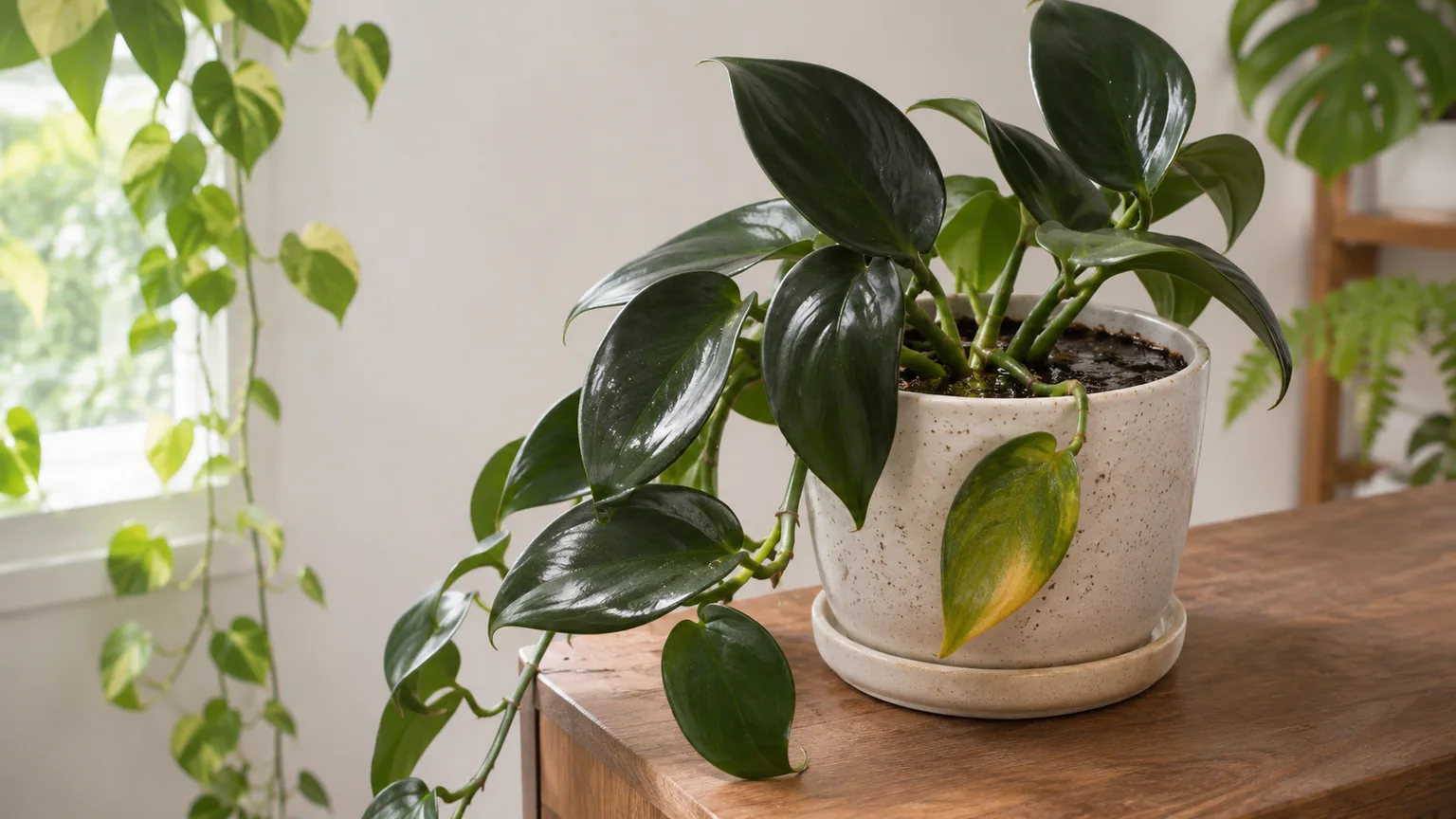
Root Rot on Scindapsus Treubii Dark Form: Causes, Checks & Fixes
This guide covers root rot on Scindapsus Treubii Dark Form. See also the general Root Rot guide, watering, and light pages for this plant.
Root Rot on Scindapsus Treubii Dark Form: Causes, Checks & Fixes
Quick answer
Root rot is a possibility when Scindapsus Treubii Dark Form wilts while its mix remains wet. Prolonged wet soil favors root-rot pathogens, but a leaf symptom alone cannot confirm the disease. For how waterlogged mix damages roots in general, see our root rot guide. On Dark Form, the pattern usually shows up as yellowing lower leaves plus a heavy wet pot on a plant that barely grows between waterings.
First step: lift the plant out of its pot and look at the roots. White or light-tan and firm means the roots are alive — put it back and fix watering instead. Brown, soft, or foul-smelling roots support root rot; remove affected tissue and replace the contaminated mix.
When to use this page vs other Scindapsus Treubii Dark Form guides
| What you see | Read next |
|---|---|
| Wilt on wet heavy mix, yellow lower leaves, sour smell | Stay on this page |
| Wilt on dry light mix, curling leaves that perk up after watering | Watering guide |
| Yellow leaves but roots are white and firm | Problems hub for yellow-leaf causes |
| Leggy bare vines with healthy roots | Light or pruning issue, not rot — see the Related guides below |
| White cottony clusters or fine webbing on leaves | Pest issue, not rot — see the Related guides below |
What root rot looks like on Dark Form
The classic sign is wilt on wet soil: leaves droop and yellow from the base upward while the mix still feels damp days after watering. University specialists describe this pattern — a plant that is wilted, even though the soil is wet, often stunted with yellowing leaves. On Dark Form the yellowing can be easy to miss because the nearly black mature foliage hides early color change, so check the lowest leaves and the stem base rather than the showy top growth.
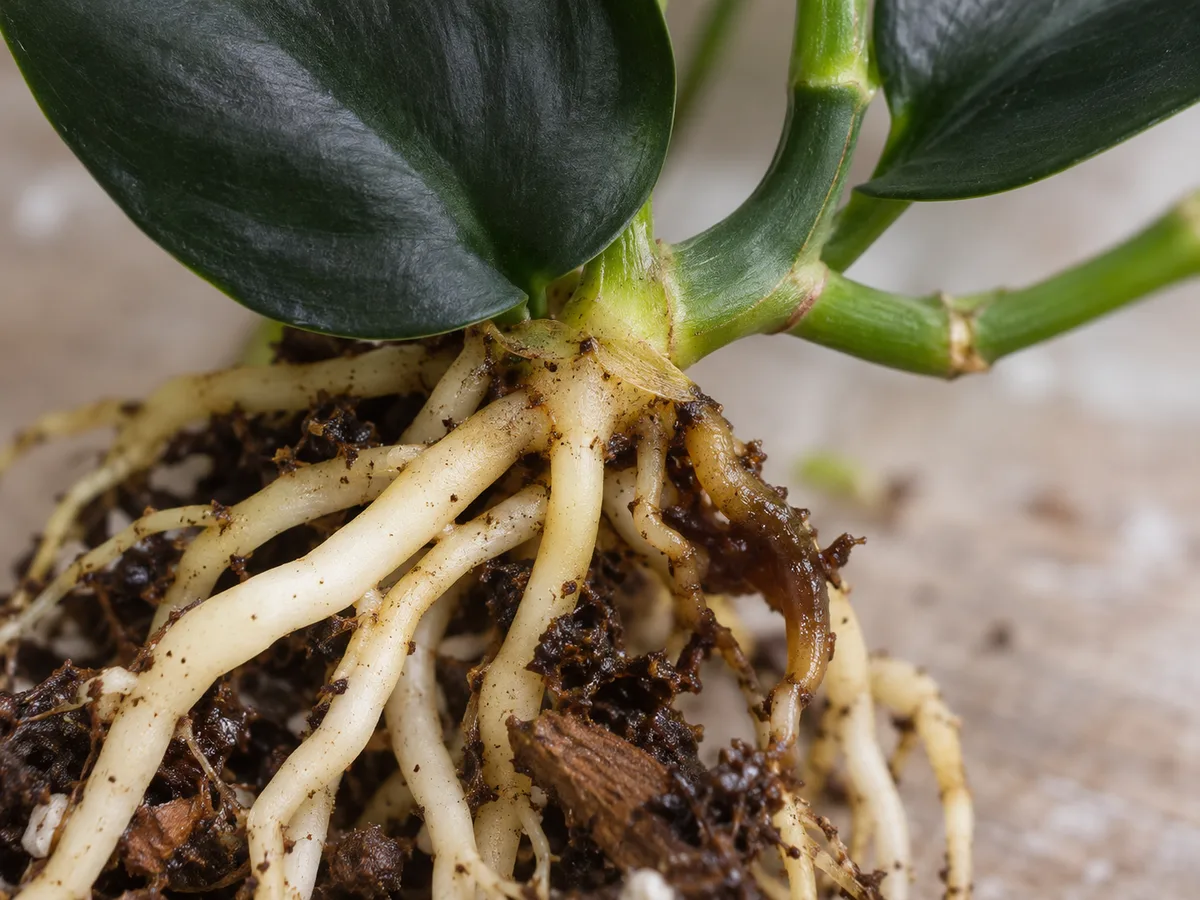
Firm pale roots alongside a localized soft brown patch support root rot; inspect the full root ball before deciding what to trim.
Advanced cases add a sour or rotten smell from the drainage holes and a stem base that feels soft or slimy at the soil line. Unpotted roots tell the final truth: healthy treubii roots are pale and firm, while rotted ones are soft and brown with a bad odor and fall apart when touched.
Why Dark Form’s slow growth makes wet mix dangerous
Dark Form is a genuinely slow vine that produces only a few leaves per season under normal indoor conditions, and NC State notes it does not tolerate overwatering. A slow-growing plant in dim light or a large moisture-retentive pot may use water more slowly than expected, so a fixed schedule can keep its root zone wet. Check the actual mix and pot rather than assuming the surface reflects moisture deeper down.
The usual triggers stack the same way: watering before the top half of the mix dries, a pot without drainage holes, dense compacted mix, an oversized pot with far more soil than the roots can use, and saucers left full of standing water. Illinois Extension explains that containers without drainage increase root-rot risk and that oversized pots can keep the mix wet too long. NC State Extension notes this species does not tolerate overwatering and rots when watered too often — the fix is always to let the soil dry to half depth between drinks, as the watering guide describes.
Once roots stay wet, water molds such as Pythium and Phytophthora can rot root tissue. Dead roots cannot deliver water, which is why the vine dehydrates while standing in moisture — and why watering more only accelerates the collapse.
Thick dark leaves hide early warnings
Dark Form’s thick, satiny blades lose water slowly and stay rigid-looking longer than thin-leaved plants, so visible wilt arrives late — often after significant root loss. Curling leaves on this plant more commonly signal plain thirst on dry mix than rot, so never diagnose from foliage alone. Pair every leaf symptom with a pot-weight check: heavy and cool days after watering points below the soil line, while light and dry points to the watering can.
Low light compounds the deception. Dark Form tolerates dimmer spots than its Moonlight sibling, but weak light slows water use to a crawl while the leaves still look fine. If the plant sits far from a window in a moisture-holding pot, review placement in the light guide alongside the soil guide before assuming the roots are healthy.
How to confirm the cause
Work in this order and stop at the first definitive answer:
- Pot weight — Lift the pot and compare it with its usual weight after watering. A persistently heavy pot alongside wilt suggests that moisture remains in the root zone.
- Mix moisture at 4–5 cm — Push a finger in. Damp at depth on a wilting plant is the core rot signal.
- Smell test — Sniff the drainage holes. A sour, rotten odor means anaerobic decay, not just moist soil.
- Stem base feel — Squeeze gently at the soil line. Firm is reassuring; soft or slimy is urgent.
- Root inspection — Slide the root ball out, shake off mix, and rinse under lukewarm water. White firm roots clear the plant of rot; brown mushy ones confirm it.
Do not fertilize, mist, or repot on suspicion alone — confirm with roots first so a thirsty plant is not subjected to surgery it does not need.
The first fix to try
Slide the plant out of its pot and inspect the roots under lukewarm water. This single check separates a watering problem from a rot problem and dictates everything after: firm pale roots go back into the same pot with corrected watering, while brown mushy roots move to trimming and fresh mix. Make this decision before cutting, repotting, or propagating anything.
Step-by-step recovery
Scindapsus treubii is toxic if ingested; keep pruned material away from pets and children, as noted by NC State Extension.
- Trim rot back to healthy tissue. Cut every brown, soft root with a clean sterilized blade until only firm pale tissue remains. If the stem base itself is mushy, cut the vine above the soft section.
- Disinfect everything the rot touched. Wash the pot, tools, and work surface; extension guidance recommends a 10% bleach or detergent solution or alcohol for tools and clay pots, and advises against reusing plastic pots that held rotted plants. Never reuse the old mix or the drained water.
- Repot into fresh dry mix. Use a clean pot with drainage holes and a chunky perlite blend that dries evenly. Size down if the root system shrank — excess soil around small roots stays wet and restarts the cycle.
- Repot and adjust care. Use fresh, well-drained mix and a pot with drainage. Keep the plant in bright indirect light and water again based on the mix’s dry-down, not a set number of days.
- Skip fungicide and fertilizer. Wisconsin plant pathologists do not recommend chemical fungicides for houseplant root rot, and feeding a rootless plant burns what little function remains. Resume feeding only when new growth is clearly established.
Node cuttings: the Dark Form rescue path
If the base is gone but upper vines are still firm with healthy nodes, this trailing vine offers a second chance. Cut sections with at least one node and leaf, and root them in water before potting up; timing varies with conditions. See the propagation guide. Start cuttings the same day you trim the parent — on a slow cultivar, backup vines take months to become display plants, so every week of delay matters. If every vine is soft and foul-smelling with no firm nodes, discard the plant and its mix rather than fighting a lost cause.
Recovery signs
There is no reliable fixed recovery deadline: root loss, light, warmth, and growing conditions all affect the pace. Look for the decline to stop and the vine to remain firm; new tip growth is a stronger sign of recovery than a set number of weeks. Dark Form grows slowly, so rebuilding a full vine can take substantially longer than stabilizing the plant. Escalate if yellowing climbs rapidly, the stem base softens further, or the pot stays heavy despite withheld water.
Mistakes to avoid
- Watering a wilting plant before checking whether the mix is already wet
- Repotting into the same old mix or an oversized pot “to give roots room”
- Stacking trimming, repotting, fertilizing, and pest sprays on the same day
- Leaving the nursery pot sitting in a decorative cachepot full of drainage water
- Mistaking node aerial roots for rot — firm nubby aerial roots on the vine are normal; mushy underground roots are not
How to prevent it next time
Prevention is a watering-plus-environment routine matched to a slow vine. Water on dry-down, not on schedule; keep the plant where light drives growth; and repot when the mix has compacted or drainage has declined, using the repotting guide for this plant’s pot and mix choices. If new symptoms appear, work through the sibling symptom guides listed below, and start from the main Scindapsus Treubii Dark Form hub whenever care basics need a reset.
Related Scindapsus Treubii Dark Form guides
- Scindapsus Treubii Dark Form hub — full care baseline when several things look wrong at once
- Watering guide — dry-down depth and seasonal frequency that prevent the next rot
- Soil guide — chunky perlite mixes that drain fast enough for slow roots
- Light guide — placement that keeps water use predictable
- Repotting guide — timing, pot sizing, and fresh mix before compaction sets in
- Propagation guide — node cuttings as backup when the base cannot be saved
- Problems hub — sibling symptom guides when the diagnosis is still unclear
Related tool
Use the Root Rot Risk Checker to narrow causes for root rot on this plant before changing multiple variables at once.