Aphids on String of Bananas: Causes, Checks & Fixes
Quick answer
If you find soft-bodied insects clustered on new String of Bananas growth, first isolate the hanging pot from other plants. Confirm aphids by their pear-shaped bodies and sticky honeydew, then rinse the colonies from the long stems while keeping excess water out of the succulent mix.
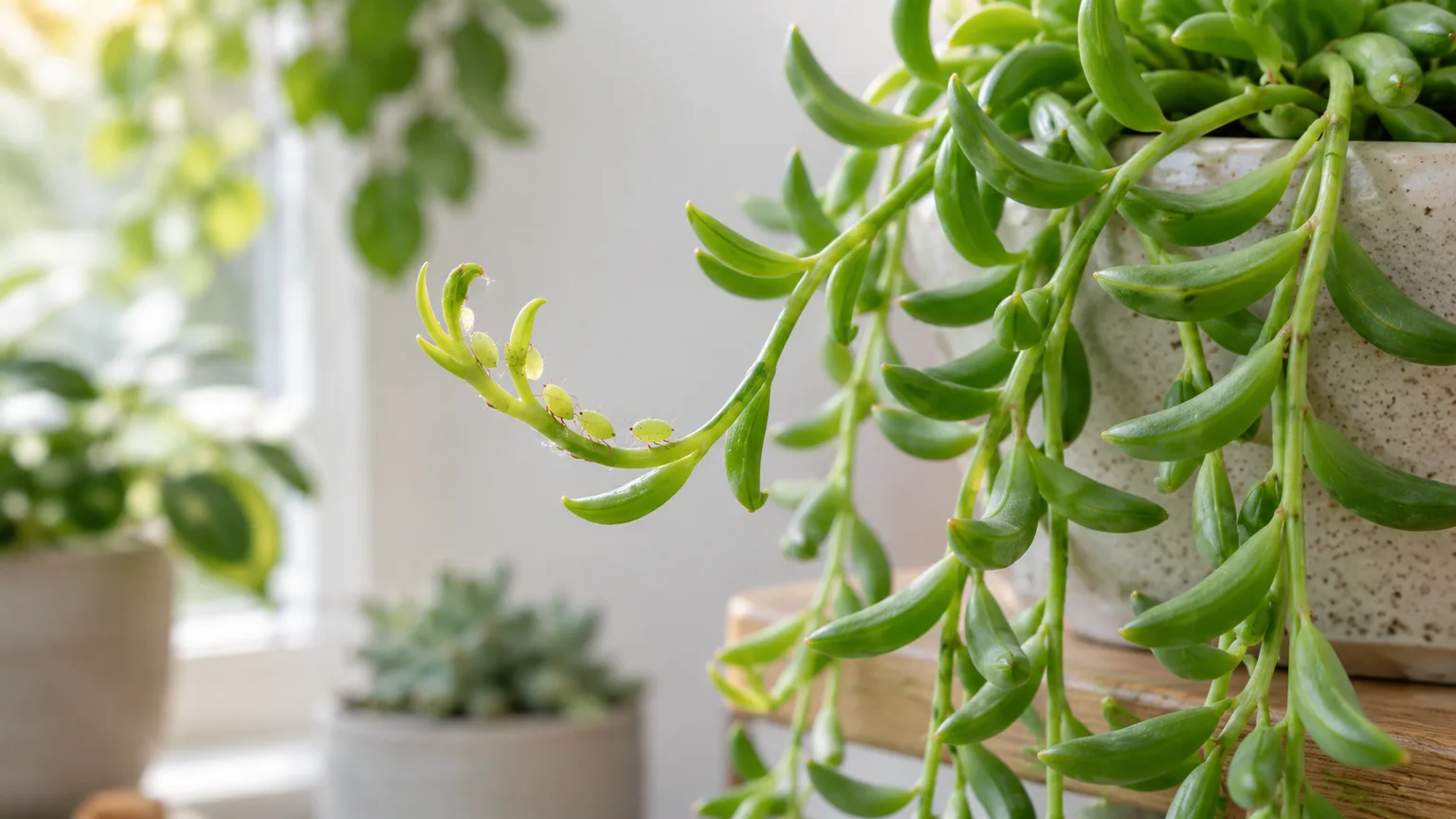
Aphids on String of Bananas: Causes, Checks & Fixes
This guide covers aphids on String of Bananas. See also the general Aphids guide, watering, and light pages for this plant.
Aphids on String of Bananas: Causes, Checks & Fixes
Search intent
Readers want to know whether tiny insects on the dangling stems are aphids, how to remove them without breaking or soaking this succulent, and how to stop them reaching nearby plants.
SEO title planning
- Aphids on String of Bananas: Causes, Checks & Fixes
- How to Get Rid of Aphids on String of Bananas
- String of Bananas Aphids: What to Check First Best choice: “Aphids on String of Bananas: Causes, Checks & Fixes” names the pest and the plant while promising practical next steps.
Meta description planning
- Find aphids on String of Bananas, confirm the signs, rinse colonies from trailing stems, and protect this succulent from excess water.
- Tiny insects on String of Bananas? Check new tips for aphids and honeydew, then remove the pests without overwatering the pot.
- Learn where aphids hide on String of Bananas, how to rinse them off safely, and when a labeled soap spray may be needed. Best choice: Option 1 states the diagnosis and the plant-specific treatment constraint.
Primary and supporting keywords
- Primary: aphids on String of Bananas
- Supporting: Curio radicans aphids; aphids on succulent; aphids on trailing plant; sticky leaves on String of Bananas; tiny green bugs on succulent; aphid honeydew; aphids on hanging basket; wash aphids off a succulent; aphid-damaged String of Bananas
NLP entities
Curio radicans; aphids; honeydew; cornicles; tender growth; trailing stems; succulent; insecticidal soap; horticultural oil; leaf joints
People Also Ask questions
- How do I confirm aphids on String of Bananas?
- What should I do first if I find aphids?
- Will damaged leaves recover?
- Should I prune aphids off the stems?
- Can I use insecticidal soap on this succulent?
E-E-A-T signals
Use visible pest traits and honeydew to confirm aphids, adapt removal to the plant’s long flexible vines and water-storing leaves, and base any pesticide use on the product label.
Featured snippet opportunities
- Short confirmation clues for aphids versus other pests
- A first-response sequence for a hanging succulent
- Signs that show removal has worked
Helpful content checklist
The guide helps readers inspect long stems and leaf joints, remove a small colony without saturating the pot, and escalate only when aphids persist.
- Aphids on String of Bananas: Causes, Checks & Fixes
- How to Get Rid of Aphids on String of Bananas
- String of Bananas Aphids: What to Check First
Aphids on String of Bananas: Causes, Checks & Fixes
- Find aphids on String of Bananas, confirm the signs, rinse colonies from trailing stems, and protect this succulent from excess water.
- Tiny insects on String of Bananas? Check new tips for aphids and honeydew, then remove the pests without overwatering the pot.
- Learn where aphids hide on String of Bananas, how to rinse them off safely, and when a labeled soap spray may be needed.
Find aphids on String of Bananas, confirm the signs, rinse colonies from trailing stems, and protect this succulent from excess water.
- H1: Aphids on String of Bananas: Causes, Checks & Fixes
- H2: Quick answer
- H2: What aphids look like on String of Bananas
- H2: Where aphids settle on a trailing succulent
- H2: How to confirm aphids and rule out lookalikes
- H2: First fix: isolate the plant
- H2: Rinse colonies from the vines
- H2: When pruning or a labeled spray makes sense
- H2: Recovery signs and when to worry
- H2: String of Bananas care cross-check
- H2: How to prevent another colony
- H2: When to use this page vs other String of Bananas guides
- H2: Related String of Bananas guides
Quick answer
If small, soft-bodied insects are clustered on the newest tips of your String of Bananas, Curio radicans, first move the hanging pot away from other plants. Aphids feed on plant fluids and can deform tender growth; their pear-shaped bodies, sticky honeydew, and sometimes ants nearby help confirm the problem. Penn State Extension describes aphids as small, soft-bodied, pear-shaped insects that can leave honeydew and distort leaves.
Once you confirm live aphids, rinse them from the affected stems and leaf joints with a controlled stream of water. Support the trailing vines as you work, and keep the potting mix from becoming waterlogged. For general aphid biology and other host plants, see our aphid guide; here the key is checking the long, easily missed vines of this succulent.
What aphids look like on String of Bananas
Aphids are usually visible as tiny, clustered insects, often green but sometimes yellow, brown, black, or pink. Look for them along the newest stem tips, around small leaf joints, and on the underside of curved leaves. A sticky film on the leaves or shelf below can be honeydew, a sugary residue produced by many aphids.
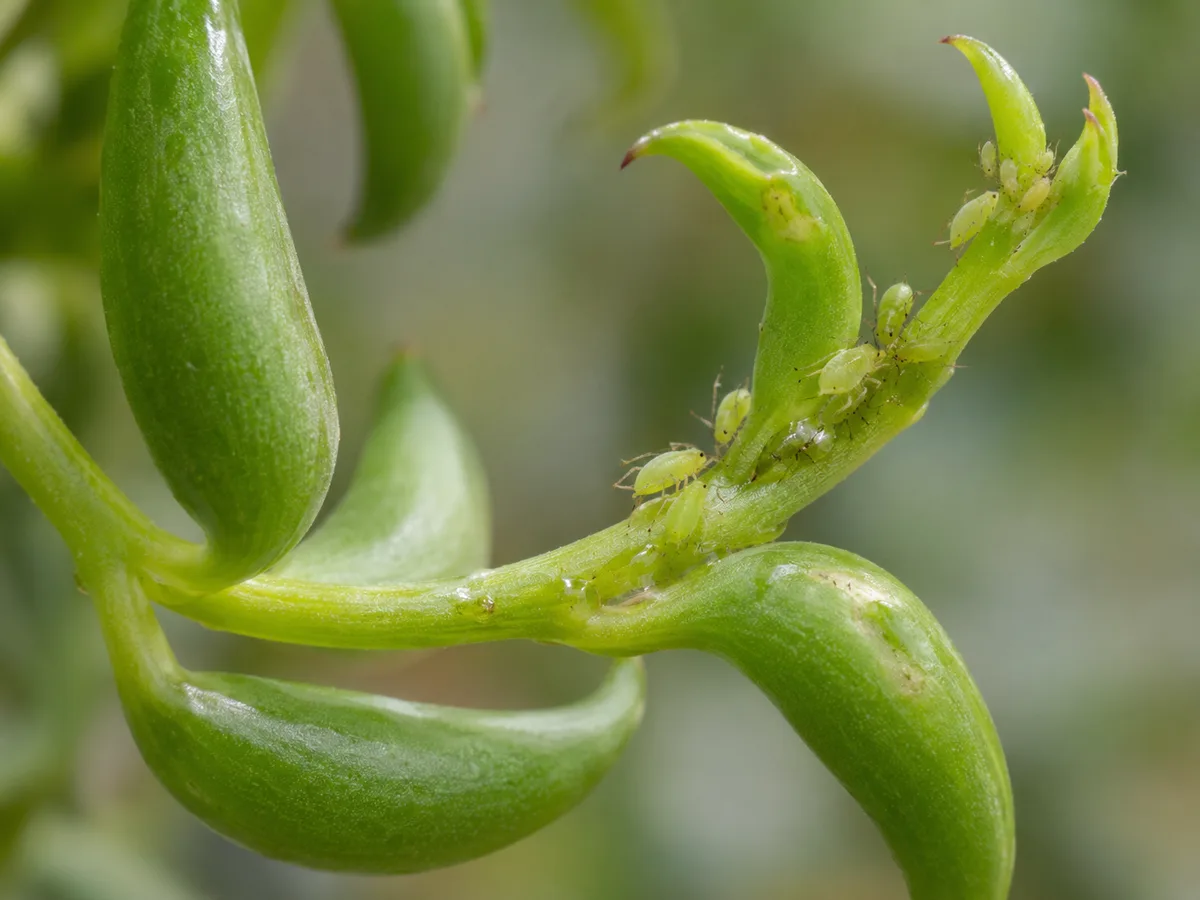
Aphids gather on the tender tip of a trailing vine; check both sides of nearby leaves and the joints where leaves meet the stem.
NC State Extension identifies String of Bananas as a trailing succulent with flexible stems and banana-shaped leaves, and lists aphids among pests to monitor. The plant’s hanging form makes an inspection from above insufficient: lift and turn the vine gently to check leaf joints and the portion of the stem facing the wall or basket.
Where aphids settle on a trailing succulent
Aphids often feed on soft, actively growing tissue. On String of Bananas, start at the newest vine ends and follow each stem back several inches, checking where fresh leaves and side shoots emerge. An indoor aphid guide notes that houseplant aphids target tender growth and can spread to nearby plants, so a new plant, a recently returned outdoor basket, or an adjacent infested plant may be the source.
A heavy nitrogen feed can produce the soft new growth aphids prefer, as the indoor aphid guide also notes. That does not mean the plant is infested because its care is poor; aphids are a pest, not a diagnosis of underwatering or low humidity. If you recently fertilized, pause extra feeding while you deal with the colony. Use the String of Bananas fertilizer guide only when you have a reason to feed, rather than using fertilizer to treat pest damage.
How to confirm aphids and rule out lookalikes
Use a bright light and check the newest stems first. Aphids are soft and pear-shaped; some have two short tube-like projections near the rear of the body. Honeydew or curled, distorted new growth strengthens the diagnosis. If you can, tap a suspect vine over white paper and watch for insects that crawl.
Do not treat every mark as aphids. Cottony clusters usually point toward mealybugs, while fine stippling and silk are more consistent with spider mites. A sticky residue without visible insects can have another cause, so inspect neighboring leaves and the plant’s newest growth before choosing a spray. If the leaves are wrinkled but there are no insects or honeydew, check the plant’s moisture and light pattern with its watering guide and light guide instead.
First fix: isolate the plant
Move the hanging basket away from other plants before you handle it. Keep it isolated while you remove the pests and check nearby plants for fresh clusters. This limits accidental spread from a trailing vine that may brush a shelf, wall, or neighboring foliage.
Rinse colonies from the vines
After confirming aphids, hold one vine at a time over a sink or take the pot outdoors. Use a firm but controlled stream of lukewarm water to dislodge the insects, turning each strand so the leaf joints and undersides are rinsed. Penn State Extension recommends washing aphids from a host when practical, and Gardeners’ Path describes water as a removal method for small colonies.
Support the stems rather than pulling on them. String of Bananas grows long, flexible vines, and breaking several stems at once removes healthy foliage without improving control. Shield the potting mix from a prolonged soak during rinsing. This succulent prefers a coarse, well-drained medium and should not be kept wet; its soil guide explains how the mix should drain.
Inspect the plant again after it dries, then repeat the rinse if live aphids remain. Wipe honeydew from leaves and the nearby shelf with a damp cloth. If one short tip remains densely infested, use clean shears to remove only that section; NC State notes that pruning can encourage branching, but do not cut healthy vines just to make the plant look uniform.
When pruning or a labeled spray makes sense
Prune only the sections that are heavily covered, damaged, or difficult to rinse. Bag the cut material and discard it, then clean your shears. Preserve firm, clean vines so the plant can continue growing while you monitor for survivors.
If aphids return after repeated physical removal, consider an insecticidal soap or horticultural oil only if its label allows use on ornamental houseplants and succulents. Test a small area first, as Gardener’s Path advises, apply under the product’s directions, and keep it away from pets and children until dry as directed. Penn State Extension says to use pesticides only on plants named on the label and to follow all directions. Do not substitute a concentrated homemade mixture or use a broad-spectrum pesticide without a clear need; these products can affect beneficial insects as well as aphids.
Recovery signs and when to worry
Old leaves that have curled or scarred may not straighten. Better signs are the absence of live insects, no new honeydew, and fresh tips that open without distortion. Check the full length of each vine every few days until you stop finding aphids, then inspect weekly for the next few weeks.
Escalate if the colony keeps spreading despite careful rinsing, if many new tips are deformed, or if stems begin to soften or collapse. Widespread decline may mean another problem is present alongside aphids. Compare cottony insects with the mealybug guide, and compare stippling or webbing with the spider-mite guide.
String of Bananas care cross-check
The goal is to keep the succulent growing steadily while you remove the pest. NC State recommends bright, indirect light, a coarse or sandy well-drained medium, and watering when the top half of the soil feels dry. Ohio Tropics gives similar String of Bananas care advice. Return the isolated plant to bright indirect light after it is dry, and do not add water simply because aphids damaged a leaf. The String of Bananas overview can help check the plant’s normal growth and care.
How to prevent another colony
Inspect new growth once a week, especially the ends of hanging stems and any vines touching neighboring plants. Quarantine new plants before placing them near the basket, and recheck String of Bananas after it spends time outdoors. Avoid unnecessary high-nitrogen feeding that produces a flush of soft growth, and remove a small colony early with water before it spreads along multiple vines.
When to use this page vs other String of Bananas guides
Use this page when you can see clusters of insects on the vine tips or leaf joints, especially with sticky honeydew. If there are no insects, start with the plant’s watering, light, or soil conditions instead; the overwatering guide covers soft leaves and wet mix, while the care pages cover ordinary maintenance.
Related String of Bananas guides
- Overview: identify normal trailing growth and leaf shape.
- Watering: check dry-down and moisture stress before adding water.
- Light: review placement and sun exposure.
- Soil: check whether the succulent mix drains freely.
- Mealybugs: use when you find cottony insects rather than pear-shaped aphids.
- Spider mites: use for stippling and fine webbing.
- Problems hub: browse other plant-specific diagnoses.
FAQ 1 Question: How can I confirm aphids on String of Bananas? Answer: Look for pear-shaped, soft-bodied insects gathered on a new tip or around a leaf joint. Sticky honeydew and curled young leaves support the diagnosis, while cottony clumps or fine webbing point to different pests.
FAQ 2 Question: Should I water String of Bananas when aphids appear? Answer: No, aphids are not a sign that the succulent needs more water. Check its potting mix and growth pattern separately, and keep to its normal well-drained, dry-down routine while removing the insects.
FAQ 3 Question: Will curled leaves recover after aphids are removed? Answer: A leaf that has already curled or scarred may remain marked. Watch the next tips for clean growth and check that fresh honeydew and live insects do not return.
FAQ 4 Question: Can aphids kill a String of Bananas? Answer: A small colony is usually manageable if you find and remove it early. A persistent infestation can damage new growth, so inspect every trailing stem and seek a different diagnosis if vines soften or decline after the aphids are gone.
FAQ 5 Question: How can I prevent aphids from returning? Answer: Inspect new tips weekly and keep recently purchased or outdoor plants separate before placing them near the hanging basket. Avoid unnecessary heavy feeding that pushes tender growth, and rinse a small colony as soon as you find it.