Not Enough Light on Swedish Ivy: Causes, Checks & Fixes
Quick answer
Swedish Ivy needs bright indirect light year-round-not a dim hallway or north-facing corner far from the glass. When light is too weak, stems stretch, leaves pale, and soil stays wet longer. First step: move the pot to your brightest east or west window within arm's reach of the pane.
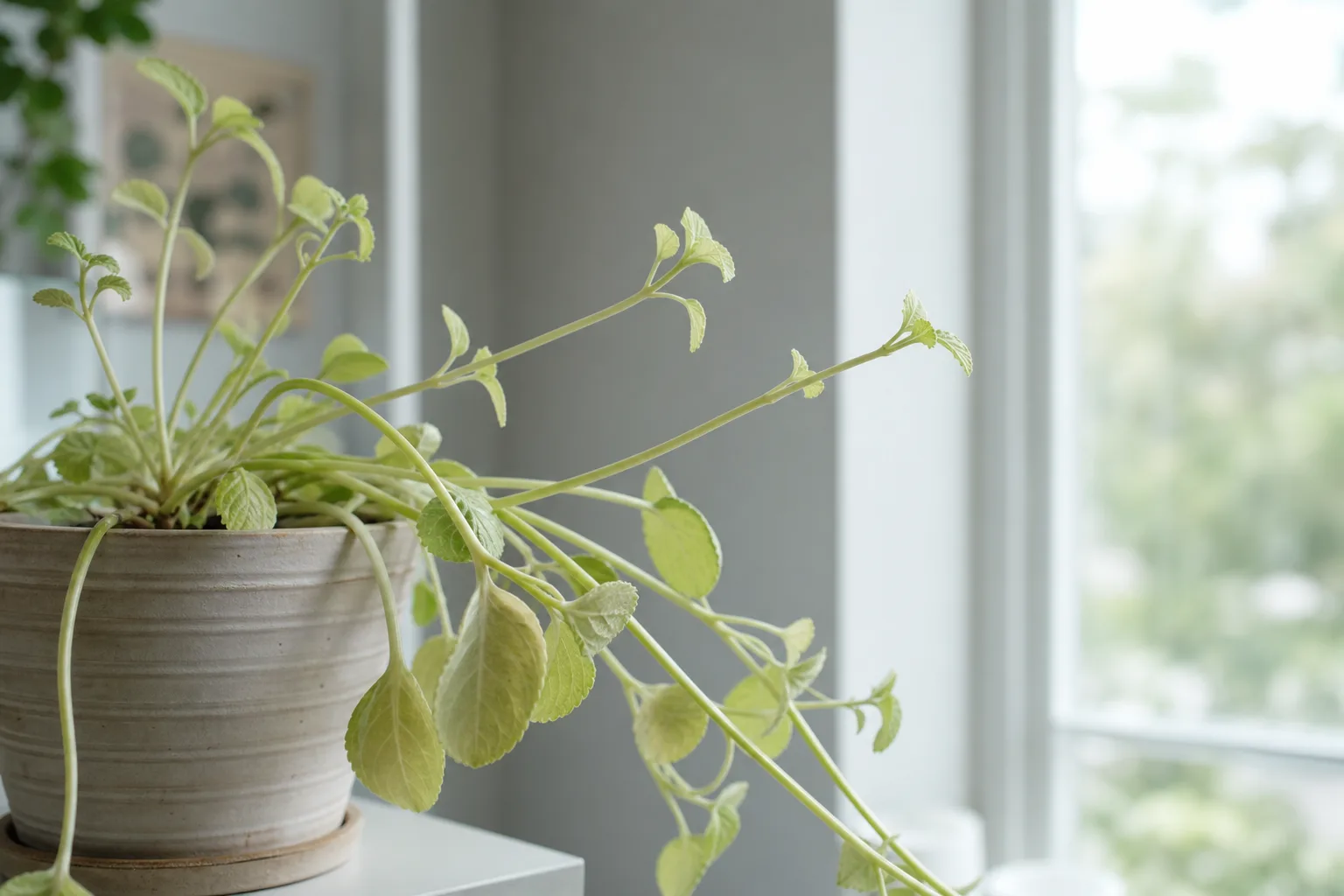
Not Enough Light on Swedish Ivy: Causes, Checks & Fixes
This guide covers not enough light on Swedish Ivy. See also the general Not Enough Light guide, watering, and light pages for this plant.
Not Enough Light on Swedish Ivy: Causes, Checks & Fixes
Quick answer
Swedish Ivy (Plectranthus australis, often sold interchangeably with P. verticillatus) is a fast-growing trailing mint-family plant built for bright, filtered light-not the dim corners where snake plants survive. When light is too weak, stems stretch between glossy leaves, color washes out, and the plant uses water so slowly that mix stays wet too long.
First step: move the pot to your brightest suitable window-east or filtered west preferred-and place it within about 60–90 cm (2–3 feet) of the glass. Do not repot, fertilize, or water heavily on the same day. Acclimate over one week if the plant has lived in deep shade, so leaves adapted to low intensity do not scorch when you increase exposure.
What not enough light looks like on Swedish Ivy
Healthy Swedish Ivy in good light forms a full cascade of rounded, glossy green leaves spaced closely along each runner. Stems stay firm and the basket looks lush rather than like a few thin strings reaching for the window.
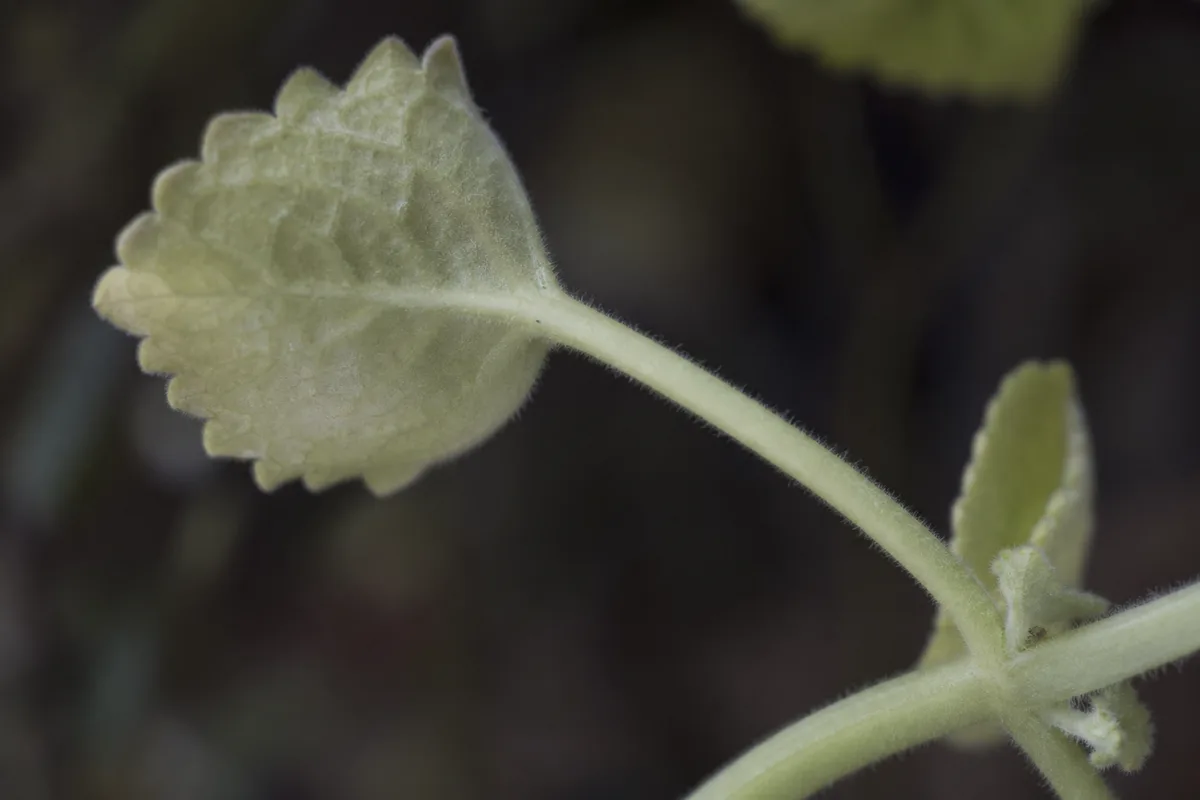
Not Enough Light symptoms on Swedish Ivy - compare with healthy tissue on the same plant.
Low-light symptoms on this species:
- Long gaps between leaf pairs - internodes stretch instead of staying tight along trailing stems
- Small, pale, washed-out leaves - glossy green fades to yellow-green or dull olive
- Stems leaning or growing toward glass - the whole basket tilts toward the brightest point in the room
- Slow or stalled growth - few new tips for weeks outside normal winter rest
- Soil that stays wet - mix remains damp 10–14 days after watering because photosynthesis and water use have slowed
- Sparse flowering or no blooms - insufficient light is a common reason Swedish Ivy stops producing its pale purple or white flower spikes indoors
What low light is not: Dull, limp leaves with no stretch pattern often mean too much direct sun, not too little-Swedish Ivy leaves turn dull and droopy when light is excessive. Yellowing with mushy stems at the soil line points to overwatering or root rot, not darkness alone. A plant in a bright window that simply pauses in cool winter with firm stems and soil that dries on schedule is resting, not light-starved.
Why Swedish Ivy gets not enough light
Swedish Ivy evolved as a ground-covering trailer native to South Africa, where it receives filtered light through canopy gaps-not deep shade. Missouri Botanical Garden recommends growing it as a houseplant in bright, mostly sunny exposures. That is brighter than many “easy houseplant” spots in a typical home.
Common placement mistakes:
- Across the room from a window - indoor light intensity drops sharply with distance from windows; a spot that looks bright to your eyes may read as medium or low light on a meter
- North-facing windows only - north exposures often lack the intensity this fast grower needs for compact trailing form
- Hanging baskets centered in the room - decorative hooks look best away from glass but steal the light Swedish Ivy needs at the leaf surface
- Dirty glass, heavy sheers, or obstructions - curtains, tint, and grimy panes cut usable light more than owners expect
- Seasonal daylight ignored - the same window delivers less energy in winter; a plant that barely held on in summer may fail by December
- Assuming “tolerates lower light” means “thrives there” - Swedish Ivy can hang on in medium light but will stretch and pale rather than stay full
Low light also changes watering math. A plant using little energy drinks slowly. Growers often keep watering on a summer schedule while growth stalls-so mix stays wet longer and trailing stems sit on stale moisture. Weak light plus wet soil is a common path to root trouble on this species.
How to confirm the cause
Work through these checks before you change anything else:
- Window direction and distance - Note whether the pot sits in an east, west, south, or north window and how far back from the glass. Within 60–90 cm of an east or filtered west window is ideal; more than 1.5 m back is suspect.
- Leaf spacing pattern - Measure gaps between three consecutive leaf pairs on the longest runner. Gaps over 5–7 cm with small pale leaves strongly suggest etiolation from low light-indoor plants become spindly as they stretch to reach for more light.
- Lean test - Vines growing only toward one window or the basket tilting horizontally toward glass confirm the plant is searching for light.
- Color check - Compare newer leaves to older ones on the same strand. Fading green on recent growth means current light is too weak-not a fertilizer shortage.
- Soil dry-down speed - Stick a finger in the mix. If the pot still feels heavy two weeks after a thorough watering during active growth season, low light may be slowing water use-cross-check against your watering history.
- Season context - Is growth slow because it is cool winter rest, or because the plant has been pale and stretched for months? Temporary dormancy is fine; chronic etiolation is a placement problem.
- Rule out too much light - If leaves are dull and droopy but spacing is tight and the plant sits in direct afternoon sun, pull it back rather than moving it brighter.
If spacing is tight, color is rich green, and new tips appear regularly, light is probably adequate-even if growth is slower in winter.
First fix for Swedish Ivy
Move the pot to the brightest suitable window-east or filtered west preferred-and place it within 60–90 cm of the glass.
That single placement change addresses the root cause. East windows offer gentle morning sun plus bright indirect light the rest of the day. West windows work if the plant sits back enough to avoid harsh afternoon rays on leaves that have been in shade.
Do not jump straight to a south-facing sill in midsummer if the plant has lived in dim light for months-leaves adapted to low intensity can scorch. Instead, move it closer to brightness over five to seven days: first to the bright side of the room, then to the window ledge with a sheer curtain, then to full exposure if leaves stay firm.
Skip fertilizer, repotting, and heavy pruning on day one. A stressed, stretched plant needs stable light first-not a stack of interventions.
Step-by-step recovery
After the initial move:
- Acclimate over one week - Increase light gradually to prevent sun scorch on pale leaves.
- Adjust watering to the new dry-down rate - Brighter light means faster evaporation. Water when the top inch of soil feels dry-check with your finger more often near a sunny window, not on a fixed calendar.
- Rotate the pot weekly - Even light prevents one-sided lean and lopsided stretching.
- Pinch stem tips once new growth tightens - Trim off new stem tips regularly just above a leaf pair to retain compact shape and encourage branching on side shoots.
- Add supplemental lighting if needed - If the best window is still a north exposure or a basement shelf, use a full-spectrum LED grow light 30–45 cm above the foliage for 12–14 hours daily.
- Trim leggy runners after new growth improves - Cut stretched vines back to a healthy node once compact leaves appear at the tips. Old bare stem sections will not sprout new leaves along their length. Root trimmed sections in water or moist mix to fill out the basket.
Do not increase watering to “help” a pale plant-that adds rot risk without fixing etiolation.
Recovery timeline
Expect a lag of two to three weeks before you see obvious change. New leaves at growing tips should look darker, larger, and closer together within three to six weeks in active growth season. Winter moves may show little visible progress until spring daylight lengthens-that is normal if stems stay firm and the mix dries on schedule.
Judge recovery by new growth, not old stretched vines. Bare internodes from months of low light stay bare unless you trim and let the plant branch from nodes near the soil.
Lookalike symptoms to rule out
Too much direct light makes leaves dull, limp, and sometimes bleached-not stretched with wide gaps. Swedish Ivy outdoors must stay in shade because direct sun burns the leaves. Indoors, harsh afternoon sun on a south sill can mimic stress without the classic etiolation pattern.
Overwatering / root rot shows yellowing leaves, soft stems at the soil line, and sour-smelling mix-often in a dim spot where soil never dries. Light correction helps, but you must also stop watering and inspect roots if rot is present.
Underwatering makes leaves crisp at the edges with dry, lightweight soil throughout the pot. Spacing may stay normal; the plant does not usually reach dramatically toward windows unless light is also weak.
Normal winter rest slows growth and may reduce vigor slightly, but vines should not keep stretching with long bare sections between leaves. A firm plant in a reasonably bright window that simply pauses in cool months is fine.
Spider mites and mealybugs can weaken a plant already stressed by low light-confirm with webbing, stippling, or cottony masses before assuming light alone is the issue.
Nutrient deficiency is uncommon on Swedish Ivy in fresh mix and should not be guessed without correcting light and watering first.
Mistakes to avoid
Do not leave Swedish Ivy on a decorative shelf centered in the room if that spot is far from glass-it will keep stretching.
Do not move a shade-adapted plant into harsh midday south sun in one step. Gradual acclimation prevents scorched leaves.
Do not water on a fixed calendar without checking soil-especially after a light upgrade, when dry-down speed changes.
Do not assume survival in a dim corner equals healthy growth. A sparse trailing basket that hangs on is not the same as a full cascade.
Do not fertilize a stretched, weak plant hoping to push density. Feed lightly only after light is corrected and new growth looks normal.
Do not expect old bare stems to fill in on their own. Pinch or trim vines if you want a fuller basket.
Swedish Ivy care cross-check
Light sits at the center of this plant’s routine. Bright indirect exposure pairs with standard well-draining potting mix and watering when the top inch dries. Swedish Ivy stores some moisture in its semi-succulent stems, so a dim plant that gets watered like an active summer pothos often sits wet too long.
Temperature comfort runs about 16–24°C (60–75°F). Average household humidity is fine-this is not primarily a humidity problem. Hanging the pot at window height usually beats a high corner where light intensity is a fraction of what the glass receives. Swedish Ivy is non-toxic to cats and dogs, so brighter window placement does not create a pet-safety tradeoff.
How to prevent not enough light next time
Choose placement before pot style. An east or filtered west window within arm’s reach of the glass beats a decorative hook in a bright-looking but windowless alcove.
Clean windows seasonally and pull back obstructions that block morning or afternoon light.
Rotate the pot weekly so all runners receive even exposure.
Pinch new stem tips regularly during active growth to keep the plant bushy once light is adequate.
Track winter light-supplement with grow lights from late fall through early spring if your brightest window drops below what the plant needs.
When buying, pick baskets with tight leaf spacing and rich green color; a plant already stretched with long bare sections was likely grown in insufficient light.
When to worry
Act promptly when low light combines with wet, sour soil and soft stems at the base-that pattern can slide into root rot. Also worry if the plant has leaned so far that stems are pulling out of the mix or breaking at the crown.
Chronic etiolation alone is rarely fatal if you move the plant, but months in deep shade with constant moisture can leave few healthy roots. If stems are mushy after inspection, treat as a rot case, not a simple light fix.
Pale, stretched growth without rot is a slow problem, not an emergency-correct placement and wait for new leaves.
Conclusion
Not enough light on Swedish Ivy shows up as stretched runners, faded glossy leaves, and soil that refuses to dry-not as a mystery wilt. Move the pot to real brightness first, acclimate carefully, then adjust watering to match faster dry-down. Pinch tips once new growth tightens. New leaves will tell you the fix worked; old bare stems may need a trim. Get light right and this easy trailer rewards you with a full, cascading basket instead of a few strings reaching for the window.
Related Swedish Ivy guides
- Swedish Ivy overview
- Swedish Ivy watering
- Swedish Ivy light
- Leggy Growth on Swedish Ivy
- Slow Growth on Swedish Ivy
- Yellow Leaves on Swedish Ivy
- All Swedish Ivy problems
Conclusion
Use this page to confirm not enough light on Swedish Ivy by pattern and pot checks-not by treating every houseplant the same. When symptoms overlap with sibling pages, follow the linked guide for the matching cause before stacking fertilizer, repotting, or pesticide.