Overwatering on Swedish Ivy: Causes, Checks & Fixes
Quick answer
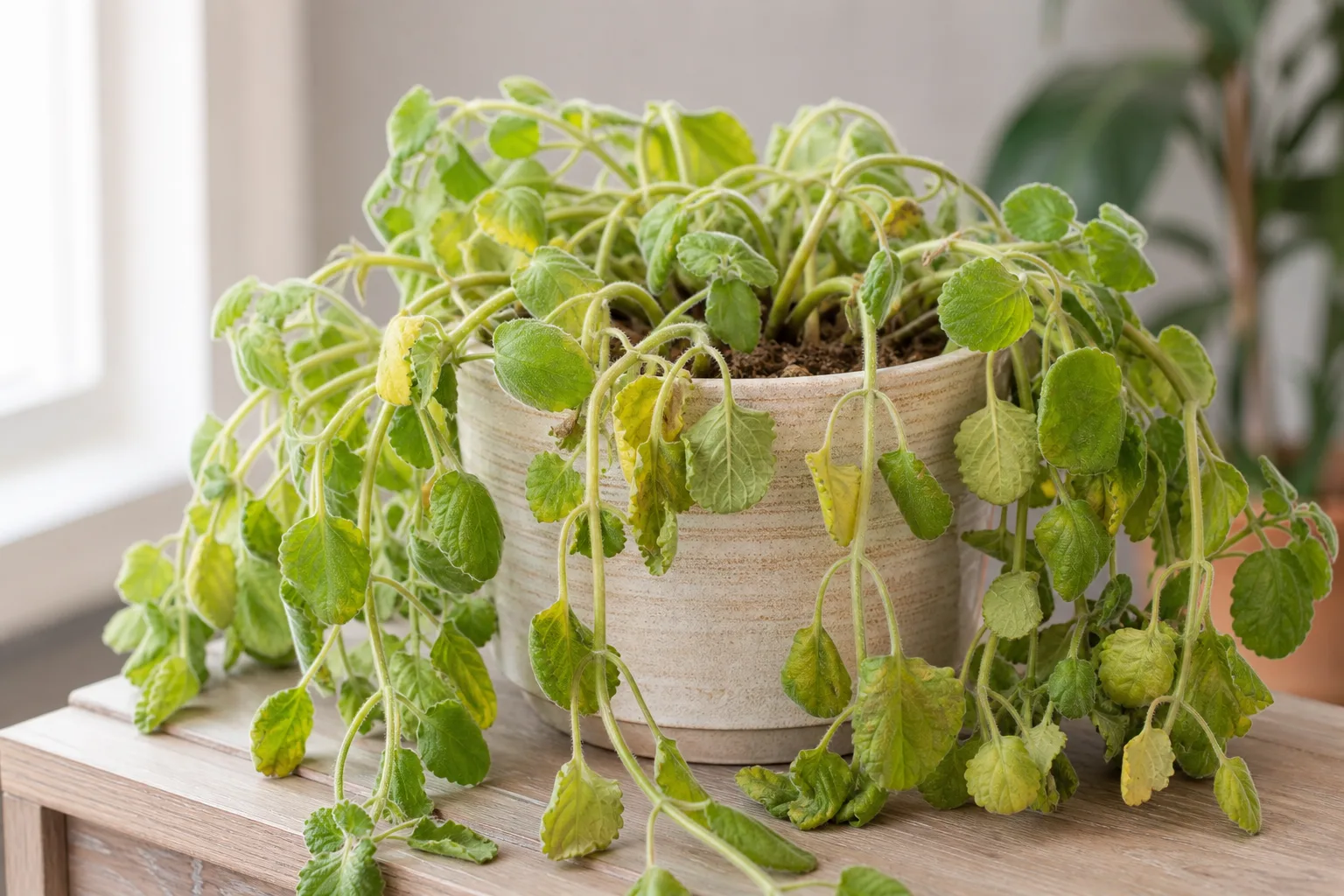
Overwatering on Swedish Ivy usually shows as yellowing leaves, limp vines, and wilting even while the mix is wet. First, stop watering and empty any standing water, then confirm with pot weight, top-inch moisture, and root checks.
Overwatering on Swedish Ivy: Causes, Checks & Fixes
This guide covers overwatering on Swedish Ivy. See also the general Overwatering guide, watering, and light pages for this plant.
Overwatering on Swedish Ivy: Causes, Checks & Fixes
Quick answer
On Swedish Ivy (Plectranthus verticillatus), overwatering often looks like “thirst” at first: limp vines, softer leaves, and yellowing lower foliage while the pot is still heavy and wet. First, stop watering and empty any standing runoff right away. Then confirm with a quick sequence: top-inch moisture, pot weight, stem firmness at the soil line, and root condition if decline continues. Swedish Ivy overview performs best in well-drained media with medium moisture, and UF/IFAS recommends watering when the top inch dries rather than on a fixed schedule.
What overwatering looks like on Swedish Ivy
Early signs are easy to miss because a trailing plant can look temporarily droopy for more than one reason. On Swedish Ivy, this pattern is more reliable than any single symptom:
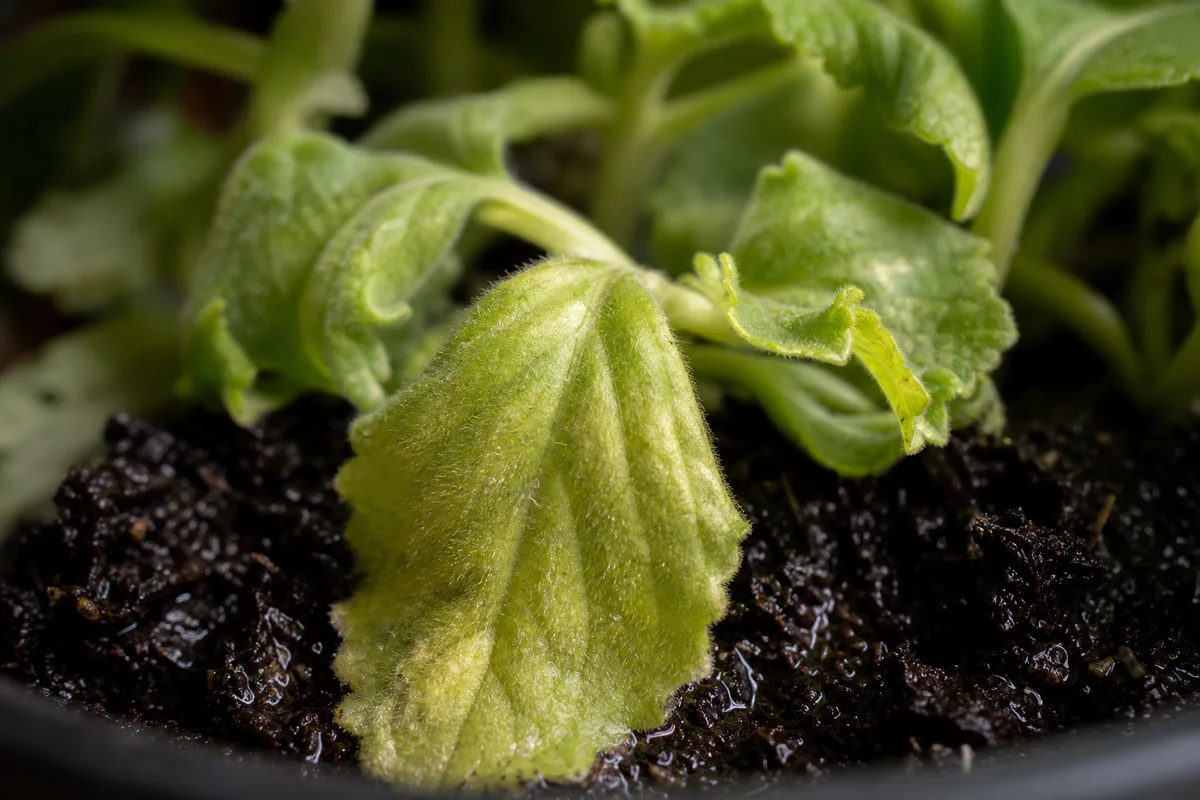
Overwatering symptoms on Swedish Ivy - compare with healthy tissue on the same plant.
- lower leaves yellow while the mix still feels moist
- leaves lose their usual spring and feel softer
- vines sag but do not recover overnight
- the pot stays heavy longer than normal
- the surface stays dark, and you may see algae or fungus gnats in persistently wet mix
As damage progresses, signs become more urgent: sour odor from the root zone, soft tissue at the stem base, and wilting despite wet media. This “wet-wilt” pattern happens because roots in saturated media lose access to oxygen and can no longer function normally Missouri Botanical Garden overwatering guide. Wisconsin Extension describes root-rot plants as commonly wilting in wet soil and showing soft brown roots with odor.
Why Swedish Ivy gets overwatered
Swedish Ivy is forgiving, which can lead growers to water too often. It has somewhat fleshy stems and leaves, so it tolerates short dry intervals better than constantly saturated roots Missouri Botanical Garden plant details. In lower winter light, growth slows and water use drops, but many people keep summer watering frequency. That mismatch is one of the most common setups for overwatering.
Common setup problems:
- hanging baskets with decorative cover pots that trap runoff
- saucers left full after watering
- oversized pots where the center stays wet for days
- dense or compacted media that drains slowly
- lower-Swedish Ivy light guide where evaporation and uptake slow down
RHS guidance notes that wilting can come from overwatering as well as drought, which is why moisture checks matter more than appearance alone.
How to confirm the cause
Use this order so you avoid adding more water to a waterlogged plant.
- Top-inch check: If the top inch is still moist, hold watering UF/IFAS Swedish Ivy guidance.
- Pot-weight check: A heavy pot plus wilt suggests excess water; a light pot plus wilt suggests underwatering.
- Drainage check: Water should run through and out; then saucers should be emptied Clemson HGIC indoor watering.
- Stem-base check: Press gently at the crown. Soft tissue near the soil line means escalation is urgent.
- Smell check: A sour or swampy smell supports oxygen-poor root conditions Missouri Botanical Garden overwatering signs.
- Root check (if symptoms persist): Healthy roots are firm and pale; failing roots are brown or black, soft, and often odorous Wisconsin Extension root rot signs.
If leaves droop but the mix is dry and roots are firm, you are likely dealing with underwatering instead of overwatering.
First fix for Swedish Ivy
First action: Stop watering and remove standing water from saucers or cover pots.
Then stabilize the plant:
- move to bright indirect light
- increase airflow around the pot
- pause fertilizer until fresh growth resumes
Do not repot immediately if stress is mild and the crown is firm. For persistent wet-wilt, sour odor, or stem-base softness, unpot and inspect roots. Remove clearly soft or decayed roots with clean tools, then repot into fresh, airy media in a container with real drainage. Clemson recommends thorough watering followed by complete drainage and explicitly says not to leave pots standing in runoff.
Step-by-step recovery
Mild overwatering (no stem rot)
Keep the current pot if drainage is good and roots are still mostly healthy. Let the top inch dry before watering again, then water deeply and drain fully. Expect some older yellow leaves to drop. Early recovery signs are firmer leaves, less midday droop, and renewed tip extension.
Moderate overwatering (persistent wetness, weak growth)
Refresh the root zone. Unpot the plant, remove old saturated media, trim damaged roots, and repot in a lighter mix. Keep the plant in bright indirect light, skip feeding for now, and water only when the top inch dries again. Track progress by new growth rather than trying to “green up” damaged leaves.
Severe decline (soft crown, strong odor, major root loss)
If stem bases are soft and most roots are gone, prioritize salvage cuttings from still-firm vines. UF/IFAS notes Swedish Ivy is commonly propagated from stem tip cuttings, which is often the fastest recovery route when root failure is advanced. Discard heavily rotted parent material rather than repeatedly rewetting it.
Recovery timeline
Swedish Ivy can recover quickly after root-zone oxygen is restored, but visible change is gradual.
- First 7 days: wilting should stop worsening if watering is corrected
- 2 to 4 weeks: new tips should appear firmer and less floppy
- 4 to 8 weeks: trailing growth usually returns if enough roots recovered
Older yellow leaves usually do not recover. Judge success by healthy new growth, stable stems, and less wet-wilt recurrence.
Lookalikes to rule out
- Underwatering: pot feels light, top inch is dry, and roots are not mushy.
- Low light stress: leggy growth and sparse leaves without sour wet media.
- Root rot progression: same wet-wilt pattern, but with clear root decay, odor, and sometimes crown softness.
If root decay is confirmed, escalate immediately rather than relying on dry-down alone. You can also compare patterns with related guides for root rot and underwatering.
What not to do
Do not water on a strict year-round schedule. Do not fertilize while roots are stressed. Do not leave decorative cachepots full of drainage water. Do not mist leaves to solve a root-zone oxygen problem. If pets nibble trailing stems, Swedish Ivy is listed by ASPCA as non-toxic to cats and dogs.
How to prevent overwatering next time
Use a moisture-led routine:
- water only when the top inch dries UF/IFAS
- water thoroughly, then let excess drain Clemson HGIC
- empty saucers every time
- reduce frequency in cooler, lower-light months
- repot into airy mix before old media collapses
Swedish Ivy does best with consistent moisture cycles, not constant wetness. Think “moisten, drain, and wait” rather than “always damp.” For prevention beyond watering cadence, review the species care baseline in the Swedish Ivy watering guide.
When to use this page vs other Swedish Ivy guides
- Swedish Ivy watering guide - Use for routine moisture checks before assuming overwatering is the main issue.
- Swedish Ivy problems hub - Browse all 18 common issues on this species.
- Yellow Leaves on Swedish Ivy - Different entry point when symptoms overlap with overwatering.
- Drooping Leaves on Swedish Ivy - Different entry point when symptoms overlap with overwatering.