Root Rot on Swedish Ivy: Causes, Checks & Fixes
Quick answer
Root rot on Swedish Ivy starts when trailing stems sit on wet mix or the basket stays saturated too long. Stop watering, check stem bases for softness, unpot if the mix smells sour, and trim mushy roots before repotting into fresh airy media.
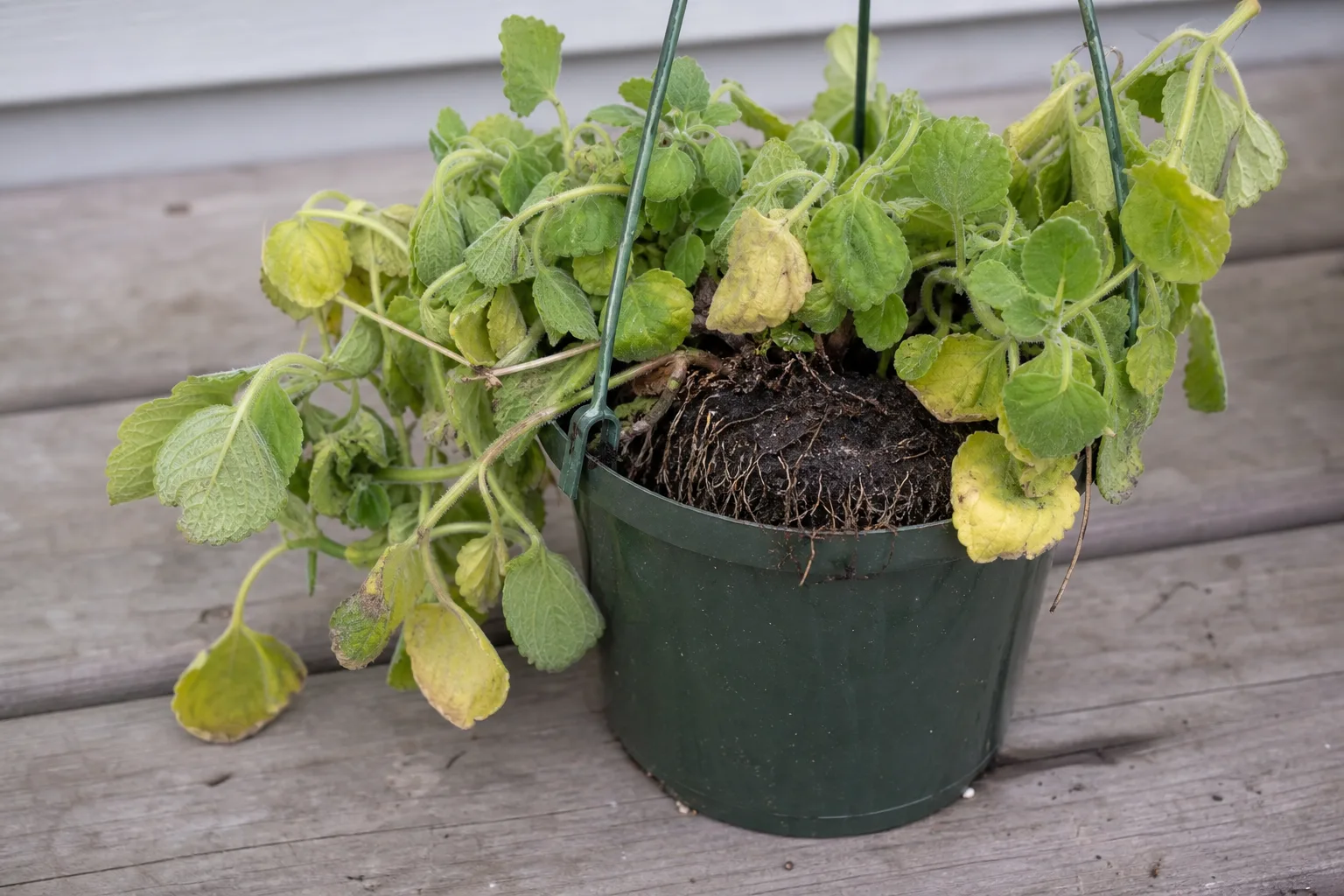
Root Rot on Swedish Ivy: Causes, Checks & Fixes
This guide covers root rot on Swedish Ivy. See also the general Root Rot guide, watering, and light pages for this plant.
Root Rot on Swedish Ivy: Causes, Checks & Fixes
Quick answer
Root rot on Swedish Ivy (Plectranthus verticillatus) is almost always a watering and drainage failure-not a mysterious disease. This trailing mint-family plant needs well-drained soils with regular but not waterlogged moisture. If plants get too wet they develop root rot, especially when runners rest on constantly damp mix or a hanging basket saucer holds standing water.
First step: stop all watering. Press stem bases at the soil line-soft tissue while the mix is wet is urgent. If the pot smells sour or feels heavy days after the last drink, unpot and inspect roots before repotting or fertilizing. For early wet-soil stress without confirmed decay, start with the overwatering guide instead.
What root rot looks like on Swedish Ivy
Swedish ivy has thick, semi-succulent, scalloped leaves that store water-so early rot often mimics thirst. The reliable pattern is wet-wilt: glossy leaves yellow or droop while the pot stays heavy and the top inch of mix is still moist.
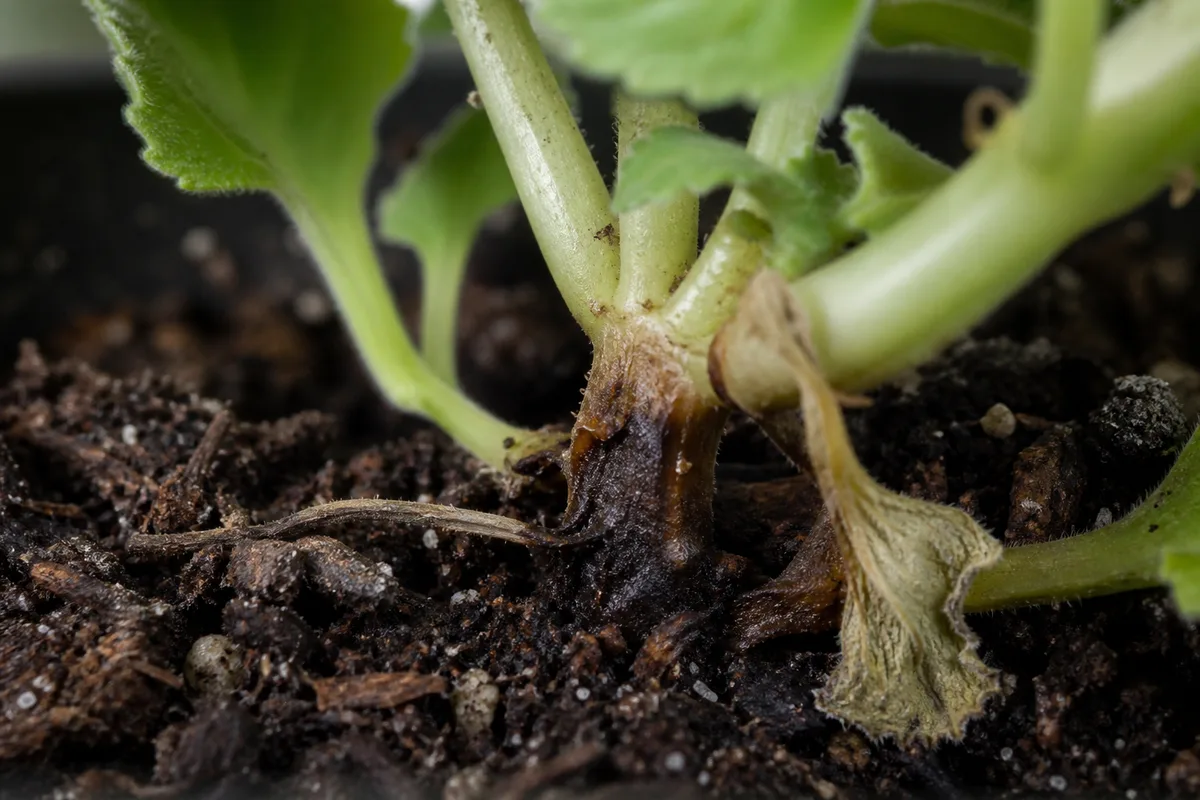
Root Rot symptoms on Swedish Ivy - compare with healthy tissue on the same plant.
Early signs
- lower leaves turn soft yellow and drop while soil feels damp
- vines sag but do not perk up overnight
- mature leaves feel rubbery on a heavy pot (not crisp-dry)
- fungus gnats hover over persistently wet organic mix
- trailing runners touching damp soil develop soft spots where stems contact the surface
Advanced signs
- sour or rotten smell from the root zone
- blackening or translucence at stem bases near the soil line
- stalled tip growth while older leaves collapse
- multiple softened runners spreading decay along trailing stems
- mushy brown or black roots when you unpot
Check stem bases-not just leaf tips. On a trailer, rot can climb one runner while others look fine until you press the crown.
Why Swedish Ivy gets root rot
Swedish Ivy is tolerant of drought but intolerant of soggy roots. The species evolved in southern and southeastern African woodland margins where moisture drains quickly. Indoors, these setups cause most failures:
- watering on a calendar instead of when the top 1 to 2 inches of mix feel dry
- hanging baskets with full saucers or decorative cachepots trapping runoff
- oversized pots where the center stays wet for days
- trailing stems laid on wet mix, keeping crown tissue damp
- cool, dim winter rooms where growth slows but watering stays on a summer rhythm
The wilt-on-wet-soil trap
Because leaves store moisture, growers often interpret drooping as thirst and add more water. Roots in waterlogged soil cannot absorb the oxygen needed to function normally. Wilted leaves may indicate soil that is too dry or too wet-rotting roots cannot take up water. On Swedish ivy, firm thick leaves on a light dry pot mean underwatering; soft rubbery leaves on a heavy wet pot mean root stress-see the watering guide for the full leaf-softness test.
How to confirm the cause
Work through this checklist in order. Stop at the first step that confirms rot.
- Top-inch check: If the top inch is still moist after your normal dry-down window, hold watering UF/IFAS Swedish ivy guidance.
- Pot-weight check: A heavy pot plus wilt on wet mix supports root failure; a light pot with dry mix points to underwatering instead.
- Leaf-firmness check: Pinch a mature leaf. Soft, pale, rubbery texture on a wet heavy pot is not thirst-it is damaged uptake.
- Stem-base check: Press gently where stems meet soil. Squishy tissue here while mix is damp is a red flag unique to crown and runner rot on trailers.
- Runner-contact check: Lift trailing stems. Any runner resting on wet mix with soft tissue at the contact point accelerates decay along the stem.
- Smell check: Sour or swampy odor from the root zone confirms oxygen-poor conditions Missouri Botanical Garden overwatering signs.
- Root inspection: Knock the plant out of its pot. Healthy roots are firm and white or pale; rotted roots are brown, translucent, or mushy Wisconsin Extension root rot signs.
If three or more checks point to decay-especially smell, mushy roots, and soft stem bases-treat root rot as confirmed and begin rescue, not dry-down alone.
Lookalikes to rule out
| Pattern | Pot weight | Top inch | Stem bases | Roots on unpot |
|---|---|---|---|---|
| Root rot (this page) | Heavy | Moist | Soft or blackening | Brown, mushy, odorous |
| Underwatering | Light | Dry | Firm | Firm and pale |
| Early overwatering | Heavy | Moist | Still firm | Mostly healthy; no sour smell |
| Low light stress | Normal | Variable | Firm | Healthy; leggy stretch instead |
Early overwatering without decay is better handled on the overwatering page. Escalate here when roots fail inspection.
First fix for Swedish Ivy
First action: stop all watering and remove standing water from saucers or cachepots.
Then stabilize before you repot:
- move to bright indirect light so the root zone can dry
- increase airflow around the basket
- pause fertilizer until new growth resumes
If stem bases are still firm and roots are only partly damaged, let the root ball dry in the pot for several days while you monitor. If odor is strong, stem bases soften, or inspection shows widespread mush, unpot immediately-do not wait for passive dry-down.
Step-by-step recovery
Mild root rot (some mushy roots, firm upper stems)
- Unpot and gently rinse away wet soil to see firm versus decayed tissue.
- Trim all brown, mushy roots with clean scissors back to firm white tissue.
- Let the trimmed root ball air-dry in bright indirect light for 24–48 hours.
- Repot into fresh well-drained potting media in a container with drainage holes-only slightly larger than the remaining root mass. See the repotting guide for mix and pot sizing.
- Wait until the top inch dries before the first cautious soak, then drain fully.
Plants with just a stem or small part with rot may be salvaged by pruning out the rotted part and rooting healthy tissue.
Moderate root rot (persistent odor, weak tips, major root loss)
Follow the mild steps, but expect to remove a large share of roots. Keep only firm upper stems. Discard saturated old mix entirely-do not blend it with fresh media. Track recovery by new plump scalloped tip growth, not by old yellow leaves re-greening.
Severe decline (multiple soft runners, crown collapse)
When more than one trailing stem softens at the base or most roots are gone, prioritize propagation. Take 3–4 inch cuttings from firm tips above healthy nodes. Root them in fresh airy mix per the propagation guide. UF/IFAS describes Swedish Ivy as commonly propagated from stem tip cuttings-often the fastest recovery route when the parent plant cannot be saved. Discard rotted parent material rather than repeatedly rewetting it.
Recovery timeline
Swedish Ivy can bounce back quickly once oxygen returns to the root zone, but damaged leaves rarely recover.
- First 7 days: wilting should stop worsening if watering stays paused and decayed tissue is removed
- 2 to 4 weeks: new tip growth should look firmer with plump scalloped leaves
- 4 to 8 weeks: trailing length usually resumes if enough healthy roots remain
Judge success by fresh growth at nodes and stable firm stems-not by older yellow foliage.
When to worry
Treat root rot as urgent when:
- stem bases turn soft or black at the soil line
- more than a third of roots are mushy on inspection
- multiple runners soften along the crown while mix stays wet
- the plant wilts in saturated soil with a sour smell
Mild trimming on firm upper stems can work. A collapsed crown with odor throughout usually means propagation is the only salvage path. Chronic wet mix may also invite fungus gnats and mold on soil-dry the cycle after rescue to remove their habitat.
What not to do
Do not keep watering because leaves look wilted when the soil is already wet-that deepens root failure. Do not fertilize a rotting plant; stressed roots cannot use nutrients and salts can burn tender tissue. Do not repot into dense clay, garden soil, or a pot without drainage holes. Do not leave a hanging basket in a full saucer. Swedish Ivy is non-toxic to cats and dogs-still handle gently when trimming rotted tissue.
How to prevent root rot next time
Build a moisture-led routine tied to this trailer’s biology:
- water when the top 1 to 2 inches dry-not on a fixed weekly date
- soak thoroughly, then empty saucers immediately
- use airy, well-drained mix-see the soil guide
- keep bright indirect light so the basket dries predictably
- lift trailing stems off wet mix after watering
- stretch winter intervals when cool dim rooms slow growth
The full wet-dry cycle, seasonal adjustments, and leaf-softness test live in the Swedish ivy watering guide. For placement and light that supports faster dry-down, see the light guide and overview.
When to use this page vs other Swedish Ivy guides
- Swedish Ivy watering guide - Use for routine moisture checks before assuming root rot is the main issue.
- Swedish Ivy problems hub - Browse all 18 common issues on this species.
- Yellow Leaves on Swedish Ivy - Different entry point when symptoms overlap with root rot.