Low Humidity on Syngonium Milk Confetti: Causes and Care
Quick answer
Syngonium Milk Confetti can tolerate ordinary home humidity, but arrowhead vines grow best with moderate to higher humidity. Dry, crisp leaf margins can fit low humidity, yet the same symptom can come from dry or waterlogged soil, salts, heat, or drafts. Measure the room, inspect the potting mix, then make one measured change.
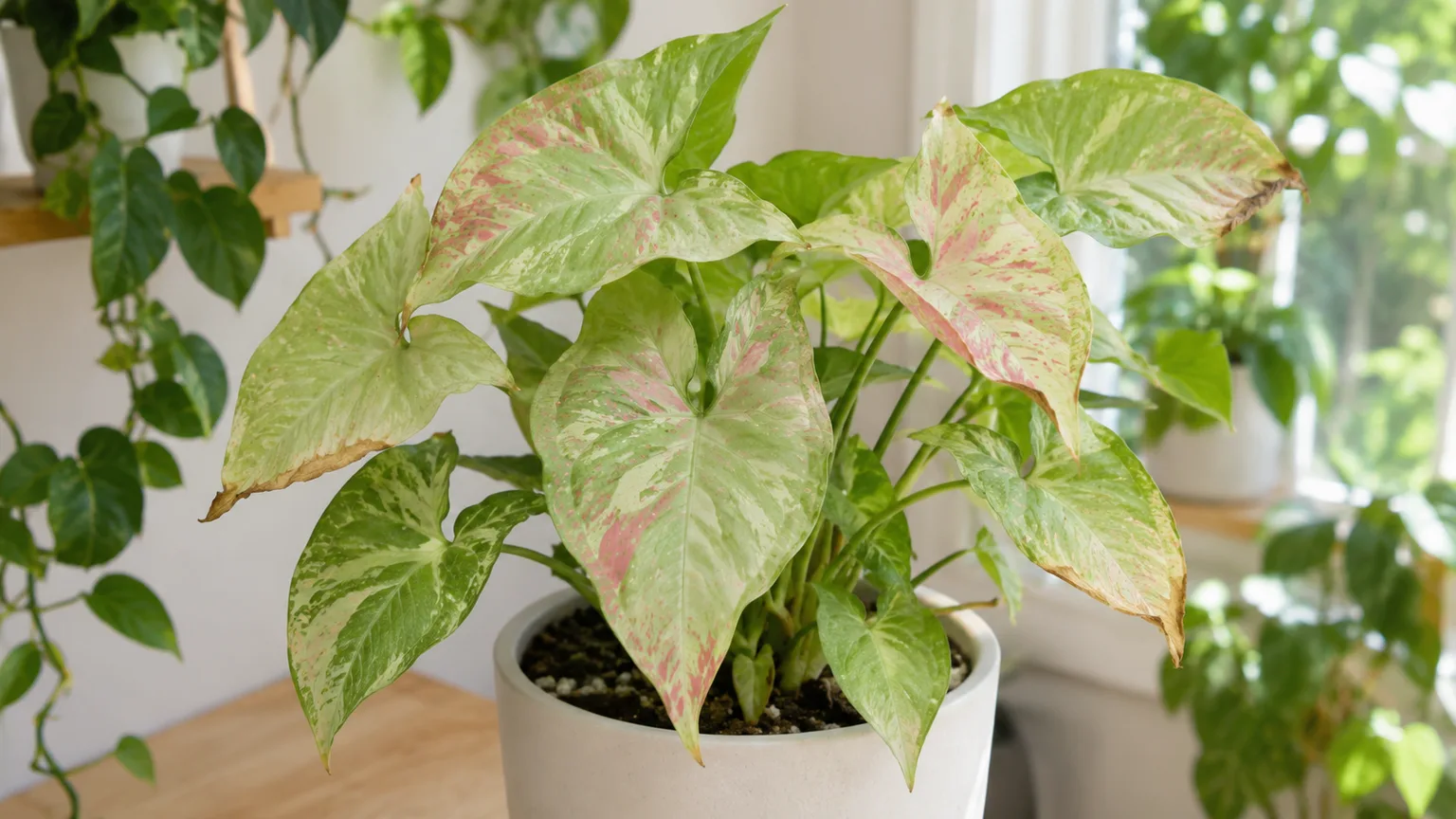
Low Humidity on Syngonium Milk Confetti: Signs and Fixes
This guide covers low humidity on Syngonium Milk Confetti. See also the general Low Humidity guide, watering, and light pages for this plant.
Low Humidity on Syngonium Milk Confetti: Signs and Fixes
- Search intent: identify whether dry air is affecting Syngonium Milk Confetti and choose a safe way to improve its environment.
- Specific angle: distinguish humidity stress from water, salt, light, heat, and draft damage on a pink-and-white variegated arrowhead vine.
- Reader outcome: measure conditions, make one targeted adjustment, and monitor new growth instead of overwatering or repeatedly misting.
- Low Humidity on Syngonium Milk Confetti: Causes and Care
- Dry Leaf Edges on Syngonium Milk Confetti? Check Humidity
- How to Help a Milk Confetti Syngonium in Dry Air
Low Humidity on Syngonium Milk Confetti: Causes and Care
- Check whether dry air is behind crispy Milk Confetti leaf edges, rule out watering and light stress, and raise humidity without overwatering.
- Syngonium Milk Confetti tolerates average home air, but dry margins can signal stress. Measure humidity and correct the cause safely.
- Learn when to use a humidifier for Milk Confetti Syngonium and why misting or extra watering may not solve dry leaf edges.
Check whether dry air is behind crispy Milk Confetti leaf edges, rule out watering and light stress, and raise humidity without overwatering.
- H1: Low Humidity on Syngonium Milk Confetti: Signs and Fixes
- H2: Quick answer
- H2: Why humidity matters to Milk Confetti
- H2: What low humidity looks like
- H2: Check humidity before changing care
- H2: Rule out other causes of dry edges
- H2: First steps to reduce humidity stress
- H2: Ways to raise humidity safely
- H2: What not to do
- H2: Recovery and when to check the roots
- H2: Related Syngonium Milk Confetti guides
- H2: Conclusion
- H2: FAQs
Low Humidity on Syngonium Milk Confetti: Signs and Fixes
Quick answer
Syngonium Milk Confetti, a variegated cultivar of Syngonium podophyllum, prefers moderate to higher humidity but can tolerate typical household air. A few dry, brown leaf edges may fit low humidity, especially during a dry heating season, but the symptom is not proof. First check the room’s relative humidity, the potting mix, recent fertilizer, light, and exposure to hot or cold drafts. If the air is consistently dry, use a small humidifier or group plants together rather than watering more often or misting repeatedly.
The plant’s pink, white, and mint-green coloring is a cultivar trait; it does not make every pale, crispy mark a humidity problem. North Carolina State Extension lists Milk Confetti among the cultivars of S. podophyllum, and Clemson Extension says arrowhead vines prefer humidity at 50% or above while tolerating lower levels. (NC State Extension’s Syngonium profile; Clemson Extension’s arrowhead-vine guide)
Why humidity matters to Milk Confetti
Arrowhead vine comes from tropical regions, and a humid room can support lush foliage. Still, indoor Syngonium is adaptable: Clemson Extension describes average home humidity as tolerable, with 50% or higher as a preferred level rather than a hard survival threshold. So do not assume the plant needs a tropical greenhouse or a precise number at all times. A stable room with suitable light and watering is a reasonable starting point. (Clemson Extension on arrowhead-vine humidity and care)
Air often becomes drier indoors when cold outdoor air is heated in winter. Penn State Extension notes that many houseplants may benefit from more humidity during the heating season, although the best level differs by plant and there is no single target for every indoor species. (Penn State Extension on seasonal humidity)
What low humidity looks like
Look for a pattern, not one damaged leaf. Low humidity can be consistent with dry or crisp tips and margins, edges that become papery, or leaves that dry sooner than expected. The University of Connecticut’s general houseplant guidance lists drying leaf edges and leaf drop among possible low-humidity signs. These symptoms are clues only; they cannot identify the cause on their own. (UConn Home Garden Education Office on humidity symptoms)
On Milk Confetti, inspect several leaves and note where the damage begins. If only the oldest leaf has a small dry patch while new leaves look healthy, the plant may be adjusting or shedding old foliage. If multiple leaves develop crispy margins at the same time, compare that timing with a heating system turning on, a fan or vent, a recent move, or a change in watering.
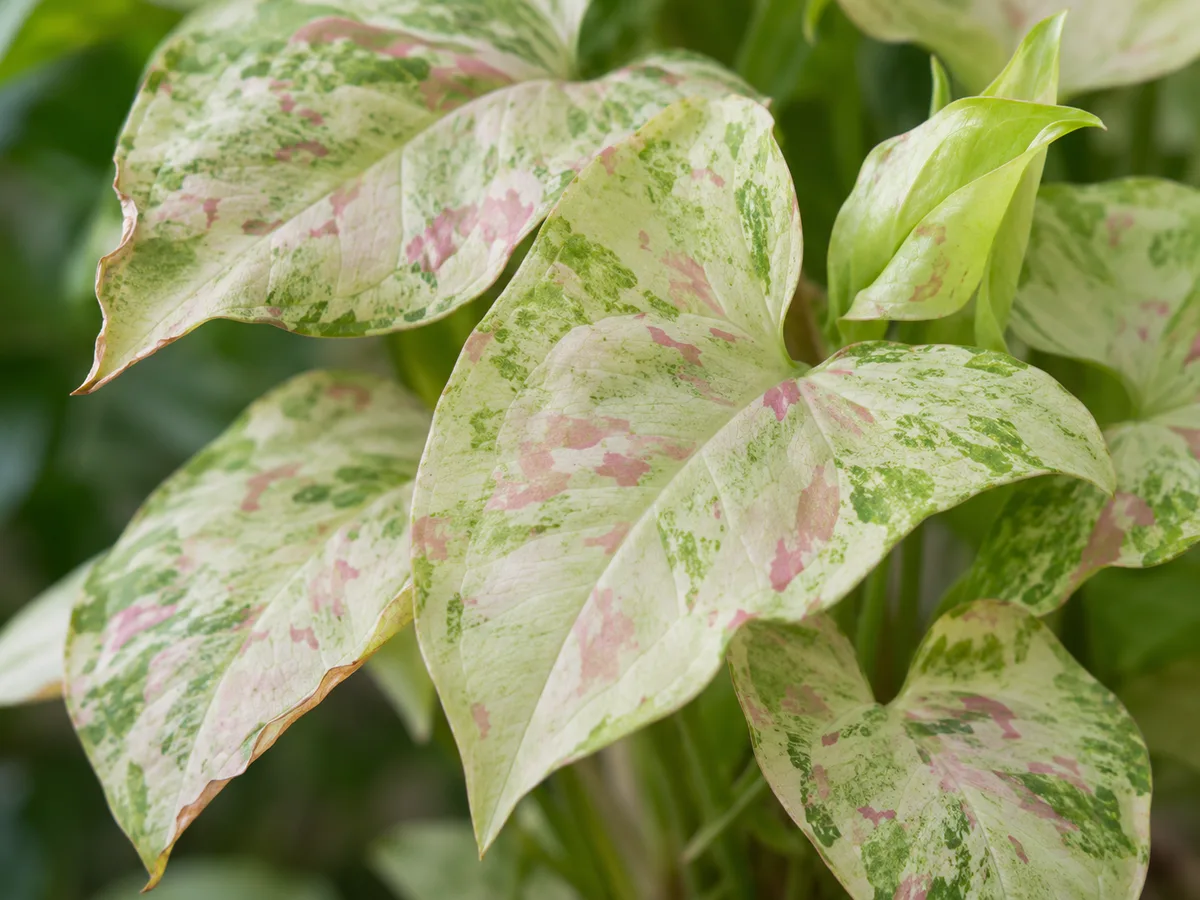
Crispy margins can fit dry air, but soil, salts, heat, and drafts can create a similar pattern.
Check humidity before changing care
1. Measure the room
Use a small hygrometer near the plant, away from a window, heater, humidifier outlet, or direct sunlight. Let the reading settle, then check it at a couple of times during the day. A momentary reading beside a humidifier does not tell you what the leaves experience across the room.
Compare the reading with the plant’s care range: Clemson Extension gives 50% or higher as the preferred humidity for arrowhead vine, while noting that it tolerates lower humidity. If readings are around that level and the plant is otherwise stable, look for another cause before adding equipment. (Clemson Extension’s Syngonium humidity guidance)
2. Check the pot before watering
Feel the growing mix below the surface and lift the pot to gauge its weight. If the mix is dry well below the top, water thoroughly and let excess drain. If it is still wet or the pot feels heavy, wait. Texas Tech’s interior-plant profile recommends well-drained soil and allowing the mix to dry slightly between waterings; excess water is not a reliable way to compensate for dry air. (Texas Tech’s Syngonium profile)
3. Look at the whole plant
Check the newest leaves, leaf undersides, and stems. Fine stippling, webbing, sticky residue, distorted new growth, or spreading yellow patches point toward other problems and warrant a closer inspection. Also review fertilizer use and whether the plant sits in strong afternoon sun, near a hot window, or in a draft.
Rule out other causes of dry edges
Brown margins are a nonspecific houseplant symptom. UC IPM lists low humidity as one possibility, alongside excessively dry or wet soil, fertilizer or salt buildup, too much sun or heat, and drafty conditions. It also notes that pests and root problems can cause other changes such as yellowing, weak growth, or leaf drop. (UC IPM’s houseplant problem guide)
Use these clues to decide what to check next:
- Dry mix and a light pot: the plant may need water. Water the mix, not the leaves, and allow the pot to drain.
- Wet mix, yellowing, or soft stems: pause watering and check drainage and roots. Compare with overwatering on Syngonium Milk Confetti and root rot.
- Crisp damage on the window-facing side: check for harsh direct sun or heat through glass.
- Damage close to a heater, air conditioner, or open door: move the plant out of the airflow and keep its light steady.
- Sticky leaves, fine stippling, webbing, or distorted growth: inspect for sap-feeding pests rather than raising humidity as the only response.
For a broader comparison, see brown tips on Syngonium Milk Confetti and the Syngonium Milk Confetti problem hub.
First steps to reduce humidity stress
If the room stays below the plant’s preferred humidity and the dry-edge pattern continues, make one change at a time:
- Move the plant away from heater and air-conditioner vents, while keeping it in bright, indirect light.
- Group it with other houseplants, leaving enough space for air to move around the foliage.
- If the room remains dry, run a clean, appropriately sized humidifier near the plant and monitor the room with a hygrometer.
- Keep normal watering based on the mix’s moisture and drainage; do not increase watering just to raise humidity.
Penn State Extension identifies grouping plants, growing under glass, or using a humidifier as ways to increase humidity in a local area. The number of plants and room size affect grouping, and a humidifier can help raise room humidity. (Penn State Extension on raising humidity)
Ways to raise humidity safely
Use a humidifier when readings stay low
A small humidifier is the most controllable option for a consistently dry room. Place it close enough to affect the plant’s area, but avoid directing a stream of damp air onto leaves or walls. Follow its cleaning instructions and monitor humidity so the room does not become persistently damp.
Group plants together
Grouping plants can create a more humid pocket around their leaves. Leave space between pots so foliage is not pressed together and air can circulate. This is an easy first adjustment when the room is only slightly dry.
Skip daily misting and do not rely on pebble trays
Misting produces only a short-lived rise in humidity because the water evaporates quickly. A tray of wet pebbles also has little effect on the room’s overall humidity, according to Penn State Extension. These methods may wet surfaces without producing a dependable, measurable change around the plant. (Penn State Extension on misting and pebble trays)
A bathroom may have higher humidity at times, but only move the plant there if the light also suits it and the humidity is actually higher when measured. Do not trade a bright, indirect-light position for a dark bathroom simply because it is used for showers.
What not to do
- Do not water more just because leaf edges are dry. Check the mix first; overly wet and overly dry roots can both injure foliage.
- Do not mist several times a day as the main fix. The humidity increase lasts only briefly.
- Do not fertilize a stressed plant to force new growth. Check light, moisture, drainage, and salt buildup before feeding.
- Do not repot immediately if the roots and mix are healthy. First correct the environmental condition and observe new growth.
- Do not cut away every discolored edge. Remove a leaf only when it is mostly damaged or fully dead; trimming healthy tissue can create more stress.
Recovery and when to check the roots
Dry margins will not turn green again. After correcting a confirmed low-humidity condition, watch the next leaves and whether the damaged area stops spreading. New growth can take several weeks, depending on light and season. Keep the plant in a stable place and avoid changing humidity, watering, and fertilizer all at once.
Check the roots if the mix stays wet for a long time, the plant wilts despite moist soil, stems soften, or yellowing spreads. Syngonium is usually forgiving of ordinary indoor humidity; persistent decline suggests the problem may be more than dry air. Follow the watering guide and the care overview as you reassess.
Related Syngonium Milk Confetti guides
Use the problem hub to compare symptoms, or try the Humidity Calculator to estimate the room’s conditions before making a change. If the main sign is brown edges, compare with brown tips; if leaves are limp or yellow, compare underwatering and overwatering.
Conclusion
Syngonium Milk Confetti prefers moderate humidity but tolerates ordinary home air. Dry leaf edges are a reason to check the room, not a diagnosis by themselves. Measure the humidity, inspect the potting mix, rule out salts, heat, pests, and drafts, then make one measured change. Keep watering tied to soil moisture and judge recovery by healthy new leaves.
FAQ 1
Does Syngonium Milk Confetti need a humidifier?
Not automatically. Arrowhead vine prefers humidity around 50% or higher but tolerates lower levels. Measure the room and check watering, light, and drafts before adding equipment.
FAQ 2
Can low humidity cause brown tips on Milk Confetti?
It can contribute to dry margins, but brown tips can also come from very dry or wet soil, fertilizer salts, heat, strong sun, or drafts. Check the pattern and root zone.
FAQ 3
Will misting fix low humidity?
No. Misting raises humidity only briefly as droplets evaporate. A humidifier or grouping plants is more useful when a measured reading stays low.
FAQ 4
Should I water more when the leaf edges are dry?
Only if the mix is dry below the surface. Check it first; Syngonium should not sit in soggy soil, and excess water can harm roots.
FAQ 5
Will brown leaf edges turn green again?
No. Crisp damaged tissue usually stays damaged. Look for new leaves with clean edges and check that the dry margins stop spreading.