Mold on Syngonium Milk Confetti Soil: What to Do
Quick answer
A small white, fuzzy patch limited to the potting mix is commonly saprophytic fungus feeding on damp organic matter; it does not by itself prove the Syngonium has a disease. Remove the surface growth, check how wet the root zone stays, and let the upper mix dry slightly between waterings while keeping this arrowhead vine in bright indirect light.
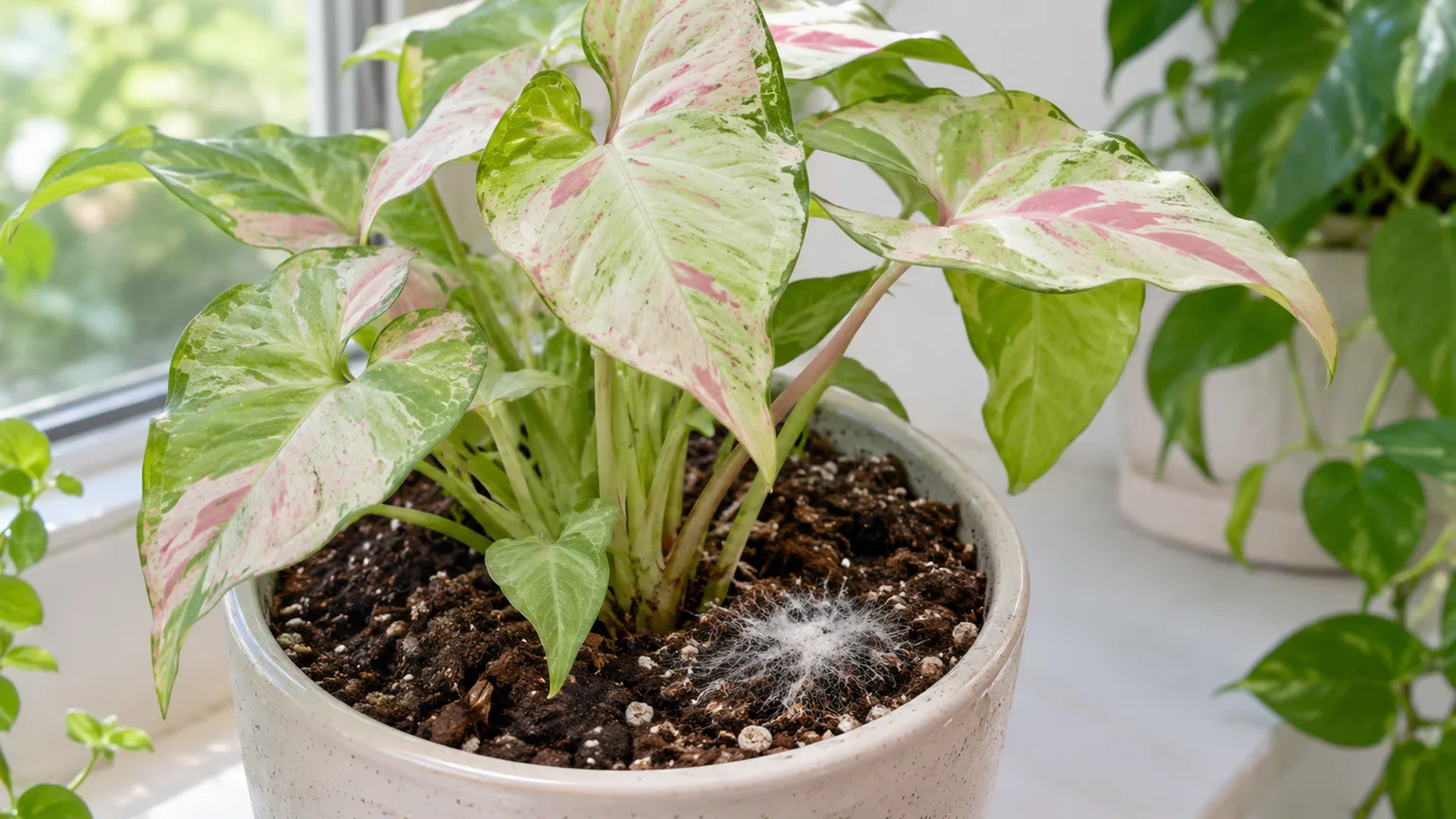
Mold on Syngonium Milk Confetti Soil: Causes and Safe Fixes
This guide covers mold on soil on Syngonium Milk Confetti. See also the general Mold on Soil guide, watering, and light pages for this plant.
Mold on Syngonium Milk Confetti Soil: Causes and Safe Fixes
- Search intent: identify white fuzzy growth on Syngonium Milk Confetti potting mix and decide whether it needs treatment.
- Specific angle: distinguish surface fungi from root rot, leaf disease, and mineral crust without assuming the cultivar is uniquely susceptible.
- Reader outcome: remove the visible patch, correct persistently damp conditions, and recognize when a root inspection is warranted.
- Mold on Syngonium Milk Confetti Soil: What to Do
- White Fuzz on Syngonium Milk Confetti Potting Mix
- Is Mold on Arrowhead Plant Soil a Problem?
Mold on Syngonium Milk Confetti Soil: What to Do
- White fuzz on Syngonium Milk Confetti soil? Learn how to identify surface mold, adjust watering, and spot warning signs of root trouble.
- Find out why mold appears on Milk Confetti potting mix and how to remove it without overreacting or keeping the soil too wet.
- Compare fuzzy growth with mineral crust, correct damp conditions, and know when to check Syngonium roots.
White fuzz on Syngonium Milk Confetti soil? Learn how to identify surface mold, adjust watering, and spot warning signs of root trouble.
- H1: Mold on Syngonium Milk Confetti Soil: Causes and Safe Fixes
- H2: What white fuzz on the potting mix means
- H2: Mold, mineral crust, or a plant disease?
- H2: What to do when mold appears
- H2: Adjust care to prevent it returning
- H2: When to inspect roots or repot
- H2: Related Syngonium Milk Confetti guides
- H2: FAQs
Mold on Syngonium Milk Confetti Soil: Causes and Safe Fixes
Quick answer
A small white, fuzzy patch on the potting mix is commonly saprophytic fungus growing on damp organic material. It does not, by itself, mean the Syngonium is diseased. Lift off the visible growth, check whether the mix stays wet for a long time, and let the upper layer dry slightly before watering again. Keep Milk Confetti in bright, indirect light and make sure its pot drains freely.
Saprotrophic fungi use dead organic matter as food and help break it down. That is different from a pathogen visibly damaging living plant tissue. White fuzz appearing on the mix is usually a sign to review moisture and airflow, not a reason to immediately drench the pot with fungicide. (RHS explains the role of saprotrophic fungi; Leafy Place describes common white soil mold)
What white fuzz on the potting mix means
Look for a soft, threadlike or cottony patch resting on the soil surface, sometimes around bark, leaf litter, or other organic pieces in the mix. This appearance can be consistent with saprophytic fungi. A humid room, a shaded pot surface, frequent watering, or mix that drains slowly can let the top stay damp long enough for the growth to become visible. Mold on soil is therefore a useful cue to check the care conditions, although it is not a reliable diagnosis of root health on its own. (Leafy Place on moisture and soil mold; Family Handyman on mold growing in houseplant soil)
The Milk Confetti name refers to a variegated Syngonium podophyllum. North Carolina State Extension describes arrowhead vine as a warm-climate foliage plant suited to filtered or partial light and moist soil. Keep the cultivar’s light needs in mind while the pot surface dries: move it to brighter indirect light if it sits in deep shade, but avoid harsh direct sun on the leaves. (NC State Extension plant profile)
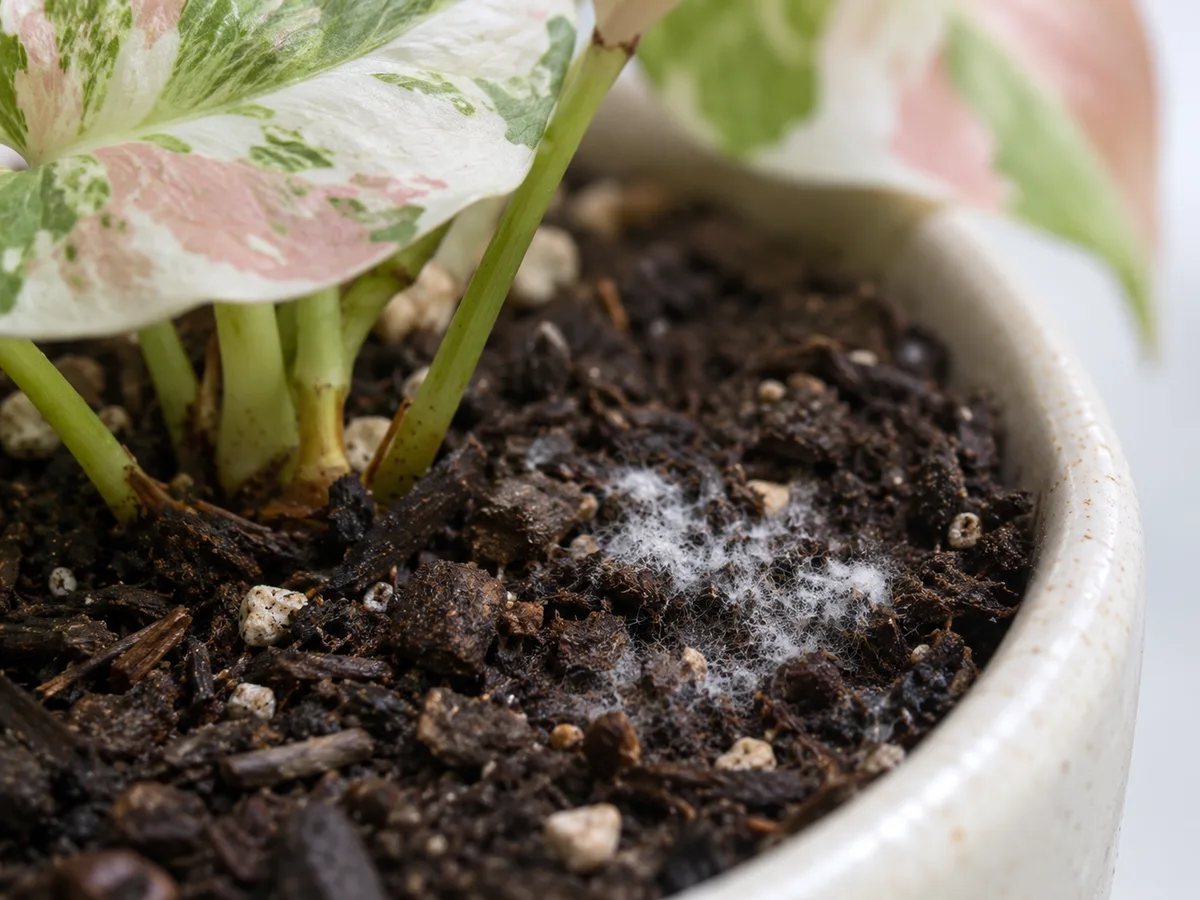
Surface fuzz can grow on organic mix while the plant itself remains healthy; check the roots and stems separately if the foliage is declining.
Mold, mineral crust, or a plant disease?
- Surface mold: soft, fuzzy or threadlike growth on the mix. It may lift away with a spoon and often coincides with a slow-drying surface.
- Mineral residue: a hard or gritty white crust on the soil or pot rim. It can build up from dissolved minerals in water or fertilizer salts, rather than fungal threads. (BabaBerry compares fuzzy growth with mineral deposits)
- Leaf disease: white powder or spreading spots on living leaves are not the same as fuzz limited to potting mix. Clemson Extension describes powdery mildew and fungal leaf spots as diseases affecting plant tissue, with visible leaf symptoms. Do not label a leaf problem “soil mold” without checking where it occurs. (Clemson Extension on houseplant diseases)
- Root or stem rot: look for a plant that continues to wilt despite moist soil, soft or dark stems near the soil line, or brown to black roots that feel soft. Those findings warrant a root-zone check; surface mold alone does not establish rot. (Clemson Extension on root and stem rot signs)
If the plant is otherwise firm and producing normal leaves, start with the soil surface and watering pattern. For soft roots, worsening yellow leaves, or persistent wilt, follow the Syngonium Milk Confetti root rot guide.
What to do when mold appears
- Check moisture before watering. Feel the top of the mix and lift the pot if you can. If the surface is still damp and the pot feels heavy, wait rather than adding water. Syngonium prefers moist growing conditions, but the container still needs to drain. (NC State Extension on Syngonium growing conditions)
- Remove the visible patch. Use a clean spoon to lift the fuzzy surface layer and a small amount of the mix immediately underneath it. Bag and discard the material; avoid shaking it across the plant. This removes the conspicuous growth so you can see whether it returns. (Leafy Place on removing surface mold)
- Check drainage. Make sure the pot has open drainage holes and empty the saucer or cachepot after watering. If water sits at the bottom or the mix remains soggy for many days, correct that condition before considering repotting. Clemson Extension identifies excess water as a contributor to houseplant root rot. (Clemson Extension on overwatering and root rot)
- Let the upper mix dry slightly. Do not leave this Syngonium bone dry for an extended period. Instead, allow the upper layer to begin drying before watering again, then water the root ball evenly and let the excess drain. Avoid frequent small splashes that keep only the surface perpetually wet. (Family Handyman on reducing surface moisture)
Do not start with repeated peroxide, cinnamon, vinegar, or fungicide drenches for fuzz confined to the mix. A surface patch does not identify a pathogen, and unnecessary chemicals can expose roots without correcting the damp conditions. If lesions are on leaves or stems, diagnose that separate issue first instead of treating it as soil mold. (RHS on saprotrophs and chemical fungicide use; Clemson Extension disease identification)
Adjust care to prevent it returning
Give the plant bright, indirect light so the pot surface is not kept in deep shade, while protecting the variegated leaves from strong direct sun. Maintain some space around the pot so air can move over the mix. Water according to the plant and pot’s actual drying rate rather than a fixed weekday schedule, and avoid leaving the container standing in runoff. (NC State Extension on light and soil; Leafy Place on damp, low-light conditions)
If the same patch returns quickly, reassess pot size, drainage, and how long the root ball stays wet. A very large container can hold more mix than the plant’s roots use, slowing drying. If the soil structure has broken down or remains waterlogged, repot into fresh, well-draining indoor mix in a pot with drainage holes. Don’t repot a healthy plant solely because a small surface patch appeared once. (Family Handyman on preventing recurring soil mold; NC State Extension plant profile)
When to inspect roots or repot
Unpot the plant only if the evidence points below the surface: persistent wilt in wet mix, soft stems at the base, roots that are dark and mushy, or a sour odor from a waterlogged root ball. Clemson Extension notes that root and stem rot can produce wilt, dark soft roots, and damage near the soil line. Remove clearly rotted roots with clean tools and use fresh mix and a clean pot; if the roots are firm and the plant is stable, a full repot may create more stress than the surface fuzz warrants. (Clemson Extension root-rot guidance)
For ordinary care, review the Syngonium Milk Confetti care overview and watering guide. Compare related symptoms in the plant problem hub or use the Plant Problem Diagnosis Tool. If small flies appear around the pot, compare with fungus gnats on Syngonium Milk Confetti; mold and fungus gnats can share damp conditions, but one does not prove the other.
FAQs
Is white mold on Syngonium Milk Confetti soil dangerous?
A small fuzzy patch limited to the mix is often saprophytic growth feeding on organic material, not proof the plant is infected. Check stems and roots separately if the leaves are declining.
Should I repot my Syngonium because of surface mold?
Not automatically. Remove the visible growth and correct slow drying first. Repot if the mix stays waterlogged, drainage is poor, or roots show rot.
How do I tell mold from mineral crust?
Mold is soft and fuzzy; mineral crust is usually hard or gritty. Consider water quality and fertilizer use if the white material forms a firm coating.
Should I use cinnamon, peroxide, or fungicide?
For surface-only fuzz, first remove it and adjust moisture. Avoid drenching the root ball with a treatment before identifying a plant disease.
How should I water after mold appears?
Check the mix before watering. Let the upper layer begin to dry, then water evenly and allow excess to drain; do not leave the pot sitting in a saucer of water.