Not Enough Light on Syngonium White Butterfly: Causes
Quick answer
Not enough light makes Syngonium White Butterfly stretch, lose its pale white pattern, and use water slowly. First step: move it to the brightest indirect spot you have-White Butterfly needs more light than a solid-green arrowhead vine to keep its butterfly-shaped variegation.
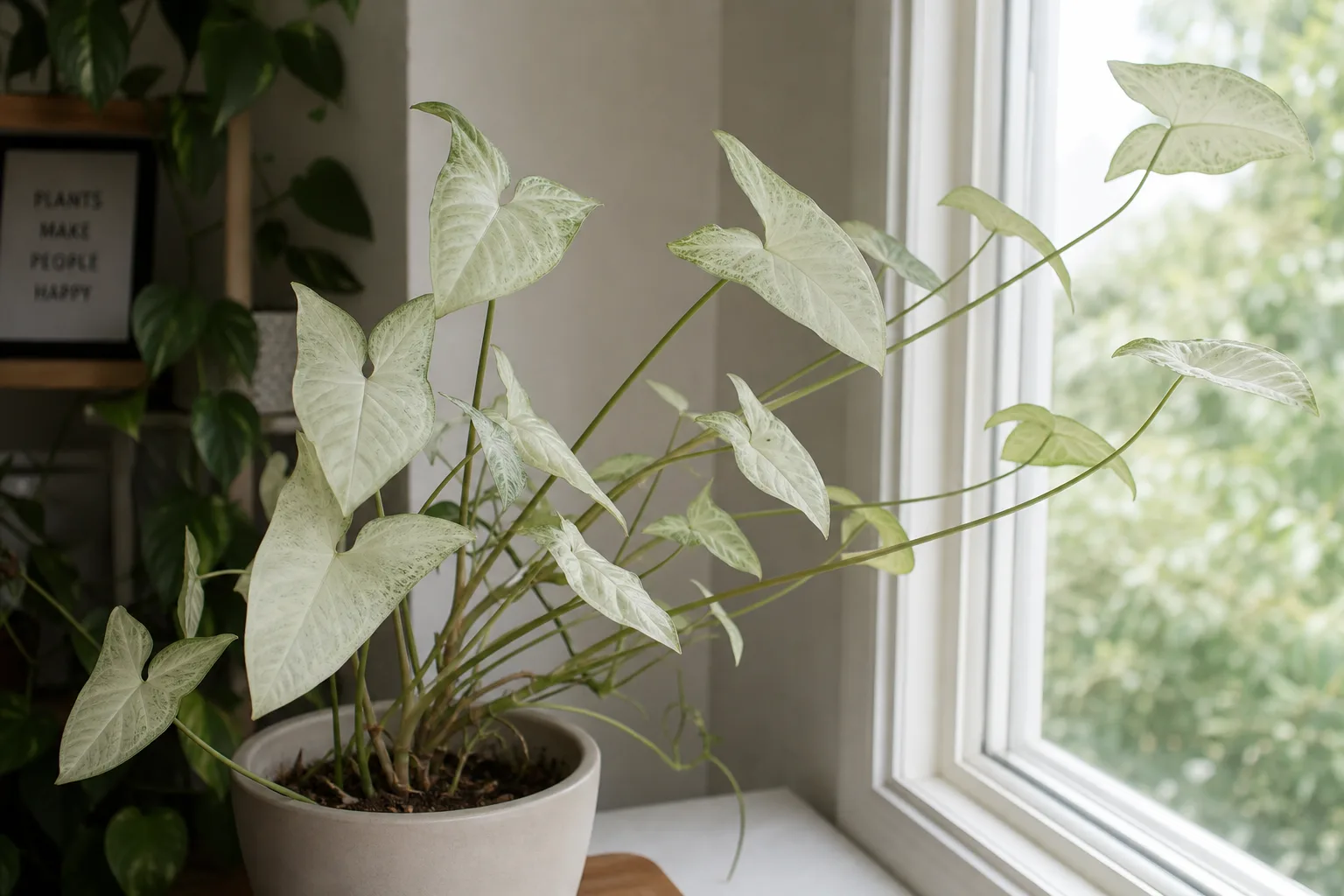
Not Enough Light on Syngonium White Butterfly: Causes, Checks & Fixes
This guide covers not enough light on Syngonium White Butterfly. See also the general Not Enough Light guide, watering, and light pages for this plant.
Not Enough Light on Syngonium White Butterfly: Causes, Checks & Fixes
Quick answer
Syngonium White Butterfly is not a dim-corner plant. The pale white veining on Syngonium podophyllum ‘White Butterfly’ depends on adequate photosynthetic energy from the green tissue surrounding it-so the plant needs more brightness than a plain green arrowhead vine to hold its pattern. In north-facing rooms, hallways, or spots far from windows, stems stretch toward light, new leaves emerge mostly green, growth stalls, and potting mix stays wet longer than you expect.
First step: move the plant to brighter indirect light-your brightest indoor spot that avoids harsh direct sun on pale leaf tissue. Do this before fertilizing, Syngonium White Butterfly repotting guide, or increasing watering. White Butterfly responds quickly to light correction; it punishes stacked fixes when the real problem is energy, not nutrients.
What not enough light looks like on Syngonium White Butterfly
Low light on White Butterfly shows up as a pattern, not one random pale leaf.
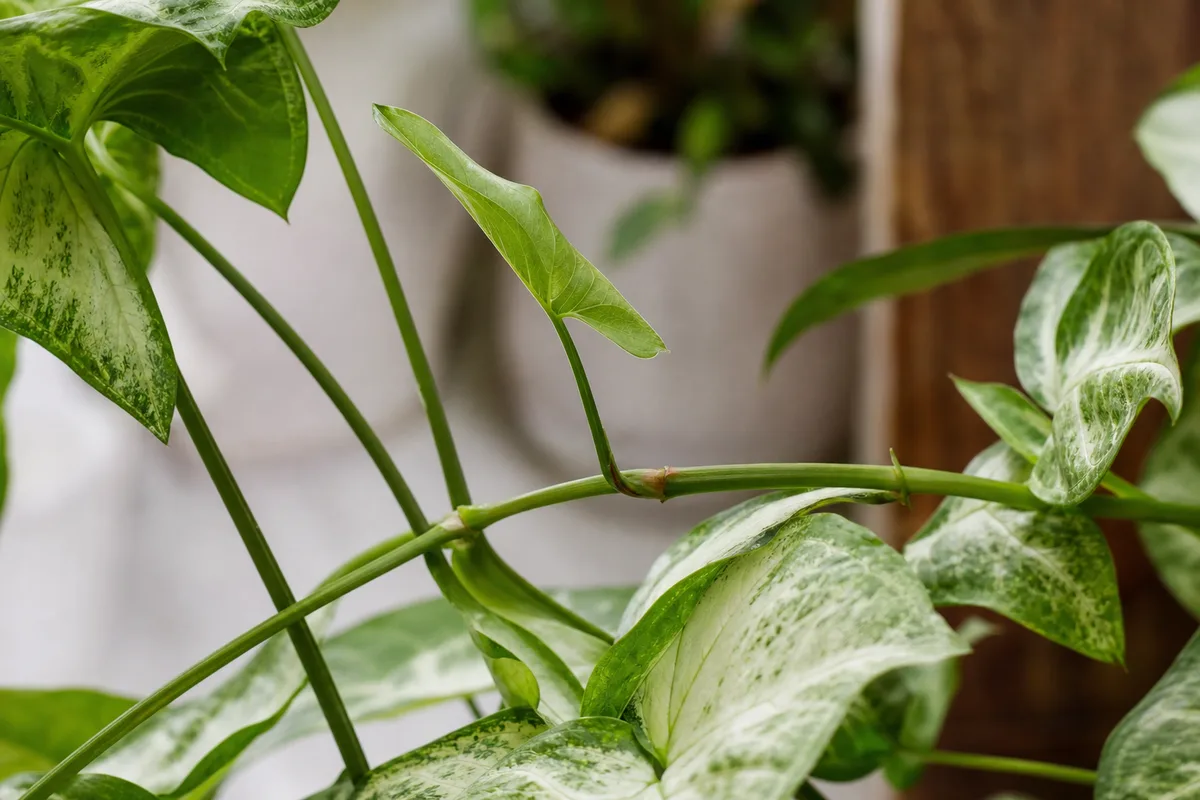
Not Enough Light symptoms on Syngonium White Butterfly - compare with healthy tissue on the same plant.
Typical signs:
- Leggy stems with long spaces between leaves (etiolation)
- Small, thin new leaves compared with leaves from a brighter period
- Fading white veining-new foliage emerging solid green or with much less pale patterning
- Strong lean toward the nearest window or lamp
- Slow or stalled growth through a warm spring despite normal watering
- Soil that stays damp because the plant is not using water quickly
- Older leaves looking dull or washed out, not crisp from drought
On White Butterfly specifically, variegation loss is the tell. Solid-green arrowhead vines tolerate moderate indoor shade and stay reasonably compact. White Butterfly in the same spot often pushes all-green shoots that grow faster than variegated sections-a survival response because green tissue harvests light more efficiently. Once a stem reverts fully green, that growth point keeps producing green leaves until you prune it back.
Cosmetic brown on old white patches from past sun or mechanical damage is different from low light. Low light rarely scorches; it fades, stretches, and reverts.
Why Syngonium White Butterfly struggles in dim light
Pale variegation is the core reason. White or cream sectors on the arrowhead leaves contain less chlorophyll than the green portions. The plant must compensate with green tissue, which needs adequate light intensity to power growth and maintain patterning. Green leaves contain more chlorophyll and outcompete variegated portions in low light-extension horticulturists see this reversion pattern across many variegated cultivars, not just syngonium.
Several home situations push White Butterfly into insufficient light:
Distance from windows. Indoor light drops sharply with every foot from glass. A spot that feels bright to you may be low light at leaf level, especially behind furniture, deep in a room, or on a wall opposite windows.
Seasonal daylight loss. Winter short days reduce intensity even when the pot never moved. White Butterfly that held its pale pattern in summer may fade or stall through December and January without supplemental light.
Dirty glass, heavy sheers, or tinted windows. Each layer cuts usable light. Variegated cultivars feel this more than plain green syngonium.
Competing with a “low-light tolerant” label. Missouri Botanical Garden notes syngonium prefers bright indirect light indoors and can survive in part shade-but White Butterfly is not interchangeable with the species baseline. Pale-variegated forms need the upper end of that range to keep white veining stable.
Misplaced watering response. In shade, White Butterfly grows slowly and drinks less. Watering on a calendar meant for a summer plant in a bright window keeps roots wet, which can yellow leaves and mimic other problems. Light and watering fail together in dim rooms.
How to confirm insufficient light
Work through these checks before changing anything else:
- Location audit - Note window direction and distance. East or filtered south within a few feet of glass usually qualifies as bright indirect. North rooms or more than six feet from a window often do not for White Butterfly.
- New growth color - Compare the last three leaves to older variegated ones. Mostly green new foliage in a previously patterned plant strongly suggests light decline or reversion.
- Internode spacing - Measure gap between leaves on the newest vine. Stretched spacing with small leaves confirms etiolation from low energy.
- Lean test - Rotate the pot 180°. Strong reorientation toward light within a week confirms the plant is hunting brightness.
- Pot weight and soil dry-down - Stick a finger into the top inch. If mix stays wet ten days or more while growth is slow, pair a light check with watering reduction-not more water to “help” a stalled plant.
- Season context - If symptoms appeared after daylight shortened, winter dimness may be the trigger even without a move.
- Rule out lookalikes - Confirm no soft stems, sour soil smell, or pest webbing. Those point elsewhere (see below).
If light is weak and new growth is greening, you have enough evidence to fix placement first.
First fix for Syngonium White Butterfly
Move the plant to the brightest indirect light available in your home-gradually if it is coming from deep shade.
Target an east-facing window or a south/west window with sheer curtain filter. Bright indirect light through the day sustains syngonium foliage without exposing pale tissue to harsh direct midday rays that can scorch.
Acclimate over one to two weeks if the plant lived in very dim conditions:
- Days 1–3: Move closer to the window but still behind filter or offset from direct beam
- Days 4–7: Shift into the bright indirect zone you want long term
- Watch pale sectors: slight warmth is fine; brown crisp patches mean pull back from direct sun
Do not jump straight into unfiltered south glass-white tissue on White Butterfly burns faster than green syngonium leaves. NC State Extension notes direct sun tends to burn or bleach arrowhead foliage.
After light improves, adjust watering to match faster dry-down in brighter spots. Water when the top inch of mix dries, not on a fixed weekly schedule.
Step-by-step recovery
Once the plant sits in better light:
- Wait two weeks before judging variegation on new leaves. The first leaf after a move may still reflect old conditions.
- Prune fully green reverted stems back to the last node showing pale variegation in the stem or leaf. Remove reversion promptly so green growth does not take over the variegated character.
- Rotate the pot weekly if one-sided leaning returns-evens light exposure on a compact tabletop plant or climber on a pole.
- Add a full-spectrum grow light if your brightest window is still weak (common in north-facing apartments). Position 6–12 inches above foliage for 12–14 hours daily during dark months, following indoor light supplementation guidance.
- Resume light fertilizer only after new growth appears in spring-half-strength balanced feed monthly during active growth. Do not fertilize a stressed plant in dim wet soil hoping to force variegation.
- Trim permanently stretched sections if they ruin shape after the plant stabilizes. New side shoots from nodes below the cut will be tighter in good light.
Do not repot on day one unless roots are rotting from chronic wet shade soil. Better light often fixes slow dry-down without a new container.
Recovery timeline
Expect visible change on new growth, not old leaves.
- Week 1–2: Lean may increase briefly as the plant adjusts, then stabilize; soil should dry slightly faster
- Week 2–4: Next one or two leaves should show improved white veining and shorter internodes if light is adequate
- Month 2–3: Consistent patterned new foliage confirms the fix; prune remaining green reversions and leggy tips
- Old tissue: Stretched stems stay thin; fully green leaves stay green. Recovery is forward-looking
If four weeks pass in a genuinely bright indirect spot and new leaves remain solid green, light may still be insufficient-move closer to the source or add a grow light before assuming genetic reversion.
Lookalike symptoms to rule out
Overwatering in shade yellows lower leaves and softens stems while soil stays wet. Fix light and dry-down together; do not only cut water while leaving the plant in dimness.
Underwatering crisps leaf edges and causes wilt with very light, dry pots-opposite of the damp slow-growth pattern common in low light.
Spider mites cause stippling and fine webbing, often worsening in hot dry bright conditions-not typical primary low-light signals, though weak plants in dim corners attract pests over time.
Nitrogen excess pushes soft green growth but usually in bright fed plants, not faded stretch in a dark corner.
Normal winter rest slows growth without dramatic reversion if autumn light was adequate. Prolonged greening through a full warm season is not normal dormancy.
Mistakes to avoid
Do not leave White Butterfly in a bathroom or hallway because it “looks fine”-variegation loss happens gradually until green shoots dominate.
Do not blast direct afternoon sun on pale leaves to fix dimness instantly. Scorch on white sectors is permanent; acclimate to filtered brightness instead.
Do not assume fertilizer restores variegation. Without adequate light, feeding mainly fuels green reversion.
Do not ignore all-green stems. They outgrow variegated portions quickly once established.
Do not water on the same schedule after moving to brighter light-check soil more often.
How to prevent low light problems
Place White Butterfly where bright indirect light is realistic most of the day-not where the pot matches décor in a dim nook. East windows work year-round; south and west need filtering.
Supplement in winter if you notice spacing between leaves widening or new white veining shrinking. Clean windows seasonally.
When buying or receiving a new White Butterfly, quarantine in good light before integrating into a low-light shelf with other “easy” plants. Syngonium is easily grown as a houseplant when light and drainage align-but White Butterfly is stricter than the species average.
If you must keep the plant out of pet reach because it is toxic to cats and dogs, choose a high bright shelf or hanging spot near a window rather than a dim floor corner for safety.
When to worry
Low light alone rarely kills White Butterfly quickly, but the combination of dim placement and wet soil can progress to root decline. Watch for soft stems at the base, sour-smelling mix, or yellow leaves that do not match a simple light fix after three weeks in brighter indirect conditions.
If the plant is mostly green reverted with minimal pale patterning left after months in good light, you may keep a healthy green syngonium but not recover strong White Butterfly variegation without propagating from the last variegated node.
Conclusion
Not enough light on Syngonium White Butterfly is a placement problem with a clear first action: brighter indirect light, acclimated carefully to protect pale tissue. Confirm the diagnosis through new green growth, stretched nodes, and slow dry-down-not a single pale leaf. Fix light before fertilizer or repotting, prune green reversions promptly, and judge success by the next leaves the plant produces, not the stretched chapter it already wrote.
When to use this page vs other Syngonium White Butterfly guides
- Syngonium White Butterfly watering guide - Use for routine moisture checks before assuming not enough light is the main issue.
- Syngonium White Butterfly problems hub - Browse all 2 common issues on this species.
- Leggy Growth on Syngonium White Butterfly - Different entry point when symptoms overlap with not enough light.
- Yellow Leaves on Syngonium White Butterfly - Different entry point when symptoms overlap with not enough light.