Spider Mites on Tradescantia Nanouk: Causes, Checks & Fixes
Quick answer
Spider mites on Tradescantia Nanouk show as tiny yellow-green stipples on pink, lilac, and white leaf zones plus fine webbing at stem nodes. First step: isolate the plant and rinse every leaf underside on trailing stems before applying insecticidal soap.
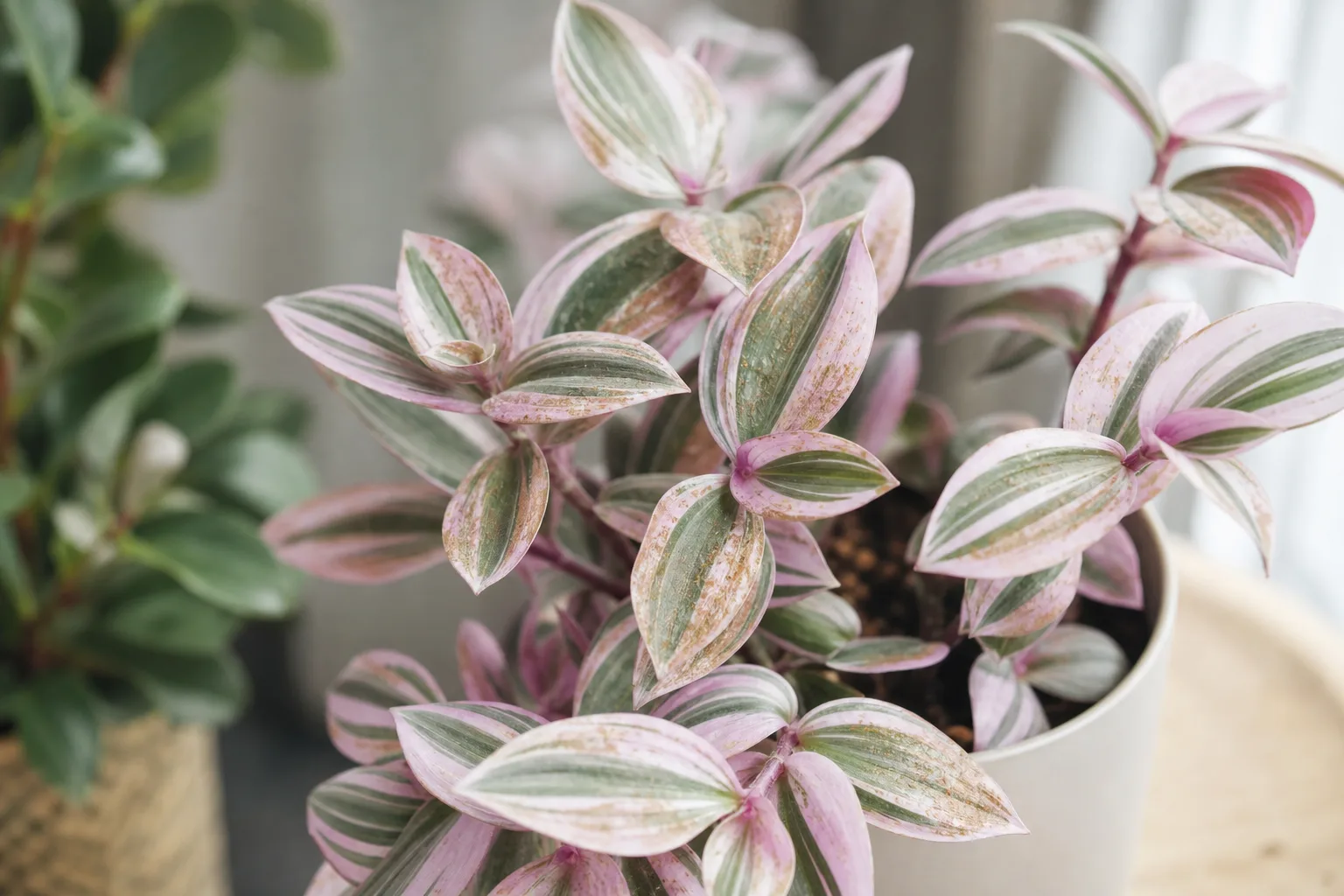
Spider Mites on Tradescantia Nanouk: Causes, Checks & Fixes
This guide covers spider mites on Tradescantia Nanouk. See also the general Spider Mites guide, watering, and light pages for this plant.
Spider Mites on Tradescantia Nanouk: Causes, Checks & Fixes
Quick answer
Spider mites on Tradescantia Nanouk (Tradescantia cerinthoides ‘Nanouk’, also sold as T. albiflora ‘Nanouk’) show up as tiny yellow-green stipples on pink, lilac, and white leaf zones and fine silk webbing at stem nodes-often on the cascading sections you do not see from across the room. The pale variegation makes early damage easier to spot than on all-green inch plants, but dense trailing growth also hides undersides until the infestation is established.
First step: isolate the plant away from other houseplants, then rinse or shower every leaf underside on trailing stems. Mites feed by piercing leaf tissue, which creates the stippled look and leaves gritty residue below. After a thorough rinse, confirm active pests with a paper-tap test before you spray. See our Tradescantia Nanouk overview for baseline humidity and care, and our low-humidity guide if winter dry air is part of the story.
What spider mites look like on Tradescantia Nanouk
On Nanouk, spider mite damage has a few signatures that differ from generic houseplant advice.
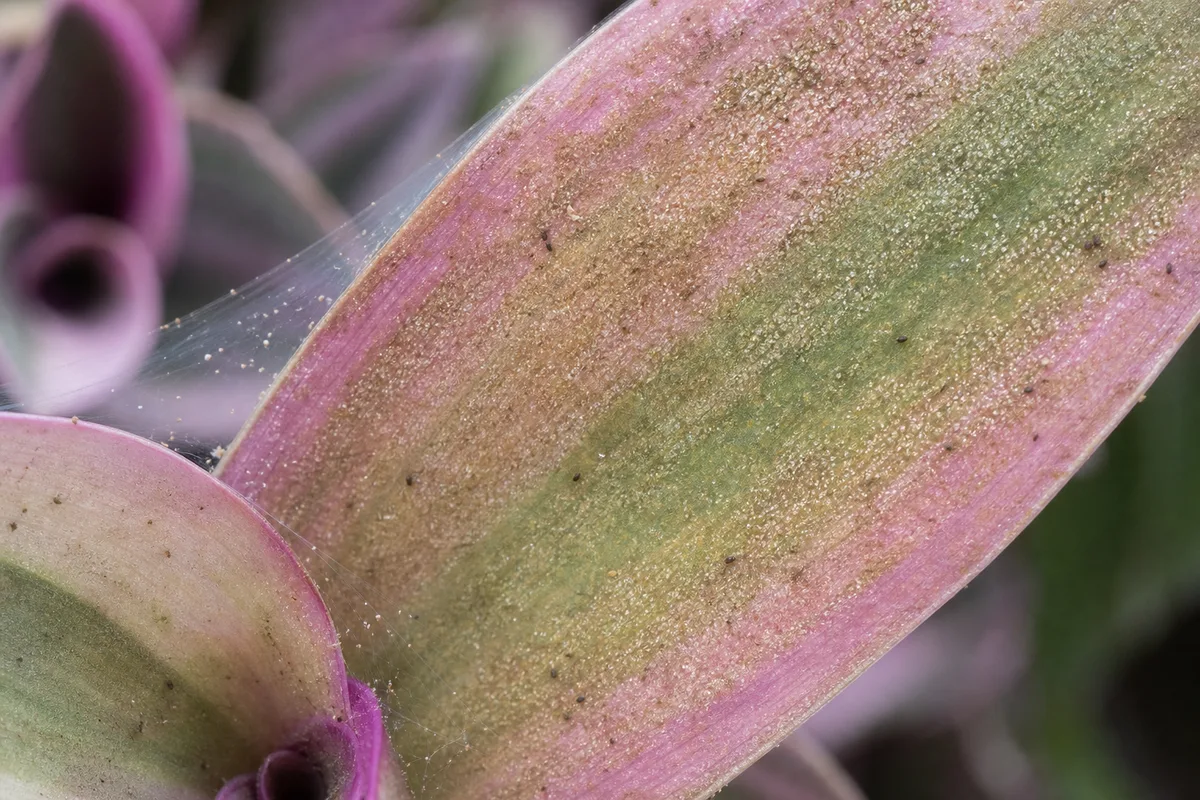
Spider Mites symptoms on Tradescantia Nanouk - compare with healthy tissue on the same plant.
Stippling on variegated zones. Look for pinprick yellow, tan, or silvery dots scattered across pink, lilac, cream, and white sections of the thick leaves. Green tissue can stipple too, but the contrast is strongest on pale zones-owners often notice “speckled” pink leaves before they see the mites themselves. Heavily fed leaves may look dull or slightly bronzed overall.
Fine webbing at nodes. Silk threads appear where leaves meet stems, especially on trailing shoots that arch over the pot rim. Webbing is easier to see with side light or a hand lens than head-on. A single strand between two leaves on a hanging stem is enough to suspect mites even when stippling is still mild.
Gritty leaf undersides. Flip a suspicious leaf. Undersides may feel sandy, and you may see tiny moving dots with magnification. Nanouk’s purple-backed leaves make pale stipples and webbing stand out against the darker surface.
Newest tips affected first in many outbreaks. Mites often concentrate on young, tender growth at stem ends-the same tips you watch for pink color. Older inner leaves may look fine while the cascade shows damage, which tricks growers into thinking only part of the plant is stressed.
What it does not look like: uniform crispy margins on pale zones with no dots (that pattern fits low humidity or brown tips more often), silver streaks with black specks (thrips), white cottony clusters (mealybugs), or mushy stem bases with sour soil (rot-not mites).
Why Tradescantia Nanouk gets spider mites
Spider mites are tiny arachnids-not insects-that multiply fast in warm, dry air. Indoor heating in winter often pulls relative humidity below 30% at leaf height, which stresses Nanouk’s thick variegated foliage and favors mites on sheltered stem joints. Spider mites thrive in dry, warm conditions on houseplants, especially when humidity drops during winter heating.
Nanouk’s growth habit makes detection harder than on upright plants. Trailing stems hide undersides, hanging baskets sit in the warm, dry micro-climate above radiators and forced-air vents, and dense node clusters give mites protected pockets to spin webbing. The cultivar tolerates average 40–50% humidity when healthy, but weeks below 30%-common in heated winter rooms-overlap with the highest mite risk period on tradescantia collections.
Nanouk is not uniquely “mite-prone” among houseplants, but it shares the Commelinaceae trailing habit with inch plants and zebrina. Mites can spread between related tradescantias on the same shelf. Stress from too little light or inconsistent watering does not cause mites, but it slows recovery once feeding damage starts.
The most common indoor species is the two-spotted spider mite (Tetranychus urticae), which feeds on many houseplants by piercing leaf cells and withdrawing chlorophyll-creating the stippled pattern extension guides describe on ivy, palms, and foliage plants alike.
How to confirm the cause
Work through these checks in order so you treat pests-not humidity alone, and not a lookalike symptom.
- Paper-tap test - Hold white paper under a suspicious stem and tap or shake the leaves. Slow-moving specks on the paper confirm live mites. A green streak when crushed suggests plant-feeding mites; yellow or orange streaks may be beneficial predators.
- Hand-lens scan - Examine leaf undersides along trailing stems, especially near nodes and newest tips. Look for dots, webbing, and cast skins.
- Stippling pattern - Scattered pinprick dots across the leaf face (not only margins) support mites. Compare a damaged leaf to a healthy leaf on the same shoot-mite stippling density should differ.
- Webbing check - Fine silk at leaf axils or between stem sections confirms arachnid activity, not thrips or salt burn.
- Humidity reading - Place a hygrometer at leaf height for a day. Below 30% RH supports mite-friendly conditions; raising humidity helps prevention but does not replace treatment once stippling and webbing are present.
- Soil moisture cross-check - Normal dry-down with firm purple-backed stems fits mites or dry air. Wet soil with limp stems points to overwatering-do not shower an already waterlogged pot daily.
- Neighbor plants - Inspect other trailing plants nearby (tradescantias, palms, English ivy). Shared stippling suggests an active outbreak, not a one-off leaf blemish.
Confirmed spider mites: stippling plus webbing or moving specks on paper, gritty undersides, and damage tracking along trailing stems. Suspected but unconfirmed: faint speckling only-rinse undersides, retest in three days before spraying. Ruled out: clean paper tap, no webbing, margins-only crisping on firm leaves in stable humidity-see low-humidity and brown-tips guides.
First fix for Tradescantia Nanouk
Isolate the plant, then rinse every leaf underside thoroughly.
Move the pot away from neighbors-mites walk and ride on tools, hands, and airflow. Take hanging Nanouk to a sink or shower and use lukewarm water with enough pressure to dislodge mites and webbing from undersides. Support trailing stems so you do not snap them. Let foliage dry in bright indirect light before the next step.
After the rinse, confirm live mites with the paper-tap test. If pests are present, apply insecticidal soap or horticultural oil labeled for houseplants, coating undersides and stem joints-not just the stippled tops. Repeat every five to seven days for three full cycles to catch newly hatched nymphs. Soap works on contact only; one spray rarely finishes the job.
Make one targeted correction first-do not stack Tradescantia Nanouk repotting guide, heavy pruning, fertilizer, and multiple pesticides on the same day. Once mites are under control, address dry winter air with a humidifier or grouping to hold 40–50% RH at leaf height.
Step-by-step recovery by severity
Light stippling, little or no webbing
Isolate, rinse undersides twice in the first week, then apply insecticidal soap on days 1, 7, and 14. Inspect with paper taps between sprays. Raise humidity modestly if readings sit below 30%. Expect clean new leaves at stem tips within two to three weeks.
Moderate webbing on several trailing stems
Shower the entire plant, including inner stems near the crown. Follow with soap or horticultural oil every five to seven days for three cycles. Wipe or rinse undersides on days between sprays if the plant tolerates handling. Remove only leaves that are mostly bronze or crispy after mites are gone-do not strip half the plant on day one.
Heavy webbing across most of the cascade
Rinse thoroughly, then treat with three weekly soap or oil cycles as above. If webbing returns on new growth after three cycles, consider propagating clean tip cuttings from the healthiest ends while you continue treating the parent-or retire a severely weakened specimen and restart from cuttings. Nanouk roots easily from nodes; a clean cutting often beats months of fighting a blanket infestation on a dense hanger.
Throughout recovery, keep bright indirect light per our light guide without baking wet leaves in hot afternoon sun right after spraying-soap and oil can stress foliage in direct heat.
Recovery timeline
Stippled and bronzed leaves do not turn green again-cosmetic damage is permanent on that tissue. Judge recovery by new clean growth at stem tips, no fresh webbing for two weeks, and paper taps that stay clear.
Mild cases often stabilize within two to three weeks after consistent rinsing and three spray cycles. Moderate trailing infestations may need four to six weeks before the cascade looks presentable again, because older damaged leaves remain visible while new tips fill in. Severe outbreaks that required cutting back may need a full growing season for the basket to look full.
If new leaves still stipple after three spray cycles, recheck isolation, repeat treatment, and inspect neighboring plants-reinfestation is more common than “resistant” mites on a single pot.
Lookalike symptoms to rule out
| What you see | Likely cause | How to tell it apart |
|---|---|---|
| Scattered pinprick dots + webbing at nodes | Spider mites | Moving specks on paper tap; gritty undersides |
| Even crispy pink/white margins, no dots | Low humidity | Hygrometer below 40%; no webbing; see low-humidity |
| Tip burn on pale zones after feeding | Salt or fertilizer burn | White crust on soil; follows fertilizer; margins only |
| Silvery streaks, black specks in tissue | Thrips | No silk webbing; distinct scrape marks |
| White cottony tufts in axils | Mealybugs | Visible insects; see mealybugs |
| Soft mushy base, sour wet soil | Root rot | Crown failure on wet mix; not a pest pattern |
What not to do
Do not mist once and assume mites are gone-misting does not reach undersides on dense trailing growth and does not kill established colonies. Do not use household dish soap as pesticide; homemade soap can burn plants and lacks consistent mite control on Nanouk’s variegated leaves. Do not apply soap or oil in direct hot sun or when leaves are already heat-stressed. Do not compost infested trimmings near other pots. Do not return a treated plant to the main collection after a single spray-wait for clean new growth and clear paper taps. Do not increase watering to “help” a stressed plant unless soil is genuinely dry; daily rinses on an already wet root zone invite rot on succulent-stemmed tradescantia.
Tradescantia Nanouk care cross-check
Mite recovery goes faster when baseline care is stable.
Watering: Water when the top inch of mix is dry, then drain fully-see our watering guide. Showering for mites is not a license to keep soil soggy.
Light: Bright indirect light with some morning sun supports recovery growth. Leggy, pale new leaves may need more light, not more pesticide.
Humidity: Target 40–50% at leaf height after treatment. Below 30% for weeks invites repeat outbreaks on trailing stems.
Pets: Tradescantia is toxic to cats and dogs if ingested. Keep treated plants elevated and ventilate during spraying.
How to prevent spider mites next time
Run a hygrometer at leaf height in winter and act when readings hold below 30%-humidifier, plant grouping, or moving the basket away from heat vents. Inspect leaf undersides on trailing stems weekly during routine pinching or watering; Nanouk’s cascade hides damage until it is widespread. Quarantine new plants for two to three weeks and paper-tap before placing them beside zebrina, inch plant, or other tradescantias. Rinse foliage monthly in dry months as a low-cost knockdown. Avoid letting hanging baskets sit directly above radiators or forced-air outlets where warm dry micro-climates concentrate.
When to worry
Treat as urgent if webbing blankets growing tips, leaves bronze and drop across multiple stems, or mites appear on several houseplants at once. Escalate if three full soap or oil cycles fail and new stippling continues-inspect the whole collection and consider discarding a severely webbed specimen rather than risking neighbors.
Nanouk rarely dies outright from mites alone if stems stay firm, but a neglected hanger can become more work than propagating fresh cuttings. Soft stem bases on wet soil are a rot emergency, not a mite issue.
Practical checks
Urgency check
Urgent when webbing covers newest tips, stippling spreads to multiple stems in a week, or neighboring plants show the same pattern.
Best inspection order
Newest trailing tips → leaf undersides along arching stems → nodes and webbing → paper-tap confirmation → humidity at leaf height → neighboring plants.
Severity note
Use spreading stippling, webbing density, and failed regrowth on new tips-not one speckled leaf-to decide how aggressively to treat or whether to propagate clean cuttings.
Related Tradescantia Nanouk problems
Dry winter air often overlaps with mite outbreaks. If margins crisp without stippling, start with low humidity. For tip damage after you have ruled out pests, see brown tips. Other sap feeders on the same plant include aphids and mealybugs. Baseline culture is in the Tradescantia Nanouk overview.
Conclusion
Spider mites on Tradescantia Nanouk announce themselves through stippling on pink and lilac leaves and fine webbing on trailing stems-often in warm, dry winter rooms. Isolate first, rinse every underside, confirm with a paper tap, then run insecticidal soap or horticultural oil every five to seven days for three cycles while you hold humidity near 40–50%. Old stippled leaves will not heal; watch for clean new tips. For dry-air prevention without an active infestation, see low humidity on Tradescantia Nanouk.
When to use this page vs other Tradescantia Nanouk guides
- Tradescantia Nanouk watering guide - Use for routine moisture checks before assuming spider mites is the main issue.
- Tradescantia Nanouk problems hub - Browse all 2 common issues on this species.