Overwatering on Tradescantia Nanouk: Causes, Checks & Fixes
Quick answer
Overwatering on Tradescantia Nanouk shows as yellow lower leaves, a heavy wet pot, and limp colorful stems while the mix stays damp. First step: stop watering, lift the pot to confirm weight, and probe the top inch-if soil is wet and stems are soft, inspect roots before the next drink.
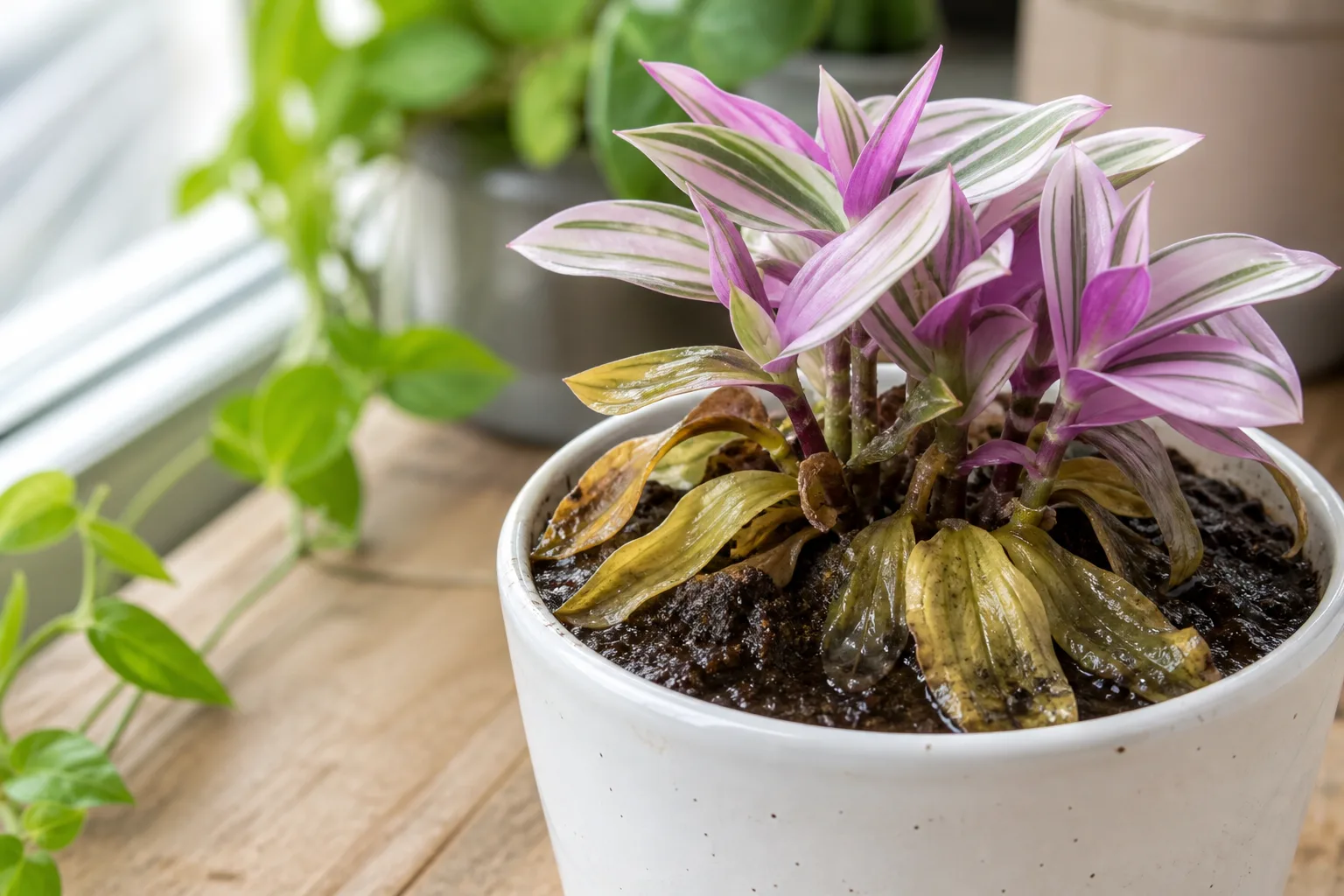
Overwatering on Tradescantia Nanouk: Causes, Checks & Fixes
This guide covers overwatering on Tradescantia Nanouk. See also the general Overwatering guide, watering, and light pages for this plant.
Overwatering on Tradescantia Nanouk: Causes, Checks & Fixes
Quick answer
Overwatering on Tradescantia Nanouk (Tradescantia albiflora ‘Nanouk’, sold as Fantasy Venice) means the root zone has stayed wet too long-roots lose oxygen, fine root hairs die, and the plant cannot move water into its colorful stems even when the mix feels moist. That produces a confusing picture: limp, pastel leaves on heavy, wet soil.
First step: stop watering and lift the pot. A cool, heavy container with a damp top inch and yellowing lower leaves confirms saturation, not thirst. Probe the top inch with your finger; if it is wet and stems feel soft at the base, slide the plant out and inspect roots before you add another drink. If the pot is light and the surface is dry, you are likely dealing with underwatering-see our underwatering guide instead.
For the full wet-vs-dry diagnostic fork and seasonal watering rhythm, see our Tradescantia Nanouk watering guide.
What overwatering looks like on Tradescantia Nanouk
Nanouk’s thick, striped leaves can stay colorful longer than classic trailing Tradescantias like T. zebrina-which means root damage may build underground before the foliage tells the full story. Learn the early and advanced patterns so you intervene before the crown collapses.
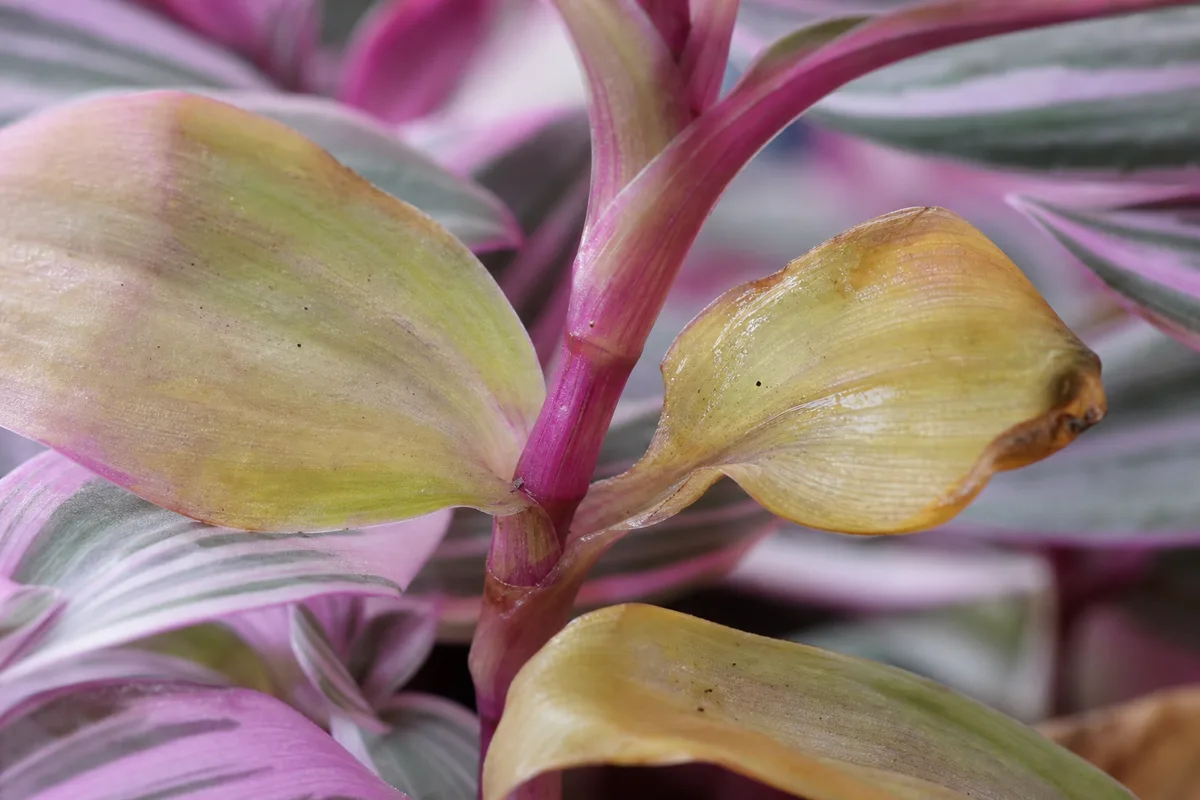
Overwatering symptoms on Tradescantia Nanouk - compare with healthy tissue on the same plant.
Early saturation signs
- Heavy pot days after watering - the container still feels cool and weighty when you expected it to lighten.
- Damp top inch that never fully dries - surface stays dark or clingy even though you have not watered recently.
- Stalled new growth - fresh tips pause while older leaves still look acceptable.
- Fungus gnats near the soil surface - persistent damp mix invites larvae in the top layer; see fungus gnats if insects are part of the picture.
Advanced stress signs
- Yellow lower leaves on wet mix - discoloration often starts at the base and works upward while soil stays damp.
- Limp stems despite moist soil - the wet-soil wilt paradox: a plant may wilt even though the soil is wet because roots fail before leaves show full drought stress.
- Soft or translucent stem bases - tissue at the soil line loses firmness when oxygen-poor, waterlogged mix persists.
- Musty or sour smell from drain holes - anaerobic mix produces an unmistakable odor.
- Pale or dull variegation on lower leaves while tips still look pink-stress pulls resources from the oldest tissue first.
What overwatering is not
A light, dry pot with slightly curled but firm leaves that perk after a thorough drink points to underwatering-not this page. Crispy brown leaf edges on otherwise firm stems in dry mix fit drought or low humidity better-see brown tips and low humidity. A few yellow leaves deep inside a trailing plant while outer tips stay vivid may be normal aging if soil moisture is healthy.
Why Tradescantia Nanouk gets overwatered
Nanouk sits between a fern and a succulent in water needs. It wants a moist root zone with a brief dry surface cycle-not constant sogginess and not weeks of drought. Overwatering happens when that balance breaks for reasons specific to this fast-growing cultivar.
Calendar watering in dim winter rooms is the most common trigger. Shorter days slow growth, the same pot holds moisture longer, and a “every Sunday” habit keeps the mix saturated while roots use less water-calendar watering is a common path to root rot. Replace the calendar with a top-inch check.
Dense peat without perlite traps water in the center of the root ball. Nanouk’s fine, shallow roots rot quickly in waterlogged soil while the surface looks merely damp. Heavy nursery mixes in undersized drain holes worsen the problem.
Cachepots and saucers holding standing water suffocate roots within hours. Decorative outer pots without drainage, or saucers left full “so the plant can drink later,” recreate bog conditions.
Thick leaves masking early root stress is a Nanouk-specific trap. The rigid, pastel foliage holds turgor longer than thin-leaved Tradescantias, so owners assume the plant is fine while roots decline below. By the time stems go limp on wet soil, damage is often already moderate.
Overpotting after purchase leaves a large volume of wet mix around a small root ball. The center stays anaerobic for days while you wait for the top inch to dry.
How to confirm the cause
Work through these checks in order. The goal is to separate wet-soil overwatering from dry-soil thirst, escalating decay, and lookalikes before you repot or prune.
- Top-inch moisture - Insert a finger to the top inch of soil (about 2.5 cm). Clingy, cool, dark soil with limp leaves suggests overwatering. Dry, dusty soil with a light pot points to underwatering.
- Pot weight - Lift the container. Heavy and cool between scheduled waterings confirms the root zone is still holding water. This check is especially useful for hanging Nanouk baskets you cannot finger-test easily.
- Wet-soil vs. dry-soil wilt fork - Limp leaves on wet, heavy mix equals root stress from saturation. Limp leaves on dry, light mix equals thirst. The fix is opposite; never add water to the wet branch.
- Leaf pattern - Yellowing from the bottom up on damp soil strongly suggests overwatering. Even wilt across all stems on bone-dry mix points to drought.
- Stem-base firmness - Press gently at the soil line. Firm bases with only lower yellow leaves suggest early intervention. Soft, dark, or collapsing bases mean rot may be advancing-see root rot.
- Smell and drainage - Sour odor, water sitting in a cachepot for days, or mix that stays wet a week after one watering confirms a chronic wet habitat. Slide the plant out if checks 1–5 point to saturation and decline is spreading.
Confirmed overwatering: damp top inch, heavy pot, yellow lower leaves, limp stems on wet mix, firm crown (or only early base softness). Suspected but mild: heavy pot and stalled growth without yellowing yet-stop watering and recheck in three days. Ruled out: light dry pot that perks after one thorough drink.
Wet-soil overwatering vs. dry-soil underwatering
| Signal | Overwatering (wet branch) | Underwatering (dry branch) |
|---|---|---|
| Pot weight | Heavy, cool days after watering | Light; lifts easily |
| Top inch of mix | Damp or wet for many days | Dry, pale, crumbly |
| Leaf pattern | Yellow lower leaves on wet soil | Crispy edges; even wilt on dry mix |
| Stem bases | Soft or translucent on chronic wet | Firm but limp foliage |
| Smell | Musty or sour from drain holes | Neutral |
| Response to water | No perk; may worsen if soil was already wet | Perks within hours after thorough drink |
First fix for Tradescantia Nanouk
Stop watering immediately. That single action prevents the most common escalation-owners seeing limp pastel leaves and adding more water to “help.”
After you stop:
- Set the pot on folded paper towels under the drain holes to wick excess moisture. Empty any saucer or cachepot completely.
- Move to brighter indirect light if the plant sits in deep shade-slow evaporation worsens wet soil. Avoid hot afternoon sun on stressed foliage.
- Wait for the top inch to dry before you even consider another drink. In a saturated pot this may take five to ten days depending on pot size, mix, and room airflow.
- Inspect roots only if yellowing spreads, stems soften at the base, or the mix still smells sour after a week of dry-down. Early cases often recover in place without Tradescantia Nanouk repotting guide.
Make one correction, then wait several days before stacking repotting, heavy pruning, fertilizer, and pesticide.
When to unpot and inspect roots
Unpot when the crown is softening, lower leaves yellow rapidly on wet mix, or sour smell persists after you have stopped watering for several days. Healthy roots are white or cream and firm; rotting roots are brown, mushy, and may smell musty. Stressed roots may be brown but still firm; mushy, gray, or odorous roots need trimming-see the step-by-step below and our root rot guide if decay is widespread.
Step-by-step trim-and-repot (early to moderate cases)
Use this path when inspection shows some mushy roots but the crown is still firm and enough healthy tissue remains.
- Gently remove the plant from its pot. Shake or rinse away old mix so you can see the full root mass.
- Trim decayed roots with clean scissors or pruners. Cut back to firm white tissue; sterilize blades between cuts if rot is advanced.
- Remove soft lower leaves that will not recover-they drain energy and hold moisture against the stem.
- Repot into fresh airy mix in a pot sized to the remaining roots-not dramatically larger. A standard blend is roughly 70% quality potting soil and 30% perlite; see our soil guide for Nanouk-specific mix notes.
- Water lightly once after repotting to settle mix, then let the top inch dry before the next drink. Keep Tradescantia Nanouk light guide and stable warmth while roots re-establish.
If the crown is already collapsing and most roots are mushy, prioritize healthy stem-tip cuttings for propagation rather than saving the mother plant-Nanouk roots easily in water or moist mix.
Recovery timeline
Mild overwatering-heavy pot, no yellowing yet-often stabilizes within one to two weeks once watering stops and the top inch cycles dry. Growth resumes when new tips look firm.
Moderate stress with yellow lower leaves may take two to four weeks after corrected watering or trim-and-repot before you see clean new growth. Old yellow leaves rarely green up.
Advanced saturation with crown softness recovery spans several weeks if enough root remains; some plants never fully recover and are better restarted from tip cuttings.
Improvement markers: top inch dries on a normal schedule, pot weight drops between waterings, new leaves open firm and colorful, no spreading stem softness, fungus gnat numbers fall as the surface dries.
Worsening markers: crown collapses, sour smell intensifies, stems turn mushy up the length, or wilt persists on wet soil after ten days without watering-escalate to the root rot page.
When to escalate to root rot care
This page covers early overwatering intervention-soggy soil, first yellow leaves, and limp stems before widespread decay. Escalate to root rot on Tradescantia Nanouk when:
- More than a third of roots are mushy, brown, and odorous on inspection
- The crown is soft or collapsing despite dry-down
- Stems blacken and weep at the base
- The plant collapsed within days on chronically wet soil
Overwatering is the habit that causes root rot; root rot is the active disease phase. Catching saturation early keeps you on this page instead.
Lookalike symptoms to rule out
Underwatering - Light pot, dry surface, firm stems, leaves perk after one thorough drink. See underwatering.
Wilting from other causes - Our wilting guide walks the full wet-vs-dry fork when limp foliage is your main concern.
Low humidity - Crispy margins on firm leaves in otherwise correct soil moisture; no sour smell. See low humidity.
Heat stress - Afternoon wilt in hot direct sun that recovers overnight with firm soil moisture-not persistent yellowing on wet mix.
Normal leaf turnover - A few yellow leaves tucked inside trailing stems while outer tips stay vivid and soil dries normally between drinks.
What not to do
Do not pour more water onto a limp Nanouk when the mix is already wet-that is the fastest route from reversible stress to crown failure. Do not fertilize a saturated plant to “give it strength.” Do not repot on day one for a merely heavy pot without inspecting roots or confirming spreading yellowing. Do not mist heavily to “raise humidity” while soil is waterlogged-misting does not fix roots and can encourage fungal spotting in tight leaf axils. Do not stack repotting, pruning, and pesticide on the same day.
How to prevent overwatering next time
Water when the top inch of mix feels dry, then soak until water runs from drainage holes and discard every drop in the saucer within thirty minutes. Use a pot with drainage holes and an airy perlite blend-never a sealed cachepot holding runoff. Match frequency to pot weight and season, not a calendar: bright summer growth may need water every five to eight days; dim winter rooms may need ten to fourteen days or longer.
Give Nanouk bright indirect light with some morning sun so the plant uses water predictably. A Nanouk in a dim corner dries slowly; resist compensating with more frequent drinks. After repotting into a larger container, expect slower dry-down until roots explore the new volume.
Run a quick pre-water checklist from our watering guide: top inch dry, pot lighter than when freshly watered, no soft stems or sour smell. If the first two are yes and the third is no, water thoroughly. If stems are soft at the base, skip the checklist and inspect roots instead.
Practical checks
Urgency check
Treat as urgent if the crown softens, sour smell spreads, fungus gnats swarm the surface, or several stems collapse within a week while soil stays wet. Mild heavy-pot feel without yellowing can wait for controlled dry-down after you stop watering.
Best inspection order
Pot weight → top-inch moisture → wet-vs-dry wilt fork → lower leaf color → stem-base firmness → smell and drain-hole check → root inspection if decline spreads.
Severity note
Use spreading yellowing, stem softness, and root firmness-not a single blemished leaf-to decide how fast to unpot. Early saturation recovers in place more often than owners expect when watering stops promptly.
Related Tradescantia Nanouk problems
- Watering - primary hub for moisture rhythm and wet-vs-dry wilt
- Root rot - active decay when mushy roots and soft crowns dominate
- Underwatering - dry-soil wilt branch
- Wilting - full limp-foliage diagnostic path
- Fungus gnats - common on persistently damp mix
- Soil - drainage and repot mix for Nanouk
- Tradescantia Nanouk overview - full care hub
When to use this page vs other Tradescantia Nanouk guides
- Tradescantia Nanouk watering guide - Use for routine moisture checks before assuming overwatering is the main issue.
- Tradescantia Nanouk problems hub - Browse all 2 common issues on this species.