Underwatering on Tradescantia Nanouk: Causes, Checks & Fixes
Quick answer
Underwatering on Tradescantia Nanouk shows as limp stems on a dry, lightweight pot-often with soil pull-away from the pot wall. First step: water thoroughly until drainage runs free, then resume when the top inch of mix dries.
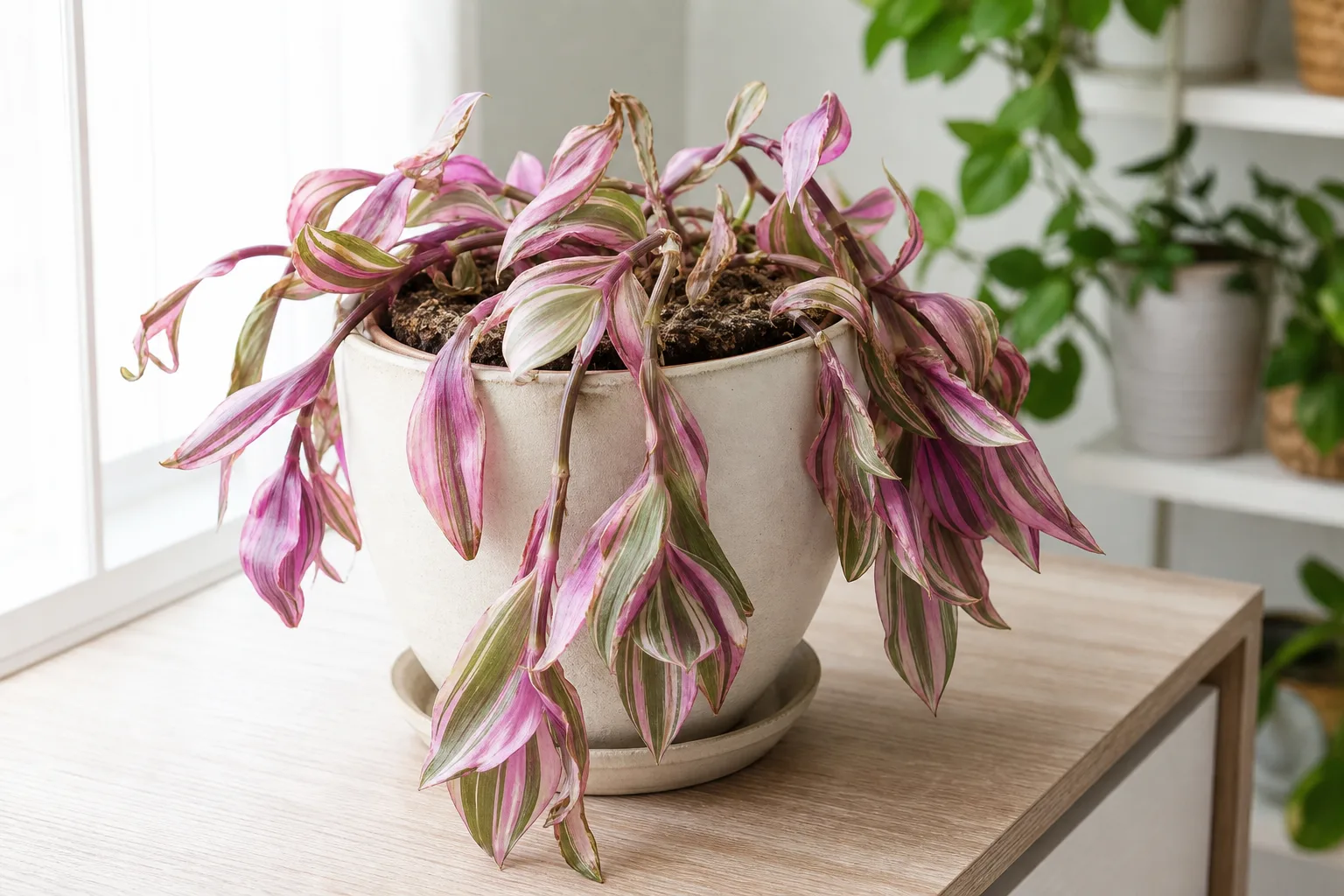
Underwatering on Tradescantia Nanouk: Causes, Checks & Fixes
This guide covers underwatering on Tradescantia Nanouk. See also the general Underwatering guide, watering, and light pages for this plant.
Underwatering on Tradescantia Nanouk: Causes, Checks & Fixes
Quick answer
Underwatering on Tradescantia albiflora ‘Nanouk’-the chunky pink-and-cream cultivar sold as Fantasy Venice-shows up as limp stems on a dry, lightweight pot. Nanouk wilts fast when the root zone dries down, but its thicker leaves recover turgor quickly once roots get a full drink. That same-day perk-up is one of the best proof points that thirst-not rot-was the problem-a plant that gets too dry may wilt, then seem to pop back after watering, though repeated drought still stresses roots.
First step: water thoroughly until water runs from the drainage holes, then empty the saucer completely. Do not give repeated shallow splashes. One deep soak rewets the root ball; resume your normal rhythm when the top inch of mix feels dry again.
| Observation | Likely meaning | Action |
|---|---|---|
| Top inch dry, pot light, firm stems | Underwatered | Soak until drain; empty saucer |
| Wilting, dry soil, limp leaves | Simple thirst | Water thoroughly; recheck in 4–6 hours |
| Top dry but pot heavy and cool | Wet center below | Wait 2–3 days; probe deeper before watering |
| Wilting, wet soil, yellow lower leaves | Overwatering / root issue | Stop water; inspect roots |
| Soft stem base, sour smell | Advanced rot | Trim, repot, propagate backups |
When two signals conflict, trust pot weight and soil moisture at one inch depth over leaf color alone. For the full dry-vs-wet workflow, see the Tradescantia Nanouk watering guide.
Underwatering vs. wilting vs. drooping leaves on Nanouk
These three pages overlap because all describe limp foliage-but the scope and urgency differ.
| Term | What it usually means on Nanouk | When to use this page |
|---|---|---|
| Underwatering | Root zone went dry too long; light pot, dusty top inch, soil pull-away, firm stem bases | You confirmed dry mix and want rehydration steps |
| Wilting | Acute whole-plant flop from any water-stress cause-thirst, rot, heat, or root failure | Limpness came on fast and you need the full dry-vs-wet fork first |
| Drooping leaves | Milder or gradual limpness on trailing sections; may be thirst, low light, or afternoon heat | Stems sag slowly over days without full collapse |
Start here when the pot feels light, the top inch is dry, and stems are limp but firm at the base. Route to wilting if you are not sure whether soil is wet or dry. Route to drooping leaves when only the outer trailers sag while the crown still looks upright on otherwise healthy moisture.
Nanouk’s fast turgor recovery after a soak is a stronger drought diagnostic than on slow-recovery species-if the plant firms within hours on dry soil, thirst was likely the driver.
What underwatering looks like on Tradescantia Nanouk
Healthy Nanouk holds stiff, plump leaves along branching stems. Underwatering removes that turgor-the internal water pressure that keeps tissue rigid-while the mix dries faster than roots can replace moisture. Too little water can lead to wilting when the root zone stays dry too long.

Underwatering symptoms on Tradescantia Nanouk - compare with healthy tissue on the same plant.
Early signs
- Top inch of mix dusty and lightweight when lifted
- Leaves feel slightly thinner; pink-and-green contrast looks dull before full collapse
- Newest growth slows or produces smaller leaves during active season
- Slight limpness at stem tips, especially on trailing sections farthest from the pot
Moderate drought
- Whole stems hang limp; plant loses its upright, bushy shape
- Soil pulls away from the pot wall, leaving a visible gap
- Crispy brown edges or tips on older leaves, especially farthest from the crown-see brown tips when margins crisp without a dry pot
- Pot feels noticeably light compared with how it felt after the last full watering
Severe or repeated drought
- Widespread limp collapse across multiple stems
- Lower leaves drop or turn fully brown and papery-distinguish from yellow leaves on wet mix, which point to overwatering
- Fine root hairs may die; when water returns, uptake can lag even after leaves perk
- Growth stalls for weeks if drought cycles repeat through spring and summer
Nanouk’s leaves are thicker and more rigid than classic T. zebrina, so early thirst can hide slightly longer-but once the whole plant sags, the signal is unmistakable. A single missed watering rarely kills Nanouk; repeated bone-dry spells weaken the plant more than one dramatic wilt.
Why Tradescantia Nanouk gets underwatered
Nanouk sits in a middle ground between fern and succulent: it wants a moist root zone with a brief dry surface cycle, not weeks of drought and not constant sogginess. Tradescantia species are fast-growing houseplants that prefer steady moisture without waterlogged soil-Nanouk follows that pattern with thicker, more drought-tolerant leaves than classic inch plant cultivars. During spring and summer active growth, fast metabolism and bright light pull water from leaves and mix quickly. In that window, letting the entire root ball go dust-dry for days crashes turgor faster than in winter when growth slows.
Common triggers specific to Nanouk:
- Calendar watering in winter while the top inch still feels damp at depth-then panic under-watering in summer when the opposite habit leaves the pot dry too long
- Fear after past root rot-owners withhold water so aggressively that Nanouk wilts repeatedly; quick leaf recovery masks fine root damage building over time
- Hanging baskets and small pots drying faster than floor pots; trailing top growth often outpaces soil volume in elevated baskets
- Hydrophobic peat after long drought-water channels down the sides without rewetting the center, so the plant looks watered while roots stay dry
- Hot, bright placement increasing transpiration without matching check frequency-often every five to eight days in active season versus ten to fourteen days in winter
Nanouk communicates thirst clearly when you read the pot. Wilting on dry, light soil with firm stems at the base is thirst. Wilting on wet, heavy soil means roots cannot move water-gardeners often notice root problems when a plant is wilted even though the soil is wet because damaged roots fail to transport moisture. See overwatering on Nanouk or root rot instead.
Lookalike symptoms to rule out
Overwatering and root rot produce limp leaves on damp mix with yellow lower foliage, sour smell, or soft stems at the soil line-the opposite pot weight from drought. Overwatering can lead to low oxygen in the soil and root rot; more water makes collapse worse when roots are failing.
Wilting from overlapping intent covers acute droop that may share thirst timing. If limpness came on suddenly after a missed week, start here; if wilt persists on wet soil, switch guides. See wilting on Tradescantia Nanouk.
Drooping leaves without full collapse often means gradual stress-dry soil, dim light, or heat wilt on outer trailers. See drooping leaves when only the longest stems sag while the crown stays firm.
Spider mites in dry, hot air cause stippling, webbing, and dull leaves-sometimes alongside dry soil. Spider mites thrive in warm, dry conditions and can overlap with drought stress. Rinse leaf undersides and inspect before assuming thirst alone. See spider mites on Nanouk.
Low humidity browns wide leaf margins on firm stems while soil moisture looks normal-especially in heated winter rooms. A hygrometer reading below 40% with crispy edges but no light pot points here; see low humidity.
Low light slows growth and water use; chronically limp, pale, leggy Nanouk on moist soil often needs better light, not more water. See not enough light.
Normal leaf aging drops older lower leaves while stems stay firm and new crown growth looks healthy-no emergency soak required.
How to confirm underwatering
Work through these checks in order. Do not skip the moisture test:
- Soil moisture at one inch - Push your finger or a dry skewer one inch into the mix. Probe down about an inch before you feel moist soil-dry and crumbly at that depth supports drought; wet and clinging suggests root failure instead. Full rhythm: Nanouk watering guide.
- Pot weight - Lift the container-a very light pot often signals dry mix; light with limp stems fits underwatering. Heavy with limp stems fits waterlogging or rot. In hanging baskets where finger probes are awkward, weight alone is your primary gauge-learn how the basket feels right after a full soak versus when the top inch has gone dusty.
- Stem firmness - Press stems at the soil line. Firm green bases with dry soil point to thirst. Soft, darkening bases on wet soil point to rot.
- Soil pull-away - Gap between mix and pot wall after prolonged dryness confirms the root ball desiccated enough to shrink.
- Perk test after watering - If you already watered thoroughly, check again in 4–6 hours. Firmness returning on otherwise healthy roots confirms simple thirst.
- Recent care context - Travel, a heat wave, a new hanging basket location, or Tradescantia Nanouk repotting guide into a larger dry core narrows the cause quickly.
If the top inch is dry but the pot still feels heavy and cool, the center may be wet-wait two days and reprobe before soaking. If stems are soft at the base on wet soil, unpot and inspect roots before adding water.
Dry-vs-wet urgency decision table
| Signal pattern | Urgency | First action |
|---|---|---|
| Dry top inch, light pot, firm stems, no pull-away | Routine | Top-water soak until drain; recheck in 4–6 hours |
| Dry soil, soil pull-away, or water runs through without darkening mix | Moderate | Bottom-soak 20–30 minutes, then drain; follow with top water next session |
| Bone-dry several days in active growth, whole-plant collapse | High | Bottom-soak plus confirm full rewet by weight gain; do not mist |
| Perked after soak but wilts again within 48 hours on wet soil | Escalate same day | Stop watering; unpot and inspect roots per root rot guide |
| Limp on wet heavy soil, yellow lowers, soft base | Not underwatering | Stop water; route to overwatering or root rot |
First fix for Tradescantia Nanouk
Water thoroughly once until drainage runs free from the bottom holes-then empty the saucer within 30 minutes. The pot must have drainage holes so excess water can drain-never let it sit in a full saucer.
Use room-temperature water. Circle the soil surface slowly so dry peat rewets evenly instead of channeling through cracks. If the first pass runs through too fast on very dry mix, wait thirty seconds and water once more.
Do not fertilize, repot, or prune heavily on day one unless you have confirmed mushy roots or a hydrophobic dry core that will not absorb top water. One targeted correction first-stacking treatments hides which step helped and adds stress.
Do not mist as a substitute for soil watering. Nanouk needs moisture at the roots; wet leaf crowns in stagnant air invite spotting on variegated foliage.
Step-by-step recovery
Standard top-water rehydration
- Water at the soil surface until excess runs from drainage holes.
- Empty saucer or cachepot completely-never leave standing water.
- Blot accidental splash from leaf axils with a tissue if needed.
- Recheck turgor in 4–6 hours; most thirsty Nanouks firm noticeably the same day on healthy roots.
- Resume watering when the top inch dries-not on a fixed calendar.
Bottom-soak for hydrophobic or severely dry mix
When water runs straight through dry peat without darkening the surface, or soil has pulled away from the pot wall:
- Fill a basin or tray with room-temperature water to roughly halfway up the pot side.
- Set the pot in a tray of water for 20–30 minutes until the surface moistens and the mix darkens.
- Remove, let drain fully, and empty the saucer.
- Alternate bottom-soaks with an occasional top watering every fourth or fifth session to flush salts from the surface layer.
After repeated drought cycles
If lower leaves dropped or edges turned fully crispy, trim only tissue that stays brown and papery after 48 hours-green limp leaves often recover turgor. Hold fertilizer until new growth looks normal. Adjust check frequency slightly earlier in active season; hanging baskets may need review every two to three days in summer.
When wilt returns on wet soil-root rot escalation
If the plant perks after soaking but wilts again within two days while soil feels wet, the problem is root uptake failure-not chronic thirst. Do not keep soaking.
- Stop watering immediately.
- Slide the plant out and inspect roots-healthy tissue is white to cream and firm; mushy brown roots need trimming.
- Follow the full root rot recovery sequence if more than a third of roots are soft or the stem base is darkening.
- Save firm stem tips for propagation if the crown is too damaged-Nanouk cuttings root quickly as backup.
Recovery timeline
Single missed watering: Noticeable perk within 4–6 hours, often same day, after one thorough soak on healthy roots.
Moderate drought with crispy edges: Turgor returns within hours; cosmetic brown tips on old leaves remain. New pink-tipped crown growth in one to two weeks confirms the cycle is stable.
Severe or repeated drought: Several weeks for full bushiness to return. Fine root recovery lags behind leaf perk-watch whether wilt returns between normal dry-down cycles.
Hydrophobic dry core: One bottom-soak plus follow-up top water usually rewets the column; judge success by weight gain and surface moisture, not a single splash.
Old damaged leaves rarely re-green. Recovery means firm stems, stable watering rhythm, and clean new growth-not perfect repair of every browned edge.
What not to do
Do not keep watering because leaves look tired if the root zone is already wet-that accelerates rot on compromised roots.
Do not fertilize a dust-dry or freshly collapsed Nanouk. Salt on stressed roots slows recovery.
Do not judge success by old crispy tissue re-greening-watch apical nodes for new leaves.
Do not assume limp always means thirst. Limp after a thorough soak on wet soil means inspect roots before watering again.
Do not leave the pot in a full saucer after rehydration. Do not allow plants to sit in drainage water-roots need oxygen between soak cycles.
Do not copy a zebrina or succulent calendar. Nanouk’s thicker leaves and middle-ground moisture needs sit between those extremes-see Nanouk overview for species context.
How to prevent underwatering next time
Replace calendar watering with a three-point pre-water checklist:
- Top inch dry?
- Pot feels lighter than when freshly watered?
- No soft stems, sour smell, or yellow lower leaves suggesting existing overwatering?
If the first two are yes and the third is no, water thoroughly. During active growth in bright rooms, expect every five to eight days when the top inch dries quickly. In cooler winter conditions with shorter days, stretch toward ten to fourteen days or longer-the surface may still dry on a similar timeline, but the pot center holds moisture longer and the plant uses less water.
Hanging baskets dry faster-learn the lifted weight after each watering rather than relying on calendar dates. Tradescantia Nanouk light guide with some morning sun increases legitimate water need versus a dim corner. Match rhythm to your room, not a blog’s generic weekly count.
For prevention detail, season tables, and potting factors, use the Tradescantia Nanouk watering guide as your primary reference; this page focuses on diagnosing and fixing drought stress when it has already appeared.
Practical checks
Urgency check
Treat as urgent when:
- The pot has been bone-dry for several days during active growth
- Stems collapse across the whole plant with soil pull-away from the pot wall
- The plant does not perk within 6–8 hours after a confirmed full soak on dry soil
- Repeated wilt-return cycles happen every two days despite wet-looking surface (possible root damage-inspect, do not keep soaking blindly)
Less urgent: early tip limpness on a dry top inch, one afternoon sag in a hot window that recovers overnight, or a single crispy edge on an older leaf with firm stems.
Best inspection order
Newest growth → stem firmness at soil line → moisture at one inch → pot weight → soil pull-away gap → leaf undersides if stippling or webbing appears.
Severity note
Use spreading limpness, pot weight, and perk response after one soak-not a single brown tip-to decide how fast to act. Nanouk is expressive; a light dry pot with firm bases is a routine drink, not a rescue mission.
When to escalate-not just soak again
Use this closing decision path once you have read the dry-vs-wet signals:
- Routine top-water soak - Dry top inch, light pot, firm stems, no hydrophobic channeling. Recheck in 4–6 hours.
- Bottom-soak first - Soil pull-away, water runs through without wetting the core, or top inch stays dusty after a surface splash.
- Same-day unpot - Wilt returns within 48 hours on wet soil, soft stem bases, sour smell, or yellow lowers spreading while mix stays damp. Follow root rot before the next drink.
Getting that fork right matters more than watering on schedule. Nanouk forgives one dry spell quickly when roots are healthy-it does not forgive repeated wrong-branch soaking when rot is already present.
Related Tradescantia Nanouk problems
- Watering - primary hub for moisture rhythm and dry-vs-wet wilt
- Wilting - acute limp foliage from any water-stress cause
- Drooping leaves - gradual limpness on trailing sections
- Overwatering - wet-soil wilt branch
- Root rot - mushy roots when wilt returns on wet mix
- Yellow leaves - lower yellowing on damp soil
- Brown tips - crispy margins with or without drought
- Low humidity - dry air browning without a light pot
- Spider mites - stippling in hot dry air
- Tradescantia Nanouk overview - full care hub
FAQs
How can I tell if my Nanouk is underwatered or overwatered?
Lift the pot and check the top inch of soil. A light pot with dry mix and limp but firm stems usually means underwatering-soak until drainage runs free. A heavy pot with wet mix, yellow lower leaves, or soft stems at the base points to overwatering or root rot; do not add more water.
Is Nanouk limp the same as wilting or drooping?
All three describe limp foliage, but scope differs. Underwatering is confirmed dry mix with rehydration steps on this page. Wilting is the acute fork when you are not sure if soil is wet or dry. Drooping leaves covers milder, gradual sag on outer trailers. Start here when the pot is light and the top inch is dry.
Should I bottom-soak or top-water first?
Top-water when the mix still accepts water normally and there is no soil pull-away. Bottom-soak when water channels through dry peat without darkening the surface, or when a gap appears between mix and pot wall. After a bottom-soak, return to occasional top watering to flush salts from the surface layer.
How long until my Nanouk perks up after watering?
When thirst is the cause, many Nanouks regain turgor within 4–6 hours after a thorough soak on healthy roots. If stems stay limp while soil stays wet for two or more days, the problem is root uptake-not a missed drink.
Will crispy Nanouk leaves turn green again?
Brown or crispy leaf edges on older foliage usually stay cosmetic. Recovery means firm stems, new pink-tipped growth at the crown, and no further wilt between waterings-not perfect repair of damaged tissue.
Should I mist my dry Nanouk instead of watering the soil?
No. Misting leaves briefly refreshes surface tissue but does not rehydrate roots. Nanouk needs water through the mix until drainage runs free. Misting wet crowns in stagnant air can invite spotting in tight leaf axils.
When to use this page vs other Tradescantia Nanouk guides
- Tradescantia Nanouk watering guide - Use for routine moisture checks before assuming underwatering is the main issue.
- Tradescantia Nanouk problems hub - Browse all 2 common issues on this species.
- Brown Tips on Tradescantia Nanouk - Different entry point when symptoms overlap with underwatering.