Not Enough Light on Tradescantia Nanouk: Causes, Checks &
Quick answer
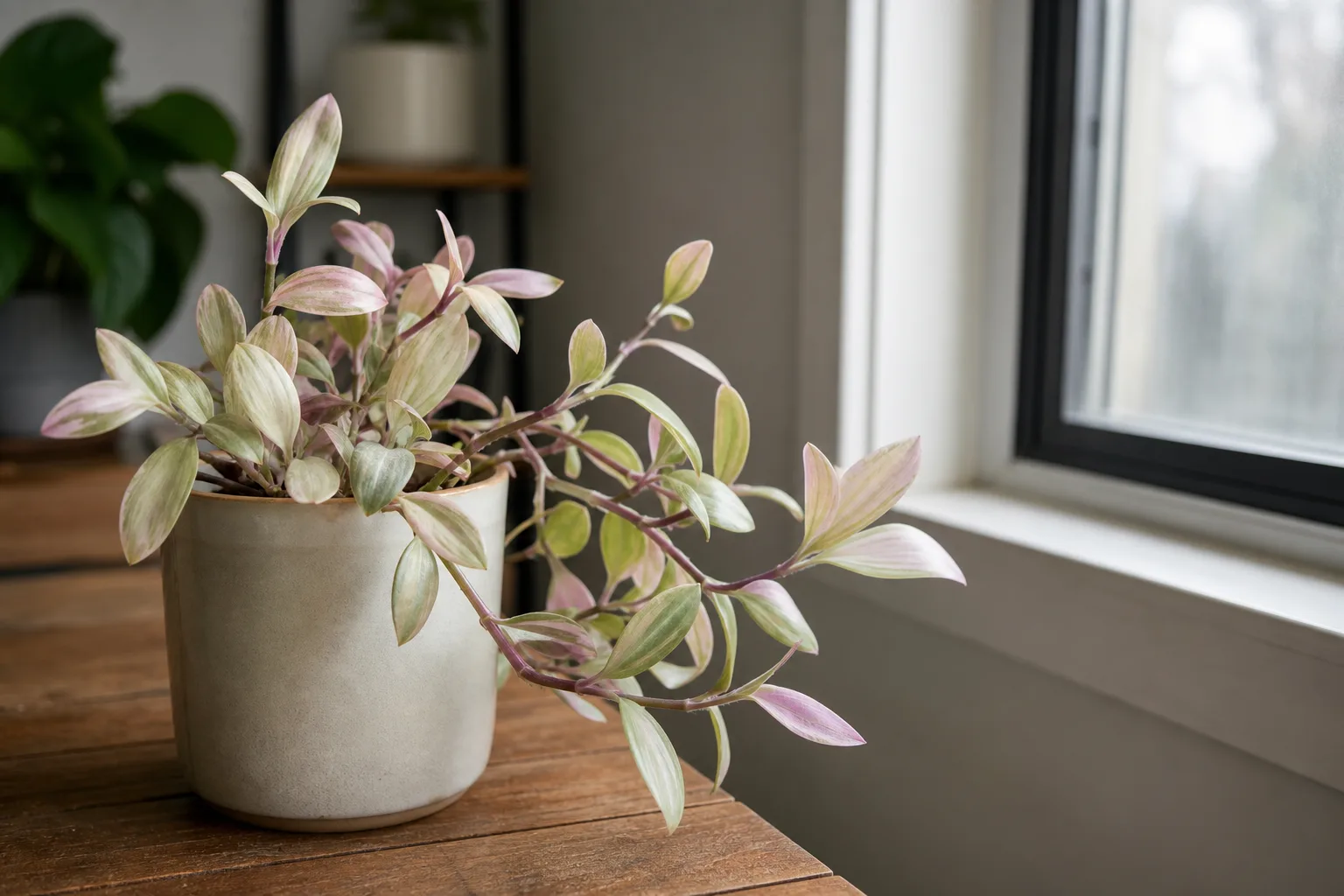
Insufficient light on Tradescantia Nanouk shows as pink and cream stripes washing toward green, long gaps between leaf pairs, and stems leaning toward the brightest window. First step: move the plant within 1–3 feet of an east window or add a full-spectrum grow light, then judge the next two new leaf pairs after 10–14 days.
Not Enough Light on Tradescantia Nanouk: Causes, Checks & Fixes
This guide covers not enough light on Tradescantia Nanouk. See also the general Not Enough Light guide, watering, and light pages for this plant.
Not Enough Light on Tradescantia Nanouk: Causes, Checks & Fixes
Quick answer
Insufficient light on Tradescantia Nanouk (Tradescantia albiflora ‘Nanouk’, trade name Fantasy Venice) shows as pink and cream stripes washing toward green, long gaps between leaf pairs, and stems leaning sharply toward the brightest window. Smaller new leaves and a hollowed-out crown on trailing baskets often follow within a few weeks because Nanouk is a fast grower that reports photon deficit quickly on variegated tissue.
First step: move the plant within 1–3 feet (30–90 cm) of an east-facing window, or add a full-spectrum grow light 12–18 inches above the canopy for 10–12 hours daily. Acclimate over 7–14 days rather than jumping from a dim corner to unfiltered south glass. Judge success by the next two new leaf pairs after 10–14 days - returning pink stripes on fresh growth confirm low light was the cause.
This page is the symptom-first diagnosis for fade and stretch. For window maps, lux targets, and scorch prevention on pale patches, see the Tradescantia Nanouk light guide. For extreme bare-stem stretch after light was low for months, see leggy growth.
What not enough light looks like on Tradescantia Nanouk
Nanouk is sold for chunky pastel leaves - green blades striped with pink, cream, and white, with purple undersides on trailing stems. In dim rooms that palette dulls before the plant stops growing entirely. Watch for these patterns together, not one leaf in isolation:
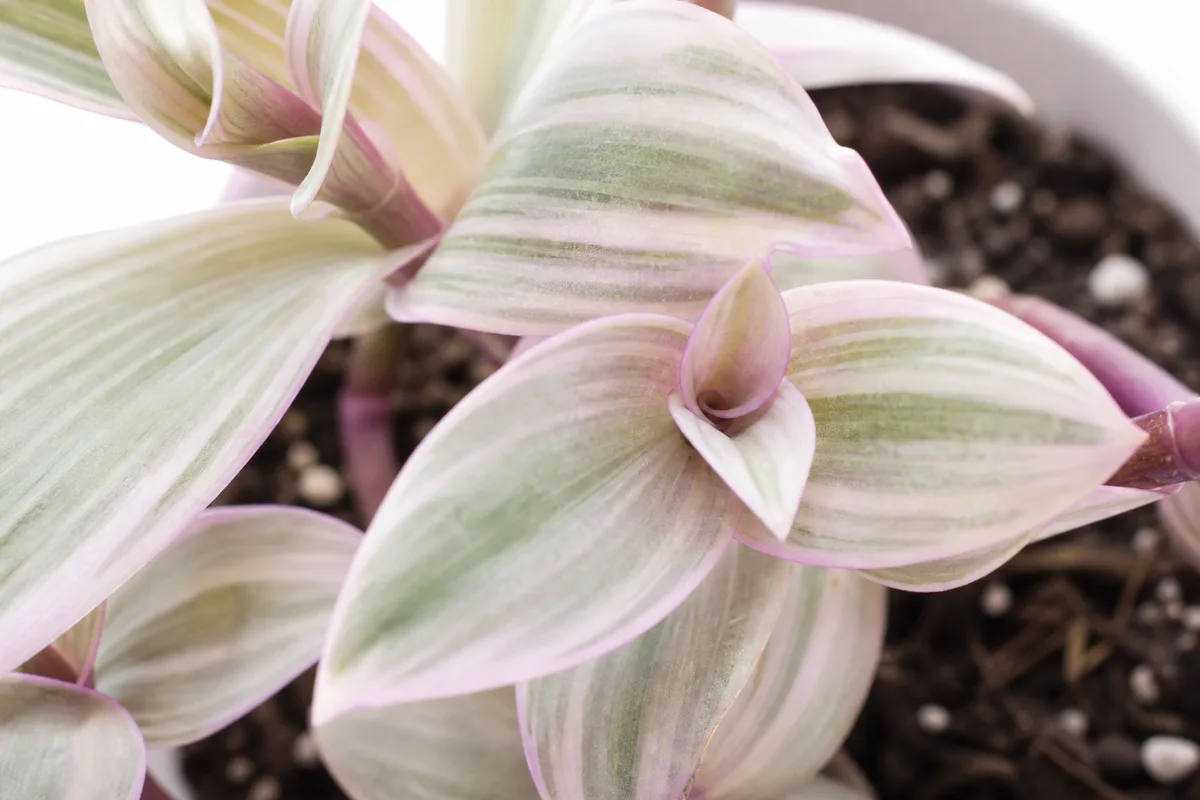
Not Enough Light symptoms on Tradescantia Nanouk - compare with healthy tissue on the same plant.
- Pink and cream fade on newest leaves - Stripes wash toward white, then solid green, often on consecutive new pairs while older leaves still look acceptable
- Long internode gaps - More than about 3–4 cm (1–1.5 inches) between leaf pairs on active stems; the plant looks ladder-like instead of stacked
- Directional lean - Whole shoots angle toward the brightest window or ceiling fixture; rotation does not fix the tilt if light is still weak
- Smaller new foliage - The youngest fully opened leaf is noticeably smaller than leaves from when the plant had stronger light; insufficient light commonly produces smaller new leaves on houseplants
- Sparse trailing crowns - Leaves cluster at stem tips while the base goes bare; hanging baskets hide the problem until you lift the pot
- Slower dry-down with wet-looking fatigue - Dim Nanouk uses less water; if you keep a bright-window watering rhythm, soil stays wet and stems soften at the base
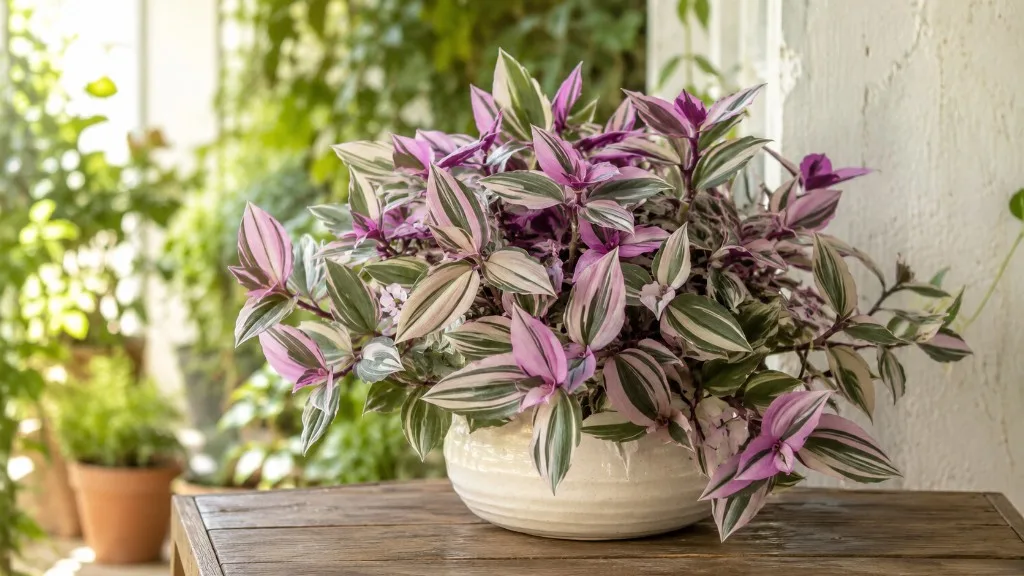
Normal aging: One or two oldest lower leaves may yellow and drop on an otherwise vivid plant. That is low priority if newest growth keeps strong pink contrast and short internodes.
Not low light alone: Crispy brown patches on pale stripes facing glass suggest too much direct sun, not too little. Yellow leaves on heavy wet soil with sour smell point to overwatering or root rot - fix moisture before chasing more light.
Visual confirmation cues
When photographing your own plant for comparison, frame these shots:
- Newest-leaf close-up: Capture the last two leaf pairs at the stem tip so pink fade on consecutive new growth is visible.
- Internode ruler shot: Include a finger or ruler beside the last three nodes to document gap length before and after a light move.
- Basket height check: Photograph the hanging basket from below - if leaves cluster at the hook while the lower stem is bare, leaf-level light at canopy height is weaker than it looks from across the room.
Why Nanouk fades faster than solid green tradescantias
Related inch plants prefer bright, indirect sun and need afternoon protection in full sun to prevent leaf scorch. Variegated cultivars including Nanouk typically produce greener foliage when light falls below that threshold.
Nanouk’s tricolor variegation is not decorative paint - it reflects uneven chlorophyll distribution across the leaf. Pink, cream, and white zones carry less photosynthetic machinery than green tissue. In low light the plant cannot maintain high-contrast variegation across fast-growing stems; variegated sectors fade and revert toward solid green when light is too weak because non-green tissue cannot photosynthesize efficiently. It compensates by pushing more chlorophyll into newer leaves, which reads as greener, duller foliage with less pink contrast.
Solid green Tradescantia zebrina or all-green revert shoots photosynthesize more efficiently per square inch of leaf. Nanouk needs stronger ambient brightness to hold the same visual density and compact habit - roughly in the medium-bright range (about 100–500 foot-candles) that Maryland Extension associates with east- or west-facing windows, not the low-light band typical of north exposures. That is why a Nanouk on the same shelf as a green tradescantia can look washed out while the neighbor still appears fine - same genus, different pigment budget. For exact lux and grow-light targets, see the Nanouk light guide.
Low light also slows metabolism, so the plant uses less water. Owners who see tired leaves and water on the old schedule keep mix wet too long. Soft stems at the soil line plus stretch toward the window often mean light deficit and moisture mismatch together, not thirst.
How to confirm the cause
Work through these checks in order. Change one variable at a time so you know what actually helped.
- Newest leaf pair - Do pink and cream stripes look weaker than leaves from a few weeks ago? Fading on consecutive new growth strongly suggests insufficient light. Judge the tip, not shaded older blades.
- Internode length - Measure gaps between the last three leaf pairs. Gaps widening above ~3–4 cm on active growth support a light diagnosis.
- Window direction and distance - Is the pot more than a few feet from glass, on a north wall, or on a shelf below window height? Run the midday shadow test: a fuzzy soft shadow at leaf height means useful indirect light; no shadow means too dim for strong variegation long term. Clemson HGIC notes that lack of sufficient light results in poor plant growth indoors.
- Lean test - Rotate the pot 180° and wait one week. If new growth still reaches toward the same bright vector, the plant is actively seeking photons - a pattern Maryland Extension links to one-directional light exposure.
- Soil moisture rhythm - Does the top inch stay wet for many days while stems look soft? Dim light plus overwatering overlap often. Probe before you move and soak on the same day.
- Rule out overwatering - Lift the pot. Heavy, soggy mix with yellow lower leaves suggests wet-root stress, not photon shortage alone. See overwatering on Tradescantia Nanouk when wet soil pairs with decline.
- Rule out too much sun - Bleached translucent patches or crispy brown zones on pink stripes facing the window mean scorch. Pull back from direct glass before adding more light.
If brighter placement for 10–14 days produces a new leaf pair with stronger pink and shorter internodes, low light was the limiter.
First fix for Tradescantia Nanouk
Move the plant to brighter indirect light - within 1–3 feet of an east window, or 2–4 feet back from a south or west window behind sheer curtain.
East exposure is the safest default: morning sun is bright but relatively gentle on pale variegation, followed by indirect light the rest of the day. Some direct morning sun is fine on acclimated Nanouk. Do not place an unacclimated plant in hot afternoon sun through west or south glass - pale patches scorch before green zones show stress.
If natural light is inadequate - north rooms, deep floor plans, winter sun-angle loss - add a full-spectrum LED grow light 12–18 inches (30–45 cm) above the canopy for 10–12 hours on a timer. Fixture wattage and distance specs live on the light guide.
Do not fertilize, repot, and move windows on the same day. Relocate first, wait for one new leaf pair, then adjust watering if dry-down speed changes in the brighter spot.
Step-by-step recovery and acclimation
After the first light upgrade, follow this sequence:
- Acclimate 7–14 days - Increase brightness gradually. Move from a dim corner to an east sill in one step if the plant was healthy; from very dark storage to filtered south glass, split the move across two positions across a week.
- Rotate weekly - Quarter turns keep trailing stems from hiding one-sided fade and encourage even color on the crown.
- Adjust watering after dry-down changes - Brighter Nanouk uses water faster. Water when the top inch of mix feels dry, then let excess drain fully. Never leave a hanging basket sitting in a full saucer. Full rhythm: watering guide.
- Wait for two new leaf pairs - Inspect stripes and internode length on fresh growth only. Old faded leaves will not re-pink.
- Pinch extreme stretch - Once new growth looks compact, trim long bare stems above a node to force branching. Root cuttings in water or moist soil in the brighter spot if the base is sparse. Detailed shaping: leggy growth.
- Hold fertilizer until new growth is firm and colorful. A stressed, faded Nanouk does not need feed to find light.
Skip repotting unless roots are rotting in wet mix. Fresh repots add stress on top of a light transition.
Recovery timeline
First response: Stem lean may slow within days once light improves. Visible color change appears on the next one to two leaf pairs.
Pink return: Stronger pink and cream on the second or third new pair after a real upgrade is common during spring and summer - often two to four weeks total.
Placement vignette: A Nanouk on a north-facing bookshelf in late October showed washed cream stripes and 4–5 cm internode gaps. After a single-step move to an east sill 18 inches from glass, the first new leaf pair opened with slightly stronger pink; the second new pair (about three weeks later) showed clear tricolor contrast and internodes under 3 cm - confirming the fade was photon deficit, not genetic reversion.
Internode tightening: New gaps shorten before older bare sections fill in. A full season in bright light may be needed for nursery-level density on badly stretched plants.
Permanent cosmetic limits: Leaves that already washed to green stay that way. Recovery means vivid new tissue and stable roots, not repaired old blades.
Winter caveat: Growth and color recovery slow from late fall through early spring even after a good move. Judge by node activity when days lengthen, not by January expectations.
Signs of success: obvious pink contrast on the newest leaf, internodes under ~3 cm on fresh growth, upright tips instead of floppy reach, and soil drying on a predictable rhythm.
Lookalike symptoms to rule out
| Pattern | Most likely cause | What to check | Where to read |
|---|---|---|---|
| Pink fade + long internodes + window lean | Not enough light | Newest leaf pair, shadow test at canopy | This page |
| Extreme bare stems, sparse leaves along length | Leggy growth after chronic low light | Internode length on oldest stretched shoots | Leggy growth |
| Yellow lower leaves, heavy wet pot, sour smell | Overwatering / root stress | Top-inch moisture, root firmness | Overwatering |
| Bleached or crispy pale patches on window-facing leaves | Too much direct sun | One-sided damage on pinkest stripes | Light guide |
| No new nodes for weeks but firm stems, winter timing | Seasonal slow growth | Temperature, day length | Slow growth |
| Fine webbing, stippling on undersides | Spider mites | Leaf undersides, sticky dust | Spider mites |
Low light and leggy growth overlap - stretch is often the visible stage of chronic insufficient light. This page confirms the photon deficit; the leggy guide covers hard pruning and basket shaping after light is fixed.
Mistakes to avoid
Do not flood a faded Nanouk because leaves look tired - wet soil in dim light invites root failure. Check moisture before adding water.
Do not jump from a dark corner to unfiltered south glass in one afternoon. Pale variegation scorches faster than green tissue. Brighten indirectly first.
Do not fertilize a washed-out plant hoping to restore pink. Nutrients do not replace photons on variegated leaves.
Do not judge recovery on oldest leaves. Only newest growth confirms whether placement is adequate.
Do not stack repotting, heavy pruning, pesticide, and relocation on the same day. Move light first, observe one new leaf pair, then adjust anything else.
Do not assume a bright room equals bright leaves. Hanging baskets and bookshelf pots often sit below window height where leaf-level light is far weaker than eye level.
How to prevent low light next time
Place Nanouk where the canopy sees window sky, not just where the pot looks decorative in the room. For hanging baskets, check light at leaf height, not at the hook.
Default to east windows or filtered south and west exposures. North rooms need grow-light supplementation if you want vivid pink stripes year-round.
Rotate the pot weekly and inspect newest leaves during routine care so fade and stretch stay small.
Match watering to dry-down speed - brighter placements need more frequent checks; dim winter corners need less volume per drink.
Repot into well-draining mix on a sensible schedule so roots stay healthy when you increase light. See soil and repotting guides.
Keep trailing stems away from pets - related inch plants are toxic to cats and dogs if chewed, and sap can irritate skin during pruning.
When to worry
Low light alone is gradual and reversible. Escalate when:
- Stems soften at the soil line while mix stays wet - suspect root decay, not just dim placement
- Sour smell from the pot or black mushy roots on inspection
- Whole-plant collapse within days despite wet soil - see root rot
- Pest colonies cover multiple shoots with webbing or stickiness
- No improvement on three consecutive new leaf pairs after a verified light upgrade - reconsider genetic reversion on a single all-green shoot or chronic root failure
A gradually fading but firm Nanouk in a north office is low urgency if you accept muted color or plan a grow light. A wilting, yellowing, smelly Nanouk needs moisture and root diagnosis immediately.
Escalation summary: Gradual pink fade with firm stems and no sour smell → move to brighter indirect light within the week (routine). Pink returns on new growth but bare stems remain → follow leggy growth for pinching and basket reshape after light is fixed. Stems soften at the soil line, sour smell, or yellowing on persistently wet mix → same-day root inspection per the root rot guide - do not add more light alone. Three consecutive new pairs stay green after a verified east-window or grow-light upgrade → check for a single all-green revert shoot to prune, or unpot for root failure before buying another Nanouk.
When to use this page vs. other Nanouk guides
- This page - You see pink fade, stretch, or lean and need confirmation checks plus a first relocation step.
- Light guide - You want window-by-window placement, grow-light distance, acclimation detail, and scorch prevention on pale tissue.
- Leggy growth - Light is already adequate but stems are bare and need pinching and shaping.
- Slow growth - The plant is firm but adding few nodes across seasons, including winter rest and root-bound stalls.
FAQs
Why is my Tradescantia Nanouk turning green in a north window?
North windows usually deliver too little brightness for Nanouk’s tricolor variegation. Pale pink and white tissue has less chlorophyll than green zones, so the plant pushes more green pigment into new leaves to photosynthesize in dim light. Move to an east sill, filtered south or west glass, or add a grow light 12–18 inches above the canopy for 10–12 hours daily.
How long until pink stripes return after moving to brighter light?
Most Nanouk show stronger pink and cream on the second or third new leaf pair after a real light upgrade - often within two to four weeks during warm months. Old leaves that already faded will not recolor. Judge recovery only by newest growth at stem tips, not by older greenish blades.
Should I read the Nanouk light guide or this problem page?
Use this page when you suspect low light from fading variegation, stretch, or window lean and need confirmation checks and a first fix. Use the full light guide for window-by-window placement, grow-light distance, acclimation from shade, and scorch prevention on pale patches.
How can I tell low light from overwatering on Tradescantia Nanouk?
Low light pairs long internodes and color fade with soil that may stay wet longer because metabolism dropped. Overwatering pairs yellow lower leaves and soft stems with persistently heavy, soggy mix even in a bright window. Probe the top inch of soil and lift the pot by weight before you change light and water on the same day.
Will damaged Nanouk leaves regain their pink color?
No - tissue that already washed to green or cream on an existing leaf will not re-pink. Recovery means new leaves open with vivid stripes and internode gaps shorten on fresh growth. Pinch back long bare stems above a node once light improves so energy redirects to compact shoots near the crown.
Related Tradescantia Nanouk guides
- Light requirements - window placement, grow lights, and scorch prevention
- Leggy growth - shaping after chronic stretch
- Overwatering - wet-soil decline in dim corners
- Slow growth - seasonal stalls and root-bound limits
- Watering - top-inch-dry rhythm for trailing baskets
- Tradescantia Nanouk overview
Practical checks
Urgency check
Treat as urgent if bases soften, rot smell spreads, pests cover multiple shoots, or several leaves fail at once while soil stays wet. Gradual pink fade with firm stems is lower urgency - plan a light upgrade within the week.
Best inspection order
Newest leaf pair → internode length → window distance and shadow test → soil moisture and pot weight → lean after rotation → leaf undersides for pests if stippling appears.
Severity note
Use consecutive faded new leaves, widening internode gaps, and failure to improve after one light upgrade - not a single older leaf losing color - to decide how fast to add grow lights or repot.