Slow Growth on Tradescantia Nanouk: Causes, Checks & Fixes
Quick answer
Slow Tradescantia Nanouk growth usually means light, temperature, or root space is below what this fast-growing variegated trailer needs-not a fertilizer shortage. First step: move the plant to brighter indirect light with some morning sun and mark a stem tip to track new node activity.
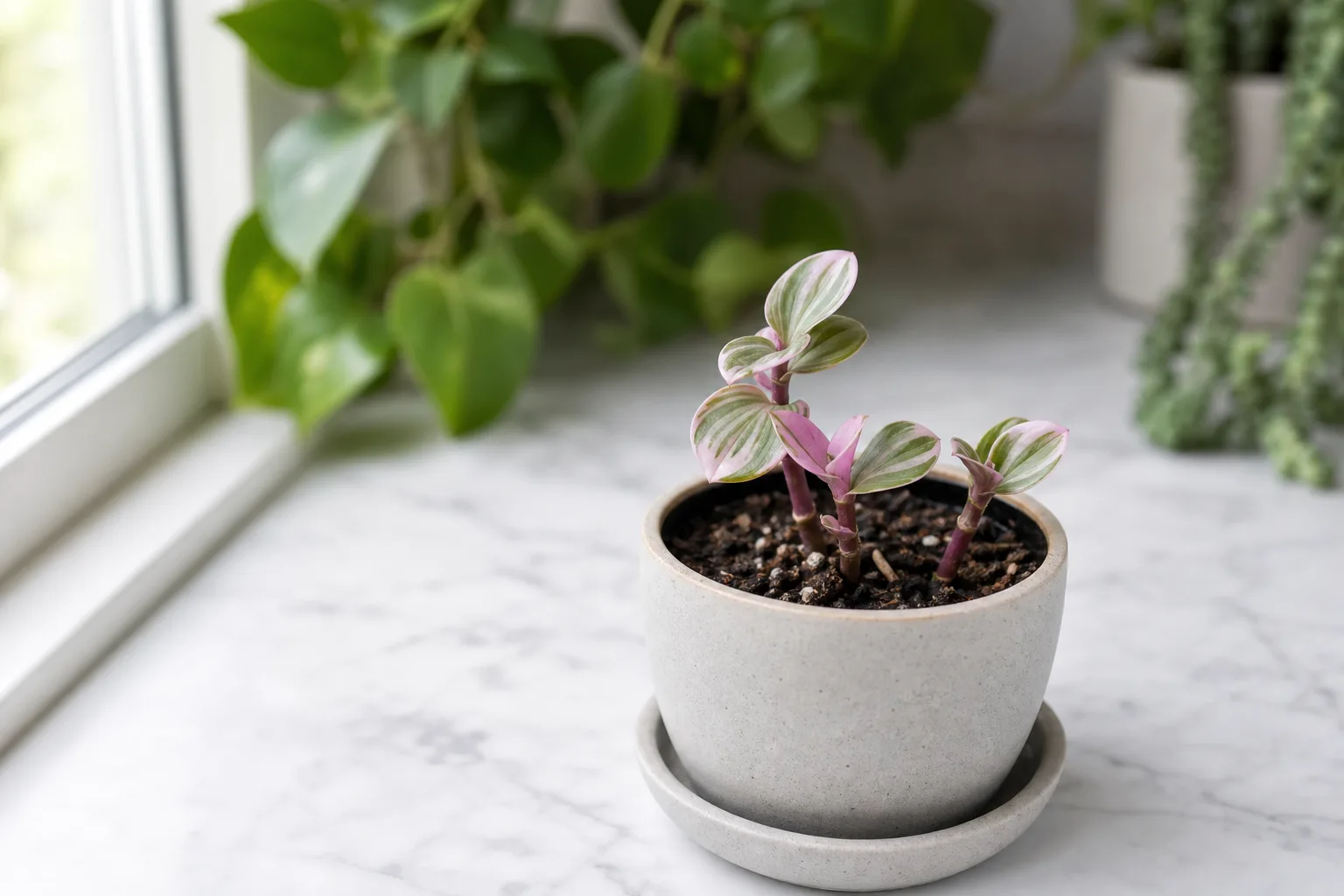
Slow Growth on Tradescantia Nanouk: Causes, Checks & Fixes
This guide covers slow growth on Tradescantia Nanouk. See also the general Slow Growth guide, watering, and light pages for this plant.
Slow Growth on Tradescantia Nanouk: Causes, Checks & Fixes
Quick answer
Slow Tradescantia Nanouk (Tradescantia albiflora ‘Nanouk’, trade name Fantasy Venice) growth usually means light, temperature, or root space is below what this fast-growing variegated trailer needs-not a fertilizer shortage. In bright warm months, healthy Nanouk should push compact new nodes every one to two weeks. A stall shows as long gaps between leaves, faded pink-and-lilac striping, smaller new foliage, and trailing length that barely changes month to month.
First step: move the plant to brighter indirect light with some direct morning sun, then mark a stem tip with tape and check weekly for new node activity. Do not reach for fertilizer or repotting until you have assessed light at the pot and whether roots circle the drainage holes.
This page covers growth stalls across the whole plant-winter rest, root crowding, and wet-soil stress. For light-driven stretch with long bare stems, see not enough light on Tradescantia Nanouk. For extreme internode elongation toward a window, see leggy growth.
Why Tradescantia Nanouk grows slowly
Nanouk is bred for a compact, upright-to-trailing habit with thick leaves and vivid pink, lilac, green, and white striping. Under good conditions it is a rapid grower that roots from stem nodes within days. When growth stalls, one of these limits usually applies:
Insufficient light for variegated metabolism. Pink and white zones carry less chlorophyll than green tissue, so Nanouk needs stronger light than all-green tradescantia to produce the same energy. In dim rooms the plant stretches, fades toward green, and adds leaves slowly-or stops entirely while older stems look superficially fine. Maryland Extension notes that too little light causes poor growth, fading leaf color, and leggy stretching as the plant reaches for brighter exposure.
Cool temperatures and winter rest. Nanouk prefers stable indoor warmth around 65–80°F (18–27°C) during active growth. Growth naturally pauses when light hours shorten and rooms hold below about 65°F. That seasonal slowdown is normal if stems stay firm and soil dries at a reasonable pace-not the same as a year-round stall in a dim hallway.
Root-bound shallow baskets. Nanouk has shallow, fibrous roots that fill small hanging pots quickly. When roots circle drainage holes or water races through dry mix without soaking in, uptake limits new tissue even when light is adequate. Clemson HGIC links pot-bound conditions to wilting and decline when there is not enough soil to hold water for the root mass.
Overwatering on semi-succulent stems. Nanouk’s fleshy stems store some water, but chronic wet mix suffocates roots and diverts energy to survival instead of new nodes. A plant sitting in soggy soil may look static while roots quietly weaken-see overwatering on Tradescantia Nanouk when lower leaves yellow on wet mix.
Depleted or compacted soil after one to two years without refresh limits nitrogen and micronutrients. Recent repot shock can also pause growth for two to four weeks while roots settle-even when care is otherwise correct.
What slow growth looks like on Tradescantia Nanouk
Healthy Nanouk in active season produces short internodes, stiff upright new tips, and pink-lilac-cream striping that reads clearly from across the room. Slow growth shows as:
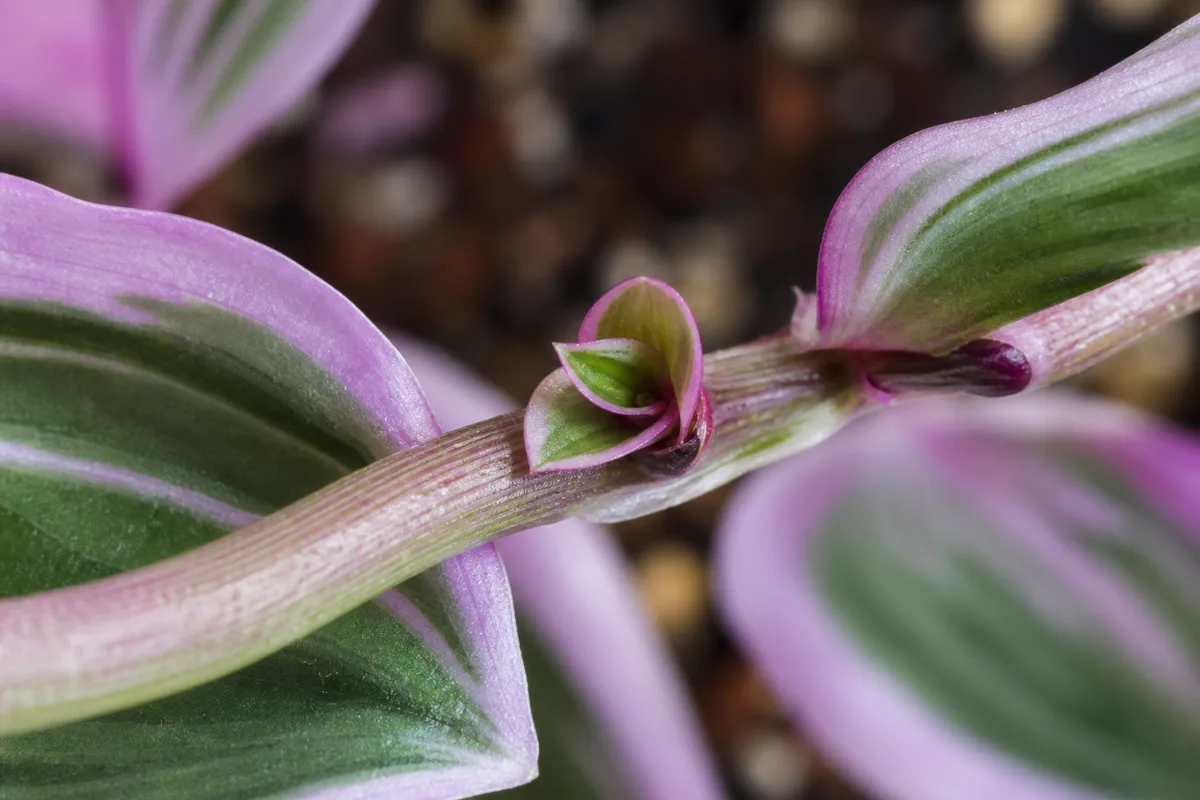
Slow Growth symptoms on Tradescantia Nanouk - compare with healthy tissue on the same plant.
- No new nodes for weeks during spring or summer while existing foliage stays attached
- Long gaps between leaves on trailing stems-even before full leggy stretch toward a window
- Smaller, paler new leaves compared with older baseline foliage on the same stem
- Pink and lilac fading toward solid green on newest growth-a light-limited metabolism signal before growth stops entirely
- Static trailing length month after month despite otherwise healthy-looking tips
- Bare woody base stems with leaves only near the ends; the cascade hides sparse interior growth
- Roots emerging from drainage holes or circling tightly when you slide the plant from its pot
Normal winter pause: Few or no new leaves from late fall through early spring when light is weak and the pot dries slowly. Stems remain firm, color may mute slightly, and growth resumes when days lengthen-no emergency fix needed.
Not slow growth alone: Yellow leaves dropping on wet soil, soft purple nodes at the base, sour smell from the pot, or heavy spider mite webbing-these need root rot or pest diagnosis, not just brighter light.
How to confirm the cause
Work through these checks in order. Change one variable at a time so you know what actually helped.
- Light at the pot - Is the plant more than a few feet from a window, or on a north wall with no supplement? Fading pink and lilac on new growth strongly suggests insufficient light. See our Tradescantia Nanouk light guide for placement targets.
- Season and temperature - Is it winter, or is the pot on a cold windowsill below about 55°F (13°C)? Cool rest explains stall without other symptoms.
- Node activity - Tape-mark a stem tip and check weekly. Zero movement for four or more weeks in warm months points to a real bottleneck.
- Root inspection - Slide the plant partway out of the pot. Dense circling roots, little visible mix, or roots poking from holes mean repotting is due. Wear gloves if handling stems-Nanouk sap can irritate skin and the ASPCA lists related Tradescantia species as toxic to cats and dogs.
- Soil moisture rhythm - Does mix stay wet for days, or dry within hours? Wet stagnation suggests overwatering; ultra-fast drying with crowded roots suggests root-bound stress. Cross-check watering rhythm.
- Recent changes - Repotting, moving homes, or a new grow-light setup can pause growth for two to four weeks while the plant adjusts.
- Pest scan - Check leaf undersides and stem joints for fine webbing, stickiness, or cottony clusters. Low-level feeding can sap vigor without dramatic leaf damage.
If brighter light for two weeks produces compact new nodes with stronger striping, light was the limiter. If roots are dense and light is already strong, repotting is the next test.
First fix for Tradescantia Nanouk
Move the plant to brighter indirect light-within a few feet of an east window, or several feet back from a south or west window with sheer curtain protection. Some direct morning sun is fine when acclimated.
Do not jump to fertilizer or repotting until you have assessed light. Variegated Nanouk needs photons before nutrients-a dark, stalled plant will not use fertilizer productively. NC State Extension notes that tradescantia prefers bright, indirect sun and that pinching stems prevents leggy growth once light is adequate.
Turn the pot weekly so trailing stems develop evenly instead of leaning toward one window. If natural light is weak in winter, add a full-spectrum grow light 12–18 inches above the canopy for 10–12 hours daily.
Do not place an unacclimated Nanouk in hot afternoon sun through glass-that can bleach pink zones and scorch leaves grown in dim nursery light.
Step-by-step recovery
After improving light, address remaining bottlenecks in this order:
- Wait two weeks - Give the plant time to respond. New leaf buds often appear before visible trailing lengthening. Watch for restored pink and lilac on the newest tissue.
- Repot if roots are crowded - Choose a container only one to two inches wider with drainage holes. Use airy, well-draining mix with perlite. Gently loosen circling roots before planting. See repotting guidance for shallow-basket timing.
- Hold fertilizer until growth resumes - Do not feed a stressed, stagnant plant hoping to force leaves. Once new growth is visible in spring, use balanced houseplant food at quarter to half label strength every three to four weeks per our fertilizer guide.
- Stabilize watering - Water when the top inch of mix feels dry, then let excess drain fully. Never leave a hanging basket sitting in a full saucer.
- Pinch leggy bare stems above a node - Cutting long sections back redirects energy to bushier growth near the crown. Root the trimmings in water or moist soil to fill sparse bases-tradescantia is easily propagated by stem cuttings that root at nodes within one to two weeks in bright light.
- Warm the environment - Move the pot away from cold windowsills and AC vents. Keep nights above about 60°F (16°C) for steady metabolism.
Skip repotting if you repotted within the past month unless roots are visibly rotting. Fresh repots need settle time without another disturbance.
Recovery timeline
Light upgrade: First compact new node within two to four weeks during active season if light was the main limiter. Pink and lilac striping on new leaves often improves before trailing length changes noticeably.
After repotting: Expect two to four weeks of quiet while roots establish. Noticeable trailing growth may take another four to eight weeks.
Winter stall: Growth may not resume until March or April even after fixes-judge by spring node activity, not January expectations.
Variegation return: New leaves show stronger color first; old green-reverted leaves rarely recolor. A full growing season in bright light may be needed for the overall plant to look as vivid as a nursery specimen.
Signs of success: short internodes, regular new nodes, larger new leaves matching older size, restored pink-lilac striping on fresh tissue, and stiff upright tips instead of floppy stretch.
Lookalike symptoms to rule out
Not enough light focuses on stretch and color fade as the primary story-long bare stems reaching toward a window with washed-out pink. Slow growth is the broader stall diagnosis; light deficit is usually the top cause within it. Compare not enough light on Tradescantia Nanouk.
Leggy growth is extreme internode elongation with sparse foliage along trailing stems. A stalled Nanouk may still look full at the tips while the base goes bare-both often share a light fix, but leggy plants need harder pinching. See leggy growth.
Root rot pairs slow or stopped growth with yellow leaves on persistently wet soil, soft stems at the base, and brown mushy roots on inspection. Bright light alone will not fix rotting tissue-see root rot on Tradescantia Nanouk.
Spider mites or aphids cause stippling, webbing, or clusters on new growth while vigor drops. Confirm pests before assuming a care deficit-check spider mites and aphids.
Post-repot shock - Temporary stall for two to four weeks after repotting is normal. Do not repot again or double fertilizer during this window.
Mistakes to avoid
Do not dump extra fertilizer on a dark Nanouk-overfertilizing can stunt growth and burn leaves without solving the light deficit.
Do not repot into an oversized hanging basket hoping to force growth. Excess wet mix around a small root ball stresses shallow roots and can worsen stall.
Do not ignore root crowding while chasing light upgrades. A bright but root-bound Nanouk may still add leaves slowly.
Do not expect summer growth rates in winter. Reduce watering frequency and wait for longer days before judging recovery.
Do not keep an unacclimated plant in hot afternoon sun through glass-scorched leaves stress Nanouk and pause growth.
Do not stack repotting, heavy pruning, and fertilizer on the same week. Change one variable, observe, then adjust.
Tradescantia Nanouk care cross-check
Align baseline culture before chasing exotic fixes:
- Light - Bright indirect exposure with some morning sun; see the light guide for window placement and grow-light timing.
- Water - Top inch dry between drinks; trailing baskets dry unevenly-lift by the hanger to judge weight. Full rhythm in the watering guide.
- Soil and pot size - Well-draining mix with perlite in a pot only slightly larger than the root ball. Details in soil and repotting guides.
- Feed - Light doses during active growth only; pause in winter and after stress. See fertilizer.
For species biology, variegation light demand, and propagation basics, start with the Tradescantia Nanouk overview.
How to prevent slow growth next time
Place Nanouk where bright indirect light is realistic all day-not only where the hanging basket looks decorative. Rotate weekly for even growth.
Repot every one to two years or when roots emerge through drainage holes. Refresh mix even if you trim roots to stay in the same decorative pot size.
Feed lightly during active growth only after light and roots are addressed-quarter to half strength every three to four weeks is enough for most indoor Nanouk.
Maintain stable warmth between 65°F and 80°F (18–27°C) and avoid cold drafts below about 55°F (13°C) on winter window ledges.
Inspect stem nodes weekly during routine care so early fade or long internodes stay small. Pinch tips when growth is vigorous to keep bases full.
Keep pets away from trailing stems-inch plant is toxic to cats and dogs and sap can irritate skin during pruning.
When to worry
Slow growth alone is low urgency. Escalate when:
- Yellow leaves spread while soil stays wet for days-suspect root rot, not light
- Stems soften at the soil line or smell sour from the pot
- Pest colonies cover undersides despite rinsing
- No new growth through an entire warm growing season after light and repotting fixes
- New leaves stay tiny and pale after months of feeding-possible chronic root failure or degraded soil
A firm, colorful, static Nanouk in winter is usually fine. A wilting, yellowing, or smelly Nanouk needs root and moisture diagnosis immediately.
Conclusion
Tradescantia Nanouk should grow noticeably when light, roots, and season align. Start with brighter indirect exposure and a quick root check before reaching for fertilizer or another repot. Most stalled Nanouk respond within weeks once the real bottleneck-usually light for variegated metabolism or crowded shallow roots-is removed. Track new node frequency through spring rather than expecting overnight trailing length, and accept winter quiet as part of this tropical trailer’s indoor rhythm.
Related Tradescantia Nanouk guides
- Overview - variegation light demand, growth habit, and pet safety
- Not enough light - color fade and stretch when light is the primary limiter
- Leggy growth - extreme internode elongation on trailing stems
- Root rot - when wet soil and mushy roots pair with stalled growth
- Watering - top-inch-dry rhythm for trailing baskets
- Light - window placement and grow-light timing
- Fertilizer - when and how lightly to feed after growth resumes