Root Rot on Tradescantia Nanouk: Causes, Checks & Fixes
Quick answer
Root rot on Tradescantia Nanouk means roots and stem nodes have decayed in waterlogged mix-yellow lower leaves on wet soil and limp colorful stems are classic signs. First step: stop watering, unpot, and pinch a root; mushy brown tissue confirms rot.
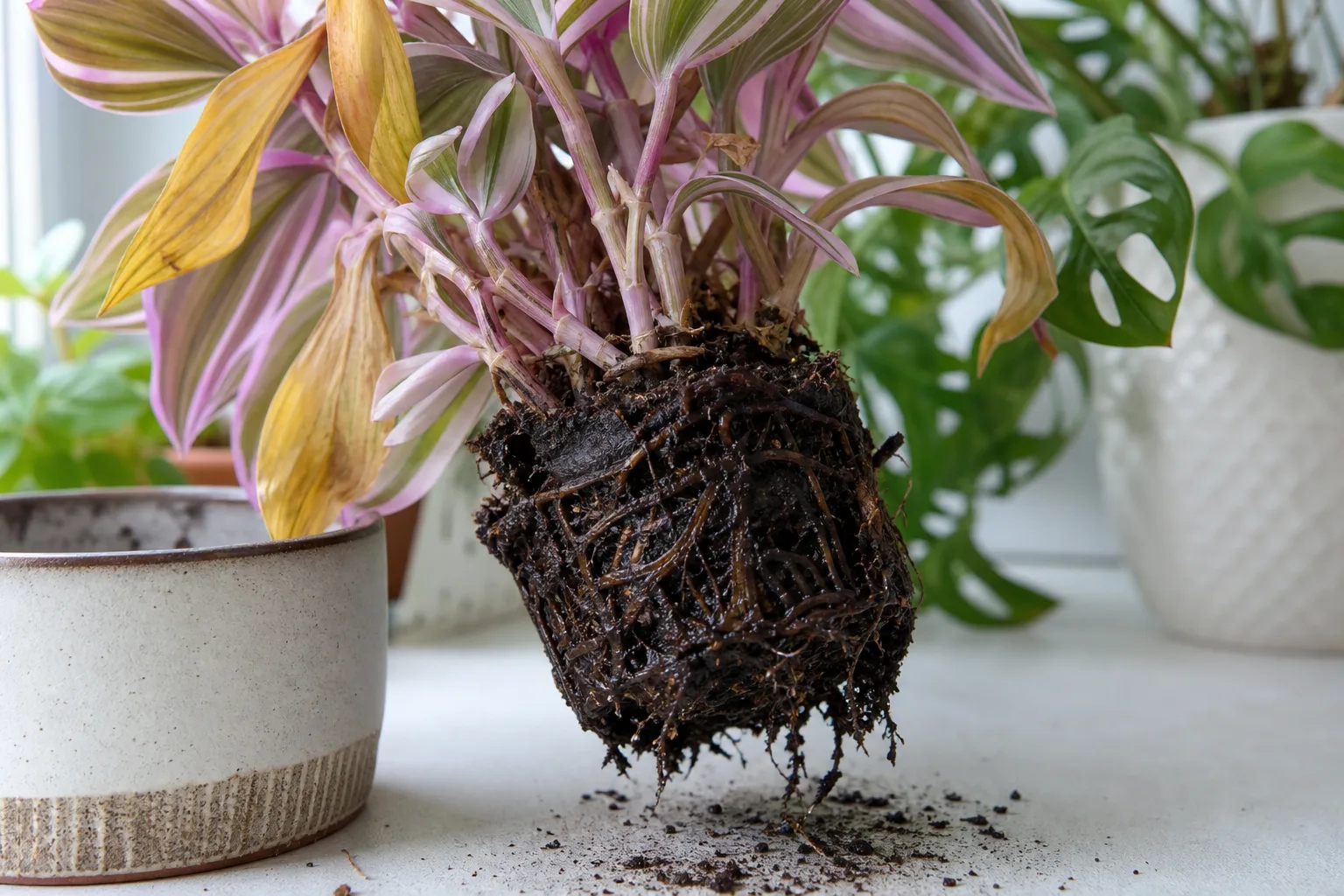
Root Rot on Tradescantia Nanouk: Causes, Checks & Fixes
This guide covers root rot on Tradescantia Nanouk. See also the general Root Rot guide, watering, and light pages for this plant.
Root Rot on Tradescantia Nanouk: Causes, Checks & Fixes
Quick answer
Root rot on Tradescantia Nanouk (Tradescantia albiflora ‘Nanouk’, trade name Fantasy Venice) is active decay of roots and succulent stem nodes in oxygen-poor, waterlogged mix-not a single bad watering, but repeated saturation that suffocates tissue and invites pathogens. The colorful thick leaves can stay pink while the base fails underground, so do not wait for pretty foliage to tell the whole story.
First step: stop watering and unpot the plant. Pinch a root-firm white or cream tissue may mean overwatering stress without full rot; brown, gray, or mushy roots that smell sour confirm decay. Trim all rotted tissue, air-dry cuts, and repot into fresh gritty mix sized to remaining roots. If the crown is too far gone, Nanouk cuttings root quickly from firm nodes above the rot line-propagation is your salvage path.
For early wet-soil signs before roots turn mushy, see overwatering on Tradescantia Nanouk. For the full watering rhythm that prevents rot, see the Tradescantia Nanouk watering guide.
Why Tradescantia Nanouk gets root rot
Nanouk sits between fern and succulent in water needs: it wants a moist root zone with a brief surface dry-down, not permanently wet peat. When mix stays saturated, oxygen around roots is displaced and tissue weakens in anaerobic conditions-water molds such as Pythium and Phytophthora can then invade compromised roots.
Common Nanouk-specific triggers include:
Calendar watering in cool winter rooms - Shorter days slow growth while the same pot holds moisture longer; watering on a fixed schedule keeps roots wet for weeks.
Dense nursery peat without perlite - Heavy mix that never breathes is a frequent cause of chronic root stress on fast-growing Nanouk in small plastic pots.
Oversized pots and cachepots - A decorative outer pot holding runoff for days, or a pot much larger than the root ball, keeps the center anaerobic long after the surface looks dry.
Crown splash on compact growth - Nanouk’s overlapping pink-and-green leaves trap water at the crown when top-watered heavily; moisture pools at stem nodes and accelerates basal rot.
Dim light with continued watering - Low light slows water use while the grower maintains summer frequency; wet soil persists and roots decay before leaves show full stress.
Recent overwatering escalation - Owners who see limp leaves on wet soil and add more water accelerate crown failure. Damaged roots cannot move water into shoots, so the plant wilts despite moisture-a paradox covered in the wet-vs-dry table below.
What root rot looks like on Tradescantia Nanouk
Root rot on Nanouk progresses in stages. Catching early saturation before tissue turns mushy is the job of the overwatering page; this page covers active decay and salvage.
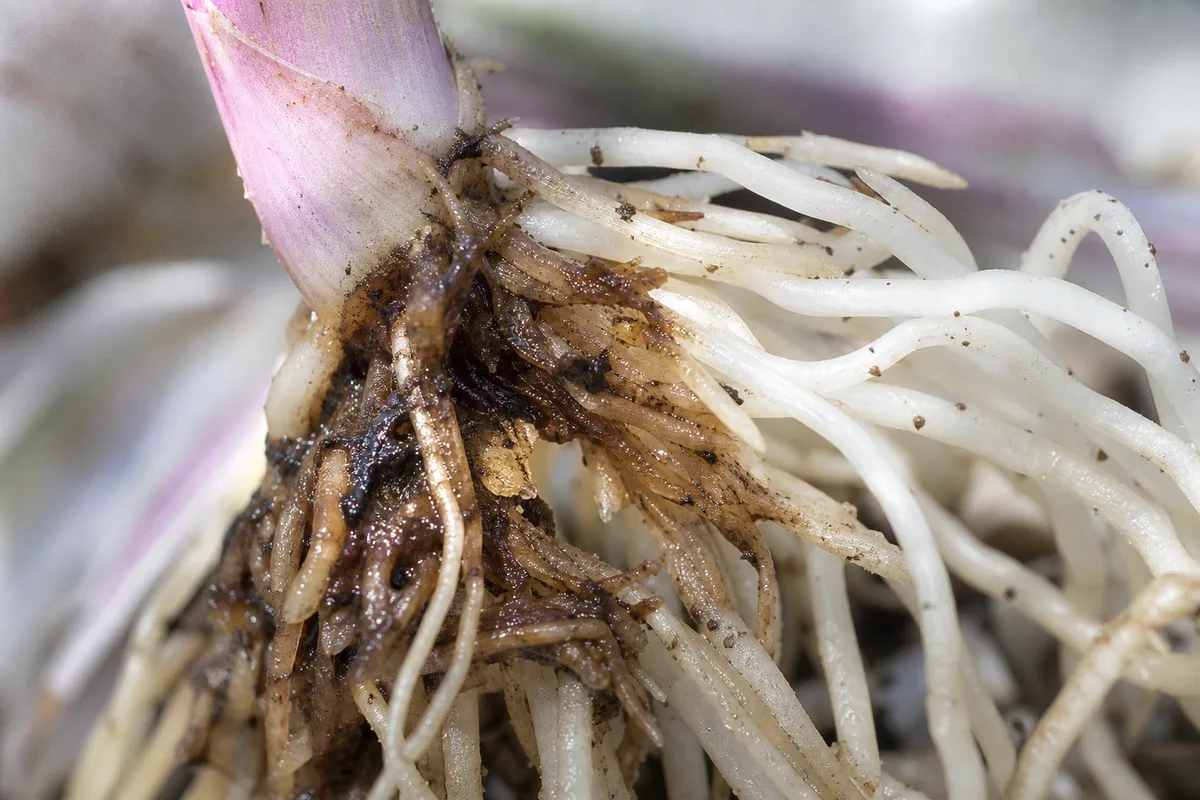
Root Rot symptoms on Tradescantia Nanouk - compare with healthy tissue on the same plant.
Early signs (wet soil, roots still partly firm)
- Yellowing lower leaves on persistently dark, cool, heavy mix-not normal single-leaf aging
- Pot stays heavy several days after the last watering
- Faint sour or musty smell from drain holes
- Fungus gnats hovering at the soil surface (often linked to chronically damp mix-see fungus gnats)
- Slow new growth or pale new leaves while older foliage yellows from the bottom up
Advanced signs (active decay)
- Limp colorful stems despite wet soil - the wet-soil wilt paradox
- Soft, mushy, or translucent purple stem nodes at or just above the soil line
- Brown, black, or gray roots that dissolve when pinched; healthy Nanouk roots are white to cream and elastic
- Sour smell intensifies when you slide the plant from the pot
- Crown collapse - compact variegated growth flops while inner mix is still damp
What root rot is not
- Dry, lightweight pot with limp leaves that firm within hours after a thorough drink - classic underwatering; see underwatering
- A few crispy leaf tips on otherwise firm stems with normal dry-down - often humidity or light stress, not rot
- Gradual lower-leaf drop on an old trailing stem with firm nodes and healthy white roots - may be normal aging on long vines
Nanouk’s thick variegated leaves mask base failure longer than thin-leaf Tradescantias like T. zebrina-inspect roots when soil stays wet, not when the whole plant has collapsed.
How to confirm the cause
Work through these six checks in order so you do not water a rotting plant or repot one that only needs a dry-down.
- Pot weight - Lift the container. A heavy, cool pot days after watering confirms saturation; a light pot with wilt points away from rot.
- Top-inch moisture - Insert a finger to the first knuckle. Damp or wet surface with limp stems suggests root failure, not thirst.
- Smell - Sour or musty odor from drain holes supports anaerobic decay in the root zone.
- Unpot and inspect roots - Slide the plant out and brush away loose mix. Pinch roots along the ball: firm white or cream tissue is healthy; brown, slimy, or hollow roots are rot.
- Stem node firmness - Press purple nodes at the soil line. Firm nodes above soft tissue mean salvage is likely; mushy nodes spreading up the stem mean trim higher or propagate.
- Wet-vs-dry wilt fork - Compare soil state to leaf turgor using the table below.
| Signal | Wet-soil wilt (root rot likely) | Dry-soil wilt (underwatering likely) |
|---|---|---|
| Pot weight | Heavy, cool | Light |
| Top inch of mix | Damp to wet | Dry, dusty |
| Lower leaves | Yellow on wet soil | May curl; often perk after water |
| Stem nodes | Soft, mushy at base | Firm |
| Root texture (if inspected) | Brown, mushy | White, firm; may be dry |
| After thorough watering | Stays limp | Firms within hours |
Confirmed root rot: mushy roots, sour smell, soft nodes, or wet-soil wilt that does not resolve after the mix has been allowed to dry for several days. Suspected early saturation only: heavy wet pot with firm roots and no smell-follow overwatering protocol before full trim-and-repot.
First fix for Tradescantia Nanouk
Stop all watering the moment you suspect rot. Adding water to damaged roots is the fastest way to lose the crown.
Then work through this sequence-one major step at a time:
- Unpot gently and brush away wet mix so every root and node is visible.
- Trim all mushy roots with clean scissors sterilized in rubbing alcohol. Cut back to firm white tissue even if you remove a large portion of the root mass.
- Inspect stem nodes. If tissue at the soil line is soft and brown, cut the stem above the damage to firm purple nodes with intact leaves.
- Air-dry the trimmed plant and any cut surfaces for 2–24 hours on a paper towel in Tradescantia Nanouk light guide-not sealed in a bag.
- Repot into fresh gritty mix - standard indoor potting soil amended with 20–30% perlite or similar drainage material. Use a clean pot with drain holes sized to the remaining root mass, not oversized. See soil for Tradescantia Nanouk for mix ratios.
- Wait one to two weeks before the first light watering. Keep the plant in bright indirect light while roots callus and regrow.
- Propagate backups if the main stem is too short or crown tissue is lost-place firm cuttings in water or moist mix. Nanouk nodes root quickly; see propagation for the full salvage path.
Make one correction, then wait several days before stacking fertilizer, heavy pruning, and pesticide.
When to salvage via propagation instead of repotting
Choose propagation over in-pot rescue when:
- Every root is mushy and only a few inches of firm stem remain above the rot line
- Multiple nodes are soft and decay is climbing faster than you can trim
- The crown has collapsed but side shoots or tip cuttings above the damage are still firm
Cut 3–4 inch sections with at least one node, remove lower leaves that would sit underwater, and root in clean water or moist perlite-heavy mix. The mother plant may not recover, but Nanouk’s fast growth means a rooted cutting can replace it within weeks.
Recovery timeline
Recovery is a heuristic, not a guarantee-it depends on how much firm tissue remains after trimming.
Mild rot with firm nodes and 50%+ healthy roots: expect stabilized new growth within one to two weeks after repotting into dry gritty mix and the first cautious watering. Nanouk’s fast metabolism is an advantage here.
Moderate rot with heavy root loss: allow two to four weeks for new white root tips and firm new leaves from the crown. Old yellow or limp leaves rarely green up; judge success by upright new growth and firm nodes.
Severe crown loss with propagation salvage: water-rooted cuttings often show white root initials in 7–14 days; potted cuttings may take slightly longer. Treat the cutting as your new plant.
Signs of improvement: firm purple stem nodes, new upright leaves with vivid pink variegation, white root tips on inspection, and no spreading sour smell.
Signs the problem is worsening: nodes soften above your last trim line, mix stays wet while the plant declines, or new growth collapses within days of repotting.
When to escalate from the overwatering page
Use this hierarchy so you do not duplicate care across URLs:
- Overwatering - soil stays wet too long, but roots are still mostly firm; stop watering, improve drainage, adjust schedule
- This page (root rot) - mushy roots, sour smell, soft nodes, or wet-soil wilt that persists after a dry-down attempt
- Propagation - crown lost but firm cuttings remain
If you arrived from the watering guide with yellow lower leaves and a heavy pot, inspect roots now rather than waiting for crown collapse.
Lookalike symptoms to rule out
Wilting - Wilting on Tradescantia Nanouk covers the full wet-vs-dry diagnostic path. Root rot is the severe wet-soil branch.
Drooping leaves on old trails - long stems naturally weigh down while crown and roots stay healthy. Check nodes and roots, not just leaf angle.
Yellow leaves - Yellow leaves includes nutrient and light causes. Yellow on chronically wet soil with soft bases still points here.
Mold on soil surface - Mold on soil can coexist with rot but is not the same diagnosis; both signal excess moisture.
What not to do
Do not keep watering limp Nanouk when the mix is already wet-that converts reversible stress into crown loss. Do not repot into dense peat or a pot without drain holes. Do not fertilize during recovery; stressed roots cannot use nutrients and salts worsen damage. Do not discard the plant until you check firm nodes above the rot line for propagation. Do not stack repotting, pruning, fungicide, and fertilizer on the same day.
How to prevent root rot next time
Water when the top inch of mix dries, then soak until water runs from drain holes and empty every drop from saucers and cachepots within 30 minutes. Give bright indirect light with some direct morning sun so the pot dries on a predictable cycle. Use well-drained mix with perlite-see soil-and repot before nursery peat collapses into a waterlogged brick. Size pots to the root mass, not the wishful canopy width. In winter, check moisture every few days but water less often than in summer. Inspect weekly during routine care so heavy pots and sour smells are caught early.
Practical checks
Urgency check
Treat as urgent if stem nodes soften at the soil line, the sour smell spreads, more than a third of roots are mushy on inspection, or the plant collapses on wet soil within days. Mild heavy-pot signals without mushy roots can wait 48 hours of dry-down before unpotting.
Best inspection order
Pot weight → top-inch moisture → smell at drain holes → unpot and root pinch test → stem node firmness → wet-vs-dry wilt table → propagation readiness if crown is failing
Severity note
Use spreading node softness and percentage of mushy roots-not a single yellow leaf-to decide between in-pot trim-and-repot and full propagation salvage.
Related Tradescantia Nanouk care
- Tradescantia Nanouk overview - full care hub
- Watering - top-inch-dry rhythm and wet-vs-dry wilt basics
- Overwatering - early saturation before roots turn mushy
- Underwatering - dry-soil wilt branch
- Repotting - post-trim pot sizing and technique
- Propagation - salvage when crown is lost
- Soil - gritty mix for recovery
- Fungus gnats - damp-mix crossover
- Wilting - wet-vs-dry diagnostic hub
When to use this page vs other Tradescantia Nanouk guides
- Tradescantia Nanouk watering guide - Use for routine moisture checks before assuming root rot is the main issue.
- Tradescantia Nanouk problems hub - Browse all 2 common issues on this species.