Yellow Leaves on Tradescantia Nanouk: Causes, Checks & Fixes
Quick answer
Yellow leaves on Tradescantia Nanouk usually trace to overwatering, underwatering, low-light variegation fade, or normal lower-leaf aging on trailing stems-not a fertilizer shortage. First step: check whether soil is wet or dry and inspect the newest growth at stem tips before changing anything.
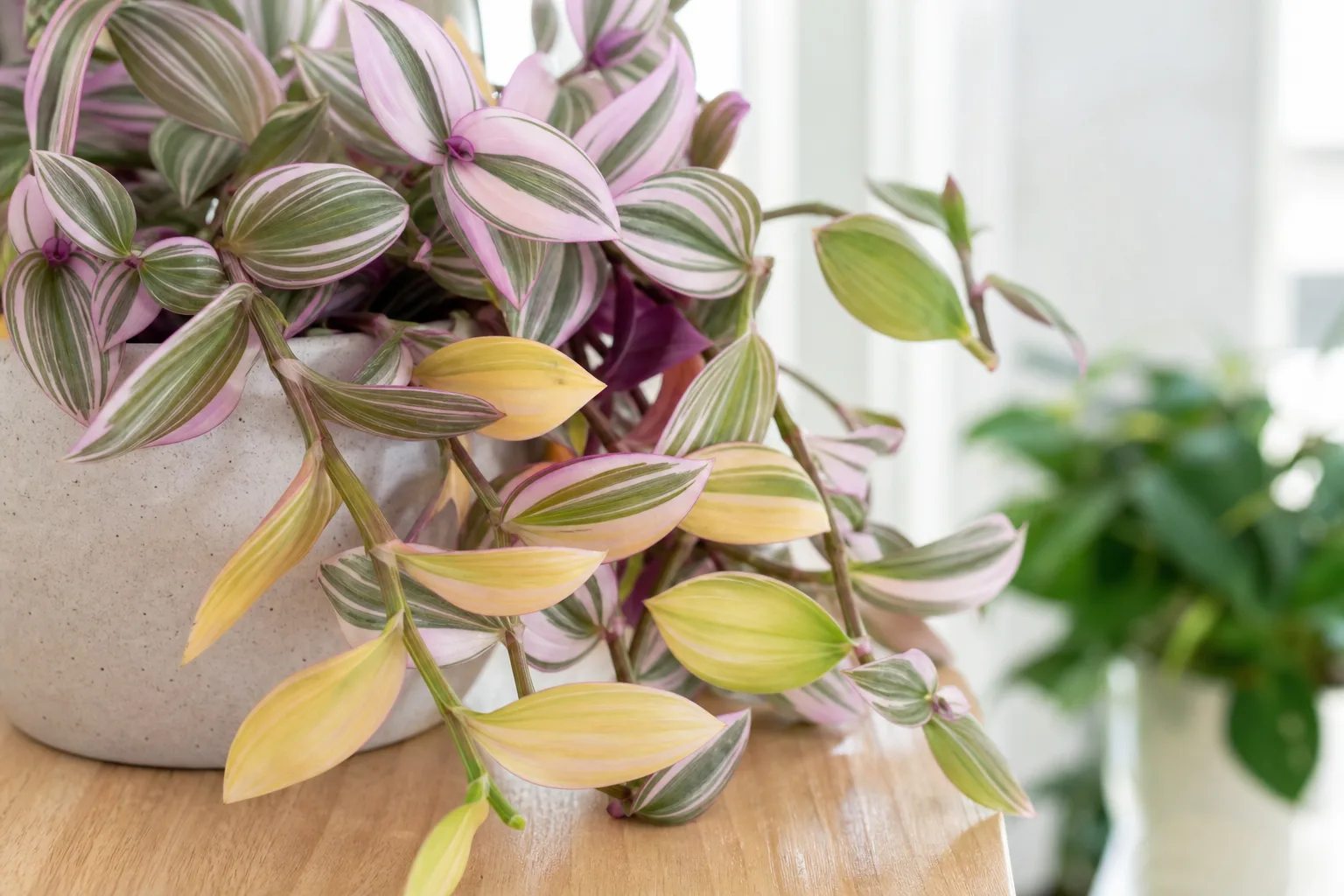
Yellow Leaves on Tradescantia Nanouk: Causes, Checks & Fixes
This guide covers yellow leaves on Tradescantia Nanouk. See also the general Yellow Leaves guide, watering, and light pages for this plant.
Yellow Leaves on Tradescantia Nanouk: Causes, Checks & Fixes
Quick answer
Yellow leaves on Tradescantia Nanouk (Tradescantia albiflora ‘Nanouk’, trade name Fantasy Venice) usually trace to overwatering, underwatering, low-light variegation fade, or normal lower-leaf aging on fast-trailing stems-not a fertilizer shortage. Nanouk renews leaves quickly when conditions are good, so the pattern-bottom-up on wet soil, crispy edges on dry soil, pale pink washing to yellow-green in dim corners, or a few yellow leaves at bare base nodes-tells you which cause fits.
First step: push your finger into the top inch of mix and look at the newest leaves at stem tips. Wet heavy soil with limp yellow lower leaves points to root stress. Light dry soil with wilted, papery leaves points to thirst. Fading pink on new growth in a dim room points to light. Firm colorful tips with yellow only at old base nodes often mean normal renewal.
This page covers yellow-leaf diagnosis across causes. For wet-soil collapse and mushy roots, see overwatering on Tradescantia Nanouk. For stretch and color wash without widespread yellowing, see not enough light.
Why Tradescantia Nanouk gets yellow leaves
Nanouk is a compact, variegated trailer with thick leaves and semi-succulent stems. It grows fast in bright warm months and drops lower leaves as stems extend-so yellow foliage is common but not always a crisis. The main indoor causes:
Overwatering and root stress. Saturated mix displaces oxygen around shallow, fibrous roots. Damaged roots cannot move water or nutrients into shoots, so lower leaves yellow while stems may go limp even though soil feels wet. Chronic wet mix suffocates roots and invites decay organisms in anaerobic conditions.
Underwatering after a dry-down cycle. Nanouk wilts visibly when the root ball dries and may show yellow-brown crispy edges on older leaves before new growth stalls. Semi-succulent tissue recovers quickly from mild thirst once watered-but repeated crash cycles yellow leaves along the stem.
Low-light variegation fade. Pink, cream, and white zones carry less chlorophyll than green tissue. In dim rooms Nanouk compensates by producing greener, paler new leaves; pink stripes can wash toward cream or yellow-green before the whole leaf looks chlorotic. Too little light causes fading leaf color and poor growth on houseplants generally. This is physiological fade, not rot-though wet soil in the same dark corner raises both risks.
Normal lower-leaf senescence on trailers. As trailing stems lengthen, the plant sheds shaded leaves at older nodes. A few yellow leaves at the base while crown and tip growth stay firm is routine renewal on a rapidly growing tradescantia.
Recent repot or move shock can yellow lower leaves for one to two weeks while roots settle-especially if watering continued on the old schedule in fresh, wetter mix.
Pest stress is a secondary cause: spider mite stippling can pale leaves before yellow drop in very dry, dusty conditions. Confirm webbing and speckled undersides before treating.
What yellow leaves look like on Tradescantia Nanouk
Yellowing on Nanouk follows recognizable patterns. Match the leaf, stem, and soil together-not a single blemish in isolation.
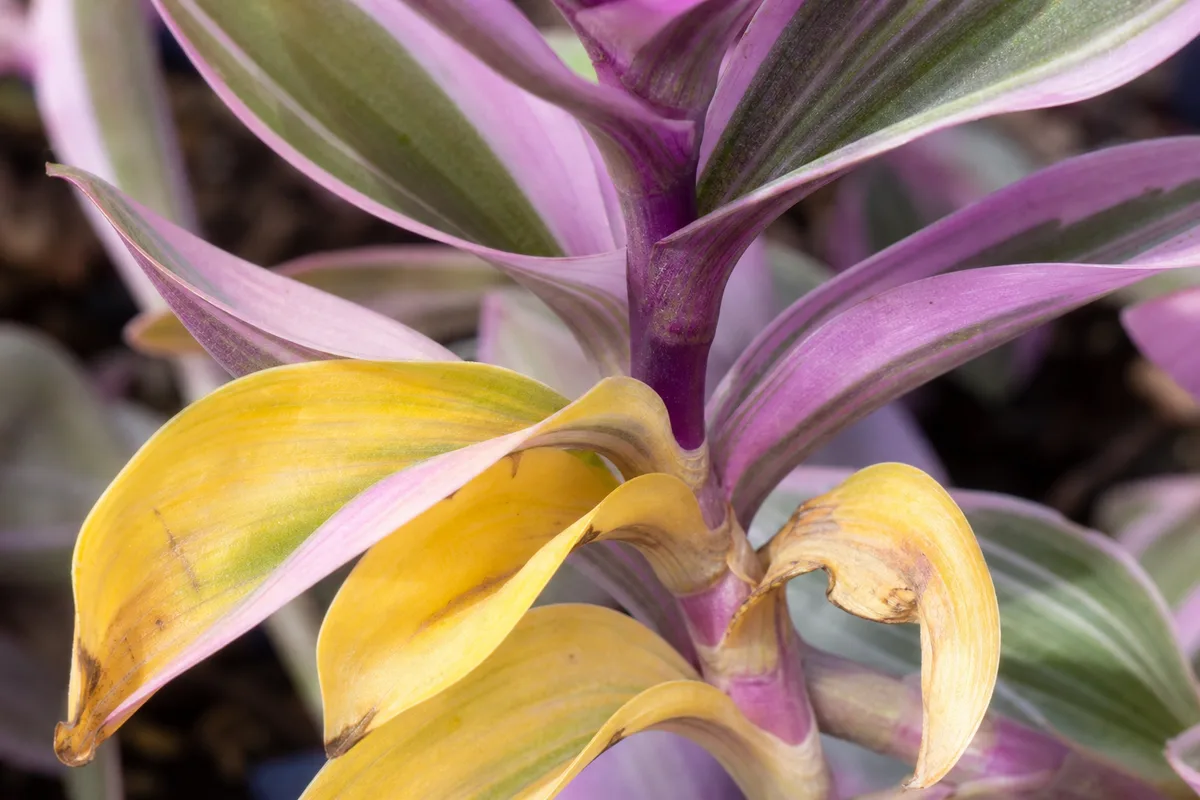
Yellow Leaves symptoms on Tradescantia Nanouk - compare with healthy tissue on the same plant.
Overwatering pattern
Yellowing often starts on lower, older leaves while the pot stays heavy and cool. Leaves may go uniform yellow then brown and drop; stems feel soft or translucent at nodes near the soil. New growth may stall or emerge smaller. A sour smell from the mix or mushy roots on inspection confirm advanced root stress. Stunted slow growth with yellowing leaves is a classic overwatering symptom on houseplants.
Underwatering pattern
Leaves lose turgor and feel papery or limp along trailing stems. Yellow often appears as crispy yellow-brown edges or bronze patches on older foliage, especially in fast-draining hanging baskets that dry unevenly. Soil pulls away from the pot sides; the container feels light. Many plants perk within hours of a thorough soak if roots are still healthy.
Low-light variegation fade
New leaves open with wider green sections and pink that reads as cream, white, or yellow-green rather than vivid lilac-pink. Internodes may lengthen as the stem reaches toward the brightest window. Older leaves can look dull before they yellow and drop. This pattern differs from rot: soil moisture may look fine, stems stay firm, and the problem concentrates on newest foliage color, not mushy bases.
Normal lower-leaf aging on trailers
On long trailing stems, one to three oldest leaves at bare lower nodes turn even yellow and drop while tip and crown growth stays colorful and firm. The stem itself remains stiff and purple-flushed underneath. No sour smell, no widespread wilt, and soil follows a normal dry-down cycle.
Pest-related yellowing
Fine stippling, webbing on undersides, or dusty gray cast on leaves can precede yellowing when spider mites stress a dry plant. Yellow from pests is usually scattered or upper-crown rather than strictly bottom-up on wet soil. See spider mites on Tradescantia Nanouk when stippling appears.
How to confirm the cause
Work through these checks in order. Change one variable at a time so you know what helped.
- Soil moisture - Insert a finger or dry skewer to the first knuckle. Wet clingy mix on a heavy pot suggests overwatering. Dry dusty mix on a light pot suggests thirst.
- Newest growth - Firm vivid leaves at stem tips mean the crown is still healthy even if lower leaves yellow from age or past stress.
- Stem firmness - Pinch nodes near the soil. Soft, weeping tissue means stop watering and inspect roots.
- Light at the leaf - If pink fade on new leaves pairs with a dim north corner or a basket hung far from glass, suspect light before rot.
- Recent changes - Repot, move, or seasonal watering shifts often explain a short yellow flush without other decline signs.
| Cause | Soil feel | Leaf pattern | Stem condition | First action |
|---|---|---|---|---|
| Overwatering | Wet, heavy, slow to dry | Bottom-up yellow on older leaves | Soft bases possible | Stop watering; improve light/airflow to dry mix |
| Underwatering | Dry, light pot | Crispy yellow-brown edges, limp wilt | Firm but floppy leaves | Water thoroughly; drain saucer |
| Low-light fade | Often normal dry-down | Pale/yellow-green new growth; pink wash | Firm; may stretch | Move to brighter indirect light |
| Normal aging | Normal cycle | Few yellow leaves at old base nodes | Firm throughout | None if tips stay healthy |
| Root rot | Persistently wet | Spreading yellow + collapse | Mushy, sour smell | Unpot, trim rot, repot airy mix |
Cross-check moisture rhythm in the Tradescantia Nanouk watering guide and window placement in the light guide.
First fixes by cause
If soil is wet and lower leaves are yellow: Stop watering. Move the pot to brighter filtered light so the mix dries faster. Lift the pot to judge weight daily. Only resume when the top inch feels dry. If stems soften or smell turns sour, unpot and inspect-see root rot on Tradescantia Nanouk.
If soil is dry and leaves are limp: Water until excess runs from drainage holes; discard saucer water. Nanouk often recovers turgor the same day. Adjust schedule to water when the top inch of mix dries rather than on a calendar.
If new growth is pale with fading pink in a dim spot: Move to brighter indirect light with some morning sun. Acclimate over seven to fourteen days. Judge the next two leaf pairs for returning pink striping.
If only old base leaves are yellow on an otherwise healthy trailer: No emergency fix. Optionally snip yellow blades at the node for appearance. Keep routine care steady.
If repot shock is suspected: Hold watering slightly longer than usual until new root hairs form-usually one to two weeks-while keeping bright indirect light stable. Do not fertilize during this pause.
Make one correction first. Stacking repotting, heavy pruning, fertilizer, and pesticide on the same day hides which step helped and can stress a plant already shedding leaves.
Recovery timeline and what to expect
Nanouk renews nodes quickly in warm bright months. Once the correct stressor stops:
- Mild overwatering or thirst: New growth often looks normal within one to two weeks; old yellow leaves may hang on until you prune them or they drop.
- Low-light fade: Pink and lilac striping on new leaves may return within two to four weeks after a real light upgrade. Leaves that already opened pale will not fully re-pink.
- Normal aging: Yellow base leaves drop individually; trailing length continues at the tips.
- Root rot recovery: Several weeks to months depending on how much healthy root remains; propagation from firm tip cuttings is often faster than saving a collapsed crown.
Judge recovery by newest node quality-firm stems, vivid variegation, and no spreading yellow up the plant-not by expecting old yellow tissue to turn green again.
What not to do
Do not fertilize a yellowing Nanouk before confirming moisture and light. Salt on stressed roots worsens leaf burn.
Do not keep watering because leaves look tired if the mix is already wet. Overwatering promotes yellowing lower leaves and soft stems while roots fail underground.
Do not strip all yellow foliage at once on a weakened plant. Remove only fully dead leaves or pest harborages.
Do not assume every yellow leaf means root rot-check soil moisture and newest growth first.
Do not place a recovering Nanouk in harsh midday sun to “fix” yellowing. Pale variegated tissue scorches easily; use bright indirect light.
How to prevent yellow leaves next time
Match watering to how fast your pot dries: top inch dry between drinks, full drainage, no standing saucer water. Trailing baskets dry unevenly-lift by the hanger to judge weight, not only the soil surface.
Keep bright indirect light so variegated tissue can photosynthesize without stretch. Related inch plants prefer bright, indirect sun and fade in low light. Rotate the pot weekly for even color.
Reduce watering frequency in fall and winter when growth slows and mix holds moisture longer.
Repot into airy, well-draining mix when roots circle drainage holes-stagnant old soil stays wet too long in shallow baskets.
Inspect stem nodes weekly during routine care so early yellow or fade stays localized.
Pinch vigorous tips after recovery to keep lower stems from going bare faster than the plant replaces leaves.
Pet safety when handling yellow leaves
Tradescantia species, including Nanouk, are toxic to cats and dogs. Sap can cause dermatitis on contact per ASPCA clinical signs for inch plant. Wear gloves when pruning many yellow leaves, keep cuttings out of reach, and wash hands after handling. This is not veterinary advice-contact your vet or poison control if a pet chews the plant.
Conclusion
Yellow leaves on Nanouk are common because this plant grows and sheds fast-but pattern matters. Wet soil with bottom yellowing needs a dry-down and possible root check. Dry soil with crispy edges needs water. Pale new growth in dim light needs brighter exposure. A few yellow base leaves on a colorful trailer is often normal. Start with moisture and newest-tip inspection, fix one cause, and track recovery on the next nodes rather than old damaged blades.
Related Tradescantia Nanouk guides
- Tradescantia Nanouk overview
- Tradescantia Nanouk watering
- Tradescantia Nanouk light
- Overwatering on Tradescantia Nanouk
- Underwatering on Tradescantia Nanouk
- Root Rot on Tradescantia Nanouk
- Not Enough Light on Tradescantia Nanouk
- All Tradescantia Nanouk problems
Conclusion
Use this page to confirm yellow leaves on Tradescantia Nanouk by pattern and pot checks-not by treating every houseplant the same. When symptoms overlap with sibling pages, follow the linked guide for the matching cause before stacking fertilizer, repotting, or pesticide.