Wilting on Tradescantia Nanouk: Causes, Checks & Fixes
Quick answer
Wilting Tradescantia Nanouk means stems and thick pink-and-cream leaves lost turgor-usually from dry soil or failed roots, not a mystery disease. First step: lift the pot and feel the top inch of mix. Light, dry soil needs a thorough soak; wet, heavy soil with yellow lower leaves means stop watering and inspect roots.
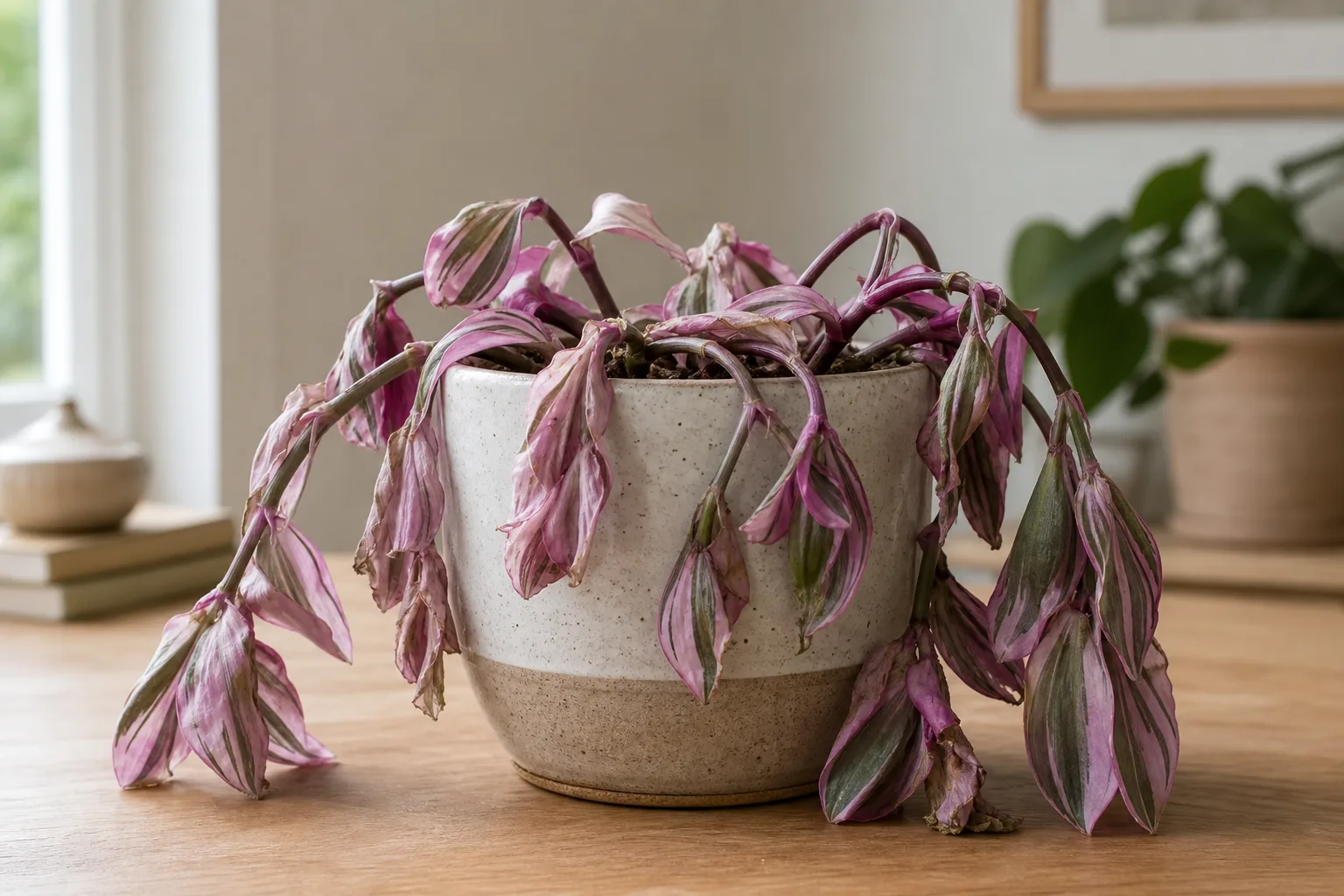
Wilting on Tradescantia Nanouk: Causes, Checks & Fixes
This guide covers wilting on Tradescantia Nanouk. See also the general Wilting guide, watering, and light pages for this plant.
Wilting on Tradescantia Nanouk: Causes, Checks & Fixes
Quick answer
Wilting on Tradescantia Nanouk (Tradescantia albiflora ‘Nanouk’, sold as Fantasy Venice) means the plant lost normal leaf turgor-thick pink-and-cream leaves and trailing stems hang limp instead of springy. The same collapse can come from opposite problems: bone-dry mix, waterlogged rotting roots, heat overload, or a hanging basket that dried faster than you expected.
First step: lift the pot and push your finger into the top inch of mix before you add water. Dry at that depth with a lightweight pot → underwatering is likely; water thoroughly until drainage runs free. Wet at that depth with limp stems → stop watering and inspect roots-damaged roots cannot move water upward, so more water worsens collapse.
Nanouk wilts faster than many houseplants when the root zone dries, but thick colorful leaves can mask early root stress until stems suddenly flop. The moisture check separates thirst from root failure in under a minute. Full watering rhythm and seasonal detail live in our Tradescantia Nanouk watering guide.
What wilting looks like on Tradescantia Nanouk
Healthy Nanouk feels firm along trailing vines. Leaves are thick, slightly rigid, and hold their angle off the stem with vivid pink, cream, and green striping. Wilting removes that stiffness-often along the whole cascade in a hanging basket.
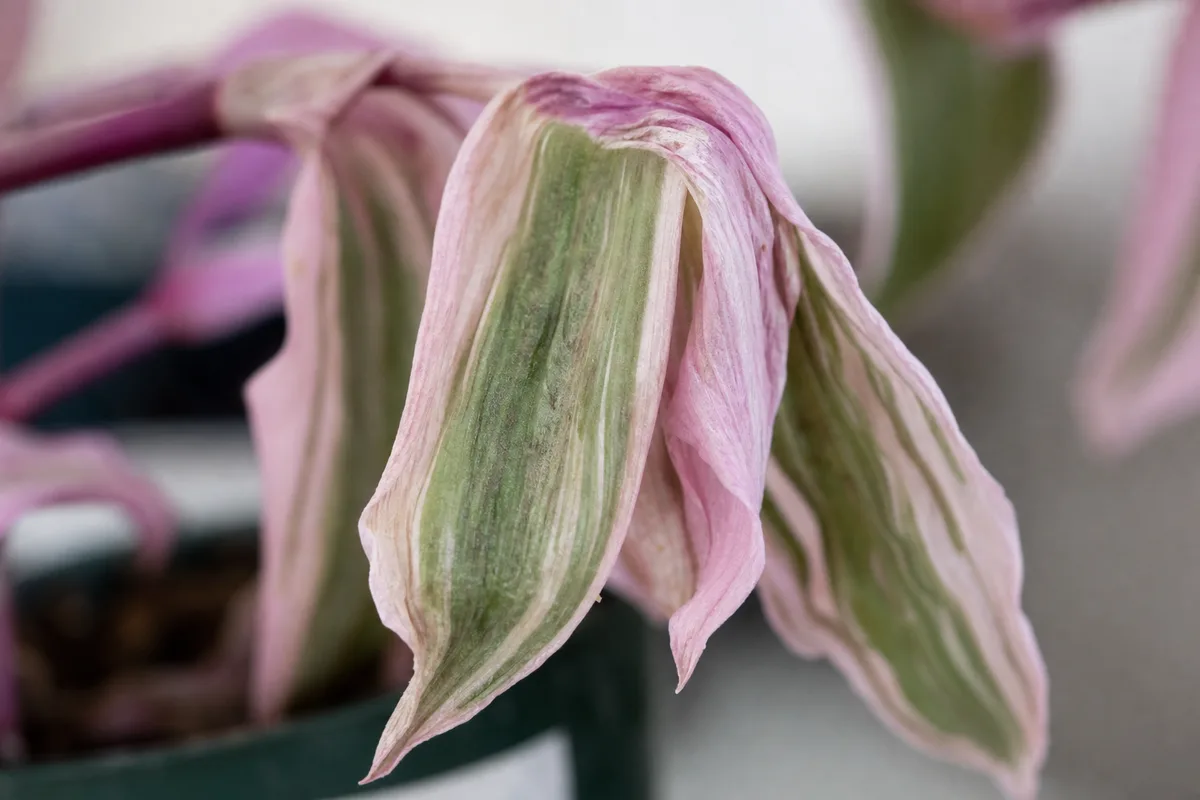
Wilting symptoms on Tradescantia Nanouk - compare with healthy tissue on the same plant.
Dry-soil wilt (underwatering):
- Stems and leaves lose turgor within hours once the root zone dries; the whole trailing length may hang limp
- Mix is dry at the top inch; soil may pull away from the pot edge
- Pot feels noticeably light when lifted
- Leaves feel thin or slightly limp but not mushy
- Many plants perk noticeably within a few hours after a deep drink if roots are still healthy
Wet-soil wilt (overwatering / root rot):
- Leaves limp and may yellow, often starting on lower foliage while the mix stays damp
- Pot feels heavy and cool; surface may look dark or stay wet for days
- Sour or musty smell when you disturb the surface or unpot
- Stem bases may soften at the soil line on advanced cases
- The paradox: plant looks wilted despite moist soil
Heat-stress wilt:
- Drooping during the warmest part of the day on otherwise moist soil
- Trailing stems often recover overnight or by morning
- Leaves near hot south or west windows may crisp at edges while roots still hold moisture
What wilting is not:
- A few lower leaves aging and dropping while the crown stays firm and new tips grow-normal senescence, not acute wilt. See drooping leaves if the pattern is mild and gradual rather than sudden collapse
- Shipping stress for a day or two after arrival-often resolves once the plant acclimates and you confirm moisture
This page focuses on acute turgor loss-sudden or same-day limpness. Gradual sag over weeks without a clear dry-or-wet fork may fit drooping leaves or low light better.
Why Tradescantia Nanouk wilts
Nanouk is a fast-growing trailing Tradescantia with thicker leaves than classic T. zebrina. It needs steady moisture without constant sogginess-see our watering guide for the full rhythm. When the water pathway breaks, wilt follows.
Underwatering dries fine root hairs first. Nanouk often shows thirst within hours of the mix drying down-visible wilt is a feature, not a fluke. Hanging baskets and small pots dry fastest because exposed mix and limited soil volume lose water quickly in bright light. Give a thorough drink and many plants perk back up the same day-a useful clue that you waited slightly too long, not that the plant is dying.
Overwatering and root rot produce the same visible wilt through a different mechanism. Saturated mix drives out oxygen; roots decline and cannot transport water. Water-mold pathogens such as Pythium and Phytophthora can invade weakened tissue in anaerobic conditions. Owners see limp leaves and water again-accelerating rot. Yellow lower leaves on wet soil and soft stem bases are classic warning signs.
Heat and draft stress increase water loss from leaves faster than roots can replace it. A Nanouk on a sunny sill with wet roots may wilt from heat while soil stays damp. Hot glass and heating vents compound the pattern.
Thick leaves masking root failure is a Nanouk-specific trap. Colorful foliage can look acceptable while roots decline underground. By the time stems wilt on wet soil, damage may be advanced-pot weight and smell matter more than leaf color alone.
Low humidity and spider mites can weaken foliage in dry winter air, but limp stems with gritty stippling and webbing point to pests-not water alone. See low humidity and spider mites if those patterns fit.
How to confirm the cause
Work through these checks in order-do not skip the moisture test:
- Top-inch soil moisture - Insert your finger to the first knuckle at the top of the soil. Dry confirms underwatering; damp or wet with limp leaves suggests root failure or heat on saturated mix.
- Pot weight - Lift the container. Light with limp stems fits underwatering. Heavy with limp stems fits waterlogging or root rot. This is especially reliable for hanging baskets you cannot easily finger-test.
- Stem firmness - Press stems at the soil line. Firm stems with dry soil point to thirst. Soft, darkening bases on wet soil point to rot.
- Leaf pattern - Yellowing from the bottom up on wet mix strongly suggests root rot. Even wilt across all trailing stems on dry mix points to drought.
- Smell and surface - Sour odor, algae, or white mold on wet mix supports chronic saturation.
- Time pattern - Afternoon-only droop on moist soil suggests heat stress. All-day wilt on dry soil suggests drought. All-day wilt on wet soil suggests roots.
- Root spot-check if mismatch persists - Slide the plant out. Healthy Nanouk roots are firm, white or cream. Brown mush that collapses between fingers confirms rot. Dry, brittle roots in dusty mix confirm drought damage.
Dry-soil vs. wet-soil comparison
| Signal | Dry-soil wilt (thirst) | Wet-soil wilt (root failure) |
|---|---|---|
| Pot weight | Light | Heavy, cool |
| Top inch of mix | Dry, may pull from edges | Damp or wet for days |
| Lower leaves | Limp, may crisp at edges | Yellowing, softening |
| Stem base | Firm | Soft or dark on advanced rot |
| Smell | None | Sour or musty |
| Response to soak | Perks within hours | Stays limp or worsens |
Confirmed dry wilt: dry surface, light pot, firm roots at the edge of the root ball. Confirmed wet wilt: moist mix, yellow lower leaves, mushy roots, or sour smell. Suspected heat stress: afternoon limpness on moist soil that recovers overnight.
First fix for Tradescantia Nanouk
Lift the pot and check top-inch moisture-then act on what you find.
- If dry: Water thoroughly until water runs from drainage holes. Empty the saucer or cachepot within 30 minutes. Do not give repeated shallow sprinkles; one deep drink rewets the root ball. Recheck turgor in four to six hours.
- If wet: Do not water. Move to bright indirect light to improve airflow, empty saucer water, and unpot if stems are soft or smell is sour.
That single diagnostic step prevents the most common mistake: watering a rotting Nanouk because it looks thirsty.
Do not fertilize, mist heavily, or repot on day one unless you have confirmed mushy roots or a clearly hydrophobic dry core. Stacking fixes on a stressed plant adds salt and disturbance without solving the water pathway.
Step-by-step recovery
If underwatering is confirmed
- Water deeply once; for very dry mix, water, wait half an hour, water again-or bottom-soak until the surface moistens, then drain fully.
- Trim only leaves that stay crispy and brown after 48 hours; green limp tissue often recovers turgor.
- Adjust schedule: water when the top inch dries, not on a calendar-see underwatering for repeat-drought patterns.
- If the basket dried in harsh sun, move to bright indirect light with some morning sun-recovery is faster without extra heat load.
If overwatering or root rot is confirmed
- Stop watering immediately.
- Unpot, rinse roots, and trim all brown mushy tissue back to firm white or cream roots.
- Repot into airy, well-draining mix with perlite in a pot with drainage holes.
- Withhold water for about a week unless the remaining root mass is very small-then give one light drink.
- Remove yellow leaves that continue to soften; they will not re-firm.
- If most roots are gone, propagate healthy stem tips above firm nodes as backup.
See the root rot guide for full trimming and Tradescantia Nanouk repotting guide detail if rot is advanced. Chronic wet-soil habits are covered in overwatering.
If heat stress is confirmed
- Move the plant away from hot windows, radiators, and heating vents.
- Ensure soil moisture is even-not bone dry, not soggy.
- Filter intense afternoon sun with a sheer curtain.
- Expect recovery within 24–48 hours once heat load drops.
Recovery timeline
Underwatering: Noticeable perk within two to six hours after a thorough drink on healthy roots; severely dehydrated plants may need 24 hours for full turgor along long trailing stems.
Overwatering / early rot: Days to weeks. Judge by firm stems and new tip growth, not old yellow leaves.
Heat stress: Often overnight to 48 hours once placement stabilizes.
Collapsed leaves rarely become glossy again-they drop or stay limp while new leaves at the crown tell you recovery is real.
When to route to sibling problem pages
| What you confirmed | Go to |
|---|---|
| Repeat dry spells, crispy edges, calendar underwatering | Underwatering |
| Chronic wet mix, saucer water, heavy pot habit | Overwatering |
| Mushy roots, sour smell, soft stem bases | Root rot |
| Mild gradual sag, not sudden collapse | Drooping leaves |
| Winter crisp margins, hygrometer below 40% | Low humidity |
| Stippling, webbing, gritty leaf undersides | Spider mites |
Lookalike symptoms to rule out
Drooping vs. wilting - Gradual lower-leaf sag over weeks with firm crown tips often fits drooping leaves, not acute wilt. This page is for sudden or same-day turgor loss.
Yellow leaves without full collapse often mean chronic overwatering-not always acute wilt. Check moisture before treating.
Brown tips without wilt - Dry air or salt buildup can crisp leaf edges on otherwise upright stems. Pair limp foliage with your moisture check before diagnosing water stress.
Leggy bare stems mean low light over time, not necessarily wilt. Stems may be firm while spacing between leaves is wide-see not enough light.
What not to do
Do not water every wilt without checking soil-wet-soil wilt needs drying and root inspection, not another drink.
Do not leave saucers or cachepots full. Standing water keeps the bottom anaerobic and mimics overwatering wilt.
Do not move a wilted plant into direct afternoon sun hoping to “dry it out.” Scorched pink-and-cream leaves add stress on already failing roots.
Do not fertilize collapsed stems. Salt stress on damaged roots slows recovery.
Do not repot healthy dry wilt on day one-a deep watering usually fixes simple thirst.
Do not assume floor pots and hanging baskets dry at the same rate. Elevated Nanouk baskets wilt from underwatering faster in bright light.
How to prevent wilting next time
Water when the top inch of mix dries, using finger, weight, or a skewer probe at that depth-not the day of the week.
Use pots with drainage holes and empty saucers after every watering.
Keep Nanouk in bright indirect light with some direct morning sun per our light guide-strong light uses more water, so check hanging baskets every few days in active season.
In bright rooms, expect five-to-eight-day intervals during growth; in cooler winter conditions, stretch to ten to fourteen days or longer when the top inch stays damp.
Refresh dense old peat or repot when water channels down the sides without wetting the root core.
Practical checks
Urgency check
Treat as urgent when:
- Stems wilt on soggy soil with sour smell or soft bases
- Blackening climbs from soil line up the stem
- The plant does not perk within 24 hours after confirmed dry-soil watering
- More than half the roots are mushy on inspection
Less urgent but worth fixing soon: mild afternoon droop on moist soil, single-basket wilt on dry soil, or wilt right after repotting with firm stems and no rot smell.
Best inspection order
Pot weight → top-inch moisture → stem firmness at soil line → leaf yellowing pattern → smell and drainage → light and placement → root spot-check if still unclear.
Severity note
Use spreading limpness along multiple trailing stems and root firmness-not a single blemished leaf-to decide how fast to act.
Related Tradescantia Nanouk problems
- Watering - primary hub for moisture rhythm and wilt signs
- Underwatering - dry mix, light pot, fast same-day recovery
- Overwatering - chronic wet mix and saucer habits
- Root rot - mushy roots, sour smell, soft stem bases
- Drooping leaves - milder or gradual limp foliage
- Low humidity - winter crisp margins without full collapse
- Spider mites - stippling and webbing on dry winter air
- Tradescantia Nanouk overview - full care hub
When to use this page vs other Tradescantia Nanouk guides
- Tradescantia Nanouk watering guide - Use for routine moisture checks before assuming wilting is the main issue.
- Tradescantia Nanouk problems hub - Browse all 2 common issues on this species.