Yellow Leaves on Tradescantia Zebrina: Causes, Checks &
Quick answer
Yellow leaves on Tradescantia Zebrina usually mean overwatering, underwatering, or low light fading the silver-purple stripes-not a single mystery disease. First step: lift the pot and probe the top inch of mix-heavy wet soil calls for dry-down; a light dry pot calls for a deep soak.
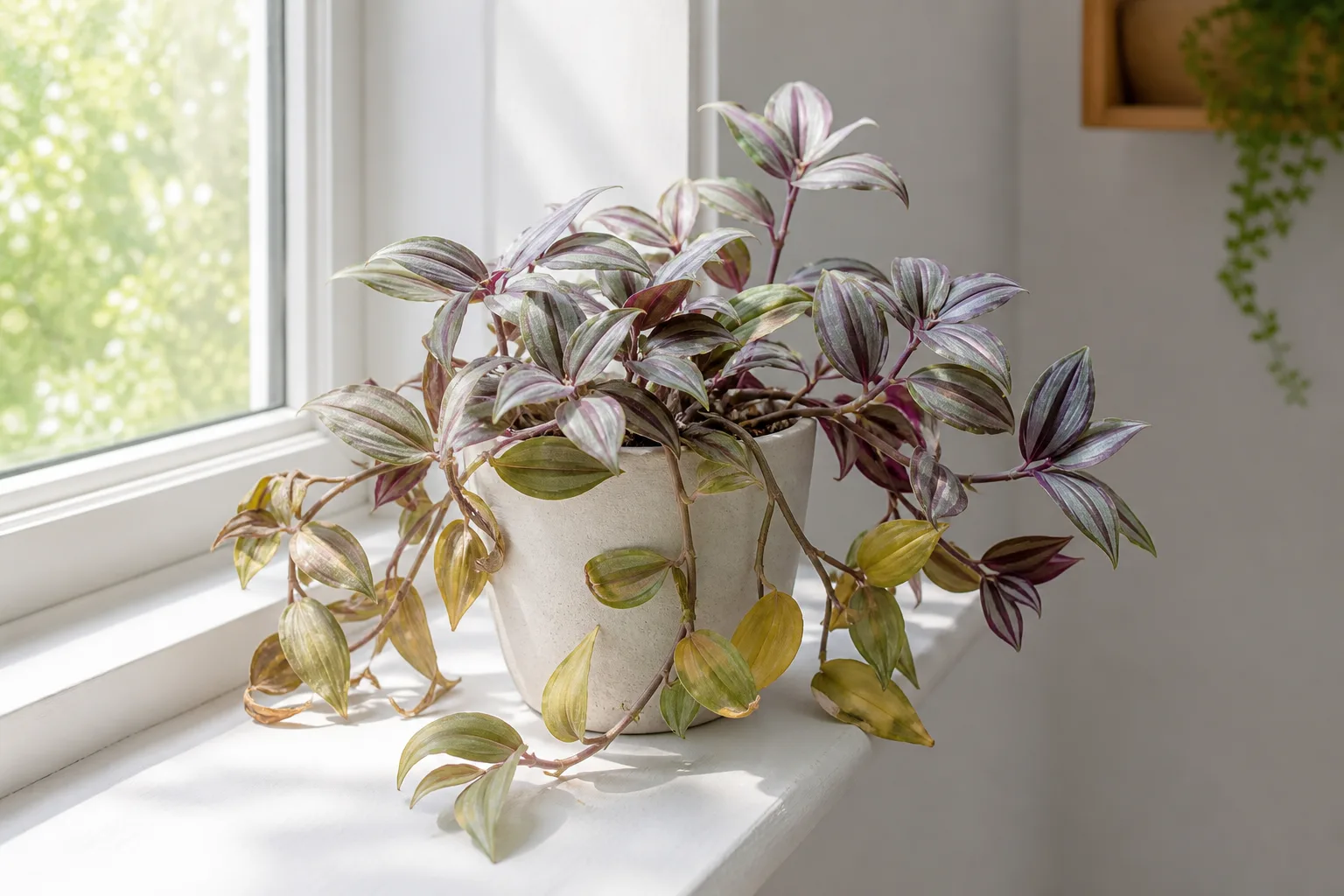
Yellow Leaves on Tradescantia Zebrina: Causes, Checks & Fixes
This guide covers yellow leaves on Tradescantia Zebrina. See also the general Yellow Leaves guide, watering, and light pages for this plant.
Yellow Leaves on Tradescantia Zebrina: Causes, Checks & Fixes
Quick answer
Tradescantia Zebrina (Tradescantia zebrina, inch plant) shows stress through leaf color before it collapses. Healthy vines carry sharp silver, purple, and green stripes on fleshy leaves along trailing stems. Yellowing usually traces to water rhythm (too wet or too dry), insufficient light (whole plant fades and stretches), cold drafts, or normal aging of the lowest leaves-not a mysterious leaf disease.
This fast-growing trailing houseplant drinks quickly in bright windows and stalls in dim corners, so the same weekly watering that worked in summer can leave mix soggy in winter-or bone dry near a heating vent.
First step: lift the pot and probe the top inch of mix. A heavy, cool, wet pot with yellow lower leaves means stop watering and let the root zone dry. A light, dry pot with limp yellow foliage means one thorough soak until water drains. If soil moisture is normal but stripes have faded to dull yellow-green and stems stretch, move to brighter indirect light before changing anything else.
What yellow leaves look like on Tradescantia Zebrina
Zebrina announces trouble through pattern and placement, not one random spot.
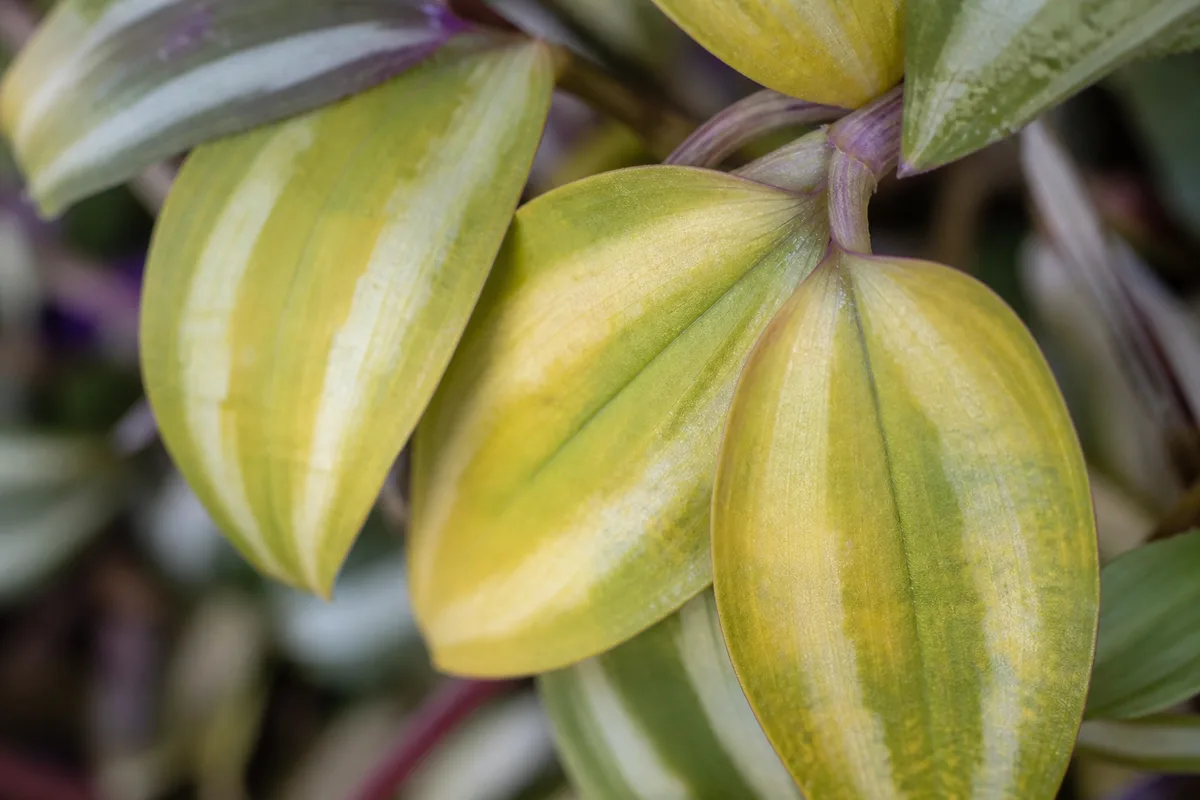
Yellow Leaves symptoms on Tradescantia Zebrina - compare with healthy tissue on the same plant.
Overwatering pattern (most common indoors):
- Yellow lower leaves while mix stays damp one inch down
- Limp, soft stems at nodes near the soil line despite moisture
- Faded stripes on affected leaves-silver-purple bands wash to flat yellow-green
- Sour smell from drain holes or surface algae on wet peat
- Fungus gnats hovering when soil never dries-see fungus gnats and overwatering
Underwatering pattern:
- Crisp yellow or brown leaves on a very light pot
- Dry mix pulled away from pot walls; water runs down the gap without soaking roots
- Thin, wrinkled leaf segments that feel papery
- Recovery within hours after a deep soak if stems are still firm
Low-light pattern:
- Whole vine pale yellow-green, not just bottom leaves
- Long gaps between leaves (etiolation) as stems reach for windows
- Smaller new segments with weak stripe contrast
- Soil stays wet longer because the plant uses less water-often pairs with overwatering in the same dim spot. See not enough light and leggy growth
Cold draft pattern:
- Sudden yellowing on outer leaves nearest AC vents, frequently opened doors, or cold winter glass
- Often reddish-purple stress tint before full yellow on zebrina cultivars
- Affects one side of the trailing basket first
Normal aging:
- One or two oldest leaves at the base turn yellow and drop while new tip growth stays striped and firm
- No sour smell, no wet soil, no whole-vine fade
Why Tradescantia Zebrina gets yellow leaves
Fast growth masks watering mistakes. Zebrina is a rapid grower in bright filtered light that can look fine until root stress catches up. Trailing stems shade the pot surface in hanging baskets, so the top may look dry while the center stays wet-or the opposite.
Overwatering in cool, dim months. When light drops, transpiration slows but owners keep summer watering habits. Soggy soil deprives roots of oxygen and yellows lower leaves first-the classic progression toward root rot.
Underwatering in hot, sunny windows. Zebrina in direct afternoon sun or near heat vents can dry a small pot in two to three days. Repeated shallow sips never rehydrate a shrunken peat ball, so leaves yellow from the bottom up while you think you watered “often enough.”
Stripe fade from low light. Variegation and stripe contrast need strong indirect light. In deep shade the plant produces more chlorophyll, which reads as yellow-green wash across the whole vine-not isolated bottom leaves.
Cold sensitivity. Tradescantia species are tropical and frost-tender. Brief exposure below 10°C (50°F) can yellow outer segments overnight.
How to confirm the cause
Work through these checks in order-pot weight beats guessing from leaf photos.
- Pot weight and moisture at one inch - Heavy and damp after several days without watering strongly suggests overwatering. Light and dusty suggests underwatering.
- Stripe check on newest growth - Vivid bands on fresh tip segments mean the core issue may be isolated bottom-leaf aging. Dull wash on new growth points to light or chronic water stress.
- Stem firmness at nodes - Soft, blackening nodes on wet mix escalate toward rot. Firm green stems support a simpler water or light fix.
- Light at the leaf surface - Stand where the basket hangs at midday. Weak or no shadow means insufficient light even if the room feels bright.
- Draft map - Note AC vents, exterior doors, and single-pane winter glass within three feet of foliage.
- Pest scan - Spider mites cause stippling and webbing, not solid yellow leaves. Check undersides before spraying.
| Pattern | Pot weight | Soil at 1 inch | Newest stripes | Likely cause |
|---|---|---|---|---|
| Lower yellow, limp | Heavy | Wet, cool | Fading | Overwatering |
| Crisp yellow, limp | Light | Dry, shrunken | May be vivid | Underwatering |
| Whole vine pale | Medium | Stays damp weeks | Dull, stretch | Low light + slow dry-down |
| One-sided yellow | Normal | Normal | Mixed | Cold draft |
| 1–2 bottom leaves | Normal | Normal on schedule | Vivid tips | Normal aging |
First fix for Tradescantia Zebrina
Match your first action to the pot check-not a bundle of fixes.
- Wet heavy pot: Stop watering until the top inch is dry. Empty saucers. Do not fertilize or repot until stems firm and yellowing stops spreading.
- Light dry pot: Water deeply until runoff, drain fully, then wait until the top inch dries before the next drink.
- Normal moisture but faded stripes: Move to bright indirect light over one week. See the light guide.
Make one targeted correction first. Stacking repot, prune, feed, and pesticide on the same day hides what actually helped.
Step-by-step recovery
Overwatering recovery
- Skip watering until the top inch dries-often five to ten days indoors.
- Remove standing saucer water and ensure drain holes are open.
- Trim fully yellow mushy leaves; they will not recover.
- If stems soften or mix smells sour, unpot and inspect roots-trim mush, repot into fresh airy mix. See root rot.
- Resume watering only when the top inch is dry per the watering guide.
Underwatering recovery
- Soak the root ball until water runs from holes; repeat once if mix was hydrophobic and water ran down the sides.
- Trim fully crisp yellow leaves.
- Move out of harsh direct sun until turgor returns-usually 24–48 hours.
Low-light recovery
- Relocate to an east window or filtered south/west exposure.
- Reduce watering frequency to match slower growth in the brighter spot.
- Pinch leggy tips after two weeks of improved light to encourage bushy new striped growth.
Recovery timeline
- Underwatering: Perk-up within hours; new striped segments in one to two weeks.
- Overwatering (mild): Yellowing stops spreading in one to two weeks once dry-down holds; new growth in three to four weeks.
- Low light: Stripe contrast improves on new leaves in three to six weeks; old stretched sections stay pale unless pruned.
- Normal aging: Single bottom leaf drops; no further spread.
Judge success by firm stems and vivid new stripes-not by old yellow tissue re-greening.
Lookalike symptoms
- Brown tips - Usually dry air or fluoride, not whole-leaf yellow.
- Wilting - Can mean over- or underwatering; always pair with pot weight.
- Nutrient deficiency - Rare on zebrina in fresh mix; confirm water and light first before feeding a stressed vine.
Mistakes to avoid
- Do not keep watering because leaves look “thirsty” on wet soil-that accelerates rot.
- Do not move from deep shade to harsh afternoon sun in one step-sunburn adds brown patches on yellowing leaves.
- Do not fertilize yellow vines before fixing water and light-salts stress failing roots.
- Do not assume every yellow leaf needs Tradescantia Zebrina repotting guide; many cases resolve with dry-down or one deep soak.
How to prevent yellow leaves next time
Water when the top inch of mix dries-not on a fixed calendar. Give bright indirect light so stripes stay sharp and the plant uses water predictably. Keep temperatures above 13°C (55°F) at night. Pinch trailing tips during active growth to renew lower foliage. Inspect weekly during watering so one yellow bottom leaf does not become a wet-root crisis.
For full species context, see the Tradescantia Zebrina overview.
When to use this page vs other Tradescantia Zebrina guides
- Tradescantia Zebrina watering guide - Use for routine moisture checks before assuming yellow leaves is the main issue.
- Tradescantia Zebrina problems hub - Browse all 2 common issues on this species.