Wilting on Tradescantia Zebrina: Causes, Checks & Fixes
Quick answer
Wilting on Tradescantia zebrina means trailing stems lost turgor-usually because roots are too dry or too wet to move water. First step: stick your finger one inch into the mix; water thoroughly if dry, stop watering and inspect roots if wet.
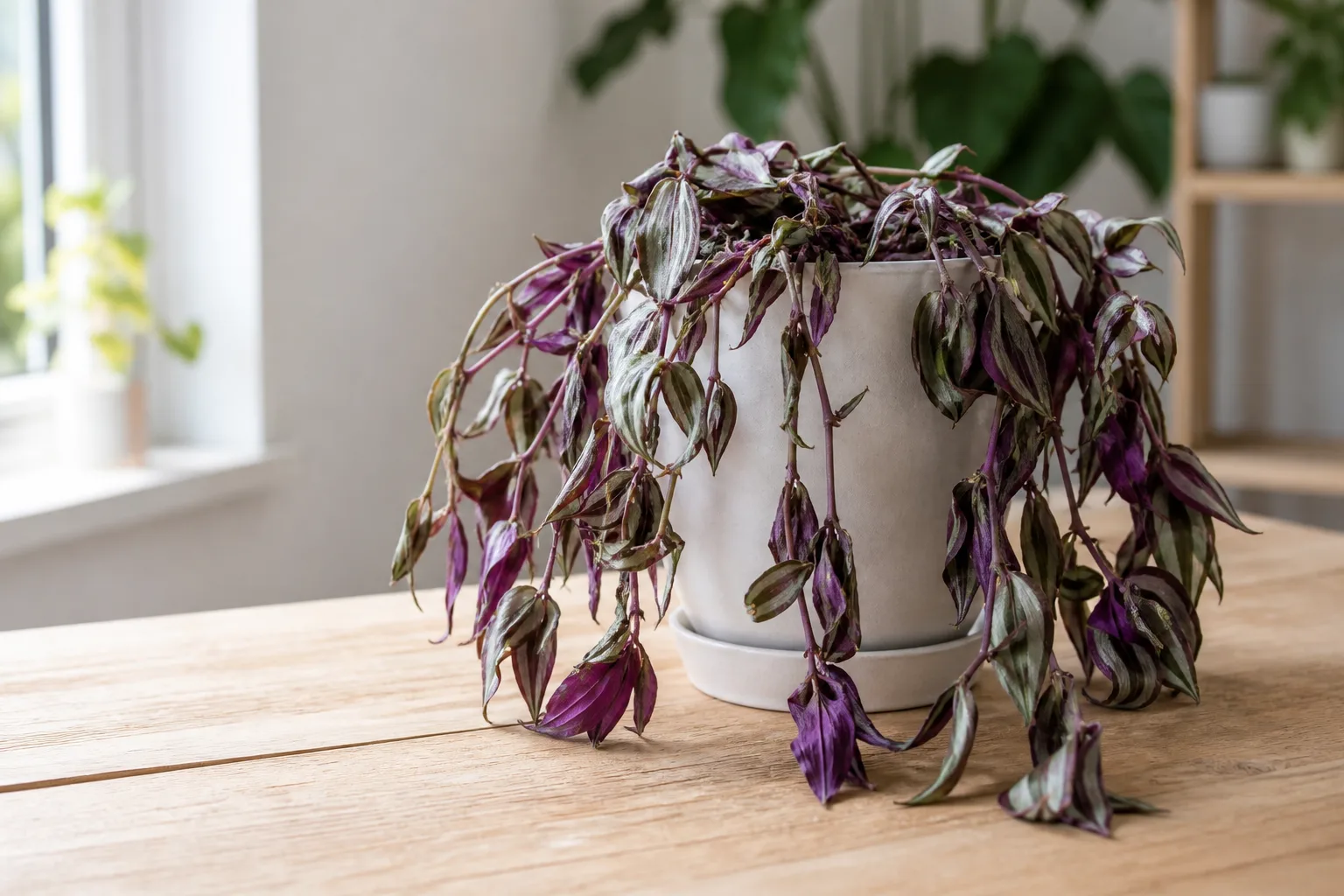
Wilting on Tradescantia Zebrina: Causes, Checks & Fixes
This guide covers wilting on Tradescantia Zebrina. See also the general Wilting guide, watering, and light pages for this plant.
Wilting on Tradescantia Zebrina: Causes, Checks & Fixes
Quick answer
Wilting on Tradescantia zebrina-the inch plant or wandering dude-means the trailing stems lost turgor, the internal water pressure that keeps leaves stiff. The same limp collapse can come from opposite problems: bone-dry mix, waterlogged rotting roots, heat overload, or a basket too full of roots to drink evenly.
First step: stick your finger one inch into the mix before you add water. Dry at that depth → underwatering is likely; water thoroughly until drainage runs free. Wet at that depth with limp vines → stop watering and inspect roots-damaged roots cannot move water upward, so more water worsens collapse.
Zebrina has succulent stems that store some moisture, so mild thirst may not show until the whole trailing mass sags at once. That delayed signal makes the one-inch moisture check essential-not a guess from how limp the leaves look.
What wilting looks like on Tradescantia Zebrina
Healthy zebrina vines feel springy. Iridescent silver-green leaves with purple undersides hold their angle off the stem. Wilting removes that stiffness across long trailing segments.
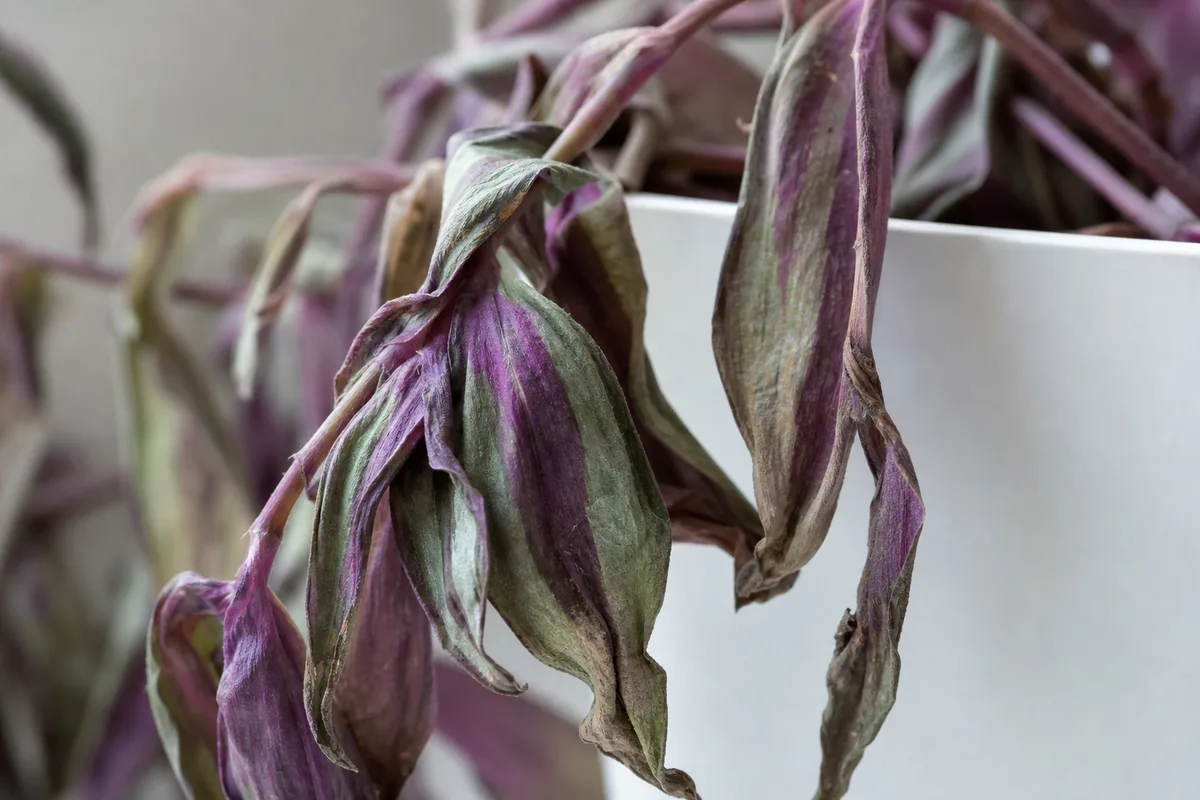
Wilting symptoms on Tradescantia Zebrina - compare with healthy tissue on the same plant.
Dry-soil wilt (underwatering):
- Leaves feel thin or slightly papery; purple stripe contrast dulls before full collapse
- Mix is dry one inch down; pot feels light when lifted
- Nodes along stems may look slightly shriveled on prolonged drought
- Trailing tips droop first, then the whole basket sags
- Vines often perk noticeably within hours after a deep drink if roots are still healthy
Wet-soil wilt (overwatering / root rot):
- Leaves limp and may yellow, often starting on lower foliage
- Mix stays moist or soggy at depth; pot feels heavy
- Sour or musty smell when you disturb the surface or unpot
- Stems may soften at the soil line on advanced cases
- The paradox: plant looks thirsty while soil is wet
Heat-stress wilt:
- Drooping during the warmest part of the day on otherwise moist soil
- Vines on the side nearest a hot window or heating vent collapse first
- Often recovers overnight or by morning once temperature stabilizes
Root-bound or hydrophobic wilt:
- Chronic limpness even after normal watering
- Water runs through quickly without fully rewetting the center of the root ball
- Roots circling the pot or visible through drainage holes
Zebrina communicates fast. A missed watering in a bright hanging basket can wilt the entire trailing length in a day. Persistent wilt across multiple vines without a clear moisture match needs a deeper look at roots, pot size, and placement. For slower tip-first sag without sudden collapse, see the drooping leaves guide.
Why Tradescantia Zebrina wilts
Tradescantia zebrina is a fast-growing trailing vine in the Commelinaceae family. Missouri Botanical Garden describes it as preferring consistently moist but well-drained soil during active growth with reduced watering in fall and winter. Those fleshy stems hold some reserve water, which delays visible wilt-but once depleted, the whole plant collapses quickly.
Underwatering dries fine roots and deflates leaf cells. Hanging baskets and small pots dry fastest because exposed mix and limited soil volume lose water quickly in bright light. NC State Extension notes that soil should feel mildly dry before the next watering-waiting until every vine is limp means you are already past the early signal.
Overwatering and root rot produce the same visible wilt through a different mechanism. Saturated mix drives out oxygen; roots decline and cannot transport water. Owners see limp leaves and water again-accelerating rot. Overwatering is the most common way indoor plants are killed, and zebrina in dense peat-heavy mix is especially vulnerable.
Heat and draft stress increase water loss from leaves faster than roots can replace it. A plant on a sunny sill with wet roots may wilt from heat while soil stays damp.
Tradescantia Zebrina repotting guide shock temporarily reduces root function. Excess water right after repotting adds stress on roots still settling into fresh mix.
Pot-bound roots leave too little soil to hold water for the whole root mass. Vines collapse between waterings even when you think you watered enough.
How to confirm the cause
Work through these checks in order-do not skip the moisture test:
- Soil moisture at one inch - Push your finger or a dry skewer one inch into the mix. Dry = suspect drought; wet = suspect root failure or heat on saturated mix. Full rhythm: Tradescantia zebrina watering guide.
- Pot weight - Lift the container. Light with limp stems fits underwatering. Heavy with limp stems fits waterlogging or root rot.
- Stem firmness - Press vines at the soil line. Firm stems with dry soil point to thirst. Soft, darkening bases on wet soil point to rot.
- Smell and surface - Sour odor, algae, or white mold on wet mix supports chronic saturation.
- Time pattern - Afternoon-only droop on moist soil suggests heat stress. All-day wilt on dry soil suggests drought. All-day wilt on wet soil suggests roots.
- Recent events - Repotting within two weeks, a heat wave, or a missed watering week narrows the cause quickly.
- Root spot-check if mismatch persists - Slide the plant out. Healthy zebrina roots are firm, white or tan. Brown mush that collapses between fingers confirms rot. Dry, brittle roots in dusty mix confirm drought damage.
Wilting is not always a call for water. Root injury from too much water decreases uptake; watering wet, wilted zebrina can make the problem worse.
First fix for Tradescantia Zebrina
Check soil moisture at one inch depth-then act on what you find.
- If dry: Water thoroughly until water runs from drainage holes. Empty the saucer within 30 minutes. Do not give repeated shallow sprinkles; one deep drink rewets the root ball.
- If wet: Do not water. Move to Tradescantia Zebrina light guide to speed drying, empty saucer water, and unpot if stems are soft or smell is sour.
That single diagnostic step prevents the most common mistake: watering a rotting inch plant because it looks thirsty.
Do not fertilize, mist heavily, or repot on day one unless you have confirmed mushy roots or a clearly hydrophobic dry core. Stacking fixes on a stressed vine adds salt and disturbance without solving the water pathway.
Step-by-step recovery
If underwatering is confirmed
- Water deeply once; for very dry mix, water, wait half an hour, water again-or bottom-soak until the surface moistens, then drain fully.
- Trim only leaves that stay crispy and brown after 48 hours; green limp tissue often recovers turgor.
- Adjust schedule: water when the top inch is dry, not on a calendar.
- If the plant was in harsh sun, move to bright filtered light-recovery is faster without extra heat load.
See the underwatering guide if drought has been repeated or lower leaves are dropping.
If overwatering or root rot is confirmed
- Stop watering immediately.
- Unpot, rinse roots, and trim all brown mushy tissue back to firm white or tan roots.
- Repot into airy, well-draining mix with perlite in a pot with drainage holes.
- Withhold water for about five to seven days unless the remaining root mass is very small-then give one light drink.
- Remove yellow leaves that continue to soften; they will not re-firm.
- If most roots are gone, propagate healthy stem cuttings with nodes as backup-zebrina roots readily from softwood cuttings.
Full trimming and repotting detail: root rot on Tradescantia zebrina. Early wet cycles without widespread decay: overwatering guide.
If heat stress is confirmed
- Move the plant away from hot windows, radiators, and heating vents.
- Ensure soil moisture is even-not bone dry, not soggy.
- Filter intense afternoon sun with a sheer curtain.
- Expect recovery within 24–48 hours once heat load drops.
If root-bound
- Repot into a container only one size larger with fresh well-draining mix.
- Tease or trim circling roots lightly so they contact new mix.
- Water once after repotting, then return to the top-inch-dry rule-do not soak repeatedly.
Recovery timeline
Underwatering: Noticeable perk within 6–24 hours after a thorough drink on healthy roots; severely dehydrated plants may need a full day for turgor to return across long trailing stems.
Overwatering / early rot: Days to weeks. Judge by firm stems and new node activity, not old yellow leaves.
Heat stress: Often overnight to 48 hours once placement stabilizes.
Repotting wilt: One to three weeks for vines to feel firm again; hold fertilizer until new growth looks normal.
Collapsed leaves rarely become glossy again-they drop or stay limp while new leaves at stem tips tell you recovery is real.
Lookalike symptoms to rule out
Drooping leaves without sudden collapse often mean the same water mismatch but develop more slowly. Tip-first sag on one side, chronic limpness, or dull stripe contrast without whole-basket collapse fits the drooping leaves page better than acute wilt.
Yellow leaves without wilt can mean chronic overwatering or low light-not always acute collapse. Check moisture before treating wilt.
Spider mite damage shows stippling, webbing, and fine specks on leaf undersides. Wilt from mites often comes with dry soil and heat-rinse and inspect before assuming thirst alone. See spider mites on zebrina.
Mealybugs cluster in stem joints and leaf axils; sticky residue and cottony patches point to sap loss, not water alone.
Cold damage after exposure below comfortable room range blackens leaf patches. Chilled wet roots wilt and discolor faster than drought alone.
Mistakes to avoid
Do not water every wilt without checking soil-wet-soil wilt needs drying and root inspection, not another drink.
Do not leave saucers full. Standing water keeps the bottom anaerobic and mimics overwatering wilt.
Do not move a wilted plant into direct sun hoping to “dry it out.” Scorched leaves add stress on already failing roots.
Do not fertilize collapsed vines. Salt stress on damaged roots slows recovery.
Do not repot healthy dry wilt on day one-a deep watering usually fixes simple thirst.
Do not assume hanging baskets need the same volume as tabletop pots. Elevated baskets dry faster in bright light; wilt there often means underwatering.
Handle stressed plants carefully-zebrina sap can irritate skin. The plant is also toxic to cats and dogs if knocked down while wilting.
Tradescantia Zebrina care cross-check
Wilting often exposes a mismatch between your routine and the plant’s current environment:
- Light - Bright filtered light keeps variegation vivid and increases water use. Dim rooms need less frequent watering, not the same summer schedule.
- Mix - Dense old peat holds water and invites rot wilt; airy mix with perlite drains faster.
- Pot size - Oversized pots stay wet at the center; undersized root-bound pots wilt between drinks.
- Season - Short winter days slow growth and water use; calendar watering in January causes wet-soil wilt.
- Placement - Drafts and vents dry leaves while soil stays wet-a dual stress pattern on many office inch plants.
Full species context: Tradescantia zebrina overview.
How to prevent wilting on zebrina
Water when the top inch of mix is dry, using finger, weight, or a skewer at root depth-not the day of the week.
Use pots with drainage holes and empty saucers after every watering.
Repot when roots circle the pot or emerge from holes-before chronic wilt between drinks becomes normal.
Keep trailing baskets away from AC vents, radiators, and hot glass.
In bright rooms, check hanging baskets every few days in summer; in low light, stretch intervals and verify depth moisture before assuming thirst.
Refresh hydrophobic mix or repot when water channels down the sides without wetting the root core.
When to worry
Treat as urgent when:
- Vines wilt on soggy soil with sour smell or soft stems at the base
- Blackening climbs from soil line up the vine
- The plant does not perk within 24 hours after confirmed dry-soil watering
- More than half the roots are mushy on inspection
Less urgent but worth fixing soon: mild afternoon droop on moist soil, single-basket wilt on a dry hanging pot, or wilt right after repotting with firm stems and no rot smell.
Conclusion
Wilting zebrina is a diagnostic signal, not an automatic command to water. Moisture at one inch depth, pot weight, and stem firmness tell you whether to drink, dry, or repot. Acting on that check first saves plants from rot and rescues thirsty vines before crispy damage spreads. Match watering to how fast your mix actually dries in your light-not to how limp the trailing stems look at first glance.
When to use this page vs other Tradescantia Zebrina guides
- Tradescantia Zebrina watering guide - Use for routine moisture checks before assuming wilting is the main issue.
- Tradescantia Zebrina problems hub - Browse all 2 common issues on this species.