Low Humidity on Tradescantia Zebrina: Causes, Checks & Fixes
Quick answer
Tradescantia zebrina tolerates ordinary indoor humidity (40–60% RH) but crispens near heating vents when air drops below ~30%. First step: move the basket away from vents and run a humidifier until RH at leaf height holds 40–60%.
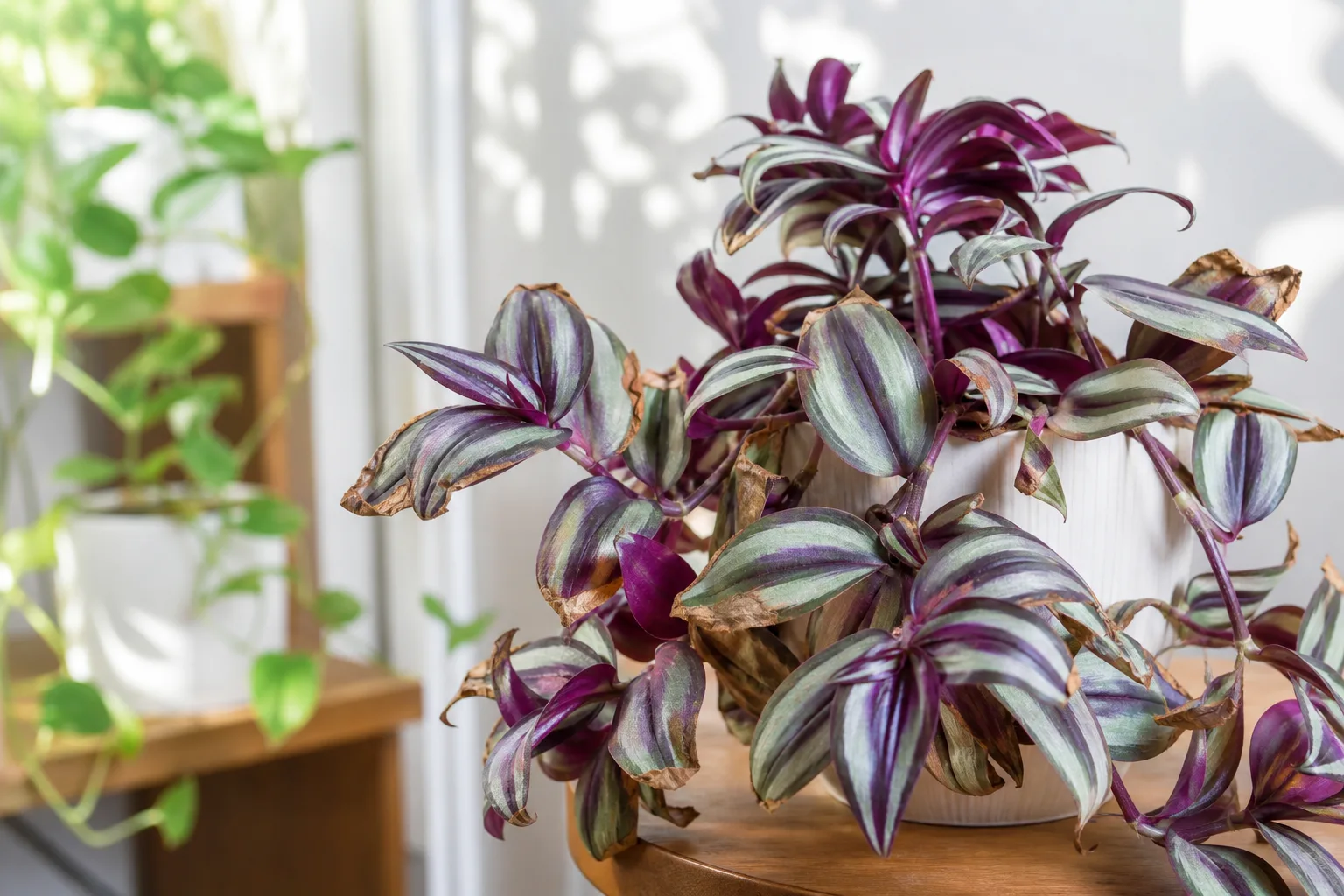
Low Humidity on Tradescantia Zebrina: Causes, Checks & Fixes
This guide covers low humidity on Tradescantia Zebrina. See also the general Low Humidity guide, watering, and light pages for this plant.
Low Humidity on Tradescantia Zebrina: Causes, Checks & Fixes
Quick answer
Tradescantia zebrina is more forgiving about humidity than prayer plants or nerve plants, but it is not immune to dry indoor air. NC State Extension notes that zebrina tolerates average home humidity as well as higher levels, which is why many growers never add a humidifier. Problems appear when winter heating pulls relative humidity below 30 percent and hot air blasts the thin leaf margins on trailing stems nearest a vent or radiator.
First step: move the basket or pot at least 60 cm (2 feet) away from heating vents and run a cool-mist or ultrasonic humidifier until RH at leaf height holds 40–60% for several days. Do not increase watering to replace lost air moisture-zebrina’s semi-succulent stems store some water, and soggy mix causes faster decline than dry air alone.
Judge progress by new growth along the stems, not by expecting old brown edges to green up again.
Low humidity vs. brown tips vs. spider mites - which guide to use
Zebrina owners often land on the wrong page because crispy leaf edges can mean several things:
| Your situation | Start here |
|---|---|
| Winter heating on, damage worst on leaves facing a vent, hygrometer below 30% | This low-humidity guide |
| Brown margins year-round, watering rhythm inconsistent, or tips persist at 45%+ RH | Brown tips on Tradescantia zebrina |
| Fine webbing, pale stippling on leaf undersides, tiny moving specks | Spider mites on Tradescantia zebrina |
| Limp stems, very light pot, soil pulled from pot sides | Wilting or underwatering |
Low humidity and brown tips share symptoms but differ in trigger and fix order. This page assumes dry air is the primary suspect-not thirst, salt burn, or pests alone. For full species context, see the Tradescantia zebrina overview Temperature and Humidity section.
What low humidity looks like on Tradescantia Zebrina
Humidity stress on inch plant usually starts at leaf margins, not the center of the blade. Watch for these patterns:
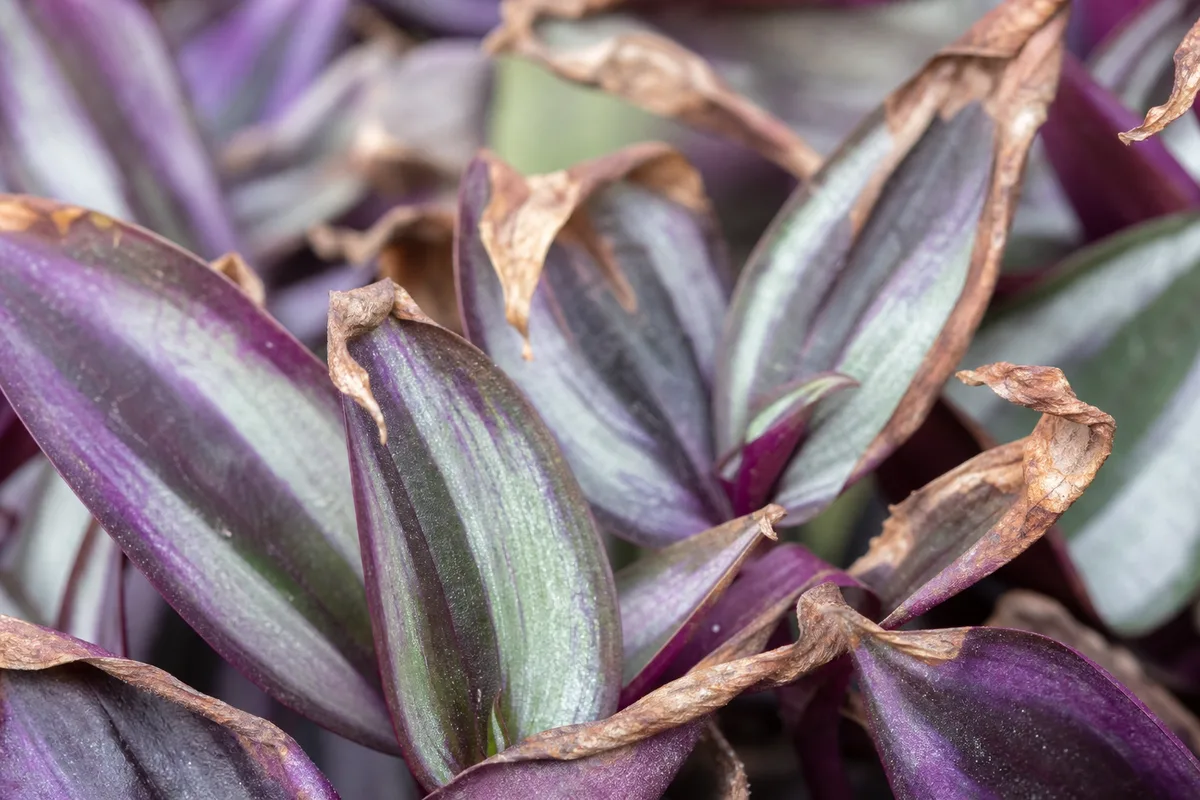
Low Humidity symptoms on Tradescantia Zebrina - compare with healthy tissue on the same plant.
Early signs near heat vents and dry winter air:
- Dry, papery brown tips or edges while the purple underside and silver-striped center stay mostly green
- Damage clustered on the side of the basket or shelf facing a radiator, floor vent, or fireplace
- Slight leaf curl inward on the most exposed stems
- Newest leaves at trailing tips opening with small tan margins already present
- Soil at the top inch appropriately dry while edges crisp-moisture rhythm has not obviously failed
Progressed stress and mite crossover below ~30% RH:
- Brown margins spreading to multiple leaves on the same exposed side
- Fine stippling or webbing on leaf undersides as spider mites exploit warm, dry conditions
- Slowed tip growth during an otherwise bright, warm season
- Entire trailing sections looking dull while inner growth near the pot still holds color
Because zebrina cascades from hanging baskets, outer stems often crisp first while growth near the crown looks fine-a strong clue that localized dry air, not whole-plant root failure, is the trigger. Damage that appears uniformly on every leaf regardless of placement suggests look further at watering inconsistency or fertilizer salt burn.
Why zebrina handles ordinary humidity but still crispens near dry zones
Tradescantia zebrina belongs to the Commelinaceae family-trailing herbs with fleshy stems that store some moisture. That physiology lets zebrina tolerate missed water and average indoor humidity better than thin-leaved tropicals like Maranta or Calathea. The trade-off is that leaf margins are still thin and lose water fast when hot, dry air blows across them.
Several traits explain why dry air matters for zebrina even though it is not a “humidity plant” in the prayer-plant sense:
- Stem water storage - Fleshy stems buffer short dry spells, so edge damage may lag a week behind the start of heating season. Zebrina fails slower than calathea but still crispens if vent air desiccates foliage daily.
- Trailing habit - Long stems hang in the warmest, driest air layer near ceiling vents and above radiators, far from the slightly damper zone at soil level.
- Winter indoor climate - Forced-air heating can drop room humidity below 30 percent while the thermostat reads comfortable. Zebrina near a vent experiences that dry blast directly on leaf tissue.
- Spider mite synergy - NC State Extension lists spider mites among pests to monitor on zebrina. Colorado State Extension notes that dry conditions greatly favor spider mites because their natural enemies need more humid air. Fixing humidity alone may not clear an established colony, but dry air often starts the problem.
Placement mistakes compound the issue. A hanging basket directly under a ceiling vent, on a radiator ledge, or beside a drafty winter window creates a microclimate far drier than the rest of the room. AC vents in summer produce the same edge-crisping pattern on the exposed side.
How to confirm low humidity is the cause
Work through these checks before changing watering, fertilizer, or soil:
- Hygrometer reading - Place a digital hygrometer at leaf height beside the trailing stems for 24 hours. Readings consistently below 30% near the plant support low humidity; 40–60% suggests another cause unless damage clearly tracks a vent microclimate.
- Vent and radiator proximity - Note whether crisp leaves face a heat source. One-sided damage on a hanging basket is one of the strongest humidity clues on zebrina.
- Soil moisture at top inch - Stick a finger into the top 2.5 cm (1 inch) of mix. Appropriately dry soil plus crispy edges points to air stress. Bone-dry soil with limp stems suggests underwatering. Wet, heavy soil with yellowing leaves suggests overwatering.
- Pot weight and roots - Lift the pot. Moderate weight with firm stems at the base rules out advanced root rot. Mushy stems at soil level or sour smell mean waterlogged mix-not humidity alone.
- Seasonal timing - Did symptoms appear after turning on heat, moving the basket near a window, or placing it under a new AC vent? Winter onset strongly favors environmental dryness.
- Pest check - Inspect undersides with a hand lens. Stippling plus webbing means treat spider mites while you raise humidity.
If RH at leaf height stays above 40% and edges still crisp, check light exposure for sun scorch on the upper surface, or switch to the brown tips guide for watering inconsistency and salt buildup.
First fix for Tradescantia Zebrina
Move the plant off heat vents and run a humidifier within 1–2 metres until RH at leaf height holds 40–60% for several days.
Choose a cool-mist or ultrasonic unit sized for the room. A small humidifier beside a plant corner often suffices for one trailing basket. Run it daily during heating season rather than misting occasionally-brief misting raises humidity only for a short time and can leave crowded zebrina stems wet overnight, which invites fungal spotting.
While the humidifier runs:
- Redirect floor vents with a deflector or relocate the basket at least 60 cm from radiators and fireplaces.
- Keep your normal watering rhythm-water when the top inch is dry per the watering guide. Do not pour extra water to “replace” lost air moisture.
- Group zebrina with other houseplants if space allows; shared transpiration creates a slightly damper microclimate.
Secondary options if a humidifier is not available:
- Pebble tray - Set the pot on pebbles in a water-filled tray so the pot sits above-not in-the water. Illinois Extension notes this raises local humidity modestly; it helps marginally but rarely fixes whole-room winter dryness on its own.
- Kitchen or bathroom placement - Only if bright indirect light is still adequate; zebrina fades in dim corners.
Check the hygrometer after 48–72 hours. Stable humidity is the signal to proceed; if edges keep spreading despite 40%+ RH at the plant, scout for mites or reassess watering before stacking more fixes.
Recovery timeline and what improvement looks like
Humidity fixes work gradually on a fast-growing trailer. Expect:
- 3–7 days - Edge browning stops spreading; leaves feel less papery on exposed stems.
- 2–4 weeks - New tips emerge with cleaner margins; trailing growth resumes at normal speed.
- 4–8 weeks - Several fresh sections replace the worst-damaged trailing stems on actively growing plants.
Old brown tissue will not green up again-judge success by new growth along nodes, not repaired edges. Zebrina roots easily from tips; if lower stems went bare while you fixed humidity, pinch healthy tips and root them in the same pot per the propagation guide.
Signs the problem is worsening:
- Stem bases softening while soil stays wet
- Multiple leaves yellowing from the crown down
- Mite webbing spreading despite humidifier use
- New leaves emerging mostly brown before they unfurl
Those patterns mean escalate beyond humidity-check root health, cold drafts below 13°C (55°F), or heavy pest load.
Lookalike symptoms to rule out
| What you see | More likely cause | Quick differentiator |
|---|---|---|
| Crispy tips on vent-facing leaves, firm roots, dry top inch | Low humidity | Hygrometer below 30% or clear vent proximity; winter timing |
| Crispy tips, light pot, limp stems | Underwatering | Soil pulls from pot sides; whole plant wilts before edges crisp |
| Yellow leaves, soggy soil, mushy stem bases | Overwatering / root rot | Sour smell; soft stems at soil line |
| Tip burn at stable 45%+ RH, older leaves worst | Salt / fertilizer burn | Persists after humidifier; see brown tips guide |
| Silver stippling, fine webbing on undersides | Spider mites | Moving specks visible; worsens in dry air |
| Bleached or brown patches on sun-facing leaf tops | Sun scorch | Damage on upper surface in direct sun, not just margins |
Low humidity and underwatering can overlap in dry homes-confirm both hygrometer reading and soil moisture before picking a fix.
Mistakes to avoid
- Overwatering to compensate for dry air - Zebrina’s fleshy stems rot in soggy mix faster than they recover from crisp edges. Wet soil plus dry air is a common winter double mistake.
- Relying on misting alone - Spritzes last minutes on crowded trailing stems and can encourage leaf spotting if foliage stays wet.
- Using only a pebble tray in a heated room - Helpful as a supplement, not a substitute for a humidifier when whole-room RH stays below 30%.
- Fertilizing stressed foliage - Hold feed until new growth opens cleanly for two to three weeks. Salt buildup mimics drought stress on margins.
- Ignoring spider mites - Dry air invites mites; raising humidity helps prevention but may not clear an established infestation.
- Stacking Tradescantia Zebrina repotting guide, pruning, and pesticide on day one - Change one variable first so you know what helped.
Tradescantia zebrina care cross-check
Low humidity rarely exists in isolation. Confirm these basics stay steady while you humidify:
- Light - Bright indirect light keeps purple-and-silver color vivid; see the light guide. Too much direct sun heats and dries leaves on the exposed side.
- Temperature - 65–75°F (18–24°C) during active growth; cold drafts below 55°F (13°C) yellow leaves independently of humidity.
- Water - Top inch dry before soaking; avoid wet crowns on freshly cut stems.
- Airflow - Gentle circulation is fine; avoid constant hot or cold blasts from vents.
Zebrina belongs with easy colorful trailers-not with humidity-demanding prayer plants. If your room holds 40–60% RH and the plant still struggles, the cause is usually light or watering, not air moisture.
How to prevent low humidity problems next winter
- Start humidifying before edges crisp - When heating season begins, run the humidifier proactively rather than reacting to brown tips.
- Track RH weekly at leaf height - A cheap hygrometer removes guesswork; act when readings stay below 30% near trailing stems.
- Group plants - Clustering zebrina with other houseplants shares transpired moisture in the same corner.
- Redirect vents - Deflect heat and AC away from hanging baskets and high shelves.
- Weekly underside checks in winter - Catch spider mites early when indoor air is driest.
- Avoid radiator ledges - Trailing baskets look great above a heater until margins crisp in a week.
Conclusion
Low humidity on Tradescantia zebrina is a real but secondary concern-ordinary indoor air suits this species until winter heating or vent placement dries the leaves that hang in the wrong microclimate. Move the plant off heat sources, confirm RH with a hygrometer, and run a humidifier to hold 40–60% at leaf height before you change watering. Judge recovery by clean new tips along the stems, not old edges turning green. If symptoms persist at adequate humidity, route to the brown tips or spider mites guides rather than stacking fixes blindly.
When to use this page vs other Tradescantia Zebrina guides
- Tradescantia Zebrina watering guide - Use for routine moisture checks before assuming low humidity is the main issue.
- Tradescantia Zebrina problems hub - Browse all 2 common issues on this species.
- Brown Tips on Tradescantia Zebrina - Different entry point when symptoms overlap with low humidity.