Underwatering on Tradescantia Zebrina: Causes, Checks &
Quick answer
Underwatering on Tradescantia Zebrina shows as limp trailing stems, faded purple-silver striping, and a light pot with bone-dry top inch. First step: water thoroughly at the sink until drainage runs free, then empty the saucer.
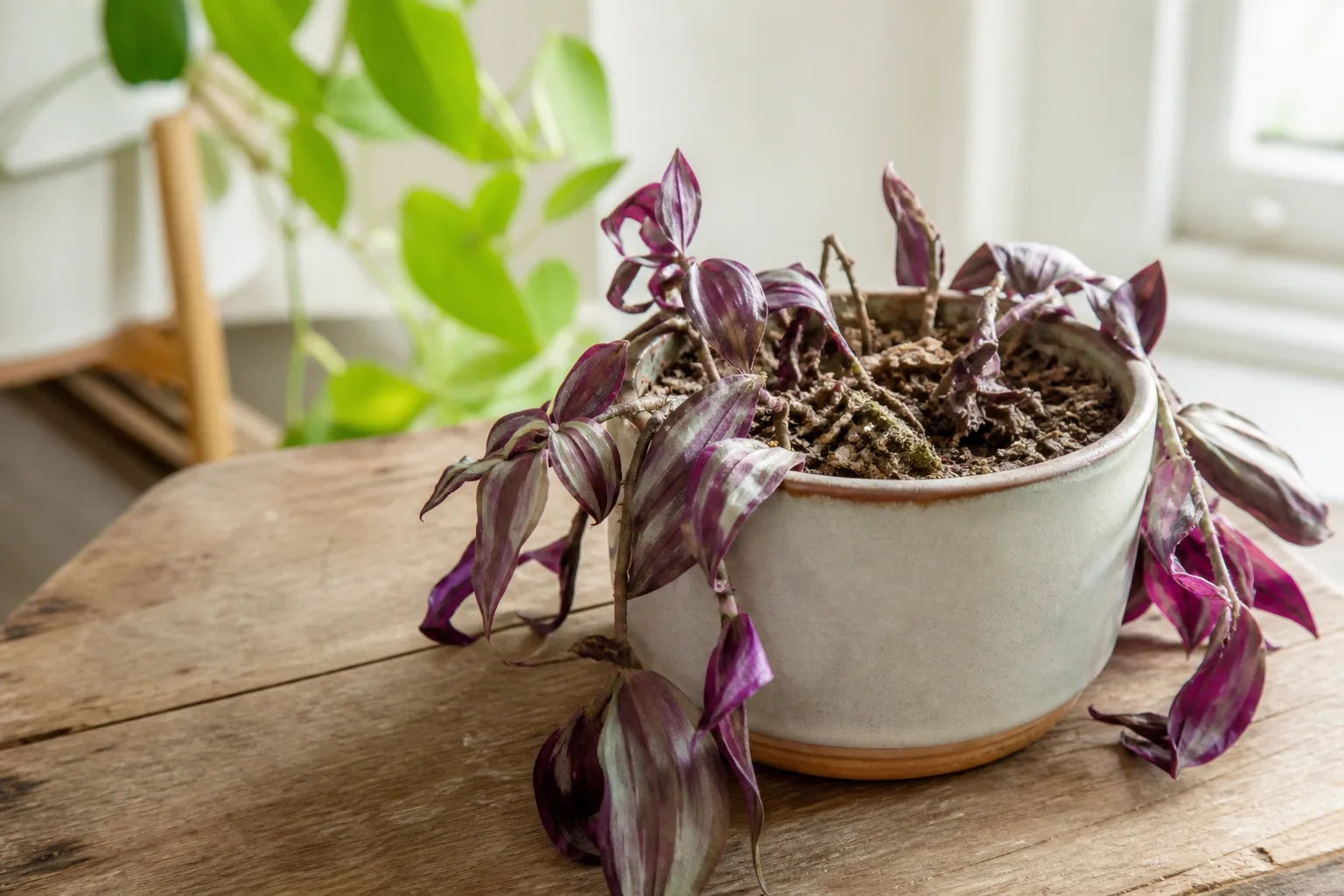
Underwatering on Tradescantia Zebrina: Causes, Checks & Fixes
This guide covers underwatering on Tradescantia Zebrina. See also the general Underwatering guide, watering, and light pages for this plant.
Underwatering on Tradescantia Zebrina: Causes, Checks & Fixes
Quick answer
Underwatering on Tradescantia Zebrina (Tradescantia zebrina) is a moisture deficit in the root zone, not a disease. Trailing purple-and-silver stems lose turgor, striping looks washed out, and the pot becomes noticeably light. Unlike rot, the top inch of mix is dry-not soggy-and stem bases stay firm rather than mushy.
First step: take the pot to a sink and water slowly until water runs freely from every drainage hole, then empty the saucer. Do not mist leaves, fertilize, or repot on day one. One deep soak confirms or rules out simple drought. Full watering rhythm: Tradescantia zebrina watering guide.
What underwatering looks like on Tradescantia Zebrina
Zebrina is a fast-growing trailing vine with fleshy stems and vivid purple-silver banding. When the root ball runs dry, the whole plant can look collapsed-which frightens new owners because the same species also wilts when roots are rotting in wet soil. Drought has its own visual pattern.
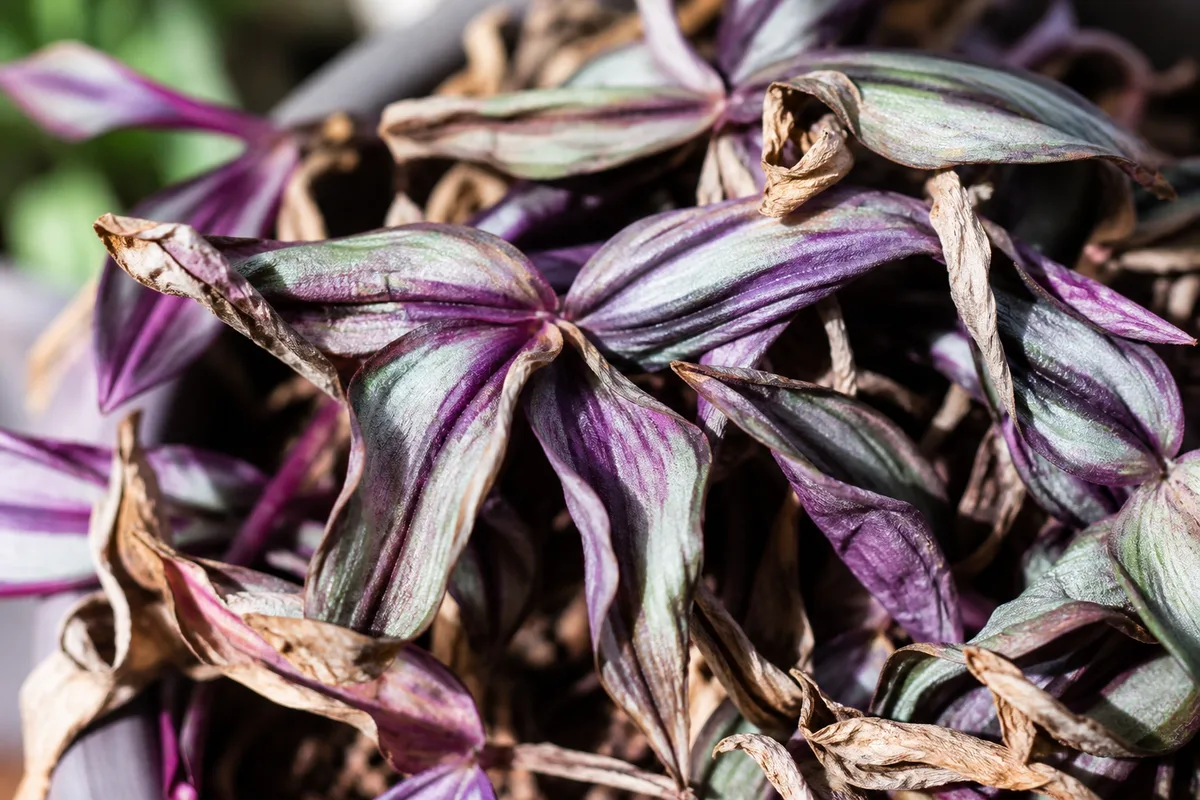
Underwatering symptoms on Tradescantia Zebrina - compare with healthy tissue on the same plant.
Early thirst:
- Trailing stems hang limply instead of holding their usual arch
- Purple and silver striping looks dull or grayed-out compared with well-hydrated growth
- Leaves feel less turgid; some curl slightly along the margins
- Pot feels unusually light when lifted or hefted from a hanging hook
- Top inch of mix is dry; a finger or dry skewer comes out clean
As drought continues:
- Crispy brown tips or margins on older leaves, especially after repeated bone-dry cycles
- Mix shrinks and pulls away from the pot wall; water runs down the gap without rewetting roots
- New node production slows; stems look thin and stretched with bare gaps at the crown
- Lower leaves yellow and drop after chronic neglect-not the same pattern as yellow lower leaves on wet soil
What underwatering is not: Limp stems on wet heavy soil, a sour smell from the drain hole, soft brown bases at the soil line, or widespread yellowing while mix stays damp point to overwatering or root rot-not thirst. Clemson HGIC notes that wilting is not always a signal to water; root injury from too much moisture reduces uptake and causes the same limp look.
Why Tradescantia Zebrina gets underwatered
Zebrina tolerates a missed drink better than chronic soggy soil, which makes underwatering easy to underestimate until an entire hanging basket collapses. Several species-specific factors accelerate dry-down.
Fast growth drinks steadily. Zebrina pushes new nodes weekly in bright indirect light. That vegetative pace pulls water through thin stems faster than slow-growing houseplants in the same window. It is not a succulent despite fleshy stems and short dry tolerance-repeated dust-dry cycles still stress fine roots and fade striping.
Calendar watering fails. Many growers water every Sunday regardless of season. Missouri Botanical Garden describes T. zebrina as preferring consistently moist but well-drained soil during the growing season, with reduced watering from fall to late winter. A zebrina in active July growth may need water every five to seven days; the same plant in a cool December room may need two to three weeks-but both schedules must follow a dry top inch, not the date.
Bright light and warm air shorten intervals. Zebrina color stays vivid in bright indirect light; those same conditions increase transpiration. A south- or west-facing shelf, grow-light setup, or spot above a warm register dries small pots quickly. RHS Tradescantia guidance ties vivid foliage to good light-which also means faster water use.
Terracotta, hanging baskets, and cachepots. Unglazed clay wicks moisture and shortens cycles versus plastic. In hanging baskets, water runs downward so the top dries first while the bottom core may still hold moisture-owners see dry surface crust and skip checks until the whole mass wilts. Warm rising air under a ceiling hook accelerates dry-down further.
Hydrophobic peat after travel or neglect. When mix dries completely, peat can repel water. Surface watering runs through the gap between shrunken soil and the pot wall without rewetting the root ball. The top looks briefly damp while the center stays dust-dry. Clemson HGIC notes that peat allowed to dry completely is difficult to rewet and holds less water afterward.
How to confirm the cause
Work through these checks in order before treating:
- Pot weight - Lift the container or heft the hanging basket from below. A light pot with limp purple trails strongly suggests drought; a heavy pot after several dry-looking days suggests saturated mix or poor drainage instead.
- Finger test at one inch - Push your finger or a dry bamboo skewer about 2.5 cm (one inch) into the mix. Bone-dry at that depth confirms underwatering. Cool, clinging soil means wait-even if leaves look tired.
- Soil gap check - Look for daylight between mix and pot rim. Shrunken soil pulled inward indicates prolonged dryness or hydrophobic peat.
- Stem base texture - Slightly soft but firm stems on dry soil fit thirst. Mushy, blackening bases on wet soil do not.
- Striping and perk preview - Dull purple-silver banding on dry mix fits drought. Vivid color on wet heavy soil with yellow lower leaves suggests a different diagnosis.
- Perk test after soak - If you already watered lightly, wait two hours, then soak thoroughly at the sink. Stems that regain stiffness within a few hours confirm thirst. No response after 24 hours with moist soil suggests root damage-unpot to inspect.
- Root spot-check (optional) - Slide the plant out if drought was severe or perk failed. Healthy drought-stressed roots are firm and white or tan. Brown, mushy roots mean rot from past overwatering, not current underwatering.
Dry-soil thirst vs. wet-soil root damage
| What you see | Soil check | Pot weight | Stem bases | Response to one deep soak |
|---|---|---|---|---|
| Limp trailing stems, faded striping | Top inch bone dry | Light | Firm | Perks within hours |
| Limp stems, yellow lower leaves | Wet 1+ inches down, damp days | Heavy | May be soft | No perk; may worsen |
| Crispy margins only, otherwise firm | Dry or moist | Variable | Firm | Margins permanent; new growth normal after soak if dry |
| Droops every 3–4 days after soak | Moist briefly, then dry fast | Light between soaks | Firm | May need repot if roots circle; not pure calendar neglect |
| Whole basket collapsed overnight | Dry top inch | Very light | Firm, not mushy | Strong perk same day if roots intact |
If the mix is wet throughout, the pot is heavy, and lower leaves are yellow, switch diagnosis to overwatering or root rot instead of adding more water. That dry-vs-wet fork is the core zebrina paradox covered in depth in the watering guide.
First fix for Tradescantia Zebrina
Take the pot to a sink and water slowly until water runs freely from every drainage hole. Let it drain completely, then empty the saucer.
That single deep soak rehydrates the root zone and tells you within hours whether drought was the problem. Missouri Botanical Garden recommends watering thoroughly until some water runs from the bottom, then letting soil dry to the proper level before watering again. Zebrina in perlite-amended mix drains well, so a thorough pass is essential rather than a quick splash.
Make one targeted correction first. Stacking repotting, pruning, fertilizer, and pesticide on the same day hides the response and can stress a plant that only needed water.
If water runs straight through
When mix has gone hydrophobic:
- Water once from the top until runoff appears.
- Set the pot in a basin of water so the mix is submerged halfway up the pot for 20–30 minutes.
- Remove when the surface feels moist, drain fully, and empty the saucer.
- Clemson HGIC recommends the double-watering method or soaking the pot in a bucket when soil becomes very dry and hard to rewet.
Do not leave the pot sitting in standing water overnight-that invites the rot you are trying to avoid.
Step-by-step recovery
After the first deep soak, support recovery in this order:
- Wait for the perk - Most zebrina trailers show noticeable lift within two to six hours; full turgor often returns by the next morning. Resist watering again until the top inch dries.
- Trim only dead tissue - Snip fully brown, crispy leaves if they bother you. Partial green remains on a leaf; leave it to photosynthesize.
- Stabilize light - Keep zebrina in bright, indirect light. Do not jump from a dim corner to harsh afternoon sun while the plant is stressed-striped leaves scorch easily during recovery.
- Hold fertilizer - Skip feed until new growth looks healthy for two weeks. Salts on drought-stressed roots add stress without fixing thirst.
- Repot only if binding is confirmed - If vines droop again every three to four days despite thorough soaks, unpot after the plant perks. Dense circling roots that let water channel down the sides may need one pot size up into fresh perlite-amended mix-not on the same day as the rescue soak.
- Refresh hydrophobic mix if needed - Old peat that repeatedly repels water may need repotting into new airy mix even if the plant is not root-bound. Wait until turgor normalizes, then repot within a week.
Recovery timeline
Hours 0–6: Limp stems begin stiffening; trailing mass holds its shape again. This fast response is one reason zebrina makes underwatering easier to diagnose than hidden root rot.
Day 1–2: Most turgor returns. Crispy margins on older leaves stay brown permanently.
Week 1–2: New nodes may emerge smaller or slower while fine roots rebuild. Steady purple-silver striping on fresh growth means the rhythm is working.
Week 3+: Normal internode spacing and vivid banding on new stems signal full recovery. Persistent limpness on moist soil means investigate roots-not water volume.
Judge success by new growth and post-watering perk, not by old damaged leaf edges turning green again-they will not.
Lookalike symptoms to rule out
- Wilting on wet soil - Same limp look, opposite fix. Heavy pot, sour smell, or mushy roots mean stop watering and inspect.
- Drooping leaves without dry soil - Heat stress, recent repot shock, or pest damage can sag stems even when moisture is adequate.
- Low humidity crisping - Dry air can brown margins while soil stays moist. Confirm the top inch before blaming humidity alone.
- Heat or sun scorch - Brown patches on leaves facing glass plus dry soil may combine drought and light stress; move slightly back from harsh direct sun after rehydrating.
Zebrina’s visible wilt is a diagnostic advantage when you pair it with a soil check-thirsty plants on dry mix perk fast; rotting roots on wet mix do not.
What not to do
- Misting instead of soaking - Surface moisture does not rehydrate roots. Soil moisture fixes drought; misting does not.
- Assuming every droop means “add water” - Wet soil plus droop means stop and inspect roots first.
- Watering on a fixed calendar - Season, light, pot material, and basket placement change how fast zebrina dries. Check the mix every time.
- Shallow sips - A cup of water on dry, shrunken mix wets the surface only. Soak until runoff or bottom-water when hydrophobic.
- Fertilizing a dry plant - Rehydrate first. Fertilizer on drought-stressed roots can burn tender feeder roots.
- Repotting immediately - Unless mix is failing or roots are bound, let the plant perk before disturbing the root ball.
- Overcorrecting with soggy soil - One missed drink is less dangerous than a week of stagnant mix. Return to the top-inch-dry rhythm after the rescue soak.
How to prevent underwatering next time
Build a routine around reading the pot, not the clock:
- Check dryness at the top inch before every major watering. Clemson HGIC advises watering when the potting mixture feels dry to the touch at your fingertip.
- In bright active growth, expect roughly every five to ten days; in cooler winter rooms with shorter days, stretch toward ten to twenty-one days-always confirm with finger, skewer, or pot weight.
- Heft hanging baskets from the hook plate; the top can look dry while the lower core still holds moisture.
- Use well-draining mix with 20–30% perlite so water reaches roots when you do water, but the pot does not stay soggy.
- Empty saucers within 30 minutes after every soak so the bottom of the root zone can breathe between drinks.
- After vacations, assume mix may be hydrophobic and plan a bottom soak instead of a light top sprinkle.
- Match expectations to seasonal watering adjustments-zebrina still wants less water in fall and winter even when leaves stay green.
Repeated drought cycles strip lower leaves and leave bare crowns on trailing baskets even when long tips still look fine. Consistent dryness checks take less time than nursing a collapsed inch plant back to health.
When to worry
Routine thirst is fixable in hours. Escalate when:
- Soil was dust-dry for weeks and large sections of stem feel hollow or brittle
- Leaves do not perk within 24 hours after a confirmed deep soak and moist root-zone soil
- Stems soften at nodes while mix is wet-that is rot, not drought
- More than half the foliage is crispy and no new nodes appear after two weeks of corrected care
If severe drought damaged most feeder roots, take healthy stem cuttings with nodes as backup before the last trails fail. Zebrina roots easily from nodes once tissue is firm again-but prevention is always simpler than propagation rescue.
Conclusion
Underwatering on Tradescantia Zebrina is usually straightforward once you read the pot: dry top inch, light weight, firm stem bases, and limp purple trails that perk within hours after one thorough soak. The same plant wilts on wet rotting roots too-so always confirm moisture before you pour. Fix calendar habits with the top-inch-dry check, watch hanging baskets and terracotta for fast dry-down, and bottom-soak hydrophobic mix after travel. Crispy old margins may stay, but new nodes tell you the rescue worked.
Practical checks
Urgency check
Mild limpness on a light dry pot is routine-soak and wait for perk. Urgent when mix has been dust-dry for weeks, soil has pulled away from the pot, stems feel papery throughout, or perk fails after 24 hours despite moist soil.
Best inspection order
Pot weight and top-inch moisture, stem base firmness, striping fade pattern, soil gap at rim, perk response after soak, root firmness if recovery stalls.
Severity note
Use spreading damage and root firmness-not a single crispy leaf tip-to decide how fast to act. Zebrina wilts dramatically on both too-dry and too-wet roots; always confirm soil moisture before stacking treatments.
Related Tradescantia Zebrina guides
- Watering - top-inch-dry rhythm, seasonal intervals, and the dry-vs-wet wilt fork
- Overwatering - when limp stems meet wet heavy soil
- Root rot - escalation when soak does not perk the plant
- Wilting - broader wilt diagnosis beyond drought alone
- Drooping leaves - sagging stems when soil moisture is not the whole story
- Tradescantia Zebrina overview - full care hub