Root Rot on Tradescantia Zebrina: Causes, Checks & Fixes
Quick answer
Root rot on Tradescantia zebrina means roots have decayed in chronically wet mix-stems wilt on heavy wet soil, bases soften, and rinsed roots are brown or mushy. First step: stop watering, unpot within 24 hours, and trim all soft root tissue back to firm white or tan before repotting into fresh well-drained mix.
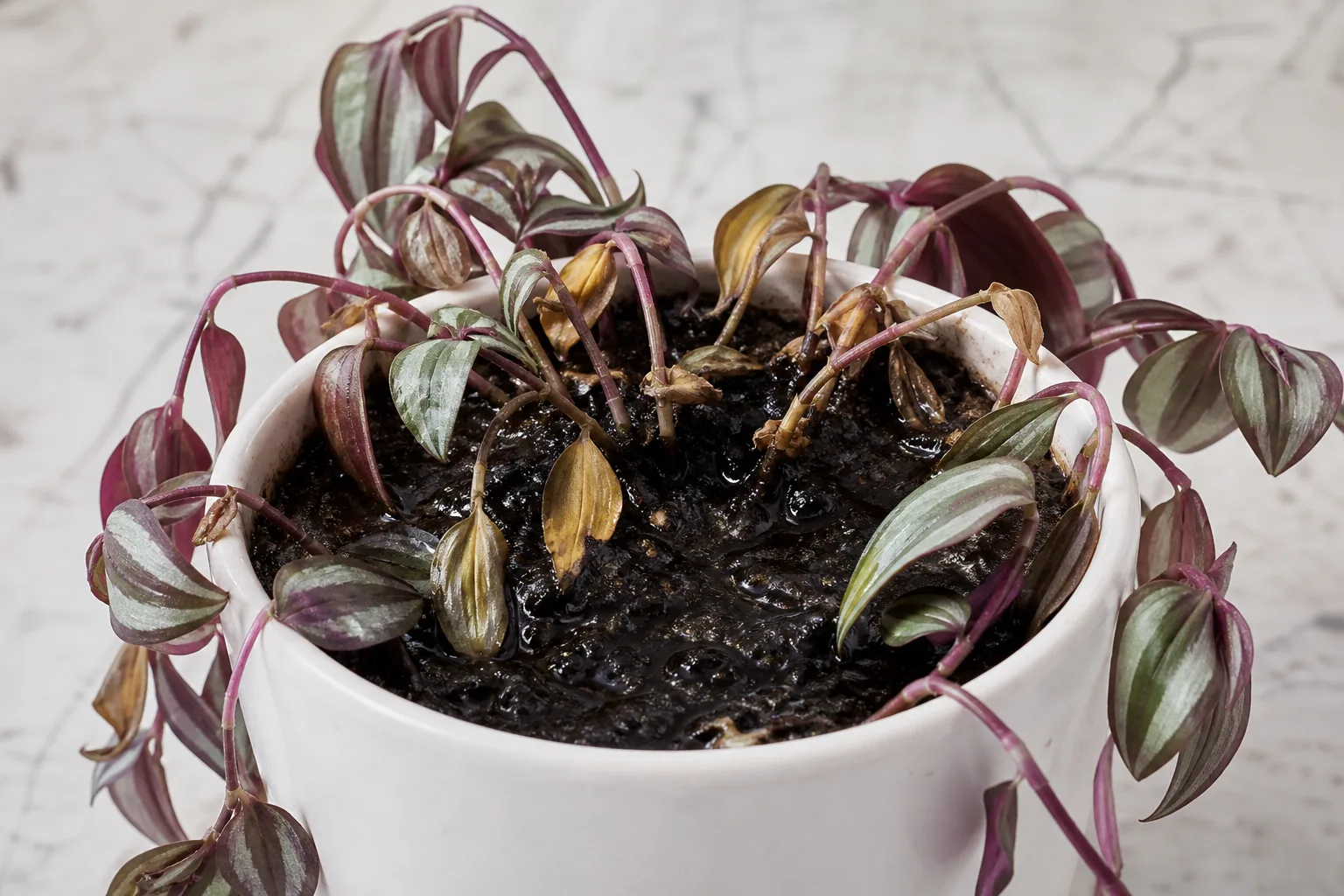
Root Rot on Tradescantia Zebrina: Causes, Checks & Fixes
This guide covers root rot on Tradescantia Zebrina. See also the general Root Rot guide, watering, and light pages for this plant.
Root Rot on Tradescantia Zebrina: Causes, Checks & Fixes
Quick answer
Root rot on Tradescantia zebrina-the inch plant, wandering dude, or silver inch plant-means the root system has decayed in chronically wet, poorly aerated mix. The trailing vine may look thirsty-limp stems, dull purple-silver striping, yellow lower leaves-but the pot stays heavy and wet. That wilt-on-wet-soil paradox is the signature pre-rot signal on this fast-growing Commelinaceae trailer.
First step: stop all watering and unpot within 24 hours. Rinse roots, trim every brown, mushy, or hollow section back to firm white or tan tissue, let cuts air-dry briefly, then repot into fresh well-drained mix with about 25–30% perlite. If stems above the damage are still firm, take node cuttings as backup before rot climbs the vine.
This page covers confirmed decay rescue-when inspection finds damaged roots, sour-smelling mix, or soft stem bases. For early wet-soil triage before widespread rot, start with the overwatering guide. For the top-inch-dry prevention rhythm, see the Tradescantia zebrina watering guide.
Root rot vs overwatering vs thirst wilt - why wet-soil wilt matters
Zebrina wilts when roots are too dry and when roots are rotting in wet soil. Pouring on a heavy pot is the most common way a fixable case becomes a salvage job.
| What you observe | Likely cause | First action |
|---|---|---|
| Light pot, dry top inch, firm stems | Underwatering | Deep soak once-see underwatering |
| Heavy pot, wet top inch, firm roots, no sour smell | Early overwatering | Stop water; dry-down-see overwatering |
| Heavy pot, yellow lower leaves, sour smell, mushy roots | Root rot | Unpot, trim, repot-this page |
| Whole-vine collapse within hours | Acute wilt | Urgent pot check-see wilting |
Key discriminator for root rot: rinsed roots show brown, black, slimy, or hollow tissue and the mix smells sour or musty. Healthy zebrina roots are white to pale tan and firm. Gardeners often notice root rot when a plant is wilted even though the soil is wet-that paradox is your cue to inspect, not irrigate.
What root rot looks like on Tradescantia Zebrina
Root rot on a trailing inch plant builds from the root zone upward. Because zebrina has succulent stems that root at nodes, damage often starts at the soil line before the long trailing tips look obviously wrong.
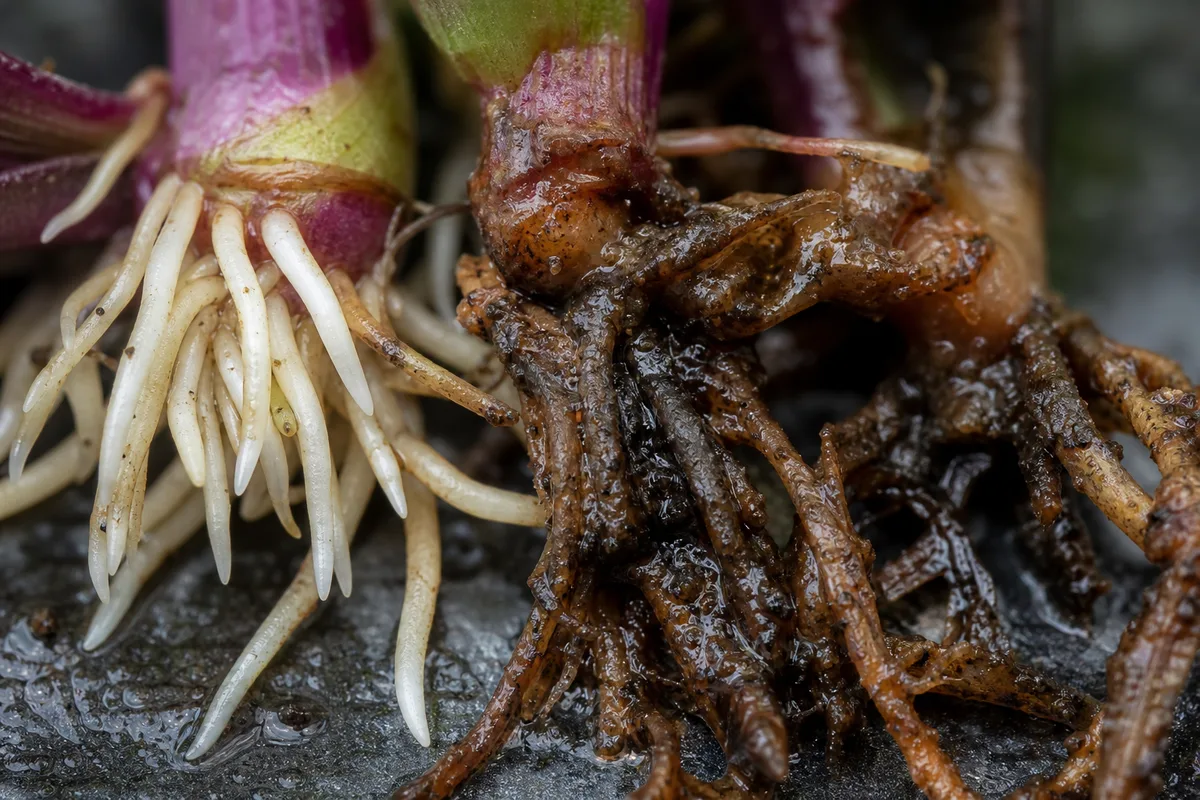
Root Rot symptoms on Tradescantia Zebrina - compare with healthy tissue on the same plant.
Early decay signs
- Limp trailing stems morning to night while the top inch stays cool and damp for days
- Dull purple-silver variegation-stripes fade when roots fail before full collapse
- Yellow lower leaves spreading up the vine on consistently wet soil
- Pot stays heavy when lifted; skewer at one inch down comes out damp repeatedly
- Fungus gnats hovering when mix rarely dries between waterings
- Musty or flat smell from the pot surface-anaerobic conditions in saturated mix
Advanced decay signs
- Soft, dark stem bases where vines enter the soil; tissue gives when pressed
- Sour rot smell when you unpot or rinse roots
- Brown, black, slimy, or hollow roots after a gentle rinse-healthy tissue is firm and pale
- Bare lower stems as leaves drop while tips still trail-a wet-soil pattern, not drought
- Stem dieback climbing from soil line toward nodes when rot is not stopped
NC State notes that root rot and stem rot can occur in soggy soil on this species. On zebrina, node-level softness is especially important because each inch-spaced node can root anew if salvaged while still firm.
Why Tradescantia Zebrina gets root rot
Root rot is the damage stage after chronic overwatering, poor drainage, or both. Tradescantia zebrina is a fast-growing trailing vine that pulls water steadily through thin stems-not a succulent despite tolerating short dry spells. Missouri Botanical Garden describes it as preferring consistently moist but well-drained soil during active growth with reduced watering from fall to late winter. “Moist” means a damp root zone after watering with a dry top inch-not stagnant mud for days.
Oxygen loss in saturated mix
Excess water causes roots to suffocate and can contribute to root rots, with yellowing foliage and eventual wilting. Waterlogged pore spaces lose oxygen; roots cannot respire, uptake collapses, and foliage wilts exactly like drought-even though the pot is wet. Root rot fungi grow and reproduce best in wet soils, especially when plants sit in drainage water. Water-mold pathogens such as Pythium and Phytophthora colonize stressed roots in those conditions.
Hanging baskets, cachepots, and oversized pots
Trailing zebrina in hanging baskets dries from the top down while the lower core stays wetter. Owners see dry surface crust and water again, soaking the bottom repeatedly-crown and upper-node rot follow. Decorative cachepots without drainage trap runoff. Recently repotted plants in oversized fresh mix also rot easily: roots have not filled the volume, so extra soil stays wet for days while you follow a summer calendar.
Low light and winter overwatering
In cool dim winter rooms, zebrina uses far less water, but many owners keep summer frequency-RHS guidance for zebrina tapers watering when growth slows. Cold roots in soggy mix fail faster than warm ones. Dense peat-heavy bags without perlite compact and hold water long after one soak.
How to confirm root rot on Tradescantia Zebrina
Work through this checklist in order. Confirmation requires seeing roots-not guessing from limp leaves alone.
- Stop watering - More water on failing roots deepens rot.
- Pot weight - Heavy for days after the last soak confirms slow dry-down.
- Top-inch moisture - Wet one inch down with limp stems supports root dysfunction, not thirst.
- Stem base firmness - Press where stems enter soil. Mushy dark tissue means unpot now.
- Smell - Sour or musty odor from the pot supports anaerobic decay.
- Unpot and rinse - Slide the plant out; rinse roots gently with lukewarm water.
- Root color and texture - Firm white or tan roots are healthy; brown, slimy, or hollow tissue confirms rot.
- Node inspection - Check each stem at the soil line; softness climbing upward limits whole-plant save rates.
If the top inch is bone dry and the pot is light with firm stems, you likely have underwatering-unpotting and trimming would damage healthy roots. If roots are mostly firm with no sour smell, try dry-down first on the overwatering page before full rescue.
First fix for Tradescantia Zebrina
Stop watering and unpot within 24 hours when you confirm mushy roots, sour mix, or soft stem bases. Dry-down alone cannot sterilize tissue that is already decaying.
That single first action prevents the most common mistake: watering wilted leaves on a heavy wet pot. After you stop, proceed to the numbered rescue below-one correction at a time, not repot plus prune plus fertilizer on the same day.
Step-by-step root rot rescue
1. Unpot and assess
Gently slide the plant from its container. Shake or rinse away saturated mix with room-temperature water so you can see root color along the full trailing root ball. Note which stems are firm above the soil line versus soft at the base.
2. Trim all decayed tissue
Cut away every brown, mushy, or hollow root with clean scissors or pruners until only firm white or tan tissue remains. Remove softened stem bases if mushy-save firm cuttings above the damage. Disinfest tools after working with root rot using a 10% bleach solution, detergent, or alcohol.
3. Air-dry trimmed roots
Let trimmed roots sit on a paper towel 20–30 minutes so cut surfaces callus slightly before repotting. This reduces reinfection risk in fresh mix.
4. Repot into fresh well-drained mix
Discard all old mix-do not reuse potting soil from a rotting plant. Repot into standard indoor potting soil amended with 25–30% perlite. Use a pot with drainage holes only slightly larger than the trimmed root ball, not an oversized container. See the soil guide for long-term mix structure.
5. Water once lightly, then withhold
Water once lightly to settle the new mix, then withhold the next watering for five to seven days unless the plant sits in very bright heat and the mix dries fast. Resume the top-inch-dry rhythm from the watering guide only after new growth or firm leaves return.
6. Stem-cutting salvage when roots are mostly gone
When more than half the root mass is mushy but stems above the damage are firm, take node cuttings as backup. Zebrina roots readily from stem cuttings in water or fresh mix-see the propagation guide. Include at least one node per cutting. Act before rot climbs past firm tissue.
Pet note: The ASPCA lists inch plant as toxic to cats and dogs, causing mouth irritation and GI upset if chewed. NC State notes watery sap can cause skin irritation-wear gloves when trimming rotted tissue and wipe spilled sap.
Recovery timeline and what to expect
| Situation | Realistic expectation |
|---|---|
| Partial rot trimmed, half or more healthy roots remain | Tips firm again within 1–2 weeks once wet cycles stop |
| Mild yellow lower leaves after rescue | Old leaves do not re-green; judge by new nodes and firm tips |
| Full unpot-trim-repot | Initial stabilization 1–2 weeks; meaningful trailing fill-in 3–6 weeks in good light |
| Winter rescue in cool dim room | Slower recovery; reduce water frequency long-term |
| Mostly mushy roots, soft stems to the crown | Low save rate as whole plant-prioritize cuttings |
Wisconsin Extension notes that if you keep a plant with root rot, reduce soil moisture-provide enough water for growth needs without over-watering. Judge success by firm new growth at nodes, stable pot dry-down rhythm, and stopped yellowing-not by perfect older leaves.
Lookalike symptoms to rule out
Underwatering shows a light pot, dry top inch, and firm stems-wilting perks within hours after one deep soak if roots are healthy.
Early overwatering shows heavy wet soil but mostly firm pale roots and no sour smell-dry-down on the overwatering guide may suffice without full trim.
Repot shock causes temporary limpness after repotting into fresh mix; stems should firm within days if moisture is balanced-not sour, not bone dry.
Low light stress produces leggy, dull trails without mushy roots or sour smell-see not enough light.
Heat-stress afternoon droop recovers overnight on otherwise healthy roots-see drooping leaves.
What not to do
Do not keep watering because leaves look wilted when soil is already wet-that accelerates rot on zebrina faster than almost any other mistake.
Do not fertilize a rotting plant; damaged roots cannot uptake nutrients and salts stress tissue further.
Do not repot into a much larger pot to “help drying”-extra wet mix volume slows oxygen return around sparse roots.
Do not reuse old mix or plastic pots from the rotting plant without thorough cleaning-root rot fungi can persist in contaminated media.
Do not bottom-soak a suspected rotting root ball without inspecting and trimming first.
Do not assume summer watering volume in winter when growth slows and pots stay wet for weeks.
How to prevent root rot next time
Prevention is the top-inch-dry rhythm plus drainage-not a fixed calendar:
- Active season: Water when the top inch dries, then soak until runoff and empty the saucer-details in the watering guide
- Fall and winter: Allow a deeper dry-down; Missouri Botanical Garden recommends reduced watering from fall through late winter
- Mix and pot: Well-drained potting soil with perlite, drainage holes, and no standing water in cachepots-see repotting
- Hanging baskets: Heft from below; top crust can lie while the core stays wet
- Weekly inspection: Catch heavy pots and dull stripes before bases soften
Fix fungus gnats and mold on soil only after drainage improves-both follow chronic wetness.
When root rot may not be saveable
Prioritize stem cuttings when:
- More than half the root mass is mushy after trimming
- Softness has climbed several nodes up multiple stems
- Sour smell returns within days of repotting into fresh mix
- Whole plant stays limp morning and night on repotted mix after correct rescue
Zebrina is forgiving genetics if you act while nodes are still firm-but a fully mushy crown rarely rebounds as one plant.
Practical checks
Urgency check
Treat as urgent if bases soften, rot smell spreads, several vines yellow at once on wet soil, or collapse worsens over 48 hours despite stopping water. Partial rot with firm tips above soft bases still needs same-day unpotting.
Best inspection order
Stop water → pot weight → top-inch moisture → unpot and rinse roots → stem base and node firmness → smell → trim decision → repot or cuttings.
Severity note
Use spreading yellowing, mushy root percentage, and failure to firm after correct rescue-not one faded leaf on an otherwise vigorous trail-to decide whether to invest in whole-plant recovery or cuttings only.
Related Tradescantia zebrina care
- Watering schedule and wilt signals - top-inch-dry rule and prevention
- Overwatering - early wet-soil triage before widespread decay
- Underwatering - dry-pot wilt lookalike
- Wilting and drooping leaves - acute and gradual limp stems
- Fungus gnats and mold on soil - wet-soil crossover
- Propagation for stem salvage
- Soil and repotting - repotting
- Tradescantia zebrina overview
When to use this page vs other Tradescantia Zebrina guides
- Tradescantia Zebrina watering guide - Use for routine moisture checks before assuming root rot is the main issue.
- Tradescantia Zebrina problems hub - Browse all 2 common issues on this species.