Not Enough Light on Tradescantia Zebrina: Causes, Checks &
Quick answer
Not enough light on Tradescantia zebrina shows as faded silver-purple striping, long gaps between leaves, and stems leaning toward the brightest window. First step: move the canopy to bright filtered light within 1–4 feet of an east window and acclimate over 7–14 days.
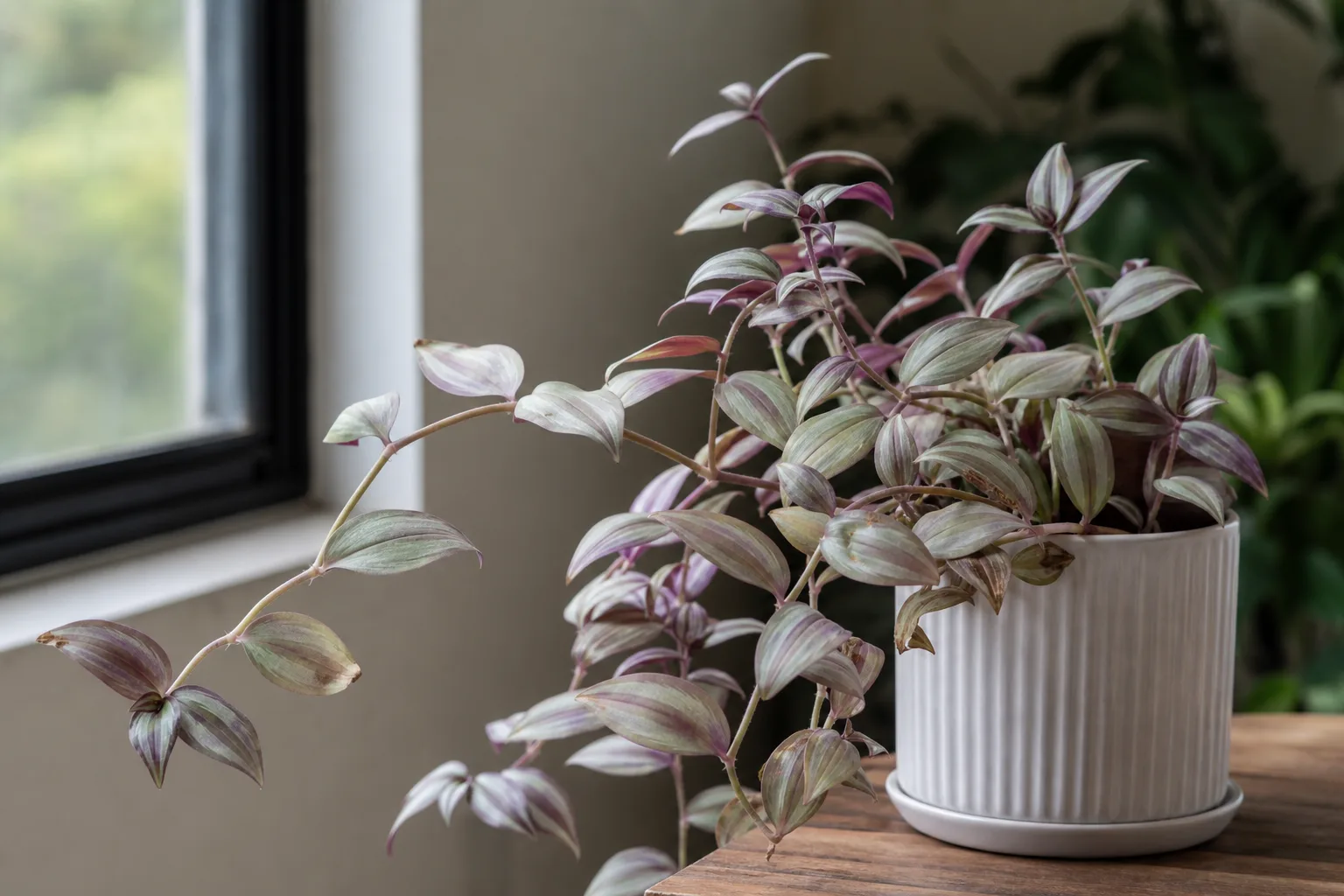
Not Enough Light on Tradescantia Zebrina: Causes, Checks & Fixes
This guide covers not enough light on Tradescantia Zebrina. See also the general Not Enough Light guide, watering, and light pages for this plant.
Not Enough Light on Tradescantia Zebrina: Causes, Checks & Fixes
Quick answer
Not enough light on Tradescantia zebrina-the inch plant or wandering dude-shows up as faded silver-purple striping, long gaps between leaf pairs, and stems angling sharply toward the brightest window. Zebrina is sold for metallic striped foliage flushed deep purple underneath; that display is a light-dependent pigment balance, not a fixed paint job. In dim corners the plant usually survives while the signature color dulls and internodes stretch-a slow downgrade owners often blame on watering because the pot still looks fine from across the room.
This page focuses on placement diagnostics: which window, how far from glass, how to acclimate, and how to read new leaves after a move. If vines are already long and bare with only tips still growing, pair a light upgrade with the leggy growth guide and pruning guide for shape rescue. Full window maps and grow-light specs live on the Tradescantia zebrina light guide.
First step: move the canopy to bright filtered light within 1–4 feet (30–120 cm) of an east-facing window-or the brightest indirect spot you have with sheer diffusion on south or west glass. Acclimate over 7–14 days if the plant came from deep shade. Do not fertilize, repot, and relocate on the same day; change light first, wait for one new leaf pair, then adjust watering if dry-down speed shifts.
What not enough light looks like on Tradescantia Zebrina
Low light on zebrina reads in a predictable cluster. Watch newest growth together with stem direction-old leaves only tell you where the plant used to live.
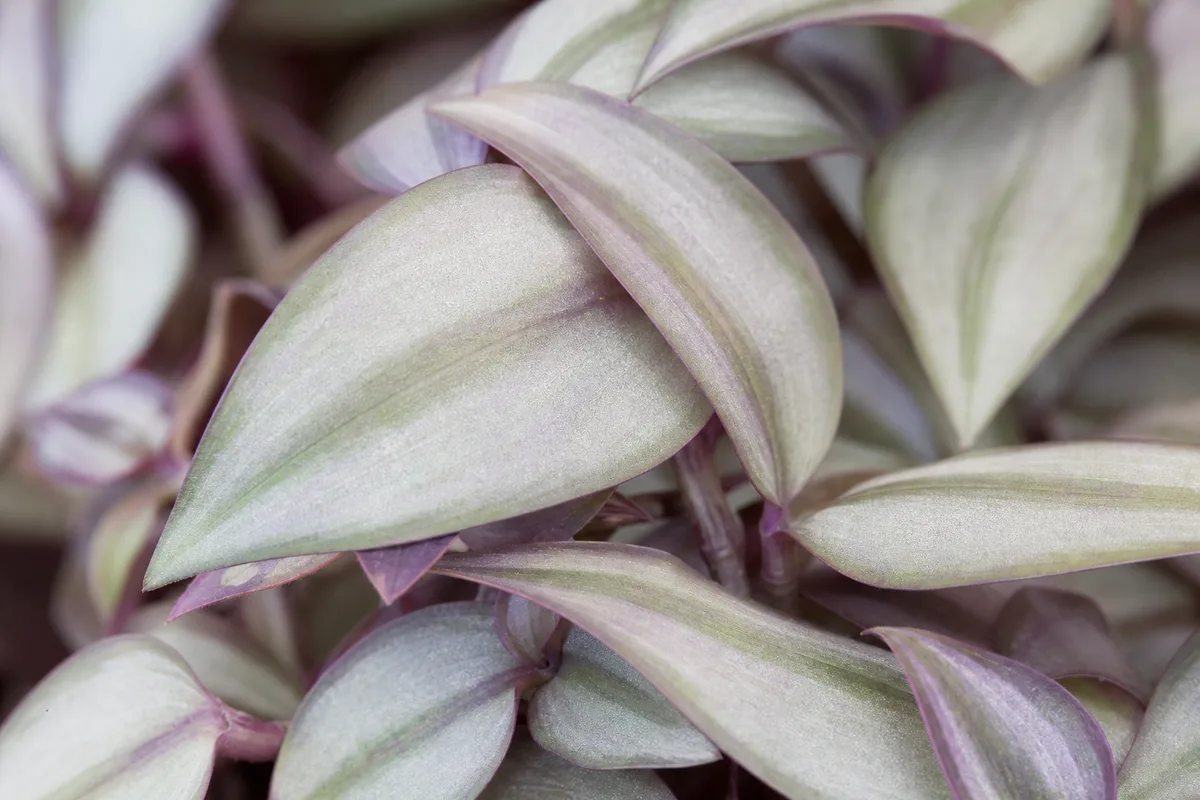
Not Enough Light symptoms on Tradescantia Zebrina - compare with healthy tissue on the same plant.
Faded silver-purple striping and green drift
- New leaves emerge with less silver contrast and duller purple undersides than recent predecessors
- Upper surfaces shift toward grey-green before full stretch appears-anthocyanin fade often shows before obvious legginess
- Consecutive new leaf pairs with weakening striping confirm chronic low light, not a single stressed leaf
Stretch toward the brightest window
- Stems lean or curve toward the glass or lamp that delivers the most photons
- Internodes lengthen-visible gaps between leaf pairs widen compared to growth from a bright window
- Trailing baskets may show one-sided lean while the shaded back side stays paler
Long internodes and crown thinning
- NC State Extension notes that in low lighting, stems lose lower leaves and remaining foliage loses much of its coloring
- Lower nodes go bare while tips keep growing-common in hanging baskets where the crown sits below window height
- The plant looks ladder-like rather than stacked and bushy
Smaller, greener new leaves
- Fresh pairs open smaller and paler than leaves formed in brighter light
- Purple flush on undersides washes out to dull green-bronze
- Growth may slow even though zebrina is normally a fast-renewing trailer
Zebrina communicates quickly because it grows fast-dim placement can dull striping within a few new leaves. That is different from normal trailing age, where older nodes naturally elongate on an otherwise vivid plant. If only the oldest leaves look tired while new growth stays striped and purple-flushed, light is probably adequate.
Why Tradescantia Zebrina gets not enough light
Tradescantia zebrina evolved in bright, filtered conditions at forest edges from Mexico to Colombia. Indoors it wants open-sky brightness without baking in hot midday sun through glass. Wisconsin Horticulture Extension recommends bright light indoors and notes foliage ranges from green to purple depending on light exposure-the same genetics, different photon budget.
Anthocyanin budget and pigment fade
Silver striping and purple undersides come from anthocyanins and chlorophyll in shifting balance. Michigan State University Extension explains that anthocyanins are protective pigments whose production increases with light intensity-which is why purple-leaf plants look muted unless conditions favor anthocyanin synthesis. In dim light, zebrina redirects energy toward chlorophyll for photosynthesis, and the metallic silver-purple contrast dulls before the plant stops growing entirely.
Rapid growth makes dim corners fail quickly
Zebrina is a fast-growing trailing vine that renews stems continuously. Weak light does not pause the plant-it reallocates growth toward stretch. Internodes elongate as the stem reaches for photons, a process called etiolation-elongated, spindly stems with pale leaves from insufficient light. University of Maine Cooperative Extension recommends gradual acclimation to brighter exposure over several days when correcting it.
Crown-vs-tips shading in hanging baskets
Room brightness misleads on baskets. The floor beside a window can look lit while the canopy hangs below the sill in shade. Trailing stems also shade lower leaves on themselves, so the crown thins even when tips near glass still look acceptable. “Near a window” should mean the top of the plant sees window sky, not that the basket hangs in a corner while glass is meters away.
Wet-soil coupling when growth slows in dim light
Low light drops water use. If you keep the summer watering cadence from a bright window, soil stays wet too long and roots suffer-then soft stems at the soil line compound the false “maybe it needs more water” loop. Always pair light diagnosis with a one-inch moisture check. Wet-soil yellowing with limp vines needs the overwatering guide or wilting guide, not just a brighter shelf.
How to confirm the cause
Work through this checklist before stacking fixes:
- Newest-leaf color test - Inspect the youngest fully opened pair at each active tip. Fading striping on two consecutive new pairs confirms low light. One pale leaf after Tradescantia Zebrina repotting guide or shipping may be stress, not placement.
- 10–14 day spot trial - Move to a candidate bright filtered window. Judge only new growth after 10–14 days-old leaves will not re-stripe.
- Hand-shadow test at midday - Hold your hand between the plant and the window. A soft, fuzzy shadow with visible edges means useful indirect brightness. No meaningful shadow means the spot is too dim for strong color long term. Clemson HGIC notes insufficient light causes weak, spindly growth as plants stretch toward available light.
- Stem lean direction - Strong angle toward one window or lamp supports etiolation. Random limp collapse on wet soil points elsewhere.
- Internode comparison - Measure gaps between recent leaf pairs on the dim side versus a stem that gets more light. Widening gaps on the shaded side confirm photon deficit.
- Moisture cross-check - Dry top inch with dull striping fits light as primary stress. Wet top inch with yellow lower leaves fits overwatering overlap-see overwatering on zebrina.
- Rule out too much sun - Bleached, crispy patches on the window-facing leaf face mean excess direct beam, not deficiency. The light guide covers scorch versus fade.
If striping dulls but roots smell sour on soggy mix, fix drainage and watering first-light alone will not rescue rotting roots.
First fix for Tradescantia Zebrina
Move the canopy to bright filtered light-then wait for new leaves before changing anything else.
Move to bright filtered east or sheer-curtained west window
Default placement: 1–3 feet (30–90 cm) from east glass, where morning sun is bright but relatively cool. Filtered south windows work 3–5 feet back or behind sheer fabric. West windows need 2–4 feet of setback or curtains-afternoon heat scorches striped tissue faster than light alone. North windows rarely sustain vivid striping without a grow light.
RHS guidance for Tradescantia emphasizes bright light for strong variegation-zebrina’s striping is that variegation expressed as silver bands and purple undersides.
Gradual acclimation over 7–14 days
Leaves formed in deep shade cannot jump to blazing sill sun without bleaching. Bridge through bright indirect first:
- Days 1–3: Move closer to east glass or behind sheer curtain on south/west; watch the newest leaf for color gain without crisping.
- Days 4–7: Allow 30–60 minutes of early-morning direct sun on east windows if new leaves stay firm.
- Days 8–14: Extend morning exposure in 15-minute increments only if no tan patches appear on new growth.
Stop immediately if window-facing leaves show bleach-move back to filtered bright light.
Adjust watering to match faster growth
Brighter light increases water use. After the plant pushes one new leaf pair in the brighter spot, check the top inch of soil before every drink-see the watering guide. Do not keep a dim-corner watering calendar on a plant you just moved to an east window.
Recovery timeline
Mild fade without heavy stretch: New leaves often show clearer striping within 10–14 days once photons improve. Internodes on existing stems stay long-that is cosmetic unless you prune.
Moderate etiolation with bare crown: Color on new growth may return in two to four weeks. Shape recovery takes longer; old naked stems do not fill in without pinching-see leggy growth and pruning.
Chronic dim placement with wet soil: Root stress may delay recovery several weeks even after light improves. Confirm firm roots and dry-down rhythm before expecting vivid new leaves.
What recovery looks like: Two consecutive new leaf pairs with obvious silver striping and purple-flushed undersides, shorter internodes on fresh growth, and stable firm stems at the soil line. Old faded leaves may drop or stay dull-that is normal.
What not to do
Do not fertilize a faded zebrina to “bring color back”-no food restores anthocyanins without more light.
Do not move from a dim shelf to unfiltered west noon sun in one afternoon-scorch adds damage on top of fade.
Do not keep watering on a calendar after a light upgrade; check moisture depth instead.
Do not assume old leaves will re-purple-only new growth confirms the fix.
Do not pinch heavily before light improves unless you are removing rot-new shoots in the same dim spot will etiolate again. Light first, then shape work.
When relocating baskets to brighter spots pets can reach, remember zebrina is toxic to cats and dogs if chewed. Sap can irritate skin on sensitive people during pruning-use gloves if you trim after the light fix.
Lookalike symptoms to rule out
| Pattern | Low light | Overwatering | Too much sun |
|---|---|---|---|
| New leaf color | Fading striping, greener, smaller | Yellowing, sometimes limp | Bleached or tan crispy patches |
| Stem habit | Long internodes, lean toward window | Soft at soil line on wet mix | One-sided scorch facing glass |
| Soil cue | Often dry slowly in dim spot | Wet top inch days after watering | Moisture may be normal |
| Fix direction | Brighter filtered light | Dry out, inspect roots | Move back, diffuse beam |
Leggy growth without placement change - If you already moved to bright light but vines stay long and bare, the problem shifts to shape rescue, not window choice. Follow leggy growth for pinching and tip propagation.
Normal trailing age - Lower nodes on old stems naturally elongate on a plant that still pushes vivid striped new tips. Judge light by newest leaves, not by bare sections on year-old vines.
Winter slowdown - Shorter days reduce growth rate and can dull color temporarily. If stretch and fade persist under supplemental light or a brighter seasonal window position, low light is still the issue-not dormancy alone.
How to prevent not enough light next time
Place zebrina where the canopy receives roughly 6–10 hours of strong ambient brightness daily-details on the light guide. Rotate the pot a quarter turn weekly so trailing stems do not hide one-sided fade.
Window map recap: east default at 1–3 feet; filtered south at 3–5 feet; curtained west at 2–4 feet; north only with LED.
Season check: Winter sun angle can pull rays onto a previously safe sill-add sheer fabric if stripes bleach. Summer west heat may require pulling back even when winter placement was perfect.
Grow-light fallback
When the best window is still too dim-north rooms, deep floor plans, office cubes-use a full-spectrum LED 8–14 inches (20–35 cm) above the tallest leaf for 10–12 hours daily on a timer. MSU Extension notes blue and ultraviolet wavebands help trigger anthocyanin production; household LEDs with adequate blue content outperform old sodium bulbs for purple coloration. Raise intensity gradually-lower the fixture 2 inches (5 cm) at a time and wait for one new leaf pair between changes. Full specs: light guide grow-light section.
Match watering to dry-down after any light increase. Inspect newest leaves every two weeks during routine care so fade stays a small correction, not a basket-wide green-out.
If hard pruning becomes necessary after chronic dim culture, root tip cuttings in brighter light per the propagation guide rather than chasing old faded vines indefinitely.
When to worry
Low light alone is rarely an emergency-zebrina tolerates moderate dimness for months while color slips. Act soon when:
- Wet soil + dim corner combine-slow metabolism keeps mix soggy and risks root decline
- Soft stems, sour smell, or spreading yellow appear alongside stretch-triage moisture and roots first
- Multiple consecutive new pairs lose striping entirely-placement is well below display threshold
Less urgent: gradual fade on a surviving plant, mild lean correctable with one window move, or winter dullness that resolves when you shift closer to glass in spring.
Conclusion
Not enough light on Tradescantia zebrina dulls the metallic striping and purple undersides that make the plant worth growing-then stretches stems toward whatever photons the room offers. Fix placement first: bright filtered light at the canopy, east window default, 7–14 day acclimation from deep shade, and new-leaf judgment after 10–14 days. Old leaves will not re-stripe; vivid fresh growth tells you the spot works. When windows fail, add a grow light; when shape is already gone, pair the light upgrade with pruning and leggy growth rescue-not fertilizer in a dim corner.
When to use this page vs other Tradescantia Zebrina guides
- Tradescantia Zebrina watering guide - Use for routine moisture checks before assuming not enough light is the main issue.
- Tradescantia Zebrina problems hub - Browse all 2 common issues on this species.
- Leggy Growth on Tradescantia Zebrina - Different entry point when symptoms overlap with not enough light.