Overwatering on Tradescantia Zebrina: Causes, Checks & Fixes
Quick answer
Overwatering on Tradescantia zebrina means the root zone stays wet too long-roots lose oxygen, uptake fails, and trailing stems wilt even though the mix feels damp. First step: stop watering, lift the pot, and check whether the top inch is wet and heavy before you pour again.
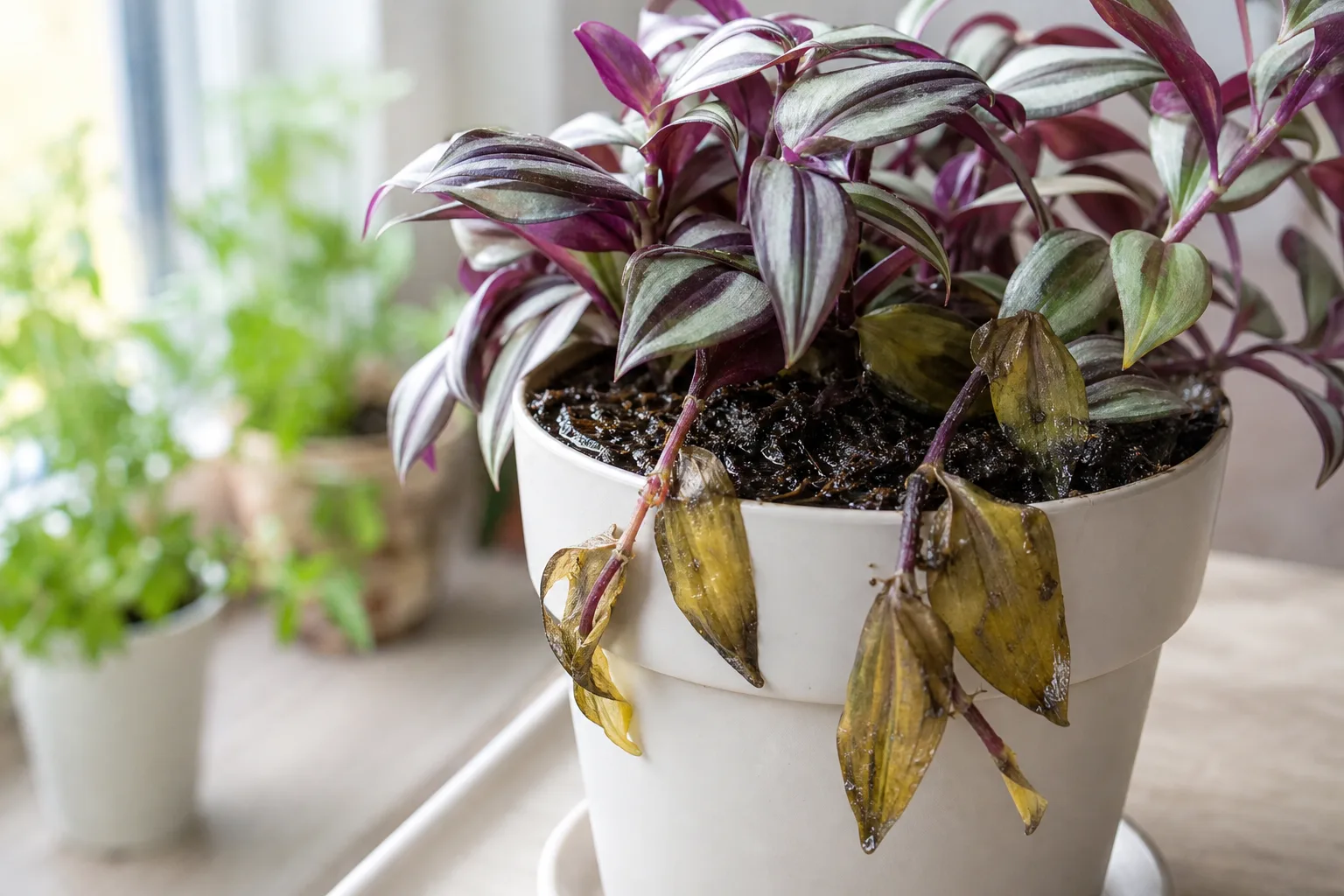
Overwatering on Tradescantia Zebrina: Causes, Checks & Fixes
This guide covers overwatering on Tradescantia Zebrina. See also the general Overwatering guide, watering, and light pages for this plant.
Overwatering on Tradescantia Zebrina: Causes, Checks & Fixes
Quick answer
Tradescantia zebrina-the inch plant, wandering dude, or silver inch plant-is a fast-growing trailing vine that wants consistently moist but well-drained soil during active growth, not soggy mix that never dries. Overwatering means you kept the root zone wet too long: calendar watering in dim winter rooms, saucers full of runoff, dense peat without perlite, or watering again because limp leaves looked thirsty when the pot was already heavy.
The diagnostic trap on zebrina is the wilt paradox: the same plant wilts when roots are too dry and when roots are rotting in wet soil. Wet-soil wilt is not a call for more water-it is a call to stop watering and read the pot.
First step: pause all watering, lift the pot, and stick your finger one inch into the mix. Heavy, cool, clinging soil with limp stems means overwatering until proven otherwise. Light, dry soil with firm stems points to thirst instead-see the underwatering guide. For the full top-inch-dry rhythm and seasonal taper, use the Tradescantia zebrina watering guide. This page focuses on wet-soil diagnosis and early rescue before rot becomes advanced.
What overwatering looks like on Tradescantia Zebrina
Overwatering signs build in stages. Catching them early-while roots are still mostly firm-changes recovery from a ten-minute dry-down to a same-day unpot.
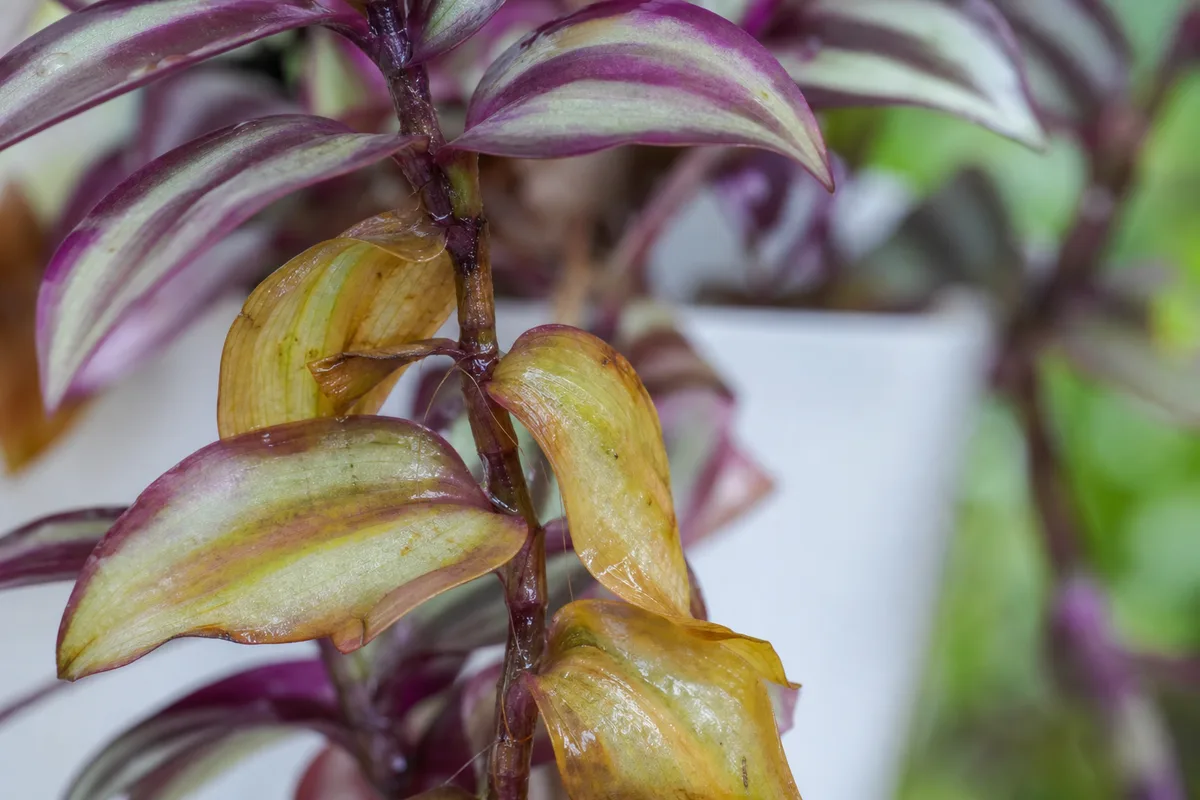
Overwatering symptoms on Tradescantia Zebrina - compare with healthy tissue on the same plant.
Early signals (wet soil, roots often still salvageable):
- Limp trailing stems while the top inch stays cool and damp for days after the last soak
- Dull purple-silver striping before full collapse-variegation fades when roots struggle
- Slow or stalled new nodes despite wet-looking surface soil
- Pot stays heavy when lifted; skewer pulled from one inch down comes out damp
- Green algae or white mold film on the soil surface
- Fungus gnats hovering when mix rarely dries between waterings
Advanced signals (escalate toward root rot):
- Yellow lower leaves spreading up the vine while soil remains wet
- Soft, dark stem bases where stems enter the mix; tissue gives slightly when pressed
- Sour or musty smell when you scratch the surface or unpot
- Wilting that persists morning to night on heavy wet soil-paradoxical wilt from failed root uptake
- Bare lower stems as leaves drop while tips still trail-a pattern that also overlaps drought, but wet soil confirms the wet path
Healthy zebrina holds stiff trailing stems with vivid stripes in good light. A single limp outer vine after a hot dry week is different from whole-plant sag on soil that has not dried in ten days.
Overwatering vs root rot vs underwatering wilt - read the pot before you pour
Zebrina shares wet-soil language across several problem pages. The fork that saves plants is pot weight plus moisture at one inch down, not leaf limpness alone.
| What you observe | Likely cause | First action |
|---|---|---|
| Light pot, dry top inch, firm stems, green limp leaves | Underwatering | Deep soak once-see underwatering |
| Heavy pot, wet top inch, limp stems, dull stripes | Early overwatering | Stop water; dry-down or inspect |
| Heavy pot, yellow lower leaves, sour smell, soft bases | Root rot / advanced overwatering | Unpot, trim, repot-see root rot |
| Afternoon tip droop, evening recovery, moist soil | Heat or light stress | Filter sun; do not auto-water-see drooping leaves |
| Rapid whole-vine collapse within hours | Acute wilt | Urgent pot check-see wilting |
Key discriminator: underwatering shows dry and light; overwatering shows wet and heavy. Both wilt. Pouring on a heavy pot is the most common way a fixable overwatering case becomes a rot rescue.
This page covers early overwatering-wet cycles before widespread decay. When inspection finds mostly mushy roots, switch to the root rot recovery protocol.
Why Tradescantia Zebrina gets overwatered easily
Tradescantia zebrina is a fast-growing trailing vine in the Commelinaceae family. In Tradescantia Zebrina light guide it pushes new nodes weekly and pulls water steadily through thin stems with limited storage-not a succulent, despite tolerating short dry spells. Missouri Botanical Garden describes the species as preferring consistently moist but well-drained soil in the growing season with reduced watering from fall to late winter. “Moist” is not “wet every Tuesday.”
The wilt paradox
Zebrina wilts dramatically when thirsty-then owners water again when leaves look limp, even though the mix never dried. Mechanically, waterlogged soil displaces oxygen from pore spaces. Roots cannot respire, uptake collapses, and foliage wilts exactly like drought-even though the pot is wet. Overwatering harms roots before upper stems look obviously wrong. Water-mold pathogens such as Pythium and Phytophthora can colonize stressed roots in saturated conditions (Wisconsin Extension - root rots of houseplants).
Fast growth, small pots, and hanging baskets
Trailing zebrina in hanging baskets dries from the top down while the lower core stays wetter. Owners see dry surface crust and water again, soaking the bottom repeatedly. Warm bright windows speed transpiration at the tips while the crown sits in stale moisture-classic setup for stem-base rot.
Recently repotted plants in oversized fresh mix also overwater easily: roots have not filled the volume, so the extra soil stays wet for days while you follow a summer calendar.
Dense mix, cachepots, and winter slowdown
Heavy peat-heavy bags without perlite compact after months and hold water long after one soak. Decorative cachepots without drainage trap runoff. In cool dim winter rooms, zebrina uses far less water, but many owners keep summer frequency-RHS guidance for zebrina tapers watering when growth slows. Cold roots in soggy mix fail faster than warm ones.
How to confirm overwatering
Work through this checklist in order. One variable at a time makes it clear what actually helped.
- Pot weight - Lift the container or heft the hanging basket from below. Heavy for days after watering confirms slow dry-down.
- Top-inch moisture - Finger or dry skewer one inch down. Cool, clinging mix with limp stems supports overwatering.
- Stripe and leaf pattern - Dull variegation plus yellow lower leaves on wet soil beats a single blemish.
- Stem base firmness - Press where stems enter soil. Mushy dark tissue means escalate beyond dry-down alone.
- Smell - Sour or musty odor from the pot supports anaerobic conditions.
- Drainage path - Full saucers, blocked holes, or sealed outer pots trapping water.
- Watering history - Fixed schedule without dry check? Watered because leaves wilted on already-wet soil?
- Root spot-check (optional) - If stems soften, slide the plant partly out. Firm white or tan roots suggest early rescue; brown slime confirms rot.
If the top inch is bone dry and the pot is light, you likely have underwatering, not this problem-adding dry-down would worsen drought stress.
First fix for Tradescantia Zebrina
Stop watering immediately. That is the single first action whether the case is mild saturation or advanced rot. More water on failing roots deepens the wilt paradox.
Then branch by severity:
- Early overwatering (firm stems, no sour smell, mostly firm roots if peeked): Move to bright indirect light with airflow, empty saucer water, and let the top inch dry fully before the next drink. Do not fertilize.
- Active decay (sour smell, soft bases, yellowing on wet soil): Unpot within 24–48 hours-dry-down alone will not sterilize mushy roots.
Make one correction at a time and read the plant over three to seven days before stacking repot, prune, and fertilizer on the same day.
Step-by-step recovery
Path A - Dry-down (early overwatering, firm roots)
- Stop all watering.
- Place the plant in bright indirect light-not harsh midday sun on stressed leaves.
- Empty saucers and confirm drainage holes are open.
- Wait until the top inch is dry and the pot feels noticeably lighter.
- Water once thoroughly until runoff, then empty the saucer within 30 minutes.
- Resume the top-inch-dry rhythm from the watering guide.
Expect firmness to return at stem tips within one to two weeks if roots stayed healthy.
Path B - Unpot, trim, and repot (sour mix or mushy roots)
- Gently unpot and rinse roots with room-temperature water.
- Trim brown, mushy, or hollow roots to firm white or tan tissue with clean scissors.
- Cut away softened stem bases if mushy; save firm cuttings above damage.
- Discard saturated mix; scrub or replace the pot.
- Repot into fresh well-drained mix-standard potting soil with 25–30% perlite matches zebrina’s indoor needs.
- Let trimmed roots air-dry 20–30 minutes on a paper towel.
- Water once lightly to settle mix, then withhold the next watering for five to seven days unless bright heat dries the mix fast.
- Resume top-inch-dry checks only after new growth or firm leaves return.
Full rot escalation: root rot on Tradescantia zebrina.
Path C - Stem-cutting salvage (severe base rot)
When more than half the root mass is gone but stems above the damage are firm, take node cuttings as backup. Zebrina roots readily from stem cuttings in water or fresh mix-see the propagation guide. Act before stems turn fully mushy.
Recovery timeline and what to expect
| Situation | Realistic expectation |
|---|---|
| Brief overwatering, firm roots, dry-down only | Tips firm again within 7–14 days once wet cycles stop |
| Mild yellow lower leaves, trimmed partial rot | Old yellow leaves do not re-green; judge by new nodes and firm tips |
| Full unpot-trim-repot | Initial stabilization 1–2 weeks; meaningful trailing fill-in 3–6 weeks in good light |
| Winter overwatering in cool dim room | Slower recovery; reduce water frequency long-term |
| Mostly mushy roots, soft stems to the crown | Low save rate as whole plant-prioritize cuttings |
Judge success by firm new growth at nodes, stable pot dry-down rhythm, and stopped yellowing-not by perfect old leaves.
What not to do
Do not keep watering because leaves look wilted when soil is already wet-that is the classic zebrina kill move.
Do not fertilize a waterlogged plant; roots cannot uptake nutrients and salts stress damaged tissue.
Do not repot into a much larger pot to “help drying”-extra wet mix volume slows oxygen return.
Do not mist leaves instead of fixing soil-surface moisture does not restore root-zone balance.
Do not bottom-soak a suspected rotting root ball without inspecting first.
Do not assume summer watering volume in winter when growth slows and pots stay wet for weeks.
Keep hanging baskets away from chewing pets-the ASPCA lists inch plant as toxic to cats and dogs, causing mouth irritation and GI upset if ingested.
How to prevent overwatering next time
Match water to growth speed and pot dry-down, not a calendar:
- Active season: Water when the top inch dries, then soak until runoff and empty the saucer-details in the watering guide
- Fall and winter: Allow a deeper dry-down; Missouri Botanical Garden recommends reduced watering from fall through late winter
- Mix and pot: Well-drained potting soil with perlite, drainage holes, and no standing water in cachepots
- Hanging baskets: Heft from below; top crust can lie while the core stays wet
- After repot: Smaller sensible pots beat oversized “low maintenance” containers
Inspect weekly during routine care. Fix fungus gnats only after drainage improves-gnats follow chronic wetness.
When to escalate to root rot recovery
Move from this page to root rot triage when:
- More than a third of roots are brown, slimy, or hollow on rinse
- Stem bases stay mushy after 48 hours of dry-down
- Sour smell returns within days of Tradescantia Zebrina repotting guide into fresh mix
- Yellowing climbs the vine while soil remains wet
- Whole plant stays limp morning and night on heavy soil
Mild heavy-pot cases without smell or softness can stay on Path A dry-down here.
Practical checks
Urgency check
Treat as urgent if bases soften, rot smell spreads, several vines yellow at once on wet soil, or collapse worsens over 48 hours despite stopping water. A heavy pot with dull stripes but firm bases can wait for a structured dry-down.
Best inspection order
Pot weight → top-inch moisture → stem base firmness → lower-leaf yellowing → smell and drainage → light and season → fungus gnats if soil never dries.
Severity note
Use spreading yellowing, soft bases, and failure to firm after correct dry-down-not one faded leaf on an otherwise vigorous trail-to decide how fast to unpot and trim.
Related Tradescantia zebrina care
- Watering schedule and wilt signals - top-inch-dry rule and seasonal rhythm
- Root rot - advanced decay and trim protocol
- Underwatering - dry-pot wilt lookalike
- Wilting and drooping leaves - acute and gradual limp stems
- Fungus gnats - wet-soil pest crossover
- Propagation for stem salvage
- Tradescantia zebrina overview
When to use this page vs other Tradescantia Zebrina guides
- Tradescantia Zebrina watering guide - Use for routine moisture checks before assuming overwatering is the main issue.
- Tradescantia Zebrina problems hub - Browse all 2 common issues on this species.