Tradescantia Zebrina Problems: Causes & Quick Fixes
Quick answer
Tradescantia Zebrina is prone to 16 common issues - each link below is a plant-specific fix guide.
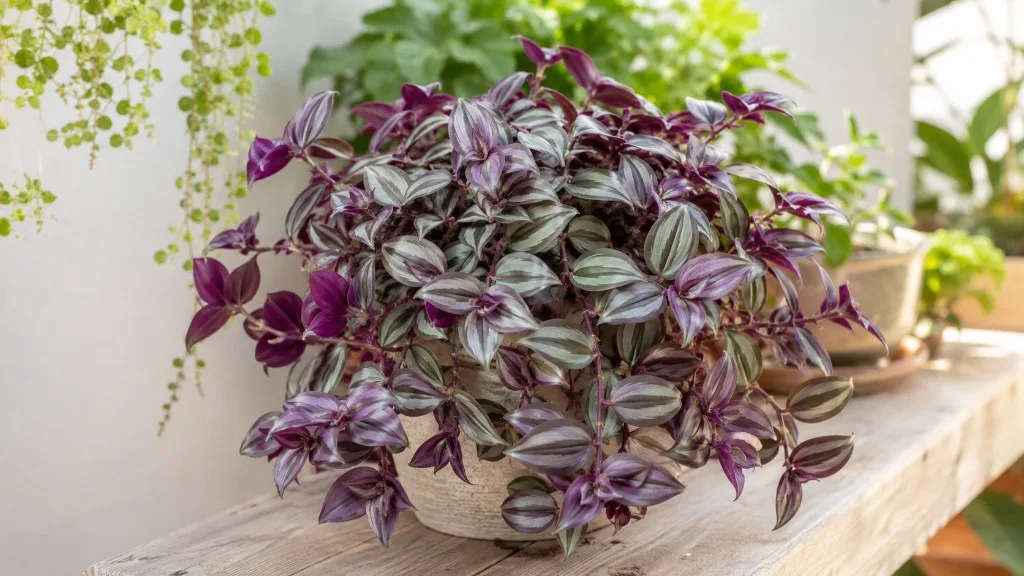
Tradescantia Zebrina problems
Use the guides below to diagnose and fix common issues on Tradescantia Zebrina. Each problem page explains why it happens on this species and what to do first.
Or use our problem diagnosis tool to narrow down symptoms.
Common problems on Tradescantia Zebrina
Brown Tips
LowLikely cause: Low humidity or inconsistent watering.
Quick fix: Increase humidity slightly and water on a consistent schedule.
Full fix guide →Leggy Growth
MediumLikely cause: Low light reduces variegation and causes legginess.
Quick fix: Move to brighter indirect light and prune back.
Full fix guide →Aphids
MediumLikely cause: Aphids on Tradescantia Zebrina cluster on soft new tips and node joints along trailing stems, leaving sticky honeydew that shows first on purple leaf undersides. First step: isolate the plant and rins
Quick fix: See plant-specific guide for step-by-step fixes.
Full fix guide →Drooping Leaves
MediumLikely cause: Drooping leaves on Tradescantia zebrina mean the trailing stems lost turgor-usually because roots are too dry or too wet to move water. Lift the pot and probe the top inch of soil before you water, re
Quick fix: See plant-specific guide for step-by-step fixes.
Full fix guide →Fungus Gnats
MediumLikely cause: Fungus gnats on Tradescantia zebrina mean the soil surface stays wet too long-common when fast-growing trailing vines look thirsty but the top inch of mix never dries. First step: stop watering until
Quick fix: See plant-specific guide for step-by-step fixes.
Full fix guide →Low Humidity
MediumLikely cause: Tradescantia zebrina tolerates ordinary indoor humidity (40–60% RH) but crispens near heating vents when air drops below ~30%. First step: move the basket away from vents and run a humidifier until RH
Quick fix: See plant-specific guide for step-by-step fixes.
Full fix guide →Mealybugs
MediumLikely cause: Mealybugs on Tradescantia zebrina look like white cottony clusters tucked into leaf axils and along semi-succulent stem nodes, often with sticky honeydew on purple leaf undersides. First step: isolate
Quick fix: See plant-specific guide for step-by-step fixes.
Full fix guide →Mold on Soil
MediumLikely cause: White or gray fuzzy mold on Tradescantia zebrina soil is usually harmless saprophytic fungus feeding on organic potting mix-not a leaf infection. First step: scrape off the surface mold, then let the
Quick fix: See plant-specific guide for step-by-step fixes.
Full fix guide →Not Enough Light
MediumLikely cause: Not enough light on Tradescantia zebrina shows as faded silver-purple striping, long gaps between leaves, and stems leaning toward the brightest window. First step: move the canopy to bright filtered
Quick fix: See plant-specific guide for step-by-step fixes.
Full fix guide →Overwatering
MediumLikely cause: Overwatering on Tradescantia zebrina means the root zone stays wet too long-roots lose oxygen, uptake fails, and trailing stems wilt even though the mix feels damp. First step: stop watering, lift the
Quick fix: See plant-specific guide for step-by-step fixes.
Full fix guide →Root Rot
MediumLikely cause: Root rot on Tradescantia zebrina means roots have decayed in chronically wet mix-stems wilt on heavy wet soil, bases soften, and rinsed roots are brown or mushy. First step: stop watering, unpot withi
Quick fix: See plant-specific guide for step-by-step fixes.
Full fix guide →Slow Growth
MediumLikely cause: Slow Tradescantia zebrina growth usually means light, root space, or season-not a fertilizer shortage. First step: move the plant to brighter indirect light and mark a stem tip to track whether new no
Quick fix: See plant-specific guide for step-by-step fixes.
Full fix guide →Spider Mites
MediumLikely cause: Spider mites on Tradescantia zebrina show as pale stippling on silver-purple striped leaves and fine silk at stem nodes, especially in dry heated rooms. First step: isolate the plant and rinse every l
Quick fix: See plant-specific guide for step-by-step fixes.
Full fix guide →Underwatering
MediumLikely cause: Underwatering on Tradescantia Zebrina shows as limp trailing stems, faded purple-silver striping, and a light pot with bone-dry top inch. First step: water thoroughly at the sink until drainage runs f
Quick fix: See plant-specific guide for step-by-step fixes.
Full fix guide →Wilting
MediumLikely cause: Wilting on Tradescantia zebrina means trailing stems lost turgor-usually because roots are too dry or too wet to move water. First step: stick your finger one inch into the mix; water thoroughly if dr
Quick fix: See plant-specific guide for step-by-step fixes.
Full fix guide →Yellow Leaves
MediumLikely cause: Yellow leaves on Tradescantia Zebrina usually mean overwatering, underwatering, or low light fading the silver-purple stripes-not a single mystery disease. First step: lift the pot and probe the top i
Quick fix: See plant-specific guide for step-by-step fixes.
Full fix guide →