Spider Mites on Tradescantia Zebrina: Causes, Checks & Fixes
Quick answer
Spider mites on Tradescantia zebrina show as pale stippling on silver-purple striped leaves and fine silk at stem nodes, especially in dry heated rooms. First step: isolate the plant and rinse every leaf underside with lukewarm water before applying any spray.
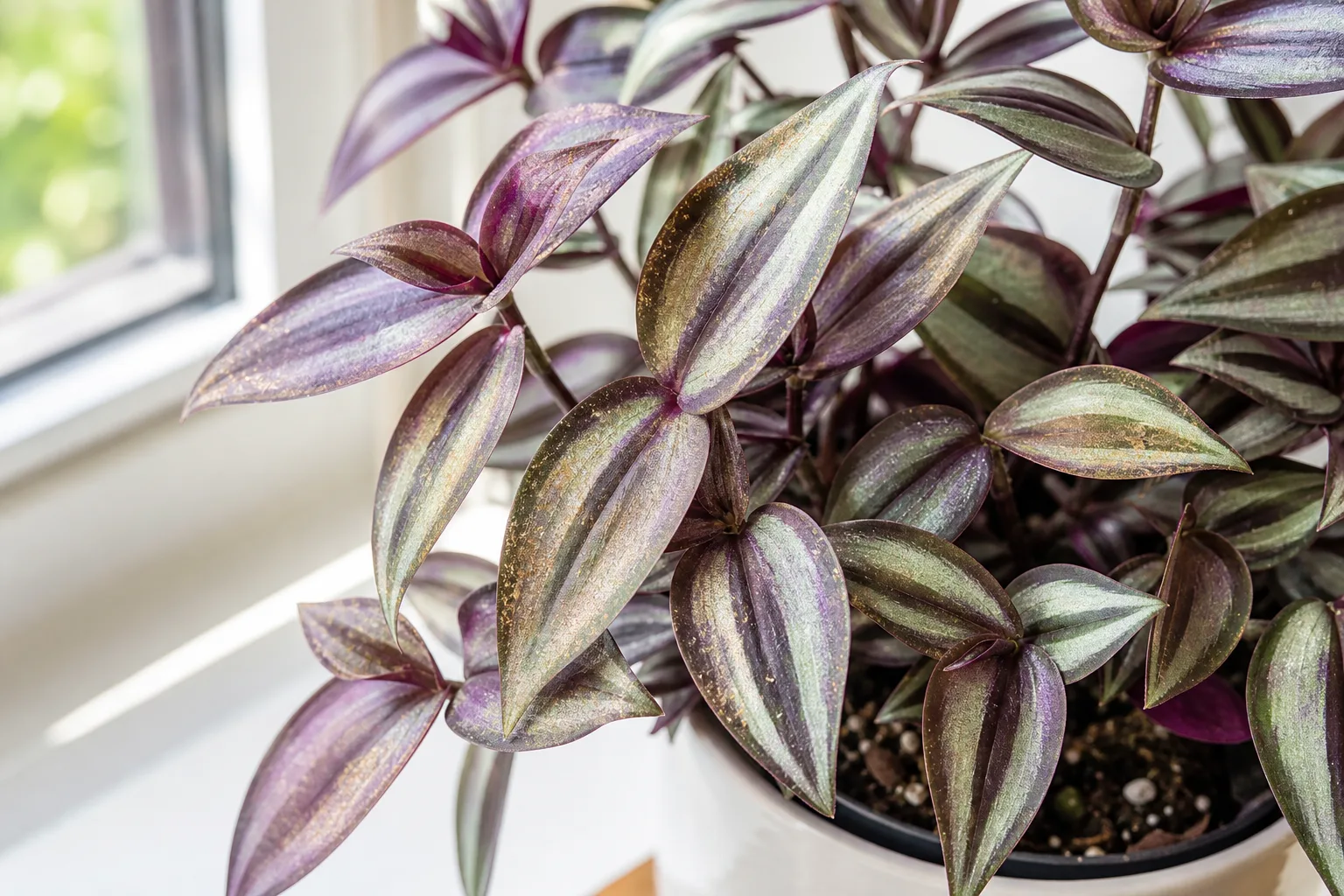
Spider Mites on Tradescantia Zebrina: Causes, Checks & Fixes
This guide covers spider mites on Tradescantia Zebrina. See also the general Spider Mites guide, watering, and light pages for this plant.
Spider Mites on Tradescantia Zebrina: Causes, Checks & Fixes
Quick answer
Spider mites are tiny sap-feeding arachnids-not insects-that pierce individual leaf cells and drain chlorophyll. On Tradescantia zebrina, the first visible sign is usually pale yellow or white stippling scattered across the silver-green striped upper surface, often showing up first on the pale silver zones where chlorophyll loss contrasts sharply against the pattern. Fine silk webbing at stem nodes and between trailing vines follows as colonies grow. Outbreaks peak in winter, when indoor heating drops humidity below what this fast-growing inch plant tolerates.
First step: isolate the plant and rinse every leaf underside with lukewarm water. That knocks down live mites and webbing so you can confirm the infestation with a tap test before you reach for sprays. Do not apply miticide, neem, or soap on day one if you have not verified moving specks or webbing.
What spider mites look like on Tradescantia zebrina
Tradescantia zebrina carries relatively thin, soft foliage with silver-green stripes on top and deep purple undersides. Mite feeding shows up quickly as thousands of tiny yellow or white dots-stippling-scattered across the upper leaf surface. On zebrina, stippling often appears more obvious on the silver-striped zones first, because chlorophyll loss contrasts sharply against pale tissue before the greener sections bronze.
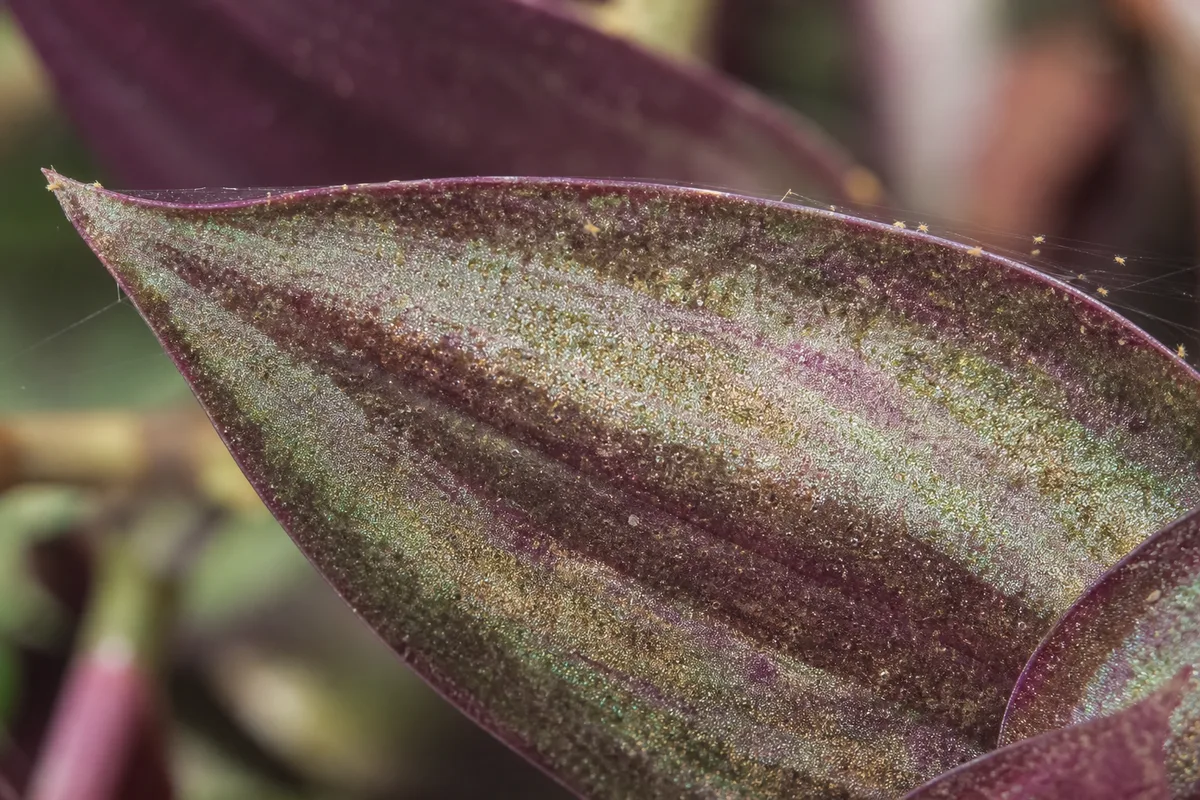
Spider Mites symptoms on Tradescantia Zebrina - compare with healthy tissue on the same plant.
As feeding continues, affected leaves lose their crisp striping pattern and take on a dusty, bronze, or washed-out look. Healthy zebrina leaves should show clean silver-green bands with vivid purple backs; mite damage breaks that pattern into an uneven speckled map rather than the even green-grey fade you see from low light alone.
Trailing inch-plant stems root at nodes spaced about an inch apart along semi-succulent growth. Mites concentrate on undersides where petioles meet stems and in the sheltered crevices at every node-places a quick glance at upper striped foliage misses when you only water from above. Fine silk webbing often appears late, threading between nodes on hanging baskets or along stems draped over a shelf edge-by then the colony is well established.
Individual mites are barely visible without magnification. They look like pale moving dots under a hand lens. A practical home test: hold a stippled leaf over white paper and tap the petiole sharply. If pepper-like specks crawl on the paper, you have spider mites-not thrips, scale, or ordinary yellow leaves from overwatering.
Why Tradescantia zebrina gets spider mites
Zebrina is not unusually pest-prone, but its care profile overlaps with mite-friendly conditions indoors. The species prefers moderate humidity around 40–60% and steady moisture without soggy roots. In many homes, winter heating dries air to well below 40% while the plant sits on a sunny windowsill or near a register-exactly the warm, dry conditions where mite populations explode.
Tradescantia zebrina is a fast-growing trailer whose dense node clusters and soft new tips give mites sheltered feeding sites. A hanging basket whose vines touch a shelf below, or a propagation bench where water jars sit beside soil pots, lets mites walk from leaf to leaf and from plant to plant before webbing is obvious on the index plant.
Purple-silver variegation needs brighter indirect light than dim corners to hold vivid striping. Growers often place zebrina in the sunniest, driest spot in the room to preserve color-unintentionally creating ideal mite habitat. That dry-air paradox is common on inch plants: the placement that keeps stripes vivid also dries the air around leaves. Stressed plants-underwatered, kept in hot direct sun, or left in stagnant dry air-show damage faster because weakened leaves cannot replace lost chlorophyll as quickly. Dry air alone does not create mites, but it shortens their life cycle and reduces the plant’s ability to outgrow feeding damage.
Low humidity and spider mites often arrive together on zebrina. If stippling appears while leaf tips crisp and new growth stays small, cross-check the low-humidity guide alongside pest treatment-fixing only one stressor slows recovery.
Lookalike symptoms to rule out
Overwatering yellow leaves turn soft and uniform yellow, often starting at the base, without stippling or webbing. Soil stays wet and may smell sour-see overwatering on Tradescantia zebrina when yellowing is even and leaves feel limp, not speckled.
Thrips leave silver scarring and black specks of frass; stippling looks scratchy rather than evenly dotted. Thrips jump when disturbed-mites crawl.
Mealybugs show white cottony clusters in nodes, not fine silk webbing across leaf tips-route to mealybugs on Tradescantia zebrina when you see waxy tufts in axils.
Aphids colonize soft new shoot tips as pear-shaped clusters with honeydew-see aphids on Tradescantia zebrina when pests concentrate on fresh growth, not stippling across older striped leaves.
Low-light color fade washes zebrina pale evenly across all leaves-no moving specks on a tap test, and no webbing at stem joints. The light guide explains how dim placement dulls purple striping without pinprick dots.
Low-humidity brown tips affect margins only, not thousands of pinprick dots across the blade.
How to confirm the cause
Work through these checks before treating:
- Tap test - Tap stippled leaves over white paper. Moving specks confirm mites. Static yellow dots with no movement point elsewhere.
- Underside inspection - Use a hand lens on the backs of the worst leaves and at stem nodes. Look for mites, eggs, and early webbing on purple undersides where colonies hide.
- Webbing check - Fine silk at nodes or between trailing stems strongly supports spider mites. Stippling without webbing can still be early mites-do not wait for silk to act.
- Pattern vs. low-light fade - Low light washes zebrina striping evenly across the whole plant. Mite stippling is scattered pinpricks, often worse on one side facing a heat vent or dry window.
- Location pattern - Damage concentrated on the side facing a heat vent, radiator, or bright dry window fits mite pressure. Even yellowing across the whole plant after chronic overwatering does not-check soil moisture and root smell if yellowing is uniform and leaves feel soft, not stippled.
- Neighbor plants - Inspect every plant on the same shelf, windowsill, or propagation station. Mites spread before webbing is obvious on the index plant.
- Exclude lookalikes - No honeydew or ants suggests mites rather than aphids or scale. No fluffy white wax rules out mealybugs.
Confirmed mites mean isolation and repeated treatment-not a single rinse and hope.
First fix for Tradescantia zebrina
Move the plant away from others, then shower or rinse every leaf underside with lukewarm water.
Zebrina handles a thorough rinse well if you avoid waterlogging the pot. Support the trailing vine, tilt the pot, and direct water across undersides from multiple angles-including nodes hidden inside hanging baskets. Let foliage dry in bright indirect light the same day. This single step removes a large share of adults and webbing and gives you a clean baseline to monitor.
Do not repot, fertilize, or prune heavily on day one. Do not move the plant into hot direct sun to “dry it off”-that worsens mite conditions and can bleach silver striping. Tradescantia species can irritate skin on contact; the ASPCA lists related inch plant as toxic to cats and dogs if chewed-keep rinsed leaves and runoff away from pets that nibble trailing vines.
Step-by-step recovery
After the initial rinse:
- Repeat water rinses every two to three days for two weeks, focusing on undersides and nodes. Zebrina’s trailing stems hide colonies in leaf axils-do not spray only the top surface.
- Apply insecticidal soap or horticultural oil if live mites remain after several rinses. Cover undersides completely and follow label intervals-typically every five to seven days for at least three applications to catch newly hatched eggs.
- Raise local humidity toward the 50–60% range zebrina prefers. A humidifier near the plant, a pebble tray, or grouping with other plants helps; misting alone is temporary but can supplement during active treatment. See the low-humidity guide for winter targets.
- Relocate away from heat vents while infested. Moving six inches off a register often slows reinfestation as much as a single spray.
- Trim only heavily bronzed leaves that are mostly dead tissue-zebrina will not repair severe stippling. Keep enough foliage for photosynthesis unless the vine is completely coated in webbing.
- Inspect quarantined neighbors weekly with a lens for early stippling. Treat any positive plant before returning the collection to shared placement.
Isolate until you see no new webbing and no moving specks on tap tests for at least two weeks.
Recovery timeline
Knocking mites down with water shows results within a few days when colonies are moderate. A full soap or oil course with label-interval repeats usually takes two to three weeks because eggs hatch in cycles. Stippled leaves remain marked permanently-expect cleaner new striped growth with vivid purple undersides within two to four weeks once mites stay gone.
A severely defoliated trailing vine may look sparse for a month even after control succeeds. Judge success by unstippled new leaves and firm stems, not by old bronzed foliage clearing up. Zebrina rebounds faster in bright indirect light than in dim corners where replacement leaves stay slow.
Mistakes to avoid
Do not stop after one rinse when webbing was already visible-eggs survive and hatch within days.
Do not spray only the top of striped leaves; mites live underneath on purple backs.
Do not apply horticultural oil in hot direct sun-zebrina’s thin leaves burn more easily than thick succulents.
Do not ignore nearby plants that look fine; inspect them before ending quarantine.
Do not fertilize a mite-stressed vine hoping to push growth-new soft tissue feeds mites faster.
Do not compost heavily infested trimmings near other houseplants.
Do not spot-treat with undiluted alcohol across entire soft leaves without testing a hidden section first-soap or water rinses are safer first-line options on thin inch-plant foliage.
Tradescantia zebrina care cross-check
While treating mites, keep the basics steady without stacking stressors:
- Light - Bright indirect exposure supports new clean growth after control and helps hold vivid purple striping. Deep shade slows replacement leaves and lets mites stay ahead of the plant. See the light guide.
- Water - Water when the top inch of soil is dry; avoid waterlogging that softens semi-succulent stems at the base. See the watering guide.
- Humidity - Winter heating without supplemental moisture favors reinfestation. Target 50–60% during active mite pressure when practical.
- Airflow - Separate crowded hanging baskets so trailing stems do not touch and transfer mites.
Hanging baskets, shelf pots, and propagation benches
Hanging baskets expose trailing zebrina to more air movement, which can dry leaf surfaces faster than a shelf pot-especially when vines drape past a heating vent or sunny glass. Mites often appear first on the outermost trailing sections where air is hottest and driest. Lower the basket a few inches off the window or add a humidifier at basket height rather than only at floor level.
Shelf pots let vines layer onto neighboring pots when stems grow long. Mites walk along touching leaves before webbing is obvious on either plant. Trim back contact points or separate pots during quarantine.
Propagation benches are high-risk when water jars share a tray with soil pots. Mites hitchhike on cuttings and spread to every jar in the cluster. Isolate new cuttings for two weeks before rooting them beside established zebrina.
How to prevent spider mites on Tradescantia zebrina
Inspect leaf undersides weekly during heating season, especially on plants near vents or in south-facing windows. Occasional lukewarm showers or wipe-downs of undersides disrupt early colonies before webbing forms.
Quarantine new zebrina purchases-and any cuttings you plan to root-for two weeks before placing them beside existing trailers. Mites hitchhike easily on nursery stock.
Maintain moderate humidity in the room-not just at the pot-because hot dry air favors rapid mite reproduction. Spacing plants so leaves do not touch prevents walk-over infestations on shared shelves.
Avoid letting zebrina sit in prolonged drought stress or blasting heat; stressed hosts show damage sooner under the same mite pressure. Do not sacrifice humidity entirely to chase the brightest windowsill for color-balance striping needs with a humidifier or pebble tray in winter.
When to worry
Escalate quickly if webbing covers multiple nodes, new growth emerges distorted and bronzed, or leaves drop despite rinsing. A vine stripped to bare stems may recover from healthy roots and firm nodes, but repeated failed treatment cycles in a shared room justify discarding the plant rather than risking the whole collection-zebrina is easy to replace from a clean cutting once neighbors are safe.
Natural single-leaf stippling after a brief dry spell, with no moving specks and no webbing, may not need chemical treatment-confirm with a tap test first.
Conclusion
Spider mites on Tradescantia zebrina are manageable when you catch stippling early on silver-purple striped foliage and treat undersides repeatedly-not when you wait for obvious webbing across trailing nodes. Isolate, rinse thoroughly, confirm with a tap test, then follow with labeled soap or oil intervals if mites return. Old stippled leaves will not revert; clean new inch-plant growth with vivid striping tells you the vine is winning again.
For species background and pest neighbors, see the Tradescantia zebrina overview. For lookalike routing, compare mealybugs when cottony wax appears in axils and low humidity when crisp tips accompany stippling in dry winter rooms.
When to use this page vs other Tradescantia Zebrina guides
- Tradescantia Zebrina watering guide - Use for routine moisture checks before assuming spider mites is the main issue.
- Tradescantia Zebrina problems hub - Browse all 2 common issues on this species.