Mold on Soil on Zinnia: Causes, Checks & Fixes
Quick answer
Mold on soil on Zinnia is usually harmless white or green fuzz on a damp peat surface-most common on indoor seed flats kept wet after germination. First step: scrape the top 1–2 cm, remove humidity domes, and let the surface dry before the next bottom-water.
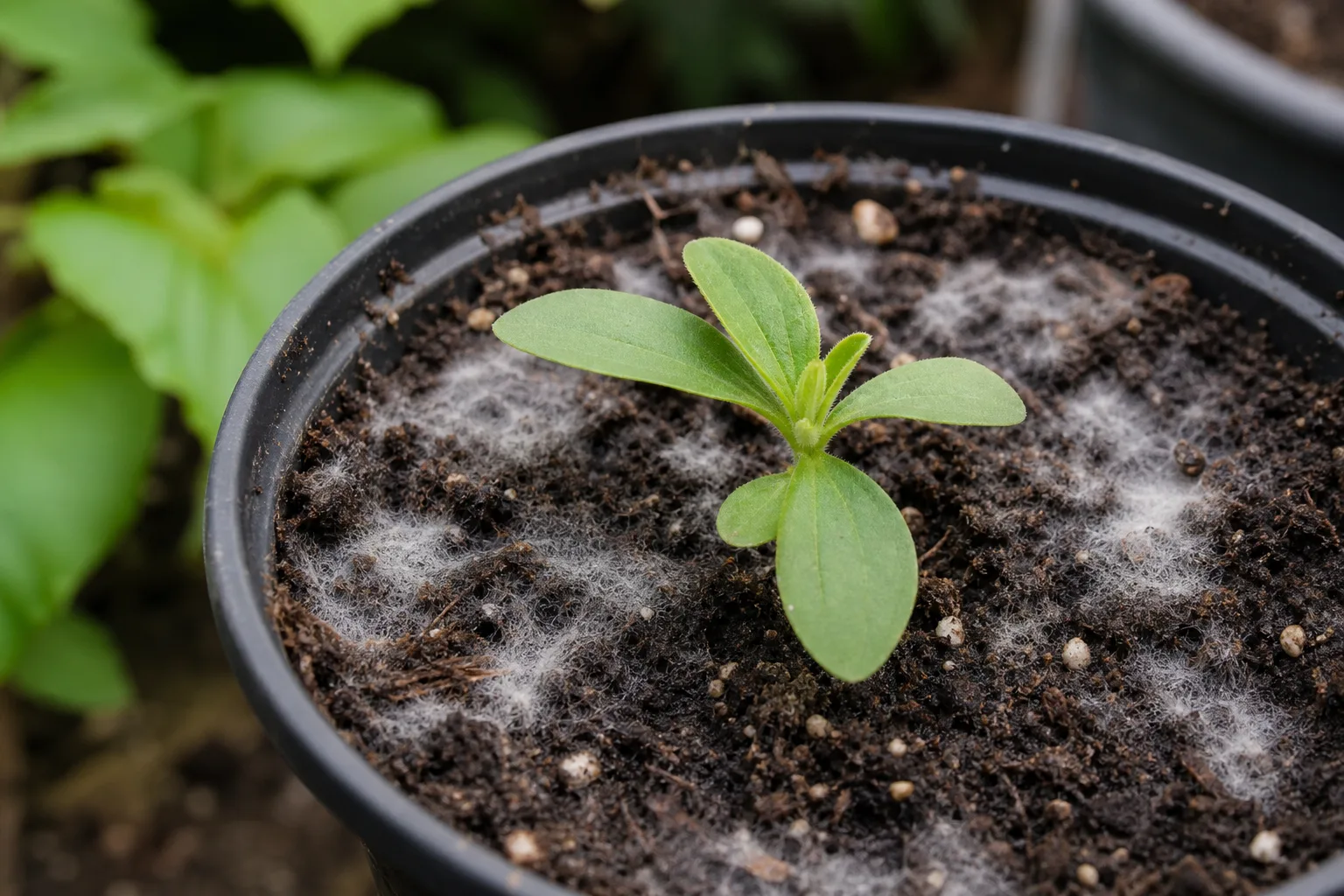
Mold on Soil on Zinnia: Causes, Checks & Fixes
This guide covers mold on soil on Zinnia. See also the general Mold on Soil guide, watering, and light pages for this plant.
Mold on Soil on Zinnia: Causes, Checks & Fixes
Quick answer
White or green fuzz on the surface of a zinnia seed flat or container is almost always saprophytic mold-a fungus feeding on damp organic matter in peat-based mix, not a disease attacking zinnia leaves or flowers. It shows up most often on indoor seed-starting trays kept moist for germination but never shifted to post-emergence dry-down. Zinnias sprout quickly-often within four to eight days at 70–75°F-so flats that made sense under a humidity dome become a mold factory within a week if the dome stays on and the surface never dries.
First step: scrape off the top 1–2 cm of moldy mix, remove any humidity dome, and stop watering until the top 2–3 cm feel dry to the touch. Then resume bottom-watering only until the surface just moistens, and drain the tray completely. Do not mist seedlings to “fix” mold-that keeps stems wet and spreads pathogens.
If stems pinch, darken, or topple at the soil line while mold persists, treat it as possible damping-off and act the same day-not as harmless surface fuzz alone.
Why Zinnia gets mold on soil
Zinnia (Zinnia elegans) is a warm-season annual that wants full sun and freely draining soil once established. The mold problem is almost always a seed-starting or container culture mismatch, not something zinnias growing outdoors in June beds typically show.
The germination moisture paradox. Zinnia seeds need consistent surface moisture to germinate. Many growers cover flats with humidity domes and keep peaty mix wet on top-correct for the first few days. After cotyledons open, that same wet surface breeds saprophytic fungi and invites damping-off organisms. The care shift from “keep moist for germination” to “let the surface dry between bottom-waters” must happen quickly on a fast-germinating crop like zinnia.
Overhead watering and sealed domes. Misting trays or leaving domes on after sprouting keeps foliage and stem bases wet for hours. Cool room air plus saturated peaty mix slows zinnia growth and extends the vulnerable seedling window.
Organic-rich seed-starting mix. Peat, coco coir, and compost in seed mix hold surface moisture. Saprophytic molds colonize that decaying organic layer when evaporation is slow-common under grow lights without airflow.
Shallow frequent watering on containers. Outdoor potted zinnias can show surface mold when gardeners sprinkle the top daily without letting it dry. In-ground zinnias in full sun rarely develop soil mold because the surface dries fast and irrigation targets the root zone-not constant wetting of the top centimeter.
Fungus gnat habitat. Small flies over a zinnia flat mean the mix stays wet too long. Fungus gnats thrive in damp potting soil, and surface mold shares the same damp organic environment; controlling moisture addresses both.
What mold on soil looks like on Zinnia
Typical surface mold on seed flats:
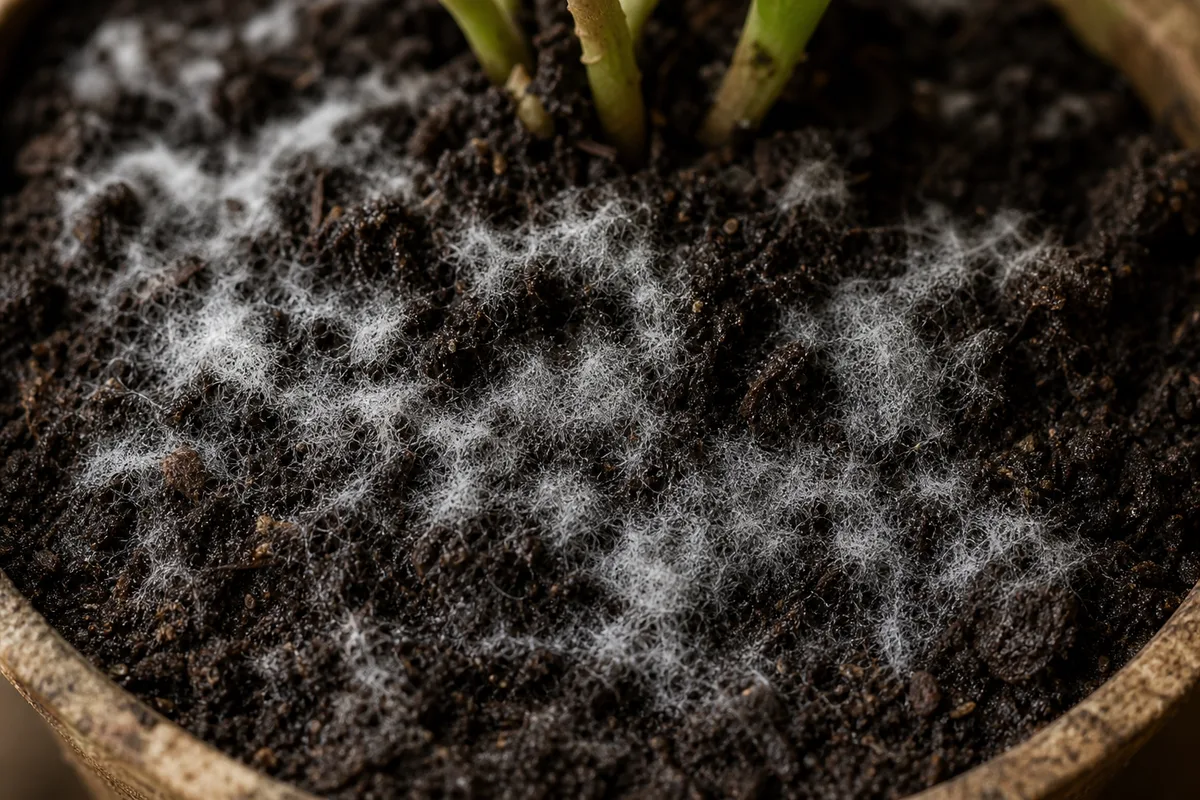
Mold on Soil symptoms on Zinnia - compare with healthy tissue on the same plant.
- White, gray, or pale green fuzzy film on the top 1–2 cm of peaty mix
- Growth in patches across cells or along tray edges where moisture pools
- Cotyledons and first true leaves still look green and upright in early stages
- Surface feels cool and clings to your finger days after the last watering
- Small dark flies may rise when you tap the tray rim
On outdoor containers or garden zinnias (less common):
- Fuzzy growth on mulch, compost top-dress, or the soil surface after repeated shallow watering
- Plants may still bloom; mold stays on the mix, not on petals or leaves
- Often appears in partly shaded pots where mix dries slowly
Signs the problem is deeper than surface mold:
- Stems pinch, water-soak, or turn brown right at the soil line
- Seedlings that stood upright yesterday lie flat with thread-thin bases
- Musty or sour smell from the tray
- Lower leaves yellow while mix stays wet in established pots
Unlike powdery mildew on zinnia foliage-a dry white powder on leaves-soil mold stays on the mix. Unlike grey mould on spent blooms from chronic overwatering, surface mold does not coat open flowers.
Lookalikes to rule out first
Green algae on the soil surface - Slimy green film in constant moisture and low light, not fuzzy white mold. Fix with more light, airflow, and surface dry-down-not fungicide.
Powdery mildew on leaves - White powder on foliage and stems, not confined to soil. Requires spacing, base watering, and foliar disease management.
Mineral or fertilizer crust - Hard white or tan crystals on a dry surface, usually without fuzz or musty smell. Flush containers and reduce fertilizer rather than scraping for mold.
Damping-off collapse - Seedlings pinching and toppling at the soil line in cool wet mix. Mold may be present, but the urgent problem is stem rot, not cosmetic surface fuzz. See damping-off on Zinnia for removal and tray recovery.
Botrytis on spent blooms - Grey fuzzy mould on wet flower petals in humid beds, not on seed-starting mix alone. Deadhead affected blooms and improve base watering.
How to confirm mold on soil
Work through these checks before repotting, fungicide, or discarding a whole flat:
- Where is the growth? Fuzzy film on soil only with firm stems suggests harmless saprophytic mold. Pinching or rot at the soil line suggests damping-off escalation.
- Surface dry-down speed - After bottom-watering, note how many days the top 2–3 cm stay damp. If the surface never lightens in color within two days under grow lights, you are overwatering post-emergence.
- Humidity dome status - Domes still on after most zinnias have sprouted strongly favor mold and damping-off. Remove domes once green cotyledons appear.
- Stem firmness - Pinch each seedling at the soil line. Firm green tissue supports surface-scrape and dry-down. Mushy or thread-thin bases mean remove that cell immediately.
- Smell probe - Musty surface smell is common with mold. Sharp sour anaerobic smell suggests deeper saturation-inspect roots in containers or escalate on flats.
- Gnat test - Tap the tray. Persistent fungus gnats confirm chronic wet organic mix-the same habitat as surface mold. See fungus gnats on Zinnia if flies remain after dry-down.
- Context - Indoor peat flat in March? Very likely moisture-culture mold. Mature zinnia in a sunny July bed with surface fuzz? Check shallow watering, mulch pile-up, or slow drainage in a container.
Confirmed surface mold: fuzzy top layer, firm seedlings, no sour smell, no new collapses after you improve dry-down. Suspected damping-off: any pinching stem, overnight toppling, or white cobweb growth at stem bases-switch to damping-off protocol.
First fix for Zinnia
Scrape off the top 1–2 cm of moldy mix, remove humidity domes, and let the top 2–3 cm dry completely before the next bottom-water.
Use a spoon or fork to lift visible mold and any loose algae on the surface. Discard scraped material-do not compost infected flat mix indoors. Do not spray fungicide on the soil as a first response; saprophytic surface fungi are controlled by drying the surface and correcting watering, not chemicals on day one.
After scraping:
- Bottom-water lightly - Set the tray in shallow water until the mix darkens slightly below the surface, then lift and drain completely. Never leave flats sitting in standing water.
- Add airflow - A gentle fan reduces humidity around stems without flattening seedlings.
- Warm the flat - Soil near 21–24°C (70–75°F) speeds zinnia growth past the seedling danger window.
- Bright light - Strong light produces stout stems that harden faster than leggy sprouts in dim conditions.
Do not repot every seedling on day one unless multiple cells show stem pinching or the whole tray smells sour. Most first-time mold flares on otherwise firm zinnias clear once post-emergence dry-down begins.
Step-by-step recovery if mold returns
If surface mold reappears within a week:
- Scrape again - Remove the new fuzzy layer and any green algae with it.
- Extend dry-down - Wait until the top 2–3 cm feel dry before the next bottom-water, even if cotyledons look slightly less turgid for a few hours-zinnias recover quickly from brief surface dryness better than from chronic wet feet.
- Bottom-water only - Stop overhead misting entirely after germination.
- Thin crowded cells - One strong zinnia per cell improves airflow at the soil line.
- Replace degraded surface mix - If peat has crusted, scrape 2–3 cm and top with dry vermiculite or fresh sterile mix only after confirming you will keep that layer dry.
- Remove collapsed seedlings - Any pinching or toppled sprout goes in the trash immediately so pathogens do not move through shared wet mix.
- Repot survivors if chronic - When mold and gnats persist despite two weeks of corrected culture, transplant sturdy seedlings with several true leaves into individual pots with fresh well-draining mix rather than nursing a contaminated flat.
Hold fertilizer until seedlings have several true leaves and watering rhythm is stable.
Recovery timeline and what improvement looks like
Surface mold should stop reappearing within one to two weeks once the top layer dries between bottom-waters. Within several days you should see the mix lighten at the surface, fewer gnats when you tap the tray, and no new fuzzy patches after a correct dry-down cycle.
Judge recovery on firm stems at the soil line, clean new true leaves, and no overnight collapses-not on whether old cotyledon edges look perfect. Zinnia seedlings that were only surface-affected usually grow out of the highest risk period within one to two weeks in warm, bright conditions.
If mold returns every two to three days despite scraping, or new seedlings pinching at the base, assume the flat is contaminated-discard collapsed plants, sanitize trays before the next sowing, and start a backup flat with sterile mix rather than fighting a chronic batch.
When soil mold signals damping-off on Zinnia
Surface mold and damping-off share wet peaty mix but differ in urgency. Harmless saprophytic mold sits on top while stems stay firm. Damping-off rots stems exactly at the soil line-seedlings topple flat and cannot be saved once collapsed.
Treat mold as a damping-off warning when:
- Stems water-soak or narrow to thread thickness at the base
- Multiple cells fail within 24–48 hours in the same tray
- White cobweb-like growth appears on stem bases, not just on open mix
- Pre-emergence rot stops seeds from sprouting while mix stays cool and wet
In those cases, remove infected seedlings immediately, warm and dry the environment for survivors, and read the full damping-off guide before reusing trays or mix. Zinnias outgrow the highest damping-off susceptibility once they develop several true leaves and a stronger root system-speed that transition with heat, light, and airflow.
Chronic wet mix that feeds mold can also progress to root rot in established container zinnias. Escalate if mature plants yellow on wet soil with soft stems, not just surface fuzz on seedlings.
What not to do
Do not leave humidity domes on “until every seed sprouts” once most zinnias have emerged-domes trap moisture around stem bases.
Do not mist seedlings to wash mold away; you wet stems and spread spores through droplets.
Do not scrape repeatedly without changing how the surface dries-that only resets the colony.
Do not reuse mix or un-sanitized trays from a mold-heavy flat for the next zinnia sowing.
Do not overhead-water seed flats after germination when bottom-watering is available.
Do not assume mildew-resistant zinnia cultivars prevent soil mold-those genetics target foliar powdery mildew, not saprophytic surface fungi.
Do not compost collapsed seedlings or heavily moldy flat mix indoors.
Do not reach for broad fungicide drenches as a first fix when drying the surface addresses saprophytic fungi directly.
How to prevent mold on soil next time
Shift watering at emergence. Keep mix moist for germination, then remove domes and switch to bottom-watering with surface dry-down per the zinnia watering guide post-emergence protocol.
Use sterile seed-starting mix and clean trays for each zinnia batch. Garden soil and reused flats import pathogens that cause both mold and damping-off.
Warm and light from day one after sprouting. Fast zinnia growth in heat and bright light shortens the vulnerable seedling window.
Run gentle airflow across flats to mimic greenhouse conditions that discourage fungal growth on damp surfaces.
Transplant on time. Move sturdy zinnias to outdoor beds or larger pots in full sun once soil warms-outdoor zinnias in well-drained soil rarely show indoor-style surface mold.
For container zinnias, water at the base when the top 2–3 cm dry, empty saucers after each drink, and avoid daily shallow sprinkles that wet only the surface.
Seed flats vs. containers vs. in-ground zinnias
Seed flats (highest mold risk) - Peat mix, domes, and overhead habits keep surfaces wet. Bottom-water, remove domes at first sprout, scrape surface mold promptly, and watch for damping-off crossover. This is where most “mold on zinnia soil” searches originate.
Containers (moderate risk) - Potted zinnias on shaded patios or overwatered on a calendar can grow surface mold on organic-rich mix. Fix drainage, move to full sun, and match the dry-down checks in the watering guide. Mold here often pairs with overwatering if lower leaves yellow on wet mix.
In-ground garden beds (low risk for soil mold) - Established zinnias in full sun and well-drained soil rarely show fuzzy surface mold. If you see growth, look for thick wet mulch, compost piled against stems, or chronic sprinkler patterns that never let the surface dry.
Related Zinnia guides
- Zinnia watering guide - post-emergence dry-down, bottom-watering flats, and container checks
- Damping off on Zinnia - stem pinching, tray recovery, and when seedlings cannot be saved
- Fungus gnats on Zinnia - wet-soil flies that share habitat with surface mold
- Overwatering on Zinnia - yellow leaves, soft stems, and grey mould on blooms when roots stay saturated
- Root rot on Zinnia - escalation when chronic wetness damages established plants
Conclusion
Mold on zinnia soil is usually a moisture alarm on damp peat-not a death sentence for the flat. Scrape the affected surface, remove domes, let the top 2–3 cm dry between bottom-waters, and add warmth, light, and airflow so fast-germinating zinnias grow past the fragile seedling stage. When stems stay firm and new true leaves emerge clean, surface mold typically clears within one to two weeks. When stems pinch or seedlings topple, shift immediately to damping-off response-cosmetic scraping alone will not save collapsed cells.