East-facing windows offer gentle morning sun and bright indirect light the rest of the day—often the sweet spot for tropical foliage. Leaves get energy early without baking in afternoon heat through glass.
This guide compares ten species by morning-light fit, growth rate, and watering rhythm. See also Best Plants for Indirect Light.
The ten best indoor plants for east windows for most homes are Monstera deliciosa, Pothos, Philodendron, Calathea, Prayer plant, Boston fern, Aglaonema, Spider plant, Peace lily, Parlor palm. Morning sun fuels growth without the scorch risk of west or south afternoon rays.
Why East Windows Work for Tropicals
Morning sun is cooler and less intense than west or south afternoon rays. Many aroids and ferns grow vigorously with east exposure while avoiding midday scorch. (University of Maryland Extension)
Plants a few feet back from east glass still receive excellent bright indirect light for much of the day.
Quick Pick: Best Plant for Your Situation
For split-leaf statement growth, choose monstera deliciosa.
For easy trailing vines, choose pothos or philodendron.
For patterned leaves, choose calathea or prayer plant.
For pet-safe arching form, choose spider plant.
How to Choose
Use east morning sun for growth, not punishment—if leaves bleach, pull back from glass. Group humidity lovers together; east baths and kitchens often suit ferns.
How We Selected These Ten
Selected for strong performance in bright indirect and gentle morning sun—common east-window conditions in apartments.
Comparison Table
Monstera deliciosa
Best for: east-window statement corners
Difficulty: Easy
Light: Bright indirect
Water: When top 2 in. dry
Best placement: East window or a few feet back
Pet safety: Toxic if ingested
Typical indoor size: 6–10 ft with support
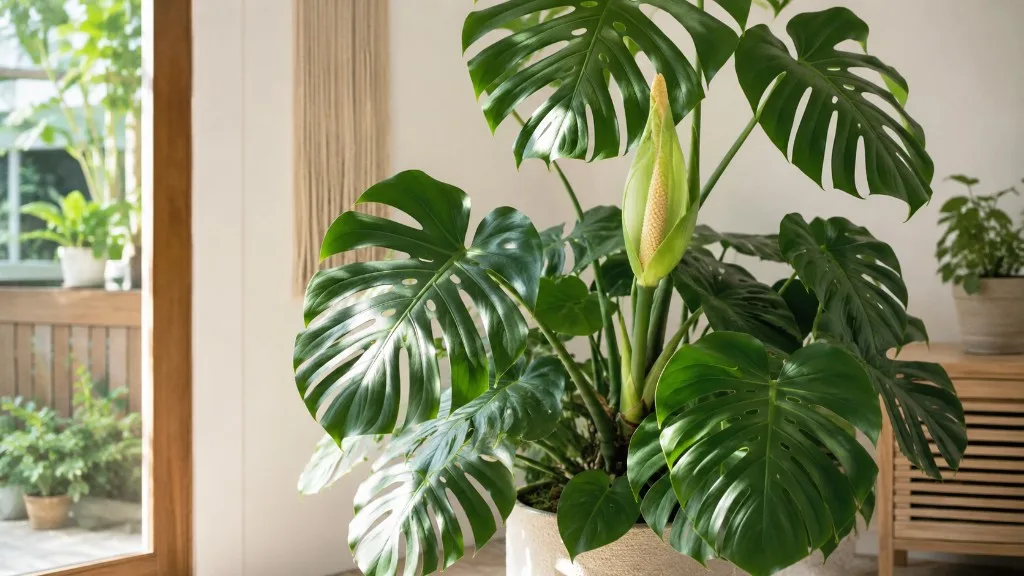
Monstera deliciosa morning east light fuels split leaves without harsh midday burn.
Why it works: Iconic foliage for gentle morning sun.
Who it is for: Bright-room beginners with pole space.
Care reality: Faster growth with east exposure.
Common mistake: Pressing against hot south glass at noon.
Limitation: Toxic; needs space.
Useful care guides:
Pothos
Best for: east trailing shelves
Difficulty: Easy
Light: Low–bright indirect
Water: When top 2 in. dry
Best placement: East sill or shelf
Pet safety: Toxic if ingested
Typical indoor size: Vines 6–10 ft
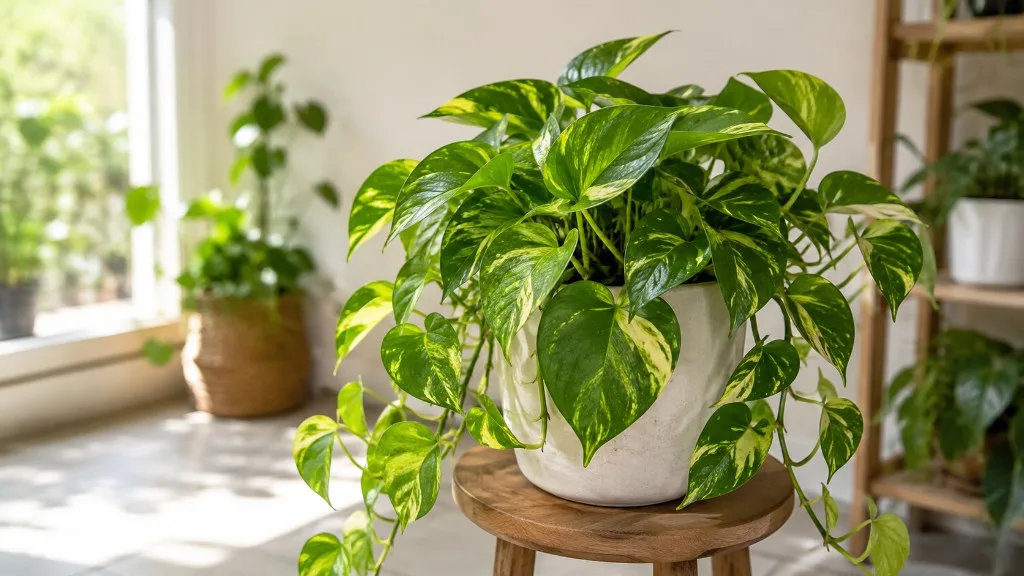
Pothos grows noticeably faster on east windows than north sills.
Why it works: Easy vine that uses morning sun.
Who it is for: Beginners wanting visible growth.
Care reality: Trim to control length toward towels and monitors.
Common mistake: Assuming east light removes drainage needs.
Limitation: Toxic to pets.
Useful care guides:
Philodendron
Best for: east hanging hooks
Difficulty: Easy
Light: Medium–bright indirect
Water: When top 2 in. dry
Best placement: East hook or high shelf
Pet safety: Toxic if ingested
Typical indoor size: Vines 6–10 ft
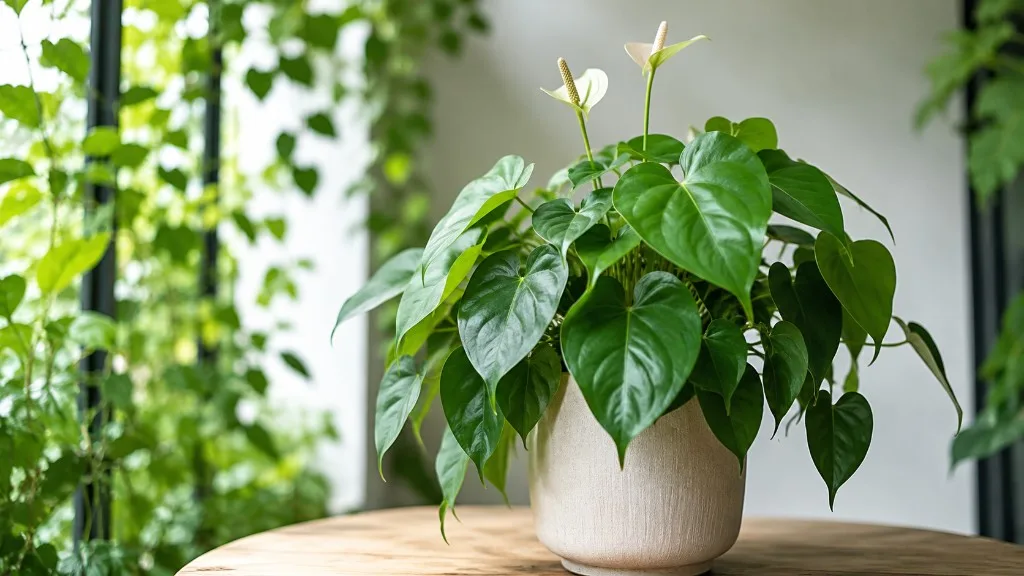
Philodendron heart-leaf types explode on east morning light with moderate watering.
Why it works: Trailing volume with morning sun boost.
Who it is for: Renters wanting fast vertical green.
Care reality: Less leggy than north-window vines.
Common mistake: Letting vines sit in wet dish towels.
Limitation: Toxic to pets.
Useful care guides:
Calathea
Best for: patterned east sills
Difficulty: Demanding
Light: Medium–bright indirect
Water: When top inch dries
Best placement: East sill away from heating vent
Pet safety: Non-toxic (ASPCA)
Typical indoor size: 12–24 in.
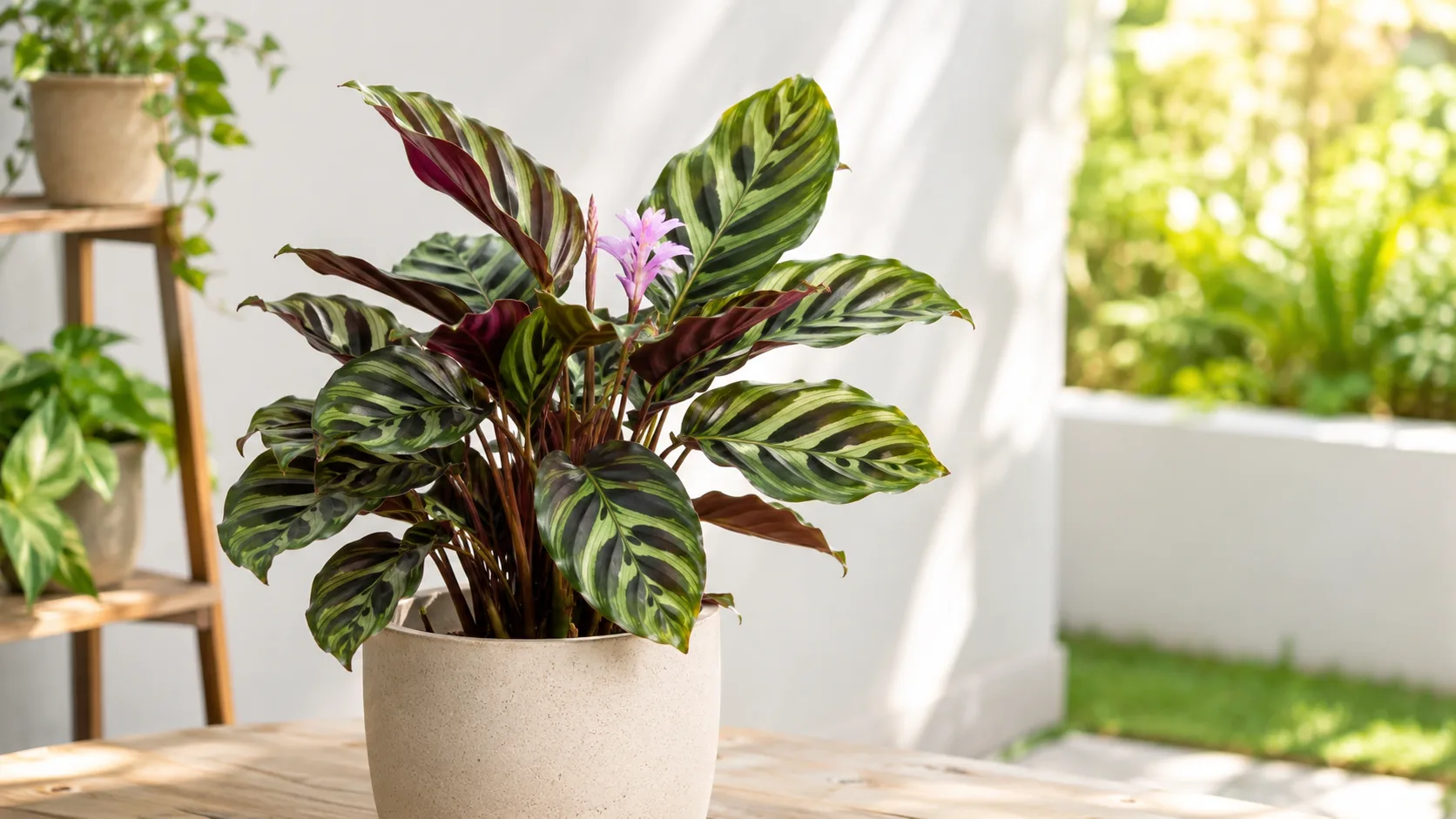
Calathea east light supports patterns without south-window scorch—humidity still matters.
Why it works: Patterned pet-safe leaves.
Who it is for: Attentive east-window growers.
Care reality: Dry winter heating still crisps tips.
Common mistake: Overwatering because morning sun feels gentle.
Limitation: Demanding in dry winters.
Useful care guides:
Prayer plant
Best for: east patterned counters
Difficulty: Medium
Light: Medium–bright indirect
Water: When top inch dries
Best placement: East counter near window
Pet safety: Non-toxic (ASPCA)
Typical indoor size: 10–18 in.
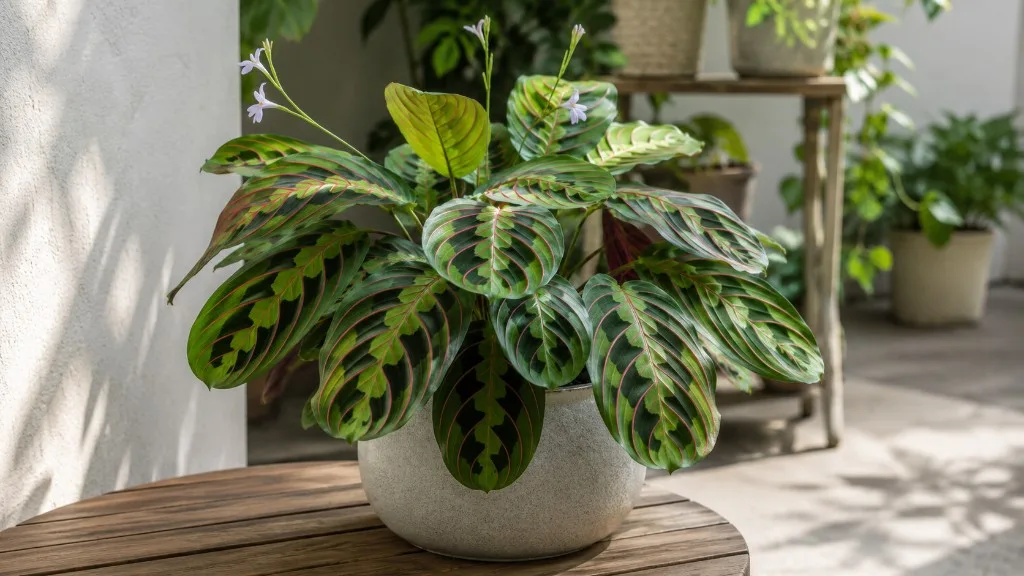
Prayer plant morning light supports steady growth—night folding is normal.
Why it works: Pet-safe pattern plant for east kitchens.
Who it is for: Growers past their first pothos.
Care reality: Consistent moisture; fluoride causes tip burn.
Common mistake: Dark winter mornings without grow light.
Limitation: Fluoride-sensitive tips.
Useful care guides:
Boston fern
Best for: east bright humidity
Difficulty: Medium
Light: Bright indirect
Water: Keep evenly moist
Best placement: East hanging basket
Pet safety: Non-toxic (ASPCA)
Typical indoor size: 12–24 in.
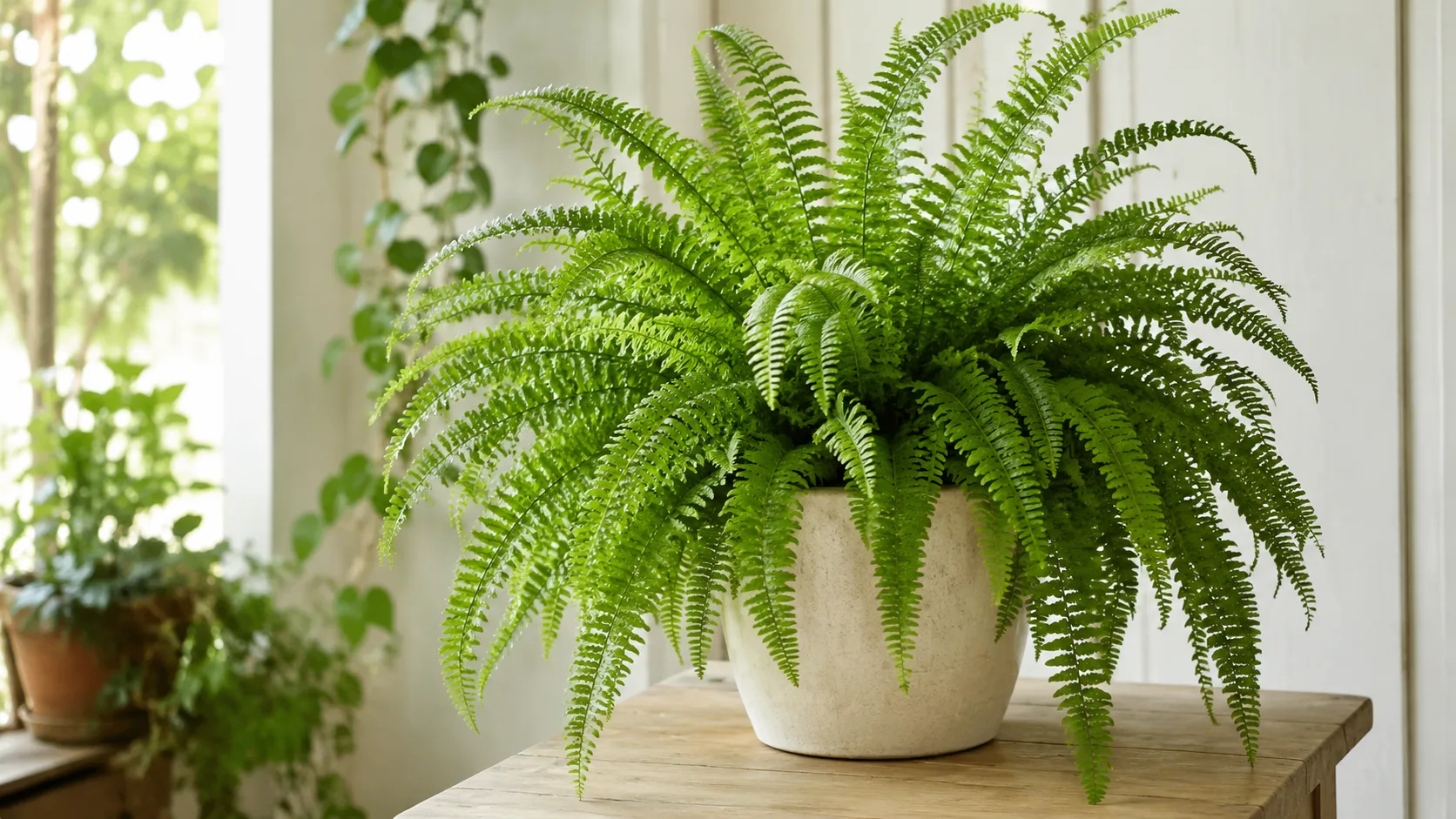
Boston fern east morning light plus humidity suits arching fronds better than south scorch.
Why it works: Classic fern texture for bright east rooms.
Who it is for: Growers who water often.
Care reality: Fronds brown when soil dries or stays soggy.
Common mistake: Guest room east window with rare use.
Limitation: Needs steady moisture.
Useful care guides:
Aglaonema
Best for: east patterned desks
Difficulty: Easy
Light: Low–bright indirect
Water: When top 2 in. dry
Best placement: East desk or sill
Pet safety: Toxic if ingested
Typical indoor size: 1–3 ft
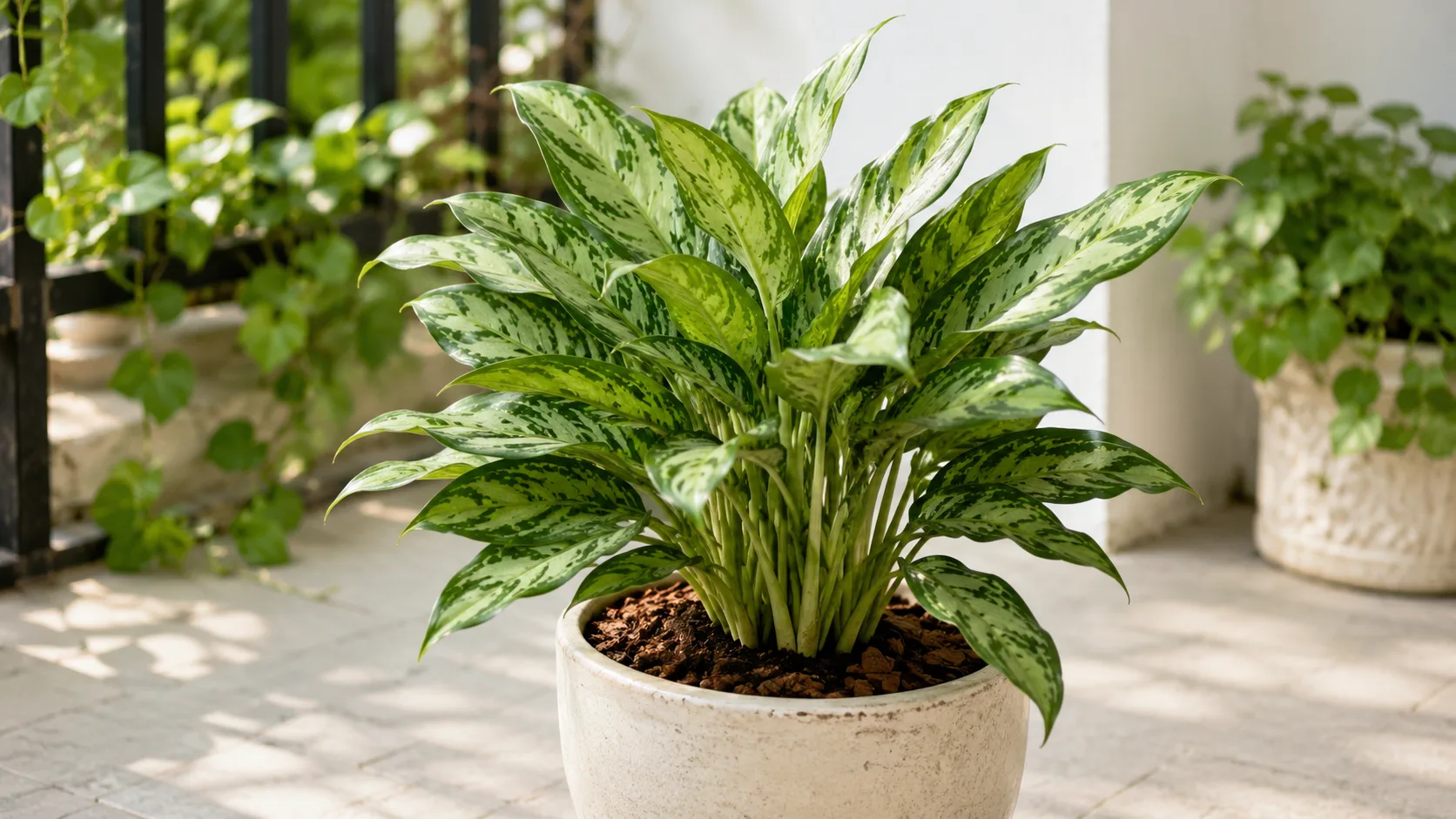
Aglaonema variegation holds on east sills with gentler sun than south exposure.
Why it works: Color without harsh afternoon rays.
Who it is for: Office desks near east glass.
Care reality: Cold drafts cause leaf drop.
Common mistake: Variegated types in very dim winter corners.
Limitation: Toxic to pets.
Useful care guides:
Spider plant
Best for: east family shelves
Difficulty: Easy
Light: Bright indirect
Water: When top 2 in. dry
Best placement: East hanging shelf
Pet safety: Non-toxic (ASPCA)
Typical indoor size: 12–24 in.
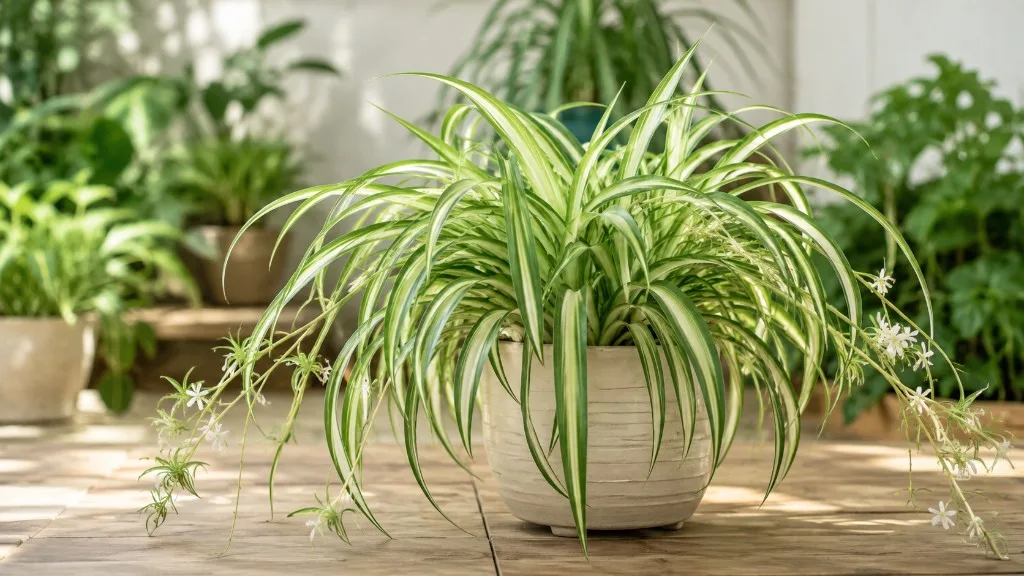
Spider plant produces spiderettes faster on east morning light.
Why it works: Pet-safe arching form.
Who it is for: Family rooms with kids or cats.
Care reality: Rot if soil stays wet in cool east rooms.
Common mistake: Overwatering in winter when evaporation slows.
Limitation: Spiderettes attract curious pets.
Useful care guides:
Peace lily
Best for: east floor corners
Difficulty: Medium
Light: Low–bright indirect
Water: When top inch dries
Best placement: East floor near window
Pet safety: Toxic if ingested
Typical indoor size: 2–4 ft
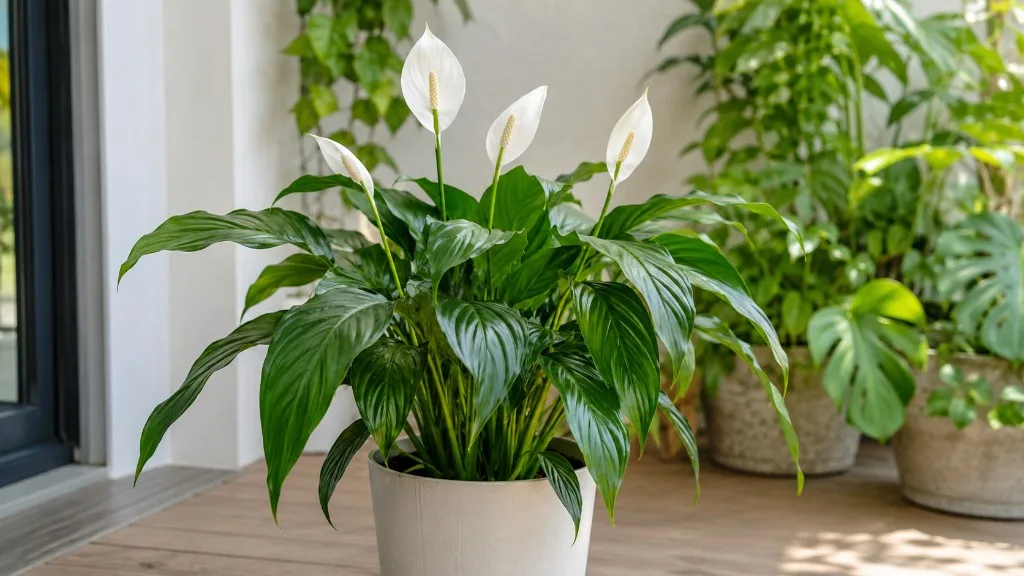
Peace lily east light supports blooms more often than north corners—wilts when dry.
Why it works: Clear water cues with better bloom potential.
Who it is for: Growers who want occasional flowers.
Care reality: Recovers from wilt; chronic wet soil rots roots.
Common mistake: Keeping constantly soggy soil.
Limitation: Toxic to pets.
Useful care guides:
Parlor palm
Best for: east soft floor corners
Difficulty: Easy
Light: Low–bright indirect
Water: When top 3–5 cm dries
Best placement: East floor corner
Pet safety: Non-toxic (ASPCA)
Typical indoor size: 2–4 ft
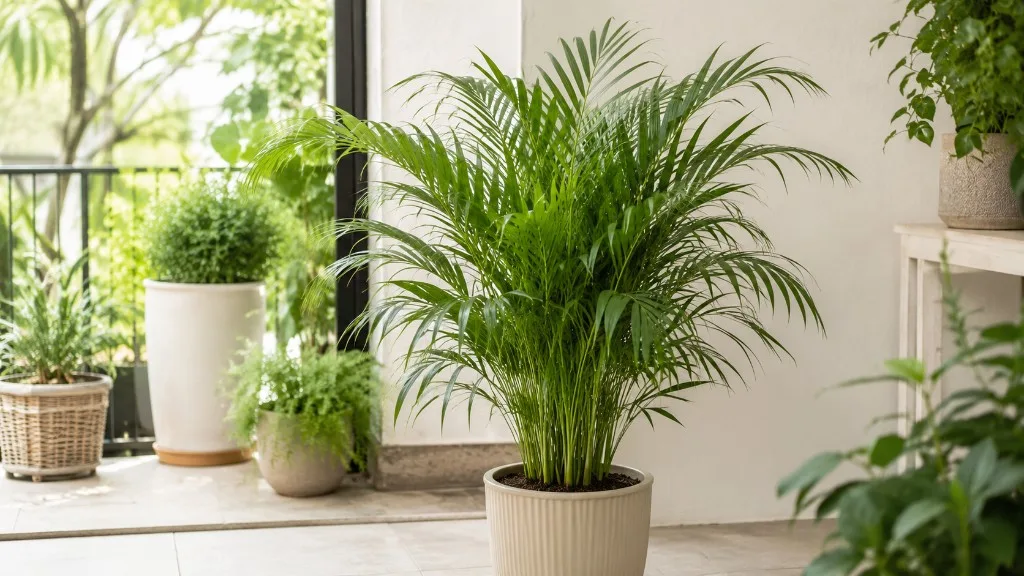
Parlor palm gentle east light suits soft fronds without harsh afternoon burn.
Why it works: Pet-safe palm for east living rooms.
Who it is for: Low-maintenance floor green.
Care reality: Slow grower—patience required.
Common mistake: Hot afternoon sun if room faces east-southeast with intense late light.
Limitation: Slow growth.
Useful care guides:
Common Mistakes
Assuming east light fixes overwatering. Morning sun increases growth, which can increase water needs—but soggy soil still rots roots.
Pressing monstera against east glass in summer. Morning sun is gentler but prolonged contact can still scorch in heat waves—leave an inch of air gap.
Skipping humidity for calathea on east sills. Light helps; dry winter air still browns edges without humidity support.
Ignoring pet toxicity on easy east vines. Pothos and philodendron are toxic—choose spider plant for pet reach zones.
Conclusion
East windows are ideal training grounds for tropical foliage—bright enough for monstera and pothos, gentle enough for calathea with humidity. Start with one east-sill plant, learn its weekly rhythm, then layer ferns or palms.