How to Get Rid of Bean Leaf Beetles Before They Destroy Your Garden
Identify bean leaf beetles, protect seedlings and pods, and choose practical controls with clear advice on row covers, garden cleanup, and pesticide safety.
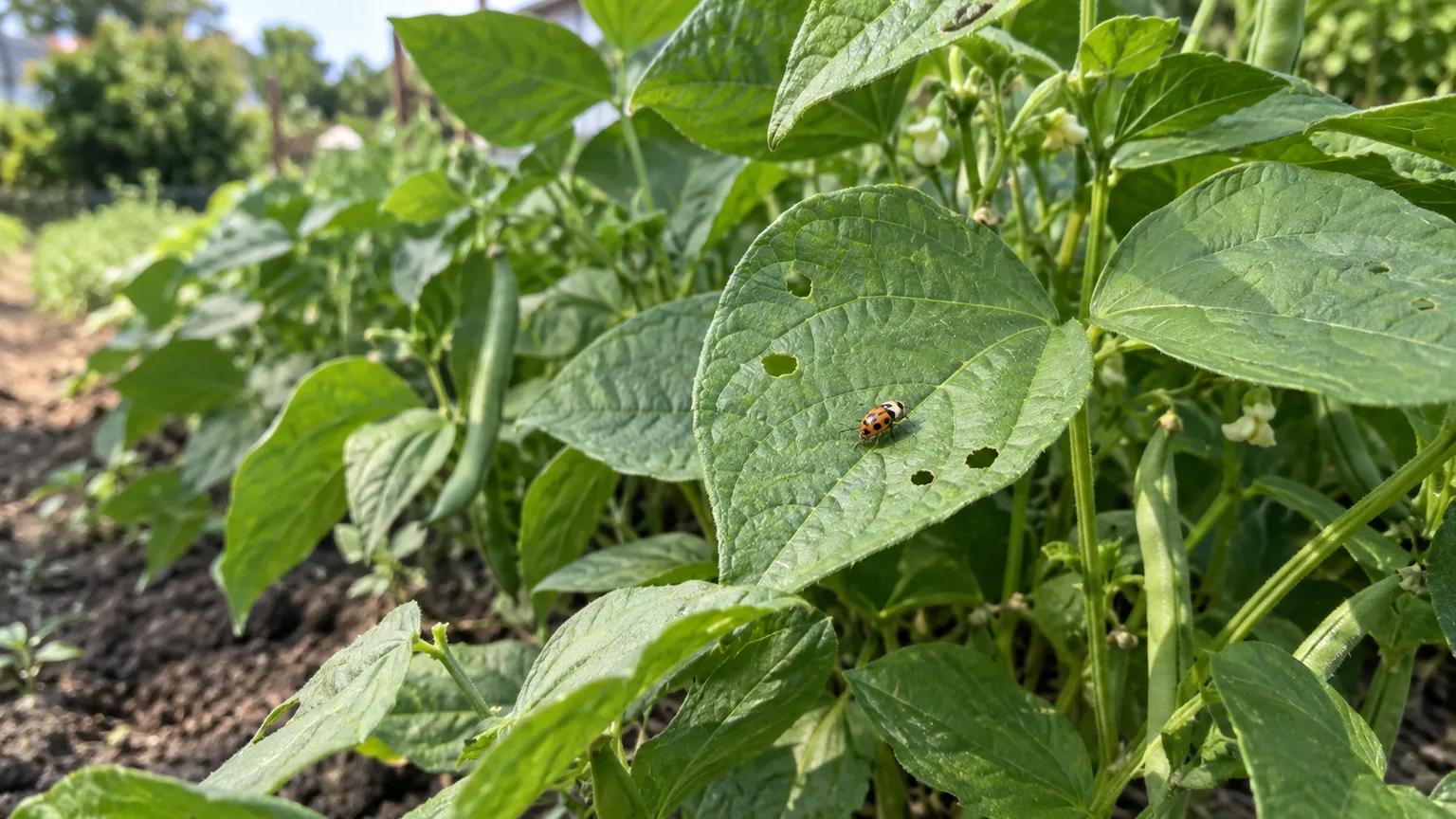
Finding small holes in a row of beans can be alarming, especially when a beetle disappears as soon as you reach for it. Before spraying or pulling plants, look for the insect itself. Bean leaf beetles usually feed on legumes such as snap beans, lima beans, peas, and soybeans, but other insects make similar holes. Correct identification helps you avoid treating the wrong pest—and protects beneficial insects that happen to be nearby.
For a small garden, start by inspecting the youngest plants and the undersides of leaves. If you find adult bean leaf beetles, remove them by hand or use a row cover before more arrive. Keep checking plants as they grow. A single beetle is a reason to scout, not an automatic reason to spray; a pesticide belongs at the end of a decision process, when the crop and pest are listed on the product label and damage justifies the added risk.
At a Glance: Confirm the Beetle Before You Treat
Bean leaf beetles (Cerotoma trifurcata) are small, oval leaf beetles that vary from yellow-green to reddish brown. Look for dark outer margins on the wing covers, a dark triangular marking near the front, and usually several black spots. Adults chew small openings in leaves and may feed on tender pods. Their pale larvae live below ground and feed on roots and underground stems.
To respond, first confirm the insect and note which plants and growth stages are affected. Hand-remove visible adults from a short row; protect young plants with a tightly secured lightweight row cover before beetles arrive; and check whether fresh damage continues. Rotate legumes and clear volunteer beans and infested crop residue when practical, but understand that adults can fly in from other overwintering sites. Consider a pesticide only if the crop is under meaningful pressure and a current product label permits that exact use. NC State Extension’s bean and pea pest profile describes the beetle’s markings, host plants, feeding, and life cycle.
Identify Bean Leaf Beetles Correctly
Bean leaf beetles are easiest to recognize when you can see the body, not just the holes left behind. Their markings vary, so do not rely on a single spot count. A clear photograph taken beside a ruler can help your local Extension office or Master Gardener program confirm an insect you cannot identify in the garden.
Adult Shape and Markings
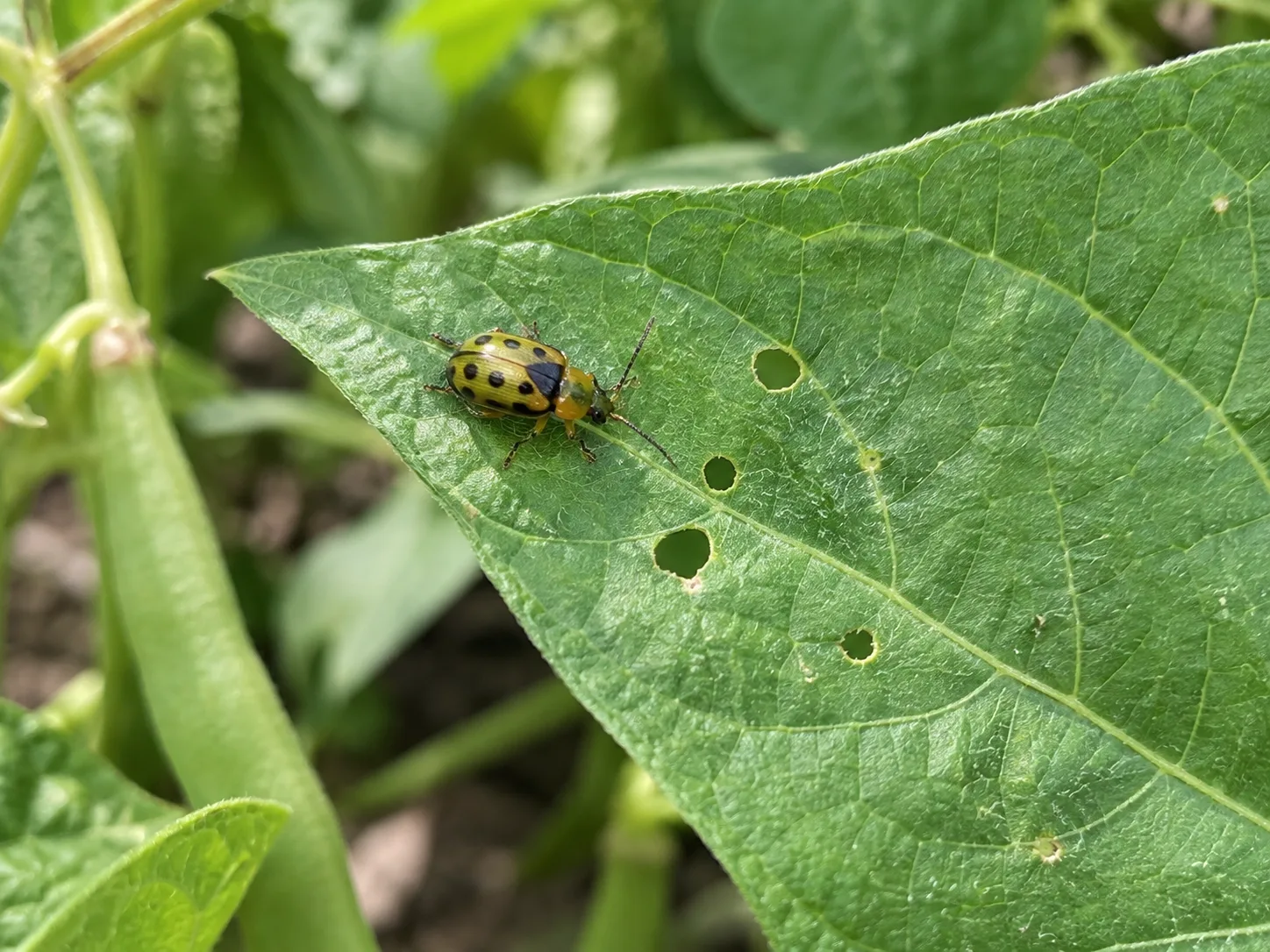
An adult is roughly 3/16 to 1/4 inch long, about the length of a grain of rice. The body is oval and slightly convex. Color ranges from yellowish green to tan, orange, or reddish brown. Many adults have black spots on the wing covers, a dark band around the edges, and a dark triangular mark at the front of the wings. Some individuals have fewer or less obvious spots than others. The triangle and dark wing margin are more useful clues than expecting every beetle to have the same pattern.
Adults often feed on the lower surface of a leaf or move quickly when disturbed. Look for them on beans, cowpeas, peas, and nearby leguminous plants, then check the undersides and young growth around the feeding area. Wisconsin Horticulture’s bean leaf beetle profile also notes the range of adult colors and the dark triangular marking. Epic Gardening’s beetle overview likewise describes the variable color and triangular wing mark, while extension references should guide local management decisions.
Check for Lookalikes
A damaged leaf does not prove that bean leaf beetles are present. Mexican bean beetles are rounder and more coppery or yellow-orange, with many dark spots across the back; they often skeletonize leaves until the tissue between veins looks lacy. A bean leaf beetle is more elongated and usually has a dark marginal band and a triangle at the front of its wing covers. These pests can share host plants, so check both the insect and the style of damage. NC State Extension distinguishes the two by body color, size, spots, and feeding pattern.
Spotted cucumber beetles can also look yellow-green with dark spots, but they are more often found on cucurbits such as cucumbers and squash. If beetles are clustered on bean plants, inspect their markings closely rather than assuming they are cucumber beetles. Other causes of holes include caterpillars, slugs, and flea beetles; slugs may leave slime, while caterpillars often leave frass or ragged feeding. For confirmation, bring a sharp photo or a collected specimen in a closed container to a local Extension diagnostic service.
Bean leaf beetle larvae do not look like the adults. They are slender, pale or whitish grubs with a darker head and darker markings at both ends. They stay in the soil near roots, so they are not the small green worms you may see on foliage. Digging up a plant just to search for larvae is rarely useful; check belowground only if you are already removing a badly damaged plant.
What Bean Leaf Beetles Damage
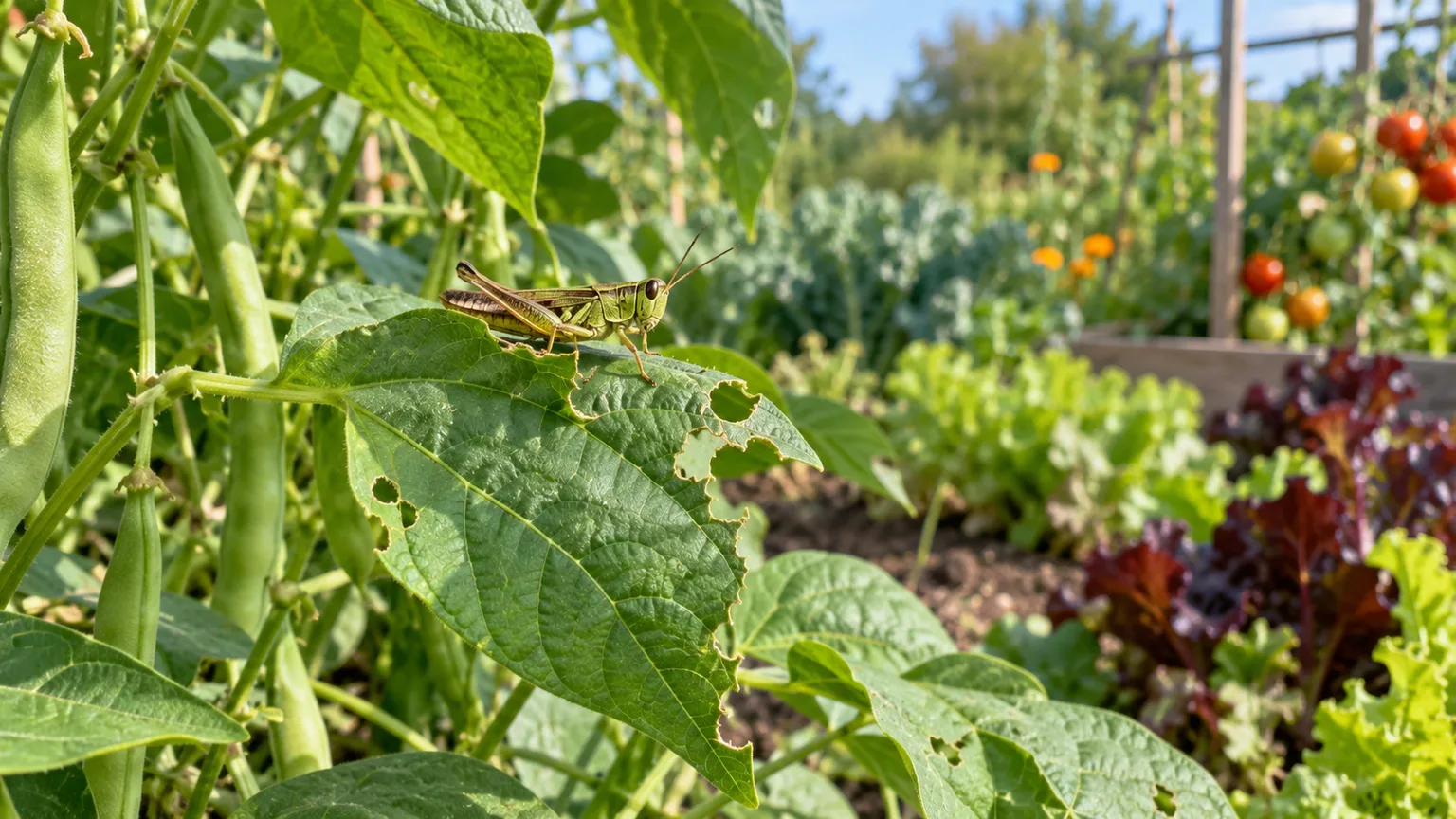
Adults chew small holes in leaves, commonly beginning on young tissue. On a seedling with only cotyledons or its first true leaves, repeated feeding can remove a meaningful share of the plant’s limited leaf area. The result may be slower establishment, reduced vigor, or a weaker stand. Once beans have several healthy leaves and are growing quickly, a few feeding holes may be cosmetic and do not automatically mean the plant will fail.
As the plant shifts from leafy growth toward flowering and pod formation, adults can feed on tender pod surfaces. This may leave shallow scars, pits, or distorted areas. The seeds inside are not usually the first target, but damaged pod tissue can reduce quality and may create an opening for secondary disease. Inspect young pods directly rather than estimating crop loss from leaf holes alone.
Larvae feed below the soil line on roots, nodules, and underground stems. Extension descriptions differ in how much injury they emphasize: root feeding is often minor on established plants, while young plants can be more vulnerable if stems are girdled. A wilted or stunted bean is not enough to diagnose larval injury because drought, root disease, poor drainage, and other soil pests can produce similar symptoms.
Bean leaf beetles also transmit some viruses in legume crops. That possibility is one reason to limit prolonged feeding, but holes in a leaf are not proof that a plant has a virus. Viral mottling, distortion, or stunting can have several causes; ask a local plant diagnostic service before removing an otherwise productive crop. The University of Wisconsin profile summarizes the beetle’s effects on foliage, pods, roots, and plant vigor.
The Missouri Botanical Garden’s home-garden profile describes round holes between leaf veins and notes that pod feeding is often cosmetic in a home vegetable garden, even though seedling injury can be more serious. That is a useful distinction: assess the actual plant stage and pod quality instead of assuming every mark means the crop is lost.
Understand the Bean Leaf Beetle Life Cycle
Adults survive the winter in leaf litter and other vegetation, often outside the vegetable bed. When weather warms, they move to available host plants, feed, and mate. Females lay small orange eggs in clusters in the soil near a plant’s base. The eggs hatch after a temperature-dependent interval; slender larvae move toward roots and feed underground for several weeks before pupating in the soil. New adults later emerge and continue feeding. NC State Extension reports that a female can lay roughly 175 to 250 eggs and that eggs and larvae develop over weeks, with timing dependent on temperature.
This life cycle explains why picking off adults can reduce immediate feeding without eradicating the pest. Adults may enter from field edges, wooded areas, clover, alfalfa, volunteer beans, or other legumes. Eggs and larvae are protected in the soil, where a foliar spray will not reach them. When later adults emerge, fresh feeding can begin again if susceptible beans are still available.
Why Calendar Dates Vary
The beetle’s active period depends on climate, winter survival, host plants, and local crop schedules. Extension profiles report different seasonal peaks across the southeastern and upper Midwestern United States. In a warm region, adults may appear earlier or remain active longer than in a shorter-season garden. A date that helps a commercial grower in one state can be too late for a home gardener elsewhere.
Instead of relying on a fixed month, begin scouting as bean seedlings emerge and continue through pod development. Ask your county Extension office whether bean leaf beetle activity is reported locally. That gives you a better basis for choosing planting dates or deciding when to install a row cover than copying a calendar from another region.
Scout Beans Before Deciding to Act
Scouting is a short repeatable check, not an elaborate field survey. Walk along the row and examine plants in several spots, including the ends and edges where beetles may enter first. Turn over leaves to find adults feeding below them; look for fresh holes, not just old weathered damage; and inspect new growth and tender pods. A quick phone note about where damage appears makes it easier to tell whether it is spreading.
Look at the plant’s stage and its ability to replace lost tissue. A few shot-like holes on a vigorous plant with multiple leaves are different from heavy chewing on a newly emerged seedling. Likewise, a few leaf marks late in the season are less concerning if pods are already close to harvest, while active feeding on developing pods may matter more. Recheck after several days if beetles are present but damage is light; increasing fresh injury tells you more than one snapshot.
There is no single home-garden threshold that fits every bean variety, climate, planting size, and harvest goal. Commercial recommendations are tied to crop stage and local economics. For a backyard row, use a practical question: are beetles continuing to appear, and is new damage affecting seedlings or pods faster than the plants can grow past it? If not, keep monitoring and avoid a treatment that may harm pollinators or natural enemies without improving the harvest.
What to Inspect at Each Growth Stage
At emergence: Check cotyledons and the first true leaves for fresh holes, missing tissue, and adults. Small plants have less leaf area to lose, so exclusion and hand removal are most valuable now.
During leafy growth: Inspect lower leaf surfaces and growing tips. Record whether damage is stable or appearing on new leaves. Keep a few plants intact for harvest if a section is damaged; do not assume every nearby plant is infested.
At flowering and pod set: Look for adults on leaves and tender pods. Avoid broad insecticide applications to blooming crops or flowering weeds unless the exact product label permits the use and its pollinator restrictions can be followed.
Near harvest: Check pod surfaces and review any pesticide pre-harvest interval before picking. Do not treat a crop just because you found old holes; determine whether active beetles are still causing important damage.
Get Rid of Bean Leaf Beetles With an IPM Plan
Integrated pest management starts with observation and uses several compatible methods rather than expecting one spray or companion plant to solve the problem. On a few garden plants, physical removal and covers may be enough. In a larger planting, repeated scouting can show whether the crop is tolerating damage, whether a cultural change is worth making, or whether a permitted pesticide decision is necessary.
Hand-Remove Adults From Small Plantings
For a short row or container crop, hold a cup or pail beneath a beetle-covered stem and tap the foliage so the adults fall into it. A little soapy water in the container can keep them from climbing back out; do not pour that mixture onto the beans or soil. You can also pick adults into a sealed container. Check the undersides of leaves and nearby plants, then repeat the inspection every few days while fresh adults appear.
Move slowly. Beetles can drop or fly when disturbed, so place the container first and work from the plant’s edge inward. Check leaf undersides and young growing points closely, and keep the task brief enough that you will repeat it. Hand removal is practical for a few plants but frustrating across a large bed or when adults continually fly in from surrounding hosts. In that case, combine it with exclusion or a crop-specific decision based on local advice.
Exclude Beetles With Row Covers
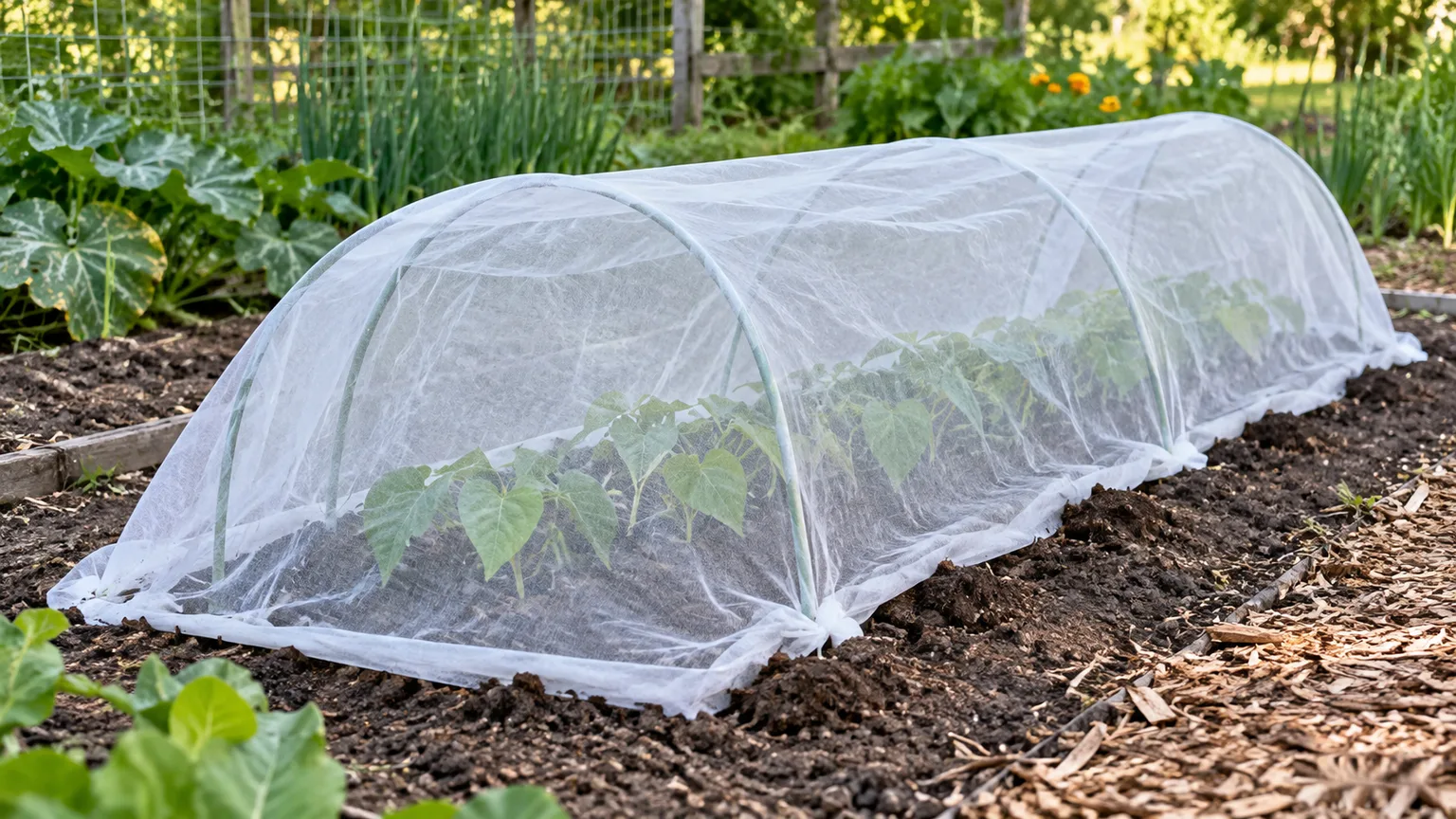
A lightweight floating row cover can keep adult beetles from reaching seedlings, but only if it is installed before beetles are already inside. Drape it over hoops or directly over the young crop without pinching stems, then bury or firmly anchor every edge. A gap at a corner defeats the barrier, and a cover put over an infested row can trap beetles with the crop. Wisconsin Horticulture recommends floating covers for small gardens and emphasizes securing the edges.
Check underneath after installation and open the cover periodically to inspect, weed, and water. Monitor temperature and moisture during warm spells; the cover should not become a hot, damp enclosure. Plan for flowering and harvest access. Beans often self-pollinate, but allowing pollinators into the wider garden and avoiding a cover that interferes with care are sensible parts of the plan. Remove or adjust the cover when its purpose has passed, and keep scouting after removal because new adults may arrive.
Use Planting Dates and Rotation Carefully
In some regions, planting beans a little later can help the crop miss a spring wave of overwintered adults. The Missouri Botanical Garden includes later spring planting among its home-garden IPM strategies. That is a timing tactic, not a universal cure: beetles can return later, and delaying beans may shorten the harvest window or expose the crop to heat, frost, or other pests. Use local Extension planting calendars and your cultivar’s days to maturity before changing the schedule. Succession planting can spread risk by keeping a younger planting available, but it can also provide hosts for longer if every planting overlaps.
Rotate bean beds with unrelated crops when space allows. Rotation may reduce the chance that emerging beetles find a host exactly where last year’s beans grew, and it helps with other pest and disease cycles. Its effect is limited when adults move among nearby beans, soybeans, clover, alfalfa, peanuts, or weedy legumes. Rotation supports an IPM plan; it does not create a beetle-proof boundary.
Reduce Nearby Shelter Without Clearing Wildlife Habitat
After harvest, remove old bean vines and volunteer seedlings from the bed so they do not serve as ongoing hosts. Pull leguminous weeds growing directly among beans and dispose of heavily infested crop residue. Adults can shelter in leaf litter and vegetation, but many overwinter beyond the garden—NC State Extension notes that wooded areas can be important shelter. Raking every leaf from a yard or mowing all flowering vegetation is neither necessary nor a reliable way to eliminate the beetle.
Focus on the crop zone: remove diseased or infested bean residue, manage volunteers, and avoid leaving a pile of old legumes beside next season’s row. Keep leaves used as mulch where they are beneficial and safe for plants. Clean up reduces some nearby habitat and makes spring scouting easier, but expect that mobile adults may still arrive from beyond the bed.
Protect Beneficial Insects
Most insects in a vegetable garden are not the pest you are trying to manage. Lady beetles, lacewings, predatory bugs, spiders, parasitic wasps, and flies can help suppress pests or support a functioning garden food web. Flowering herbs and diverse blooms can provide nectar and pollen to adult beneficial insects, but no companion plant is a guaranteed bean leaf beetle repellent or control. Treat habitat planting as support for natural enemies, not a substitute for checking the crop.
If you see only a few beetles and the beans are growing well, monitoring may be the most protective choice. Avoid spraying flowers, beneficial insects, or the entire garden for a small, localized problem. Purdue Extension’s vegetable garden pest guidance advises conserving beneficial arthropods and using insecticides only when necessary, with care around blooming crops and bees.
When Pesticides Are Warranted
A pesticide may be worth considering when a correctly identified beetle is causing repeated, substantial injury to vulnerable seedlings or developing pods, nonchemical measures are not sufficient, and the harvest is important enough to justify treatment. First verify that a product’s current label lists beans or the exact crop you are growing and names the target pest or permits that use. A product labeled for lawns, ornamentals, or soybeans is not automatically legal or safe to use on garden snap beans.
Sprays act on exposed insects; they do not remove eggs and larvae protected in the soil, and they may need to be timed to adults. Do not increase a concentration, mix products, or repeat an application because damage is visible. Use only the label rate and application method, and consider whether a spot treatment can reduce exposure compared with treating every plant. If you cannot find a product label that covers your crop and pest, do not improvise—ask a local Extension office or licensed applicator about legal options.
Follow the Label, Protect Pollinators, and Keep Harvest Safe
Read the entire label before opening the container. Check the crop and site list, target pest, application rate, maximum number of treatments, personal protective equipment, re-entry interval, rain or drying restrictions, environmental hazards, and any restrictions near water or wildlife. Purdue Extension’s label guidance emphasizes that label directions include application rates, re-entry intervals, harvest restrictions, and handling precautions. The label is the source for that specific formulation; recommendations for a different product are not interchangeable.
For edible beans, find the pre-harvest interval (PHI)—the minimum time required between the last application and harvest. The PHI can differ by product, crop, and application rate. Do not guess based on a familiar active ingredient or wash produce to shorten the stated interval. The National Pesticide Information Center’s pre-harvest interval explainer describes why the label’s PHI matters for treated food crops. Also follow the re-entry interval before entering or handling treated plants.
Protect pollinators and other beneficial insects. Read the label’s “Environmental Hazards” and “Directions for Use” sections for bee and bloom restrictions; do not assume that dusk application makes a restricted product safe. Pesticide Environmental Stewardship’s pollinator-label guide explains where these warnings appear and why risk can include residues after application. Keep spray off blooming beans, flowering weeds, and neighboring flowers whenever the product prohibits exposure. Do not apply in wind, rain, or heat conditions that conflict with the label, and keep people and pets away for the required interval.
“Organic” or botanical on a product label does not mean harmless to bees, aquatic life, or the gardener. Neem, pyrethrins, soaps, and other products differ by formulation and may injure beneficial insects or burn plants in some conditions. Avoid homemade mixtures and broad-spectrum sprays. If pest numbers are low, physical removal usually has fewer side effects and lets pollinators continue to use the garden.
Conclusion
The most reliable way to manage bean leaf beetles is to verify the adult, check the stage and amount of fresh damage, then use the least disruptive measure that protects the crop. Hand-pick small numbers, cover vulnerable seedlings before beetles arrive, and reduce volunteer beans and infested residue after harvest. Keep scouting because adults can move in from beyond the garden, and treat a planting date or rotation as one part of prevention rather than a promise of control.
Use a pesticide only when the crop needs it and a current label explicitly allows the use. Follow its pollinator warnings, protective directions, re-entry interval, and pre-harvest interval. With that sequence, you can protect a bean harvest without turning every leaf hole—or every visiting insect—into a reason to spray.