The 5 Best Backpack Leaf Blowers, Reviewed
Compare five backpack leaf blowers by airflow, force, runtime, weight, noise, and maintenance so you can choose the right tool for your yard.
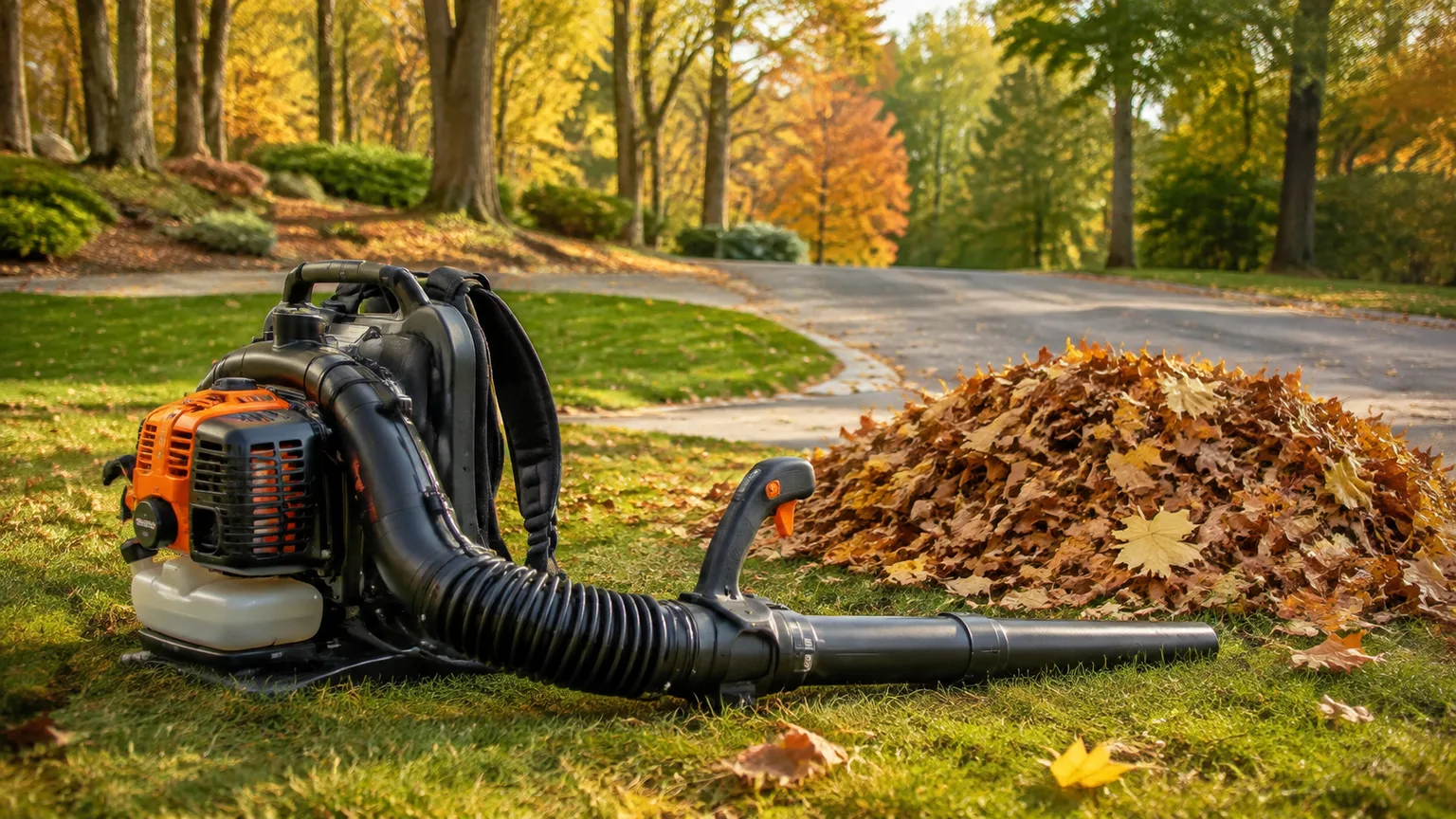
Backpack blowers earn their keep when a handheld model leaves your arm tired before the yard is clear. The useful question is not which machine prints the largest CFM or MPH number; it is whether the blower can move your actual mix of dry leaves, wet mats, acorns, grass clippings, and small sticks while remaining manageable to wear, start, store, and maintain.
This review compares five established models across that broader question. I cross-checked current manufacturer specifications and support information with independent gardening-tool testing coverage, then added the practical decisions a spec sheet usually leaves out. Where a number is a manufacturer maximum, I label it as such; where a source reports a test impression, I keep that distinction clear. I did not run a new hands-on test of these machines, so this guide does not turn desk research into a personal field-test claim.
The short version: the RYOBI 40V HP Brushless 850 CFM Backpack Blower Kit is the most versatile electric choice if you can live with battery logistics; the Husqvarna 150BT is the best gas fit for demanding residential cleanup; the Greenworks Pro 80V 610 CFM is the easiest to justify when lower weight matters more than maximum clearing speed; and the ECHO PB-770T is the serious heavy-debris machine. The Wild Badger 53cc offers a budget route to high-volume gas power, but its value depends on how much you are willing to handle fuel, weight, and a less polished ownership experience.
How I evaluated the five backpack blowers
I looked at five jobs that determine whether a backpack blower is genuinely useful: moving leaves across open lawn, peeling damp leaves off hardscape, working around beds and tree trunks, finishing a reasonable area on one charge or tank, and surviving the ownership chores between cleanups. Comfort is not a cosmetic extra here. A blower that is powerful but makes you fight the harness, tube, vibration, or throttle can slow the whole job.
The product specifications come from current pages for RYOBI, Husqvarna, Wild Badger, Greenworks, and ECHO. For technique and leaf destinations, I also checked Penn State Extension’s leaf-recycling guidance, BBC Gardeners’ World Magazine’s tool testing, and its autumn leaf collection guide.
That mix matters because a product page can tell you what a motor is rated to do, but not whether a number is measured at the nozzle, how long the battery claim lasts at full power, or whether a machine is pleasant to use beside a neighbor’s house. A responsible recommendation has to connect the published number to the job and state what the number cannot tell you.
Quick comparison: the specifications that matter
The table uses manufacturer-stated maximums. CFM is air volume, MPH is air speed, and Newtons are a force measurement used by some brands. They are not interchangeable, and different test conditions mean these figures are best used as a starting point rather than a laboratory ranking.
| Model | Power | Published airflow and speed | Published weight or runtime detail | Best fit |
|---|---|---|---|---|
| RYOBI RY40HPLB02K | 40V battery, two 8Ah batteries | 850 CFM, 180 MPH | Over 2 hours on low using both batteries | Large residential yards where quieter operation and no fuel matter |
| Husqvarna 150BT | 51cc, 2-cycle gas | 765 CFM, 270 MPH, 22 N | 21.95 lb; 50:1 fuel mix | Wet leaves, long sessions, and demanding residential cleanup |
| Wild Badger 53cc | 53cc, 2-cycle gas | 853 CFM, 174 MPH | 50–60 minutes per fill, according to the manufacturer | Budget-minded buyers who need high air volume |
| Greenworks Pro 80V | 80V battery, brushless motor | 610 CFM, 180 MPH | 9.5 lb tool-only; 5Ah battery and rapid charger included | Smaller or medium yards where carrying weight is the main constraint |
| ECHO PB-770T | 63.3cc, 2-cycle gas | 756 CFM, 234 MPH, 33 N | 24.3 lb dry; 68.3 fl oz fuel tank | Heavy debris, large properties, and frequent use |
The table reveals an important buying trap. Greenworks is dramatically lighter as a tool-only figure, while ECHO is substantially heavier but publishes 33 N of force and a large fuel tank. RYOBI’s runtime headline is impressive, but it is explicitly based on low-speed operation with two high-capacity batteries. Ask what the machine weighs ready to work, how long it lasts at the setting you actually use, and how quickly you can resume after a depleted battery or empty tank.
Best overall electric: RYOBI 40V HP Brushless 850 CFM Backpack Blower Kit
Why it stands out
The RYOBI RY40HPLB02K is the strongest all-around electric pick because it combines a large 850 CFM air volume with a useful 180 MPH air speed and a two-battery kit. RYOBI says the 40V HP system delivers more power than a 58cc gas backpack blower, but that is a brand-specific performance claim, not a reason to assume every battery blower matches every gas machine. It is still a meaningful signal that this model is designed for large piles and compacted grass clippings, not just a few dry leaves on a walkway.
Its best ownership feature is the ability to use two 40V 8Ah batteries. The manufacturer’s claim of more than two hours is tied to low speed and variable-trigger use, which is exactly how a careful operator should approach a long cleanup: use only as much force as the surface needs, and reserve the high setting for wet mats, dense edges, or stubborn debris. The LCD battery display, cruise control, and variable-speed trigger reduce guesswork and make it easier to keep a steady stream moving across a lawn.
The RYOBI is also a smart choice when noise and fumes affect when you can work. Its WHISPER SERIES design is advertised as 83% quieter than gas, and an electric motor eliminates fuel mixing, pull-start behavior, spark-plug checks, and gasoline storage. That does not make it silent or impact-free, but it is a substantial comfort advantage for a residential property where you want to finish a cleanup without announcing it to the whole block.
Where it falls short
The two-battery setup solves runtime only if you have the batteries charged and a workable plan for the charger. It also raises the ready-to-use weight and total system cost, so compare the kit rather than the bare tool. A battery blower can be the better long-term choice if you already own compatible 40V equipment; it is less compelling when this purchase starts a new platform and you need several spare packs for peak leaf season.
Do not choose the RYOBI solely because 850 CFM is the highest airflow in this group. High volume helps sweep a broad lawn, but damp leaves stuck to paving still need a concentrated stream and sometimes a closer nozzle position. Around delicate beds, the same power that saves time on open turf can scatter mulch or bend small stems, so keep the trigger low and direct air across the surface rather than straight into the planting.
Best overall gas: Husqvarna 150BT
Why it stands out
The Husqvarna 150BT is the best gas choice for a homeowner who has sustained fall cleanup, wet leaves, and no interest in waiting for a battery to charge. Its official specifications are 765 CFM, 270 MPH, and 22 Newtons of blowing force from a 51cc two-cycle engine. That combination favors focused push on damp leaves and stubborn debris, while the backpack harness transfers the engine’s weight away from your forearm.
The model weighs 21.95 pounds and includes a padded harness with a weight-leveling load-management system. That number is heavy compared with a handheld blower, but backpack comfort is about how the load sits after adjustment, not just the scale reading. Set the shoulder straps so the machine does not pull backward, snug the waist belt if supplied, and keep the tube hand relaxed; a poor fit turns a manageable machine into a neck and shoulder workout.
Husqvarna’s air-purge system is helpful for starting, and its variable throttle includes cruise control. The official guidance specifies fresh unleaded gasoline of at least 87 octane mixed with high-quality two-cycle oil at a 50:1 ratio. The company also states that the 150BT is a dedicated blower without vacuum or mulching attachments, which is useful to know before you plan an all-in-one leaf collection system.
Trade-offs and maintenance
The 150BT’s strengths are tied to the chores battery owners avoid. You need correct fuel, clean storage, an air filter that is not clogged with dust, a serviceable spark plug, and a carburetor that has not been left full of stale mix. The safest rule is simple: follow the manual for fuel storage and seasonal shutdown rather than improvising a ratio or leaving old gasoline in the tank.
Noise is the other unavoidable trade. A gas backpack blower is a poor fit for a small lot with close neighbors, early-morning cleanup, or a homeowner who is sensitive to fumes. Check local ordinances and community rules before buying, and wear hearing and eye protection every time; the 150BT has enough force to throw grit back from concrete as well as move leaves.
Best budget: Wild Badger 53cc Gas Backpack Blower
The Wild Badger is the budget pick for buyers who want a large gas engine and high air volume without stepping up to the price or size of a commercial machine. The manufacturer’s current listing describes a 53cc two-cycle engine, 853 CFM, 174 MPH, a 31.1-ounce fuel tank, and 50–60 minutes of continuous work from one fill. Some retailer listings round those specifications to 855 CFM and 175 MPH, a useful reminder that published maximums are not precision measurements for comparing brands.
That high-volume profile is well matched to broad lawns, open driveways, and piles containing dry leaves, damp leaves, sand, or small debris. It is less attractive for a compact urban yard where the noise and fuel handling overwhelm the time saved. A high-CFM gas backpack blower is also physically more machine than many people need for a short front walk; a lighter handheld battery blower or a rake may finish that job with less setup.
The manufacturer states a three-year warranty for home-use power tools, excluding listed wear items. Before buying, read the exact warranty terms, check parts and service availability, and price the full kit rather than the headline tool. The budget advantage is real only if the machine arrives with the pieces you need and you are comfortable with two-cycle fuel, assembly, storage, and troubleshooting.
Best lightweight: Greenworks Pro 80V 610 CFM Backpack Blower
The Greenworks Pro is the easiest recommendation when the backpack format appeals to you but the weight of a gas engine does not. Greenworks lists the tool-only weight at 9.5 pounds, with a brushless motor, 610 CFM, 180 MPH, variable-speed control, cruise control, a turbo button, a 5Ah battery, and a rapid charger. That is a meaningful advantage for smaller homeowners, sloped lots, or repeated short cleanup sessions where fatigue—not raw power—is the limiting factor.
The 80V platform also makes the model more practical if you already own compatible Greenworks tools. Its four-year limited tool-and-battery warranty is stronger on paper than many entry-level offers, and the removable battery can move across the company’s 80V range. BBC Gardeners’ World Magazine’s testing guidance makes the same broader point that battery tools can be lightweight and low-maintenance, but the battery and charger cost must be counted when a kit is not already part of your system.
The compromise is clearing speed in deep, wet, or compacted piles. Six hundred ten CFM is plenty for routine leaves on a small-to-medium property, but a 610-CFM machine may need more passes than an 850-CFM model on a large lawn. Greenworks publishes the tool-only weight but not a universal runtime figure on the product page, so do not translate 9.5 pounds into a guaranteed acreage. Confirm the battery capacity, expected runtime at turbo, and price of a spare pack before choosing it for a property with several hours of peak-season cleanup.
Best heavy-duty: ECHO PB-770T X Series
The ECHO PB-770T is the choice for heavy debris, frequent use, and properties where a serious gas machine earns its keep. Its 63.3cc professional-grade two-stroke engine produces a published 756 CFM, 234 MPH, and 33 Newtons at the nozzle. That Newton rating is the standout: it gives a better sense of pushing force than MPH alone when you are trying to break damp leaves loose from pavement or move heavier debris across rough ground.
ECHO adds the ownership details that matter to someone using a blower often. The PB-770T has a padded backrest and shoulder straps, a tube-mounted variable-speed throttle with cruise control, a vented back pad for airflow in hot weather, and a side-mounted dual-stage air filtration system. Its dry weight is 24.3 pounds with standard pipes, the fuel capacity is 68.3 fluid ounces, and ECHO lists a five-year consumer warranty or two-year commercial warranty. Those specifications explain why it is a better fit for large, recurring work than for a homeowner who clears a few bags of leaves twice each fall.
The cost of that performance is mass, engine noise, fuel, and starting effort. Do not read the product page’s 74 dB(A) figure as a universal promise about how loud the machine will feel at your ear or to your neighbor; ECHO identifies a specific ANSI measurement basis, while other brands may report different test conditions. The machine is also dedicated to blowing, so you still need a rake, tarp, mower, or separate vacuum if your cleanup plan includes collection and shredding.
How to choose between gas and battery power
Choose battery when the priorities are simple starting, less routine maintenance, lower perceived noise, and the ability to work around a neighborhood without storing gasoline. A battery backpack blower is especially sensible for a small or medium property, several short sessions, or a homeowner who already owns the platform’s batteries. The trade is that runtime changes sharply with turbo use, wet debris, temperature, battery age, and nozzle technique.
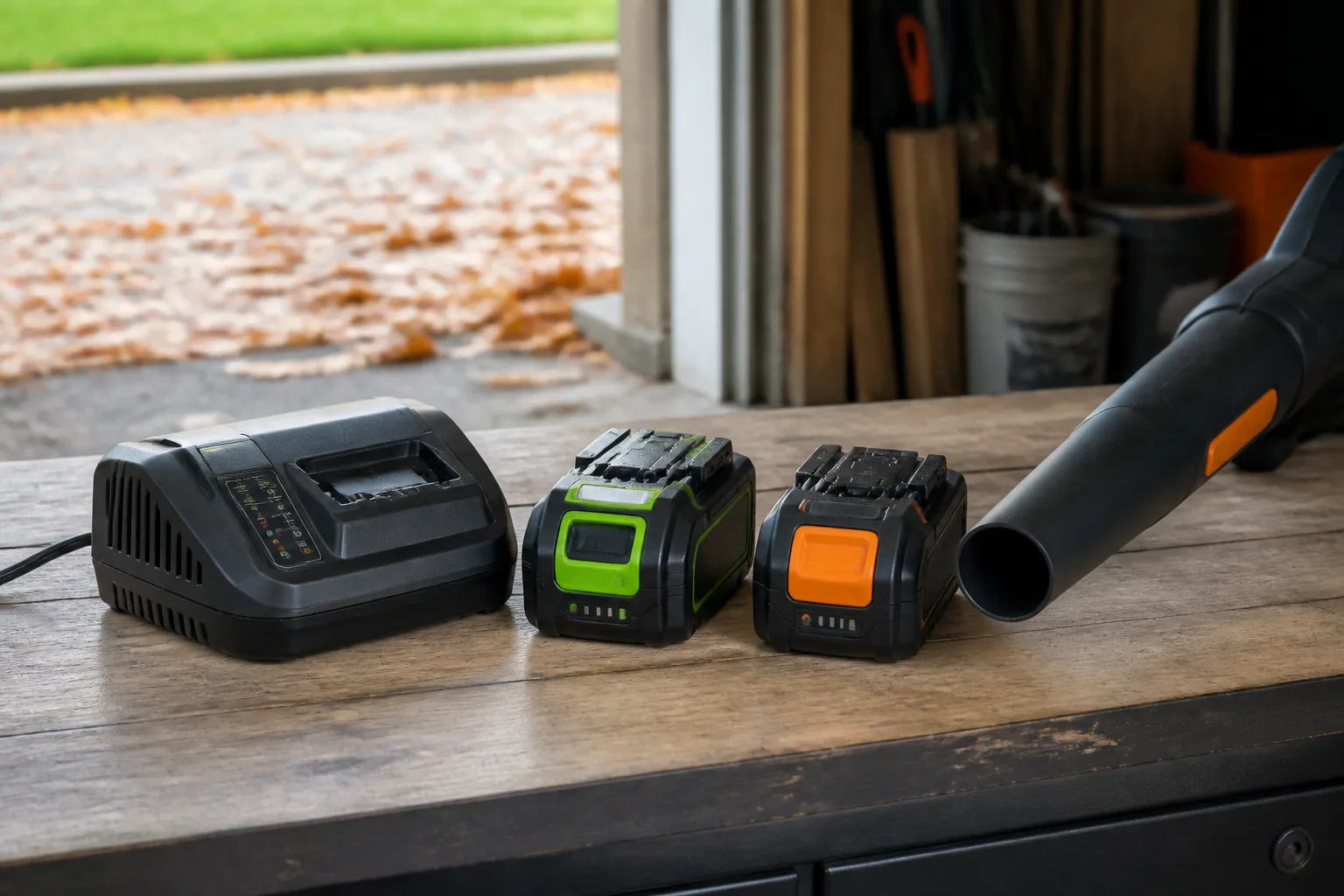
Choose gas when your work is long, remote, or dominated by wet leaves and heavy debris. A fuel tank can be refilled in minutes, while a depleted battery may require a long charge or a spare pack. Gas is not automatically “better,” though; it is a different ownership bargain that exchanges charging logistics for fuel mixing, exhaust, noise, pull-start behavior, filter care, and winter storage.
Think in work blocks instead of acreage claims. If the cleanup usually takes 20 minutes, one battery kit may be ideal. If it takes two hours at high power, calculate the number of charged packs and chargers required, then compare that logistics bill with one gas tank and a short refueling stop. The best backpack leaf blower is the one that can finish your normal session without forcing you to change the task halfway through.
CFM vs. MPH vs. blowing force
CFM, or cubic feet per minute, describes air volume. High CFM is useful when you want to sweep a wide lawn, move a broad sheet of leaves, or clear a large pile efficiently. It is the number to watch when your problem is coverage and the debris is already loose.
MPH, or miles per hour, describes air speed at the outlet. Higher air speed can help break damp leaves loose and focus the stream into a narrow edge, but a high MPH number from a tiny nozzle does not always move more material overall. It tells you about the velocity of the jet, not the total air mass behind it.
Newtons describe blowing force. Not every brand publishes Newtons, but the measure is useful for comparing the push a nozzle can apply when leaves are wet, matted, or mixed with heavier debris. Treat a 33 N claim and a 270 MPH claim as different pieces of information, not as numbers to add together.
The practical rule is to favor air volume for broad lawn work, air speed or force for stuck debris, and variable control for delicate areas. A blower with both strong volume and a controllable trigger is more useful than a machine that delivers one dramatic maximum with no comfortable middle setting.
Match the blower to your yard and debris
Start with the worst routine job, not the most attractive product photo. A few dry leaves on a patio do not justify a 24-pound commercial backpack, while a wooded acre with wet oak leaves will make a lightweight 20V handheld feel like a frustrating choice.
- Small lot, close neighbors, mostly dry leaves: use a light battery blower or rake; a backpack model may be unnecessary.
- Medium yard with lawn, driveway, and beds: choose a controllable battery backpack such as the Greenworks if weight matters, or RYOBI if you want more clearing reserve.
- Large yard with repeated leaf fall: RYOBI makes sense when you can manage batteries; Husqvarna gives you longer work blocks without charging.
- Wet leaves, acorns, gravel, and compacted edges: prioritize blowing force, a focused nozzle, and a harness you can wear for the whole session; Husqvarna and ECHO fit this job better.
- Frequent or commercial-style use: pay attention to filtration, anti-vibration or back-pad design, warranty coverage, parts, and service—not just CFM.
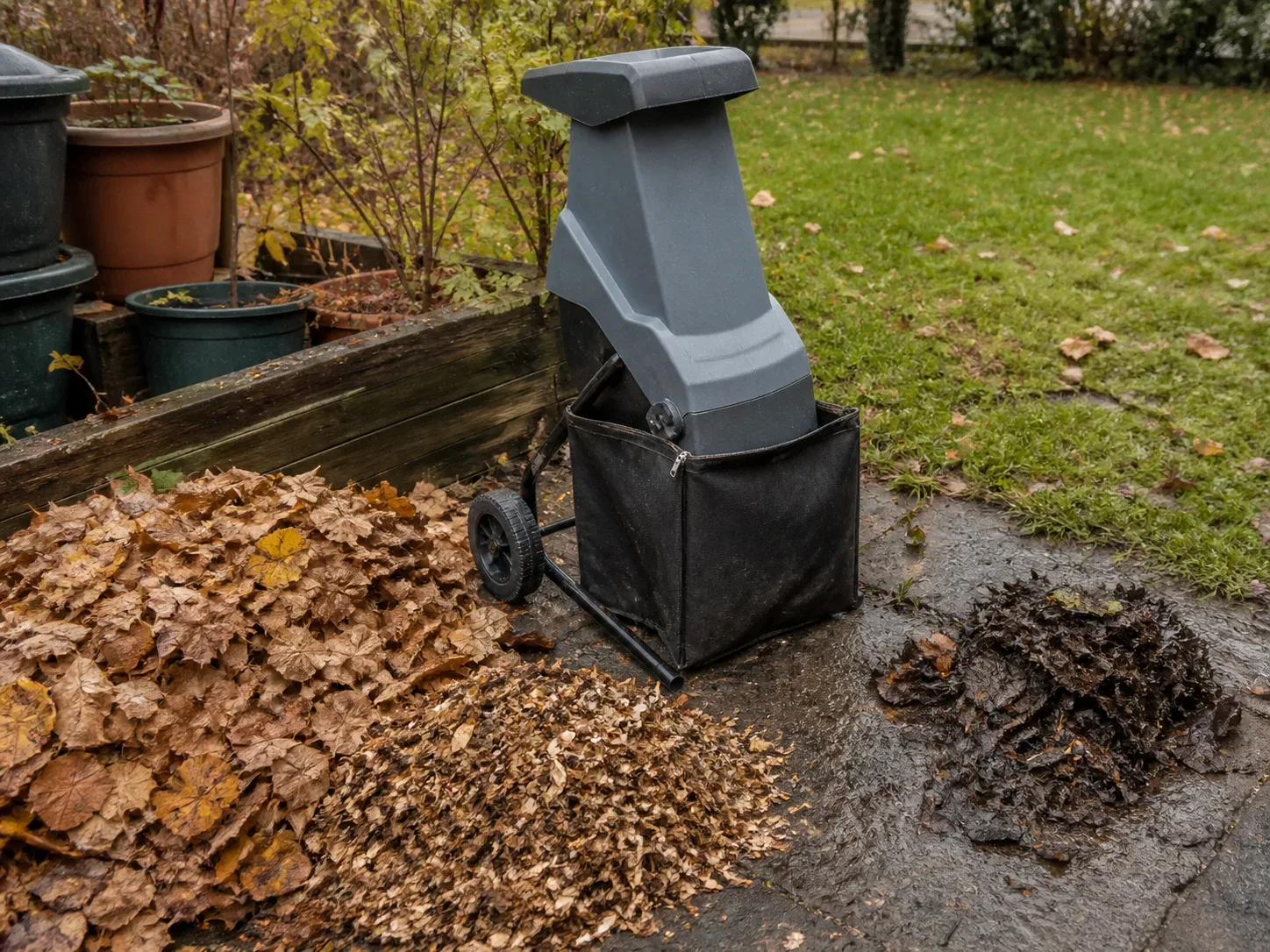
Also decide where the leaves are going. Penn State Extension recommends shredding leaves for mulch or piling whole leaves to make leaf mold; it notes that up to about one-half inch of shredded leaf material can benefit turf, while a 2- to 4-inch layer works around trees, shrubs, and perennial beds. Savvy Gardening’s leaf-mulch guidance makes the same practical distinction: shred leaves before spreading when you want a stable mulch, and avoid piling an unshredded mat against plants. That makes a blower a gathering tool, not the whole leaf-management system. For a step-by-step cleanup plan, use this fall leaf cleanup guide.
How to use a backpack blower without making cleanup harder
Start by checking the area for stones, sticks, toys, irrigation parts, wildlife, and anything that could become a projectile. BBC Gardeners’ World Magazine specifically advises checking for wildlife and being cautious around plants during leaf-blower testing; the same discipline belongs in a home yard. Leave hedge bottoms or a deliberate bed section undisturbed when they are serving as winter cover, and keep leaves away from steps, drains, and surfaces where they become slippery.
Fit the backpack before you start the engine or motor. Center the load high on your back, snug the shoulder straps without crushing your chest, secure the waist or chest strap if supplied, and set the tube so your wrist stays neutral. If the machine pulls you backward, do not compensate by leaning forward for an hour; stop and adjust the harness.
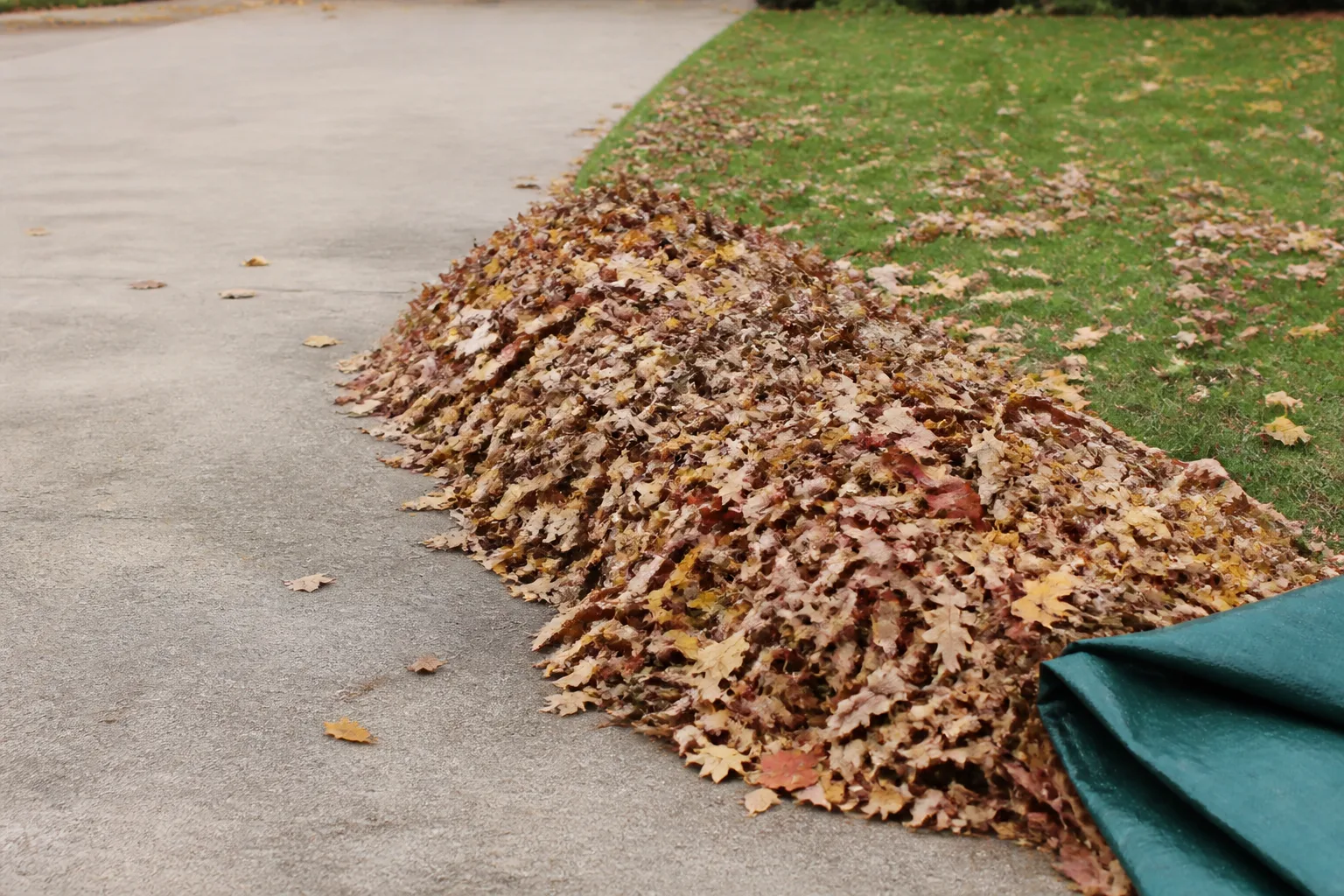
Work in lanes that lead toward a destination. Clear the driveway, walks, and steps first, then push lawn leaves toward a low collection row rather than building one giant mound. Keep the nozzle roughly 6 to 12 inches above the surface to begin, angle the air across the leaves, and lower or raise it only until the pile moves; holding a high-power nozzle inches from loose soil often creates dust, strips mulch, and sends leaves back behind you.
Use the lowest setting that works. On open lawn, a broad sweeping motion is faster than chasing individual leaves. Around shrubs, young plants, gravel, and bed edges, reduce speed and aim across the surface. When the row is manageable, rake or blow it onto a tarp, slide the tarp to the compost or collection area, and stop before the load becomes too heavy to control.
Finally, do not treat every leaf as waste. The National Wildlife Federation’s leaf guidance recommends keeping useful leaf cover in beds, while Penn State Extension explains how shredded leaves can become mulch or whole leaves can become leaf mold. The right finish may be a clean lawn and path, not a leaf-free property.
Safety, noise, fuel, and maintenance
Wear eye protection, hearing protection, sturdy shoes, long pants, and gloves suited to the debris. A blower can send grit, acorns, gravel, and broken twigs back toward the operator, especially on hardscape. Never direct air at people, pets, windows, open doors, vehicles, or wildlife, and keep children away from the work zone.
Treat the published noise number as a warning, not a comfort guarantee. CDC/NIOSH guidance sets a recommended exposure limit of 85 dBA averaged over an eight-hour workday and explains that the recommended exposure duration halves for each 3 dBA increase. You are unlikely to run a blower for eight hours, but a short, loud session still deserves hearing protection—particularly when the model is gas-powered or you use it repeatedly.
For gas blowers, mix fuel exactly as the owner’s manual specifies, use fresh fuel, and never refuel a hot engine. Let the machine cool, keep fuel in an approved container away from ignition sources, and follow the manufacturer’s instructions for seasonal storage. Check the air filter, spark plug, fuel lines, fasteners, and flexible tube at the intervals in the manual; clogged filtration and loose connections can turn a powerful blower into a hard-starting, underperforming one.
For battery blowers, inspect the pack and contacts before installing the battery, keep the pack dry, use the correct charger, and stop if the battery is swollen, cracked, unusually hot, or damaged. Remove the battery before clearing a blockage or servicing the tube. Store the machine and battery according to the battery maker’s temperature and charging guidance, and remember that cold weather can reduce practical runtime.
The final safety decision is whether the blower belongs in that location at all. If local rules restrict gas equipment or operating hours, a quieter battery model may be the only responsible option. If the yard is small enough for a rake and a mower, using less machine can be faster, cheaper, quieter, and kinder to the insects and leaf habitat that a completely bare landscape removes.
Conclusion
The RYOBI 40V HP Brushless 850 CFM Backpack Blower Kit is the best overall electric recommendation because it combines serious airflow, two-battery flexibility, variable control, and a lower-noise ownership profile. Buy it when you have a large residential yard and can support the battery system; do not buy it expecting two hours of turbo runtime.
The Husqvarna 150BT is the best gas choice for demanding residential work, especially wet leaves and long sessions. The Wild Badger 53cc is the budget route to high-volume gas performance if you accept fuel care and a more utilitarian ownership experience. The Greenworks Pro 80V is the lightest, easiest-carrying option for smaller or medium yards, while the ECHO PB-770T earns its heavy-duty label with strong published force, a large tank, filtration, and commercial-ready design.
Whichever model you choose, judge it by the whole job: ready-to-work weight, real runtime at useful power, noise where you live, maintenance you will actually perform, and what happens to the leaves after they move. A blower is most effective when it finishes a deliberate yard plan—not when it simply makes the biggest pile.



