The 6 Best Bug Zappers We Tested
Compare six bug zappers by indoor and outdoor use, coverage, power, cleanup, and portability—and learn when a fan or repellent works better.
If your patio is full of moths, gnats, beetles, or flying flies at dusk, a bug zapper can provide a satisfying, visible answer. The best bug zappers use ultraviolet light to draw flying insects toward an electrified grid, then collect or drop what they catch. That is useful for general flying-insect pressure, but it is not the same thing as creating a mosquito-free yard.
This comparison treats “best” as best for a particular job. The Flowtron BK-40D is the strongest all-around outdoor choice for a typical yard, while the Aspectek is better suited to indoor flies and gnats. The Black Flag is a practical smaller-yard pick, the Ryobi travels without a cord, the larger Flowtron is made for broad outdoor coverage, and the Executioner works when you need to deal with one insect at a time. I also explain where each style falls short, because a device that kills insects is not automatically the right tool for preventing bites.
Quick verdict: pick the zapper for the insect, not the label
For an outdoor patio or garden, choose the Flowtron BK-40D if you want a durable, hanging, plug-in unit with a manufacturer-listed one-acre coverage area. It is the best balanced pick in this group for routine evening use. For an indoor kitchen, porch, or garage where you want a collection tray instead of insects dropping below a hanging grid, choose the Aspectek 40W. For a compact outdoor area, the Black Flag BZ-20 offers a smaller-footprint alternative with an included octenol lure.
The Ryobi ONE+ 18V is the most convenient option when an outlet is inconvenient, such as a campsite, shed, or far corner of a yard. The Flowtron BK-80D makes more sense for a large open space where you can hang a bigger unit well away from seating. The Executioner racket is the least like a traditional zapper, but it is inexpensive, portable, and useful for a single fly or wasp that gets indoors.
| Best for | Pick | Power and setting | Main reason to choose it | Main limitation |
|---|---|---|---|---|
| Typical outdoor yard | Flowtron BK-40D | Plug-in, outdoor | Durable hanging design and broad listed coverage | Requires an outlet and lure maintenance |
| Indoor flies and gnats | Aspectek 40W | Plug-in, indoor | Bright two-sided UV light and removable tray | Not a weatherproof outdoor unit |
| Smaller outdoor area | Black Flag BZ-20 | Plug-in, outdoor | Compact size and octenol lure included | Smaller listed coverage |
| Cordless use | Ryobi ONE+ 18V | Rechargeable battery | No extension cord and easy relocation | Runtime and catch area depend on battery and conditions |
| Large yard | Flowtron BK-80D | Plug-in, outdoor | Larger housing and 1.5-acre manufacturer claim | Bulky, bright, and more expensive to run |
| One insect at a time | Executioner racket | Rechargeable handheld | Immediate, targeted control | Requires active aiming and manual use |
Coverage numbers are useful for comparing models in the same category, but do not read them as a guaranteed radius of insect control. Wind, competing lights, vegetation, nearby breeding sites, and the insects present in your yard matter more than a number printed on a box.
What we looked for in the 2025 comparison
The comparison set was judged on fit, attraction and capture design, cleanup, placement flexibility, and value for the intended job. An indoor unit needs debris containment; an outdoor unit needs weather-conscious construction and safe cord or battery handling. I also separated general flying-insect control from mosquito-bite control, which requires a broader plan.
Manufacturer and retailer listings can change, so confirm the current model number and included accessories before ordering. The Flowtron specifications come from the manufacturer’s product pages for the BK-40D one-acre bug zapper and BK-80D 1.5-acre bug zapper. The other models are linked to their current product listings so you can check the exact revision and battery or lure contents.
1. Flowtron BK-40D: best overall outdoor pick
The Flowtron BK-40D is the best overall choice for a patio, garden edge, or backyard entertaining area. It hangs as outdoor equipment rather than sitting on a table, and its open grid lets insects pass through instead of building up on a sticky surface. Flowtron lists up to one acre of coverage and offers an optional octenol mosquito-attractant cartridge.
The key advantage is balance: it is substantial for outdoor use without dominating a residential patio. The manufacturer lists weather-resistant housing, a high-voltage grid, and a two-year warranty, though no electrical product is maintenance-free. Hang it away from competing porch lights and from the exact spot where people sit.
In practice, the BK-40D is most convincing for moths, gnats, and other flying insects that respond to light. If mosquitoes are your target, the optional lure may make the unit more relevant than UV alone, but it still does not turn the zapper into a perimeter shield. The trade-off is the usual one for an outdoor plug-in: you need a safe outlet, enough cord reach, and a place to clean or replace parts without climbing.
Choose it if: you want one durable outdoor unit for routine evening use and have a sensible hanging location near power.
Skip it if: your main problem is indoor flies, or you need a silent, portable device with no outlet.
2. Aspectek 40W: best indoor high-volume killer
The Aspectek 40W Indoor Insect Killer is the best fit for indoor spaces where flies, moths, and gnats gather around windows, lights, or food-preparation areas. Its two-sided UV-light design is conspicuous and bright, but that brightness is also why it belongs in a utility room, enclosed porch, garage, or kitchen-adjacent area rather than beside a television or bedroom.
Its removable collection tray is the feature that changes the cleanup experience. Instead of hunting for insect fragments under a hanging outdoor grid, you can slide out the tray, empty it, and wipe the surrounding surfaces. Keep the unit away from splashing water and do not assume that an indoor label becomes outdoor-safe under a roofed patio. Electrical ratings are about the whole environment: moisture, condensation, dust, and cord routing all matter.
The Aspectek is not a meaningful outdoor mosquito-control device. Its common win is reducing flies and gnats that have already entered the house. Place it away from other bright lamps and open doors; a screened window or closed door still does more to prevent entry.
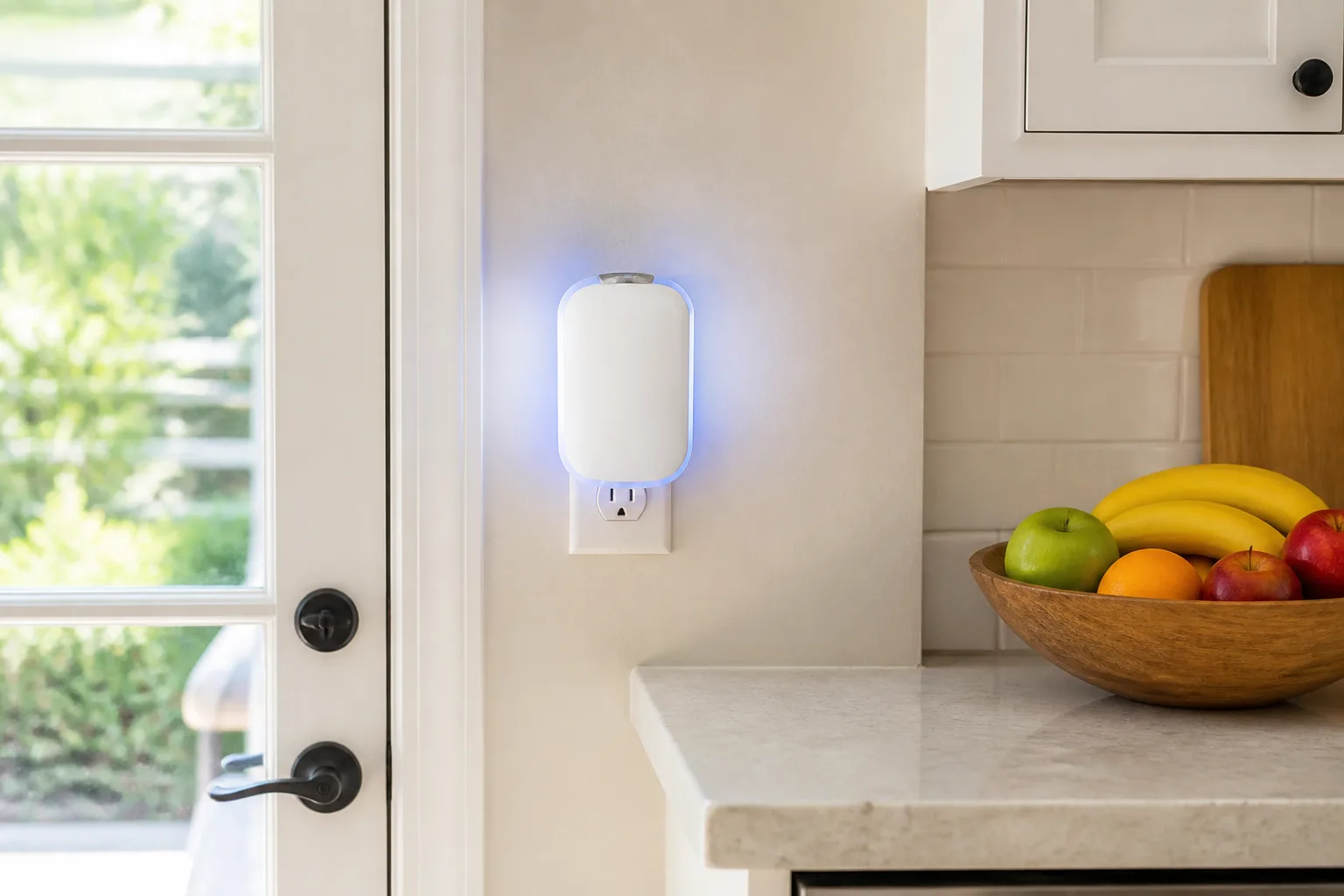
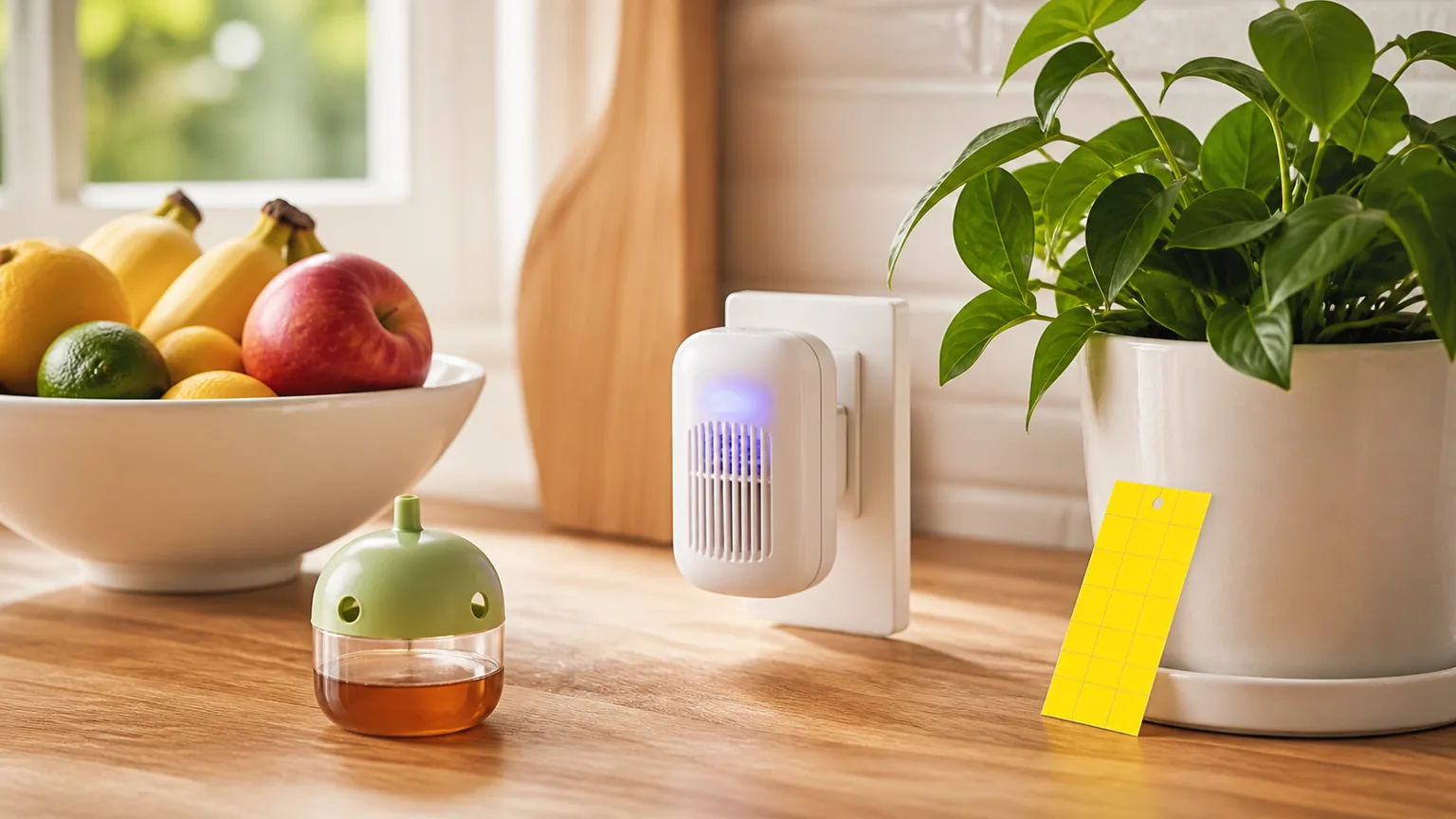
This shows the general indoor use case: a compact light-based trap near a problem area without an open electrified grid over a food surface. A sticky or enclosed trap can be more comfortable around kitchens and living spaces.
Choose it if: you need an indoor unit with a tray and do not mind a bright, visible appliance.
Skip it if: you need weather resistance, a quiet bedroom solution, or a device for an open yard.
3. Black Flag BZ-20: best compact outdoor value
The Black Flag BZ-20 2000-volt bug zapper is a practical middle ground for a smaller yard, balcony edge, or patio where a one-acre-plus unit would be unnecessarily large. Its product listing describes a half-acre coverage area and includes a Black Flag mosquito octenol lure. The lure is the important distinction: it gives the unit another odor cue to work with, rather than relying on UV light alone.
This is the pick for a shopper who wants a conventional outdoor hanging zapper without moving up to a larger Flowtron. The compact footprint is easier to place, but compact does not mean invisible. The blue glow can compete with ambient lighting, and the grid still needs regular inspection. Hang it where insects travel through, not beside the chair you want to keep empty of bugs.
Read its half-acre rating as a comparison tool, not a guarantee that every mosquito in that space will be drawn in. An octenol lure does not replace draining standing water. Give the unit space from seating and children, and replace the lure according to its label.
Choose it if: you want an affordable, smaller outdoor zapper with an included lure.
Skip it if: you need cordless operation, a large-yard unit, or an indoor collection tray.
4. Ryobi ONE+ 18V: best cordless option
The Ryobi ONE+ 18V Cordless Bug Zapper solves the most annoying limitation of outdoor zappers: the nearest outlet is usually in the wrong place. With a rechargeable battery and no extension cord crossing a walkway, it is easier to move from a deck to a campsite, shed, or garden seating area. That flexibility makes it the best choice for temporary use and spaces where permanent hanging is not convenient.
Cordless convenience comes with a capacity trade-off. Runtime depends on battery condition, temperature, and use, while the listed coverage is only a starting point. Charge it before an evening event and keep a second pack available for late use.
This pick also asks you to think about stability. A cordless unit may be placed lower because it does not need a cable, but a lower position can bring the electrified grid closer to children, pets, or curious hands. Use the intended stand or hanging point, maintain clearance, and do not leave the device in a place where it can be knocked into damp soil or a pool.
The Ryobi is best for people who value relocation over maximum capacity, especially on a rental patio or in a yard without an outdoor receptacle.
Choose it if: you want to move a zapper without planning cord paths.
Skip it if: you need all-night operation every evening and do not want to monitor or recharge a battery.
5. Flowtron BK-80D: best for a large yard
The Flowtron BK-80D is the large-yard pick. Flowtron lists a 1.5-acre coverage area, two 40-watt UV bulbs, a 5,600-volt grid, a weather-resistant polycarbonate housing, and an octenol cartridge. Its anti-clog grid and larger body are designed for heavier outdoor use, and the manufacturer lists a two-year warranty.
The BK-80D makes sense for a broad, open property, not simply because a larger number sounds better. It needs a stable hanging location, clearance from people, and a safe power route. It is bright and prominent, so place it at the edge of the activity zone rather than over a dining table.
Flowtron recommends hanging it away from competing light and roughly 25 feet from an outdoor living area. That creates a separate attraction point instead of concentrating insects beside your chair. The acreage claim is still not mosquito-bite prevention; remove wet corners, clogged gutters, and planter saucers first.
Choose it if: you have a large open yard, a stable hanging point, and want the biggest outdoor unit in this comparison.
Skip it if: you have a small balcony, limited storage, or no safe place to route power.
6. Executioner: best handheld racket
The Executioner Electronic Bug Zapper Racket is the outlier in this group. It does not try to draw insects across a yard. You pick it up, aim at a fly or mosquito, and use the electrified mesh to deal with that one insect. That makes it the best handheld option for a bedroom, screened porch, camping trip, or the final fly that refuses to leave.
A racket is useful precisely because it does not make a broad promise. You do not need to calculate acreage or choose between competing lights. You do need to be present, keep it away from children, and store it where the charging cable and mesh will stay dry. It is also a poor substitute for screens or sanitation if flies keep arriving around garbage, compost, pet food, or uncovered fruit.
The advantage is targeted control. A stationary outdoor zapper can kill insects indiscriminately, while a racket lets you respond to a specific nuisance. The disadvantage is effort: it cannot work while forgotten in a corner, and it will not reduce a population breeding in standing water. Think of it as a small finishing tool, not a yard-management system.
Choose it if: you want portable, immediate control of individual flying insects.
Skip it if: you want unattended coverage for a patio or a way to prevent recurring mosquito bites.
How to choose between a zapper, trap, and repellent
The word “bug zapper” covers several tools. A hanging grid attracts and kills insects in a zone; an indoor trap may use UV light plus glue or a fan; a repellent changes the space so insects are less likely to land; and a fan disrupts mosquito flight. Those jobs overlap but are not interchangeable.
Match the device to the bug
UV light is most useful for insects that orient toward light, including many moths, gnats, and some flies. Mosquitoes use a more complicated set of cues, including carbon dioxide, body odor, heat, humidity, and visual contrast. Colorado State University Extension explains that mosquitoes respond to cues such as carbon dioxide, lactic acid, and octenol, and it notes that conventional bug zappers are poor tools for reducing mosquito biting.
That is why a device can make an impressive snapping sound while doing little for the mosquitoes landing on your ankles. If your nuisance is mostly moths around lights, a UV grid may match the problem. If it is mosquitoes at dusk, start with water removal, screens, a repellent, or a fan, then treat a lure-equipped trap as one possible supplement.
Treat coverage numbers as a starting point
Coverage claims are useful for comparing a compact half-acre model with a larger 1.5-acre model, but they are not a force field. The actual attraction zone depends on the brightness of surrounding lights, the height and openness of the location, wind, vegetation, insect species, and whether food or breeding sources are nearby.
Use the number to avoid an obvious mismatch: a tiny indoor unit is not an outdoor-yard solution, and a large grid is overkill for a kitchen counter. Place it according to the instructions and observe insect traffic. If it catches nothing, moving it away from porch lights may help more than buying a larger model.
Decide whether you want a tray or a drop-through grid
A removable tray is convenient indoors because it contains debris and makes inspection simple. An open outdoor grid lets insect remains fall through, which keeps the killing surface clearer but means the ground below needs occasional sweeping. Both designs still need the grid and surrounding housing checked for buildup.
For kitchens and enclosed porches, decide whether a visible blue light and open grid are acceptable near food, children, and pets. Outdoors, make sure the hanging height and drop zone are easy to clean; awkward maintenance eventually means weaker performance or an unused device.
How to place a bug zapper so it has a fair chance
Placement is a bigger part of performance than most product comparisons admit. Start by putting the zapper at the edge of the area you want to protect, not directly over the table. Keep it away from competing porch bulbs, bright landscape lighting, and other UV sources. If the manufacturer provides a hanging-distance recommendation, use it as the starting point.
For outdoor units, choose a dry, stable mounting point clear of roofs, curtains, branches, and stored materials. Keep the cord along a wall rather than across a walkway. Indoors, place the trap near a flight path but away from open doors, food-preparation surfaces, and the brightest room light.
Observe the first few evenings. If the unit is busy but people are still being bitten, the device is doing its general flying-insect job while failing the mosquito-bite job. Add source reduction and personal protection rather than moving the zapper closer to the chairs.
Electrical and household safety rules
Treat every zapper as an electrical appliance, even when the product looks like simple garden equipment. Use it only in the environment listed by the manufacturer. An indoor model should not be left in rain or heavy condensation. An outdoor model still needs a sound outlet, protected cord routing, and a location that will not sit in puddles.
Keep grids and rackets out of children’s reach, and do not let pets chew cords or knock a standing unit into water. Unplug a plug-in zapper before cleaning, moving, or opening a service panel. Give bulbs and the grid time to cool. Do not improvise a damaged cord, bypass a protective cover, or use a cracked housing.
Use an extension cord only when it is rated for the environment and product load, and route it away from foot traffic, mower wheels, and irrigation. Never hide a wet connection under mulch.
Cleaning, bulbs, batteries, and lure replacement
Inspect a frequently used outdoor zapper every week or two during peak season. Unplug it, let it cool, and brush or vacuum debris from the housing and grid according to the manual. Do not spray water into an electrified unit. A clogged grid can reduce the open space insects need to pass through and make the device appear weaker.
Replace UV bulbs when the manufacturer recommends it or when the unit is visibly operating but attracting fewer insects. A bulb can still glow while its attraction output has declined. Use the correct replacement rather than a visually similar tube with a different rating. The Flowtron product pages link to replacement bulbs and octenol cartridges; treat the cartridge’s stated service life as a schedule for inspection, not permission to ignore the device.
Empty removable trays before they pack with debris. Recharge the Ryobi after use and store its battery as directed. Keep the racket mesh dry and inspect its charging lead. Clean before performance falls, not after insects stop appearing.
Why zapping mosquitoes is not the same as preventing bites
Bug zappers are often marketed with mosquito language because mosquitoes are a powerful reason to shop. The biology is less cooperative. Colorado State University Extension says conventional UV bug zappers rely mainly on light and are ineffective at reducing mosquito biting; it also warns that they kill harmless and beneficial insects. The American Mosquito Control Association FAQ summarizes controlled studies in which mosquitoes made up only a small share of zapper catches and reports no meaningful difference in mosquito numbers between yards with and without zappers.
That does not mean a zapper catches zero mosquitoes. It means the presence of mosquitoes in a catch is not proof that the device reduces the bites people experience. A lure that adds octenol or another cue may change what a device attracts, but the attraction still happens in a yard with competing carbon dioxide, body odors, plants, wind, and breeding sites.
There is also a non-target cost. The light that attracts a nuisance moth or fly can attract pollinators, predators, parasitoid wasps, and other insects you may want in a garden. K-State Research and Extension’s practical bug-zapper guidance makes the same point: most insects killed by zappers are not the mosquitoes people hope to control.
Use a zapper when its general flying-insect benefits justify the trade-off, but do not install several bright units around a pollinator garden and expect a healthier ecosystem. Turn it off when it is not needed, and use targeted mosquito protection when bites are the actual problem.
Better mosquito control for a garden or patio
The first step is source reduction. The CDC’s home mosquito-control guidance recommends emptying and scrubbing, turning over, covering, or throwing out water-holding containers each week. That includes buckets, toys, planters, saucers, clogged gutters, and anything else that can hold rain. For water that cannot be dumped or covered, follow the label for an appropriate larvicide rather than guessing.
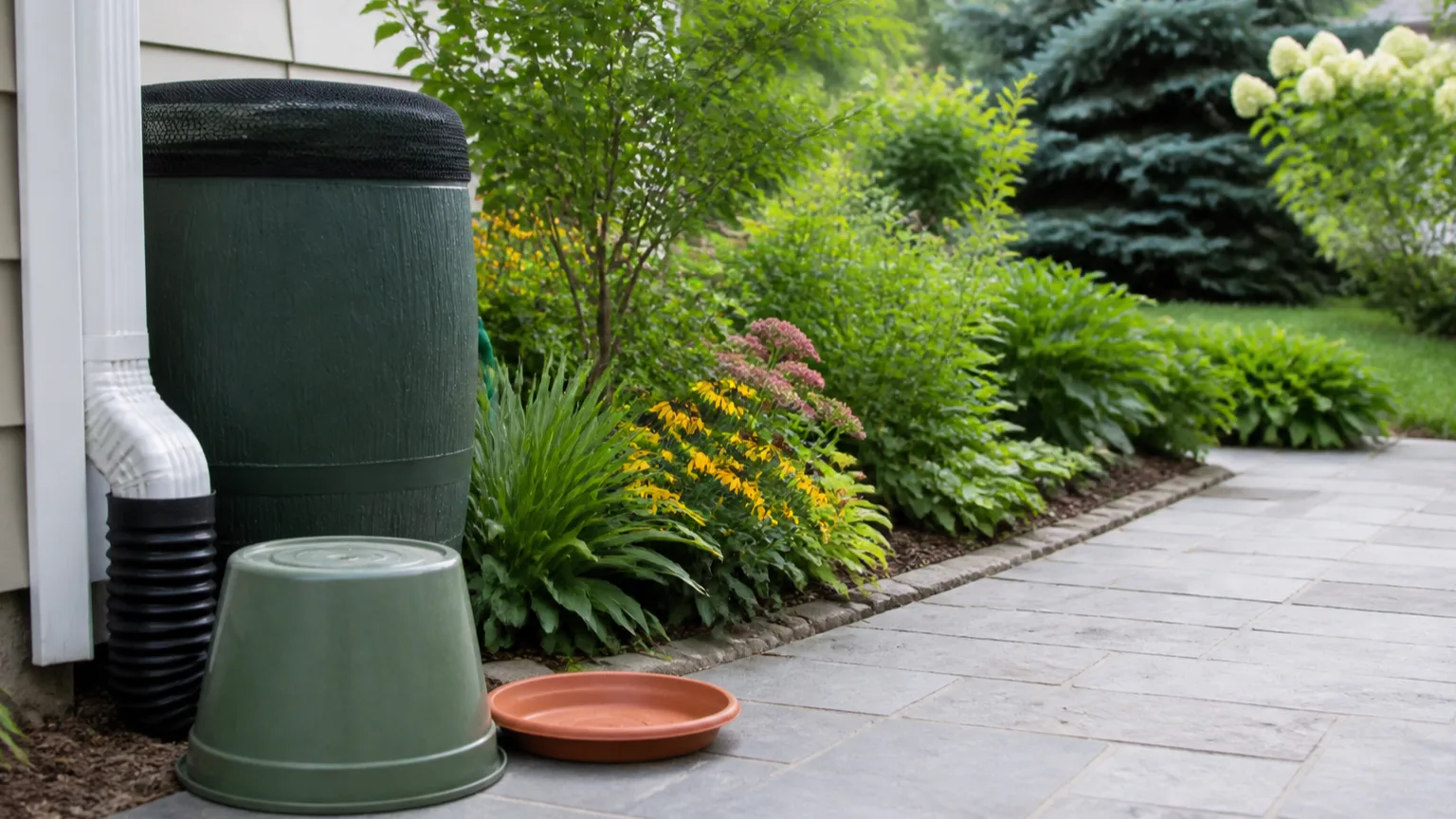
Walk the yard after rain and inspect the places you do not think of as containers. A saucer under a pot can be more relevant than a large ornamental pond, because small stagnant pockets warm quickly and are easy for mosquitoes to use. Keep screens intact, close doors promptly, and use air conditioning or window screens indoors when possible.
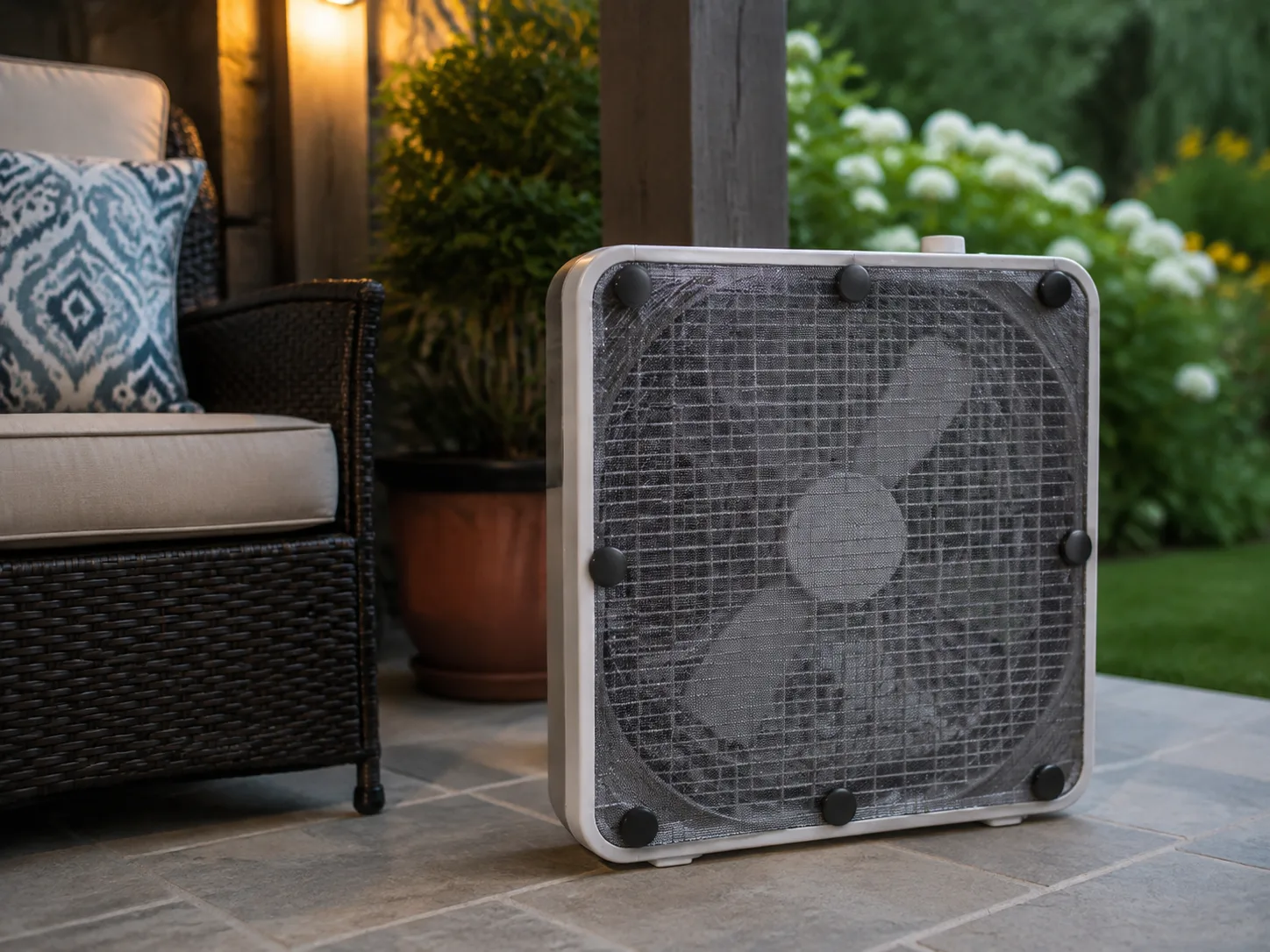
For a patio gathering, a fan is often a better mosquito tool than a second UV zapper. Mosquitoes are weak fliers, so moving air can make it harder for them to land. Set a fan to move air across ankles and lower legs without creating an unsafe cord path.
Personal protection fills the gaps. Use an EPA-registered repellent according to its label, wear long sleeves when practical, and avoid relying on aromatic plants as a magic perimeter. Gardening writers often recommend plants such as basil, catnip, marigold, and citronella, but Epic Gardening’s plant guide correctly treats scent-based plant ideas as supplemental; a plant in a pot is not the same as tested repellent on skin.
The practical sequence is: remove breeding water, screen and close the house, add moving air or labeled repellent where people sit, and use a zapper only for the flying insects it can realistically attract. That combination produces a calmer patio than a single glowing device asked to solve every insect problem.
Conclusion
The best bug zapper depends on the insect and the setting. The Flowtron BK-40D is the strongest all-around outdoor pick, the Aspectek 40W is the better indoor choice, and the Black Flag BZ-20 fits a smaller outdoor area. The Ryobi is convenient when a cord would get in the way, the Flowtron BK-80D is the large-yard option, and the Executioner racket handles individual insects with the least setup.
Whichever model you choose, give placement and maintenance as much attention as the product label. Keep outdoor units away from competing lights and seating, clean the grid before it clogs, and replace bulbs, batteries, and lures on a sensible schedule. If mosquitoes are the reason you are shopping, start with standing-water control, screens, fans, and personal repellent. A zapper can be useful equipment, but it is only one tool in a good garden and patio pest-control plan.