The 12 Best Fake Plants for Every Room
Compare 12 realistic fake plants for shelves, corners, desks, and hanging spots, with honest notes on size, materials, styling, cleaning, and durability.
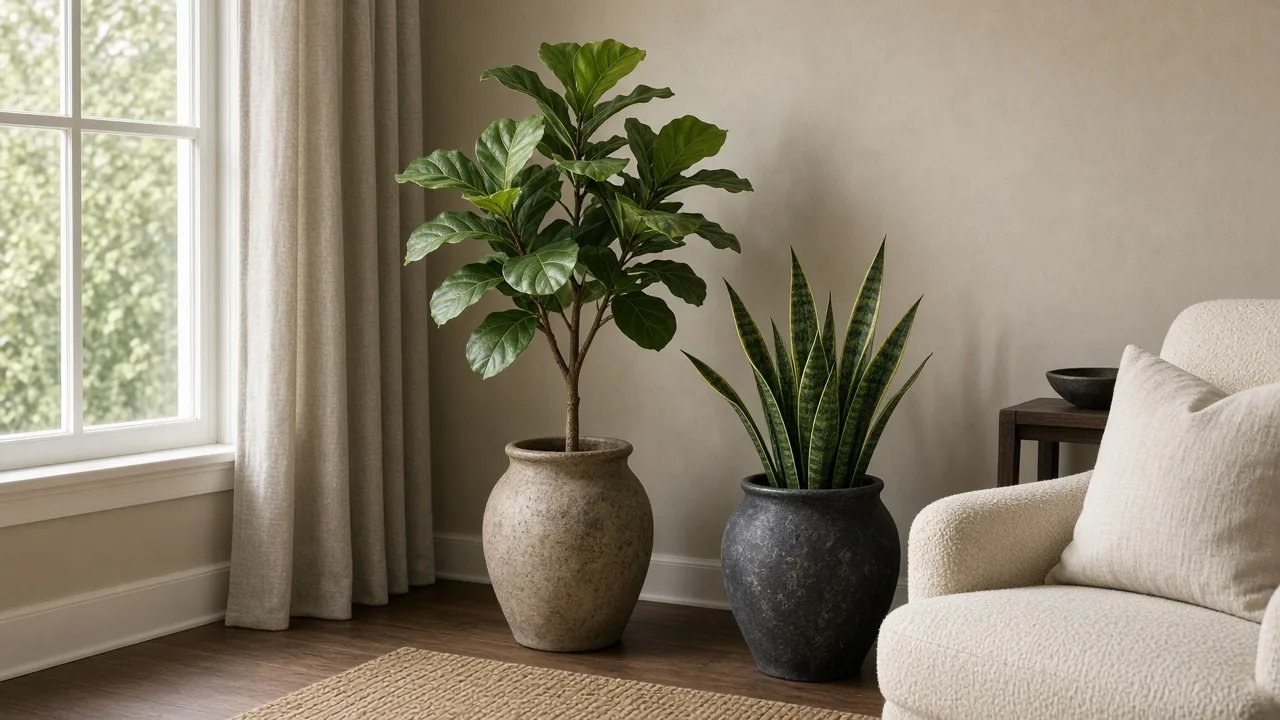
The best fake plants do one job exceptionally well: they add shape, color, and a sense of life to a room where a real plant would struggle. The convincing ones are not necessarily the biggest or most expensive. They have believable leaf variation, a base that does not give away the trick, and proportions that make sense beside the furniture.
This list covers twelve carefully compared artificial plants in distinct roles: a tall corner tree, a statement tabletop plant, a hanging accent, a shelf-filling vine, a small desk plant, and several budget-friendly options. Use the quick picks to narrow the field, then read the trade-offs before buying; “realistic” is always a combination of material, placement, lighting, and maintenance. If your main question is where to shop rather than which shape to choose, start with our guide to the best places to buy fake plants.
Quick Picks: Which Faux Plant Fits Your Space?
| If you need… | Start with… | Why it fits |
|---|---|---|
| A tall living-room corner filler | Kazeila Artificial Olive Tree | Five feet tall, with bendable branches and a naturally sparse silhouette |
| A polished statement plant | West Elm Faux Potted Bird of Paradise | Two height choices, a finished pot, and rigid leaves that hold their shape |
| A small plant for a desk or coffee table | IKEA FEJKA Artificial Orchid | Compact, inexpensive, already shaped, and easy to wipe clean |
| A hanging plant for a bathroom or tight room | The Sill Faux Hanging Ric Rac Cactus | Includes the pot and hanger, with trailing lengths that add movement |
| A shelf or bookcase accent | The Sill Artificial Pothos Plant | Full, pliable foliage that can spill over the edge |
| The most convincing small tropical look | Der Rose Large Artificial Monstera | Varied leaves, wire stems, and removable top dressing let you style it |
| A low-cost bonsai look | Juvale Artificial Potted Bonsai Tree | Small footprint, ceramic pot, and loose moss that softens the base |
Start with the room, not the plant name. Measure the available height and depth, note whether the plant will be brushed by people or pets, and decide whether you want a finished pot or already own a vessel. A faux plant that is six inches too tall can look more obviously artificial than a cheaper, better-scaled one.
What Makes a Fake Plant Look Real?
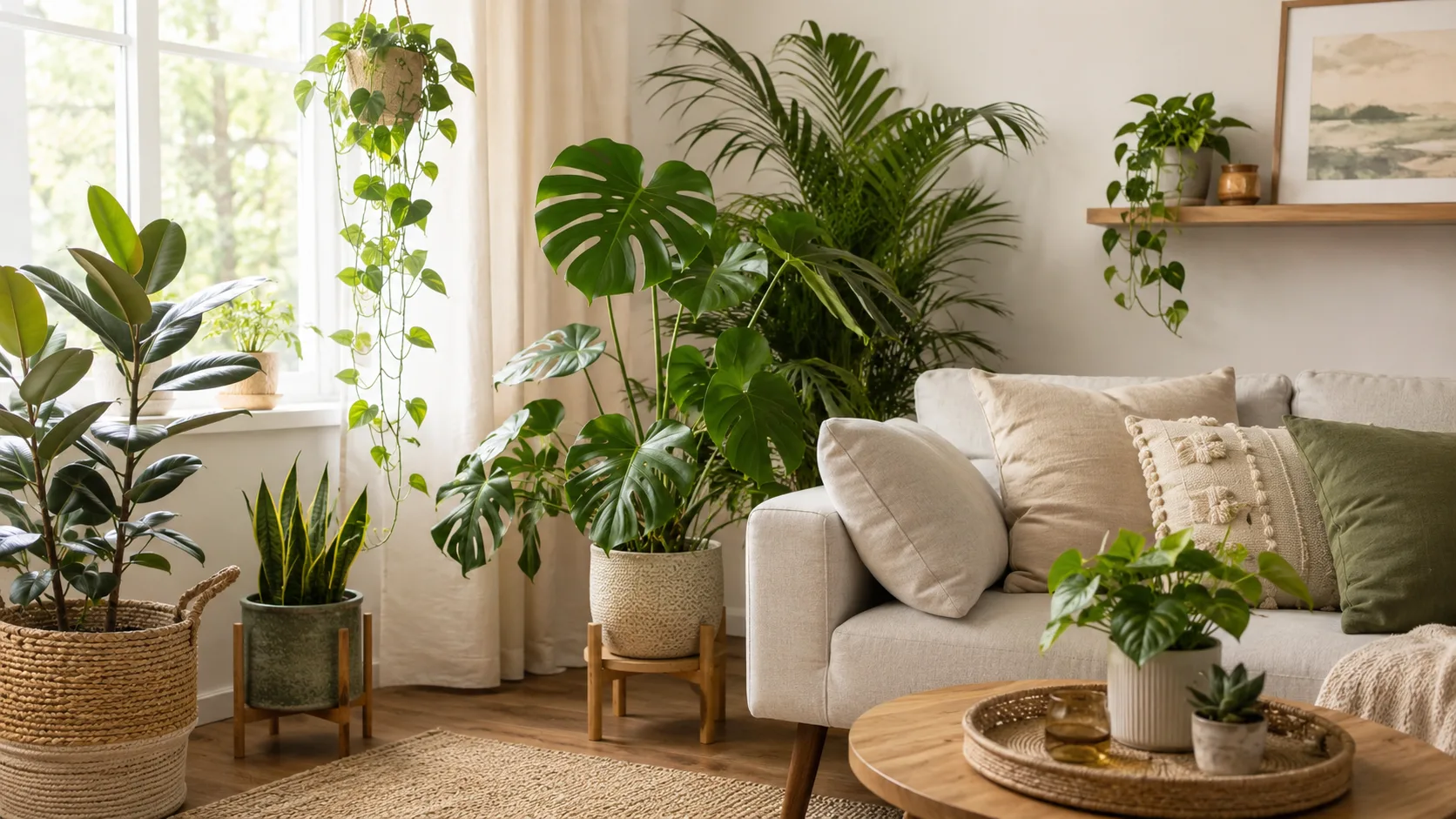
Realism comes from several small cues agreeing with one another. The leaf color should have variation rather than one flat green; the surface should have some texture or a restrained sheen; stems should leave the crown at slightly different angles; and the pot should have enough visual weight for the foliage above it. A beautiful leaf on a flimsy, exposed foam base is still a giveaway.
Read the leaf finish and variation
Look closely at the edges, veins, and color transitions. A leaf that is too glossy, perfectly identical to its neighbor, or printed with a bright stripe that stops abruptly will read as plastic. Matte or waxy surfaces generally photograph and wear better than high-shine plastic, while real-touch polymer can feel more convincing than thin fabric when the species is known for substantial leaves.
Variation does not mean random mess. It means the plant has different leaf sizes, a few natural bends, and enough negative space for you to see into the canopy. On a pothos or trailing cactus, uneven lengths create movement. On an olive or fiddle-leaf fig, a little air between branches looks more natural than a dense green lollipop.
Audit the pot, base, and structure
The base is where many artificial plants fail. Check whether the foliage is anchored in convincing faux soil, moss, or stones; whether the included pot looks intentional; and whether the piece can be moved without the leaves pulling loose. If the pot is basic but the plant is good, a cache pot can solve the problem. If the plant has a visible foam block, loose filler, or top-heavy stem, it may need a heavier outer vessel.
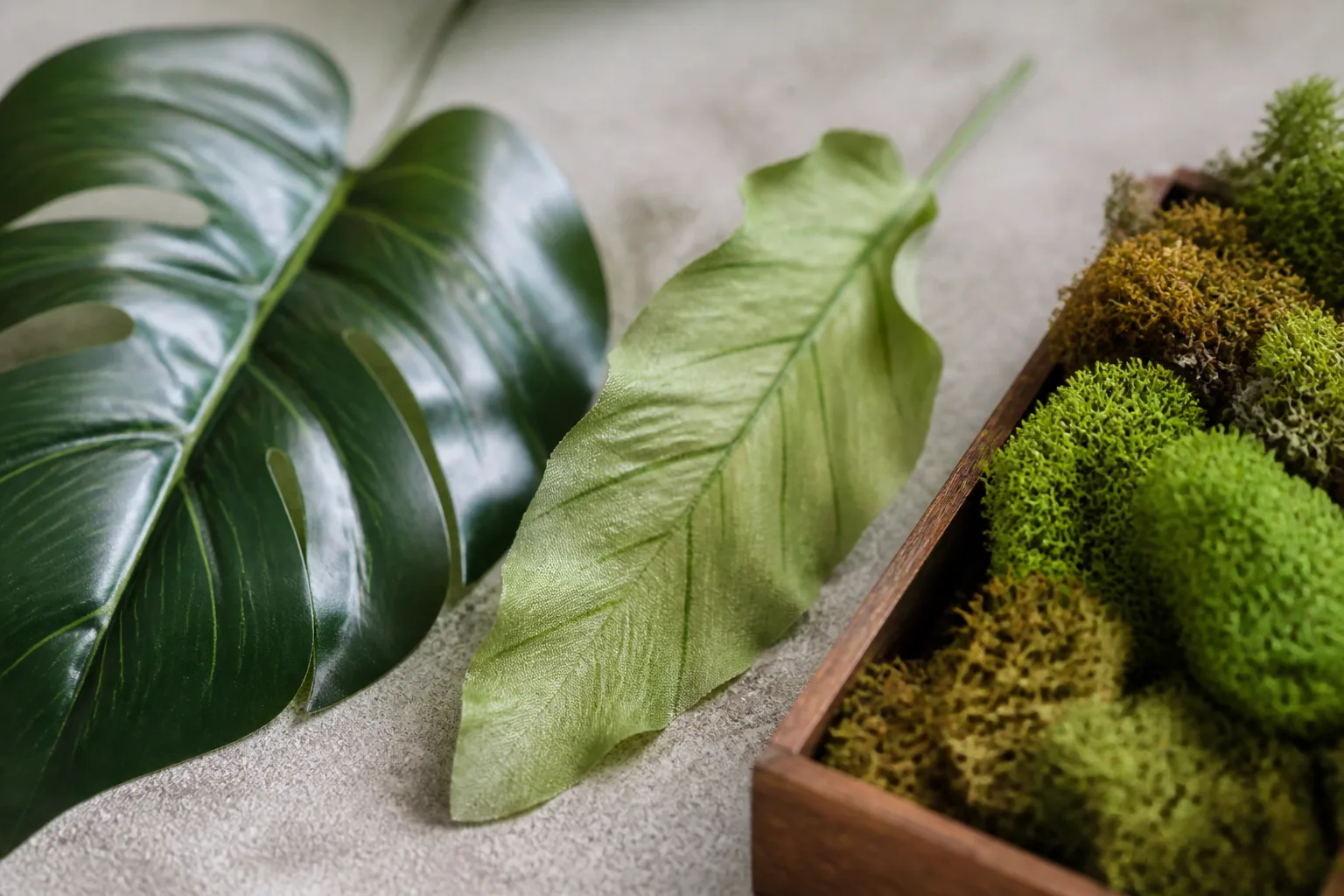
For a tall or hanging plant, structure matters as much as leaf detail. Bendable wire lets you create an asymmetrical silhouette, but it also creates a point of failure if thin branches are repeatedly bent or snagged. Rigid stems hold a clean shape for longer, while flexible stems are better when you need to fit the plant around a lamp, shelf, or wall.
Caption: Leaf texture, color variation, and a believable top dressing do more for realism than a glossy pot or an oversized silhouette.
The 12 Best Fake Plants
Kazeila Artificial Olive Tree
The Kazeila Artificial Olive Tree is the strongest choice when a living-room corner needs vertical height without a dense, bushy canopy. At about five feet tall, it can sit beside a sofa, armchair, media console, or empty wall and provide the same long, quiet shape an olive tree gives a real interior. The thin veined leaves and small olives add more species-specific detail than a generic green tree.
Its branches are bendable, which is important because the tree arrives needing a little shaping. Work from the trunk outward and create a few uneven gaps instead of spreading every branch into a symmetrical fan. The trade-off is that the foliage is somewhat sparse and the leaves feel thin, so it looks best with a little space around it rather than jammed beside a crowded bookcase. A stable, heavier planter also helps the tall silhouette feel intentional.
AllModern Faux Alocasia Zebrina Plant
This faux Alocasia Zebrina is a compact statement piece for a console table, low cabinet, or tall plant stand. Its two oversized leaves do the visual work, making it a good pick for someone who wants a sculptural tropical accent without managing a dense cluster of small leaves. The limited leaf count also means fewer edges to dust and fewer parts to shed.
The simple pot is the obvious weak point. That is not a deal-breaker: slide the plant into a planter that suits the room, making sure the outer pot is not so wide that it swallows the plant’s scale. The cemented faux soil is a useful construction detail because it keeps the base tidy and makes the plant less fussy to move. Choose this one when you prefer clean lines and a strong silhouette over a full, jungle-like look.
West Elm Faux Potted Bird of Paradise Plant
The West Elm Faux Potted Bird of Paradise is the polished, ready-to-display option for a larger room. It is available in four- and six-foot versions, and the plant can be purchased with a planter, so you can choose a true floor accent rather than trying to hide a small nursery-style pot. The broad leaves have a waxy look that fits the species and do not require much fluffing after unboxing.
Its rigid leaves are a strength when the plant will live beside a chair, in a commercial-looking office, or in a walk-through area where flexible foliage would keep getting knocked out of shape. They are less convincing if you want a loose, windblown look. The official listing describes a plastic faux botanical and recommends wiping it with a soft, dry cloth, so keep this one indoors or in a protected placement unless the current product instructions say otherwise. It is a style splurge, not a bargain pick.
Der Rose Large Artificial Monstera
The Der Rose Large Artificial Monstera is the best choice when you enjoy arranging a plant rather than opening a box and walking away. It arrives with eighteen leaves that attach to stems, and those metal wire stems can be bent and spaced to create a more natural canopy. The leaves vary in size and show the veined, cut-out shape people expect from a monstera, which is why it can look surprisingly convincing at normal room distance.
Assembly is the price of that flexibility. A few leaves may need to be reattached during setup, and the plant can look awkward if every stem is pointed straight up. Start with the largest leaves at the back, bring two or three medium leaves forward, and leave a little opening at the center. The removable fake moss gives you another way to hide the base, but it may not be the best choice for a home where loose decorative material will be pulled or tasted.
IKEA FEJKA Artificial Orchid
The IKEA FEJKA artificial orchid is the easy budget accent for a desk, nightstand, coffee table, or bathroom shelf. It is only about eleven inches high with a 3 1/2-inch pot diameter, and the orchid curve and stake arrive already arranged. You will not mistake it for a close-up botanical specimen, but a few feet away it supplies a clean, bright shape without asking for assembly or a second planter.
The current IKEA listing describes polyethylene and EVA plastic foliage, a steel component, a pot with recycled plastic content, and dry-cloth care; it also lists the piece as suitable for indoor and outdoor use. That does not make every outdoor placement wise: strong sun can fade artificial materials, and wind can tip a small pot. Treat the “outdoor” note as an option for a sheltered spot, not an invitation to leave it exposed on a balcony year-round.
The Sill Faux Hanging Ric Rac Cactus
The Sill Faux Hanging Ric Rac Cactus solves a specific decorating problem: a room needs greenery, but there is no safe floor or shelf space. It arrives in a weathered-looking terracotta pot with a metal-and-twine hanger and has trailing foliage with different lengths and colors. At about twenty-seven inches high including the foliage, it can sit in a bathroom corner, above a bookcase, or in a hard-to-reach place where a living plant would be difficult to water.
The Sill recommends a soft, dry cloth and keeping it out of direct sunlight. That is sensible for any hanging faux plant, especially one with delicate-looking branches. Do not hang it over a bed, doorway, or chair where a loose branch could catch clothing, and do not assume the hanger is suitable for every ceiling or wall anchor. The foliage is pliable and attractive, but the thin branches are not the most durable option for a household where they will be grabbed.
The Sill Artificial Pothos Plant
The Sill Artificial Pothos Plant is the most useful shelf filler in the group. Pothos has naturally varied, heart-shaped leaves and a trailing habit, so the fake version can hide a shelf edge, soften a bookcase, or fill the back corner of a dim office without looking like a single stiff stem. The flexible branches let you choose whether the plant falls to one side, splits into two trails, or sits in a loose mound.
The catch is that the plant itself does not include a decorative pot. The current product page offers several planter sizes and describes a nursery pot with the faux foliage secured inside, so measure the existing vessel before ordering. A cache pot that is too deep can make the plant sit low; one that is too small will pinch the branches and make the arrangement look crowded. This is a good choice for shoppers who already have a favorite planter and want control over the final look.
Juvale Artificial Potted Bonsai Tree
The Juvale Artificial Potted Bonsai Tree is a small, calming accent for a desk, bookshelf, entry console, or narrow windowsill where a large plant would be out of proportion. Its evergreen-style leaves and bending trunk suggest a bonsai silhouette, while the ceramic pot gives the piece more presence than a lightweight plastic cup. Loose moss around the base helps disguise the transition from trunk to soil.
Look closely at the trunk before buying: the molded nubs can make it less convincing at close range. The loose moss is also a styling advantage and a practical liability. It can be rearranged to cover the base, but it can shed or become a temptation for children and pets. Place it where it will not be knocked over, and use a small tray or a heavier outer pot if the bookshelf is near a busy walkway.
West Elm Faux Potted Flat Cacti Plant
The West Elm Faux Potted Flat Cacti Plant is for the shopper who wants a desert-inspired shape and a polished planter more than a botanically exact close-up. Its flat paddle-like form reads clearly from across a room, and the white pot gives it a cleaner, more finished look than many low-cost faux cacti. It can work on a sunny-looking console even when the actual corner does not receive useful plant light.
The limitation is visible craftsmanship: the tested version had hot-glue blobs on the surface, which can ruin the illusion when the plant is placed at eye level. If you choose a similar cactus, inspect the seams and glue points before committing to a prominent location. A taller shelf, a woven basket around the base, or a grouping with real ceramic and stone textures can make small imperfections less noticeable; do not pay a premium expecting every piece to be flawless.
CG Hunter Faux Potted Fiddle Leaf Fig Tree
The CG Hunter Faux Potted Fiddle Leaf Fig Tree is the high-end option for a room that needs a finished architectural accent rather than a filler plant. The product page lists a three-foot size with broad leaves, a sleek pot, and dimensions of about 21 by 27 by 36 inches. Its wide foliage works beside a fireplace, armchair, low cabinet, or office credenza where a narrow tree would look lost.
The reason to choose it is the combination of scale and presentation: it arrives as a composed object instead of asking you to solve the pot and top dressing yourself. The reason to hesitate is price. If your space is casual, small, or likely to change soon, a less expensive plant in a heavier cache pot may deliver more value. Use a fiddle-leaf fig shape when you want broad leaves and a calm, vertical presence, not because every empty corner needs a luxury purchase.
The Sill Faux Tradescantia Zebrina
The Sill Faux Tradescantia Zebrina is a good match for a shelf that needs movement and color rather than height. The striped leaves create more visual information than a plain green vine, and the pliable stems can be arranged to trail over a bookcase or soften the edge of a cabinet. It is especially useful when a room already has large leafy plants and needs a smaller accent with a different pattern.
The trade-off is maintenance effort. Small, dense leaves take longer to dust than a two-leaf Alocasia or broad monstera, and fine stems are easier to flatten during shipping or cleaning. Give it a pot with enough width to let the foliage spill naturally; a narrow container forces all of the trails into one stiff bundle. This is a better decorative choice for someone willing to reshape and dust carefully than for a “set it and forget it” corner.
Hearth & Hand Faux Satin Variegated Pothos Plant
The Hearth & Hand with Magnolia Faux Satin Variegated Pothos is the value pick for shoppers who want a patterned trailing plant without paying for a premium version. The satin-like variegation adds interest on a shelf, bathroom ledge, or small side table, and the compact scale makes it easier to fit into an existing arrangement. It can also be a sensible way to test whether a faux vine works in a room before upgrading to a more expensive one.
Its realism is not as strong as The Sill’s artificial pothos, so placement matters. Keep it above eye level or in a grouping where the leaves are read as texture rather than examined individually. A good pot, a little asymmetry, and a clean surface will help; a bright window or a bare, shiny container will expose the flatter finish. Choose this one for budget and pattern, not for the most convincing close-up.
Style, Clean, and Maintain Faux Plants So They Stay Convincing
Placement is the final part of the purchase. Match the plant’s visual weight to the furniture: a five-foot tree needs floor space and a broad enough base, a bonsai belongs on a shelf, and a trailing pothos should have an edge to spill over. Keep the leaf mass from blocking a television, lamp, artwork, or walkway, and leave enough clearance to dust behind the pot. The goal is for the greenery to look like it belongs to the room’s architecture, not like it was dropped into an empty corner.
Use a simple scale check before unboxing. The plant should occupy roughly the amount of air the room can support without competing with the largest object nearby. A small plant can look more expensive when it sits on a stack of books or a low stand; a tall plant can look cheaper when its pot is tiny, its branches are perfectly symmetrical, or its leaves stop at an arbitrary line just below the ceiling.
Faux plants are not maintenance-free; they are low-maintenance. Dust is the quickest way to make realistic foliage look fake. TidyPlant’s care guidance separates water-resistant real-touch polymer from fabric or silk-like leaves; Warm Shelf’s maintenance guide likewise recommends light dusting every few weeks, a material-appropriate deeper clean, and protection from direct sunlight and grease. Those distinctions are more useful than a universal “rinse every plant” rule.
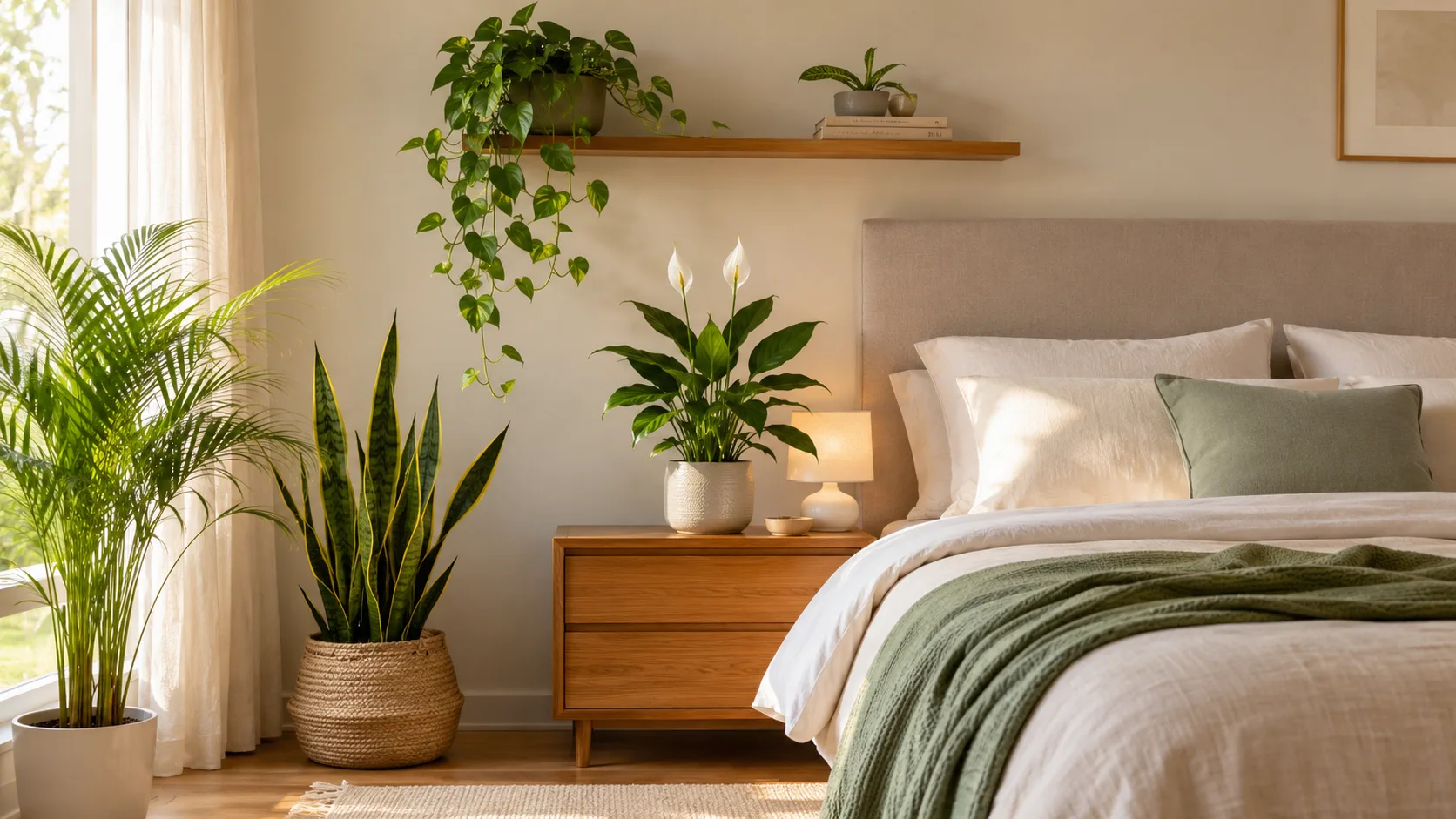
For ordinary dust, support each leaf and wipe from the stem toward the tip with a clean microfiber cloth. A soft makeup brush works better for narrow foliage, moss, or dense arrangements. On a tall tree, start at the top so dislodged dust falls onto surfaces you have not cleaned yet. A cool-air hair dryer held well back can loosen dust from tight foliage, but never use hot air: heat can warp plastic or soften glue.
Wash only when the material and construction allow it. Sturdy plastic or real-touch polymer leaves may tolerate a gentle lukewarm rinse, but protect the pot, foam, paper, preserved moss, and any electrical component first; then let every part dry completely before returning it to place. Fabric-like or silk-like leaves are safer with a barely damp cloth and a hidden-area test. Do not use bleach, abrasive cleaners, furniture polish, or a dishwasher, and do not put a damp plant back into an enclosed pot where trapped moisture can create a musty base.
Keep faux greenery away from sustained direct sun unless the manufacturer specifically rates it for that location. Even when a listing says a plant can be used outdoors, wind, rain, UV exposure, and temperature swings can shorten its useful life. A covered balcony, shaded porch, or protected entryway is a different job from an exposed roof deck. If the product includes thin wire, loose moss, small leaves, or a hanging cord, place it where pets and children cannot pull, chew, or knock it down.
When a plant arrives bent, reshape it slowly instead of forcing the tips. Bend wire stems near the point where you want the curve, arrange large leaves first, and step back several feet before making another adjustment. Real rooms are viewed at a distance, so a slightly uneven silhouette usually looks more natural than trying to make every leaf face the same direction.
Caption: Protected placement can extend the life of faux greenery; sheltered entries and covered patios are gentler than exposed sun, wind, and rain.
Conclusion
The best fake plant is the one whose scale, leaf finish, and base make sense in the exact place you need to fill. Choose the Kazeila olive tree or a large bird of paradise for height, the Der Rose monstera or West Elm Alocasia for a bold focal point, the IKEA orchid or Juvale bonsai for small surfaces, and a pothos, Tradescantia, or ric rac cactus when you need movement.
Before you buy, look past the product photo. Check the dimensions, pot and top dressing, material-specific care instructions, stability, hanging hardware, and return policy. Then keep the plant out of harsh sun, dust it before the film builds, and shape the stems with restraint. That combination—not a high price alone—is what lets faux greenery stay believable for years.



