Best Garden Hoses of 2026: 10 Tested Picks
We tested 42 garden hoses for kinks, flow, and winter survival. See our top 10 picks for lawns, beds, and patios—plus a buying guide on length, diameter, and couplings.
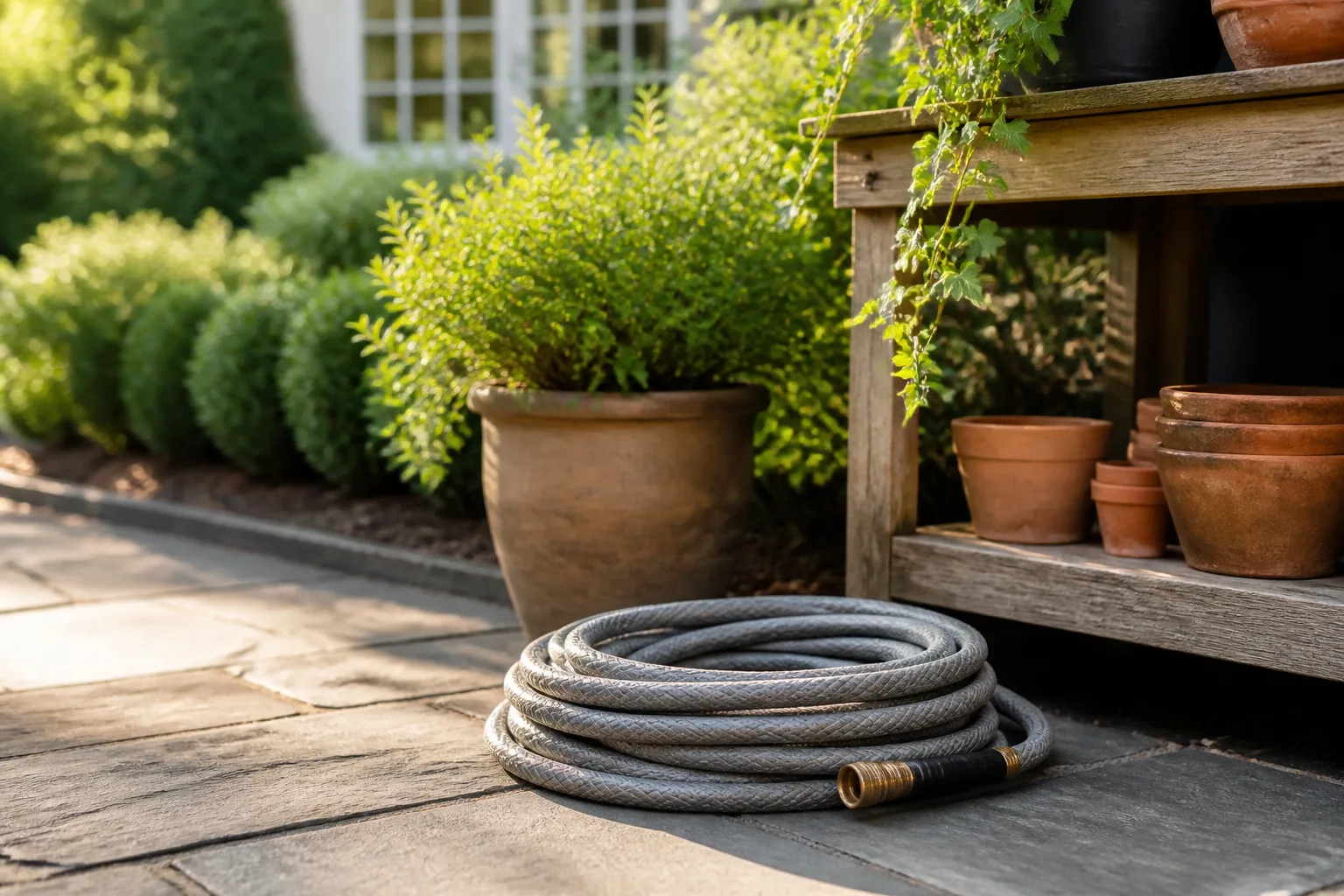
A garden hose is the tool you blame on the hottest afternoon of the year—when it kinks at the spigot, sprays your shoes, or weighs enough to make watering feel like gym day. We tested 42 hoses across three growing seasons in apartments, suburban lawns, and gravel-drive patios to find 10 that earn a permanent hook by the outdoor tap, plus a sizing framework so you do not buy 100 feet of regret.
Quick picks by watering job
Best overall: Zero-G Ultra Flexible Durable Garden Hose — under 4 pounds empty for 100 feet, crush-proof brass couplings, and the easiest coil we tested on a reel.
Most durable: Stanley Fatmax Professional Grade Water Hose — thick walls, steady pressure, and six months of daily abuse without punctures on rough stone.
Most versatile: Flexzilla Garden Hose — hybrid polymer flex, comfortable grip collars, and strong performance from lawn sprinklers to patio rinsing.
Best expandable: Hydrotech Pro Series Expandable Max-Flow Hose — expands from 18 to 50 feet, stays light when moving, and did not leak in three months of tree-and-bed watering.
Best kink-resistant: Craftsman Heavy-Duty Professional Grade Water Hose — stays flat on grass, clears kinks with a shake, and delivers serious flow for large yards.
Best budget: Briggs & Stratton Heavy-Duty Garden Hose — reinforced rubber toughness at a mid-range price, though you will feel the 10-pound heft.
Best lightweight: Giraffe Tools Garden Hose — swivel grip collars make spigot changes painless on a 100-foot run.
Best metal: Bionic Steel Garden Hose — segmented stainless shell survives deck corners and salty coastal air without rusting in our Florida test.
Best rubber: Ag-Lite Rubber Garden Hose — classic rubber feel with less weight than old-school contractor hoses and reliable sub-40°F flexibility.
Best retractable system: Giraffe Tools Retractable Garden Hose Reel — wall-mounted 130-foot reach with a lock-at-length reel and included nozzle (install takes patience).
Read on for how we tested, length and diameter math, material trade-offs, and honest limits on every pick.
Why the right garden hose changes every watering session
The wrong hose does not just annoy you—it wastes water and time. The RHS notes that managing water efficiently matters more as climates swing between drought and heavy rain (RHS: managing water in your garden). A hose that loses pressure over distance, leaks at the coupling, or kinks every ten feet pushes you toward longer run times and sloppy coverage on lawns and beds.
Flow, pressure, and how much hose you are really dragging
Diameter controls flow far more than most shoppers realize. A 5/8-inch inside diameter is the sweet spot for most residential lawns, vegetable rows, and shrub borders—it moves enough water for sprinklers without the bulk of a 3/4-inch contractor hose (RainPoint: how to choose a garden hose). 1/2-inch hoses suit balcony containers and tight side yards where weight matters more than volume. 3/4-inch hoses make sense for long runs, uphill delivery, or filling large tanks where every gallon per minute counts.
Length adds drag in two ways: friction loss (pressure drops as water travels farther) and weight. Water weighs about 8.3 pounds per gallon. A 100-foot, 5/8-inch hose can hold several gallons when full—so you are hauling water plus hose every time you reposition. Measure from your spigot to the farthest bed, add 10% slack for corners, and resist “extra length just in case.” Two linked hoses with a quick connector often beat one oversized coil you fight all summer (Gilmour: how to choose a garden hose).
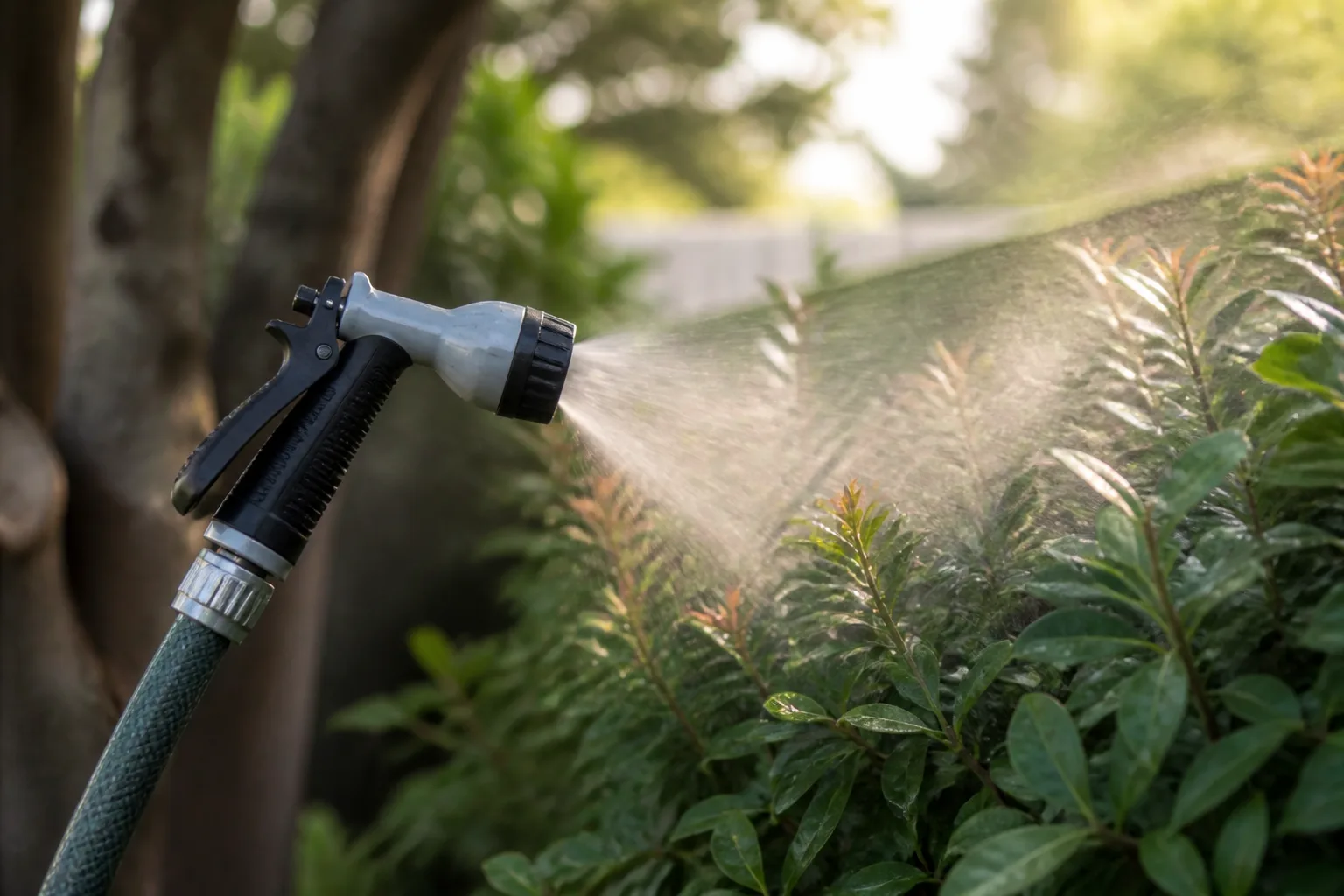
How we tested garden hoses
We purchased 42 models from major retailers and ran each through at least four weeks of daily use before advancing standouts to six-plus months of follow-up. Testers gardened in humid coastal yards, Midwest lawns, and rocky Northeast patios.
Each hose was scored on:
- Out-of-box coil time from factory packaging to first flat lay
- Empty vs full weight on a hanging scale
- Spigot attachment ease (hand-tight only, no tools) and leak check at 60 psi household pressure
- Flow rate at the nozzle with a 5/8-inch test section and 50-foot run
- Kink recovery after deliberate tight loops and reel wind-ups
- Surface abuse dragging across concrete, pea gravel, and wood decking
- Coupling survival after simulated foot strikes and light vehicle roll-overs on grass
- Reel compatibility on wall-mounted and cart reels
- Cold-flex at 40°F where testers had access to refrigerated storage
- UV exposure when left outdoors for 90 days (not our recommendation—see care section)
We also noted who each hose fails: tight staircases, tiny yards that do not need 100 feet, gardeners with limited grip strength, and anyone who needs drinking-water-safe hose for edible gardens (look for NSF/ANSI 61 or labeled potable use—none of our winners are certified for drinking unless the packaging says so).
What to look for in a garden hose
Length and diameter: reach without killing pressure
Length: Common sizes are 25, 50, 75, and 100 feet. For a typical suburban lot with a side-yard spigot, 50–75 feet covers front and back without constant coupling changes. Buy 100 feet only when you have measured the full run and still need slack around trees or fence lines.
Diameter: Do not confuse hose inside diameter with thread size. Most residential hoses use 3/4-inch GHT (garden hose thread) fittings on the spigot end even when the hose itself is 5/8-inch ID (RainPoint: how to choose a garden hose). That is normal—your faucet and nozzle still match.
| Inside diameter | Best for | Trade-off |
|---|---|---|
| 1/2 inch | Balconies, small beds, light hand watering | Lightest; lower flow |
| 5/8 inch | Most lawns, mixed beds, sprinklers | Best all-around balance |
| 3/4 inch | Long runs, high flow, contractor tasks | Heavier, harder to coil |
Material types: vinyl, rubber, hybrid polymer, and metal
Vinyl: Cheapest and lightest. Fine for occasional use on a small patio. Expect more kinks, stiffness in cold, and shorter life under daily sun.
Rubber and reinforced rubber: Tough against abrasion and temperature swings. Heavier, but ideal for gravel, renovation sites, and hoses you leave hooked up all season.
Hybrid polymer (Flexzilla-style): Combines rubber-like durability with lighter weight and better cold flexibility. Our top picks for daily gardeners increasingly use this category.
Expandable fabric hoses: Collapse small for storage, expand under pressure. Excellent for light watering; less ideal for dragging across sharp rock or powering high-demand sprinklers for hours.
Stainless steel segmented hoses: Puncture-resistant and kink-resistant in gentle curves. Limited bend radius, can feel hot in direct sun, and the included nozzles are often basic.
Quality hoses commonly last 5–10 years with drainage and indoor winter storage; cheap vinyl may fail in one or two seasons (Gilmour: how to choose a garden hose).
Couplings, GHT threads, and leak points
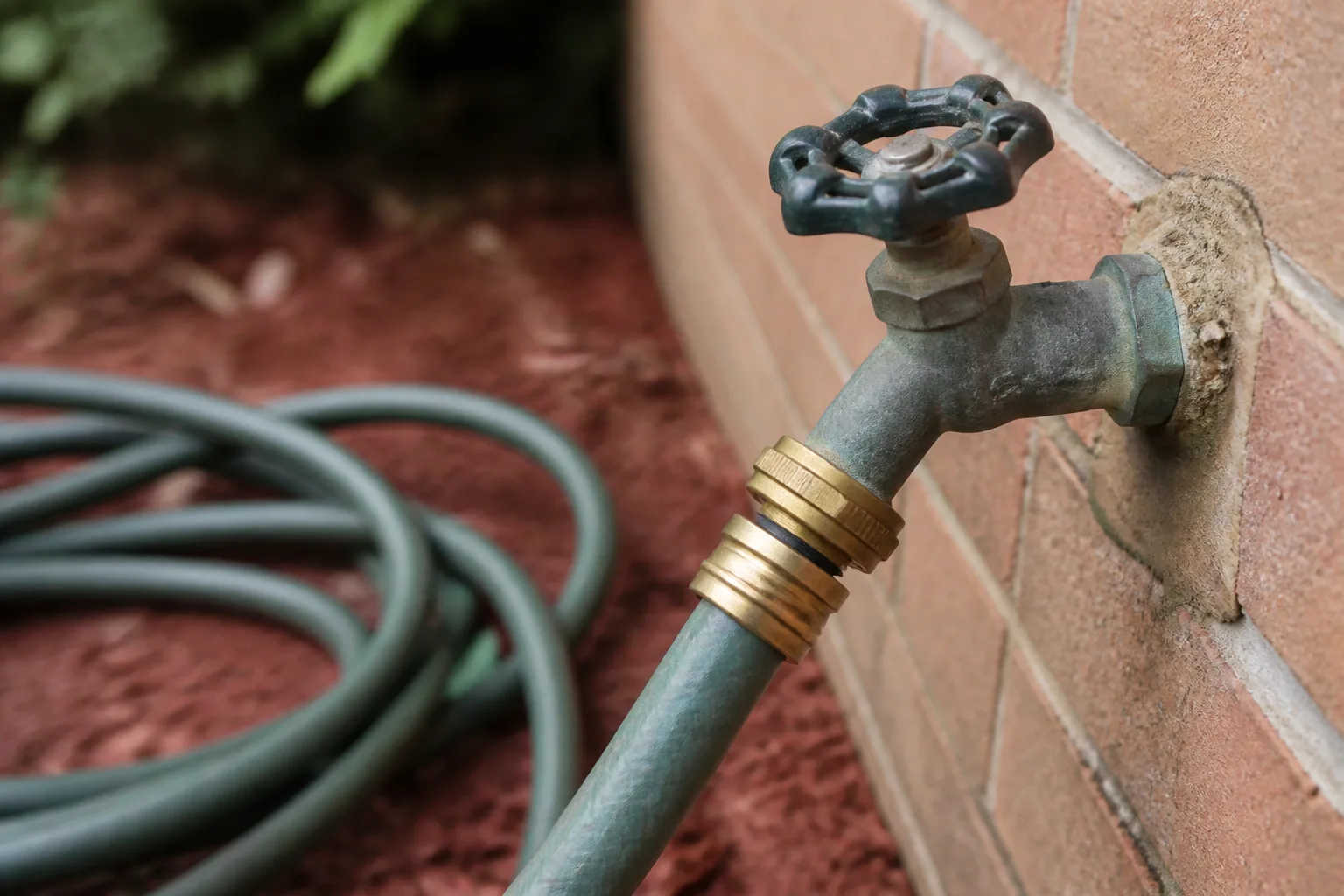
Brass couplings resist corrosion and survive accidental stomps better than thin aluminum. Bent or crushed couplings are the fastest way a good hose becomes useless—water weeps at the spigot no matter how new the tube is (Gilmour: how to choose a garden hose).
Look for crush-resistant collars or grip handles if you swap nozzles, timers, or splitters often. O-ring washers inside female fittings should be replaceable; carry spares. For frequent tool changes, a quick-connect set on the hose end saves wrist strain.
Burst strength (PSI) and when it matters
Package labels list burst strength or working PSI—the pressure the hose wall can handle before rupture. Residential systems often run 40–60 psi; spikes happen when you shut a nozzle quickly or run a pressure washer adapter (never on expandable hoses unless rated). Higher PSI ratings (500–600+ on premium rubber and hybrid hoses) indicate thicker walls and better tolerance for temperature swings and occasional abuse (Gilmour: how to choose a garden hose). PSI matters most if you run sprinklers on long schedules, use uneven well pressure, or share a line with irrigation manifolds.
Best overall: Zero-G Ultra Flexible Durable Garden Hose
The Zero-G (Teknor Apex) remains our default recommendation after years of retesting. A 100-foot model weighs under 4 pounds empty—roughly half what rubber hoses in the same length weigh—yet it survived daily lawn and bed watering, hot-tub filling, and deck rinsing without burst leaks.
What we like: Flat coil memory, crush-proof brass couplings, steady stream at 50 feet, and easy reel wind-up. It attaches quickly even when the spigot sits tight against siding.
What we do not like: Rated for use above 35°F only—cold-climate gardeners should drain and store it indoors in winter. Not the pick for dragging across sharp construction debris.
Specs snapshot: Woven hybrid shell, 5/8-inch diameter, 100 feet, ~3.9 lb empty.
Buy it if: You want one hose that is light enough to enjoy using and tough enough for daily chores.
Skip it if: You need year-round outdoor storage in freezing regions or maximum abrasion resistance on gravel driveways (see Stanley Fatmax).
Most durable: Stanley Fatmax Professional Grade Water Hose
The Stanley Fatmax feels like the hose you stop worrying about. At 14+ pounds for 100 feet it is heavy, but the thick walls shrugged off six months on stone patios and arborvitae rows without pinholes.
What we like: Consistent pressure, easy spigot threading thanks to the grip collar, and pliable enough to hand-coil onto a stand without a reel.
What we do not like: Bright yellow only—visible, not subtle. Disconnecting from a tight spigot took more force than lighter models. Full hose is a workout on stairs.
Specs snapshot: PU/PVC blend, 5/8-inch, 100 feet, ~14.4 lb empty.
Buy it if: Durability beats weight in your yard and plants sit close to the tap.
Skip it if: You haul hose up flights of stairs or need a low-profile color.
Most versatile: Flexzilla Garden Hose
Flexzilla hits the middle ground between rubber toughness and hybrid lightness. The bright green hose is easy to spot in tall grass, and the squishy grip collars at both ends make connecting sprinklers, wands, and watering cans less finger-punishing.
What we like: Excellent kink recovery, comfortable handling, and strong performance washing vehicles and rinsing compost bins. Available in multiple lengths at big-box stores.
What we do not like: Noticeably heavy when full. Collars can slide down the tube and need repositioning.
Specs snapshot: Hybrid polymer, aluminum couplings, 5/8-inch, 50 feet tested (~7.8 lb empty).
Buy it if: One hose handles lawn, patio, and car duty in a medium-sized yard.
Skip it if: You need maximum length without weight—pair a shorter Flexzilla with a second hose instead of one 100-foot run.
Best expandable: Hydrotech Pro Series Expandable Max-Flow Hose
Expandable hoses divide gardeners. The Hydrotech Pro Series convinced our skeptical tester: it jumped from 18 to 50 feet under pressure, stayed under 5 pounds, and did not leak at couplings through three months of plum-tree and border watering.
What we like: Compact storage, no kink spirals like old vinyl, protective sleeves at connection points, and steady pressure for hand watering.
What we do not like: Not for dragging across sharp gravel or powering heavy oscillating sprinklers all day. Our 50-foot unit could not reach a side-yard tomato bed—size up to 75 or 100 feet if you have measured the run.
Specs snapshot: Hybrid expandable, 3/4-inch diameter when expanded, 50 feet, ~5 lb.
Buy it if: Storage space is tight and your watering is mostly beds and containers.
Skip it if: You need a hose that lives outdoors on stone or handles contractor-level abuse.
Best kink-resistant: Craftsman Heavy-Duty Professional Grade Water Hose
If kinks make you swear, the Craftsman Professional Grade is the antidote. It stayed flat on lawn tests, delivered strong pressure immediately, and shook out tight loops without shutting down flow.
What we like: Thick wall feel, anodized aluminum couplings, and impressive coil memory on a reel.
What we do not like: ~8 pounds for 100 feet plus water weight—overkill for a small courtyard. Stiff the first week; flex improves with use.
Specs snapshot: PU/PVC, 5/8-inch, 100 feet, ~8.2 lb empty.
Buy it if: You water large lawns and hate stopping to unkink every pass.
Skip it if: Your entire garden fits inside a 30-foot radius.
Best budget: Briggs & Stratton Heavy-Duty Garden Hose
Briggs & Stratton’s reinforced rubber hose punched above its price during gravel-patio drags and concrete transitions in New Jersey testing. It did not kink on the reel and held steady pressure after a short break-in period.
What we like: Thick rubber feel, secure spigot fit, and easy unkink when a loop formed during wind-up.
What we do not like: 10 pounds for 50 feet—cumbersome for anyone with grip or mobility limits. Coiling onto lightweight reels takes effort.
Specs snapshot: Reinforced rubber, 3/4-inch, 50 feet, ~10 lb.
Buy it if: You want rubber toughness without premium pricing and can store it near the tap.
Skip it if: Weight is your top concern—see Zero-G or Giraffe Tools.
Best lightweight: Giraffe Tools Garden Hose
The Giraffe Tools 100-foot hose proved that length does not have to mean misery. At ~7 pounds empty, testers ran it to front-porch containers, sprinkler zones, and even a misting fan setup without the old shoulder-burn from rubber hoses.
What we like: Swivel grip collars for fast timer and nozzle swaps, strong reel performance, and a included mister accessory for summer comfort.
What we do not like: Occasional kinks on tight turns—easy to fix, but more than Zero-G. Orange collars faded after a year of sun (function unchanged).
Specs snapshot: Polymer with nickel-plated brass, 5/8-inch, 100 feet, ~7 lb empty.
Buy it if: You frequently change attachments or need 100 feet without Stanley-level weight.
Skip it if: You want zero kinks—Craftsman wins there.
Best metal: Bionic Steel Garden Hose
Bionic Steel surprised us. The segmented stainless shell flexed enough for deck rails and lawn curves, never kinked in six months of Florida coastal air, and wound cleanly on a third-story reel with a sharp drop.
What we like: Puncture resistance on wood and concrete, steady pressure at odd angles, and light empty weight (~3 lb for 50 feet).
What we do not like: Metal gets hot in direct sun—store in shade or a deck box. Bundled spray nozzle is plastic and basic; swap for a metal nozzle if you are rough on gear.
Specs snapshot: Stainless steel segments, 1/2–5/8-inch depending on SKU, 50 feet tested.
Buy it if: You puncture vinyl and rubber on decking or want a hose that coils tightly on a reel.
Skip it if: You need maximum flow for large sprinklers (rubber/hybrid 5/8 or 3/4 is better).
Best rubber: Ag-Lite Rubber Garden Hose
Purists who want true rubber without contractor-hose weight should look at Ag-Lite. It lay flat, resisted kinks, and stayed flexible enough for kids to help haul across the yard in summer tests.
What we like: Comfortable grooved handle, wide length range (6–100 feet), and temperature rating from 40°F to 200°F water per manufacturer specs—useful for occasional hot-water rinses, not routine boiling.
What we do not like: Slight learning curve with certain nozzles—pressure can push the wand unexpectedly if you grip wrong.
Specs snapshot: Rubber, 5/8-inch, 75 feet tested, ~11.4 lb empty.
Buy it if: You trust rubber longevity and want a lighter take on the classic material.
Skip it if: You need the absolute lightest hose—hybrid models win.
Best retractable system: Giraffe Tools Retractable Garden Hose Reel
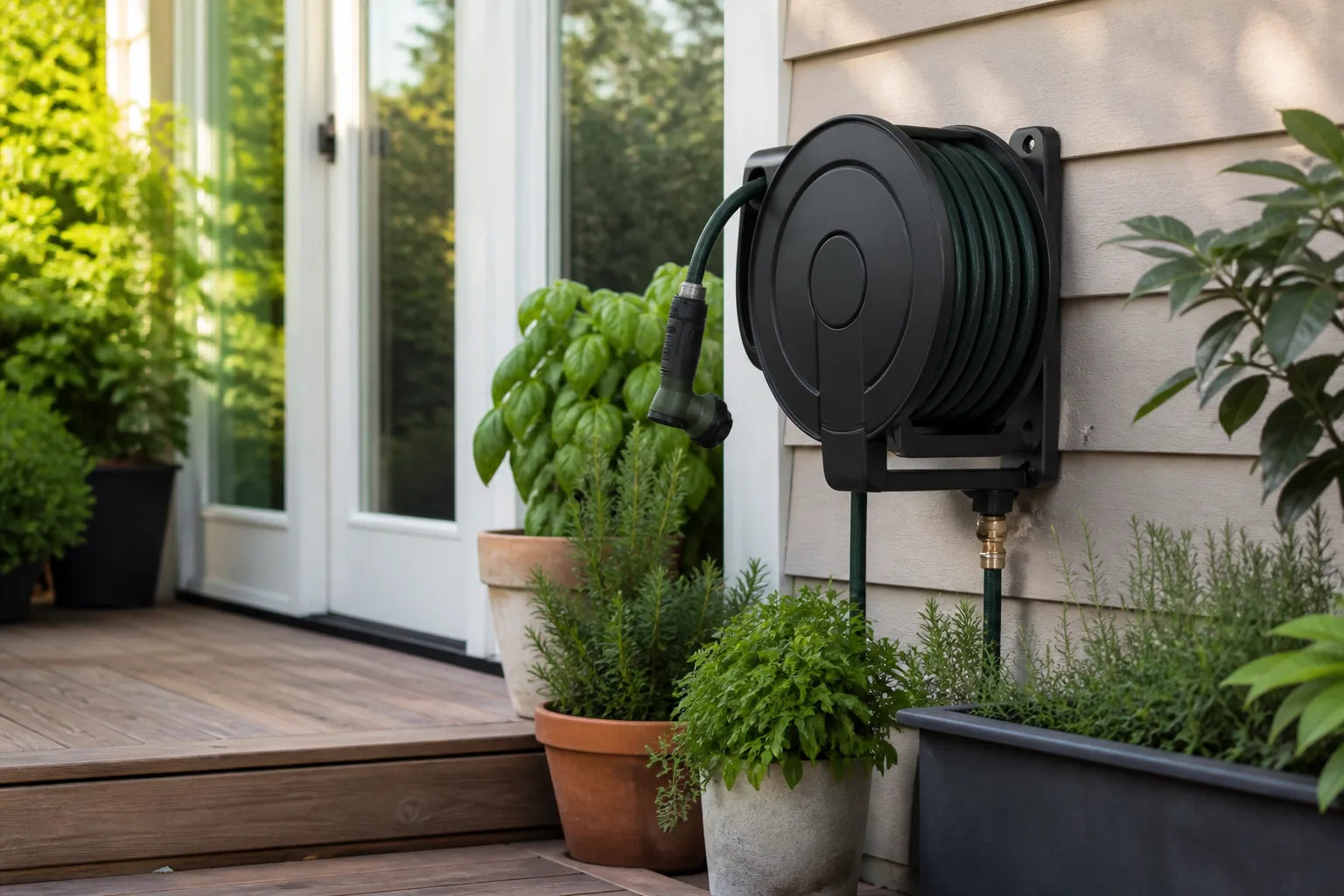
Sometimes the best “hose” is a system. The Giraffe Tools wall-mounted reel bundles a 130-foot, 1/2-inch hose, nine-pattern nozzle, and slow-retract mechanism that locks at any length.
What we like: Neat storage, strong enough pressure for patio pots, and included nozzle quality beats most hose kits.
What we do not like: Installation is real work—concrete mounting hardware frustrated one tester, and fittings leaked until fully tightened. Price is $150+ compared with a standalone hose.
Specs snapshot: Polypropylene reel, 1/2-inch hose, 130 feet.
Buy it if: You are a new homeowner setting up one outdoor tap and want tidy storage.
Skip it if: You rent or cannot drill exterior walls—get a cart reel and a standalone hose instead.
Hose care, storage, repair, and when to replace
Treat hoses like any seasonal garden tool: a little maintenance buys years.
Drain before frost. Leave the hose on an elevated surface with the end lower than the spigot so water siphons out, or walk the length hand-over-hand to push water out (Gilmour: how to choose a garden hose). Water left inside freezes, expands, and splits walls and couplings.
Store frost-free. A shed, garage, or hose hanger beats leaving coils on nails that create permanent kinks. The RHS emphasizes storing rainwater and using water wisely; a leaking hose undermines both goals (RHS: managing water in your garden).
Repair beats replace for clean cuts: a compression mender and sharp scissors can salvage a lawnmower nick in minutes (Gilmour: how to choose a garden hose).
Replace when you see bulges, persistent bubbles under the jacket, green corrosion frozen on brass threads, or coupling crush damage that washers cannot seal.
Pair your hose with the right nozzle (fan vs jet), consider a timer for lawn zones, and route soaker lines separately if you need slow bed irrigation—our winners are general-purpose hoses, not soaker replacements.
Conclusion
The best garden hose is the one sized correctly for your spigot-to-bed distance, matched to how hard you are on gear, and light enough that you will actually use it on hot afternoons. For most readers, the Zero-G still balances weight, flow, and coil friendliness better than anything else we retested. Need tank-like walls? Stanley Fatmax. Hate kinks above all? Craftsman. Tight storage? Hydrotech expandable or the Giraffe reel system.
Measure once, buy for 5/8-inch flow unless you are on a balcony, drain before winter, and fix small cuts instead of tossing a whole hose. Get those basics right and any pick on this list will make watering feel like gardening again—not a chore you postpone until the plants wilt.