The 5 Best Watering Cans of 2026, Tested and Reviewed
We tested 28 watering cans for balance, pour control, and durability. See our top 5 picks for houseplants, patios, and large container gardens—plus a buying guide.
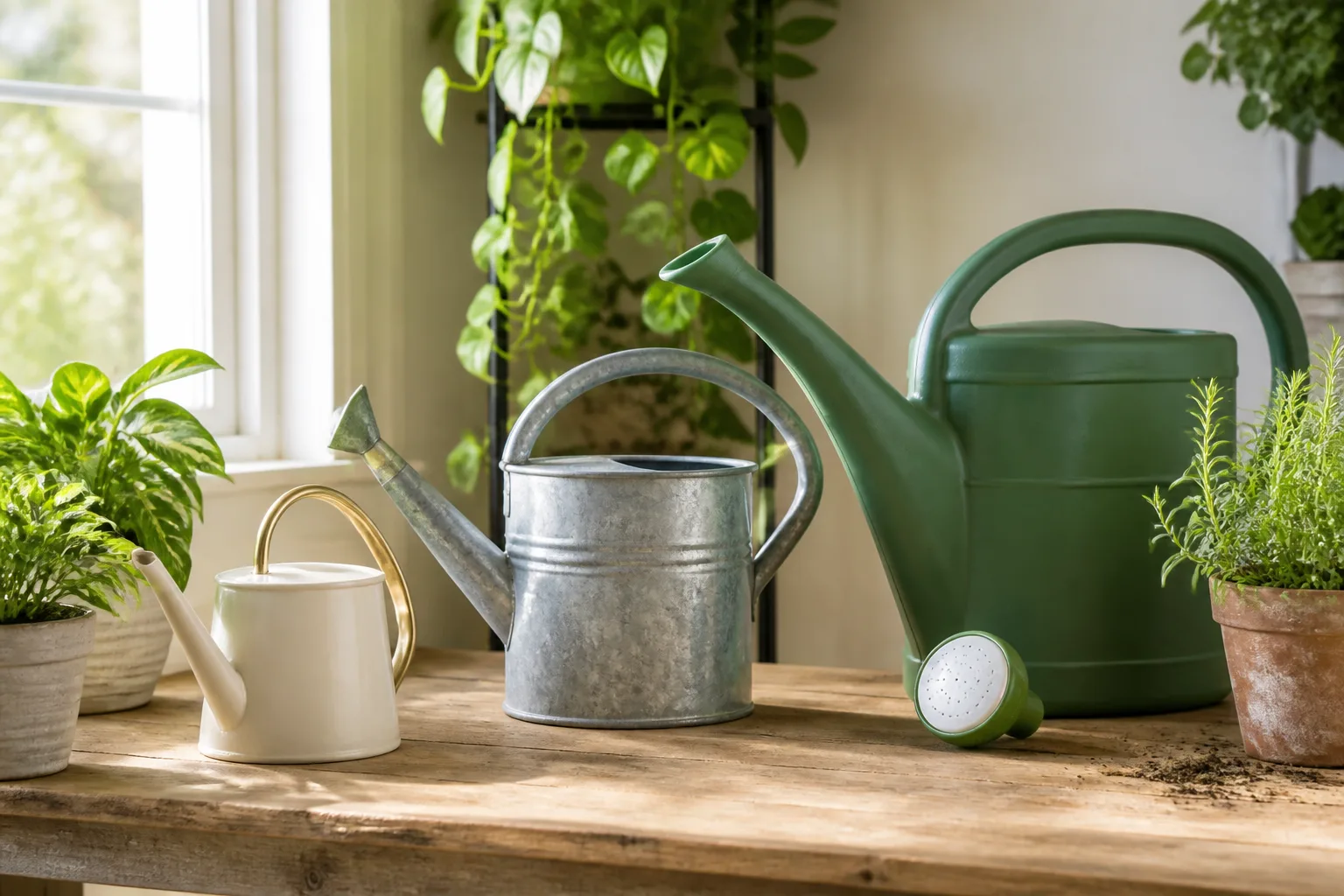
A watering can is the tool you reach for dozens of times a season—yet most gardeners own exactly one, often the wrong size, with a spout that splashes leaves or dumps half the water on the patio. We tested 28 watering cans across three months of daily use to find five that earn a permanent spot in the shed or by the kitchen sink, plus a decision framework so you do not buy a beautiful can that fights your wrist every watering day.
Quick picks by gardening scenario
Best outdoor all-rounder: Bloem Easy Pour 2.6-Gallon — dual handles, removable rose, and the best balance we found in a large plastic can.
Best for big container runs: XXXFlower 1.5-Gallon — swivel spout, fill lid, and enough capacity to water a patio row without constant refills.
Best display-worthy upgrade: Williams Sonoma Tall Copper Watering Can — narrow stream, gorgeous hammered finish, and surprisingly good pour control for delicate pots.
Best indoor houseplant can: Haws Handy 1-Liter — featherweight, long reach, rose storage peg, and the most accurate soil targeting in our indoor tests.
Best compact reach: Terrain Beech Wood Handle — slim spout for hanging baskets and tight shelves; store it indoors if the handle is wood.
Read on for how we tested, capacity math, rose vs stream rules, and honest limits on every pick.
Why the watering can you own matters more than you think
Watering is not just about volume—it is about where water lands. The RHS advises watering the compost, not the foliage, to limit fungal disease spread and make sure moisture reaches roots (RHS: how to water containers). A can with the wrong spout makes that harder: wide mouths splash African violet leaves, short spouts miss the back of a deep window box, and a 2.6-gallon tank becomes an arm workout on a fourth-floor walk-up.
The right can also changes how often you water. A heavy, clumsy vessel quietly trains you to rush pours or skip plants on the top shelf. A balanced 1-liter indoor can makes thorough, slow watering feel easy—which matters because indoor plants depend on you for every drop, and overwatering from repeated shallow splashes is a common killer (University of Maryland Extension: watering indoor plants).
Precision indoors vs volume outdoors
Indoor watering is a precision job: long narrow spouts, modest capacity (roughly 0.5–1 liter / 1–2 pints for most collections), and a handle you can tip with one hand without nose-diving. Outdoor container and bed watering favors 1.5–2.5+ gallons, a removable rose for seedlings, and handles that let you brace the can while aiming into large pots.
Most committed gardeners eventually own two cans—one for the house, one for the yard—not because it is trendy, but because the physics differ.
Indoor vs outdoor watering cans: use the right tool
Garden-center cans are often built for moving a lot of water quickly through a wide opening or sprinkler rose. That is perfect for outdoor seedlings and border edges. It is clumsy indoors, where you thread past furniture and pour into 4-inch pots wedged on a shelf.
Indoor priorities (in order): spout length and aim, balance when full, capacity you can lift comfortably, and a fill opening that clears your faucet. Outdoor priorities: capacity per trip, rose quality for gentle showers, UV-stable plastic or rust-resistant metal, and stability when set down on uneven pavers.
When a hose or drip system beats a can
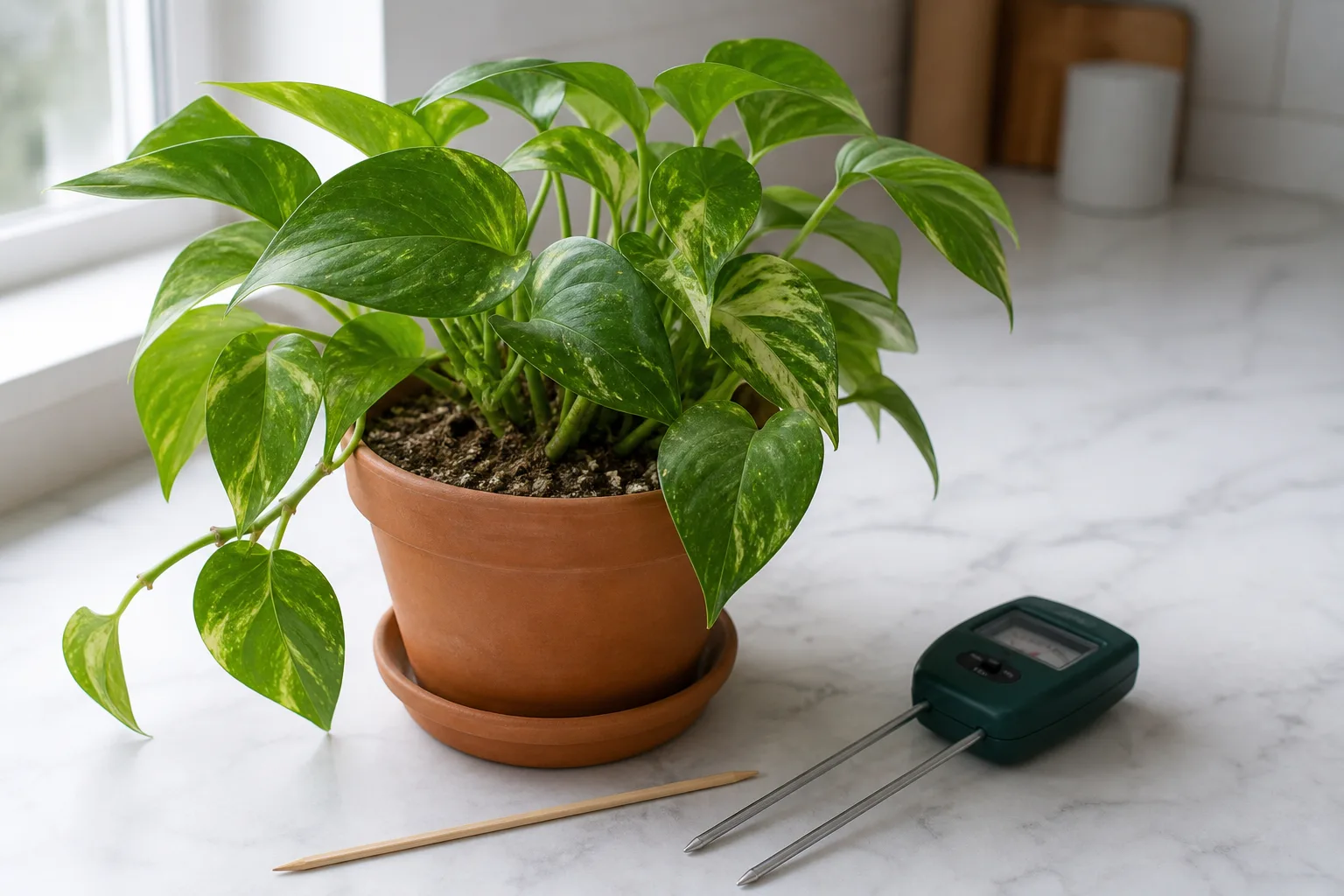
A watering can still wins for targeted pours, seedlings, fertilizer mixes you want to measure, and balconies without taps. Switch to a hose or drip line when you are watering more than about 20 large containers in one session, lawn edges, or rows where a rose would take all day. For houseplant-heavy homes, pair a good indoor can with our indoor plant watering basics cheat sheet and top vs bottom watering guide if you use tray methods.
How we tested watering cans
We purchased 28 models from mainstream retailers and used each through at least two weeks of real watering before advancing the top performers to three months of follow-up wear. Testers gardened in apartments, patios, and in-ground container rows across multiple U.S. climates.
Each can was scored on:
- Stated vs actual capacity (filled under a faucet or hose, then measured)
- Full weight and balance while walking 30+ feet
- Pour accuracy at soil level in 4-inch pots, 12-inch containers, and hanging baskets
- Rose performance (even sprinkle, clog resistance, storage when detachable)
- Sink fit for indoor models (handle clearance at common faucet heights)
- Durability via controlled 4-foot drops onto grass and concrete, empty and full where safe
- Slosh and spill while carrying with one hand
- Value judged after testing, not before
We also noted who each can fails: stairs, hanging hooks, delicate copper finishes, and gardeners with limited grip strength.
What to look for in a watering can
Capacity, weight, and refill frequency
Water weighs about 8.3 pounds per gallon. A 2.6-gallon can holds roughly 22 pounds of water alone, plus the empty can—before you climb stairs. That is fine for a ground-level patio; it is miserable for a loft jungle.
Rule of thumb: choose capacity so a full can is comfortable for your weakest grip on your longest carry. For most indoor growers, 1 liter (34 oz) is enough per refill session. Outdoor container gardeners often want 1.5–2.5 gallons to cut trips. If you must size up, look for dual handles or partial-fill marks inside the body.
Rose vs free-flow spout: which plants need which
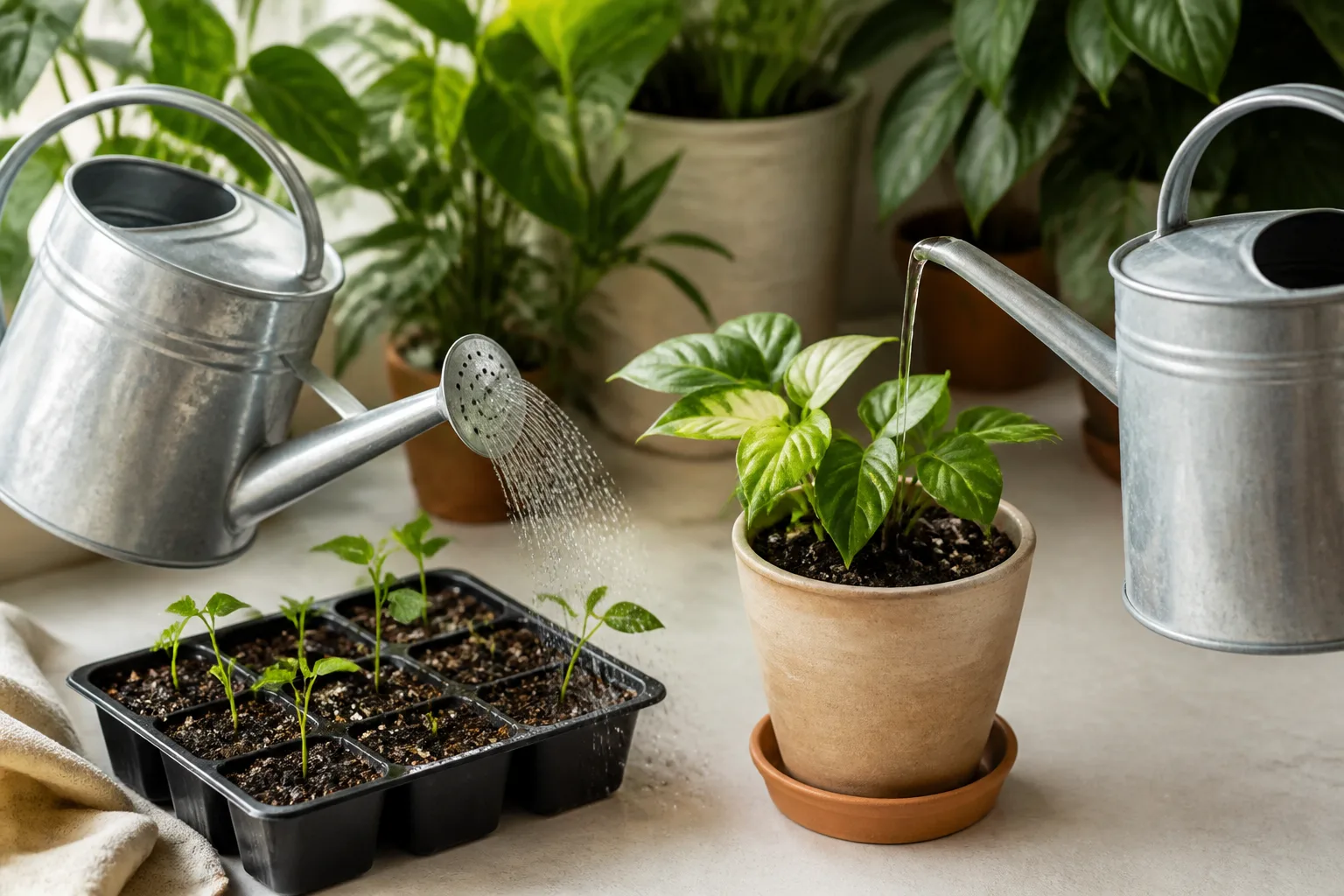
A rose is the perforated sprinkler head that mimics gentle rain. It is ideal for seedlings, freshly sown trays, and delicate outdoor starts where a direct stream would crater soil. Mature houseplants usually want a straight, narrow spout aimed at compost—not a sprinkle across leaves.
Many roses detach for stream mode. If yours does, store the rose on the can (Haws includes a peg) so it does not vanish in a drawer. Clean roses regularly; mineral crust blocks even spray patterns.
Handle balance, grip, and reach
Top-heavy cans with long fixed spouts tip forward when full. Dual-handle designs (rear + side) let you brace and aim like a small watering pitcher—excellent for large outdoor cans. Indoor cans benefit from a high loop handle that clears shelf lips when you pour downward into a tall fiddle-leaf pot.
Test grip with wet hands. Smooth metal handles get slippery; textured plastic or wood inserts help.
Material trade-offs: plastic, steel, and copper
Plastic (polyethylene): light, cheap, UV-sensitive on cheap models—choose thick, food-grade feel and avoid leaving budget cans in full sun year-round. Powder-coated galvanized steel: indoor-friendly, rust-resistant if coated intact—great for display-worthy indoor cans. Copper and brass: beautiful pour, develops patina outdoors; dents more easily than plastic and can over-deliver volume to small pots if you are not careful.
None waters plants better by material alone. Buy for weight, durability in your storage spot, and whether you mind patina or fade.
Fill opening and sink clearance
Measure your sink depth and faucet height, then compare to the can. Wide outdoor cans fill from a hose—no issue. Stylish indoor cans with arching handles often cannot sit flat under a low faucet; you end up filling from a pitcher (extra step, extra spills). Prefer a wide mouth if you mix liquid fertilizer in the can.
Best outdoor watering can: Bloem Easy Pour 2.6-Gallon
What we like: Two-handle control, removable rose, huge capacity without constant refills, and surprising toughness—it survived our 4-foot grass drop full of water without cracking or dumping.
What we do not like: Too bulky for hanging baskets and indoor shelves; the wide body does not thread between tight houseplant rows.
The Bloem Easy Pour is the outdoor can we recommend most often. At 2.6 gallons, it covers a patio container run or modest vegetable bed in fewer trips. The rear and side handles let you tilt slowly for a controlled stream or attach the rose for seedling trays and newly transplanted annuals.
In daily use, the rose threads on securely and removes cleanly for direct pours into large pots. Plastic thickness feels commercial-grade—not the single-season brittle cans that crack after one hot summer on concrete. We still would not haul it up multiple flights for houseplants; that is what the Haws pick is for.
Specs: Plastic | 2.6 gal | Rose + free-flow | ~1 lb empty | Dual handles
Best for large container gardens: XXXFlower 1.5-Gallon
What we like: Swivel spout aims up or down, screw-on fill lid prevents slosh, grippy handles, and strong value for the capacity.
What we do not like: Utility look—not something you display in the living room. Dent on sharp concrete when dropped full (still usable).
If Bloem is more can than your balcony needs, the XXXFlower 1.5-gallon hits a sweet spot: enough volume for multiple large pots, still manageable to fill in a kitchen sink when you do not have a hose hookup. The lid is a genuine upgrade for renters carrying water through a hallway; we had far less splash than open-top cans.
The adjustable rose direction matters on crowded decks: angle the sprinkle upward for gentle coverage on leafy annuals, or downward for soil-level pours. It is not pretty, but it outperformed several “designer” cans that leaked at the spout joint within weeks.
Specs: Plastic | 1.5 gal (~6 L) | Rose + free-flow swivel | ~1.5 lb empty | Lid included
Best upgrade pick: Williams Sonoma Tall Copper Watering Can
What we like: Stunning hammered copper, steady narrow stream, comfortable single-handle pour, and a form factor that looks at home next to bookshelves.
What we do not like: 65–80 oz capacity means frequent refills for large collections; copper dents on concrete; stream can overwhelm tiny seedlings without extra care.
This is the can you buy when you want function and décor in one object. The tall narrow spout reaches into dense foliage without dragging leaves, and the pour rate suits medium indoor pots and outdoor container flowers alike.
We measured about 80 oz comfortable fill despite a 65 oz label—still modest compared with plastic workhorses. Treat it as a precision + display tool, not a patio workhorse. Copper will patina over time; embrace it or polish occasionally if you prefer shine. After a full concrete drop, ours dented slightly but did not leak—acceptable for a premium piece if you are not clumsy.
Specs: Copper | 65–80 oz practical fill | Free-flow | Lightweight for metal | Hammered finish
Best indoor watering can: Haws Handy 1-Liter
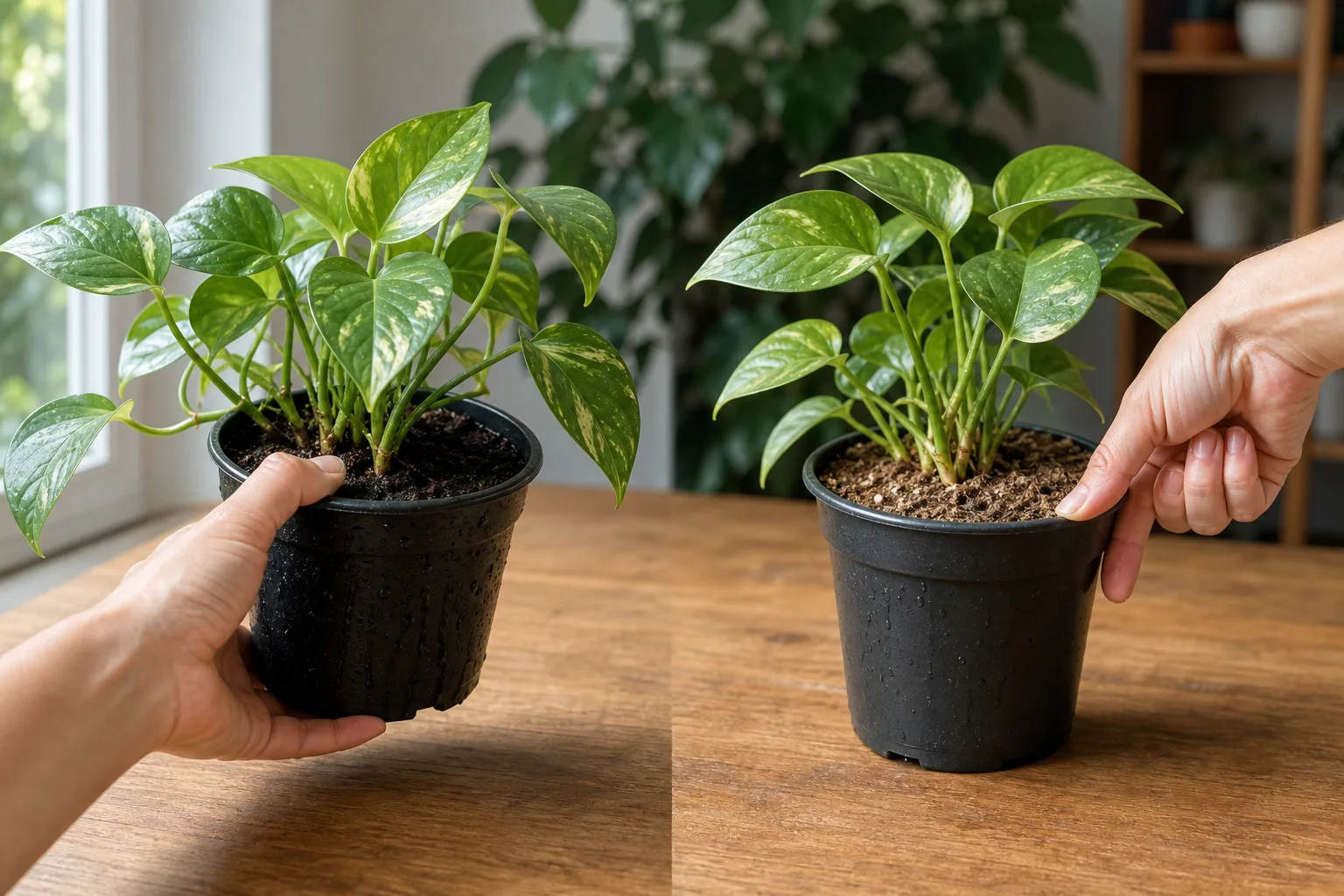
What we like: Under 5 oz empty, accurate long spout, detachable rose with storage peg, cheerful colors, and the best indoor aim in our lineup.
What we do not like: 1 liter requires refills for big collections; plastic is not heirloom-grade (though it survived drops fine).
Haws has made watering gear since 1886, and this small indoor model shows why the name persists. The slim neck slips under cascading pothos and into back-row shelves where a gallon jug would never fit. The rose screws off for direct soil pours; when detached, it hangs on the integrated peg above the spout—small detail, huge frustration saver.
For apartment growers with 5–30 pots, this is the default recommendation. Pair it with how to water indoor plants the right way if you are unsure how much to apply per pot. If you bottom-water many plants, you still may want this can for the few that need top-ups.
Specs: Plastic | 1 L (33.8 oz) | Rose + free-flow | ~0.2 lb empty | Multiple colors
Best small but mighty: Terrain Beech Wood Handle
What we like: Slim stainless body, comfortable beech handle, excellent reach for hanging baskets, steady pour despite open top design.
What we do not like: 18 oz capacity; wood handle should not live outdoors year-round; dents/paint chips on hard drops.
Terrain’s beech-handle can is the pick for tight spaces and elevated plants. The narrow spout reaches hanging baskets and wall-mounted planters better than wide-mouth outdoor cans. The handle shape distributes weight well for its size—we moved pot to pot on a balcony rail without wrist fatigue.
Because the top is open, we expected splashing; it stayed surprisingly controlled if you do not overfill. Store indoors or under cover—wood and constant rain do not mix. Think of it as a precision indoor/outdoor crossover for small collections, not a community-garden tank.
Specs: Stainless steel body, wood handle | 18 oz | Free-flow | Slim spout
Other solid options we tested
Fasmov Plastic 1-Gallon: No rose, but a dependable budget stream for herb pots and starter houseplants. Lightweight and easy to sink-fill.
E.Palace Stainless Steel: Long spout reach for high hangers, brushed finish, good pour control. A strong alternative if Terrain is out of stock.
Neither displaced our top five, but both are sensible under-$25 backups for a second station (office desk plants, back porch herbs).
How to clean and maintain a watering can
Rinse after use if you feed with liquid fertilizer or have hard water—mineral crust narrows roses and changes pour rate. For buildup:
- Mix equal parts warm water and distilled white vinegar.
- Fill the can (and submerge the rose) for 20 minutes; overnight for heavy clogging.
- Scrub with a bottle brush, rinse thoroughly, and air-dry before storage.
- At season end, empty completely; store upside down or cracked open so moisture does not stagnate.
Outdoor plastic cans last longer out of direct summer sun when not in use. Wood handles benefit from occasional food-safe oil if they dull—keep oil away from soil contact surfaces.
Common watering-can mistakes
Buying one giant can for everything. You will either under-water indoor plants (because hauling is a chore) or over-water small pots (because a full outdoor pour is too much volume at once).
Using a rose on mature houseplants. Leaves get wet; soil may stay dry. Remove the rose and aim at compost.
Ignoring full weight. If a full can hurts your wrist, you will short-change plants on the far end of the patio.
Leaving cans full between weeks. Stagnant water grows biofilm; mosquitoes breed in open outdoor cans. Empty after watering day.
Skipping the hose for big jobs. If watering day takes four refill cycles with a 2-gallon can, a hose with a gentle shower nozzle or drip grid on the balcony saves time and back strain—see hot-weather plant watering guide for heat-wave timing that applies to containers too.
Conclusion
The best watering can in 2026 is not a single product—it is the one matched to where and how you water. For most households, that means a Haws Handy 1-liter indoors and a Bloem Easy Pour 2.6-gallon (or XXXFlower 1.5-gallon on smaller patios) outside. Add the Terrain can if hanging plants dominate, or the Williams Sonoma copper piece if you want beauty without sacrificing pour control.
Buy for spout precision, comfortable full weight, and honest capacity—not color alone. Maintain the rose, rinse after feeding, and keep a second cheap can on backup duty before you chase a fourth “perfect” design that still splashes your windowsill.



