Can You Use Cooking Water in Your Garden?
Can you use cooking water in your garden? Learn which pasta, potato, and veggie waters help soil, which ones harm plants, and how to cool, dilute, and apply safely.
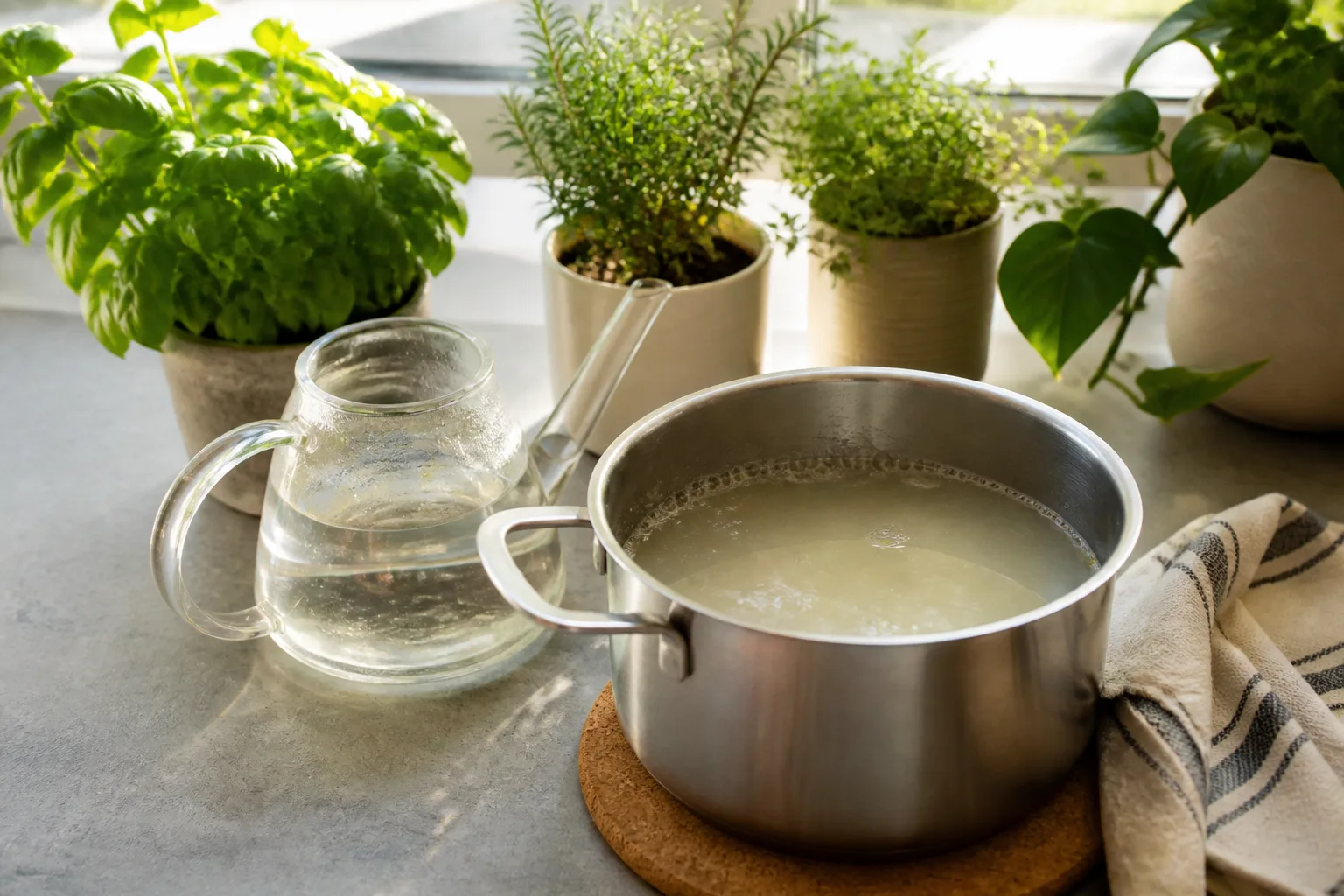
That cloudy pot of water left after draining pasta looks too useful to waste—and sometimes it is. You can use cooking water in your garden when it is plain, unsalted, and free of grease, meat, dairy, and heavy seasoning. Cool unsalted water from pasta, potatoes, rice, or vegetables can hydrate soil and add a small pulse of carbon-rich organic matter that supports beneficial soil microbes. It is not a substitute for fertilizer, and the wrong batch can do real damage.
The decision happens at the sink, not in the garden bed. Before you carry a hot pot outside, ask what cooked in the water and what you added while it boiled. That single check prevents most mistakes.
The short answer: plain starch water yes, salt and grease never
Save and reuse cooled water from boiling plain pasta, potatoes, rice, couscous, or unsalted vegetables when you want to conserve water and give soil biology a light snack. Pour it down the drain or into compost when the water was salted, used for meat or broth, contains visible fat, or was cooked with oil, butter, cream, or aggressive spice blends.
Color alone is not a reliable guide. Starchy water looks cloudy even when it is safe; clear broth can still be salty or greasy. Taste is a poor test for garden use, but if the water tastes noticeably salty, treat it as unsafe for plants.
This is a sustainability win with narrow boundaries. You are reusing water you already heated and adding dissolved starches and minerals that would otherwise leave the kitchen. You are not creating a free liquid fertilizer that replaces balanced feeding.
What cooking water actually does for soil (and what it does not do)
The main benefit is soil biology, not plant nutrition in a bottle. John Murgel, horticulture extension specialist with Colorado State University Extension, frames leftover starchy cooking water as a quick source of ready-to-use organic matter that feeds soil microbes rather than a direct vitamin dump for leaves and roots. By feeding decomposers, you increase soil activity—and healthier soil activity generally supports healthier plants.
That is a meaningful distinction. Pasta and potato water contain dissolved starches and some minerals leached during boiling, but they do not deliver a complete NPK profile the way a labeled fertilizer does. You will not replace compost, balanced fertilizer, or a soil test with pasta night leftovers.
What you may get is a modest bump in microbial processing, slightly improved moisture retention in organic-rich mixes, and one less gallon down the drain. Think of it as a gentle soil conditioner plus irrigation, not plant food concentrate.
Which cooking waters are safe to reuse
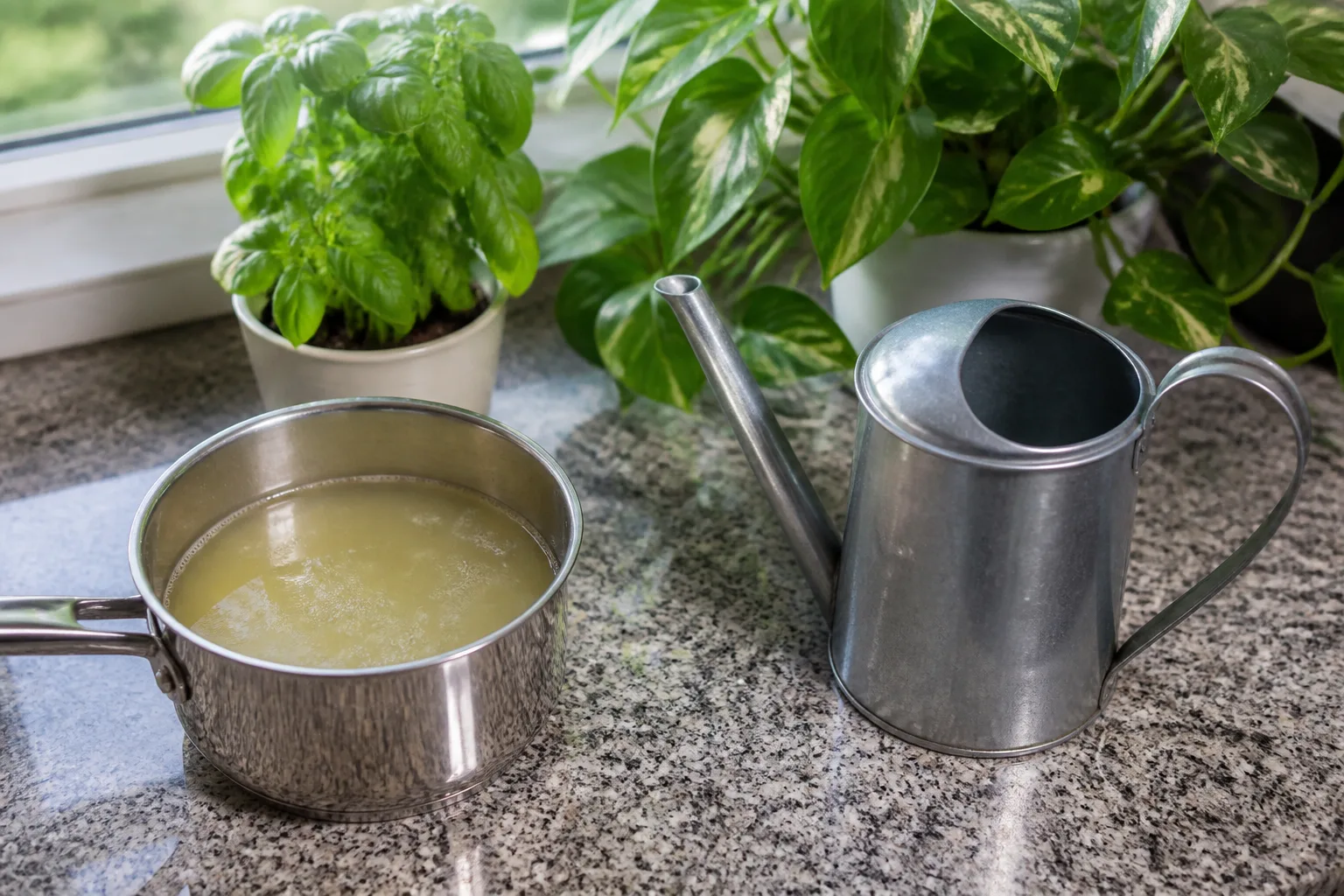
Safe water shares three traits: no added salt, no added fat, and no animal protein cooked in it. If you boiled food in plain water—or water with only a small amount of unsalted vegetables—you are usually in the clear once the liquid cools.
Plain pasta, potato, and rice water
This is the classic reuse case. Starch released during boiling gives the water a cloudy appearance and provides easily digestible carbon for soil microorganisms. Conservation columnist John L. Turner notes that water from boiling potatoes, pasta, rice, and similar foods can be used on indoor or outdoor plants after cooling, with the explicit caveat that salted cooking water must never go on plants because it can damage or kill them.
Use this water at the soil surface, not as a foliar spray. Starch films on leaves attract dust and can interfere with gas exchange. Pour slowly at the base of the plant so the root zone receives the moisture.
Vegetable boiling water
Water used to boil carrots, green beans, corn, peas, or mixed vegetable scraps (without salt or oil) is generally safe for garden beds and large containers. It may contain small amounts of minerals and dissolved organic compounds leached from the vegetables.
This water is also useful for adding moisture to an active compost pile, which needs water to keep decomposition moving. Let it cool completely first; hot liquid can kill heat-loving but beneficial decomposer communities near the pile surface.
Egg boiling water and other mild mineral waters
Water from boiling eggs in plain, unsalted water picks up a small amount of calcium from the shells. An occasional application on houseplants with brown tip issues might help when hard water or low calcium is part of the problem, but this is a minor supplement—not a cure for overwatering, low humidity, or fluoride sensitivity.
Do not rely on egg water as a primary calcium program. If tip burn persists, check watering habits, humidity, and whether fertilizer salts are building up in the pot.
Cooking waters you should never pour on plants
Some kitchen liquids look harmless but create long-term soil problems, pest attraction, or immediate root stress. When in doubt, skip the garden.
Salted pasta water, brines, and seasoned boil water
Salt is the most common and most serious mistake. Many cooks salt pasta water heavily; that same water can raise soil salinity, pull moisture away from roots through osmotic stress, and cause leaf burn, stunting, wilting, and decline in sensitive plants. The USDA Agricultural Research Service notes that salt can disrupt a plant’s ability to function under irrigation stress—household cooking salt is not a special gentler version for garden beds.
LSU AgCenter guidance shared through NOLA Ready’s saltwater garden resource explains that salts can accumulate in soil over repeated exposure, damaging roots, causing crispy leaf margins, and interfering with nutrient uptake—especially in containers with limited soil volume. The same logic applies when you repeatedly pour salted cooking water into a pot.
Brine from pickles, olives, or salted blanching water belongs in the drain, not the hydrangeas.
Meat, broth, and greasy cooking water
Water used to simmer meat, bones, or stock concentrates proteins and fats. It can smell foul as it sits, attract rodents and raccoons outdoors, and create anaerobic, greasy patches in soil. Fat also coats soil particles, reducing air exchange and water movement—conditions that favor root problems rather than growth.
If you would not drink the cloudy skim off a pot roast, do not pour it on tomatoes.
Water with oil, butter, dairy, or strong seasonings
Olive oil, butter, cream, cheese water, and oily pasta sauces leave lipids that break down slowly in garden soil. Garlic-heavy or chili-heavy boil water is less toxic than salt but can still irritate seedlings and attract pests when poured repeatedly on open soil.
A tiny accidental splash from rinsing lightly oiled vegetables is different from saving a full pot of fettuccine water that cooked with butter and parmesan. Scale matters; repeated use matters more.
Run this 30-second sink-side checklist
Before you walk outside with a pot, run through these five questions:
- Did I add salt or salty ingredients? If yes, drain it—do not use on plants or compost near edible beds.
- Did meat, bones, or stock cook in this water? If yes, drain it.
- Is there visible oil, butter scum, or dairy film? If yes, drain it.
- Has the water cooled to room temperature? If no, wait.
- Will I use it within a few hours or refrigerate it? If it will sit warm overnight, skip the garden and compost or drain instead.
If you pass all five, you are in the safe reuse zone.
How to collect, cool, and store cooking water safely
Cooling is non-negotiable. Hot water can scald roots, shock beneficial microbes, and crack cold ceramic pots. Set the pot off the heat and let it stand until it feels neutral to the wrist—typically 30 to 60 minutes. In winter, Turner suggests letting heat from the cooling pot warm the kitchen; that is a nice side benefit, but plants still need room-temperature liquid.
Use promptly when possible. Starchy water that sits at room temperature for many hours can sour and grow bacteria. If dinner ran late, refrigerate the water in a covered pitcher or jar and use it within 24 hours. Let refrigerated water warm to room temperature before applying.
Keep a dedicated container for garden-bound water so it never gets confused with salted pasta pots. Label it if your household cooks both ways.
How to apply cooking water without shocking roots
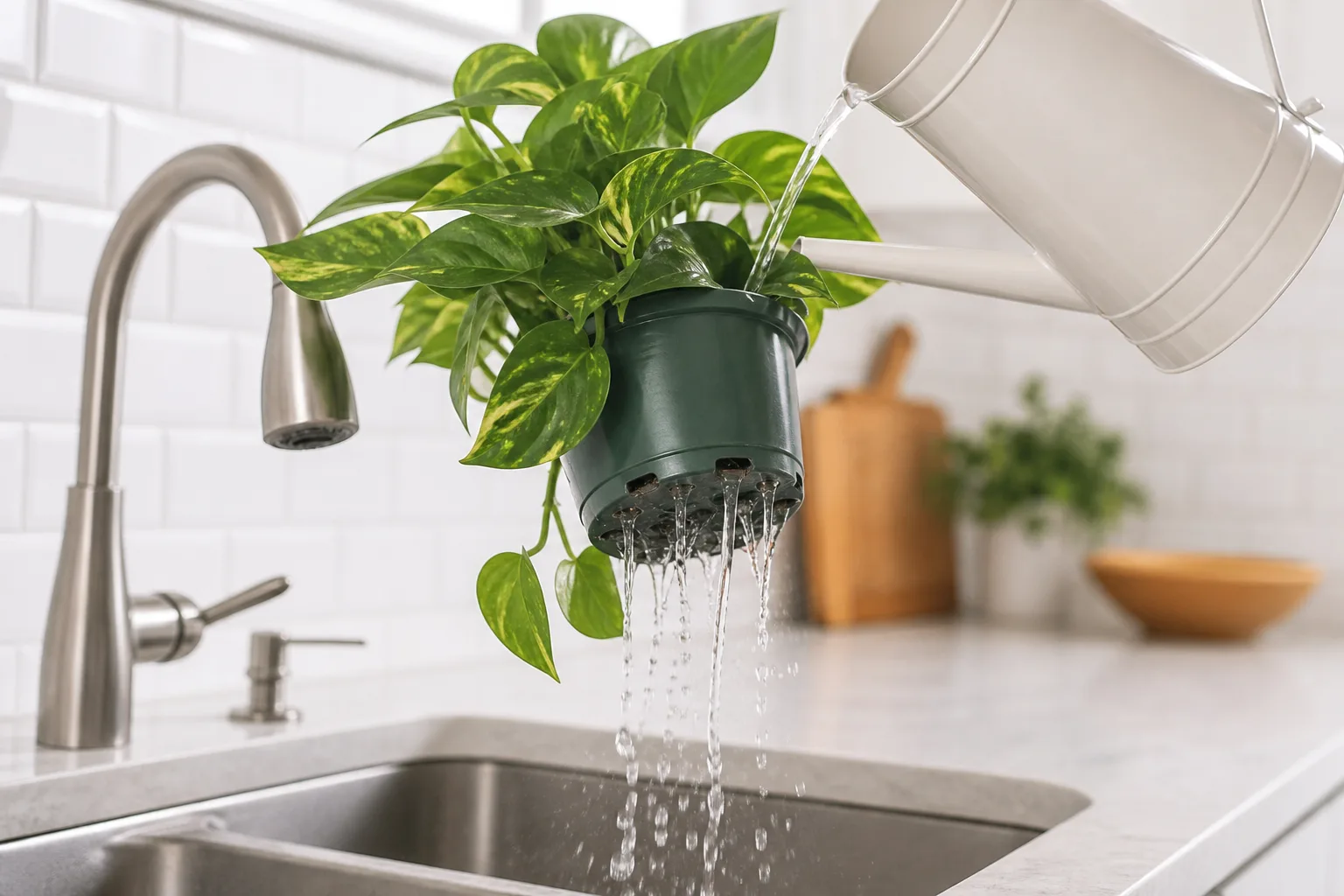
Apply cooking water the same way you would plain water: slowly, at soil level, until the root zone is evenly moist—not saturated.
For houseplants, water until a little drains from the bottom if the pot has holes, then discard excess in the saucer after 15 minutes. For in-ground beds, soak the root zone and avoid broadcasting starchy water over foliage.
Do not use cooking water on dry, hydrophobic soil as a first fix. If soil has pulled away from the pot edge, rehydrate with plain water first, then resume occasional cooking-water use once moisture is even again.
Skip foliar feeding fantasies. This is a soil application only.
Indoor plants, containers, and in-ground beds need different caution
In-ground garden beds tolerate occasional starchy water best because soil volume dilutes residues and soil food webs process starches quickly. Occasional pasta water on a tomato bed is a different risk profile than the same volume in a six-inch pothos pot.
Containers and houseplants have tiny root zones where salts and starches concentrate. LSU AgCenter guidance for container plants under salty irrigation recommends periodic flushing with fresh water—enough to move through the entire soil profile and out the drainage holes—to leach excess salts before they burn roots. If you ever mistakenly used salted water in a pot, flushing becomes urgent; if you used unsalted starchy water too often, flushing helps reset starch buildup too.
Seedlings and newly repotted plants deserve plain water until they are established. Their roots are fragile, and consistent, boring moisture matters more than kitchen experiments.
When starchy water leads to mold, gnats, or surface slime
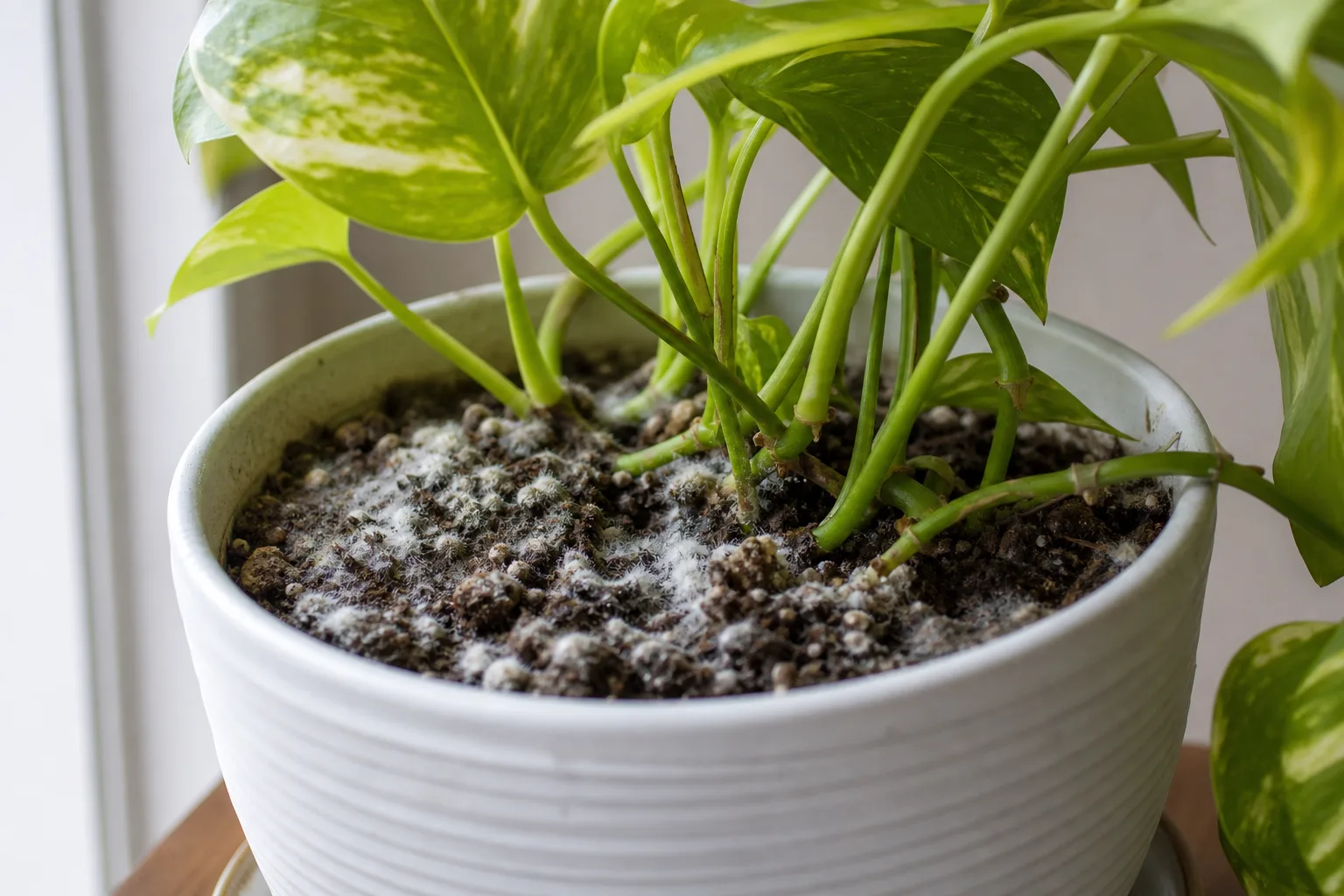
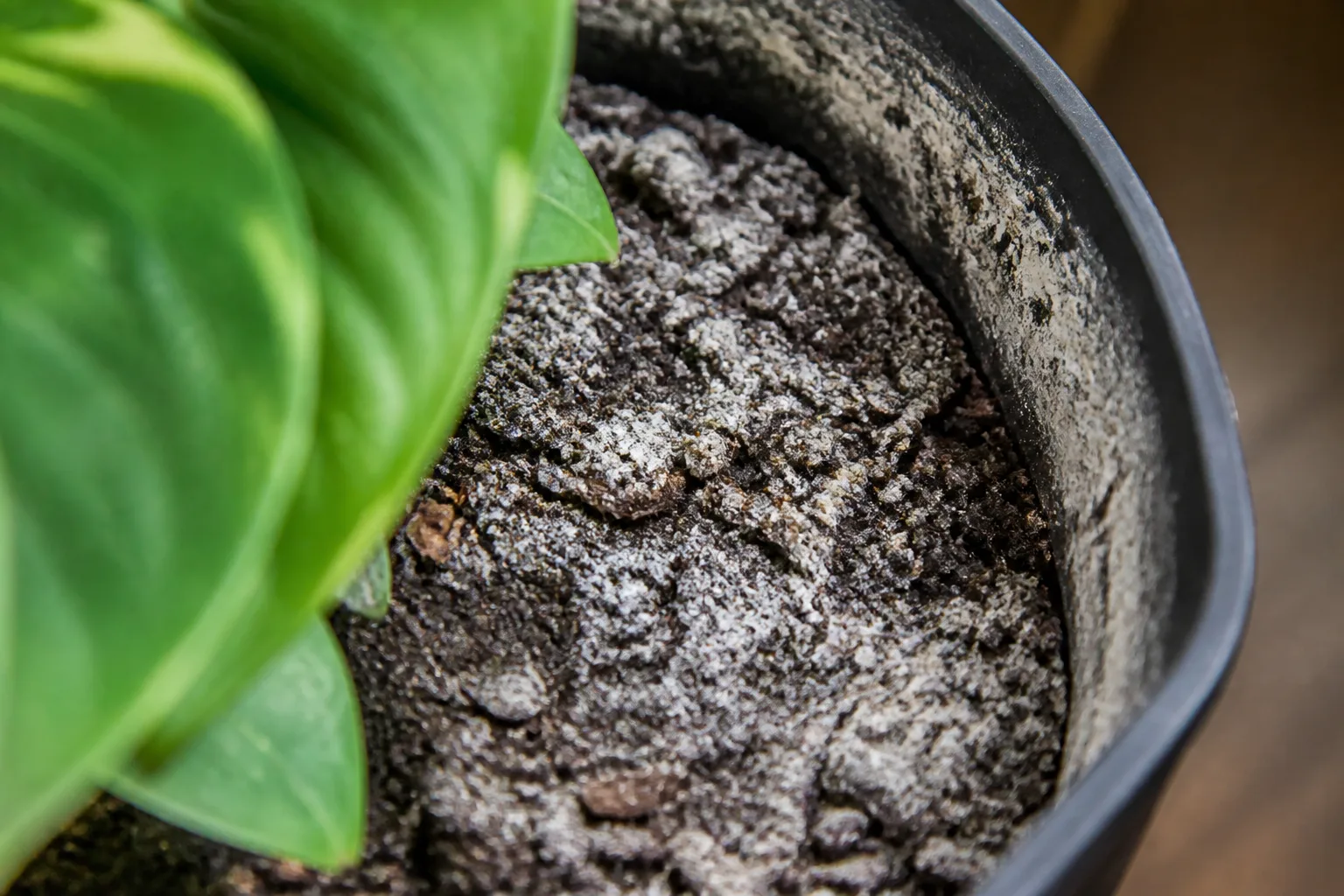
Repeated applications of very starchy water—especially on constantly moist houseplant soil—can feed saprotrophic fungi that colonize the potting surface. White or gray fuzzy growth is often harmless to the plant if you fix the moisture pattern, but it signals that organic inputs are outpacing decomposition.
Cut back cooking-water frequency, dilute 1:1 with plain water, and scrape off dense surface mold before it matts. Allow the top inch of soil to dry slightly between waterings. If fungus gnats appear, reduce organic surface inputs and improve airflow; gnats exploit wet, rich topsoil.
A single mushroom or slime patch outdoors after starchy water is usually a sign of active soil biology, not catastrophe. Indoors, aesthetics and gnats make it worth correcting faster.
How often to use cooking water—and when to dilute it
You can use unsalted cooking water whenever plants need water and you have a safe batch available. There is no magic weekly schedule. Match irrigation to plant need, season, and soil dryness—not to how often you cook pasta.
If you cook starchy foods several times a week, alternate cooking water with plain water rather than using starch every time. That is especially wise for small pots and plants prone to surface mold.
Dilute when:
- the water is thick and cloudy like gravy water;
- you see increasing mold on soil;
- the plant is slow-growing, succulent, or drought-adapted;
- you are watering seedlings or herbs in tiny pots.
A 1:1 dilution with plain tap or rainwater is a sensible default when starch is heavy. You still get some organic input with less surface buildup.
How to recover plants after salty or overly starchy water
If you used salted water once or repeatedly, act quickly. Flush the soil with a large volume of clean, room-temperature water. For containers, LSU AgCenter-style guidance suggests using enough water to pass fully through the pot profile and out the drainage holes; repeat until water runs clear. For in-ground plants, slow deep soaking with clean water helps move salts downward away from roots, especially if drainage is good.
Trim badly burned leaf tips if they are purely cosmetic. Hold fertilizer until new growth looks normal—stressed roots do not need extra salts.
If starchy water caused mold but the plant looks healthy, scrape the surface, dilute future applications, and improve drying between waterings. If the plant wilts while soil stays wet, unpot and inspect for root rot; starchy, anaerobic conditions can contribute when paired with overwatering.
Recovery works when damage is recent and moderate. A container that received salted pasta water every week for a season may need repotting into fresh mix.
When the compost pile or drain is the better destination
Not every pot of water belongs on living roots. Compost is the right place for unsalted vegetable cooking water when you do not need to irrigate that day—it adds moisture and nutrients to decomposers. The drain is correct for salted, greasy, meaty, or spoiled water.
Do not pour salted water on weeds as a homemade herbicide unless you accept that salt can persist in soil and affect future plantings. What kills pavement weeds can linger in garden beds for seasons.
If your municipality restricts kitchen liquids in green waste, follow local rules. Cooking water without animal fat is usually fine for home compost; oily meat broth is not.
Conclusion
Cooking water is worth saving when it is plain, unsalted, cool, and promptly used—mainly as a way to conserve water and feed soil microbes a little dissolved starch, not to replace fertilizer. The wins are real but modest: one less gallon down the drain and a small boost to soil activity.
The failures are avoidable. Salt, grease, meat broth, and long-lived oily residues cause the damage; starchy buildup and mold in small pots are the usual annoyance. Run the sink-side checklist, water soil not leaves, alternate with plain water in containers, and flush if salt ever slips through. Get those boundaries right and pasta night can quietly help the garden instead of hurting it.



